10 Benefits of Collaborative Family Cooking
• Updated
Cooking together as a family isn't just about making meals - it’s about building connections, improving health, and teaching life skills. Collaborative cooking strengthens relationships, encourages healthier eating, and reduces stress for parents. It also saves money, cuts food waste, and fosters a positive relationship with food. Plus, it’s a fun way to preserve family recipes and create lasting memories.
Here’s a quick overview of the benefits:
- Strengthens Family Bonds: Encourages teamwork and communication.
- Improves Nutrition: Home-cooked meals lead to healthier eating habits.
- Teaches Life Skills: Kids learn cooking, planning, and independence.
- Preserves Recipes: Keeps family traditions alive.
- Creates Quality Time: Turns meal prep into a shared experience.
- Promotes Positive Food Relationships: Helps kids enjoy and explore food.
- Saves Money: Reduces takeout costs and food waste.
- Boosts Emotional Health: Cooking together lowers stress and builds confidence.
- Encourages Problem-Solving: Tackles challenges like substitutions or timing.
- Simplifies Planning: Shared meal prep reduces parental workload.
Modern tools like Honeydew Recipe Manager make it easier to plan meals, share tasks, and stay organized, ensuring the focus stays on quality family time. Start small with one or two family cooking nights a week and watch the benefits unfold.
The Surprising Benefits of Cooking Family Meals Together
1. Builds Stronger Family Relationships and Communication
Cooking as a family isn't just about putting food on the table - it’s about working together toward a shared goal. This process naturally encourages communication, teamwork, and collaboration, creating opportunities to connect in ways that passive activities like watching TV or scrolling through phones simply can't match. Side by side in the kitchen, families share casual conversations, exchange jokes, and tell stories, all of which help deepen emotional bonds. The relaxed atmosphere allows everyone to feel heard and valued.
In this informal setting, even routine tasks turn into moments of connection. Parents might ask their kids about their day while chopping vegetables or stirring a pot. Families also practice essential skills like giving clear instructions, asking questions, and offering help - abilities that easily transfer to teamwork in school or work situations. Negotiating roles, such as deciding who stirs, who tastes, or who cleans up, fosters respect and teaches how to resolve everyday challenges together. These small acts of collaboration create a sense of inclusion for everyone involved.
When kids help choose recipes, contribute to grocery lists, or take on specific roles during meal prep, they feel like valued members of the family. Completing tasks and receiving praise for their efforts boosts their confidence and reinforces their importance in family decision-making. Over time, as they gain new skills and even guide younger siblings, they develop a sense of pride and belonging.
Modern tools make this collaboration even easier. Apps like Honeydew Recipe Manager let families share recipes, meal plans, and grocery lists with up to six members, ensuring everyone knows what's for dinner and what needs to be done. Its drag-and-drop calendar allows each person to claim a meal slot, making responsibilities clear. As one user, Alex P., shared:
"My family of five uses Honeydew for all our meal planning. The household sharing feature keeps everyone organized."
Psychologists often refer to cooking together as a "social glue" that strengthens bonds and fosters a sense of belonging. When everyone’s contribution is reflected in the final meal, it cultivates mutual respect and a shared feeling of, "We’re in this together." Whether it’s a quick dinner on a busy weeknight or a leisurely baking session over the weekend, these moments in the kitchen build communication habits and emotional closeness that last far beyond mealtime.
2. Improves Nutrition and Eating Habits
Cooking together does more than just bring families closer - it can also transform eating habits and improve nutrition. When families prepare meals at home, they have full control over the ingredients, allowing them to cut back on sugars, salt, and unhealthy fats while incorporating whole grains and healthier oils. This is a stark contrast to the high levels of additives and processed ingredients often found in restaurant meals or packaged convenience foods. As a result, home-cooked meals naturally lead to better food choices. Research shows that children who regularly eat home-prepared meals consume more fruits, vegetables, and nutrient-rich foods.
Getting kids involved in the kitchen is a game-changer. When children help with tasks like washing lettuce, chopping vegetables (using safe tools), or building their own tacos or grain bowls, they feel more invested in the meal. This hands-on involvement makes them more likely to try - and enjoy - healthier foods. The American Academy of Pediatrics emphasizes that cooking as a family is a way to "lead by example", encouraging kids to choose nutritious, home-cooked meals over processed alternatives. Even activities like reading food labels together while preparing meals can highlight the benefits of home cooking over prepackaged options.
For families looking to make healthier choices more manageable, small adjustments can make a big impact. For instance, instead of ordering takeout pizza, try making a semi-homemade version using whole-wheat crust and fresh toppings. Introducing "new ingredient nights" once or twice a week is another fun way to encourage variety and exploration in the kitchen.
Modern tools like the Honeydew Recipe Manager simplify the process even further. This app automatically calculates calories and macronutrients - like protein, fat, carbs, and fiber - helping families stay on track with their dietary goals. Its smart substitution feature even adapts recipes to meet specific health needs. As one user, Michael B., shared:
"The calorie and macro calculator has helped me stick to my health goals while still enjoying great meals."
The benefits of these efforts go beyond just the plate. Families who regularly cook and eat meals together tend to have healthier body weights and better overall diet quality. Home cooking is often associated with fewer sugary drinks, fried foods, and oversized portions compared to restaurant meals. Teaching kids to prepare and enjoy balanced, home-cooked meals not only supports their health now but also equips them with lifelong skills and habits that promote wellness well into adulthood.
3. Teaches Life Skills and Builds Confidence
The kitchen doubles as a hands-on classroom, offering countless opportunities to develop essential life skills that ripple through every aspect of family life. Cooking together fosters teamwork and communication, but it also teaches practical abilities that kids will carry into adulthood. By reading and following recipes, children improve literacy skills. Measuring ingredients sharpens their grasp of math, while juggling multiple tasks enhances their multitasking and organizational abilities. On top of that, they learn safe kitchen practices - an invaluable step toward independence. According to the American Academy of Pediatrics, completing a recipe from start to finish helps kids practice planning and executing projects - skills that can later apply to schoolwork, job deadlines, and even managing their own households.
One of the most empowering aspects of cooking is the visible, tangible results. When kids help turn a pile of raw ingredients into a finished meal, they see the direct impact of their efforts. This immediate success builds confidence and self-esteem. Even small tasks, like stirring a pot or setting a timer, contribute to a growing sense of capability and mastery.
Parents can tailor kitchen tasks to suit each child's age and abilities, ensuring safety while keeping the experience engaging. Younger children might rinse vegetables or sprinkle cheese on a dish, while elementary-aged kids can measure ingredients or mix batter. Older kids and teens, under supervision, can handle more complex tasks like chopping, using the stove, or even managing simple recipes on their own. Gradually expanding responsibilities - such as letting a teen plan and prepare a themed dinner like "Taco Tuesday" - helps them build both competence and confidence. Over time, these experiences prepare them for full culinary independence.
Modern tools can also make learning these skills more structured and enjoyable. For instance, the Honeydew Recipe Manager allows families to organize recipes, create grocery lists automatically, and plan meals on a shared weekly calendar. With its household-sharing feature, up to six family members can collaborate on meal planning and track updates in real time, encouraging teamwork and shared responsibility.
Ultimately, these lessons lead to independence. Children who grow up cooking at home learn how to take care of themselves - picking recipes, shopping with purpose, preparing balanced meals, and properly storing leftovers. These habits make it easier for them to rely on their own cooking rather than takeout when they head to college or move into their first apartment. Teaching kids to plan and prepare meals now lays the groundwork for healthier, more self-reliant lives as adults.
4. Preserves Family Recipes and Stories
Cooking together does more than fill plates - it helps preserve family traditions and history. The kitchen becomes a living archive when families gather to prepare meals. Recipes aren’t just instructions; they’re snapshots of your family’s journey. When a grandmother teaches her grandchild how to brown onions for a holiday stuffing or explains why tamales are a Christmas Eve tradition, she’s passing down more than techniques. She’s sharing stories of immigration, regional customs, and the unique identity that ties generations together. Every meal becomes a stage for storytelling.
These moments in the kitchen often spark meaningful conversations. A child might ask, "Why do we always make this pie for Thanksgiving?" or "Who taught you this recipe?" Such questions lead to memories tied to food - like the first time a family barbecue featured a now-famous sauce or how a great-grandparent made do with simple ingredients to feed a household. The American Academy of Pediatrics even suggests creating a family cookbook as a way to honor heritage and strengthen bonds.
Today’s technology makes it easier to preserve these stories. Tools like Honeydew Recipe Manager let families save and share recipes effortlessly. You can import recipes from social media, attach personal notes about who introduced the dish, and even tag holidays or occasions. For example, Priya K., a Honeydew user, shared:
"Being able to import recipes from anywhere has built my cookbook faster than I ever imagined."
Organizing your recipes by tagging them with details like a family member’s name ("Aunt Maria’s enchiladas"), a celebration ("Fourth of July"), or cultural roots (like Southern, Mexican-American, or Korean American) ensures these traditions stay alive. Adding voice memos of older relatives demonstrating a recipe or snapping step-by-step photos adds another layer of context. These digital keepsakes don’t just streamline meal prep - they safeguard family heritage.
Preserve both the original and updated versions of beloved recipes. Keep your grandmother’s pozole recipe exactly as she made it, complete with instructions like "simmer until fragrant", while also creating a quicker version for busy weeknights. Hosting regular heritage recipe nights is a great way to ensure these traditions stay vibrant for generations to come.
5. Creates Quality Time Despite Busy Schedules
Let’s face it - busy schedules often leave little room for family connection. But cooking together can turn the everyday task of making dinner into a built-in opportunity for quality time. In fact, it can add anywhere from 15 to 45 minutes of face-to-face interaction, which is so valuable in today’s fast-paced world.
By involving everyone in the kitchen, dinner prep becomes more than just a chore - it’s a shared experience. Simple tasks like washing vegetables, stirring a sauce, or setting the table give each family member a role to play. These small contributions not only speed up the process but also create natural opportunities for conversation, laughter, and bonding among all ages. Studies even show that regular family meals, especially when families cook together, are linked to better communication, stronger emotional connections, and improved mental health in children.
To make this work with packed schedules, start small. Plan for two cook nights a week with quick, 20-30 minute recipes - think Taco Tuesday or a relaxed Sunday breakfast. For particularly hectic weeks, try prepping ingredients in advance on a Sunday afternoon. Chop veggies, marinate proteins, or portion out ingredients so that weeknight meals are as simple as assembling and heating.
For even smoother planning, technology can lend a hand. Tools like Honeydew Recipe Manager simplify the process by creating meal plans, grocery lists, and even a drag-and-drop weekly calendar. As Alex P., a Honeydew user, puts it:
"My family of five uses Honeydew for all our meal planning. The household sharing feature keeps everyone organized."
With the logistics handled, you can focus on enjoying the time together.
To make these cooking sessions even more special, turn them into screen-free rituals. Give them fun names like "Family Stir-Fry Fridays" or "Pizza Night Prep." These predictable moments of togetherness not only help families slow down but also provide a chance to share stories, reconnect, and enjoy a home-cooked meal - even during the busiest weeks.
6. Develops a Positive Relationship with Food
When kids get involved in tasks like washing vegetables, stirring sauces, or picking out taco toppings, food becomes more than just something to eat - it turns into a source of adventure and enjoyment. This hands-on approach helps kids see food in a positive light, making them more willing to try new things and less likely to grow into picky eaters. Instead of constant battles over finishing their plate, children who cook with their parents learn to tune into their own hunger and fullness signals.
This mindset doesn’t just expand their taste buds - it also encourages healthier eating habits. Studies show that kids who regularly share family meals tend to eat more nutritious foods, have lower obesity rates, and experience fewer issues like depression and anxiety compared to those who don’t. Cooking together builds on these benefits by teaching children that food is about nourishment, connection, and even celebrating heritage - not about chasing a certain body image or following restrictive diets.
Parents can further encourage this healthy perspective by using neutral and curious language during meals. For instance, instead of saying, "You need to finish your vegetables before dessert", try asking, "What do you think that tastes like?" Serving meals family-style, where kids can dish up their own portions, also helps them practice self-regulation. According to the American Academy of Pediatrics, involving kids in meal preparation fosters a "culture of wellness", helping them absorb healthy habits naturally into their daily lives.
To make things even smoother, smart tools can help busy families stay on track. For example, Honeydew Recipe Manager simplifies meal planning while supporting a balanced approach to nutrition. Its features provide insights on nutrient tracking without adding unnecessary stress, making it easier to maintain a relaxed and enjoyable food culture. When planning feels less overwhelming and cooking becomes a shared joy, families naturally create a lasting, positive bond with food that carries into adulthood.
7. Reduces Grocery Costs and Food Waste
Cooking together isn’t just about meals; it’s about saving money and cutting down on waste too. Home-cooked meals are much cheaper than takeout, especially for larger families. Plus, when everyone joins in to plan the week’s dinners, you’re more likely to use up what you’ve bought instead of resorting to pricey, last-minute food orders. The University of Kentucky’s "Families in the Kitchen" program highlights this point, showing how preparing meals at home not only keeps costs down but also gives families control over ingredients and encourages turning leftovers into new dishes. This approach inspires smarter shopping habits.
When the whole family gets involved, grocery shopping becomes more intentional. Kids can help check what’s already in the fridge and pantry before heading to the store, spotting items that need to be used soon and suggesting ways to include them in meals. This reduces forgotten produce turning into a science experiment in the crisper drawer and helps avoid those tempting, unnecessary impulse buys. Teaching kids to label leftovers and find creative ways to reuse them - like turning last night’s roast chicken into sandwiches or soup - instills a sense of value for food. A weekly "leftovers night" can even become a fun family tradition, where everyone works together to whip up burrito bowls, pasta dishes, or hearty soups from whatever’s on hand.
Technology makes this process even easier. Honeydew Recipe Manager simplifies budget-friendly meal planning by letting families import recipes, organize them into a weekly calendar, and generate grocery lists with exact quantities. The app even suggests recipes based on what’s already in your kitchen. Users report big savings - James L. shared:
"The smart grocery lists save me hundreds of dollars a month. I love how it suggests recipes based on what I already have! I used to waste so much food, but now with Honeydew's meal planning, I buy exactly what I need."
Honeydew’s household sharing feature keeps up to six family members on the same page. Everyone knows what’s planned and what’s already stocked, helping to avoid duplicate purchases and ensuring ingredients get used before they go bad.
8. Boosts Mood and Emotional Health
Cooking together does more than just fill stomachs - it’s a powerful way to nurture emotional well-being. Studies show that children who regularly participate in family dinners tend to have lower rates of depression and anxiety. Sharing the process of preparing a meal creates natural opportunities for connection, offering a much-needed break from screens and daily stress while strengthening family bonds.
The kitchen often transforms into a space where everyone feels appreciated and included. When kids help with tasks like measuring ingredients, stirring sauces, or plating food, they gain a sense of accomplishment that builds confidence and self-esteem. According to Harvard's Graduate School of Education, family dinners benefit "the body, the physical health, the brains and academic performance, and the spirit or the mental health", highlighting how these shared experiences contribute to overall well-being.
Cooking’s hands-on nature - like chopping vegetables, kneading dough, or simply enjoying the aroma of a simmering sauce - grounds people in the present moment, helping to ease anxiety. For children, consistent routines like family meal prep provide a sense of security and emotional resilience, especially during chaotic times. Programs such as the University of Kentucky's "Families in the Kitchen" have found that participants report feeling more joy, gratitude, and connection during cooking sessions, even during challenging periods like financial strain or significant life changes. These moments of shared joy can turn meal prep into a smoother, more enjoyable experience.
Technology can also play a role in making these mood-boosting moments easier to achieve. Tools like the Honeydew Recipe Manager take the stress out of meal planning by automatically generating weekly menus, creating grocery lists, and letting family members contribute recipe ideas through a shared calendar. By eliminating the "What’s for dinner?" dilemma, parents can focus on enjoying the cooking process instead of getting bogged down by logistics. One user, David K., shared:
"Honeydew has made meal planning fun again. The interface is intuitive and the suggestions are spot on!"
9. Encourages Problem-Solving and Learning
The kitchen isn't just a place to cook; it's a hub for developing problem-solving skills and learning in a hands-on way. Every meal comes with its own set of challenges - like running out of an ingredient, juggling the timing of multiple dishes, or fixing a dish that's turned out too salty. These moments create opportunities for families to work together and come up with quick, practical solutions. When kids pitch in by measuring ingredients, following step-by-step instructions, or adapting when things go awry, they're practicing skills that go beyond the kitchen and apply to schoolwork and everyday life.
Cooking naturally blends learning into the experience without feeling like homework. Kids use math when they measure or adjust recipes, explore science as they watch heat transform food or yeast make dough rise, and expand their vocabulary with recipe terms like "simmer", "sauté", or "marinate". The process also strengthens executive function - teaching kids how to plan, manage time, and see a project through from start to finish. According to the American Academy of Pediatrics, following a recipe from beginning to end can significantly boost planning and project-completion skills, which are key to academic success.
Even mistakes in the kitchen can become valuable lessons. Parents can guide kids through these moments by asking questions like, "What happened?", "What can we try next time?", and "How can we fix it right now?". For instance, if pasta turns out mushy, it's an opportunity to discuss water ratios and experiment with adjustments next time. If a dish is too spicy, adding yogurt or tomato sauce can help balance the flavors. This approach helps kids see mistakes as experiments rather than failures, fostering resilience and adaptability.
Technology can also enhance these learning moments. Apps like Honeydew Recipe Manager make planning meals interactive and engaging. Families can drag recipes into a weekly calendar, watch as AI-generated grocery lists update in real time, and explore themes like "Meatless Monday." The app’s ingredient substitution feature sparks curiosity and learning by encouraging discussions about why certain swaps work. Emily C., a Honeydew user, shared her experience:
"The ingredient substitution feature is a game-changer for my dietary restrictions. I can adapt any recipe easily!"
Even on hectic weeknights, the kitchen can be a space for small but meaningful problem-solving tasks. Assigning kids simple roles - like doubling a taco seasoning recipe, timing pasta to cook perfectly, or choosing a quick vegetable side dish - ensures every meal includes a challenge to tackle. Over time, these consistent, real-world problem-solving opportunities build habits and skills that are useful far beyond the dinner table.
10. Simplifies Planning and Reduces Parental Stress
The daily "What's for dinner?" dilemma can be a major source of stress for parents. Between work, school activities, and running a household, meal planning often feels like an overwhelming task. From tracking pantry supplies to creating grocery lists and coordinating schedules, it can quickly become too much for one person to handle. But when families plan and cook together, the responsibility shifts from being a solo chore to a shared activity. Research even suggests that dividing household tasks this way significantly reduces stress.
One effective strategy is to host a 30-minute "Sunday kitchen huddle." Gather the family to choose 4–5 dinners for the week. Kids can pick one "favorite" meal and one "new recipe" to try, while parents ensure the meals align with the week's schedule. For example, quick 20-minute dinners can be planned for busy nights, while more time-intensive recipes can be reserved for slower weekends. Tools like the Honeydew Recipe Manager make this process easier by letting families drag recipes onto a weekly calendar, automatically generate grocery lists sorted by store section, and even order ingredients through Instacart with just one click. This turns meal planning from a stressful task into a manageable - and even enjoyable - family activity.
This collaborative approach doesn’t just reduce stress - it also saves money by cutting down on takeout and last-minute food orders. According to experts at the University of Kentucky, children who regularly share family meals tend to eat healthier, have lower obesity rates, and are less likely to experience depression or anxiety. This helps parents feel more confident that their kids are eating well. Predictable meal routines also create a calmer household. When everyone knows what’s for dinner and their role in preparing it - like "Wednesdays we eat at 6:00 PM, and you're in charge of the salad" - evenings feel more organized and less chaotic.
Assigning age-appropriate tasks can make the process even smoother. Younger kids might wash vegetables, while teens can handle tasks like managing the oven. Features like ingredient substitutions and automatic meal plan generation, powered by AI, further reduce decision fatigue. Over time, families build a reliable rotation of go-to meals, making weekly planning even easier.
As Sarah M., a Honeydew user, shared:
"Honeydew has transformed the way I cook. I'm saving so much time and enjoying new recipes every week!"
Comparison Table
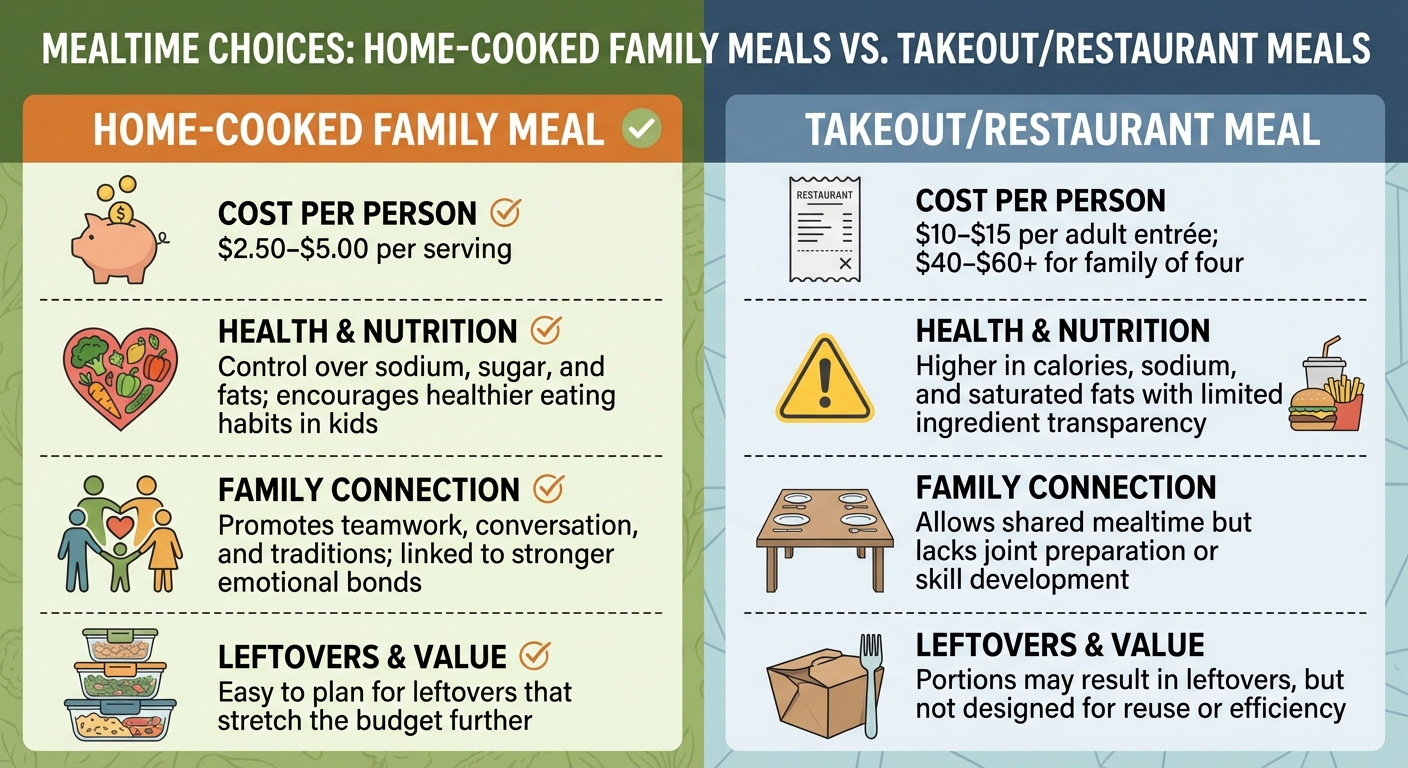
Home-Cooked vs Takeout Meals: Cost, Nutrition & Family Benefits Comparison
Looking at home-cooked meals versus takeout highlights notable differences in cost, nutrition, and overall family benefits. Here's a breakdown of how these two options stack up for U.S. families:
| Aspect | Home-Cooked Family Meal | Takeout/Restaurant Meal |
|---|---|---|
| Typical cost per person | Around $2.50–$5.00 per serving, using affordable ingredients and leftovers | Approximately $10–$15 per adult entrée; a family of four may spend $40–$60+ per meal |
| Health & nutrition | Provides control over sodium, sugar, and fats; encourages healthier eating habits in kids | Tends to be higher in calories, sodium, and saturated fats with limited ingredient transparency |
| Family connection | Promotes teamwork, conversation, and traditions; linked to stronger emotional bonds | Allows shared mealtime but lacks joint preparation or skill development |
| Leftovers & value | Easy to plan for leftovers that stretch the budget further | Portions may result in leftovers, but they’re not typically designed for reuse or efficiency |
This comparison illustrates the tangible perks of home cooking, especially when combined with modern tools like AI-assisted meal planning.
Unplanned grocery trips can be a hassle, often requiring multiple visits each week. However, tools like the Honeydew Recipe Manager simplify the process. By consolidating shopping into a single trip or delivery, families can cut their shopping time to just 45–90 minutes per week. Honeydew compiles ingredient lists, organizes them by store sections, and even integrates with Instacart for seamless one-click ordering.
Take it from Mark T., a satisfied Honeydew user:
"I used to waste so much food. Now with Honeydew's meal planning, I buy exactly what I need and save money!"
Studies back this up - children who regularly share home-cooked meals tend to eat healthier, have lower obesity rates, and experience fewer symptoms of depression and anxiety. These benefits show how thoughtful, collaborative meal planning can improve both family life and daily routines.
Conclusion
Cooking together does more than just put food on the table - it brings people closer and supports both physical and emotional well-being. It encourages teamwork and meaningful conversations, promotes healthier eating habits, and helps everyone develop practical skills like time management and following instructions. Studies even suggest that kids who regularly enjoy home-cooked meals tend to eat better, have lower chances of obesity, and experience fewer symptoms of depression and anxiety. On top of that, involving children in the kitchen can boost their confidence and sense of belonging.
Modern technology has made tackling the challenges of meal planning much easier. Tools like Honeydew Recipe Manager streamline the process, helping families plan meals and shop for groceries with less stress.
Start small by setting aside one evening a week for cooking as a family. Assign tasks based on age - young kids can rinse vegetables or set the table, while older ones can measure and mix ingredients. Don’t worry about perfection; it’s all about building memories and skills over time. These simple routines can create cherished traditions that help balance the demands of a busy life.
With thoughtful planning and the right tools, cooking together becomes more than just a way to feed the family - it’s a way to nurture health, strengthen bonds, and create lasting memories. Each shared meal becomes an opportunity to connect, grow, and build a healthier, happier future together.
FAQs
How can I make family cooking a part of our busy routine?
Planning meals as a family, even with a hectic schedule, doesn’t have to be overwhelming. Start by using tools like Honeydew Recipe Manager. Its drag-and-drop calendar and AI-generated grocery lists simplify the process, saving you time and effort. Plus, it’s a great way to stay organized.
Get everyone involved by letting family members choose recipes or take on small meal prep tasks. This not only lightens the load but also makes the experience more enjoyable for everyone. Stick to straightforward, quick recipes or add some fun by creating themed nights - like Taco Tuesday or Pasta Friday. Setting aside regular times for cooking, even just once or twice a week, can turn it into a cherished family tradition.
What are some simple and healthy meals to cook with kids?
Cooking with kids isn't just enjoyable - it’s also an excellent opportunity to inspire healthier eating habits. Try whipping up some easy and nutritious meals together, like homemade tacos filled with fresh veggies, chicken stir-fry featuring vibrant bell peppers, or fruit parfaits layered with creamy yogurt and crunchy granola. These recipes are not only simple to make but also adaptable to individual tastes, making them a fun way to get everyone excited about spending time in the kitchen!
How does cooking together as a family help reduce food waste and save money?
Cooking as a family can be a great way to cut down on food waste. When everyone pitches in, it naturally leads to better meal planning and smarter grocery shopping. You’re more likely to stick to a list and avoid buying things you don’t need. Plus, it’s a chance to get creative with leftovers, transforming them into fresh meals instead of tossing them out.
This approach doesn’t just help the planet - it’s easier on your wallet, too. By using what you already have and skipping unnecessary purchases, you’ll save money on groceries. And let’s not forget, cooking at home is often much cheaper than eating out. It’s a simple way to do good for both your budget and the environment.