Top 7 AI Meal Planning Apps for Healthy Eating
• Updated
Eating healthy is easier with AI meal planning apps that create tailored meal plans, grocery lists, and track nutrition based on your preferences and goals. These apps are designed for U.S. users, offering features like imperial measurements, calorie tracking, and grocery delivery integration. Whether you're looking to save time, reduce food waste, or stick to a specific diet, these tools simplify the process.
Here are the top 7 AI meal planning apps:
- Honeydew Recipe Manager: Import recipes, create meal plans, track nutrition, and generate grocery lists with Instacart integration.
- Mealime: Quick, healthy recipes tailored to dietary needs with easy grocery list creation.
- Eat This Much: Data-driven meal plans for precise calorie and macronutrient goals.
- Yummly: Offers personalized meal plans and over 2 million recipes with grocery list features.
- PlateJoy: Focuses on dietary preferences for simplified meal planning and shopping.
- Forks Over Knives: Specializes in plant-based, whole-food meal plans and grocery lists.
- Prepear: Organizes recipes, meal plans, and shopping lists for families with dietary flexibility.
These apps cater to various diets, preferences, and lifestyles, making healthy eating more manageable.
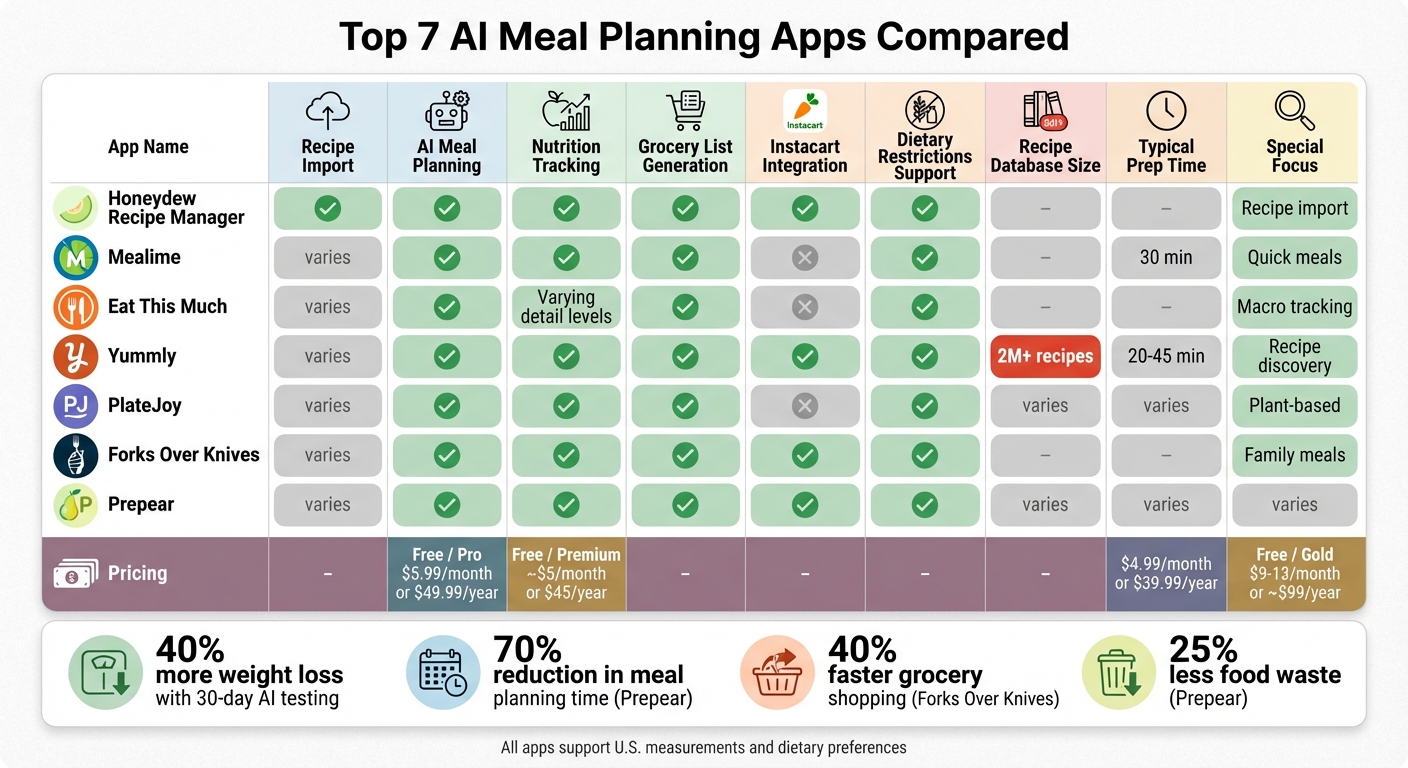
Comparison of Top 7 AI Meal Planning Apps Features and Pricing
The Best Meal Plan App? (Eat This Much Review)
How AI Meal Planning Apps Help You Eat Healthier
AI meal planning apps take your personal details - like age, weight, height, activity level, and health goals - and turn them into customized meal plans. Unlike one-size-fits-all templates, these apps are designed to adapt to your specific needs. They consider your diet preferences and exclude ingredients you’d rather avoid, ensuring your meals align with realistic calorie goals and balanced macronutrients. This personalized approach doesn’t just support better weight management; it also makes eating healthier more satisfying and practical.
Once your weekly menu is set, these apps simplify your grocery shopping. They create a detailed shopping list, organized by store sections such as produce, dairy, meat, and pantry staples. Measurements are provided in familiar units like ounces, pounds, and cups, making it easy to shop efficiently. Many apps even sync with popular grocery delivery services, enabling you to order everything directly. By sticking to the list, you’re less likely to give in to impulse buys like sugary snacks or processed foods.
But the benefits go beyond just planning and shopping. AI-powered apps also offer smart ingredient substitutions to make recipes work for your dietary needs without sacrificing flavor. For example, they might recommend swapping sour cream for plain Greek yogurt to cut saturated fat and boost protein or suggest gluten-free pasta for someone with gluten intolerance. As you accept or decline these suggestions, the app learns your preferences, making future recommendations even more tailored.
"The ingredient substitution feature is a game-changer for my dietary restrictions. I can adapt any recipe easily!" – Emily C., Honeydew User
The more you use these apps, the smarter they get. Advanced features track which recipes you cook, skip, or rate highly, using this data to refine future meal plans. Some apps even adjust calorie targets and recipe choices based on progress, like weight changes or how well you stick to the plan. For instance, if you often skip lunches that take too long to prepare, the app might prioritize quicker, no-cook options, making it easier to stay on track with your healthy eating goals.
1. Honeydew Recipe Manager
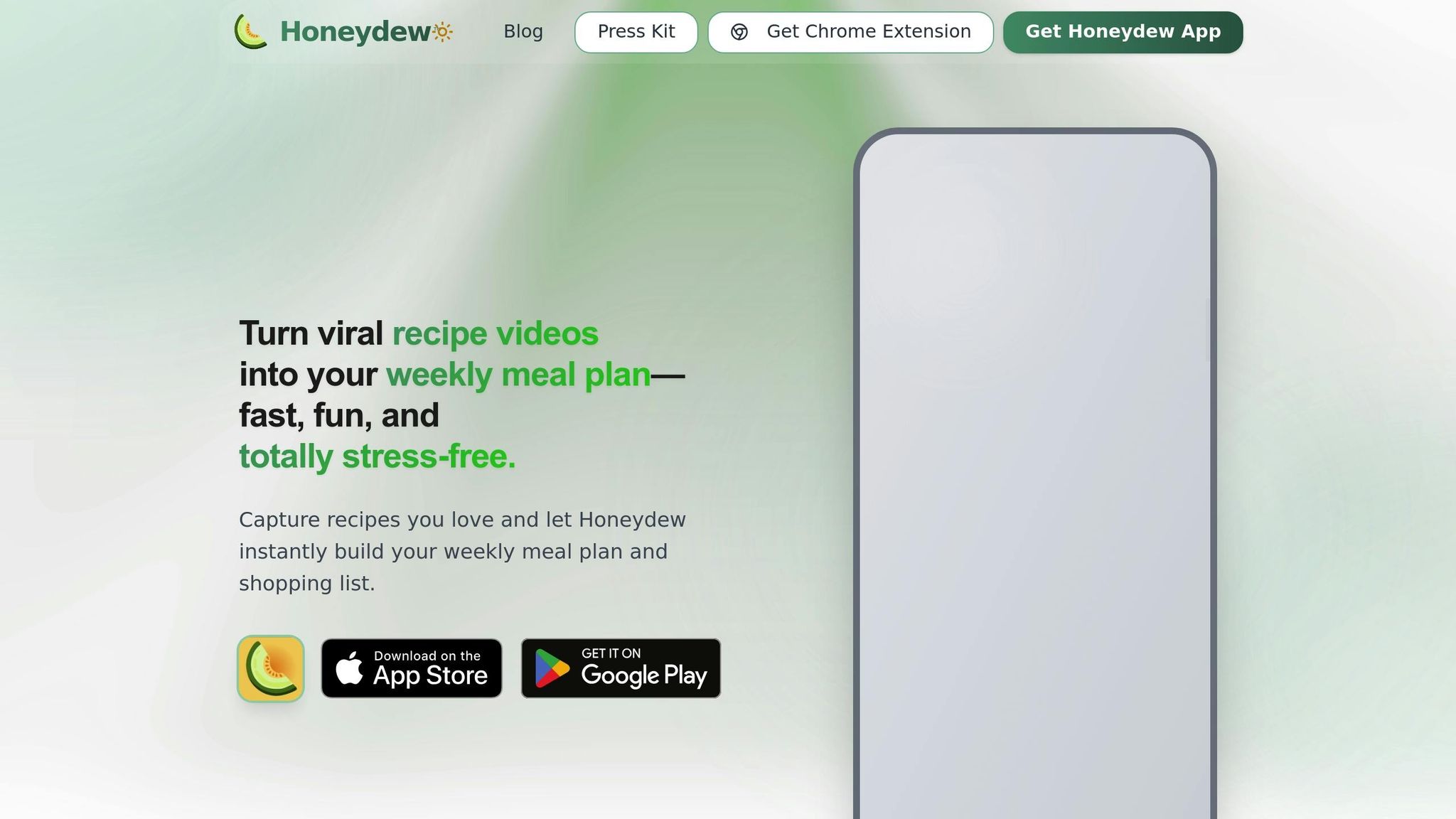
Honeydew Recipe Manager focuses on bringing your favorite recipes to life instead of relying on a fixed database. With this app, you can easily import recipes from Instagram, TikTok, Pinterest, or your go-to U.S. food blogs using a simple URL or share button. Once imported, it organizes everything into your own personal digital cookbook.
AI-Powered Meal Plans Tailored to You
The app’s AI takes your saved recipes and crafts weekly meal plans based on the number of meals you want, your schedule, and your household size. As you rate or skip dishes, it adjusts future plans to better match your preferences. The drag-and-drop calendar makes it easy to rearrange meals, and the AI recalculates everything to keep things practical for busy households. Plus, it ties directly into real-time nutrition tracking, simplifying meal planning even further.
Nutrition Tracking Made Simple
Honeydew keeps track of nutritional details for each recipe - calories, protein, carbs, and fats - using built-in databases or the data from imported recipes. When you add meals to your weekly plan, the app totals everything up for the day and week, giving you a clear picture of your intake. If you adjust serving sizes, the app automatically updates the nutrition info, making it especially handy for families or couples who cook together. By connecting nutrition data directly to the recipes you prepare, it helps you make informed choices without extra effort.
"The calorie and macro calculator has helped me stick to my health goals while still enjoying great meals." – Michael B., Honeydew User
Smart Grocery Lists with U.S. Brand Integration
Honeydew takes your meal plan and turns it into a streamlined grocery list, grouping items by common supermarket aisles in the U.S. It standardizes ingredients and units, merging similar items to avoid duplicates. Through its Instacart integration, the app maps ingredients to popular American brands and package sizes, letting you select specific products and schedule delivery or pickup. You can also manually swap brands or check off items you already have at home, saving time and effort.
Catering to Dietary Needs and Preferences
During setup, you can specify dietary preferences like vegetarian, vegan, pescatarian, gluten-free, or dairy-free, and list any allergies (like peanuts or shellfish) or ingredients you’d rather avoid (like cilantro or mushrooms). The AI filters out recipes that don’t align with your preferences when creating meal plans. It also suggests easy substitutions - such as swapping regular pasta for a gluten-free option - so you can still enjoy imported recipes that might need slight adjustments. Families can create shared profiles to accommodate overlapping restrictions, and the AI highlights recipes that work for everyone, minimizing the need for separate meals.
2. Mealime
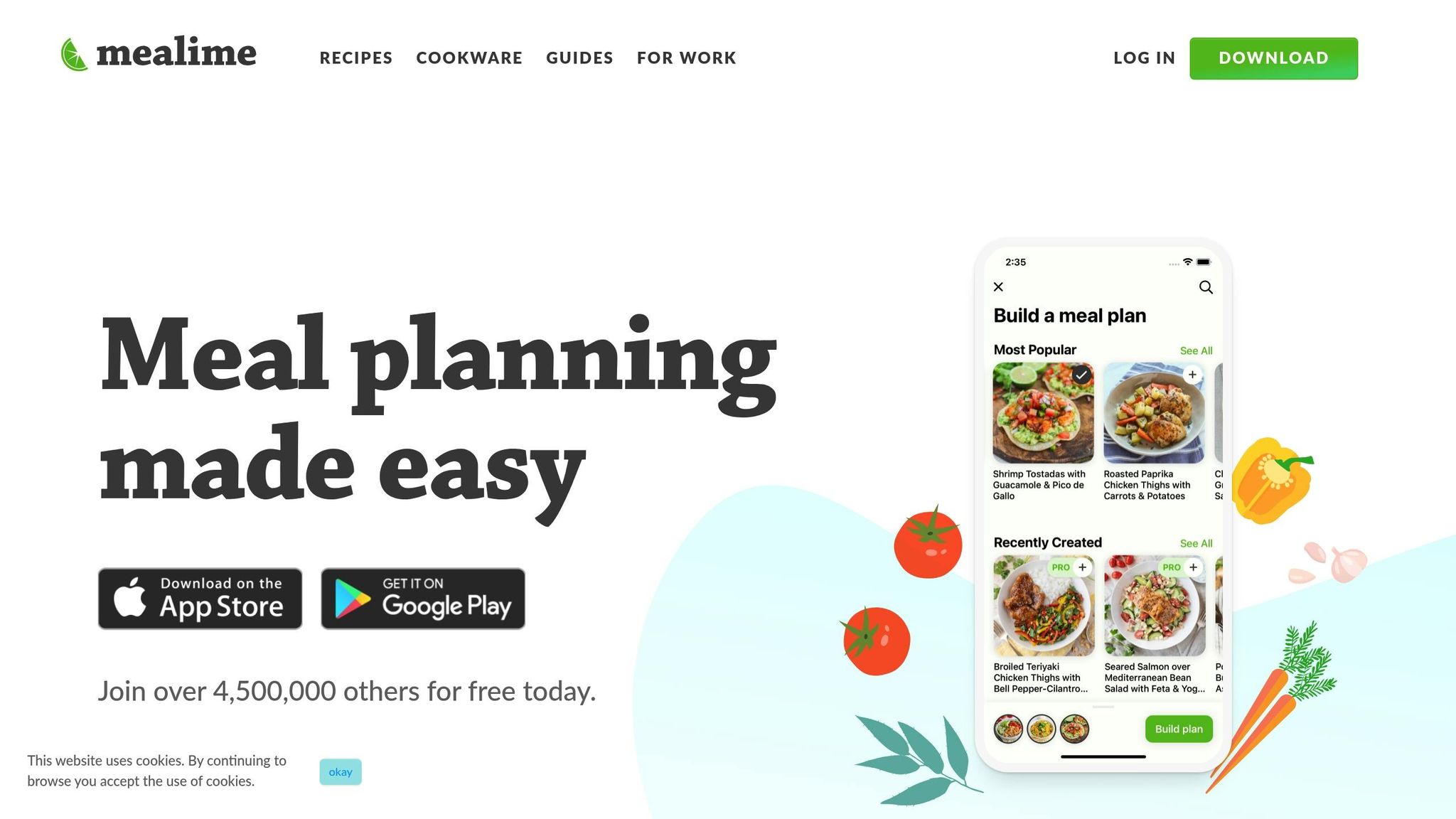
Mealime is designed for busy professionals, couples, and small families who want to whip up quick, healthy dinners without the hassle. The app allows users to set preferences, like household size, cooking skill level, and the number of meals they'd like to prepare. Based on these details, it suggests recipes that typically take about 30 minutes to make. While it doesn’t rely heavily on AI, Mealime uses straightforward personalization tools to tailor meal plans to dietary needs and time constraints, making it a practical choice for many U.S. households.
Once your preferences are set, you can further refine them to match your dietary requirements.
Support for Dietary Restrictions and Preferences
Mealime makes it easy to accommodate various dietary lifestyles. Whether you’re vegetarian, pescatarian, low-carb, or keto, you can select a style that works for you. It also lets you flag specific allergies or ingredients you'd like to avoid. These settings are flexible and can be updated anytime, so if you decide to switch to a gluten-free or dairy-free plan, it’s simple to adjust.
Nutrition Tracking and Calorie Estimates
Mealime includes nutritional information for its recipes, offering calorie estimates and basic macronutrient details for each serving. While the free version provides general calorie estimates, the Pro version goes a step further with more detailed breakdowns. However, it doesn’t offer full-scale food logging, progress tracking, or detailed macro goals. If you’re looking for a more comprehensive nutrition tracker, you’ll need to pair Mealime with another app.
Grocery List Made Simple
After selecting your meals for the week, Mealime creates a consolidated grocery list, organizing items into categories like produce, dairy, and pantry staples. The list uses familiar measurements, making shopping straightforward. Plus, you can remove items you already have at home, helping to cut down on food waste and keep your grocery budget in check. Mealime offers a free version, but upgrading to Pro for $5.99/month or $49.99/year unlocks additional recipes and enhanced nutrition details.
3. Eat This Much
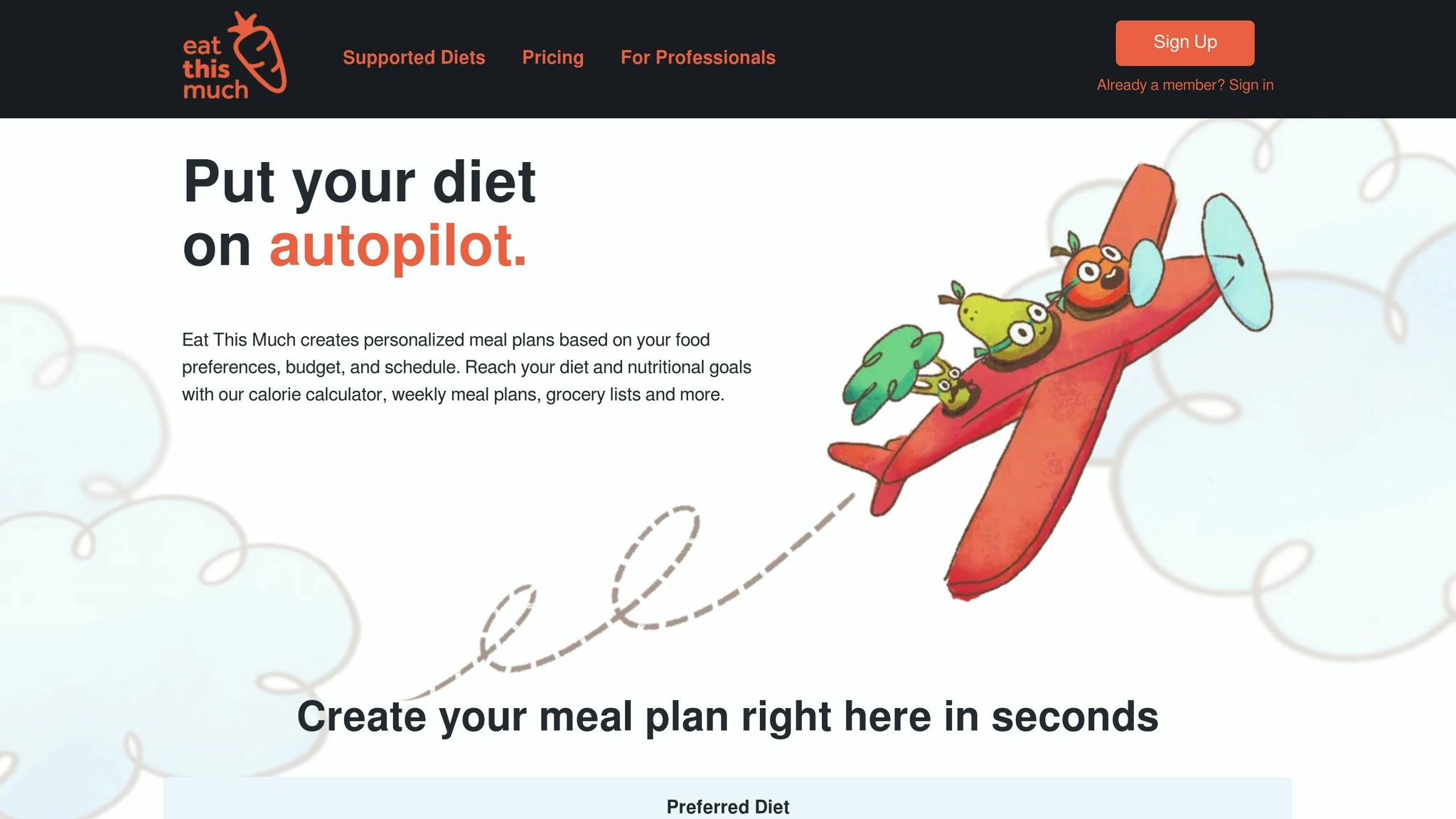
Eat This Much takes a data-driven approach, making it a go-to choice for anyone aiming to meet specific calorie or macronutrient goals. Simply input your calorie and protein targets (like 1,800 calories and 150g of protein), and the app generates a complete meal plan tailored to your needs. This setup is particularly useful for bodybuilders, athletes, or anyone following structured eating plans for weight loss, muscle gain, or maintenance. The app’s straightforward design focuses on functionality, keeping things simple and effective. Here’s how it stands out:
AI-Powered Meal Plans Built for You
Eat This Much creates personalized meal plans based on your unique inputs. By entering details like your age, height, weight, activity level, goal weight, dietary preferences, and budget, the app calculates your daily calorie needs using BMR formulas. It then divides those calories across your chosen number of meals - whether that’s three, four, or more - and fills each meal slot with recipes designed to hit your targets. Don’t like a suggested dish? No problem. Just click “Regenerate” to swap it out while keeping your overall goals intact.
Detailed Nutrition Tracking and Adjustments
This app is excellent for hitting precise macro goals. It provides a clear breakdown of calories, protein, carbs, and fats for every meal. Portion sizes are automatically adjusted to match your targets, making it easier to stay on track. You can also log what you actually eat and compare it to the plan, giving you a clear picture of how well you’re sticking to your goals.
Grocery Lists Made Simple
Once your meal plan is set, Eat This Much generates a grocery list organized by ingredients and measured in imperial units. The app also tailors the list to fit your weekly budget in U.S. dollars. While the free version covers basic meal planning, the Premium plan (about $5 per month or $45 annually) unlocks features like automatic weekly meal plans, expanded grocery lists, and integration with select online grocery services in the U.S. These tools make meal prep easier and more budget-conscious.
Adaptable to Your Dietary Needs
The app supports a variety of diet types, including vegetarian, vegan, paleo, ketogenic, and Mediterranean. You can also exclude specific allergens or ingredients you dislike. Once these preferences are set, Eat This Much generates meal plans that align with your restrictions while still meeting your calorie and macro goals. This customization ensures that your meals not only fit your health objectives but also suit your taste and dietary requirements.
4. Yummly
Yummly brings together recipe discovery and AI-driven personalization to make meal planning easier and more enjoyable. With access to over 2 million recipes from food blogs, publishers, and its own original content, the app uses a proprietary feature called Taste Graph to learn from your cooking habits, recipe ratings, and meal history. The more you use it, the smarter it gets at suggesting options that align with your preferences, time constraints, and nutrition goals. For example, if you often prepare quick chicken dinners, Yummly will prioritize similar recipes while also introducing fresh ideas that fit your style.
AI-Powered Personalized Meal Plans
Yummly takes personalization to the next level by creating tailored meal plans. You can set up a profile by selecting your favorite cuisines, cooking skill level, and the time you typically have for meals. Based on this, Yummly suggests balanced recipes for breakfast, lunch, and dinner, focusing on meals that take between 20 and 45 minutes to prepare. These suggestions can be added to a calendar view, adjusted for serving sizes, and turned into a consolidated shopping list. This streamlined approach helps busy home cooks stick to healthier, home-cooked meals without the hassle.
Nutrition Tracking and Calorie Insights
Yummly offers estimated calorie counts and macronutrient breakdowns for every recipe, using ingredient databases and standard calculations. This makes it easier to track your daily intake and choose meals that fit your dietary goals. For instance, those focused on weight loss often filter recipes for high-protein, low-carb options in the 400–600 calorie range. Meanwhile, users prioritizing heart health can search for meals with lower sodium or saturated fat. The detailed nutrition panels make comparing recipes simple and effective.
Grocery List Integration with U.S. Brands
When you save a recipe or add it to your meal plan, Yummly automatically generates a centralized grocery list, neatly organizing ingredients by category. Measurements are displayed in standard U.S. units, making shopping straightforward. In many areas, Yummly even integrates with grocery services like Instacart, allowing you to send your shopping list directly to local stores for pickup or delivery - saving you time and effort.
Support for Dietary Needs and Preferences
Yummly is designed to accommodate a wide range of dietary restrictions and preferences. Whether you're vegetarian, vegan, pescatarian, gluten-free, dairy-free, nut-free, or following a low-carb diet, the app’s smart filters help you avoid unwanted ingredients while highlighting recipes that meet your needs. For example, someone who is both gluten-free and dairy-free can easily find dinner ideas without having to double-check ingredient lists. Additionally, Yummly offers curated collections for popular eating styles like keto, Mediterranean, and plant-based diets, making it a practical tool for anyone looking to align their meals with these popular frameworks.
5. PlateJoy
PlateJoy simplifies meal planning and grocery shopping by tailoring its recommendations to your dietary preferences. Using personalized filters, it creates meal plans that align with specific nutritional needs. While details about its onboarding process, nutrition tracking, and grocery list automation are somewhat scarce, it’s clear that PlateJoy aims to make healthy eating more accessible and convenient. Diving deeper into its features could reveal how well it supports different lifestyles and dietary goals. Up next, we’ll look at another app that brings its own unique approach to meal planning.
6. Forks Over Knives
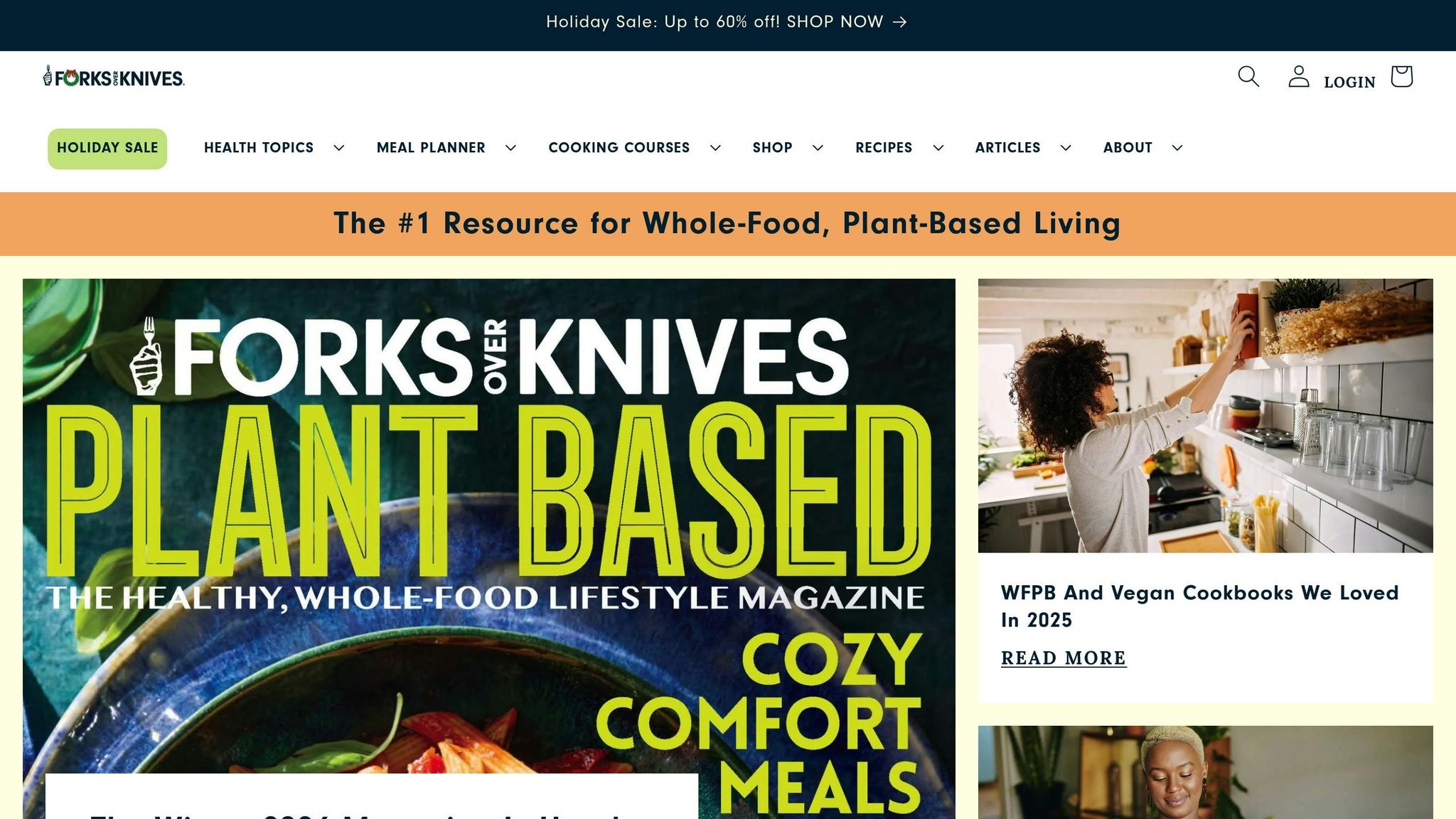
Forks Over Knives zeroes in on whole-food, plant-based eating - a lifestyle linked to lowering the risk of chronic diseases. The app is built to guide users in adopting and sustaining a diet focused on unprocessed plant foods, a concept brought to the forefront by the 2011 documentary of the same name.
AI-Powered Meal Planning Made Simple
Using details about your household and plant-based preferences, the app creates personalized weekly meal plans. For example, you might see something like "Monday: Smoky Jackfruit Tacos (450 cal, high fiber)." The drag-and-drop interface makes it easy to swap meals, giving you flexibility, though it doesn’t include advanced features like BMR-based calculations.
Clear Nutrition Insights Without the Stress
Each recipe includes detailed nutritional information, covering macros, vitamins, and minerals. Most main dishes fall in the 300–500 calorie range per serving. Instead of focusing on strict calorie tracking, the app emphasizes nutrient-dense, whole foods, making it easier to manage weight while sticking to a healthy, unprocessed diet. This focus on clarity also simplifies the next step: grocery shopping.
Smarter Grocery Lists for U.S. Shoppers
The app generates categorized grocery lists tailored for U.S. supermarkets, complete with familiar brands, imperial measurements, and Fahrenheit temperatures. Users can export these lists to services like Instacart, which dietitians report can cut shopping time by up to 40%.
Inclusive Options for Dietary Needs
Forks Over Knives accommodates a range of dietary restrictions and preferences. Its automatic recipe filtering supports vegan, vegetarian, gluten-free, nut-free, low-sodium, and oil-free diets. It even offers allergy-friendly recipes and culturally inspired dishes like Southern-style plant-based meals. Research indicates this tailored approach can improve adherence to healthy eating habits by 20–30%. For $4.99 per month or $39.99 annually, premium access unlocks complete meal plans, advanced tracking features, and unlimited grocery lists.
7. Prepear
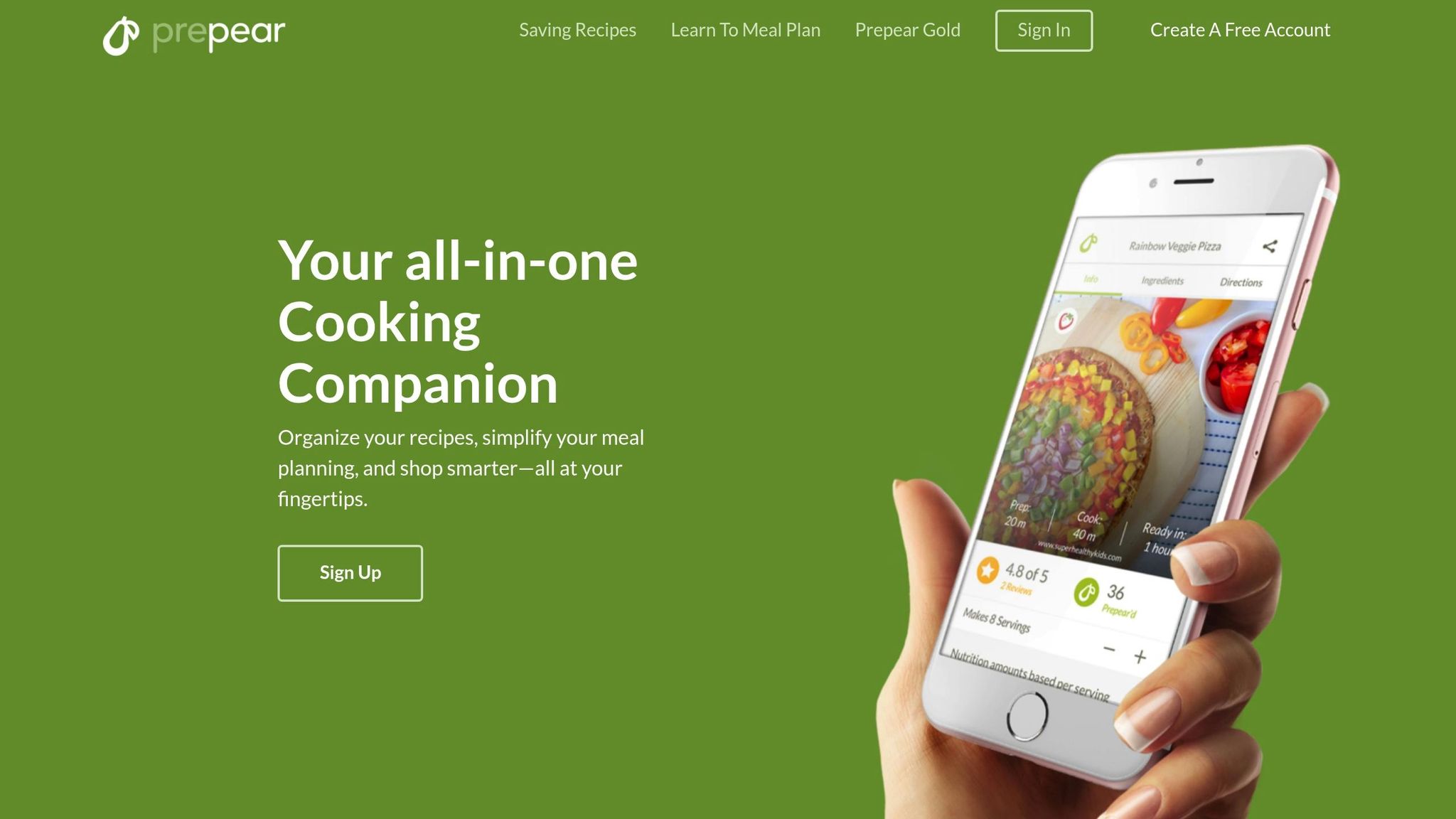
Prepear is a handy tool for organizing your favorite recipes and family collections, offering a drag-and-drop calendar and automatically generated shopping lists. It simplifies meal planning by using smart AI to create meals that align with your diet and schedule. With content sourced from food bloggers and dietitians, Prepear is tailored for families who want to streamline dinner prep without the hassle of detailed calorie counting.
Smart Meal Plans and Recipe Organization
Prepear provides premium meal plans created by dietitians and chefs, which you can adopt with just a tap. For instance, if heart-healthy eating is your goal, you might choose a Mediterranean-inspired plan featuring dishes like grilled salmon (450 calories, 35g protein) served with quinoa salad, all scaled to fit a 2,000-calorie daily goal. The app’s calendar makes it easy to swap out meals while keeping your overall plan intact. According to user feedback, Prepear can cut meal planning time by 70%, reduce shopping time by 20–30%, and lower food waste by 25%. This efficient system ensures your meal planning flows seamlessly into grocery management.
Grocery Lists Built for U.S. Shoppers
Prepear automatically generates categorized grocery lists that you can edit to include your favorite brands or adapt to your local store layout. It integrates with major U.S. retailers like Walmart, Kroger, and Instacart, saving you time and minimizing food waste.
Flexible Support for Dietary Needs
The app caters to a wide range of dietary preferences, from gluten-free and vegan to keto, and even offers substitutions when needed. For example, it can create an entirely vegetarian plan that excludes dairy while still meeting your nutritional goals. With much of its content contributed by food bloggers and creators, Prepear also offers niche options like kid-friendly meals and recipes for picky eaters. While the free version covers basic meal planning, the Prepear Gold subscription - priced at $9–$13 per month or about $99 annually - unlocks premium meal plans and an ad-free experience.
How to Choose the Right AI Meal Planning App
Start by identifying your dietary needs and health objectives. If you follow a specific diet or have allergies, look for apps that cater to those requirements. For goals like weight loss or muscle gain, opt for tools that include BMR and macro calculators. Interesting fact: testing AI features for 30 days has been shown to result in 40% more weight loss and 60% higher satisfaction rates. If you’re cooking for a family with picky eaters, prioritize apps that offer family-sized portions and kid-friendly options. It’s also important to find an app that fits your cooking habits.
Some apps allow you to import your favorite recipes with a simple drag-and-drop calendar, while others automate the process entirely, creating daily menus tailored to your calorie needs. If you prefer more control, guided weekly planning options let you adjust and swap suggested meals to suit your tastes. Don’t forget to consider how much time you have for cooking - some apps focus on quick 15–30 minute recipes with simple ingredients, while others are better suited for those who enjoy more elaborate meal prep.
Another key feature to look for is a consolidated shopping list. The best apps organize lists in familiar U.S. measurements and group items by store sections like produce, dairy, and pantry, making in-store shopping faster and more efficient. If you prefer online grocery shopping, choose an app that integrates with services like Instacart, Walmart Grocery, or Amazon Fresh. With one-click ordering, your meal plan can quickly turn into a cart of ingredients ready for delivery. Once you’ve narrowed down your options, compare the cost and features of each app.
Free versions can be useful, but premium subscriptions - typically ranging from $4 to $13 per month - often include advanced features that save time and reduce food waste. Many users find that structured meal planning cuts down on takeout and helps them use groceries more efficiently, offsetting the subscription cost. Take advantage of free trials (usually 7 to 30 days) to test the app and see if it meets your needs before committing.
During your trial, put the AI to the test. Generate a full meal plan and check if the recipes fit your schedule and use ingredients available locally. Make sure the app allows you to easily swap meals or adjust portion sizes. The best AI systems adapt to your preferences, considering factors like activity level, cooking time, favorite cuisines, and pantry inventory. To make the best choice, compare two or three apps side by side during their trial periods and pick the one that aligns with your lifestyle.
Conclusion
AI-powered meal planning apps make healthy eating easier by taking the guesswork out of meal prep. They handle everything from building personalized weekly menus and organizing grocery lists by store sections to accommodating specific diets like keto, vegan, or gluten-free. This not only simplifies your daily decisions but also helps cut down on food waste.
Many of these apps go a step further by including features like nutrition tracking and smart grocery lists. Some even allow you to place orders directly through services like Instacart. Users often notice positive changes, such as weight loss and increased satisfaction, in as little as 30 days.
If you're ready to give it a shot, experiment with a few apps that align with your cooking habits and health objectives. For features like recipe imports, automated shopping lists, and shared meal planning, Honeydew Recipe Manager stands out as a practical and tailored option. By combining technology with everyday meal planning, these tools make healthy eating both simple and stress-free.
FAQs
How do AI meal planning apps create personalized meal plans for specific dietary needs?
AI-powered meal planning apps leverage cutting-edge algorithms to create meal plans that align with your specific dietary needs, preferences, and health goals. By considering factors such as food allergies, calorie limits, and favorite cuisines, these apps provide meal suggestions that seamlessly fit into your daily routine.
What’s more, they can offer ingredient swaps to cater to unique requirements and tweak recipes to match your nutritional targets. This makes maintaining a balanced diet easier and takes the hassle out of planning healthy meals.
How can AI meal planning apps help save money and reduce food waste?
AI-powered meal planning apps, such as Honeydew, are changing the way we approach grocery shopping. They generate precise shopping lists tailored to your planned meals, ensuring you purchase only what’s necessary. Plus, they can recommend ingredient swaps to help you make the most of what’s already in your kitchen. This not only helps minimize food waste but also keeps extra expenses in check. On top of that, features like automated meal planning and grocery list creation streamline the process, making it easier to eat healthy without overspending.
What should I look for in an AI meal planning app to help me eat healthier?
When picking an AI meal planning app, focus on features that simplify healthy eating and make it more enjoyable. Start with personalized meal plans that fit your dietary needs and preferences. Add nutrition tracking to keep tabs on your progress and tools for importing recipes from your favorite websites or cookbooks. Other must-haves? Grocery list generation, ingredient substitutions, and options tailored to specific health goals, whether you're aiming for weight management or a well-rounded diet.
An easy-to-use interface is key, and if you're planning meals for a family or group, look for collaborative meal planning features. The right app should fit seamlessly into your lifestyle, keeping you motivated and on track!