How to Plan Meals for Mixed Dietary Needs
• Updated
Planning meals for a household with different dietary needs can feel overwhelming, but it doesn’t have to be. Whether you're managing allergies, medical conditions, or personal preferences, the key is creating a system that works for everyone. Here's the gist:
- Identify everyone's needs: List allergies, medical restrictions, and lifestyle preferences. Combine these into a household dietary profile for easy reference.
- Use flexible meal setups: Try a "base plus options" model, like taco bars or grain bowls, with shared components and customizable add-ons.
- Stock substitutions: Keep essentials like gluten-free pasta, non-dairy milk, and low-carb alternatives on hand for easy swaps.
- Plan weekly meals: Create a theme-based framework (e.g., Meatless Monday, Taco Tuesday) to simplify planning and reduce stress.
- Prep ahead: Dedicate 1–2 hours weekly to prepping ingredients, labeling containers, and organizing your fridge.
- Review and adjust: Hold weekly check-ins to see what worked, what didn’t, and refine your plan.
Tools like Honeydew Recipe Manager can streamline this process by organizing recipes, flagging allergens, and generating grocery lists. With a little preparation, you can ensure meals are safe, enjoyable, and stress-free for everyone at the table.
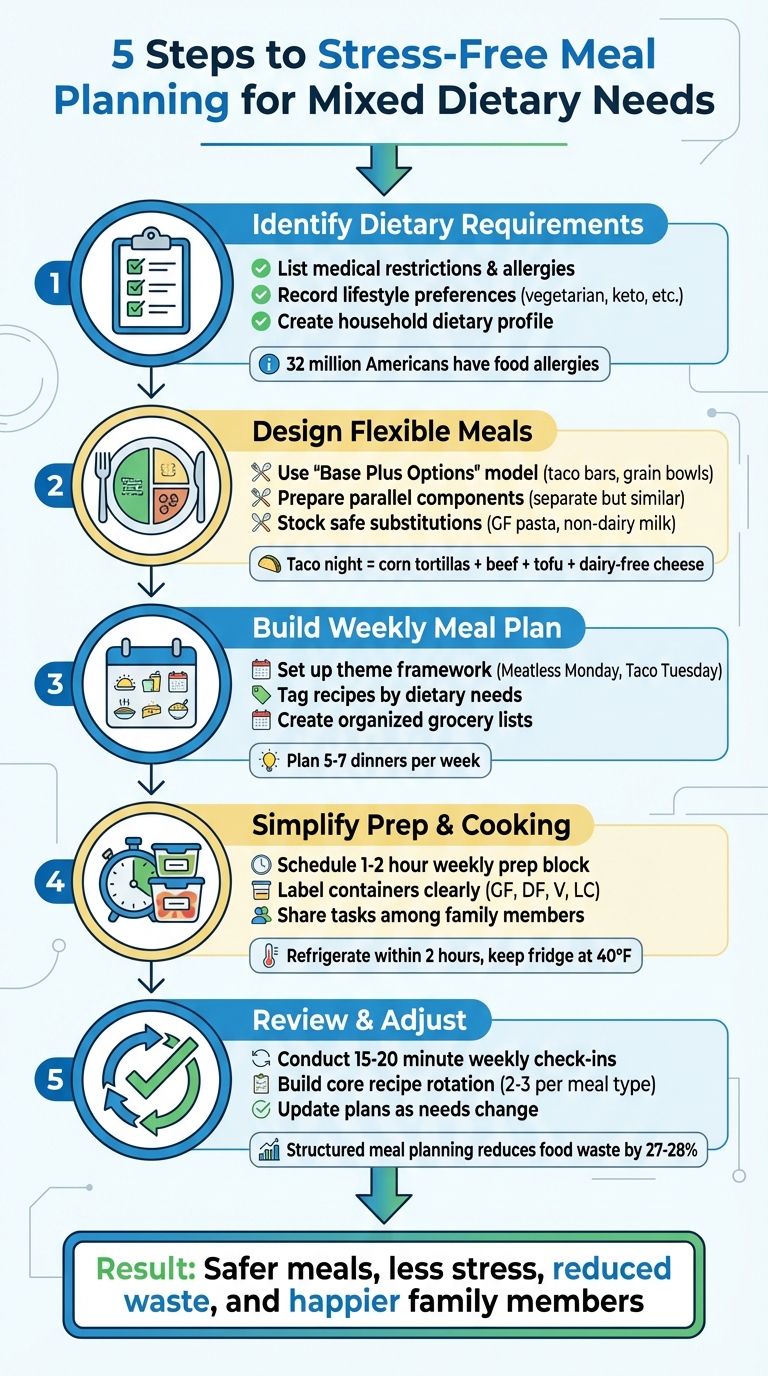
5-Step System for Planning Meals with Mixed Dietary Needs
Step 1: Identify Everyone's Dietary Requirements
List Medical Restrictions and Allergies
Start by noting any medical conditions or allergies that require strict dietary adjustments. These might include celiac disease (which necessitates avoiding wheat, barley, rye, and malt), food allergies like peanuts or shellfish (where even trace amounts can cause severe reactions), or lactose intolerance (which might permit lactose-free options or certain hard cheeses).
For each person in your household, document their diagnosed conditions and the foods they must avoid. For instance, someone with a peanut allergy should steer clear of peanuts and be cautious about cross-contamination by checking for labels like "processed in a facility with peanuts." Similarly, a person managing diabetes may need to carefully track their carbohydrate intake. If you're unsure about any restrictions, consult a healthcare provider to confirm.
Record Lifestyle Preferences
Next, take note of everyone's dietary preferences and lifestyles. This could include vegetarian, vegan, pescatarian, keto, paleo, halal, kosher, or other eating habits. For example, someone on a keto diet typically limits their daily carbohydrate intake to 20–50 grams, while a vegetarian avoids meat and fish but may consume eggs and dairy.
Don’t forget to record dislikes or texture preferences. One person might avoid mushrooms, another might dislike spicy food, and a child might prefer vegetables cooked and served separately. These details will help you create meals that everyone can enjoy.
Create a Household Dietary Profile
Combine all this information into a household dietary profile that outlines each family member's medical restrictions, allergies, dietary preferences, and dislikes. You can keep this profile on a paper chart on your fridge, in a digital note, or within a meal planning tool.
This profile becomes your go-to reference for meal planning, ensuring you cater to everyone's needs. For instance, a household profile might look like this:
- Sarah: Celiac disease (no gluten), lactose intolerant (can have lactose-free dairy), vegetarian
- John: No allergies, follows a low-carb diet, avoids bread and pasta, enjoys meat and eggs
Digital tools like Honeydew Recipe Manager can help you store and manage this profile. These platforms can flag recipes that contain allergens or don’t meet specific dietary tags like "gluten-free" or "vegetarian." As of December 2025, Honeydew's household sharing feature allows up to six family members to access and update meal plans and grocery lists in real time, keeping everyone on the same page.
One user, Emily C., shared her experience:
"The ingredient substitution feature is a game-changer for my dietary restrictions. I can adapt any recipe easily!"
Keep your household profile updated whenever someone’s dietary needs change - whether it’s a new diagnosis, a shift in preferences, or a lifestyle adjustment. This living document ensures harmony at mealtime and serves as the backbone of your meal planning efforts.
Step 2: Design Meals That Work for Everyone
Use the 'Base Plus Options' Model
The 'Base Plus Options' approach is a flexible way to create meals that cater to different dietary needs without making separate dishes. It starts with a shared base and includes customizable add-ons. Picture taco bars, grain bowls, or salad stations - these setups naturally divide into components. You prepare a core base (like seasoned veggies, rice, or greens) and then offer a variety of proteins, toppings, and sauces so everyone can build their own plate.
For instance, a taco night could feature corn tortillas and sautéed peppers and onions as the common base. Add options like seasoned ground beef for meat lovers and black beans or seasoned tofu for vegetarians. Include both regular shredded cheese and dairy-free cheese, and even lettuce cups for low-carb eaters. This way, everyone enjoys the same meal, but each plate fits individual preferences. This method is particularly helpful in the U.S., where about 32 million people have food allergies, and many follow specialty diets like vegetarian, keto, or gluten-free.
Prepare Parallel Components
Parallel components involve cooking separate but similar items to meet dietary needs without creating entirely different meals. For example, you could prepare tofu and chicken with the same seasoning but cook them in separate pans. Or, boil regular pasta and gluten-free pasta in different pots. This method allows you to serve one cohesive meal while respecting dietary restrictions.
To make this work, keep flavors consistent across all versions so the meal feels unified. For those with strict gluten-free needs, use separate utensils, colanders, and cutting boards to avoid cross-contamination. Always cook allergen-free items first and clearly label everything in storage - tags like "GF pasta" or "contains nuts" can make a big difference. With these parallel components ready, the next step is having reliable ingredient substitutes on hand to meet various dietary needs.
Keep Safe Substitutions on Hand
A dedicated shelf or bin stocked with common substitutions makes it easy to adjust recipes on the fly. For dairy-free cooking, keep unsweetened non-dairy milks, vegan butter, and dairy-free cheese. For gluten-free dishes, maintain staples like gluten-free pasta, certified gluten-free oats, corn tortillas, quinoa, and a 1:1 gluten-free flour blend. Low-carb households will appreciate having riced cauliflower, zucchini for zoodles, lettuce wraps, and shirataki noodles on hand.
With these essentials stocked, you won’t need separate meal plans - just swap ingredients as needed. If a recipe calls for regular milk, grab oat milk. If it uses wheat pasta, choose a gluten-free alternative like chickpea or brown rice pasta. Tools like Honeydew Recipe Manager can even help you track which substitutions work best for your household, ensuring every meal meets dietary needs seamlessly.
Step 3: Build a Weekly Meal Plan
Set Up a Weekly Theme Framework
Creating a weekly theme framework simplifies meal planning by assigning a theme to each day without locking you into specific recipes. This flexible method allows for easy adjustments to accommodate different dietary needs. For example, Monday can be Meatless Monday, where you whip up vegetarian pasta using gluten-free noodles for one person and regular noodles for others. On Taco Tuesday, set up a build-your-own taco bar with seasoned protein, corn tortillas for gluten-free eaters, and lettuce wraps for anyone avoiding carbs. For Wednesday’s Sheet-Pan Night, roast chicken and vegetables on one pan, while setting aside a corner for tofu to cater to a vegetarian family member.
Themes like Stir-Fry Friday, Soup Sunday, or One-Pot Wednesday work particularly well because their core elements - grains, proteins, and sauces - are easily swapped to suit individual preferences. Many families find planning 5–7 dinners per week effective, leaving room for leftovers or more flexible meals on one or two nights. This structure ensures that everyone has a safe and satisfying option without overcomplicating things.
Organize Recipes by Dietary Tags
Once you’ve decided on your themes, the next step is to organize your recipes so you can quickly identify which ones meet specific dietary requirements. Tag each recipe with labels like gluten-free, dairy-free, vegetarian, vegan, low-carb, kid-friendly, or quick. Save these recipes digitally, enabling you to search and filter by tags when planning your weekly meals. For example, if you need a gluten-free and kid-friendly recipe for Thursday, you can easily narrow down your options without sifting through your entire collection.
Using tools like Honeydew Recipe Manager, you can import recipes from websites or social media and assign custom tags to each one. This makes it easy to filter by tags like "vegan + 20 minutes" when you’re in a rush or save specific collections like "peanut-free school lunches" or "low-carb dinners" for future use. The app’s drag-and-drop meal planner calendar lets you balance dietary needs visually across the week, ensuring no one feels left out. With 270,000 recipes saved each month through Honeydew, families are finding it easier to reduce decision fatigue and keep track of everyone’s preferences. This digital tool seamlessly connects your meal themes with efficient planning and shopping.
Once your recipes are organized, you’re ready to turn your plan into an efficient grocery list.
Create Your Grocery Lists
Start by listing all the ingredients needed for each meal, then identify which items are shared and which are diet-specific. For instance, broccoli and chicken might be shared across the family, while rice pasta is gluten-free only, and cauliflower rice is for low-carb eaters. Check your pantry for existing items and cross them off your list. Organize what’s left by store sections - produce, dairy, frozen, etc. - to make shopping quicker. When listing quantities, use realistic package sizes familiar in U.S. stores, like "2 lb chicken breasts" or "three 15-oz cans of beans."
The AI-powered grocery list feature in Honeydew Recipe Manager simplifies this process by automatically consolidating ingredients from your planned meals. It calculates exact quantities for the week, allowing you to edit the list for pantry staples you already have and add household essentials. Plus, with Instacart integration, you can send the list directly to your local store for pickup or delivery. This is a game-changer for busy families managing allergies or specific diets, as it cuts down on in-store decision-making and saves valuable time. As one user, James L., shared:
"The smart grocery lists save me hundreds of dollars a month."
To stretch your budget further, plan meals around store sales, seasonal produce, and bulk staples like rice, oats, and frozen vegetables. This approach ensures you’re meeting everyone’s dietary needs while keeping costs under control.
Step 4: Simplify Prep and Cooking
Schedule a Weekly Prep Block
Set aside 1–2 hours each week to streamline your meal prep process. Use this time to review your meal plan, tackle essential prep tasks like washing and chopping vegetables, cooking a versatile grain or protein, and portioning ingredients into clearly labeled containers. Focus on ingredients that can be used in multiple dishes. For example, roast a variety of vegetables with olive oil and salt - simple seasonings that work with most diets - and store toppings like cheese or nuts separately for those who want to add them later. Batch-cook staples like beans or lentils for vegetarian or high-fiber meals, and prepare snack boxes with items such as veggie sticks, hummus, hard-boiled eggs, or fruit to make healthy choices convenient throughout the week.
This prep routine bridges the gap between planning and cooking, helping you maintain a stress-free approach to meals all week long.
Label and Store Components Clearly
A clear labeling system can make all the difference in keeping your kitchen organized and safe. Label containers with the food name, dietary tags (e.g., GF for gluten-free, DF for dairy-free, V for vegetarian, LC for low-carb), any allergens, and a use-by date in the format MM/DD/YYYY. Consider using color codes - green for universally safe items, yellow for those with common allergens, and red for food meant for specific individuals. Place labels on both the side and lid of containers so they’re visible even when stacked in the fridge or freezer.
Follow USDA food safety tips to keep everything fresh and safe. Refrigerate perishable foods within 2 hours of cooking (or within 1 hour if the room temperature is over 90°F), keep your fridge at or below 40°F, and reheat leftovers to at least 165°F. Most cooked meats and mixed dishes stay safe in the fridge for 3–4 days, while frozen items maintain quality for 2–3 months. Use a "first in, first out" system to organize your fridge, and store allergen-containing foods in sealed containers below allergen-free items to prevent cross-contamination.
Share Planning and Prep Tasks
To make meal prep even easier, divide the workload among family members. Start with a quick weekly check-in where everyone shares dietary needs, schedule constraints, and meal preferences. Assign tasks based on each person’s strengths. For instance, someone skilled with knives can handle chopping, another can take care of labeling and dishwashing, and a more experienced cook can manage proteins and allergen-sensitive tasks. Rotate responsibilities like cleaning allergen-specific cutting boards to keep things fair, and consider assigning "leaders" for specific dietary needs - a vegetarian family member might oversee vegetarian meal prep, while someone else ensures allergen-safe practices.
The Honeydew Recipe Manager is a great tool for coordinating tasks. It allows up to six family members to share and update recipes, meal plans, and grocery lists in real time. With its drag-and-drop calendar and AI-powered ingredient substitutions, you can easily adapt recipes for dietary needs. Honeydew tags recipes by dietary type (like vegetarian or gluten-free) and allergens, making it simple to find meals that work for everyone or identify where adjustments are needed. Family members can even sign up for specific tasks directly from the shared calendar, such as prepping vegetables for a stir-fry or cooking a vegetarian protein.
As Alex P., a Honeydew user, explains:
"My family of five uses Honeydew for all our meal planning. The household sharing feature keeps everyone organized."
When it’s time to shop, Honeydew generates a streamlined grocery list that separates specialized items like gluten-free bread or dairy-free cheese. With Instacart integration, you can send the list directly to your local store for pickup or delivery, saving time and cutting down on in-store decision-making.
Step 5: Review and Adjust Your Plan
Conduct Weekly Check-Ins
After simplifying your meal prep and cooking routine, it’s important to take time each week to reflect on how things are going. Dedicate 15–20 minutes to review what worked and what didn’t. Ask your family to rate meals on a 1–5 scale and share whether their dietary needs were met without any hassle. Keep track of practical details, like how long meals took to prepare, whether you stayed within your budget, and how much food ended up being wasted. For example, if your gluten-free family member didn’t enjoy a pasta dish, figure out if the issue lies with the recipe, the brand of pasta, or how it was cooked. These discussions can reveal helpful patterns - like realizing that sheet pan dinners are a lifesaver on busy nights compared to more complex recipes.
Using tools like Honeydew Recipe Manager can make this process smoother. Its nutrition tracking feature lets you monitor daily intakes of calories, protein, fat, carbs, and fiber to ensure everyone’s health goals are on track. Plus, with its household sharing option, all six family members can view the meal plan and give feedback throughout the week. This way, you can make adjustments as needed instead of waiting for a formal review.
Build a Core Recipe Rotation
Develop a go-to list of 2–3 dependable recipes for each meal type - breakfast, lunch, dinner, and snacks - that either satisfy everyone or can be easily adapted. Save these recipes with notes about which dietary needs they meet and any tweaks that worked well. To keep things fresh, rotate ingredients or cooking methods.
To avoid meal fatigue, try introducing one new recipe per week. Honeydew’s smart categorization can help you tag recipes by dietary needs - like vegetarian, gluten-free, or quick-prep - so you can quickly find options that suit specific requirements. As one user, Emily C., shared:
"The ingredient substitution feature is a game-changer for my dietary restrictions. I can adapt any recipe easily!"
Remember to keep your recipe rotation flexible, so it can evolve with your family’s changing tastes and needs.
Update Plans as Needs Change
Make it a habit to keep a record of everyone’s dietary needs, including any new allergies, intolerances, or preferences. Review and update these profiles monthly or whenever a change arises. Adjust recipes to incorporate seasonal ingredients - like fresh summer veggies or hearty winter squashes - which not only refreshes your meal options but can also improve nutrition and cut costs.
Honeydew’s AI tools can simplify this process by suggesting recipe adjustments based on dietary restrictions, allergies, or even what’s already in your pantry. You can also import new recipes from social media or websites to keep your collection current. And with the app’s drag-and-drop calendar, it’s easy to swap meals around when plans change unexpectedly.
Meal Planning: The Recipe for Success!
Conclusion: Planning for Success
By keeping track of dietary needs, crafting adaptable meals, and dedicating time for weekly planning, you're setting your family up for smoother, stress-free meals. The foundation lies in creating a repeatable system: start by noting everyone's dietary restrictions and preferences, build meals around a shared base with customizable options, and carve out time each week to plan, prep, and review. This kind of routine keeps things manageable while ensuring everyone enjoys meals tailored to their needs.
Tagging recipes by dietary requirements - like gluten-free, vegetarian, or nut-free - can make a big difference. Pair this with a household dietary profile and a consistent weekly plan, and you’ll sidestep the chaos of last-minute decisions. Research even shows that families using structured meal plans and shopping lists can cut food waste by 27–28%. Plus, a clear plan reduces impulsive takeout orders and ensures you don’t forget key ingredients. This organized approach encourages teamwork and efficiency.
Get everyone involved in meal planning to share responsibilities and meet individual needs. Weekly check-ins, picking recipes together, and dividing simple prep tasks can make the process more collaborative. Tools like Honeydew Recipe Manager make this even easier with features like real-time updates, smart substitutions, and integrated grocery lists.
To get started, jot down your household's dietary needs, pick five flexible, tagged recipes, and create a one-week meal plan with a matching grocery list. Set a quick reminder at the end of the week to reflect on what worked and what didn’t. Over time, you’ll build a reliable rotation of 10–20 go-to meals, making weeknight cooking feel almost as effortless as ordering takeout - but healthier, safer, and easier on the wallet.
With thoughtful planning, a bit of organization, and the right tools, meal planning can become a habit that saves time, reduces stress, and ensures everyone at the table is happy. Each week, you’ll feel more confident and prepared to serve meals that truly work for your family.
FAQs
How do I plan meals for a family with different dietary needs?
Planning meals for a family with different dietary needs or preferences might seem like a daunting task, but it doesn’t have to be. The key is to start by understanding everyone’s requirements - whether it’s allergies, vegetarian choices, or low-carb diets. Once you have a clear picture, focus on recipes that are flexible and can be adjusted easily. For instance, meals with interchangeable proteins or versatile side dishes can work wonders in keeping everyone happy.
Tools like Honeydew Recipe Manager can make this process much smoother. It lets you import and organize recipes, create grocery lists tailored to your family’s specific needs, and even plan meals for the week using a simple drag-and-drop calendar. This way, you can manage everyone’s preferences without the stress, all while saving valuable time.
How can I create a dietary profile for my household?
Creating a household dietary profile can make meal planning smoother and more tailored to everyone's needs. Start by noting each family member's dietary preferences, restrictions, and goals. This might include allergies, vegetarian or vegan choices, low-carb diets, or specific nutritional needs.
After gathering this information, look for overlaps where meals can cater to multiple requirements. For instance, if one person avoids gluten and another prefers low-carb options, you could focus on dishes like grilled proteins paired with vegetable sides. Keeping a quick-reference list of everyone's preferences can save time and reduce stress when planning meals.
What is the 'Base Plus Options' method, and how can I use it to plan meals for different diets?
The 'Base Plus Options' method is a smart way to serve meals that fit a range of dietary needs without the hassle of cooking separate dishes. The idea is simple: start with a neutral base - think pasta, rice, or a bed of salad greens - that works as a starting point for everyone. From there, provide a variety of toppings, proteins, or sides, such as grilled chicken, tofu, or low-carb veggies, so each person can build their plate according to their preferences.
This method makes mealtime easier and more flexible, especially for families or groups with different dietary restrictions. It simplifies prep work and gives everyone the freedom to create a meal they’ll enjoy without the need for juggling multiple recipes.