Seasonal Produce Calendar for Meal Planning
• Updated
Eating seasonal produce has three key benefits: better taste, lower costs, and reduced carbon footprint. Seasonal fruits and vegetables are harvested at their natural peak, offering more flavor and nutrients. They’re also cheaper due to local abundance and require less transportation, which helps the environment.
Here’s a quick breakdown of what’s in season each month in the U.S.:
- Winter (Dec–Feb): Citrus fruits (oranges, grapefruits), root vegetables (sweet potatoes, kale).
- Spring (Mar–May): Strawberries, asparagus, peas.
- Summer (Jun–Aug): Tomatoes, peaches, zucchini, corn.
- Fall (Sep–Nov): Apples, pumpkins, squash.
To plan meals, focus on one or two seasonal ingredients each month. For example, make roasted squash soup in fall or a tomato basil salad in summer. Use tools like the Honeydew Recipe Manager to organize recipes, create shopping lists, and even order groceries.
Shopping at local farmers markets or joining a CSA (Community Supported Agriculture) program can help you find the freshest options in your region. Seasonal eating not only improves your meals but can also cut grocery costs by up to 50%.
How I Plan Weekly Meals with In-Season Produce
US Seasonal Produce Calendar by Month
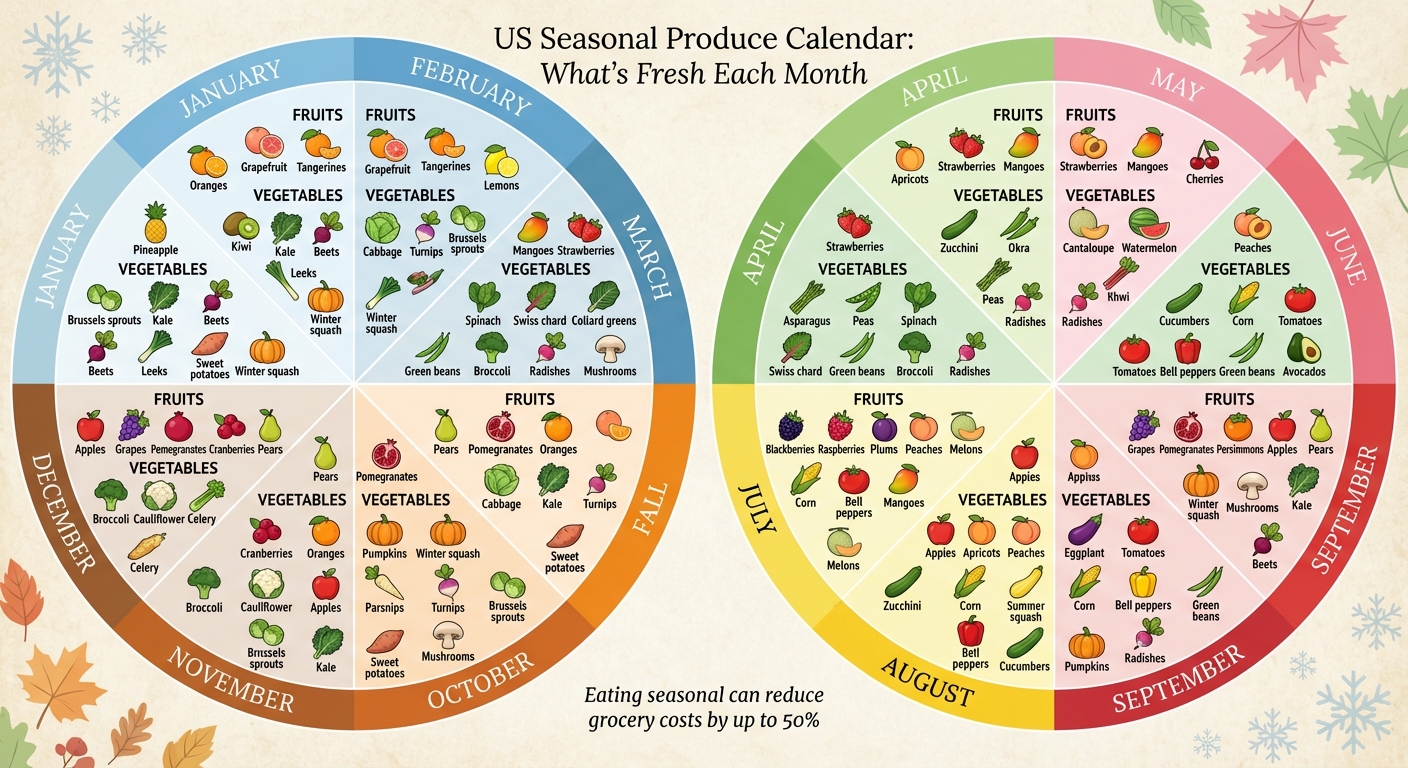
Monthly Seasonal Produce Calendar for the United States
Monthly Seasonal Produce Guide
Knowing which fruits and vegetables are at their best each month can help you make smarter choices at the grocery store and enjoy fresher, tastier meals. Here's a month-by-month breakdown of peak seasonal produce in the United States:
| Month | Peak Fruits | Peak Vegetables |
|---|---|---|
| January | Oranges, Grapefruit, Tangerines, Lemons | Brussels sprouts, Kale, Beets, Leeks, Sweet potatoes, Winter squash |
| February | Oranges, Grapefruit, Tangerines, Lemons | Cabbage, Turnips, Brussels sprouts, Kale, Beets, Leeks, Winter squash |
| March | Pineapple, Kiwi, Mangoes, Strawberries | Spinach, Swiss chard, Collard greens, Green beans, Broccoli, Radishes, Mushrooms |
| April | Strawberries, Mangoes, Kiwi, Rhubarb | Asparagus, Peas, Spinach, Swiss chard, Green beans, Broccoli, Radishes |
| May | Apricots, Strawberries, Mangoes, Cherries | Zucchini, Okra, Asparagus, Peas, Swiss chard, Radishes |
| June | Blueberries, Cherries, Cantaloupe, Watermelon, Peaches | Cucumbers, Corn, Tomatoes, Bell peppers, Green beans, Avocados |
| July | Blackberries, Raspberries, Plums, Peaches, Melons | Corn, Tomatoes, Zucchini, Summer squash, Bell peppers, Cucumbers |
| August | Apples, Apricots, Peaches, Kiwi, Mangoes, Melons | Eggplant, Tomatoes, Corn, Bell peppers, Green beans, Summer squash |
| September | Grapes, Pomegranates, Persimmons, Apples, Pears | Pumpkins, Sweet potatoes, Winter squash, Mushrooms, Kale, Beets |
| October | Apples, Grapes, Pomegranates, Cranberries, Pears | Broccoli, Cauliflower, Brussels sprouts, Celery, Sweet potatoes, Mushrooms |
| November | Cranberries, Oranges, Apples, Pears, Pomegranates | Pumpkins, Winter squash, Parsnips, Turnips, Brussels sprouts, Kale |
| December | Pears, Pomegranates, Oranges | Cabbage, Kale, Collard greens, Turnips, Sweet potatoes |
Each season brings its own bounty: winter is perfect for hearty root vegetables and citrus fruits, spring delivers tender greens and asparagus, summer bursts with juicy, hydrating fruits and vibrant vegetables, and fall offers apples, pears, and winter squash. Use these seasonal highlights to inspire your grocery list and meal ideas.
How to Plan Meals Using the Calendar
Now that you know what's in season, use this information to guide your meal planning. Pick one or two peak ingredients each month and build a few meals around them. For instance, when asparagus is at its best in April, you can try incorporating it into a stir-fry, roasting it as a side dish, or adding it to a frittata.
"Because seasonal fruits and vegetables don't undergo lengthy transit times to get from farm to your kitchen, these integral vitamins and minerals are more likely to be preserved by the time you're ready to eat your produce,"
says Registered Dietitian Lisa Hayim.
When shopping, look for produce with vibrant colors and firm textures, which are signs of freshness. Buying in bulk during peak season can also save you money, and it's a great opportunity to freeze or preserve extra produce for future use.
Regional Differences in Seasonal Produce
Seasonal Produce by US Region
The United States is home to a wide range of climates, which means the seasonal produce available can vary greatly depending on the region.
In the Northeast, the growing season is shorter due to cold winters, making it a hub for hardy crops. Spring brings fiddleheads and ramps, while fall is all about cranberries, apples, and Brussels sprouts. The Midwest shares a similar seasonal rhythm but offers unique items like paw paws in the fall. The South, with its warmer climate, enjoys longer growing seasons and is known for winter citrus like oranges and grapefruits. Moving west, the West region boasts incredible diversity: the Northwest is rich in wild-foraged foods like nettles, while the Southwest offers Mediterranean-style crops such as artichokes, dates, and almonds.
| Region | Spring (Mar-May) | Summer (Jun-Aug) | Fall (Sep-Nov) | Winter (Dec-Feb) |
|---|---|---|---|---|
| Northeast | Fiddleheads, Asparagus, Rhubarb, Radishes | Blueberries, Tomatoes, Sweet Corn, Peaches | Cranberries, Apples, Pumpkins, Brussels Sprouts | Parsnips, Leeks, Horseradish, Salsify |
| Midwest | Rhubarb, Asparagus, Peas, Greens | Currants, Sweet Corn, Berries, Tomatoes | Paw paws, Sorghum, Winter Squash, Leeks | Chicories, Winter Squash, Horseradish |
| South | Vidalia Onions, Strawberries, Asparagus, Peas | Key Limes, Okra, Peaches, Muscadines | Pecans, Persimmons, Sweet Potatoes, Figs | Oranges, Grapefruit, Kumquats, Collard Greens |
| West | Artichokes, Nettles, Fiddleheads, Citrus | Boysenberries, Apricots, Figs, Dates | Walnuts, Almonds, Pomegranates, Persimmons | Mandarins, Sunchokes, Tangerines, Rutabagas |
For instance, strawberries appear as early as March in the South and West, but in the Northeast and Midwest, they don’t peak until May. Similarly, Southern states enjoy fresh citrus all winter, while colder regions rely on root vegetables and greenhouse-grown greens during the same season.
Understanding these regional patterns allows you to plan meals around the freshest produce available locally.
Adjusting Meal Plans for Your Region
To make the most of what’s in season near you, adapt your recipes and shopping habits to match the local harvest calendar. Farmers markets and local extension services are great resources for finding out exactly when certain crops are at their peak.
Community Supported Agriculture (CSA) programs are another excellent way to connect with your region’s harvest. These programs provide boxes of seasonal produce, helping you plan meals around what’s freshest. Farmers markets are also a treasure trove of local knowledge - don’t hesitate to ask growers about the best-tasting varieties or how to store them properly.
When certain ingredients aren’t available locally, tweak recipes to include alternatives. For example, if citrus is out of season in your area during winter, try using stored apples or pickled vegetables instead. Grocery store specials and bulk bins often reflect peak harvests, so stock up when items are abundant. You can also preserve the flavors of the season by freezing, pickling, or making jams, ensuring you enjoy local produce long after its peak.
Using Honeydew Recipe Manager for Seasonal Meal Planning
Creating Seasonal Meal Plans with Honeydew
Honeydew Recipe Manager makes it simple to craft meals around fresh, seasonal produce. With its drag-and-drop calendar, organizing your week is a breeze - just pick a recipe and slide it into the day you plan to prepare it. Plus, the "Honey" AI assistant offers recipe suggestions tailored to the seasonal ingredients you choose.
For instance, snap a quick photo of seasonal produce like heirloom tomatoes, and the AI will recommend recipes that highlight their flavor. You can even ask Honey to tweak recipes for specific dietary preferences, like gluten-free or dairy-free, or to transform them into more seasonally appropriate versions before adding them to your plan.
Shopping for Seasonal Produce with Instacart Integration
Once you've finalized your meal plan, Honeydew automatically creates a grocery list based on your chosen recipes. Ingredients are neatly categorized, making your shopping trip - or delivery - more efficient. You can also skip items you already have at home, so you won’t end up with an extra bottle of olive oil.
Thanks to its Instacart integration, you can order everything directly through the app and have fresh, seasonal produce delivered to your door. This feature is especially handy when planning meals around local availability. For example, if your April menu includes fresh asparagus, you can enjoy it when it's at its peak flavor and priced at just $2 per pound. Once your groceries are set, you can further refine your meals using Honeydew’s nutrition tracking and substitution features.
Nutrition Tracking and Ingredient Substitutions
Honeydew’s built-in nutrition tracker calculates calories and macros for each recipe, helping you stick to your health goals while enjoying seasonal dishes. For those who subscribe to Honeydew Plus, the app also offers clever ingredient swaps. For example, if a recipe calls for butternut squash but it’s out of season, you can easily swap it for zucchini or yellow squash without compromising the dish.
"The ingredient substitution feature is a game-changer for my dietary restrictions. I can adapt any recipe easily!" - Emily C.
Additionally, you can scale recipes up or down, making it easy to plan for meal prep or leftovers. Honeydew has earned high marks from users, boasting a 4.8/5-star rating on the Apple App Store from 614 reviews and the same 4.8/5 stars on Google Play, where it has over 6,200 reviews.
Sample Seasonal Meal Plans and Recipes
Here are some simple, seasonal recipes that highlight the freshest local produce throughout the year.
Spring: Asparagus and Pea Stir-Fry
Spring is the perfect time to enjoy asparagus and peas at their peak. A quick stir-fry brings out their natural sweetness without overpowering their flavors.
Start by trimming 1 pound of asparagus into 2-inch pieces and combining it with 1 cup of fresh or frozen peas. Heat 2 tablespoons of olive oil in a large skillet over medium-high heat, then sauté minced garlic and ginger until fragrant. Add the vegetables and stir-fry for 4–5 minutes, keeping them tender but crisp. For a bold twist, toss in ramps, which add a unique onion-garlic flavor. Finish with a splash of tamari or liquid aminos for a gluten-free option, and serve over quinoa or brown rice.
"In-season fruits have a depth and brightness of flavor that out-of-season produce just can't compare to." - Marque Collins, Executive Chef, Tullibee
As spring fades, summer offers vibrant, no-cook meals that celebrate the season's bounty.
Summer: Tomato and Basil Pasta Salad
Summer is all about keeping things light and fresh, and a no-cook pasta salad is the perfect way to enjoy the season's best produce. Juicy summer tomatoes, at their prime from June through September, shine in this dish.
Cook 1 pound of pasta (or a chickpea-based alternative for extra protein) following the package instructions, then rinse it under cold water to cool. Combine the pasta with 2 cups of diced heirloom tomatoes, 1 cup of fresh basil leaves, 1 cup of diced mozzarella, 3 tablespoons of olive oil, and 2 tablespoons of balsamic vinegar. Season with salt and pepper. For an added summer touch, mix in grilled zucchini or corn. Sliced cucumbers also make a refreshing addition.
When summer winds down, fall's hearty produce takes the spotlight.
Fall: Roasted Squash and Apple Soup
Fall is the season for comforting soups, and roasted butternut squash paired with apples creates a warm, flavorful bowl. Both ingredients are abundant from September through November, and roasting enhances their natural sweetness.
Peel and chop 1 medium butternut squash and 2 apples into chunks. Toss them with olive oil and roast at 400°F for 30–35 minutes until caramelized. Transfer the roasted pieces to a pot with 4 cups of vegetable broth and simmer for 10 minutes. Blend until smooth, then stir in a splash of coconut milk for a creamy, dairy-free finish. Season with cinnamon, nutmeg, and sea salt. Fun fact: Eating locally and seasonally can reduce your food's carbon footprint by up to 7%.
As fall gives way to winter, hearty root vegetables take center stage.
Winter: Root Vegetable Casserole
Winter is the time for filling, nutrient-packed dishes, and a root vegetable casserole fits the bill perfectly. Carrots, parsnips, and potatoes are at their best from December through February.
Dice 2 cups each of carrots, parsnips, and potatoes into 1-inch cubes. Toss them with 2 tablespoons of olive oil, minced garlic, and fresh thyme. Spread the mixture in a 9×13-inch baking dish and roast at 375°F for 45–50 minutes, until tender and golden. For a burst of flavor, squeeze fresh lemon juice over the top before serving - citrus adds brightness that balances heartier winter meals. If you’d like, toss in some kale during the last 10 minutes of baking for an extra nutrient boost. Pro tip: Remove the green tops from root vegetables before storing them in the fridge to prevent moisture loss and softening.
Conclusion
Seasonal produce isn’t just about enjoying fresher and more flavorful food - it’s also packed with more nutrients, easier on your wallet (potentially cutting grocery costs by up to 50%), and kinder to the planet by minimizing transportation and the need for chemical preservatives.
Making the most of these benefits has never been simpler, thanks to modern tools like the Honeydew Recipe Manager. This handy app lets you import recipes, create AI-powered grocery lists with smart ingredient swaps, and even order groceries through Instacart. Plus, its drag-and-drop meal planning calendar helps you organize meals around seasonal produce, while household sharing ensures everyone in the family can pitch in.
FAQs
How can I adapt my meal plan to use seasonal produce in my region?
Including seasonal produce in your meal plan is both simple and satisfying. To get started, figure out which fruits and vegetables are currently in season in your area. Tools like regional harvest calendars or state-specific produce guides can help you discover what’s fresh and at its peak.
Once you know what’s available, try swapping out-of-season ingredients in your recipes with fresh, local options. For instance, you could trade winter Brussels sprouts for spring peas or swap summer corn for fall okra. Apps like Honeydew Recipe Manager make this process a breeze. You can import your recipes, get suggestions for seasonal substitutions, and even update your grocery list automatically with just a few taps.
Keep in mind that seasonal produce availability can shift slightly from month to month, so it’s a good idea to check those charts regularly. Adding fresh, local ingredients to your meals not only boosts flavor and nutrition but also supports local farmers and can often help you save money.
How can the Honeydew Recipe Manager help with seasonal meal planning?
The Honeydew Recipe Manager takes the stress out of seasonal meal planning. With the ability to import recipes from social media and other platforms, it helps you zero in on dishes that highlight fresh, in-season ingredients. Plus, its AI-powered tools can create personalized meal plans and grocery lists, making it easy to embrace seasonal produce without the headache of doing it all manually.
Features like a drag-and-drop calendar and Instacart integration make organizing your meals and shopping for ingredients a breeze. Whether you're saving recipes, keeping an eye on nutrition, or collaborating on meal plans with others, Honeydew simplifies everything so you can focus on enjoying delicious, seasonal meals all year long.
How can eating seasonal produce help me save money on groceries?
Eating seasonal fruits and vegetables is a smart way to save money on groceries. When produce is in season, it’s harvested in larger amounts and doesn’t need costly long-distance shipping or extended storage. This means lower prices for you. On top of that, grocery stores and farmers’ markets often run specials on these items, giving you even more bang for your buck.
Another bonus? Seasonal produce is fresher, which means it stays good longer. This helps cut down on food waste and saves you from constantly replacing spoiled items. With Honeydew Recipe Manager, meal planning around seasonal ingredients is a breeze. Its AI-powered meal planner creates grocery lists that focus on fresh, budget-friendly produce, making it easy to enjoy tasty, nutrient-rich meals without overspending.