Ultimate Guide to AI-Powered Nutritional Swaps
• Updated
AI-powered nutritional swaps simplify meal planning by suggesting ingredient substitutions that align with your health goals - whether it’s cutting calories, reducing sugar, or increasing protein. These tools analyze recipes, dietary preferences, and even real-time health data to personalize meal plans. Unlike generic advice, AI uses massive databases like USDA FoodData Central and tools like FoodKG to provide precise, tailored recommendations.
Key takeaways:
- AI suggests healthier ingredient swaps without compromising flavor (e.g., Greek yogurt for sour cream or zucchini for pasta).
- Tools like Honeydew Recipe Manager streamline meal planning with features like automated grocery lists, nutrition tracking, and real-time adjustments.
- AI reduces food waste by recommending recipes based on what you already have.
How it works: AI evaluates recipes using nutritional databases, ingredient classifications, and co-occurrence data to ensure swaps meet dietary needs while maintaining taste and texture.
Why it matters: Poor diet is a leading cause of preventable diseases. AI simplifies healthier eating, making it easier to manage conditions like diabetes or high blood pressure. However, always verify AI recommendations and consult professionals for specific needs.
Start using AI tools to make smarter ingredient swaps and optimize your meals today.
How AI Evaluates and Recommends Ingredient Swaps
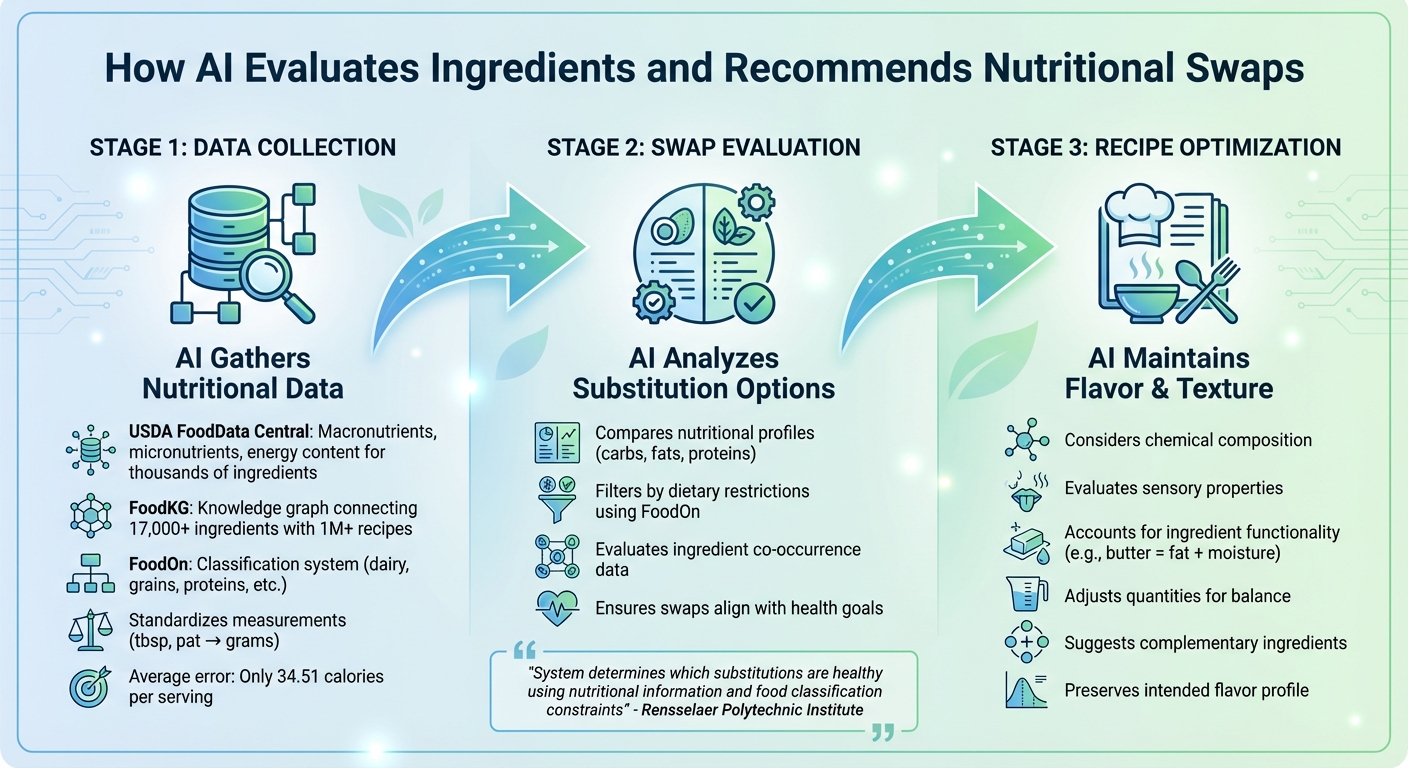
How AI Evaluates Ingredients and Recommends Nutritional Swaps
When it comes to personalized ingredient swaps, AI brings precision and depth to the process. Here's a closer look at how it evaluates ingredients and suggests substitutions that balance nutrition, flavor, and functionality.
Data Sources AI Relies On
AI systems draw from a range of extensive nutritional databases to decode what’s in your food. A key resource is USDA FoodData Central, which offers detailed insights into macronutrients (proteins, carbs, fats), micronutrients (vitamins, minerals), and energy content for thousands of ingredients. Regular updates to USDA FoodData Central and FNDDS ensure that the data remains accurate and reliable.
Beyond nutritional stats, AI taps into tools like FoodKG, a knowledge graph that connects over 17,000 ingredients with more than a million recipes. This graph doesn’t just provide nutritional profiles - it also links ingredients to classification systems like FoodOn, categorizing them as dairy, grains, proteins, and more. For example, researchers at Rensselaer Polytechnic Institute showcased in January 2021 how their AI system used FoodKG to link "Unsalted Butter" with both FoodOn classifications and USDA nutritional data.
To ensure precise nutritional calculations, AI standardizes ingredient quantities. For instance, it converts measurements like "1 tbsp" or "1 pat of butter" into grams. This level of accuracy led to an average error of just 34.51 calories per serving during testing.
How AI Selects Ingredient Swaps
AI doesn’t stop at calorie counts - it takes a holistic approach, evaluating swaps based on nutrition, dietary needs, and how well ingredients work together. By comparing the nutritional profiles of potential substitutes with the original ingredient, AI ensures replacements align with specific goals. For instance, if the aim is to cut carbs, AI will suggest alternatives with lower carbohydrate content using USDA data. It also uses tools like FoodOn to filter options that meet dietary restrictions.
"Our proposed system also helps determine which ingredient substitution options are 'healthy' using nutritional information and food classification constraints." – Sola S. Shirai et al., Rensselaer Polytechnic Institute
Another critical factor is ingredient co-occurrence - data on how often certain ingredients are paired in recipes. This helps AI recommend swaps that not only fit nutritional goals but also preserve the dish’s intended flavor and character.
Maintaining Flavor While Adjusting Recipes
Once a suitable substitute is identified, AI fine-tunes recipes to ensure flavor and texture remain intact.
Ingredient swaps are treated as a balancing act between nutrition, taste, and functionality. AI considers factors like chemical composition, sensory properties, and consumer preferences to predict how a swap will affect the dish. For example, when replacing butter in a baking recipe, the system accounts for butter’s role in providing both fat and moisture. It may adjust quantities or suggest complementary ingredients to maintain the recipe’s structure and texture. This approach ensures that healthier choices don’t compromise the sensory experience.
Common Types of AI-Powered Nutritional Swaps
AI leverages guidelines from trusted organizations like EFSA and WHO to suggest ingredient swaps tailored to your health goals. These swaps typically focus on three main areas: proteins and fats, carbohydrates and fiber, and reductions in sodium and sugar. The aim? To boost nutritional value without sacrificing flavor or satisfaction.
Here’s a closer look at these swap categories and how they can improve the nutritional quality of your meals.
Protein and Fat Swaps
When it comes to protein, AI often suggests replacing chicken or salmon with options like prawns, tofu, tinned black beans, kidney beans, chickpeas, or lentils. For ground meat, it may recommend extra-lean ground beef or ground turkey breast, which cut down on saturated fat while keeping protein levels high.
To tackle unhealthy fats, AI might propose using plain Greek yogurt instead of sour cream or mayonnaise. Other swaps include replacing butter or margarine with cooking spray, chicken broth, or a drizzle of olive oil. In baking, alternatives like applesauce or apple butter can stand in for butter or oil, reducing fat content while keeping baked goods moist. For salad dressings, using more balsamic vinegar or orange juice and less olive oil can lower fat while maintaining a flavorful balance.
Carbohydrate and Fiber Swaps
AI tools often suggest swapping refined grains and starchy ingredients for high-fiber, low-carb options like cauliflower, zucchini, or spaghetti squash . These substitutions not only add nutritional value but also support weight management by better aligning meals with your energy and nutrient needs.
Sodium and Sugar Reduction Swaps
To help reduce sodium and sugar intake, AI analyzes recipes and recommends alternatives that maintain flavor and texture. For example, regular sauces can be swapped for low-sodium versions, while refined sugars might be replaced with natural sweeteners.
These simple swaps make it easier to incorporate AI-driven nutritional adjustments into your daily cooking, as explored in more detail later on.
How to Use AI Tools for Nutritional Swaps
AI's ability to analyze ingredients with precision offers a powerful way to rethink your meals. By tapping into these insights, you can make smarter nutritional swaps and improve your overall diet. AI platforms can create a complete profile based on factors like your weight, height, age, BMI, activity level, energy needs, and even medical conditions such as type-2 diabetes, cardiovascular issues, or iron deficiency. With this data, they generate personalized weekly meal plans that align with established nutritional standards.
Setting Your Nutrition Goals
Before diving into AI-guided swaps, it's important to define your nutrition goals. Are you trying to cut back on sodium, add more protein, or increase your vegetable intake? Once you clarify your objectives, AI can balance macronutrients and tailor recommendations based on your profile . Including dietary restrictions, allergies, and taste preferences ensures the suggestions meet both your health needs and flavor preferences.
After setting your goals, AI tools can help you zero in on precise nutritional targets. With this groundwork in place, you're ready to start making efficient ingredient swaps.
Step-by-Step: Making AI-Guided Swaps
AI tools like Honeydew Recipe Manager make nutritional swaps easy. Start by importing your recipes into the app, which uses advanced algorithms to analyze ingredients and suggest adjustments. For example, if you're looking to lower saturated fat, the AI might recommend swapping regular ground beef for extra-lean ground beef in your taco recipe. Once you approve the changes, the app updates your grocery list and syncs with services like Instacart for seamless shopping.
Planning Your Weekly Meals with AI
AI-powered platforms can also help you plan your weekly meals, complete with shopping lists and recipe ideas that include ingredient swaps. Tools like Honeydew Recipe Manager offer features like a drag-and-drop calendar, allowing you to organize your updated recipes with ease. The app's AI continues to refine future menus based on your progress and health goals. Plus, built-in optimizers adjust portion sizes to ensure your meal plan delivers the right energy and nutrients. This approach isn't just about making healthier choices here and there - it's about creating a sustainable, adaptable strategy for long-term wellness.
Tips and Safety Considerations
Using AI for nutritional swaps can be incredibly helpful, but it’s important to approach it with caution. While these systems often provide balanced suggestions, they’re not foolproof. For example, a study published in Nutrition in August 2023 found that while ChatGPT generally created balanced meal plans, it failed to account for at least one food allergen and made errors in portion sizes and calorie counts. This makes it clear: you need to play an active role in verifying AI-generated advice. Here’s how you can do that effectively.
Verifying AI Recommendations
Before making any changes to your meals based on AI suggestions, always double-check the information against actual nutrition labels. The Nutrition Facts panel is your most reliable resource. Pay close attention to serving sizes and the % Daily Value (%DV). A %DV of 5% or less is considered low, which is ideal for things like saturated fat, sodium, and added sugars. On the other hand, a %DV of 20% or more is high, which is good for nutrients like calcium and vitamin D.
Be cautious of front-of-package claims such as "low sodium" or "heart-healthy." These can sometimes be misleading. Instead, review the full Nutrition Facts panel and ingredient list for a complete picture. If you have food allergies, always check for "contains" statements that list the nine major allergens: milk, fish, tree nuts, peanuts, shellfish, wheat, eggs, soybeans, and sesame (the latter added as of January 1, 2023).
When to Consult a Professional
AI often lacks the nuance needed for personalized advice. Research published in Nature.com in November 2025 highlighted that ChatGPT’s meal recommendations can contain errors, especially for individuals with specific needs like allergies, pregnancy, diabetes, or obesity. If you’re managing a chronic health condition, dealing with food allergies, following a therapeutic diet, or are pregnant, it’s best to consult a dietitian, health coach, or medical professional. Their expertise ensures that the dietary changes you make are both safe and effective.
Tracking Results and Refining Your Approach
Once you’ve verified AI recommendations and consulted professionals where needed, it’s time to track your results. Keep a log of your meals and monitor how you feel - pay attention to energy levels, digestion, and overall progress. This will help you identify which swaps are working and allow you to fine-tune your approach over time. For a smoother process, tools like Honeydew Recipe Manager can simplify meal planning and nutrition tracking, helping you stay on top of your goals.
Conclusion
AI-powered nutritional swaps are reshaping the way we approach meal prep and healthy eating. By analyzing your health data and available ingredients, these tools take the guesswork out of creating balanced meals. Whether you're managing allergies, sticking to a specific diet like Keto or Vegan, or simply aiming for better nutrition, AI simplifies everything - from planning meals and tracking macros to organizing your grocery list.
Some standout benefits include cutting down on food waste by suggesting recipes based on what you already have, saving time with shopping lists sorted by aisle, and monitoring your progress toward goals like weight loss or muscle gain. The global food technology market mirrors this trend, valued at about $183.5 billion in 2023 and expected to grow to $354.9 billion by 2030. These tools make meal planning smarter and more efficient.
The impact is real. Sarah M., a satisfied user, shared: "Finally a meal plan that feels fresh and modern. The recipes are genuinely tasty, I actually look forward to cooking now".
One app leading the charge is Honeydew Recipe Manager, which bundles these features into a single, intuitive platform. From importing recipes directly from social media to generating AI-powered grocery lists with smart substitutions, Honeydew makes meal prep a breeze. You can plan your week using a drag-and-drop calendar, track nutrition, and even order ingredients through Instacart integration. Plus, it adapts to your preferences and supports collaborative meal planning for households.
Start using AI nutritional swaps today and enjoy healthier, stress-free cooking every day.
FAQs
How does AI choose ingredient swaps that keep the flavor and texture intact?
AI takes the guesswork out of ingredient substitutions by diving deep into the science of how ingredients interact at a molecular level. With its advanced flavor and texture modeling, it pinpoints substitutes that mirror the original ingredient's taste, aroma, moisture, and overall mouthfeel.
By tapping into extensive ingredient databases and running sensory simulations, AI can suggest alternatives that not only fit seamlessly into a recipe but also preserve the intended culinary experience. This means you can make dietary changes or cater to specific preferences without sacrificing the quality of the dish.
Can AI-powered ingredient swaps handle specific dietary needs?
AI-driven ingredient swaps are a game-changer for anyone with specific dietary needs, like allergies, gluten-free, vegan, or low-sugar preferences. By evaluating ingredient properties, nutritional information, and personal restrictions, AI suggests substitutions that are both practical and well-matched to your requirements.
This smart technology takes the uncertainty out of meal planning. It offers tailored recommendations that fit your dietary goals, whether you're managing a health condition or simply aiming for healthier eating. With AI, you can enjoy meals that suit your needs - without sacrificing taste or nutrition.
What should I consider to ensure safety when using AI for meal planning?
When using AI for meal planning, ensuring the accuracy of the data it relies on is crucial. These systems pull information from nutrition databases, ingredient labels, and dietary guidelines. If any of this data is outdated or incorrect, it could lead to issues like inaccurate calorie counts, overlooked allergens, or poorly calculated portions. To keep things reliable, sources like USDA and FDA guidelines are essential.
It’s also worth noting that AI might unintentionally lean toward specific ingredients, diets, or budget-friendly choices that don’t align with everyone’s needs. Think of AI-generated meal plans as suggestions, not strict rules. Always double-check allergen details, and consult a dietitian or healthcare professional before making major changes to your diet.