How AI Enhances Custom Cooking Modes in Smart Kitchens
• Updated
AI-powered kitchen appliances are transforming meal preparation by automating cooking processes, reducing food waste, and improving energy efficiency. Here's what you need to know:
- Food Recognition: Smart ovens and refrigerators use cameras and AI to identify ingredients or dishes, automatically adjusting cooking modes for optimal results.
- Real-Time Adjustments: Sensors monitor temperature, moisture, and oxygen levels, fine-tuning settings to ensure consistent cooking.
- Personalized Cooking: These systems learn your preferences over time, tailoring settings to match how you like your food prepared.
- Connected Tools: Apps like Samsung SmartThings and GE SmartHQ integrate with appliances, offering voice control, recipe syncing, and inventory tracking.
- Energy and Waste Savings: AI optimizes power usage and suggests meals based on pantry items, helping households save up to $125 monthly by reducing waste.
AI is reshaping kitchens by combining convenience, precision, and sustainability, making cooking simpler and more efficient for everyday users.
How AI Is Powering Smarter, More Efficient Kitchen Appliances | GearBrain
How AI Powers Custom Cooking Modes
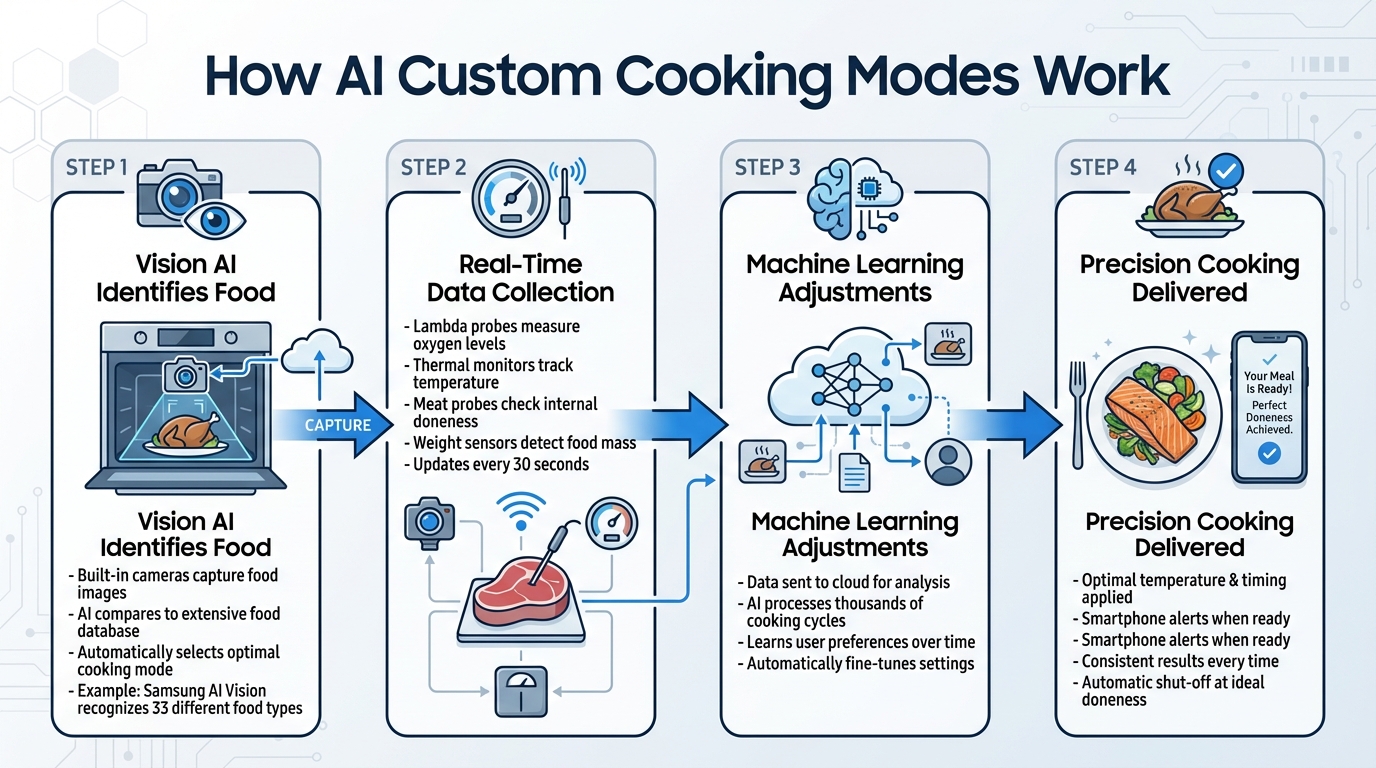
How AI Custom Cooking Modes Work: From Food Recognition to Perfect Results
AI-driven cooking modes use a combination of cameras, sensors, and machine learning to identify your food and adjust settings for the best results. These technologies work quietly in the background, analyzing details like food type and moisture levels inside the cooking chamber. The result? A seamless, hands-off experience where your appliance fine-tunes settings in real time, making cooking more precise and effortless.
How AI Identifies Food and Recipes
Smart appliances like ovens and refrigerators leverage Vision AI to recognize what’s on your menu. Cameras capture images of your food, and machine learning algorithms compare them to an extensive database of food photos to identify the item. This visual recognition enables your appliance to select the right cooking mode automatically - no need for manual adjustments.
But it doesn’t stop there. These systems also process recipe data to simplify cooking. For example, platforms like Samsung Food can analyze recipes or ingredient photos and send exact temperature and timing instructions directly to your connected smart oven. This eliminates guesswork and ensures precision.
Real-Time Adjustments to Cooking Settings
Once the AI identifies your food, it keeps a close eye on the cooking process using advanced sensors like lambda probes and thermal monitors. Originally designed for automotive catalytic converters, lambda probes measure oxygen levels in the oven. As moisture evaporates during cooking, oxygen levels decrease, helping the AI accurately track the progress of your dish. Bosch’s AI predictive model, for instance, updates the remaining baking time every 30 seconds based on real-time data.
"The oven continuously monitors the food's progress and, by extension, the remaining baking time. This is important because every dish is unique." – Hoang Richter, AI Project Manager, BSH
Meat probes take precision a step further by measuring internal temperatures at multiple points, ensuring proteins are cooked to perfection. The AI uses this data to turn off the heat exactly when your dish reaches the ideal doneness. All this sensor information is sent to the cloud, where machine learning algorithms analyze thousands of cooking cycles, constantly improving the system’s accuracy and performance.
Main Features of AI Cooking Modes
Automatic Food Detection and Mode Selection
Smart ovens with built-in cameras, like GE's Cookcam™ AI, take a snapshot of your food as soon as the door closes. The AI then compares this image to a massive food database to identify what you're cooking - be it salmon, pizza, or a batch of chocolate chip cookies. Once identified, the oven activates a Precision Cooking Mode, automatically setting the optimal temperature, time, and humidity for that dish.
But it doesn’t stop at visual recognition. These appliances combine data from various sensors to monitor food weight, internal temperature, and moisture levels in real time. This sensor fusion enables the oven to adjust cooking settings dynamically. For instance, if the system detects increased humidity, it tweaks the settings to prevent soggy results. Samsung's AI Vision Inside technology can even identify and label 33 different types of fresh foods in your fridge. This level of precision opens the door to appliances that not only recognize your ingredients but also learn to complement your cooking habits.
Learning Your Cooking Preferences
AI-powered kitchen gadgets go beyond preset programs - they adapt to your preferences. Over time, these systems learn how you like your meals prepared and automatically adjust settings to match. The more you cook, the smarter they get, ensuring consistent results tailored to your tastes.
For example, if you always cook chicken breasts to 165°F with crispy skin, the AI remembers this and applies the same settings whenever it detects chicken in the oven. This kind of hyper-personalization eliminates the hassle of manually adjusting settings, making it easier to achieve perfect results every time.
Monitoring and Alerts During Cooking
These smart systems don’t just handle adjustments - they keep you in the loop throughout the cooking process. Cameras and probes monitor your food without requiring you to open the oven, letting you check progress right from your smartphone. That means you can keep an eye on browning and texture without losing heat. Wireless probes also let you track cooking from anywhere in your home.
The AI takes it a step further by notifying you when your meal is perfectly cooked. Connected kitchen hubs can send alerts directly to your smartwatch, delivering a gentle tap on your wrist when dinner is ready. Some advanced fryers even adjust oil temperature on the fly, based on batch size, to ensure consistent results every time. And if something goes wrong - like an oven door left open or unexpected overheating - the system sends immediate alerts and can even trigger an automatic shut-off to prevent accidents.
Connecting with Other Smart Kitchen Tools
Voice and App Control Options
Smart kitchen tools are designed to work together, creating a connected cooking experience. Platforms like Samsung SmartThings and GE SmartHQ make it easy to control multiple appliances - such as ovens, refrigerators, and microwaves - through a single app or touchscreen interface. For example, Samsung SmartThings is trusted by over 33 million users to manage their kitchen tasks seamlessly.
Voice control takes this integration a step further. Samsung appliances feature Bixby voice control, allowing hands-free adjustments to your oven or cooktop. Meanwhile, GE's SmartHQ leverages Google Cloud's generative AI to offer unique tools, like a "digital sous chef", which can assist with tasks like measurement conversions and temperature recommendations. Shawn Stover, Executive Director of SmartHome and Energy Solutions at GE Appliances, describes this innovation perfectly:
"By integrating AI into our SmartHQ platform, we're streamlining daily tasks in ways that feel natural and effortless – like having a helpful friend in your home".
These tools also enable smart automation across devices. For instance, AI-powered refrigerators can recognize food items as they’re added or removed, creating inventory lists and suggesting recipes based on what's available. Apps like Samsung Food and SmartHQ can then send precise cooking instructions - such as temperature, timing, and mode - directly to compatible ovens, eliminating the guesswork. Honeydew Recipe Manager builds on this concept by merging recipe management with your smart appliances, making the process even more intuitive.
How Honeydew Recipe Manager Supports Smart Cooking
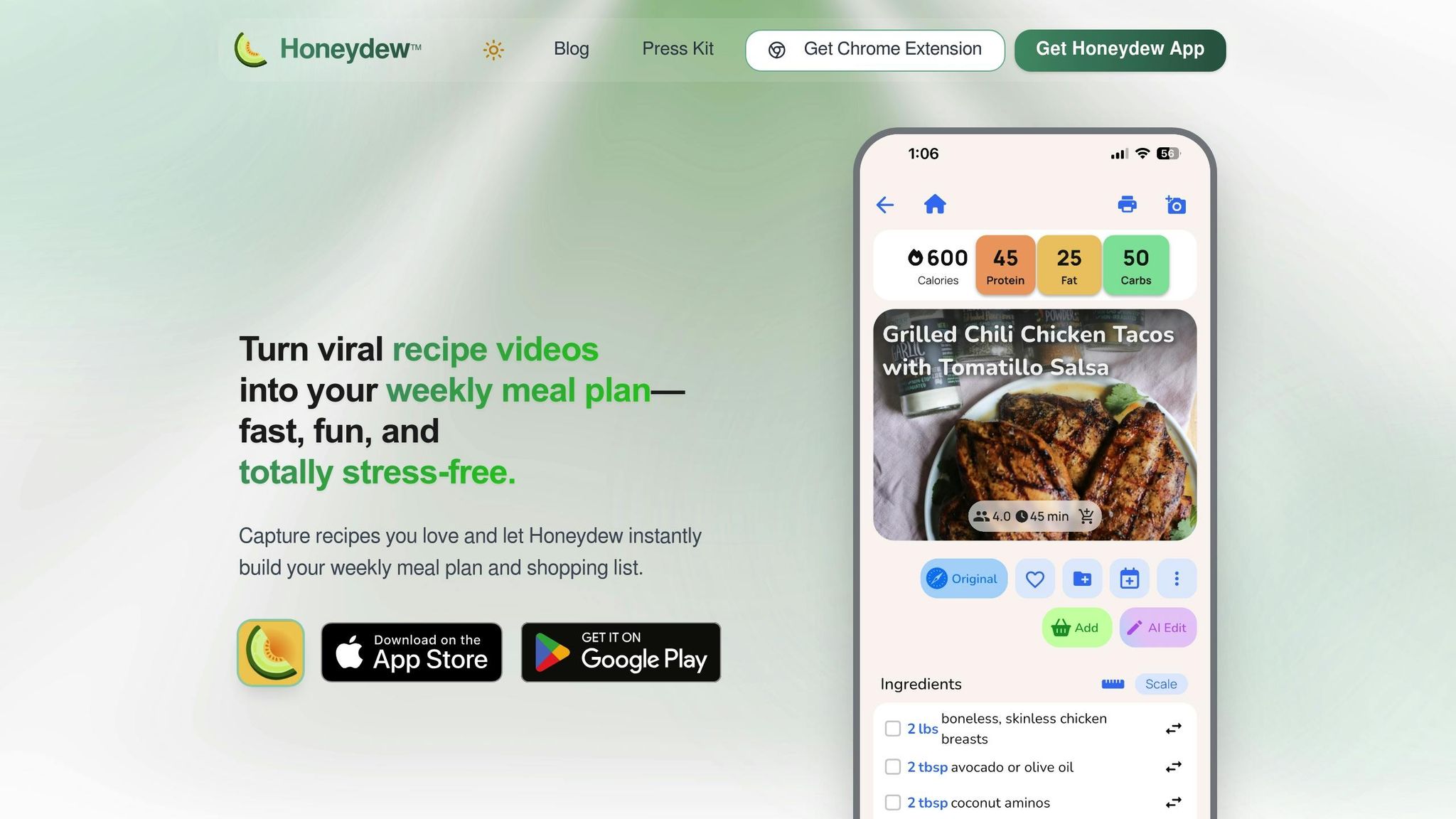
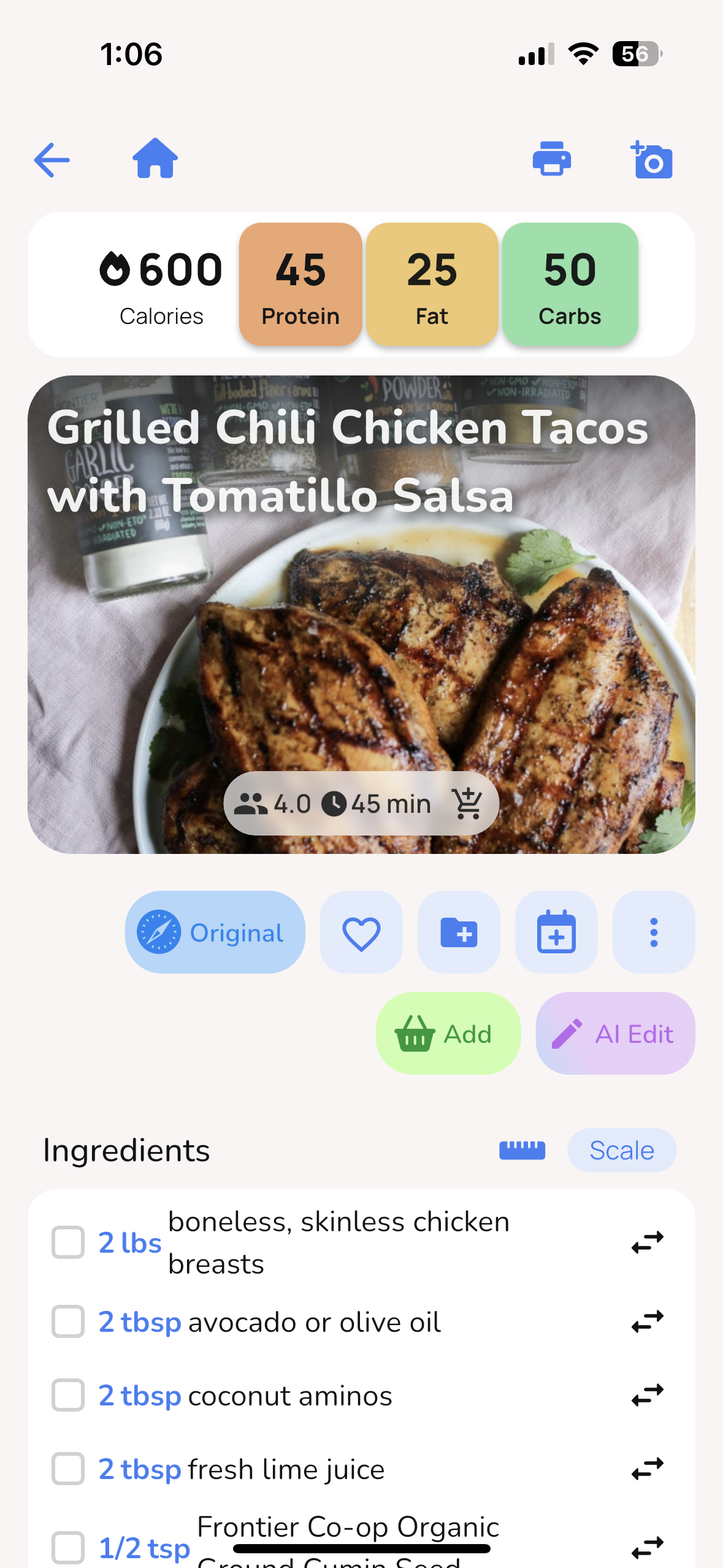
Honeydew Recipe Manager is a game-changer for anyone looking to streamline their cooking and meal planning. This app bridges the gap between discovering recipes and actually preparing meals. It allows users to import recipes from platforms like TikTok, Instagram, YouTube, and other websites, organizing them into collaborative meal plans. When it’s time to shop, Honeydew automatically generates grocery lists sorted by store sections and syncs with Instacart for easy ordering.
The app’s AI meal planner can create weekly menus in seconds, while features like smart ingredient substitutions and recipe searches based on what’s already in your fridge make it incredibly practical. You can even snap a photo of any dish to generate a copycat recipe or use Pantry Mode to photograph your fridge contents and receive instant recipe suggestions. Plus, Honeydew calculates calories and macros, translates recipes, and offers offline access, ensuring you have everything you need whether you’re planning ahead or cooking on the spot.
What's Next for AI in Smart Kitchens
The smart kitchen industry is evolving at a rapid pace. By 2031, the global market for AI-powered cooking machines is expected to hit $101 million, growing at an annual rate of 8.2%. This steady rise points to a future where more advanced features become a standard part of everyday kitchens, many of which are already being tested in commercial settings.
Emerging appliances are set to include cutting-edge tools like multi-point thermal sensors and spectroscopic scanners. These technologies will monitor factors such as moisture content, browning levels, and internal temperatures in real time. With this data, AI can automatically adjust heat levels during cooking, delivering consistent results without the need for constant supervision. Similarly, advanced refrigerators are being designed to track food expiration dates and suggest recipes based on the ingredients you already have. These innovations represent a significant step toward fully autonomous kitchen systems.
Infrared spectroscopy is another game-changer, offering precise monitoring of moisture and texture to deliver restaurant-quality results. Some manufacturers are also experimenting with automated meal kit integration. Here’s how it works: appliances scan QR codes on pre-portioned kits, download the recipe steps, and then take over the cooking process entirely. Aditi, a market researcher at Intel Market Research, offers a bold prediction:
"By 2032, AI cooking machines may become standard in urban kitchens, much like microwaves today, with commercial kitchens leading in early adoption".
Beyond improving cooking precision, AI is also set to enhance energy efficiency and appliance durability. Predictive maintenance features will track wear and tear on components like motors and heating elements, notifying users before breakdowns occur. Cross-device connectivity is making strides as well. For example, smart ranges can now send alerts to smartwatches when a custom cooking mode is complete. Shane Higby, Senior Vice President at Samsung Electronics America, highlights this growing trend:
"We've continued to expand our Bespoke line and build on its success with new kitchen products that have advanced AI technology and connectivity to empower consumers to get more done".
Looking ahead, these advancements will likely integrate seamlessly with tools like Honeydew Recipe Manager, making tasks like importing recipes, generating grocery lists, and coordinating with services like Instacart even easier. As appliances grow smarter, the synergy between meal planning apps and kitchen hardware will transform cooking into a more intuitive and time-saving experience for everyone.
FAQs
How does AI help reduce food waste and save energy in smart kitchens?
AI is transforming kitchens into smarter, more efficient spaces by cutting down on food waste and conserving energy. How? By making cooking and inventory management more precise. For instance, AI-powered appliances can automatically tweak settings like temperature and cooking time to prevent overcooking or undercooking, which helps reduce food spoilage. These systems also analyze your usage habits to streamline supply chains, ensuring you buy only what’s needed - no more overstocking.
On top of that, AI works seamlessly with smart devices like refrigerators and ovens, learning your routines to use energy only when it’s truly necessary. Features like pantry tracking and tailored recipe suggestions not only make meal planning easier but also encourage smarter shopping, reducing waste. By helping you use resources more wisely, AI is making kitchens greener and more budget-friendly.
Can AI-powered cooking modes accommodate different dietary needs?
AI-powered cooking modes are a game-changer when it comes to meeting various dietary needs. They can tweak recipes, suggest ingredient swaps, and even create meal plans tailored to specific diets like Keto, Vegan, or Gluten-Free. This makes cooking more inclusive and personalized for everyone.
For instance, AI can help you find substitutes for ingredients to accommodate dietary restrictions or preferences - without sacrificing taste or nutrition. It also takes the guesswork out of planning by generating meal ideas that align with your lifestyle, making healthy eating simpler and more convenient.
What innovations can we expect in AI-powered kitchen appliances?
AI-powered kitchen appliances are about to get a whole lot smarter and easier to use. Imagine your oven or stovetop making real-time adjustments to settings like temperature or cooking time, all based on factors like the doneness of your food or the surrounding humidity. The result? Perfectly cooked meals with almost no effort on your part.
These appliances are also expected to learn and adapt to your personal preferences. Think customized cooking modes that tweak recipes to fit your dietary needs or favorite flavors. On top of that, AI could deepen its integration with recipe management tools, letting you seamlessly import recipes from your favorite social media platforms, plan meals, and tailor dishes to your liking. All of this is designed to make cooking simpler and create a more connected, stress-free kitchen environment.