AI Meal Planning: Insights From Smart Kitchens
• Updated
AI meal planning tools are transforming how people handle cooking and grocery shopping. By connecting with smart kitchen devices, these tools track your ingredients, suggest recipes, and create grocery lists tailored to your needs. This approach saves time, reduces food waste, and simplifies decision-making. Here's the problem they solve and how they work:
-
Problems with Meal Planning:
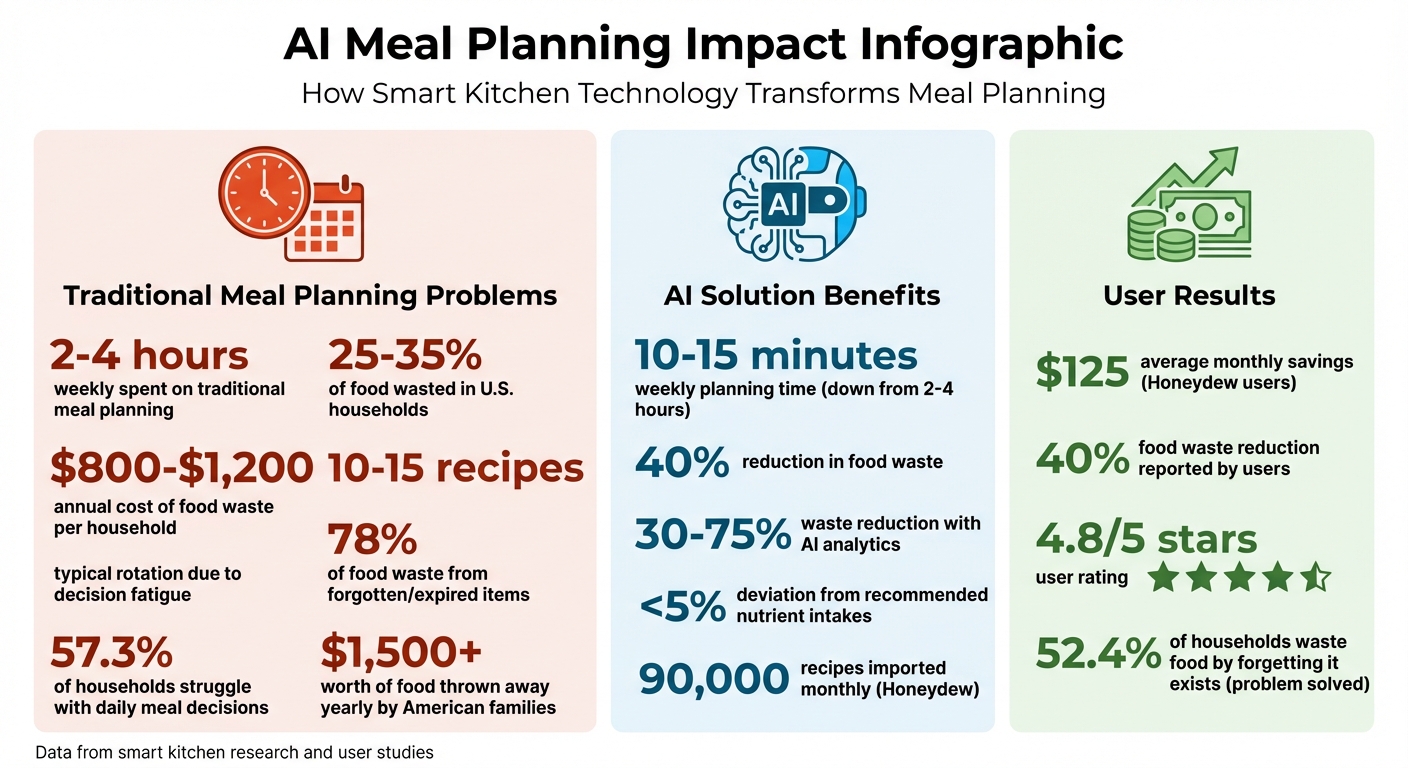
- Time-consuming: Traditional planning takes 2–4 hours weekly.
- Wasted food: U.S. households waste 25–35% of food, costing $800–$1,200 annually.
- Limited variety: Most people stick to 10–15 recipes due to decision fatigue.
-
How AI Helps:
- Tracks ingredients with smart fridges and pantry cameras.
- Suggests recipes using what you already have.
- Cuts planning time to 10–15 minutes weekly.
- Reduces food waste by up to 40%.
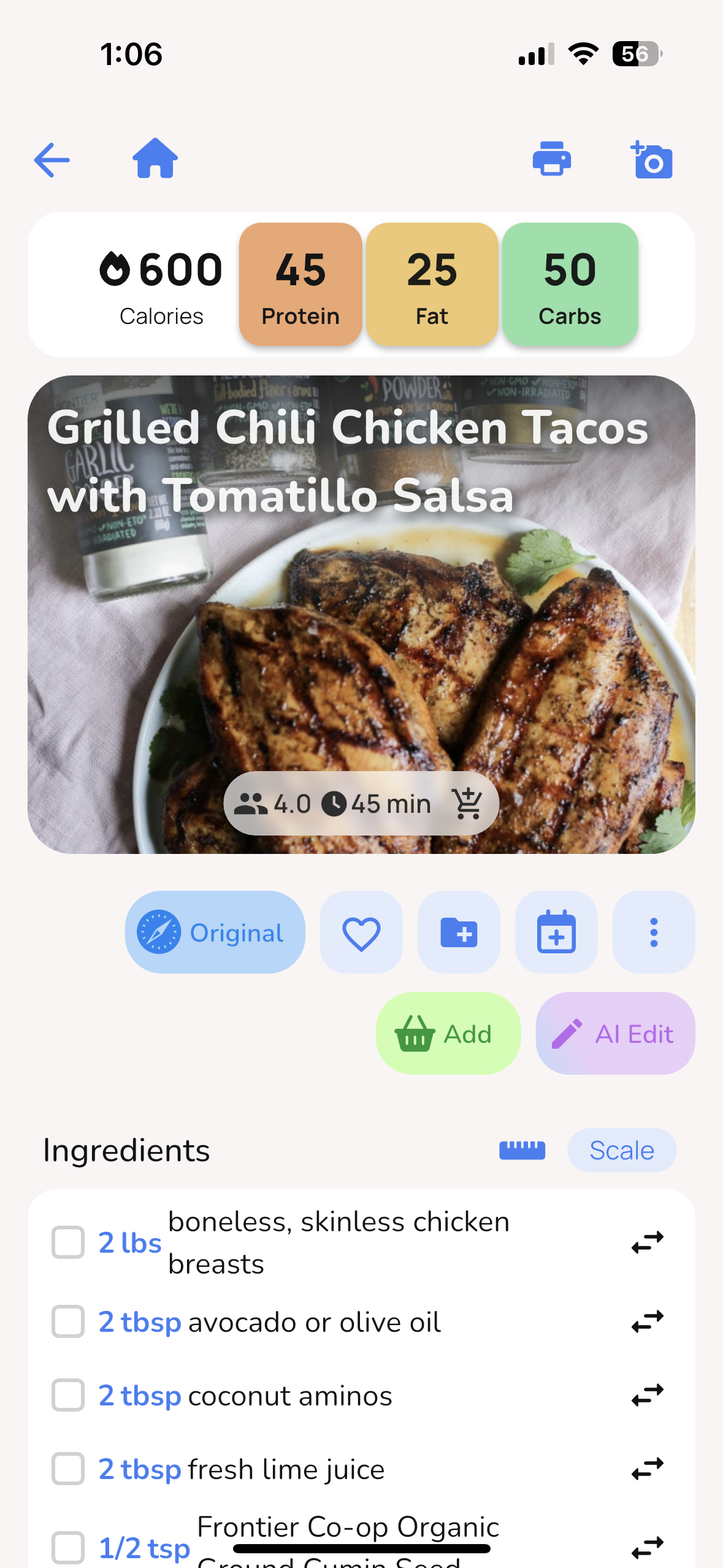
Example: The Honeydew Recipe Manager app connects your inventory with recipes, offers ingredient substitutions, and creates shopping lists. Its users report saving $125 monthly and cutting food waste by nearly half. Tools like this make cooking faster, less stressful, and more efficient.
AI Meal Planning Benefits: Time Savings, Waste Reduction, and Cost Savings Statistics
Here's how AI can build the perfect personalized meal plan
Common Meal Planning Problems for Busy People
Figuring out "what's for dinner?" is a daily headache for 57.3% of households. Meal planning isn't just about deciding what to cook - it also involves juggling time, managing ingredients, and dealing with an overwhelming number of options. For busy people, these challenges can feel like an uphill battle.
Not Enough Time to Prepare Meals
Time is the biggest barrier to home cooking. Traditional meal planning can take 2–4 hours a week, but even a quick 45–90 minutes spent browsing recipes can feel like a luxury many can't afford. For busy professionals, that’s time they simply don’t have.
"The hardest part is choosing what to cook and planning - so everyone eats and likes it. When I worked and studied, it was overwhelming..."
This quote from a working mother (Participant P1) reflects the stress many face. The mental toll of constant decision-making builds up over the week, leading to decision fatigue. Add in unexpected schedule changes - like a late meeting or a soccer practice - and even the best-laid meal plans can fall apart. When that happens, people often turn to quick fixes or pricey takeout. On top of time constraints, keeping track of ingredients adds another layer of frustration.
Missing Ingredients and Wasted Food
Busy schedules often lead to overlooked ingredients, which can spoil before they’re used. This "Hidden Fridge" problem is incredibly common. In fact, 78% of household food waste comes from expired items that were simply forgotten. A young professional (Participant P3) shared their experience:
"I forget what products I have at home... Somehow I often end up going to the store twice a day."
The financial impact is huge. On average, American families throw away over $1,500 worth of food every year. Globally, households are responsible for 61% of total food waste, amounting to over 1 billion meals wasted daily in 2022. Manual systems for tracking ingredients don’t help much either - nearly 59.3% of people abandon them because they’re too time-consuming.
Too Many Recipe Choices to Pick From
The internet is overflowing with recipes, but having too many options can make meal planning even harder. Despite the endless possibilities, most people stick to a rotation of just 23 recipes because searching for new ideas is so overwhelming. A graduate student (Participant P2) described the frustration:
"Each cooking session is separate stress... Because of such problems, you don't even want to cook anymore."
Sifting through cookbooks, websites, and social media for inspiration is mentally draining. Verifying ingredients and narrowing down choices takes time and energy - resources that busy individuals often need for work, family, or other responsibilities. These challenges highlight the need for smarter tools, like AI and IoT, to simplify meal planning and cut down on waste.
How AI and IoT Devices Improve Meal Planning
Smart kitchen technology is changing the way we approach meal planning by using automation and real-time data. These tools eliminate the need for manual inventory tracking, making it easier to manage groceries, reduce waste, and plan meals based on what’s already in your kitchen. Here's a closer look at how these devices work and the role AI plays in simplifying meal planning.
Data from Smart Kitchen Devices
Modern kitchen appliances use sensors and computer vision to keep track of ingredients. Take Samsung's AI Family Hub refrigerator as an example - it can identify 33 different fresh items, monitor their expiration dates, and even suggest recipes to use those ingredients before they spoil. These systems rely on visual scanning or smartphone photos to gather details like brand names, weights, and shelf lives. Once the data is collected, the devices continuously update your kitchen inventory, calculate expiration timelines, and highlight ingredients that should be used soon.
This level of automation addresses a common issue: 52.4% of households throw away food simply because they forget it's there. Some systems even use tools like a "Spoilage Proximity Index" to prioritize ingredients nearing their expiration dates. Once your kitchen data is organized, AI takes over to create meal plans tailored to what's available.
AI-Powered Meal Planning Tools
AI transforms data from smart devices into personalized meal plans. Unlike generic recipe generators, these systems rely on a "grounding layer" of information - real-time data about the ingredients in your kitchen. As the MealMind Research Team points out:
"The core failure of solutions like ChatGPT or DishGen is their lack of a grounding layer - they do not know what is actually in the user's kitchen."
By using this detailed inventory, AI tools can create meal plans that balance ingredients, meet nutritional goals, and accommodate time or dietary restrictions. For instance, they can generate weekly meal plans with less than 5% deviation from recommended nutrient intakes. These systems also suggest ingredient substitutions based on what you already have and adjust portion sizes based on your feedback. Over time, the AI learns your preferences, making future recommendations even more accurate.
AI-driven food waste analytics further enhance efficiency. Studies show these tools can reduce kitchen waste by 30%, with larger systems like Winnow achieving reductions of 40% to 75%. By integrating data and AI, smart kitchen technology helps create a more organized, waste-conscious approach to meal planning.
Honeydew Recipe Manager: AI Meal Planning Made Simple
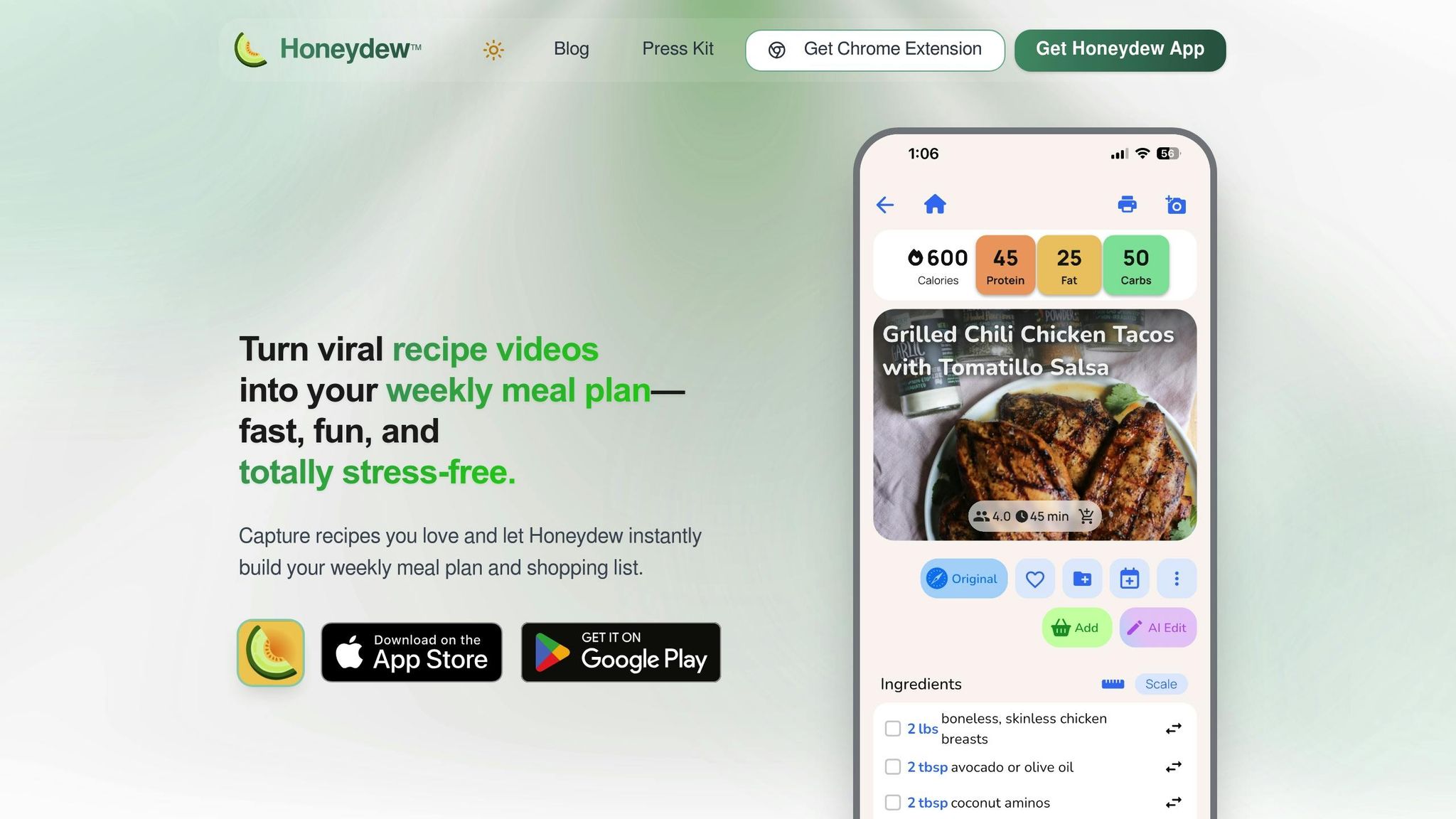
Honeydew Recipe Manager brings meal planning into the future by seamlessly connecting your kitchen inventory with personalized meal plans. Designed to work within smart kitchen ecosystems, this app links recipes and grocery services to streamline your cooking routine. With Alexa integration, you can enjoy hands-free, voice-guided recipes and meal planning while cooking, making it a breeze to manage your meals.
What Honeydew Recipe Manager Offers
With Honeydew, importing recipes is effortless. Whether it’s from TikTok, Instagram, YouTube, or any website, the app’s AI extracts ingredients and instructions for you. It even goes a step further: snap a photo of a handwritten family recipe or a cookbook page, and the app digitizes it into a structured, searchable format. With an impressive 90,000 recipes imported monthly, Honeydew’s AI can also generate weekly meal plans in seconds.
Shopping becomes simpler too. The app creates smart grocery lists sorted by store aisle, complete with exact quantities, saving you time and hassle. Missing an ingredient? The AI suggests substitutions based on your pantry items, dietary needs, or allergies. You can even send your grocery list to Instacart with a single click for easy ordering. Plus, with household sharing for up to six members, everyone stays on the same page with synced meal plans and shopping lists.
These features aren’t just clever - they make daily cooking smoother and more efficient.
How Honeydew Recipe Manager Helps You
Using AI for meal planning and grocery management can significantly reduce food waste and save money. Households using Honeydew report cutting food waste by up to 40% and saving around $125 per month. The app’s "Pantry Mode" is especially handy: take a photo of your fridge, and it suggests recipes using what you already have, ensuring nothing goes to waste. Users consistently highlight the time and money saved, reflected in the app’s impressive 4.8 out of 5 stars rating.
"The smart grocery lists save me hundreds of dollars a month. I love how it suggests recipes based on what I already have!" - James L.
"I used to waste so much food. Now with Honeydew's meal planning, I buy exactly what I need and save money!" - Mark T.
Next, we’ll explore how to pair these AI tools with IoT kitchen devices to elevate your smart cooking experience.
Free vs. Honeydew Plus: Plan Comparison
Honeydew Recipe Manager offers two plans tailored to different needs. The Free plan includes essential features like recipe imports from websites, basic meal planning, and grocery lists sorted by aisle. For advanced tools, Honeydew Plus - priced at $4.17 per month - unlocks premium features such as unlimited recipe storage, recipe digitization from photos, social media imports, household sharing, AI-driven meal planning, smart ingredient substitutions, and an ad-free experience.
| Feature | Honeydew Free | Honeydew Plus |
|---|---|---|
| Recipe Import | Up to 10 recipes from URLs and websites | Unlimited imports from URLs, photos, screenshots, and social media |
| Meal Planning | Drag-and-drop calendar | Advanced AI-generated plans |
| Grocery Lists | Aisle-organized | Aisle-organized with Instacart integration |
| Household Sharing | Personal use only | Up to 6 family members |
| Ingredient Substitutions | Manual | AI-powered smart suggestions |
| Recipe Storage | Limited to 10 recipes | Unlimited |
Curious about its features? Try the Free version to see how it extracts ingredients and steps from web recipes. When you’re ready for more, upgrade to Honeydew Plus to digitize physical recipes, save social media finds, or manage meals for a larger household. Choose the plan that best fits your kitchen needs.
Using AI Meal Planning in Your Kitchen
Connecting with IoT Kitchen Devices
Honeydew Recipe Manager works effortlessly with smart kitchen devices, making meal planning a hands-free experience. The app keeps your screen active while you're following a recipe, so you don’t have to worry about touching it with messy fingers. With its Pantry Mode, you can even take stock of your fridge or pantry - no internet required - and instantly generate recipes based on what you have. It also handles measurement conversions between imperial and metric systems, making recipes easy to follow no matter where you're cooking. This seamless connection between smart devices and real-time kitchen data helps create a practical way to cut down on waste, as discussed below.
Cutting Food Waste with AI
Honeydew goes beyond simplifying meal planning - it actively helps reduce food waste. By using real-time data from your kitchen, the app suggests meals tailored to the ingredients you already have, prioritizing items that are nearing their expiration. Its smart grocery lists ensure you buy only what you need, avoiding overstocking and unnecessary waste. If you're missing an ingredient, the AI offers substitutions based on what’s already in your pantry. Considering that 52.4% of households waste food simply because they forget what's in their kitchen, this feature tackles the problem head-on.
Conclusion
AI-driven meal planning takes the guesswork out of deciding what to cook, saving time and effort by matching your ingredients with personalized recipes. With tools that can cut planning time by over 40% and reduce food waste by 35–60%, families in the U.S. could save more than $1,500 a year.
The Honeydew Recipe Manager brings these AI benefits straight to your kitchen. It suggests recipes based on what’s already in your pantry, prioritizes items close to expiration, and creates detailed grocery lists to ensure you only buy what’s necessary. Plus, its compatibility with smart devices and offline functionality makes it just as useful whether you're shopping at the store or cooking in a no-Wi-Fi zone. The result? A more seamless, stress-free cooking experience.
With smart kitchen tools like this, meal prep becomes easier, faster, and less wasteful. Whether you're managing a packed schedule or trying to eat well without overspending, Honeydew Recipe Manager offers practical ways to simplify your cooking routine while cutting down on waste.
FAQs
How can AI meal planning help reduce food waste in your kitchen?
AI-powered meal planning is a game-changer when it comes to cutting down on food waste. It works by making the most of what you already have in your kitchen. These tools can tweak recipes to match the ingredients in your pantry, suggest meals using items nearing their expiration dates, and even offer alternatives for ingredients you’re missing. By focusing on what’s on hand, you’re less likely to overbuy or toss out unused food.
On top of that, AI tools can send handy reminders about expiring items and create meal plans that prioritize using perishables first. The result? You save money, streamline your meal prep, and make choices that are kinder to the planet.
How does Honeydew Recipe Manager simplify meal planning for busy people?
Honeydew Recipe Manager is your one-stop solution for effortless meal planning. With its smart features, you can import recipes straight from social media, create grocery lists automatically, and map out your weekly meals - all within the app. Plus, it works seamlessly with Instacart, allowing you to order ingredients directly to your doorstep.
The app also includes handy extras like ingredient substitution suggestions, nutrition tracking, and shared lists, making it simple to tailor meals to your tastes or dietary restrictions. And with AI-driven tools for meal planning and recipe creation, Honeydew transforms cooking into an easy, stress-free experience while saving you both time and energy.
Can AI meal planning tools handle dietary restrictions effectively?
AI meal planning tools are built to cater to a variety of dietary restrictions and personal preferences. Whether you're managing allergies, aiming for specific health goals, or following diets like gluten-free, vegetarian, or keto, these tools can provide meal suggestions tailored to your needs. Most allow you to set your restrictions during the initial setup, so all recipe recommendations align with your requirements.
Many of these apps go a step further by offering ingredient substitutions, generating customized grocery lists, and tracking nutritional details. This makes it easier to stick to your dietary goals while saving time and enjoying meals that fit seamlessly into your lifestyle.