AI Meal Planning with IoT Kitchen Devices
• Updated
AI and IoT are transforming meal planning, saving time, reducing food waste, and personalizing nutrition. Imagine a fridge that tracks your groceries, an oven that adjusts cooking settings automatically, and an app that creates meal plans tailored to your needs. These technologies work together to simplify meal prep, reduce food waste by up to 76%, and save households $800–$1,200 annually.
Key Points:
- Smart Fridges: Monitor inventory, track expiration dates, and suggest recipes.
- AI Ovens: Automatically adjust settings for perfect cooking and sync with recipes.
- Voice Assistants: Enable hands-free control and grocery list updates.
- Honeydew App: Combines recipe imports, AI meal planning, and pantry management.
By integrating these tools, meal planning becomes faster (reduced by 90–95%) and more efficient, helping you save time, money, and resources. Keep reading to learn how these innovations fit into your kitchen.
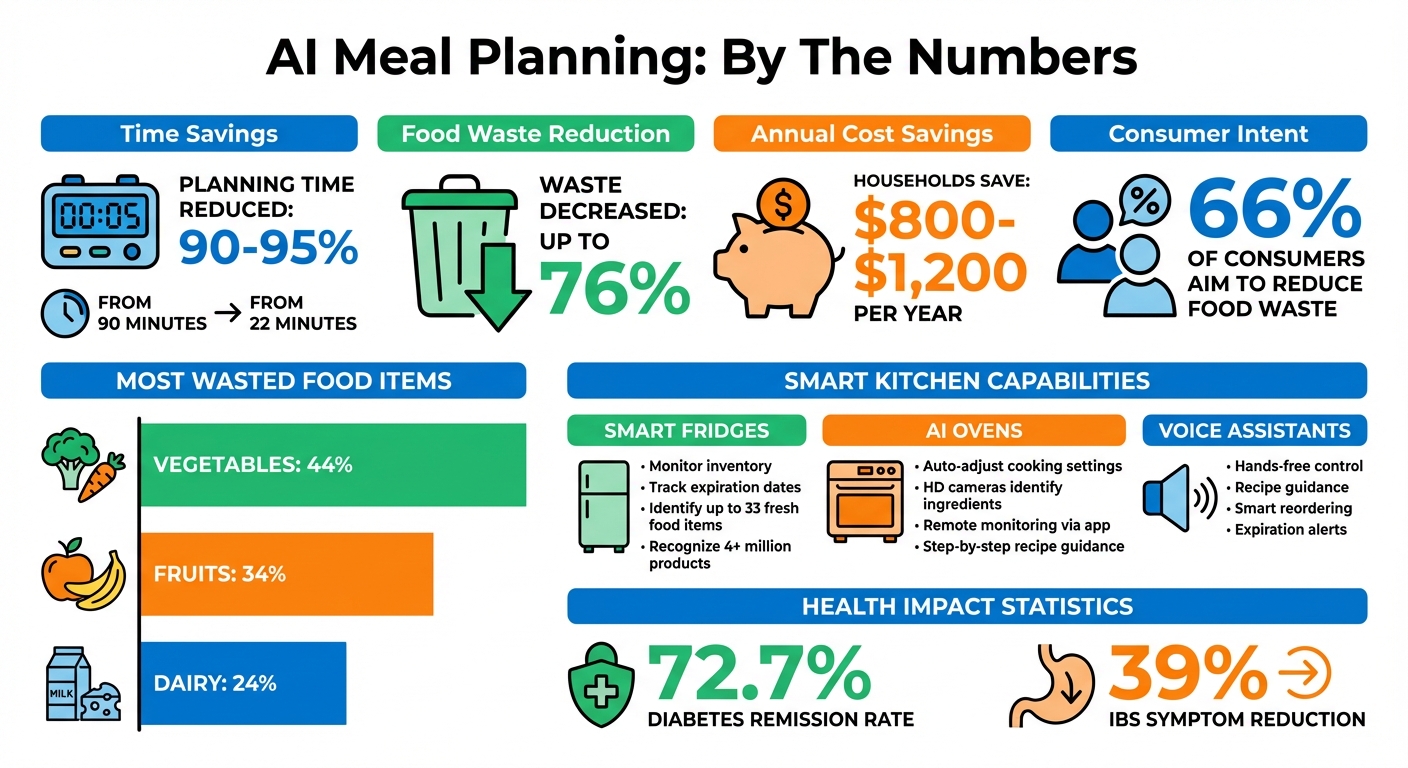
AI Meal Planning Benefits: Time Savings, Cost Reduction, and Waste Prevention Statistics
Robot Chefs, AI Cooking, and Crazy Kitchen Gadgets at CES!
IoT Kitchen Devices That Support AI Meal Planning
The modern kitchen is evolving, and three types of smart devices are leading the charge: refrigerators that keep tabs on your groceries, AI-powered ovens that perfect your cooking, and voice assistants that make multitasking a breeze.
Smart Refrigerators for Tracking Food Inventory
Today’s smart refrigerators are more than just cold storage - they’re your personal food inventory managers. Using AI technology, they can monitor what goes in and out, helping you keep track of your groceries. For instance, in April 2024, Samsung Electronics America introduced the Bespoke 4-Door Flex™ Refrigerator with AI Family Hub™+. This model uses AI Vision Inside™ to identify up to 33 fresh food items and automatically updates an inventory list in the SmartThings app.
GE brought its own innovation to the table in January 2026 with the Smart 4-Door French-Door Refrigerator featuring Kitchen Assistant™. This device includes a "Scan-to-List" barcode scanner that recognizes over four million products, syncing them with Instacart for near-instant delivery. It also features "FridgeFocus™", which uses LED cameras to provide real-time snapshots of your crisper drawers, helping you avoid overbuying perishables.
Both systems go a step further by sending expiration alerts to your smartphone and recommending recipes based on what’s in your fridge. As Mark Newton from Samsung Electronics America explained:
"The idea is that if you use more of what you have, you'll cut down on wasted food and also end up saving some money, too".
Considering that 66% of consumers aim to reduce food waste, and with vegetables (44%), fruits (34%), and dairy (24%) being the most commonly wasted items, these features are addressing a real problem. This seamless inventory tracking lays the foundation for the next step: ovens that adapt to your ingredients.
AI Ovens for Accurate Cooking
AI ovens are changing the way we cook by taking care of the details - adjusting temperatures, cooking times, and fan speeds automatically. Equipped with HD cameras, these ovens can identify ingredients and suggest the best cooking modes. In 2026, GE Appliances launched 39 smart oven models across its Monogram, GE Profile, and CAFÉ brands, all featuring CookCam™ with AI. These ovens also include touchscreens that guide you through recipes with step-by-step instructions and video tips.
What makes these ovens even more impressive is how they sync with other smart kitchen devices. Recipes from your smart fridge can be sent directly to the oven, which preheats and sets timers accordingly. You can even watch a live feed of your food cooking and adjust settings remotely through a smartphone app. As Rachael Schwartz from GE Appliances noted:
"With this new oven line-up, we're solving real, everyday challenges by blending smart design with thoughtful technology".
User David L. shared his experience:
"Sending a recipe's exact time and temperature from the app to my oven with one tap feels like living in the future. It's not just a recipe book; it's the brain my kitchen was missing".
These ovens also receive software updates via Wi-Fi, adding new cooking modes and recipes over time. This integration makes meal prep smoother and helps reduce waste by making the most of what you already have.
Voice Assistants for Hands-Free Kitchen Control
Voice assistants are the final piece of the puzzle, making your kitchen fully hands-free. Devices like Samsung’s Bixby and Amazon’s Alexa let you control your appliances with simple voice commands. You can add items to your fridge’s inventory, change oven settings, or check cooking progress - all without lifting a finger.
They also provide step-by-step recipe guidance while you cook. Amazon highlights this functionality:
"With your Echo device or the Alexa app, you can tell Alexa what ingredients you have in the refrigerator and then see matching recipes from trusted sources like AllRecipes and Food52".
Beyond recipes, voice assistants can handle smart reordering for pantry staples, send alerts for low supplies, and notify you of approaching expiration dates. For busy households or individuals with limited mobility, this level of convenience makes the kitchen more accessible and efficient.
Honeydew Recipe Manager: AI Meal Planning with IoT Integration
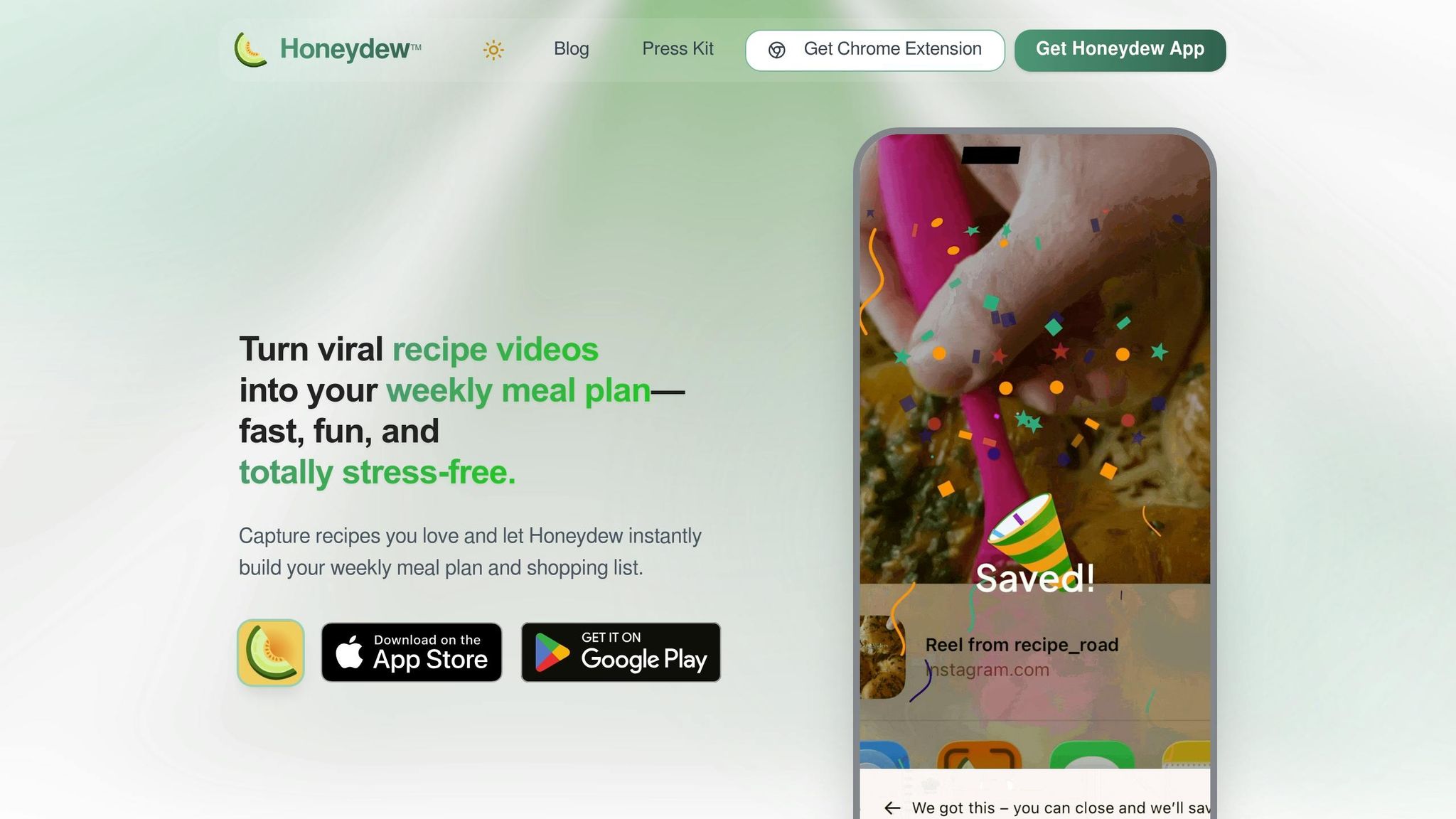
Honeydew Recipe Manager brings all your smart kitchen devices together, creating a seamless meal planning experience. Smart refrigerators track your inventory, AI ovens perfect your cooking, and Honeydew connects these tools with your recipe collection. The result? A smarter, more cohesive kitchen system.
Recipe Imports and AI-Generated Meal Plans
With Honeydew Recipe Manager, you can import recipes from virtually anywhere - whether it’s TikTok, Instagram, YouTube, or a favorite website - with just one tap. Craving something you tried at a restaurant? Snap a photo, and the app generates a copycat recipe for you. Once saved, these recipes become part of your collection, accessible even offline.
The app’s AI meal planner takes the stress out of planning weekly meals. It quickly creates tailored meal plans, accommodating different dietary needs and preferences. You can even share your recipe library with up to six family members, making meal coordination a breeze. From recipe organization to meal planning, Honeydew simplifies every step.
Automated Grocery Shopping
After finalizing your meal plan, Honeydew saves you time by creating grocery lists sorted by store sections. No more wandering the aisles aimlessly. Plus, the app connects directly with Instacart, letting you order ingredients with just a few clicks.
To make things even easier, Honeydew checks your digital pantry inventory to avoid buying items you already have. This feature works seamlessly with smart refrigerators, ensuring your grocery list reflects exactly what’s missing. The result? A smooth, efficient system that keeps your kitchen stocked without unnecessary duplicates.
Pantry Management and Ingredient Substitutions
Honeydew’s Pantry Mode is a game-changer. Simply snap a photo of your fridge, and the app suggests recipes based on what you already have. You can also search for recipes by specific ingredients, helping you use up perishables before they go to waste. Missing an ingredient? Honeydew suggests smart substitutions, saving you an extra trip to the store.
The app doesn’t stop there. It calculates calories and macros, scales serving sizes, and converts recipes between Imperial and Metric units. Plus, its AI cooking assistant is ready to answer your questions or share helpful tips while you cook.
Honeydew offers a free plan with 10 recipe imports, but for $4.17/month, Honeydew Plus unlocks unlimited recipe storage, advanced AI planning features, and priority customer support. Whether you're a casual cook or a kitchen enthusiast, Honeydew transforms how you plan, shop, and cook.
What's Next for AI and IoT in Meal Planning
The future of AI and IoT in meal planning is heading toward systems that are smarter and more autonomous - designed to anticipate your needs. These advancements are set to reshape how we approach food, health, and sustainability.
Predictive Recipes and Real-Time Customization
AI is moving beyond basic recipe suggestions. Future systems aim to predict what you'll want to eat by analyzing your habits, schedule, and even mood. Some platforms already consider calendar events and weather to recommend meals. The focus is shifting from "What do I want to eat?" to "What needs to be used?" By prioritizing ingredients nearing expiration, these systems will automatically adjust meal plans to minimize waste. They’ll even communicate with AI ovens to set the perfect cooking conditions. For better efficiency, using the FIFO (First-In, First-Out) method - placing newer groceries behind older ones - can improve digital pantry management.
On top of these features, future systems will incorporate personal health data to make meal planning even more tailored.
Connecting with Health and Fitness Apps
As AI becomes more advanced, it will integrate seamlessly with health and fitness apps to fine-tune meal recommendations. Platforms already use real-time data from devices like continuous glucose monitors (CGMs) and fitness trackers to adjust meal plans instantly. For example, interventions have shown a 72.7% remission rate for diabetes and a 39% reduction in IBS symptoms. Looking ahead, these systems will analyze factors like sleep quality, workout intensity, and stress levels to personalize nutrition further. By granting AI tools access to broader lifestyle data - while ensuring privacy controls - users can unlock even more precise recommendations.
Reducing Food Waste Through Smart Technology
IoT technology is also tackling food waste by using sensors to monitor conditions like temperature, humidity, and door cycles, predicting spoilage before it happens. These systems can extend food freshness by managing ethylene-sensitive produce and adjusting ventilation in smart storage bins. Predictive inventory management will combine household usage patterns with retailer data to ensure just-in-time restocking, reducing over-purchasing. Additionally, thermal cameras in smart ovens will optimize cooking times and temperatures, preventing food from being ruined. With edge AI, appliances will process data locally, enabling faster decisions about food safety and inventory without relying on the cloud. Together, these innovations are creating a seamless network of devices designed to support sustainable food practices on a larger scale.
Conclusion
Research reveals that planning time can drop from 90 minutes to just 22, while food waste can decrease by as much as 76%. By integrating AI and IoT, meal planning has shifted from a tedious task to a streamlined, personalized process. These technologies handle everything from syncing with your schedule and tracking nutrition goals to keeping tabs on your fridge's inventory.
Among these advancements, the Honeydew Recipe Manager stands out by seamlessly blending digital convenience with practical cooking solutions. The app allows users to import recipes directly from TikTok, Instagram, and YouTube, generates grocery lists synced with Instacart, and uses AI to craft weekly meal plans. Additional features like smart ingredient substitutions and photo-based pantry management - where you can snap a picture of your fridge for instant recipe ideas - help keep your kitchen efficient and organized.
Of course, AI isn't without its quirks. Raul Palacios, Director of the Didactic Program in Dietetics at Texas Tech University, points out some of its current limitations:
"Sometimes, the AI will suggest grams instead of milligrams... Once, it recommended 4 tablespoons of salt when the correct measure was teaspoons".
This highlights the importance of human oversight. Treat AI-generated plans as a starting point - review them carefully and make adjustments as needed to ensure accuracy and suitability for your preferences.
FAQs
Do I need all smart appliances to use AI meal planning?
No, you don’t need to invest in all smart appliances to make AI meal planning work for you. Tools like Honeydew Recipe Manager are designed to integrate seamlessly with your current kitchen setup. They use AI to craft personalized meal plans, generate grocery lists, and even offer pantry suggestions - all without requiring high-tech gadgets.
While smart appliances can add perks like automatic ingredient tracking or real-time inventory updates, they’re not essential. AI meal planning tools are fully functional with your standard kitchen appliances and don’t rely on a smart device ecosystem to deliver results.
How does Honeydew use my fridge and pantry data to cut food waste?
Honeydew takes the hassle out of meal planning by analyzing the contents of your fridge and pantry. It suggests recipes based on ingredients you already have, notifies you about items that are close to expiring, and helps you avoid buying duplicates. This not only simplifies your cooking routine but also cuts down on food waste.
What should I double-check in AI-generated meal plans and recipes?
Make sure AI-created meal plans and recipes match your dietary needs, personal preferences, and the ingredients you have on hand. Double-check the nutritional details and portion sizes provided to confirm they align with what you need.