How AI Suggests Recipes Based on Ingredients You Have
• Updated
AI-powered recipe tools make meal planning simple by analyzing the ingredients you already have and suggesting meals you can cook right away. These tools help reduce food waste, save time, and cut grocery costs. For example, they can:
- Identify ingredients through photos or manual input.
- Match your pantry items to recipes or even create new ones.
- Suggest substitutions for missing ingredients.
- Generate weekly meal plans and grocery lists automatically.
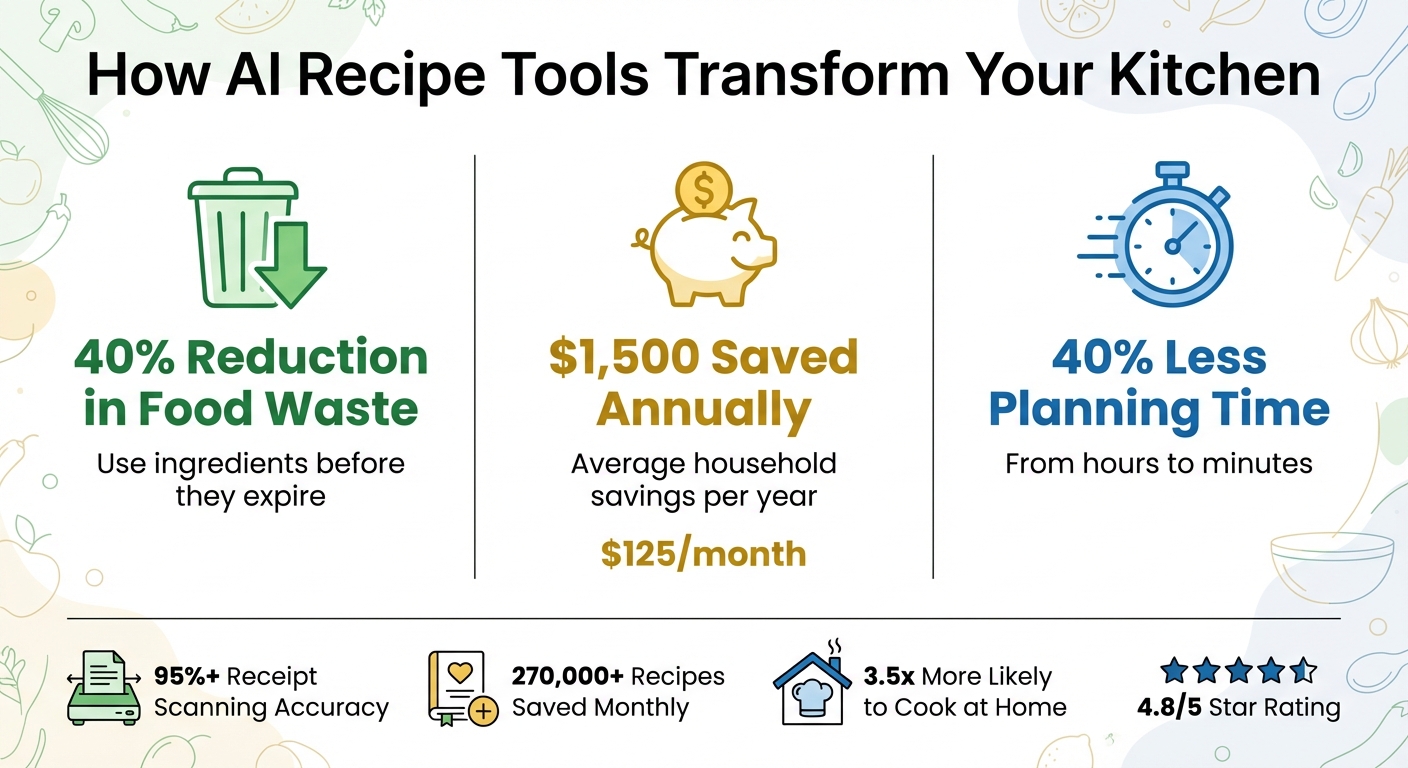
On average, these tools can cut food waste by 40% and reduce meal planning time by 40%. They also help households save up to $1,500 annually by using what’s already in the kitchen. Apps like Honeydew Recipe Manager even offer features like pantry scanning, nutrition tracking, and step-by-step cooking assistance, making everyday cooking easier and more efficient.
AI Recipe Tools: Cost Savings, Waste Reduction, and Time Efficiency Benefits
How to use AI to generate recipes for FREE | ChatGPT + More
How AI Identifies Ingredients in Your Kitchen
Getting personalized recipe suggestions starts with sharing what you’ve got in your kitchen. Modern apps combine visual recognition with manual input to make this process as smooth and accurate as possible. Whether you snap a quick photo or type in your ingredients, these tools pave the way for tailored recipe ideas.
Using Pantry Mode for Instant Ingredient Detection
Take a photo of your fridge or pantry shelf, and AI-powered computer vision steps in to identify the items. These systems are trained on thousands of food images, enabling them to recognize everything from fresh produce to packaged goods.
For example, Honeydew Recipe Manager offers a Pantry Mode feature that lets you photograph your fridge and instantly receive recipe ideas based on what’s visible. This method works particularly well for fresh fruits, vegetables, and other loose items. Just returned from the store? Some apps can even scan your receipt using Optical Character Recognition (OCR) to extract every item you purchased, adding them to your virtual pantry with an accuracy rate of over 95%.
Manual Entry for Precise Ingredient Lists
While photo scanning is quick and convenient, it’s not foolproof. That’s where manual input comes in. After scanning, apps like Honeydew allow you to review and confirm the detected ingredients, correcting any errors along the way. You can also manually add pantry staples like flour, oil, or spices - items that may not show up clearly in photos but are essential for many recipes.
Manual entry is especially helpful for ensuring your inventory is complete. When working with text-based AI tools, including these staples ensures the system doesn’t mistakenly think you’re missing crucial ingredients. With a full and accurate list, the AI can then match your ingredients to a recipe database.
How AI Matches Ingredients to Recipe Databases
Once your ingredients are logged, the AI takes over, cross-referencing your list with recipe libraries to generate personalized suggestions. Some advanced systems, like Honeydew, can even create entirely new recipes tailored to your specific ingredients. This means you’re not limited to existing recipes - the AI can help you whip up something unique with what you already have.
The system also handles partial matches, offering recipe suggestions even if you’re missing a few minor ingredients. This flexibility allows you to make the most of what’s in your kitchen, saving you unnecessary trips to the store.
Finding Recipes Based on What You Already Have
Once you've logged your ingredients, the real magic begins. AI systems use Knowledge Graphs to connect the dots between ingredients, flavors, and cooking techniques. This means even those random leftovers - like half a cup of heavy cream or three-quarters of a bell pepper - can find their way into a recipe. These systems rank recipes using a match score, which evaluates how many ingredients you already have on hand. So instead of random suggestions, you're getting recipes that maximize what’s already in your kitchen.
Some of the more advanced tools even create custom recipes tailored to your exact ingredient quantities and flavor preferences. This is a lifesaver when you have odd amounts of leftovers that don’t fit neatly into standard recipes. It’s a smarter, more efficient way to cook and plan meals.
Reducing Additional Purchases
Did you know the average American family wastes about $1,500 a year on uneaten groceries? AI-powered recipe tools aim to change that by prioritizing recipes that require minimal extra ingredients. For instance, when you use Honeydew Recipe Manager, the system highlights recipes you can make immediately, cutting down on unnecessary grocery runs.
If a recipe calls for ten ingredients and you already have eight, the tool will still suggest it, clearly listing the two missing items. These AI tools are estimated to reduce household food waste by 40%, which means not just less waste but also significant savings over time.
Ingredient Substitution for Flexibility
Running out of an ingredient doesn’t have to derail your cooking plans. Modern AI systems can suggest substitutions based on flavor profiles and cooking properties. For example, if a recipe calls for buttermilk but you only have regular milk and lemon juice, the AI will recommend that as a substitute. Need a binder but you're out of eggs? It might suggest using applesauce or flaxseed meal depending on the dish.
Honeydew’s smart substitution feature takes this a step further by recommending swaps using only what’s already in your pantry. This keeps recipes accessible even when you're missing a few items and helps you learn which ingredients can be swapped out for future cooking experiments.
How AI Simplifies Meal Planning
Gone are the days of spending countless hours planning meals. With AI, the process becomes seamless by connecting your saved recipes, available ingredients, and meal schedules. Instead of deliberating over dinner choices every night, you can have an entire week planned in mere seconds. This efficiency paves the way for automated grocery lists and precise meal organization.
Auto-Generating Grocery Lists
Once you’ve picked out your recipes for the week, AI tools take over by compiling a single, organized grocery list. No more zigzagging through aisles or realizing you’ve forgotten a key ingredient. These tools ensure your shopping trips are quicker and more efficient.
Take Honeydew Recipe Manager, for example. It doesn’t just create grocery lists - it removes items you already have in your pantry and syncs directly with Instacart, allowing you to order groceries with just a few taps. With users saving over 270,000 recipes monthly, the platform uses extensive data to refine and optimize lists.
"The smart grocery lists save me hundreds of dollars a month. I love how it suggests recipes based on what I already have!" - James L.
But it doesn’t stop there. AI also takes meal planning up a notch by creating personalized weekly plans.
Creating Weekly Meal Plans
Using information about the ingredients you already have, AI generates weekly meal plans that are efficient and waste-free. This feature eliminates the nightly stress of deciding what to cook by offering a customized meal calendar that aligns with your preferences and schedule. Whether you follow a specific diet like gluten-free, vegan, or keto, the AI can auto-generate a plan - or you can manually arrange recipes for each day. It strikes the perfect balance between variety, nutrition, and reducing food waste.
For busy families, this tool is a lifesaver. You can view the entire week’s meals at a glance, share the plan with household members, and even adjust portions based on who’s eating. Over time, the AI learns your habits and preferences, making its suggestions increasingly tailored. This ensures you only buy what you need, saving both money and resources.
"I used to waste so much food. Now with Honeydew's meal planning, I buy exactly what I need and save money!" - Mark T.
Cooking with AI Assistance
Once you've planned your meals and gathered your ingredients, AI steps in to guide you through the cooking process. These AI-powered tools transform cooking into a smoother, more interactive experience, helping you go from prep work to plating with ease.
Step-by-Step Guidance and Real-Time Tips
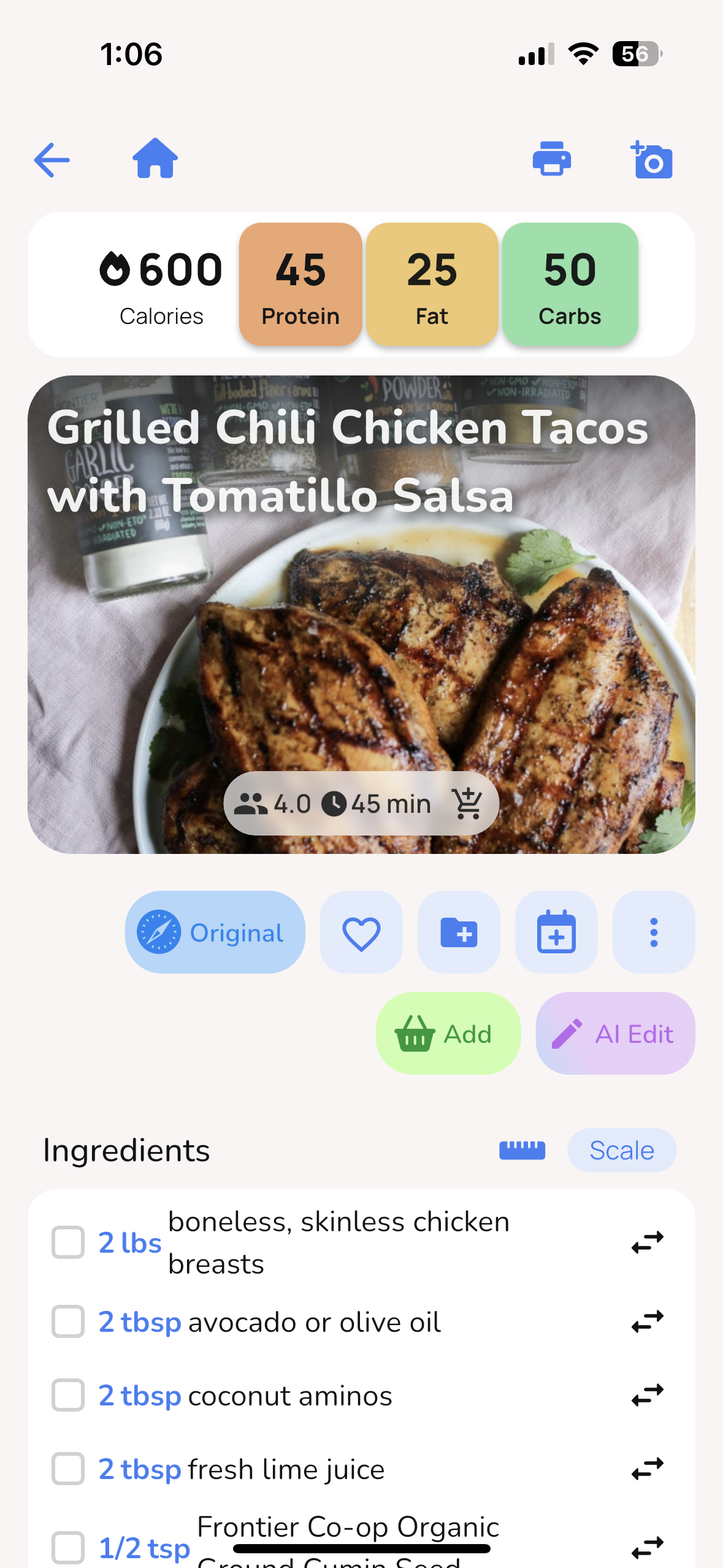
Think of AI as your virtual sous-chef, ready to assist you in real time. Many tools come equipped with hands-free voice commands, so you can have recipe steps read aloud while your hands are busy chopping or stirring. For instance, Honeydew Recipe Manager keeps your screen active throughout the cooking process, eliminating the hassle of touching your device with messy hands.
Need help sautéing vegetables or rolling out dough? AI tools can provide detailed, on-the-spot guidance. Forget an ingredient mid-recipe? No problem - these tools can suggest substitutions based on what you have in your pantry. With built-in timers and unit converters, they also streamline your workflow, saving you time and effort.
What's more, these tools adapt to your skill level. Beginners get detailed step-by-step instructions, while seasoned cooks receive creative tips to elevate their dishes. This tailored approach makes cooking more accessible and enjoyable, with users reportedly 3.5 times more likely to cook at home using AI assistance compared to traditional recipe sources. Plus, AI ensures your meals align with your health and dietary goals while you cook.
Tracking Nutrition and Serving Sizes
For those focused on health, AI takes the guesswork out of tracking calories, macros, and sodium levels. Simply set your serving size, and the AI adjusts ingredient quantities while automatically calculating nutritional information. Tools like Honeydew Recipe Manager even include smart features like calorie and macro calculators that scale with your chosen serving size, seamlessly switching between imperial and metric units as needed.
This real-time tracking makes it easier to stick to your health goals, whether you're managing your weight, building muscle, or following specific diets like keto or gluten-free. By monitoring your intake throughout the cooking process, AI ensures every meal fits your nutritional targets - no manual calculations required.
Benefits of AI-Powered Recipe Suggestions
AI isn't just simplifying meal planning - it’s transforming the way we cook and shop. By matching recipes to the ingredients you already have, AI can cut food waste by 40%, which translates to saving around $125 a month. It also helps reduce grocery bills by up to 20% - a win for both your wallet and the environment.
Beyond cost savings, these tools save time. Instead of spending hours figuring out what to cook, AI analyzes your pantry and suggests recipes instantly. For example, users of the Honeydew Recipe Manager save about 270,000 recipes every month, showcasing just how popular this technology has become for streamlining everyday cooking.
One standout feature is ingredient substitution. As Emily C. shared:
"The ingredient substitution feature is a game-changer for my dietary restrictions. I can adapt any recipe easily!"
Whether you're dealing with allergies, following a keto diet, or just missing an ingredient, AI ensures you can find alternatives that keep your meal both flavorful and nutritious.
Key Benefits Comparison
Here’s a quick look at how AI-powered tools deliver real-world advantages:
| Benefit Category | AI-Powered Advantage | Real-World Impact |
|---|---|---|
| Waste Reduction | Suggests recipes using ingredients close to expiring | Cuts food waste by up to 40% |
| Cost Savings | Tracks pantry inventory to avoid overbuying | Saves about $125 per month |
| Time Efficiency | Creates organized shopping lists and extracts recipes | Reduces planning time from hours to minutes |
| Customization | Offers swaps for allergens or dietary needs (vegan, keto) | Makes any recipe adaptable to restrictions |
| Nutrition Tracking | Provides calorie and macro calculations in real time | Supports health and fitness goals |
| Shopping Integration | Enables one-click grocery orders via Instacart | Skips the need to visit physical stores |
With an impressive 4.8/5-star rating on major platforms, these AI-powered tools are becoming indispensable for home cooks across the country. From saving time to reducing waste, they’re proving their worth in kitchens everywhere.
Conclusion
AI-powered recipe tools are changing how we approach cooking, making it easier to manage ingredients and plan meals. These tools simplify the process, offering creative recipe suggestions and improving efficiency in the kitchen.
Take the Honeydew Recipe Manager, for example. This app demonstrates what AI can do, offering dependable features that help with everything from scanning your pantry to creating full meal plans. It’s designed to take the hassle out of planning so you can focus on cooking. Plus, its consistent performance hints at even more exciting updates in the future.
One standout feature is recipe translation, which opens the door to exploring global cuisines. The app also provides intelligent ingredient substitutions, making recipes more adaptable to your preferences. As Lisa H. put it:
"Honeydew's recipe translation feature lets me try recipes from around the world. It's like having a personal chef!"
With tools like these, cooking becomes not just easier but also more adventurous.
FAQs
How does AI identify ingredients from a photo?
AI leverages cutting-edge image recognition technology to pinpoint ingredients in a photo. By examining key visual elements like shape, color, and texture, AI models - trained on massive food image datasets - can accurately identify individual items, even in photos with cluttered or intricate backgrounds.
These systems use neural networks and computer vision to compare the visual data with a database of known ingredients. This means you can quickly figure out what’s in your kitchen and get recipe suggestions, saving you both time and reducing food waste.
Can AI help me find recipes if I don’t have all the ingredients?
AI has the ability to suggest recipes even when you're short on certain ingredients. By taking stock of what’s already in your kitchen, it can recommend clever substitutions or tweak recipes to match what you have on hand. This not only saves you the hassle of a last-minute grocery trip but also helps cut down on food waste by making the most of your existing ingredients.
Take Honeydew Recipe Manager, for example. This tool leverages AI to create meal ideas based on your pantry staples. It offers smart ingredient swaps and customized meal plans tailored to your household’s needs. It’s a practical and time-saving way to whip up meals without extra stress.
How does AI help you save money and reduce food waste?
AI can be a game-changer when it comes to saving money and cutting down on food waste. By analyzing the ingredients you already have in your kitchen, it can suggest recipes that make the best use of what’s on hand. This means fewer trips to the grocery store and less spending on items you don’t actually need.
On top of that, AI tools can keep track of how fresh your ingredients are and recommend meals that use items close to their expiration date. This way, you’re not only reducing waste but also streamlining your meal planning. It’s a smart way to make your kitchen more efficient while stretching your budget further.