AI Temperature Control for Sous Vide and Slow Cooking
• Updated
AI temperature control is changing how we cook by offering unmatched precision for techniques like sous vide and slow cooking. Unlike ovens or slow cookers with temperature swings as wide as 60°F, AI systems maintain stability within ±0.5°F. This ensures consistent results for everything from tender steaks to perfectly cooked vegetables. Here's why it matters:
- Real-Time Adjustments: Sensors and PID controllers fine-tune heat, steam, and fan speeds to keep temperatures steady.
- Sous Vide Benefits: AI keeps water or air temperatures precise, eliminates the need for vacuum bags with "bagless sous vide", and even cuts cooking time by up to 50% with express modes.
- Slow Cooker Precision: AI prevents overcooking by holding temperatures steady and adapting to recipes with predictive modeling.
- Smart Features: Devices like the Anova Precision Oven 2.0 use HD cameras, food probes, and multi-stage cooking for professional-quality results.
- Convenience: Apps like Honeydew Recipe Manager sync with AI devices, offering recipe suggestions, grocery lists, and hands-free cooking guidance.
AI-powered cooking tools are making consistent, high-quality meals easier to achieve at home, saving time and reducing guesswork.
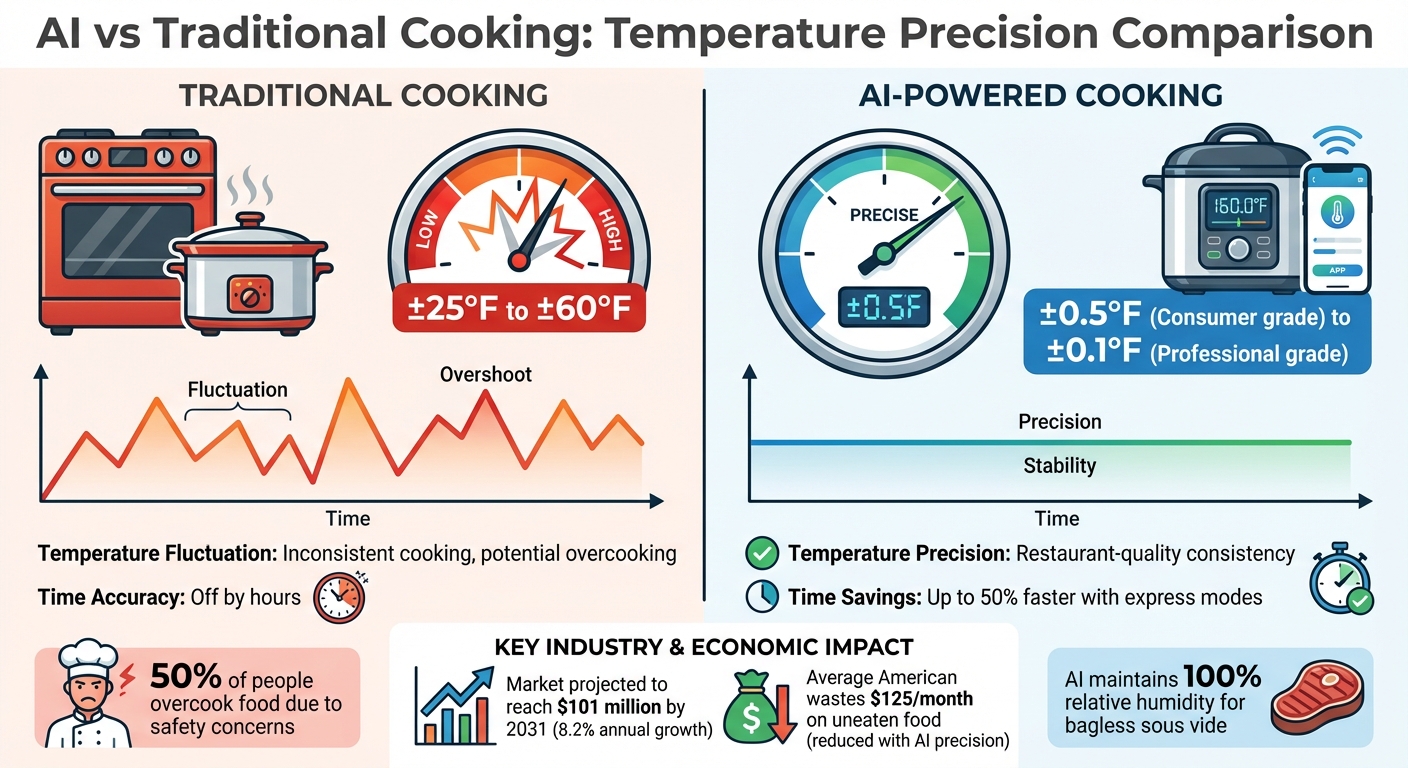
AI vs Traditional Cooking: Temperature Precision Comparison
Agari: The AI Smart Cooker - Master Sous-Vide with Crispy Finishes!
AI Temperature Control for Sous Vide Cooking
Sous vide cooking thrives on precise temperature control - just a few degrees off can mean the difference between a perfectly tender steak and a tough, rubbery one. AI-powered systems address this challenge by keeping water and air temperatures within a narrow margin of ±0.5°F (0.3°C). Professional-grade equipment pushes this even further, achieving an impressive accuracy of ±0.1°C to guarantee consistent results every time.
How AI Maintains Precision in Sous Vide
AI systems use dual-sensor monitoring to deliver the precision that sous vide cooking demands. These sensors measure both the surrounding air and the actual temperature of the food, feeding this data into PID control loops. These loops make real-time adjustments to heating elements, fan speeds, and even steam levels, ensuring the perfect cooking environment. Some advanced systems go a step further, integrating high-definition cameras and internal probes to stop cooking 5°F early, accounting for carryover heat.
Modern AI ovens can even mimic the conditions of a traditional water bath by maintaining 100% relative humidity. This allows for "bagless" sous vide cooking, which eliminates the need for vacuum-sealed bags while still delivering the same precise results. For those looking to save time, "Sous Vide Express" modes use continuous probe monitoring to safely raise ambient temperatures, cutting cooking times by as much as 50% without compromising the core temperature of the food.
These precise technologies take sous vide cooking to new levels of convenience and consistency.
Advantages of AI in Sous Vide
AI's precise control brings a range of benefits to sous vide cooking. Take the Anova Precision Oven 2.0 ($1,299.00), for example - it maintains temperature accuracy within ±0.5°F and offers both wet and dry sous vide modes. The dry mode is particularly handy, keeping food surfaces dry for better crisping while still maintaining internal temperatures as high as 197.6°F.
AI-driven steam ovens also eliminate the size limitations of traditional water baths. They can handle large cuts of meat, like whole turkeys, with the same precise edge-to-edge cooking. However, for sous vide sessions lasting more than four hours, bagging food is still recommended to prevent surface drying, even in AI-controlled environments.
These advancements make sous vide cooking more versatile and accessible, especially for home chefs looking to elevate their culinary skills. This precision also helps with smarter ingredient prep for more efficient cooking.
AI-Driven Temperature Management in Slow Cookers
Traditional slow cookers often rely on basic thermostats, leading to temperature swings of 25°F to 60°F. These fluctuations can throw off cooking times by hours, leaving you unsure if your pot roast will come out perfectly tender or disappointingly tough. By comparison, AI technology brings precision to slow cooking, much like it does in sous vide. AI systems keep temperatures steady within a tight ±0.5°F (0.3°C) range, ensuring consistent cooking from start to finish.
How AI Handles Temperature Fluctuations
AI systems tackle temperature swings by making rapid, real-time adjustments. Using integrated PID controllers and multiple sensors, these systems continuously fine-tune heating and moisture levels to maintain the exact target temperature. Advanced models go a step further with predictive modeling. They calculate the thermal mass of your dish - factoring in both food and liquid - to apply just the right amount of heat. This prevents overshooting, a common issue where traditional controllers build up excess heat during warm-up, potentially overcooking delicate proteins.
How AI Adapts to Different Recipes
Beyond maintaining steady temperatures, AI systems can adapt to the unique needs of various recipes, much like AI meal planning optimizes your kitchen workflow. They manage multi-stage cooking automatically, starting with high humidity to keep meats juicy and transitioning to dry heat for browning - all without requiring manual input. Some devices even feature high-definition cameras to monitor visual cues like browning or crisping, shutting off precisely when your dish reaches the desired state.
Another innovation is predictive thermometers, equipped with up to eight sensors, which determine the ideal cutoff point - usually 5°F below the target temperature - to account for carryover heat. This level of precision addresses a common kitchen challenge: about 50% of people overcook food out of concern for food safety. AI systems eliminate this guesswork by adhering to USDA time-at-temperature standards rather than focusing solely on peak temperature.
Comparing AI-Enhanced Appliances for Precision Cooking
Key Features of AI-Enhanced Cooking Devices
AI-driven cooking gadgets are changing how we approach precision in the kitchen. By combining advanced sensors with smart connectivity, these devices refine techniques pioneered by sous vide and slow cookers. For instance, high-end models can maintain temperature accuracy within ±0.5°F, while professional-grade immersion circulators push this precision to an impressive ±0.1°F. This level of control eliminates the wide temperature swings - ranging from 25°F to 60°F - commonly seen in traditional appliances.
A standout feature of these devices is their ability to use multiple sensors. By measuring both ambient (dry bulb) and food (wet bulb) temperatures, they ensure consistent results. Many also come equipped with Wi-Fi, enabling remote monitoring and control through smartphone apps. However, some models, like the Joule Sous Vide, rely entirely on app-based operation, making a phone essential. If you'd rather not depend on your phone, options like the Anova Precision Cooker Pro or Instant Accu Slim feature built-in touchscreens or digital interfaces for added convenience.
What truly sets advanced AI devices apart is their multi-stage programming. These systems can seamlessly transition between cooking methods, such as moving from steam-based sous vide to high-heat browning without requiring manual adjustments. Some even feature HD cameras to monitor food as it cooks, automatically stopping when the perfect browning is achieved.
These innovations build on the precision already seen in sous vide and slow cooking, cementing AI's role as a game-changer in modern kitchens.
Comparison Table: AI-Enhanced Cooking Devices
| Device | Type | Temperature Range | Precision | Key AI/Smart Features | Price |
|---|---|---|---|---|---|
| Anova Precision Oven 2.0 | Combi Oven | Up to 482°F | ±0.5°F | HD camera, ingredient recognition, recipe conversion, multi-stage cooking | $1,299.00 |
| Anova Precision Cooker Pro | Immersion Circulator | 77°F–197°F | ±0.1°F | Wi-Fi/app control, touchscreen, 1,200W power | $271.97 |
| Anova Precision Cooker Mini | Immersion Circulator | 77°F–197°F | ±0.1°C (≈0.2°F) | App-controlled, remote monitoring, 850W power | $99.00 |
| Joule Sous Vide | Immersion Circulator | Up to 208°F | High | App-only control, magnetic base, compact design | $249.95 |
| Instant Accu Slim | Immersion Circulator | Up to 203°F | High | Built-in digital interface, 800W power | $97.99 |
| Crock-Pot 7-Qt with Sous Vide | Slow Cooker/Multi-Cooker | 200°F (Low)–300°F (High) | ±1°F (with probe) | Programmable timer, integrated probe | ~$70–$95 |
| Cuisinart Cook Central 3-in-1 | Multi-Cooker | 150°F–400°F | Standard | Brown/sauté, steam, and slow cook modes | $100.00 |
For those on a budget, the Crock-Pot 7-Quart Programmable with Sous Vide offers a versatile option, earning a 4.7/5 rating from 101 customer reviews. It combines slow cooking with basic sous vide functionality, priced between $70 and $95. Meanwhile, the Anova Precision Cooker Mini delivers near-professional accuracy (±0.1°C or ≈0.2°F) for just $99.00, rivaling devices that cost much more.
Higher wattage models also play a role in cutting down cooking times, particularly for larger quantities, making them a practical choice for busy kitchens. This combination of precision and efficiency highlights how AI-driven appliances are transforming home cooking into a more reliable and streamlined experience.
Using Honeydew Recipe Manager with AI Cooking Devices
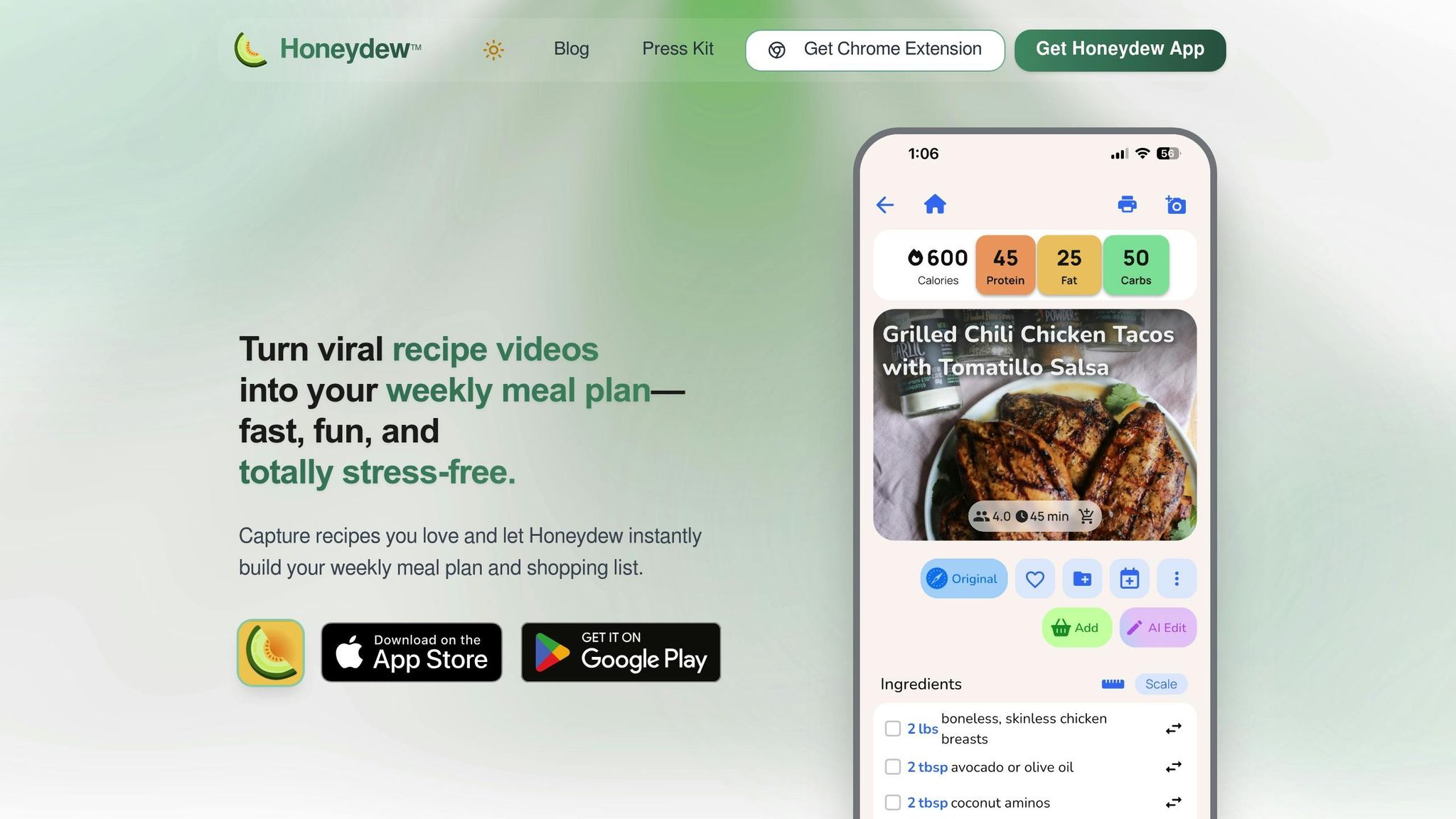
Using Honeydew to Simplify Recipe Planning
Honeydew Recipe Manager connects the dots between finding precision cooking recipes online and executing them flawlessly with your AI-powered appliances. Its standout feature? The ability to import recipes directly from social media. By automatically extracting ingredients and steps, the app eliminates the hassle of pausing videos or scribbling down notes.
Once recipes are imported, Honeydew’s drag-and-drop meal calendar helps you organize your weekly cooking sessions. The built-in AI takes it a step further by suggesting meals based on what’s already in your pantry - perfect for recipes that require specific cuts of meat or proper vacuum sealing. After finalizing your meal plan, the app generates a detailed grocery list, complete with one-click Instacart ordering. Whether you’re planning a slow-cooked brisket or perfectly tender salmon, Honeydew ensures you’re fully stocked for success.
For slow cooker fans, the app’s Pantry Mode is a game-changer. Simply snap a photo of your pantry, and Honeydew suggests recipes using what you have on hand. This feature can help cut down on the $125 the average American wastes monthly on uneaten food. With around 270,000 recipe saves processed each month, Honeydew has established itself as a go-to tool for home cooks looking to simplify meal prep. These planning features lay the groundwork for the app’s advanced cooking optimization tools.
AI Features in Honeydew for Cooking Optimization
Honeydew’s "Ask Honey" AI assistant is like having a personal chef at your fingertips. Need to make a sous vide recipe dairy-free or swap an ingredient in a slow cooker dish? The AI provides alternatives that maintain the recipe’s moisture, texture, and overall quality.
The app also integrates seamlessly with Wi-Fi–enabled cooking devices, such as the Anova Precision Oven 2.0 and sous vide circulators. It can translate recipe instructions into precise settings for temperature, mode, and cooking time. This means you can import a recipe from Instagram, tweak it to fit your dietary needs, and send the exact cooking parameters directly to your device - no guesswork required.
Cooking prep is even easier with Honeydew’s compatibility with Alexa and Google Assistant. You can manage timers and follow voice-guided instructions without needing to touch your phone, keeping your hands free for chopping, stirring, or seasoning. It’s no surprise the app boasts an impressive 4.8/5 star rating. Verified user James L. raves:
"The smart grocery lists save me hundreds of dollars a month. I love how it suggests recipes based on what I already have!"
Practical Tips for Using AI Temperature Control at Home
Getting Started with AI Cooking Devices
Start by downloading the app for your AI-enabled cooking appliance. This app not only allows for remote monitoring but also lets you convert standard recipes into precise cooking instructions. Just snap a photo of a cookbook page or paste a recipe URL into the AI interface, and you're ready to go.
To get the most out of your device, opt for models equipped with food probes and cameras. High-end options often feature cameras with 1080×1920 resolution, capable of identifying food types and tracking browning in real time. Many systems also include chatbots to assist with troubleshooting and maintenance. You can further refine your device’s performance by providing feedback - marking suggested settings as a "thumbs up" or "down" helps the AI adapt to your preferences. Features like "Cook Recall" save your favorite settings, so the next time you prepare the same dish, the AI automatically adjusts to your preferred temperature and steam levels.
Once your device is set up, dive into these best practices to make the most of your sous vide and slow cooking.
Best Practices for Sous Vide and Slow Cooking
After configuring your AI cooking device, follow these tips to ensure consistent, high-quality results.
Focus on uniformity. Cut vegetables and proteins into similar sizes to help the AI sensors distribute heat evenly. Avoid overcrowding trays or water baths, as free circulation of steam and water is crucial for maintaining the precise cooking environment.
For sous vide cooking, removing air from the bag is essential. Use either vacuum sealing or the water displacement method to ensure even heat transfer and prevent oxidation. Always rely on the integrated food probe to monitor the core temperature. For the best results, set the probe to alert you 5°F before reaching your target temperature to account for carryover heat.
Safety is a priority for long cooking sessions. Dishes that cook for more than four hours must reach at least 131°F (55°C) within that time to prevent bacterial growth. Since sous vide and slow cooking often operate at lower temperatures, finish meats in a hot skillet or use a torch to achieve the Maillard reaction (browning). To get a proper sear, make sure to pat meat completely dry with paper towels after removing it from the sous vide bag - moisture can interfere with browning.
Here’s a handy table to guide you on cooking times and temperatures for various foods:
| Food Type | Preferred Doneness | Temperature | Minimum Time |
|---|---|---|---|
| Chicken Breast | Soft and juicy | 145°F / 63°C | 1h 30m |
| Steak (Beef/Lamb) | Medium-rare | 129°F / 54°C | 1h 30m |
| Pork Chops | Rosy pink | 135°F / 57°C | 1h |
| Fish (Tender/Flaky) | Medium | 124°F / 51°C | 30m |
| Eggs | Creamy yolks | 145°F / 63°C | 45m |
| Root Vegetables | Fully cooked | 183°F / 84°C | 1h |
(Source: Anova Sous Vide Time and Temperature Guide)
Modern AI combi ovens offer even more flexibility with a "bagless sous vide" mode that uses 100% humidity. This feature is perfect for batch cooking while still maintaining precision.
Conclusion: The Future of AI in Precision Cooking
AI-driven temperature control has turned sous vide and slow cooking into a precise science. These advanced systems can maintain temperatures within an impressive ±0.5°F, a level of accuracy that traditional ovens simply can't match. The result? Consistently restaurant-quality meals prepared at home, with less waste and more reliability.
The market for AI-powered cooking machines is on a steep growth trajectory. By 2031, it's expected to hit $101 million, with an annual growth rate of 8.2%. Future devices are set to become even smarter, incorporating 3D scanning to automatically identify food, eliminating the need for manual input altogether. Stephen Svajian, CEO of Anova, highlights the potential of these advancements:
"Steam, combined with heating algorithms written in the age of endless computing power, can maintain temperature with levels of precision that would outperform traditional ovens".
Beyond hardware, smart tools like Honeydew Recipe Manager are already transforming the way we cook. This app takes recipes from social media, cookbooks, or websites and optimizes them for AI-powered appliances. Its "Ask Honey" feature suggests ingredient substitutions without compromising the recipe, and Instacart integration streamlines grocery shopping by automating fulfillment.
Looking ahead, autonomous cooking systems will handle complex, multi-step processes with ease. Imagine a device seamlessly transitioning from low-temperature cooking to a 550°F sear in under a minute - all without any intervention. Dean Khormaei, CEO of Chef AI, envisions an even more advanced future:
"Eventually, there will be smart robots that act as personalized chefs cooking every meal, perfectly on request".
These advancements promise to empower home cooks by handling the technical details, leaving you free to focus on creativity and flavor. Whether you're meal prepping for the week or perfecting a delicate dish, AI tools enhance your skills and make precision cooking accessible to everyone. The future of cooking is not just smart - it’s personal, precise, and incredibly exciting.
FAQs
How does AI improve precision in sous vide cooking?
AI brings a new level of precision to sous vide cooking by keeping water temperatures steady, usually within a tight range of ±0.5°F. Thanks to advanced sensors and algorithms, it ensures even heat distribution, prevents overcooking, and delivers perfectly cooked meals consistently.
With real-time temperature monitoring and adjustments, AI takes the guesswork out of the process. Whether you're cooking steak, seafood, or vegetables, it helps you achieve dishes that rival what you'd find in a high-end restaurant - all with minimal effort.
How does AI improve slow cooking compared to traditional methods?
AI brings a new level of convenience to slow cooking by offering precise temperature control. This ensures your meals are cooked evenly and consistently, taking the guesswork out of the process.
By automatically adjusting the settings, AI prevents overcooking, so you don’t have to constantly check on your dish. The result? Perfectly tender and flavorful meals that feel like they came straight from a professional kitchen - all without the hassle of manual fine-tuning.
Can AI cooking devices adjust recipes to fit specific dietary needs?
AI-powered cooking devices can adjust recipes to suit different dietary preferences and restrictions. By tweaking ingredients, portion sizes, and nutritional content, these devices help create meals that fit specific needs like low-carb, gluten-free, or vegetarian diets. This makes it simpler to enjoy meals tailored to your health goals without added hassle.