AI Temperature Control vs. Traditional Methods
• Updated
AI-powered temperature control is changing how we cook by using sensors and automation to deliver consistent, precise results. Unlike manual methods that rely on timers and guesswork, AI systems adjust heat in real time, improving cooking accuracy and energy efficiency. With a growing market projected to reach $101 million by 2031, these technologies are becoming more accessible, offering features like automatic shutoff, food identification, and integration with smart home systems.
Key Takeaways:
- Precision: AI systems achieve ±1.8°F accuracy, eliminating uneven cooking.
- Energy Savings: Real-time adjustments reduce waste and optimize efficiency.
- Convenience: Devices like the June Oven and Anova Precision Oven automate cooking with advanced sensors and pre-set programs.
- Market Growth: The global AI cooking market was valued at $59.2 million in 2024 and is expected to grow at an 8.2% CAGR.
AI technology simplifies cooking, saves energy, and ensures perfect results every time, making it a game-changer for home kitchens.
wan AIChef Ultra cooking system: chef mode, temperature control, $3,999 US launch
How AI Temperature Control Works
AI temperature control operates through a closed-loop system that keeps a constant eye on the conditions inside your cooking appliance. By using sensors to monitor food temperature in real time, these systems make precise adjustments to heat levels, switch modes, or even shut down when necessary. This approach builds on earlier shifts away from manual cooking methods, offering a new level of precision and convenience.
Real-Time Monitoring and Adjustments
At the heart of these systems is multi-sensor data fusion, which enables precise, real-time heat adjustments. Advanced appliances gather data from multiple tools like thermal cameras, platinum wire sensors, and internal food thermometers. A great example is the June Oven, a smart oven equipped with six carbon-fiber heating elements. It processes information from a platinum wire temperature sensor and a glass bead food thermometer every second. Plus, its internal HD camera, powered by a neural network, identifies food and suggests one of over 200 automatic cooking programs. As June Oven puts it:
"The knowledge from our professionally-trained chefs has been translated into software to create our automatic multi-step Cook-Programs guaranteeing you consistent and delicious results every time."
Other systems take a different approach to sensing and adjusting. For instance, Software-Defined Cooking (SDC), developed with a modified Sharp SMC1441CW microwave, uses 32 neon lamps powered by the microwave's electromagnetic field. These lamps map hot and cold spots in real time, and the system moves food on a programmable turntable to target specific thermal zones. The Association for Computing Machinery describes it like this:
"SDC first senses the thermal gradient by using arrays of neon lamps that are charged by the electromagnetic (EM) field a microwave produces. SDC then modifies the EM-field strength to desired levels by accurately moving food on a programmable turntable."
AI systems don’t just measure current temperatures - they also predict future ones. By analyzing electromagnetic field intensity data, they estimate spatial temperature distributions, helping to avoid overcooking. High-precision tools like glass bead thermometers, accurate to within ±1°C (approximately ±1.8°F), ensure food is cooked to perfection.
This level of accuracy not only improves cooking but also reduces energy waste.
Energy Optimization and Efficiency
AI-powered systems take the guesswork out of cooking by determining the exact amount of heat needed and stopping when the target temperature is reached. This closed-loop control minimizes energy waste by halting heating as soon as the food reaches the ideal temperature. Technologies like infrared spectroscopy push energy efficiency even further. For example, Philips Kitchen AI uses infrared spectroscopy to detect changes in moisture and texture during cooking, adjusting heat output in real time to deliver restaurant-quality results while conserving energy.
McDonald's Japan tested an AI-powered fryer that adjusts oil temperature dynamically based on batch size and load, optimizing energy use and extending the oil's lifespan. Some systems even connect to home energy management platforms, allowing users to schedule energy-intensive cooking tasks during off-peak hours, saving on electricity costs.
Integration With Smart Technologies
Today’s AI temperature control systems are part of a connected kitchen ecosystem. They integrate with smart home hubs like Amazon Alexa and Google Home, enabling hands-free voice commands and real-time updates. Through mobile apps and smartwatch notifications, users can monitor cooking progress and even sync devices for a seamless experience. For instance, Samsung’s Bespoke AI Kitchen Hub can coordinate with smart refrigerators to check ingredient availability and suggest recipes with pre-set temperature settings.
Some devices, like the June Oven, priced between $899 and $1,299, offer over-the-air updates through juneOS. This means users gain access to new cooking modes, updated temperature algorithms, and fresh recipes without needing to replace hardware - ensuring the appliance gets smarter over time.
For home cooks using platforms like Honeydew Recipe Manager (https://honeydewcook.com), recipes can be transferred directly to compatible AI devices. These devices then automatically adjust temperature and program settings, making meal preparation even easier.
Traditional Temperature Control Methods
For years, home cooks have relied on mechanical thermostats and manual timers to manage cooking temperatures. These systems operate using physical components like bimetallic strips or wax pellets, which expand or contract in response to heat changes. In gas ovens, a gas-filled bulb and capillary tube regulate burner flow by manipulating diaphragm pressure as temperatures increase. However, these systems work as binary controllers: the heating element is either fully on or completely off, with no middle ground.
This approach stands in stark contrast to the precision that AI-powered systems can achieve, as we'll explore later.
Manual Thermostats and Timers
Mechanical thermostats and timers depend entirely on physical regulation, lacking the finesse of modern AI systems.
Traditional thermostats struggle to maintain precise temperatures, typically fluctuating by 2–4°F around the target setting. To prevent rapid on/off cycling - which can lead to mechanical wear - these systems incorporate hysteresis, a built-in delay that slows their response to small temperature changes. Some models even include a "heat anticipator", a small internal heater designed to shut the system off slightly early, reducing the risk of overshooting the desired temperature.
Manual timers in appliances like microwaves and ovens add another layer of guesswork. Cooks must estimate cooking times, often leading to repeated checks and reheating. If the initial time is off, the process becomes a tedious cycle of testing, adjusting, and waiting.
Inconsistencies and Energy Overuse
Traditional methods add heat without accounting for the food's state, leading to uneven results. For example, microwave standing waves create hotspots and cold spots, and while turntables help, they don't fully solve the problem. The ACM research team highlights this limitation:
"Today's consumer microwaves are mainly used as blunt heating appliances... rather than precise cooking instruments."
This imprecise heating also wastes energy. In traditional stovetop cooking, about 25% of the energy applied to a pan is lost to the surrounding environment and the cooktop surface. Additionally, temperature overshooting - common in these systems - wastes even more energy because they can't adjust dynamically. Ovens and refrigerators, which rely on thermostatic controls, account for nearly half of household electricity use in the United States. Yet, many households with programmable thermostats still use manual settings, further increasing energy consumption.
When it comes to determining doneness, traditional methods often fall short. Techniques like pressing on a steak with your finger, following "minutes per pound" formulas, or checking if juices run clear are notoriously unreliable. As Sho Spaeth, Senior Editor at Serious Eats, explains:
"Common tricks like pressing on your steak with a finger to assess its internal temperature are notoriously unreliable."
Even a small temperature difference - just 1 or 2 degrees - can be the deciding factor between a perfect custard and a curdled mess, or between tender shrimp and a rubbery disaster. These challenges highlight the limitations of traditional cooking tools and methods.
Comparing Precision and Efficiency: AI vs. Traditional Methods
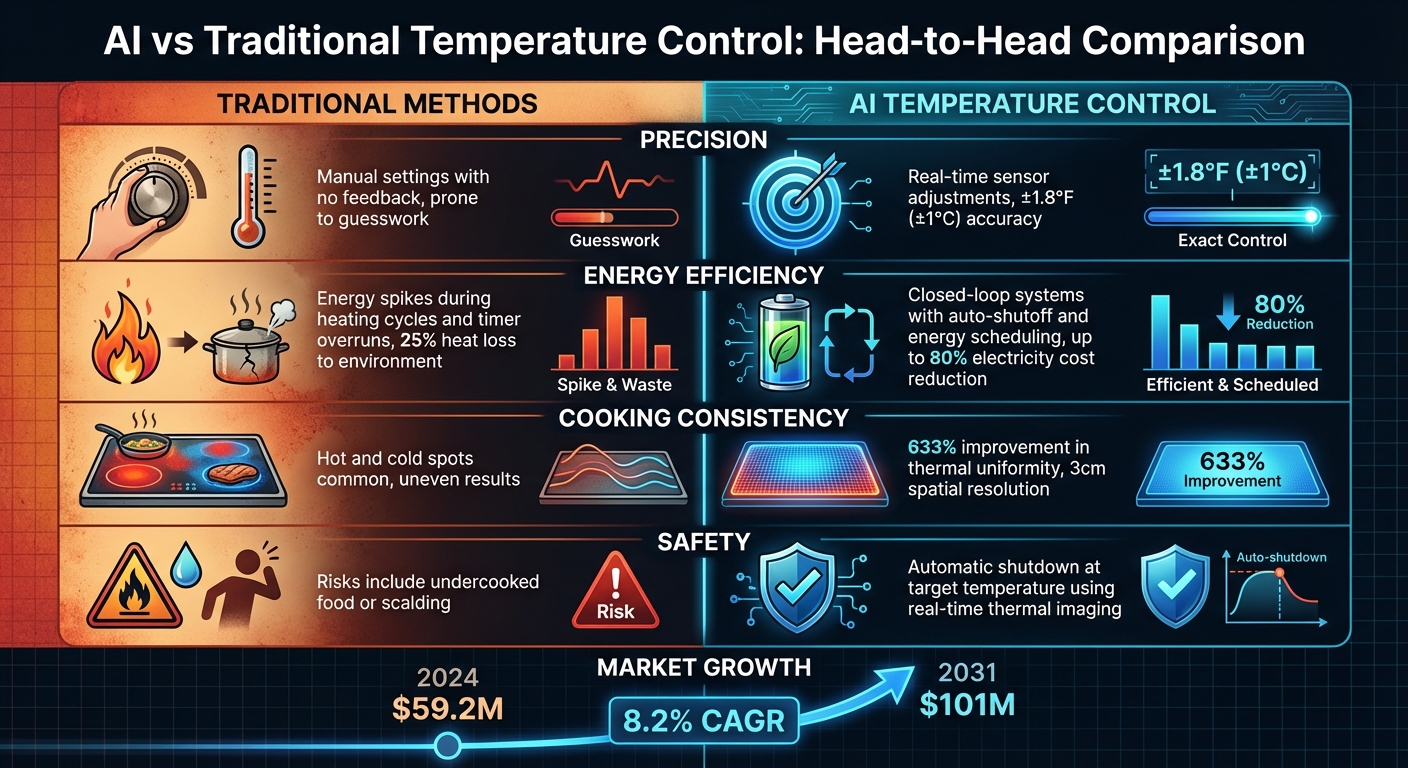
AI vs Traditional Temperature Control: Precision, Efficiency and Consistency Comparison
Comparison Table: Key Metrics
AI systems bring a game-changing approach to temperature control by continuously adjusting heat based on real-time sensor feedback. Unlike traditional methods that depend on preset timers, AI employs closed-loop control, using thermal cameras or sensors to monitor food temperature in real time. This allows the system to automatically stop heating once the desired temperature is reached. On the other hand, traditional methods lack this adaptability, heating food without making real-time adjustments.
The table below breaks down how AI temperature control stacks up against traditional methods across essential metrics:
| Metric | Traditional Methods | AI Temperature Control |
|---|---|---|
| Precision | Relies on manual settings with no feedback; prone to guesswork | Real-time sensor adjustments with an accuracy of approximately ±1.8°F (±1°C) |
| Energy Efficiency | Energy spikes during heating cycles and timer overruns | Closed-loop systems with auto-shutoff and energy scheduling |
| Cooking Consistency | Hot and cold spots are common, leading to uneven results | 633% improvement in thermal uniformity |
| Safety | Risks include undercooked food or scalding | Automatic shutdown at target temperature using real-time thermal imaging |
These metrics highlight significant advancements, such as improved thermal uniformity and precise temperature control. AI systems even achieve temperature adjustments at a spatial resolution of just 3 cm, enabling targeted heating for specific food areas.
Benefits of AI Temperature Control for Home Cooks
The advantages outlined in the table translate directly into practical benefits for everyday cooking. AI systems address common inefficiencies of traditional methods, such as energy waste from overcooking or the need for multiple heating cycles to fix cold spots. With AI, the target temperature is reached on the first attempt. Additionally, traditional thermostats often swing as much as 20°F above or below the setpoint, while AI maintains steady, precise temperatures, reducing both electricity consumption and food waste.
Consider this real-world example: In August 2025, McDonald’s Japan tested an AI-powered fryer system that dynamically adjusted oil temperature based on batch size and load. This setup not only optimized energy usage but also ensured consistent results, even during high-volume operations. For home cooks, similar technology means better energy conservation and evenly cooked meals every time.
The market for AI-powered cooking devices is also growing rapidly. In 2024, the global market was valued at $59.2 million, and it’s projected to reach $101 million by 2031. Products like the June Oven, priced between $899 and $1,299, bring restaurant-quality precision into home kitchens, making AI-driven cooking more accessible than ever.
Practical Applications and Examples
Examples of AI-Powered Devices
Take the June Oven, for instance. This smart kitchen gadget showcases how AI can transform cooking into a precise and effortless experience. It uses six carbon-fiber heating elements that analyze data every second to maintain an even temperature inside the oven cavity. Its internal HD camera, powered by a neural network, identifies what you’re cooking through a feature called Food ID. This allows the oven to automatically select the right cooking program. Plus, its glass bead thermometer offers highly accurate readings with a precision of ±1°C, adjusting settings on the fly and sending instant updates.
Then there’s the Anova Precision Oven 2.0, which earned the title of "Editors' Pick #1" at the 2025 Inspired Home Show. This oven is equipped with the "Anova Intelligence" system, which goes beyond simple cooking. It identifies ingredients, recommends the best cooking methods, and can even convert instructions from packaged foods or cookbooks into precise oven settings. The oven also features advanced steam and humidity control, as well as browning detection through livestreaming cameras, ensuring consistently great results across a variety of cooking styles.
Both ovens are designed to save time and energy. The June Oven, for example, uses instant-on carbon fiber elements and twin convection fans that double airflow, cutting down cooking times and reducing electricity usage. These features not only make meal preparation faster and easier but also help minimize energy waste, offering a smarter way to manage your kitchen.
How Honeydew Recipe Manager Works With AI Cooking
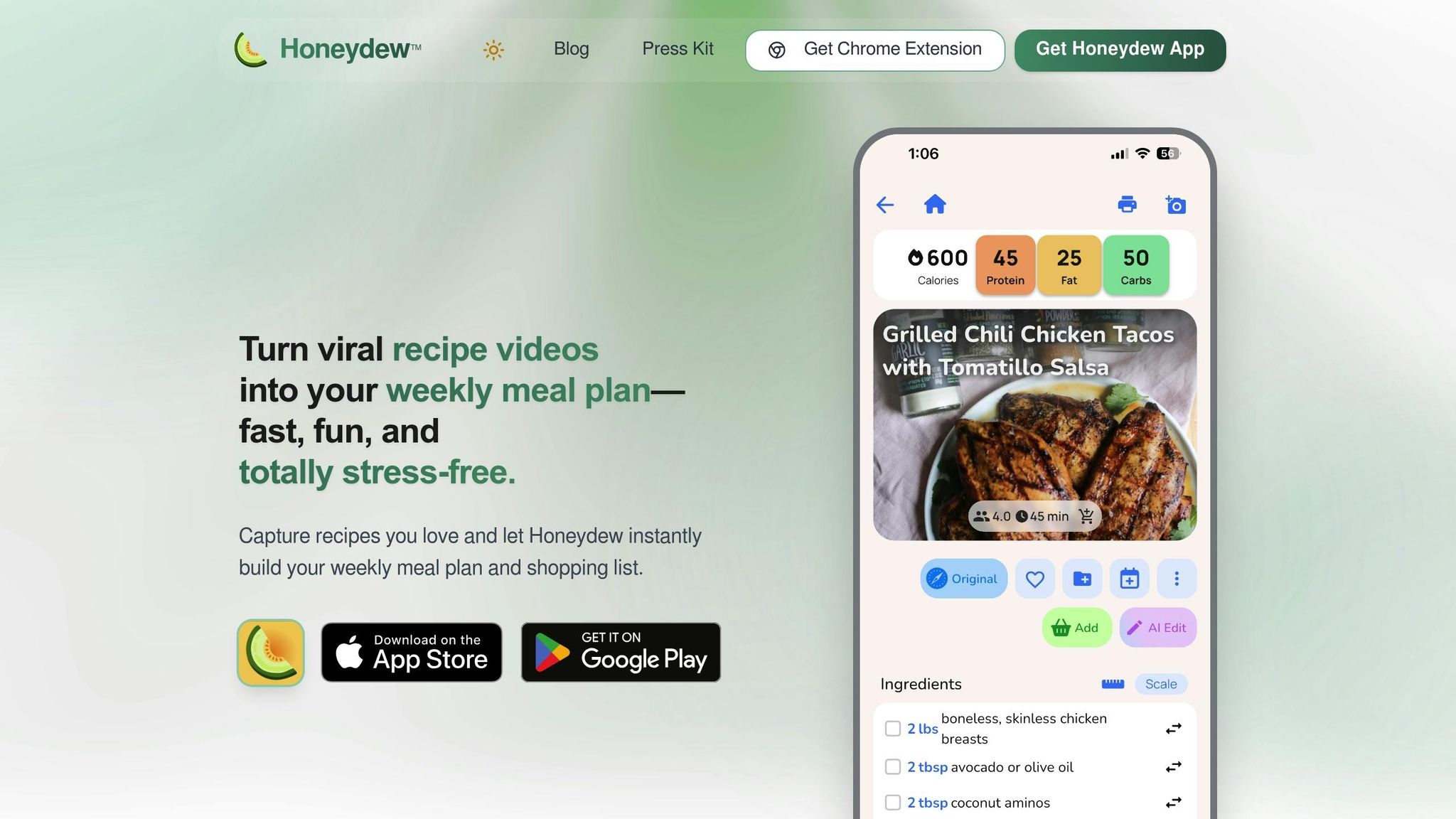
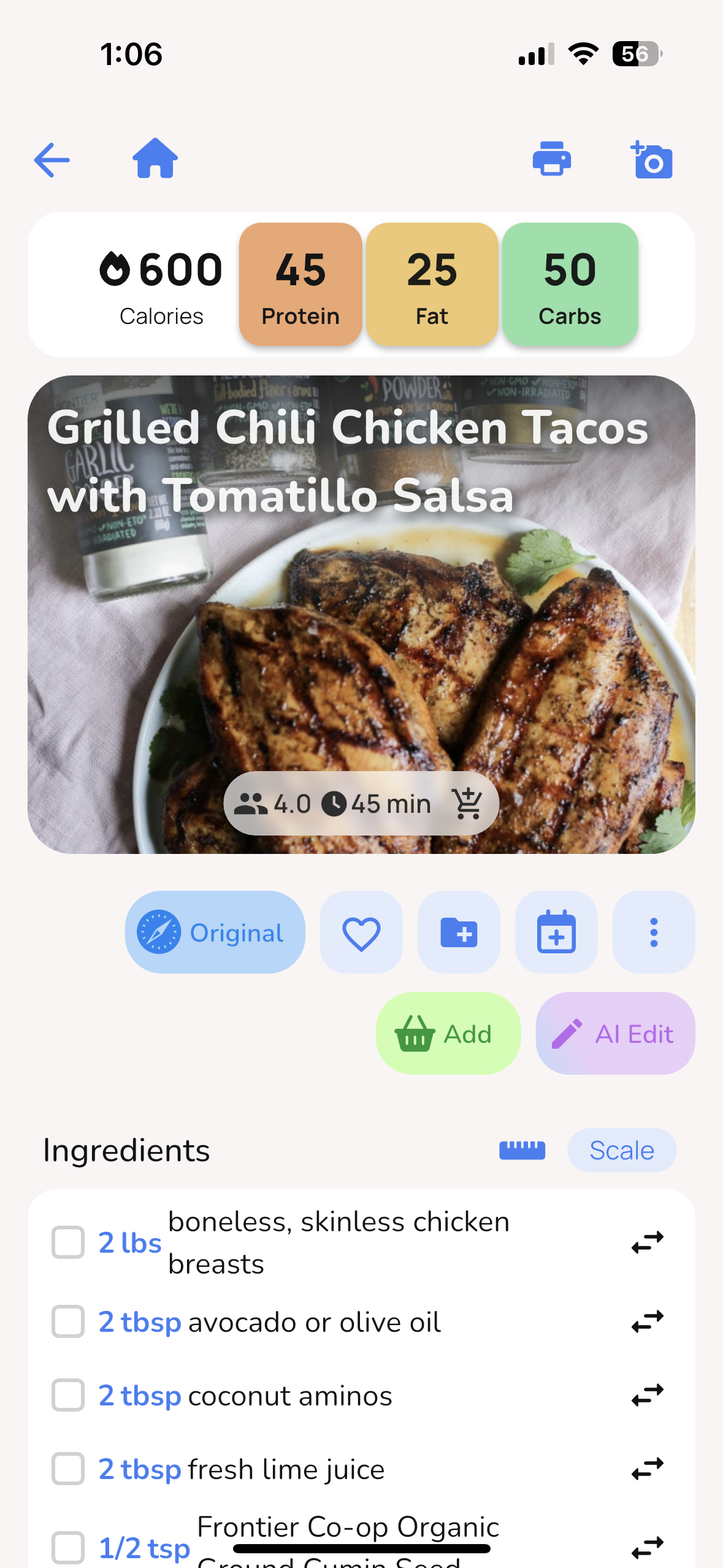
While AI ovens handle temperature and cooking precision, tools like the Honeydew Recipe Manager take meal planning and preparation to the next level. This app works seamlessly with AI-powered kitchen devices, simplifying everything from recipe scaling to grocery shopping. You can import recipes from platforms like TikTok, Instagram, YouTube, or any website, and Honeydew automatically adjusts servings in Imperial units to match your smart oven’s Fahrenheit settings.
The app’s AI meal planner can create an entire week’s menu in just seconds. It also generates grocery lists that are sorted by store sections, making shopping trips more efficient. One standout feature is its smart ingredient substitution. If you’re missing an ingredient, Honeydew suggests alternatives that work with your oven’s preset programs, ensuring you never miss a beat.
For even more convenience, Honeydew Plus, priced at $4.17/month, offers unlimited recipe storage, household sharing for up to six family members, and integration with Instacart. This means you can order ingredients directly through the app and enjoy a seamless cooking experience, all while leveraging the precision of AI-driven kitchen technology.
Conclusion: The Future of Cooking With AI Temperature Control
AI temperature control is reshaping the way we cook at home. With real-time sensors, closed-loop automation, and adaptive learning, it removes the guesswork that often complicates traditional cooking methods. The result? Consistent precision and evenly cooked meals every time. This leap forward is changing the home kitchen experience.
Beyond better cooking, the financial and energy savings make a strong case for embracing AI in the kitchen. Infrared cooking technology powered by AI can cut electricity costs by up to 80%, while predictive maintenance features extend the lifespan of appliances and reduce waste. Riya Nanda from Techstrong.ai sums it up perfectly:
"The kitchen of the future will be intelligent, intuitive and fully connected to our needs".
AI-powered devices also work hand in hand with smart planning tools to create a seamless cooking ecosystem. For example, the Honeydew Recipe Manager takes the hassle out of meal preparation by automatically scaling recipes, generating grocery lists organized by store section, and even crafting weekly menus in seconds. Its smart ingredient substitutions ensure you’re never left scrambling for alternatives.
Adopting AI in your kitchen doesn’t have to be complicated. Start with devices that feature internal temperature probes and real-time monitoring, explore multi-step cooking programs, and use apps like Honeydew to simplify recipe management and grocery shopping.
The future of cooking isn’t about replacing your creativity - it’s about freeing you from the tedious tasks like constant monitoring and complex calculations. With AI handling precision and efficiency, you can focus on what truly matters: enjoying delicious meals and spending quality time with the people you care about.
FAQs
How does AI temperature control make cooking more precise compared to traditional methods?
AI-powered temperature control takes cooking accuracy to the next level. By utilizing advanced sensors and smart algorithms, it continuously monitors and adjusts the temperature in real time. This means your food is cooked at consistent heat levels, minimizing the chances of overcooking or undercooking.
Traditional cooking methods often depend on manual adjustments and personal experience, which can leave room for error. AI systems, on the other hand, eliminate the guesswork. Whether you're baking, roasting, or simmering, these systems ensure precise results, making your cooking process easier and more reliable.
How do AI-powered cooking devices save energy compared to traditional methods?
AI-powered cooking devices are changing the way we cook by using smart technology to cut down on energy use. These devices are equipped with real-time sensors and advanced systems that adjust settings on the fly, ensuring they only use the energy necessary to cook your food perfectly. The result? Less energy wasted and more efficient cooking.
These systems adapt to variables like food type, weight, and temperature, tailoring their performance to the specific task at hand. This not only reduces energy consumption but also makes them a more eco-conscious and budget-friendly addition to your kitchen. On top of that, their precision ensures consistently great results, so you can enjoy perfectly cooked meals while keeping utility costs in check.
How do AI cooking systems work with smart home technology?
AI cooking systems work hand-in-hand with smart home technology, thanks to IoT (Internet of Things) and advanced automation. These systems rely on real-time sensor data and machine learning to fine-tune cooking settings like temperature and time, ensuring your meals are cooked to perfection. Picture a smart oven that monitors the state of your food and adjusts heat levels on the fly to deliver the best results.
On top of that, AI-powered cooking devices seamlessly integrate with smart home ecosystems. Features like voice commands, remote monitoring, and automation through smart speakers or home hubs make managing your kitchen easier than ever. Imagine getting a notification on your phone when dinner is ready or having the device automatically set cooking parameters based on a recipe. This combination of technology turns your kitchen into a smarter, more convenient space while also boosting energy efficiency.