AI Tools for Creating Fusion Recipes
• Updated
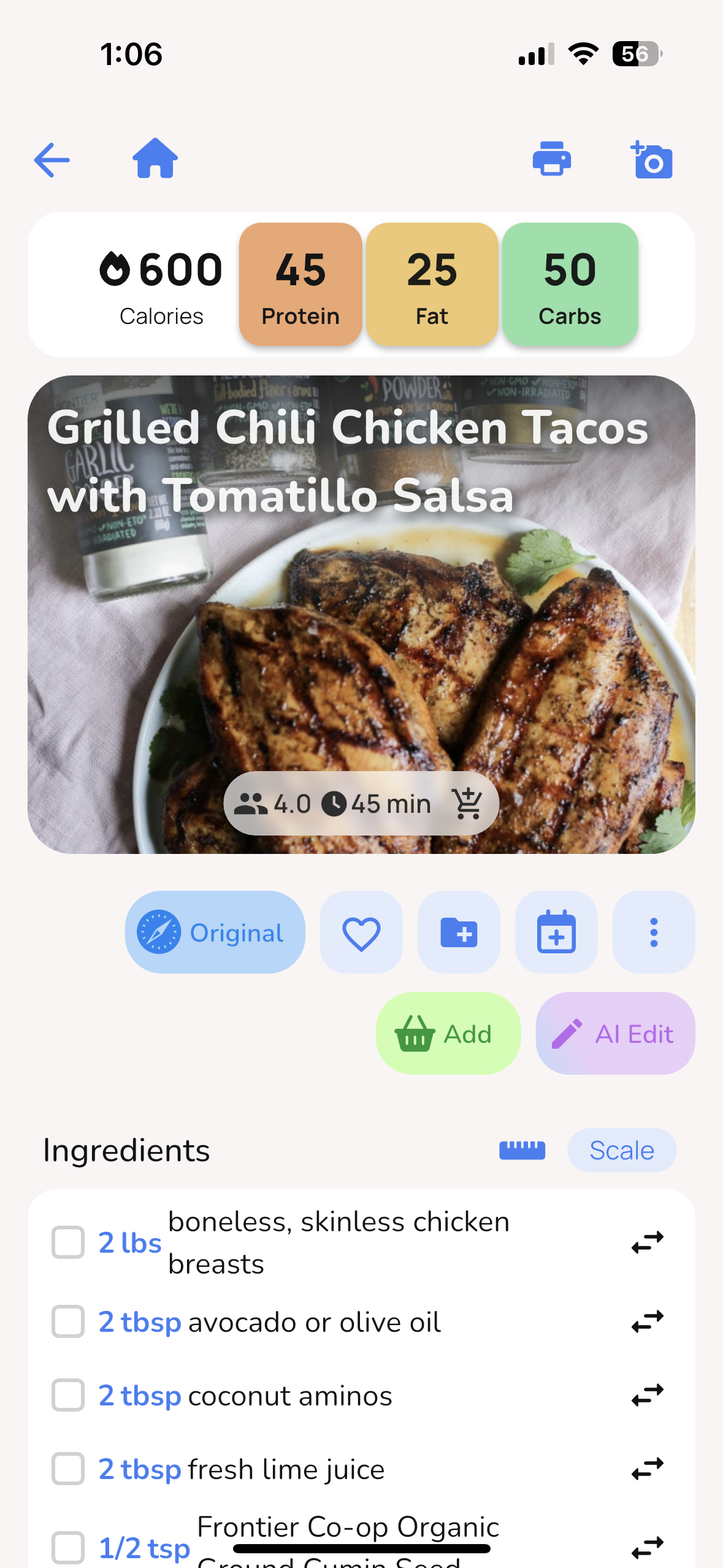
AI tools are transforming how you approach fusion cooking, making it easier to combine flavors from different cuisines while saving time and reducing waste. These tools analyze recipes, suggest ingredient pairings, and adapt meals to dietary needs - all with just a few clicks. For example, Honeydew Recipe Manager simplifies fusion cooking by turning social media recipe videos into editable cards, offering ingredient swaps, and even suggesting meals based on what’s in your pantry.
Key Features of AI Tools for Fusion Recipes:
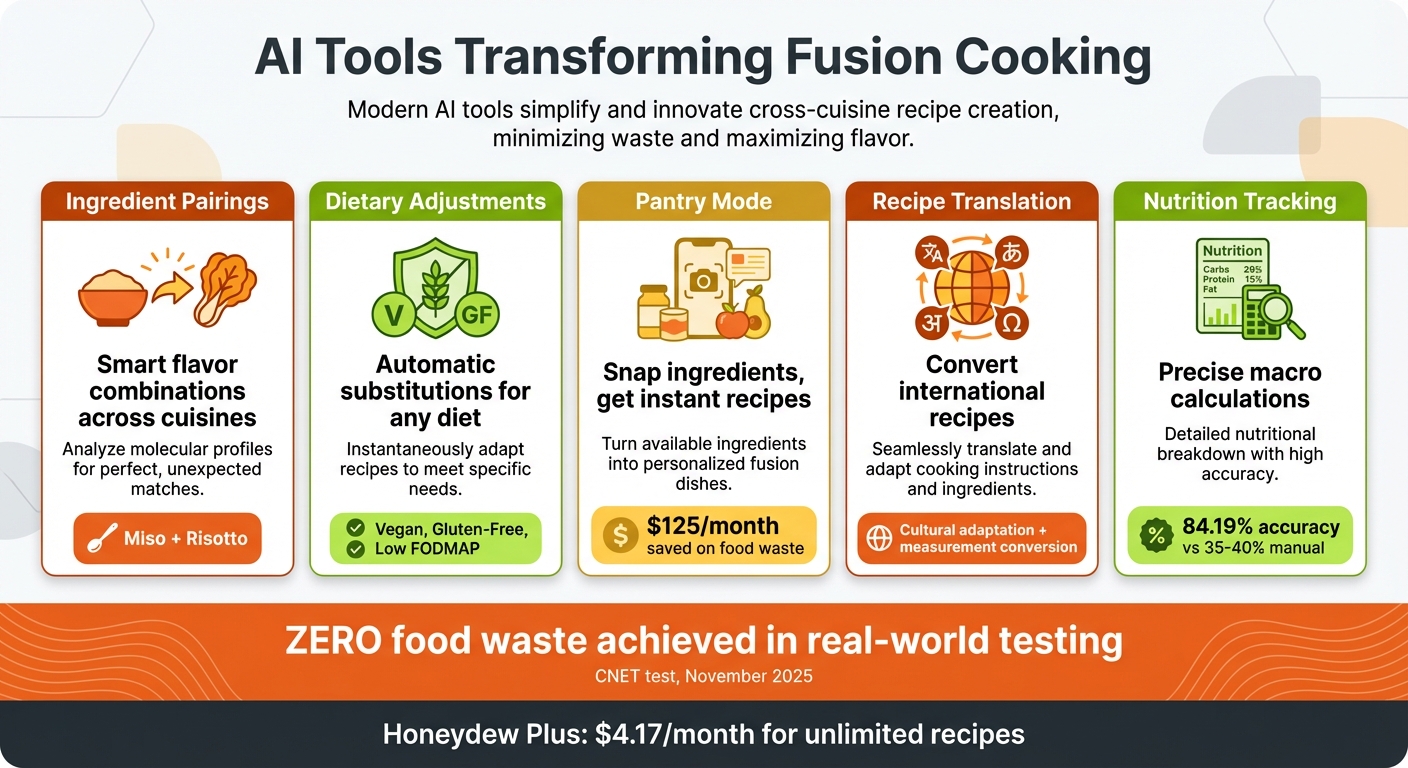
- Ingredient Pairings: AI finds combinations that work across cuisines (e.g., miso with risotto).
- Dietary Adjustments: Tools suggest substitutions for gluten-free, vegan, or other dietary needs.
- Pantry Mode: Snap a photo of your ingredients, and AI suggests recipes to reduce waste.
- Recipe Translation: Convert international recipes into English with measurement adjustments.
- Nutrition Tracking: Calculate macronutrients with high accuracy for customized meal planning.
AI tools like Honeydew also help you plan meals, create grocery lists, and minimize food waste. For $4.17/month, Honeydew Plus offers unlimited recipe storage and advanced features, making it a practical choice for home cooks exploring fusion dishes.
AI Recipe Manager Features Comparison: Key Benefits for Fusion Cooking
Gordon Ramsay Meets AI: Fusion Cooking with ChatGPT!
How AI Tools Change Fusion Recipe Creation
AI is reshaping the way we approach fusion cooking by analyzing vast amounts of recipe data to uncover ingredient pairings and techniques from different cuisines that work well together. Instead of wondering whether miso paste might complement Italian risotto, AI tools dive into thousands of successful flavor combinations to provide guidance for your culinary experiments. Using Natural Language Processing (NLP), these tools can even extract ingredients and instructions from social media images, turning visual inspiration into practical recipes you can tweak at home.
By balancing flavors and techniques from various traditions, AI helps blend culinary styles seamlessly. Whether you're mixing Japanese and Italian cuisines or something entirely different, these tools make it easier to create fusion recipes that cater to dietary needs while staying true to the essence of the original flavors.
AI-Generated Recipe Recommendations
AI-powered tools make crafting fusion dishes a breeze by offering tailored recipe recommendations based on data-driven insights. With just a few inputs - like selected cuisines, available ingredients, and dietary restrictions - these systems generate recipes that balance culinary traditions effectively. For example, tools like Honeydew Recipe Manager feature a "Pantry Mode", which lets you snap a photo of your ingredients. The tool then suggests recipes that prioritize what you already have, helping reduce food waste and unnecessary shopping trips.
This precision extends to meal planning as well. AI achieves an 84.19% accuracy rate in macronutrient calculations, far surpassing the 35–40% accuracy of manual planning. This can be especially useful when working with unfamiliar ingredients from diverse cuisines. In November 2025, CNET editor Corin Cesaric tested an AI-generated meal plan for a week and reported zero food waste, avoiding the $125 monthly food loss that many U.S. households face.
Ingredient Swaps for Different Diets
One of AI's standout features is its ability to suggest ingredient substitutions without compromising the essence of a fusion recipe. Specialized algorithms like DIISH analyze ingredient relationships and usage patterns to find substitutes that maintain both flavor and function. For example, if you're adapting Korean-Mexican fusion tacos to be gluten-free, AI tools can swap flour tortillas for corn while adjusting related ingredients to preserve the dish’s balance.
"The ingredient substitution feature is a game-changer for my dietary restrictions. I can adapt any recipe easily!" - Emily C., Verified User
AI also leverages Optical Character Recognition (OCR) to scan food labels and handwritten recipes, identifying complex ingredient names and flagging those that don’t align with your dietary preferences. This means you can take a French-Vietnamese fusion recipe and quickly convert it into a vegan or keto-friendly version without laboriously researching each substitution.
Recipe Translation from Other Cuisines
AI doesn’t just stop at ingredient adjustments - it also bridges language and cultural divides in recipes. Recipe translation powered by AI goes beyond simple word-for-word conversions. It incorporates "cultural adaptation", which involves recognizing region-specific ingredients, cooking methods, and dietary habits. For instance, if you come across a Chinese cooking video on TikTok, tools like Honeydew Recipe Manager's "Cookbook Translator" can translate the recipe into English, adjust measurements from metric to imperial, and apply dietary filters - all in one smooth process.
Using advanced network models, these tools suggest ingredient substitutions that maintain the dish's sensory profile. If a Japanese recipe calls for a hard-to-find ingredient in U.S. stores, the system offers alternatives that preserve the dish’s character. You can even paste an international recipe URL into the platform, and its "Share" extension extracts and adapts the recipe automatically, saving you the hassle of manual input. While models like GPT-4 excel in adapting certain cuisines, researchers acknowledge that they still have room for improvement when it comes to preserving the full authenticity of some cultural recipes.
Honeydew Recipe Manager: Features for Fusion Cooking
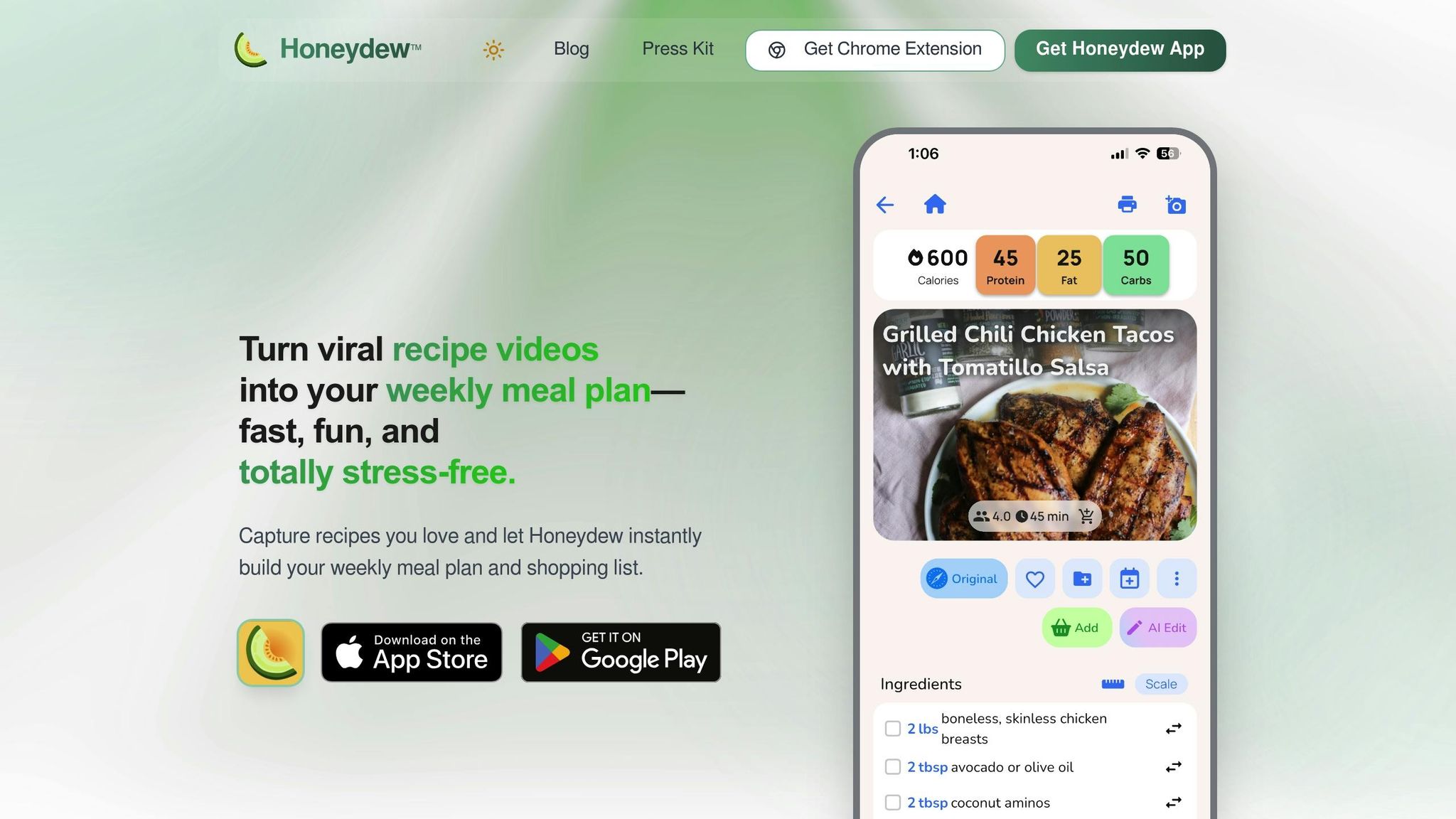
Honeydew Recipe Manager takes the complexity out of fusion cooking with AI-powered tools designed to make the process smoother and more enjoyable.
Honeydew Recipe Manager brings together advanced features that allow users to effortlessly pull inspiration from multiple sources. Whether it’s TikTok, Instagram, YouTube, websites, or even handwritten notes, the app imports recipes seamlessly. It then uses AI to extract all the essentials - ingredients, steps, measurements, and nutrition data - saving you from the hassle of manual entry. This makes it easier to experiment with new cuisines and craft unique fusion dishes.
Recipe Import and AI Meal Planning
One standout feature is the "Ask Honey" assistant, which tailors recipes to specific dietary needs. Whether you’re vegan, gluten-free, or following a Low FODMAP diet, the assistant ensures substitutions don’t compromise the dish’s flavor harmony. This is particularly helpful for fusion recipes, where balancing flavors from different cuisines is key.
The Pantry Mode feature takes things a step further. Simply snap a photo of your available ingredients, and the AI will suggest recipes you can make right away. This not only sparks creativity but also helps reduce food waste - potentially saving users around $125 per month.
Smart Ingredient Swaps and Nutrition Tracking
Honeydew’s DIISH algorithm excels at recommending ingredient swaps without losing the essence of a dish. If a recipe calls for hard-to-source items like tamarind paste, kaffir lime leaves, or galangal, the app suggests accessible alternatives. It even considers how each ingredient functions - whether as a flavor base, emulsifier, or leavening agent - ensuring your fusion creation stays true to its original intent.
For those focused on health, the app’s nutrition tracking feature is a game-changer. Using USDA data, it calculates calories and macronutrients (protein, carbs, fats, and fiber) per serving. Whether you’re scaling a recipe for a dinner party or tweaking it for specific dietary goals, the app instantly recalculates everything. This is especially handy for dishes like high-protein vegetarian tacos that merge Mexican and Indian flavors while meeting nutritional targets.
Family Sharing and Grocery Integration
Honeydew also simplifies meal planning for families and groups. With support for up to six family members, the household sharing feature lets everyone contribute to weekly meal plans and shared recipe collections. This is perfect for coordinating fusion meals that cater to different preferences and dietary needs.
Shopping is made easier with aisle-sorted grocery lists that organize ingredients by store section. For even more convenience, the app integrates with Instacart, allowing you to send your ingredient list directly for delivery in just one click. And when it’s time to cook, the "no screen lock" mode ensures your device stays active, so you can follow recipes without needing to touch your phone with messy hands.
Honeydew Recipe Manager is free to download on iOS and Android, with the Honeydew Plus subscription available for $4.17/month. The subscription unlocks unlimited recipe storage and advanced features, making it an excellent tool for fusion cooking enthusiasts.
Tips for Creating Fusion Recipes with AI
Combining Unexpected Ingredients
Fusion cooking thrives on blending the unexpected, and AI can be a great partner in this culinary adventure. Start by clearly defining your dish type - whether it’s a starter, main course, soup, or dessert - and the two cuisines you want to merge. This focus helps the AI deliver practical and creative suggestions rather than random pairings.
Got a mix of ingredients at home but no idea what to make? Snap a photo of everything laid out on your kitchen counter and let the AI suggest fusion ideas. A flat, well-lit surface improves visibility, so fewer photos are needed. Tools like Honeydew Recipe Manager can make this process even smoother by pairing ingredients effortlessly.
Sometimes, AI might suggest combinations that seem unusual - like cheese paired with chickpeas and rice. Don’t dismiss these outright. Instead, refine the results by asking for substitution suggestions, specific proportions, or alternative flavor profiles. Iterative prompts help you fine-tune these combinations into something delicious.
Adjusting Recipes for Special Diets
AI isn’t just about creativity; it’s also a game-changer for dietary customization. Start by specifying your dietary requirements - vegan, gluten-free, or Low FODMAP - and the AI will automatically filter ingredients for you.
Want to tweak a recipe? Use simple prompts like “make this gluten-free” or “reduce the carbs.” The AI doesn’t just swap out obvious ingredients like flour; it also adjusts for hidden sources of gluten in sauces or seasonings. Advanced systems even account for ingredient roles, ensuring substitutes maintain the dish’s texture and flavor. For instance, if a thickener is needed, the AI will suggest alternatives that won’t compromise the recipe’s structure. This level of personalization means you can adapt fusion dishes to suit your needs without sacrificing taste.
Reducing Food Waste with AI Recipes
AI can also help you cut down on food waste - by as much as 40% in some cases. In November 2025, CNET editor Corin Cesaric tested an AI-generated meal plan for a week and managed to achieve zero waste by using pantry staples and precise portions.
"Letting AI help me make the most of what I already have saves our family of four roughly $100 a week." - Abby Brody, Digital Parenting Expert
Got ingredients nearing their expiration date? Photograph them and ask for "pantry-safe" substitutes or recipes that use them up immediately. The AI will identify these items and suggest creative fusion dishes, saving you from unnecessary grocery runs. By using what’s already in your kitchen, you can reduce waste while still enjoying inventive, flavorful meals.
Conclusion
AI tools have made fusion cooking accessible to home cooks everywhere. Gone are the days when you needed years of culinary training to craft innovative recipes. Now, blending flavors like Thai red curry with Middle Eastern hummus or experimenting with other global cuisines is within reach for anyone. These tools analyze flavor profiles, suggest intriguing pairings, and even tailor recipes to meet specific dietary needs.
This kind of technology encourages bold experimentation without the hassle. For instance, apps like Honeydew Recipe Manager simplify the process by organizing recipes into meal plans and grocery lists. It’s easy to get started - smart imports streamline the setup, and Honeydew Plus offers expanded storage and advanced features for those looking to dive deeper.
What truly sets these tools apart is their ability to personalize. They adjust recipes based on what’s in your pantry, your health goals, or even seasonal ingredients. Whether you're gluten-free, vegan, or following another dietary path, the AI ensures the recipes maintain their flavor and texture. As Ticker Sketch puts it, "The future of food is fluid, adaptable, and endlessly innovative, with AI as the master conductor behind every bite". By merging global flavors with smart data-driven insights, AI tools are reshaping the art of fusion cooking.
From turning leftover ingredients into creative dishes to pairing unexpected flavors like strawberry and basil, AI takes the guesswork out of the equation. This lets you focus on the fun part - tasting, tweaking, and enjoying meals you never imagined making.
FAQs
How do I pick two cuisines that fuse well?
To craft a successful fusion dish, start by pairing cuisines that share common ingredients or cooking methods. For instance, Indian and East Asian cuisines both make frequent use of spices and ginger, making them a natural match. Another approach is to combine contrasting techniques - imagine Mexican slow braising paired with Chinese stir-frying for a unique twist. You can also explore historical connections, such as the influence of Chinese techniques on Italian pasta, or focus on complementary flavor profiles. The secret lies in finding harmony between the flavors while honoring the essence of each cuisine.
Will AI swaps keep the same taste and texture?
AI-driven ingredient swaps often struggle to fully replicate the original taste and texture of a dish. Many tools prioritize removing or replacing ingredients but may fall short when it comes to preserving the flavor, texture, or the role those ingredients play in the recipe. The success of these substitutions often depends on the specific recipe and the capabilities of the tool being used.
How accurate is AI nutrition tracking for fusion meals?
AI-powered nutrition tracking tools are fairly accurate when it comes to estimating calories for simple meals, with a typical margin of error ranging from 10–20%. However, when dealing with more complex recipes, the accuracy can drop significantly, with errors climbing to approximately 38.3%. As for nutrient estimations, these tools generally maintain a margin of error between 10–15%. While they offer useful approximations, their precision tends to decrease as the complexity of the dish increases.