AI Tools for Detecting Hidden Sugars and Sodium
• Updated
Decoding food labels can be overwhelming, especially with hidden sugars and sodium disguised under complex names like "maltodextrin" or "E621." With 76% of Americans feeling confused by nutrition advice and 49% struggling to identify healthy options, AI tools are stepping in to simplify the process. These apps scan labels, translate cryptic terms, and provide clear, actionable insights to help you make informed choices.
Here’s a quick overview of four popular AI tools:
- FactsScan: Scans barcodes, assigns health scores (0–100), and flags hidden sugars and sodium.
- Food Additive Lens: Focuses on ingredient-level analysis with fast, offline results.
- Yuka: Rates products using a 100-point system, highlighting nutritional quality, additives, and organic status.
- Label AI: Uses real-time data updates to identify hidden additives and sugars.
Each tool offers unique features, from personalized filters to privacy-focused scanning. Whether you want quick scores, in-depth ingredient analysis, or healthier alternatives, these apps make navigating food labels simpler and faster.
1. FactsScan
Detection Methodology
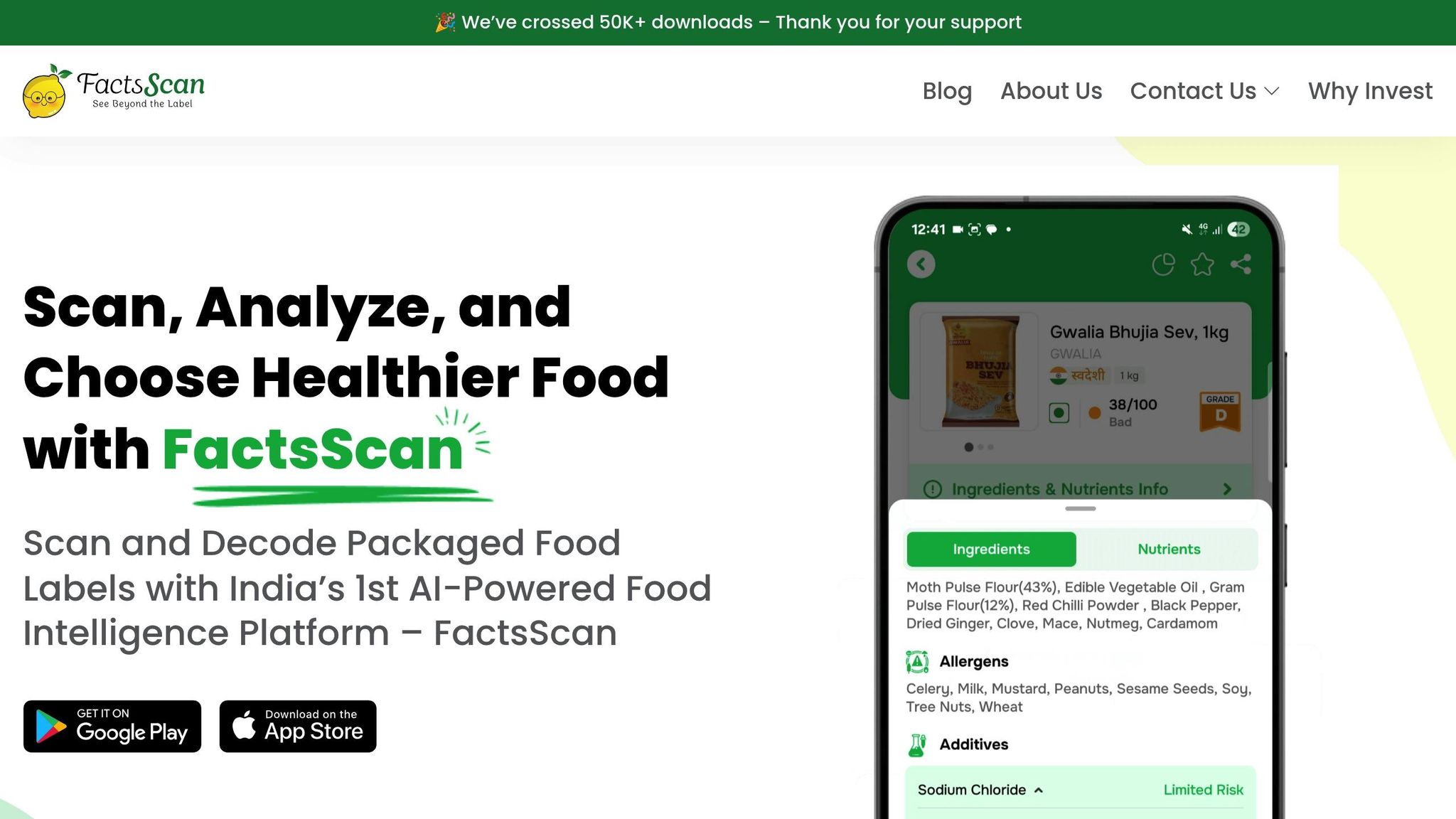
FactsScan transforms your smartphone into a health detective. By scanning product barcodes with your camera, it pulls up detailed nutritional profiles and uncovers hidden additives. Its AI-powered system simplifies complex ingredient names - like turning "sodium benzoate" or "E133" into plain English. It also identifies sneaky sugars like dextrose, maltose, and invert sugar, while flagging items where sodium levels exceed 50% of the recommended daily intake.
Each product gets a health score ranging from 0 to 100 and an A–E grade. Lower scores prompt the app to suggest healthier alternatives.
"FactsScan evaluates packaged foods using a transparent 0 to 100 scoring system based on nutritional value, additives and processing level. Products are graded A to E to help consumers make healthier, informed choices instantly." - Sweety Patel, Founder of FactsScan
This scanning approach is powered by a rich database, ensuring reliable results across a wide range of products.
Database Size and Accuracy
FactsScan’s database includes thousands of products, spanning both Indian and international brands. From snacks and sweets to cooking essentials and dairy, the platform adapts to the diverse labeling practices found in local shops and large supermarkets alike. Its ratings are grounded in medical and dietary expertise, with input from nutritionists. The database is continuously updated to stay aligned with evolving food trends and health standards.
Personalization Features
The app caters to individual dietary needs. Users can apply filters for preferences like vegetarian, vegan, low-carb, or keto diets, and it also provides allergen alerts for common sensitivities such as gluten, dairy, nuts, and soy. No barcode? No problem - its "Product Search by Category" feature helps users quickly find pre-vetted, healthier options for items like cereals or snacks.
Platform Availability
FactsScan is accessible across iOS, Android, and a web-based version. Created by Sweety Patel - who brings over 14 years of expertise in development and a strong background in food safety and nutrition - the app reflects a deep commitment to empowering healthier choices.
2. Food Additive Lens

Detection Methodology
Food Additive Lens takes a unique approach by focusing on individual ingredients rather than assigning an overall product score. With just a snap of a food package's ingredient list, its three-part AI system goes to work. First, it classifies the food category, then identifies specific additives, and finally provides clear, science-backed explanations. The best part? The app operates entirely on your device, using advanced language models to keep your scans private and functional - even offline.
The tool identifies over 500 specific ingredients across more than 16 specialized detection lenses. It flags hidden additives, such as sweeteners like maltodextrin and sodium compounds like monosodium glutamate, offering transparency often missed on labels. Instead of simply labeling ingredients as "good" or "bad", it cross-references them with FDA databases to explain their roles - whether as preservatives, flavor enhancers, or sweeteners. And it’s fast: results are typically delivered in under 5 seconds. This detailed, ingredient-specific insight builds on earlier analyses to offer a deeper understanding.
Database Size and Accuracy
The app draws from a comprehensive database of over 4,000 FDA-approved additives and references a sampling index of 10,000+ branded products from the USDA's Global Branded Food Products Database. It even pulls regulatory citations directly from the Code of Federal Regulations, ensuring the data is thorough and trustworthy. This makes it a valuable tool for health professionals and consumers alike when navigating ingredient labels.
Trish Zecca, MS, Senior Nutrition Program Manager at the Institute for the Advancement of Food and Nutrition Sciences, highlights the app's impact:
"The app transforms complex food science into actionable knowledge, empowering consumers to make informed choices based on science rather than fear or confusion."
- Trish Zecca, MS
Launched in December 2025 by Yihang Feng, a University of Connecticut graduate student, the app was designed to tackle misinformation rampant on social media. By providing instant, science-backed definitions, it aims to promote clarity and accuracy in food labeling.
Personalization Features
Food Additive Lens also caters to individual needs with filters for over 15 dietary concerns. These include common allergens like gluten, nuts, soy, and dairy, as well as conditions such as PKU. Looking ahead, an AI Meal Planner is in development to suggest meals based on flagged ingredients, highlighting the growing debate of meal planning apps vs manual planning. Importantly, all allergen and condition-related features are completely free, and the platform remains ad-free to avoid conflicts of interest.
Platform Availability
The app is available as an iOS app for in-store ingredient scanning and as a Chrome extension for online shopping on platforms like Amazon, Walmart, and Instacart. Your scans remain secure on your device, and no data is sold to advertisers, ensuring privacy is a top priority.
3. Yuka
Detection Methodology
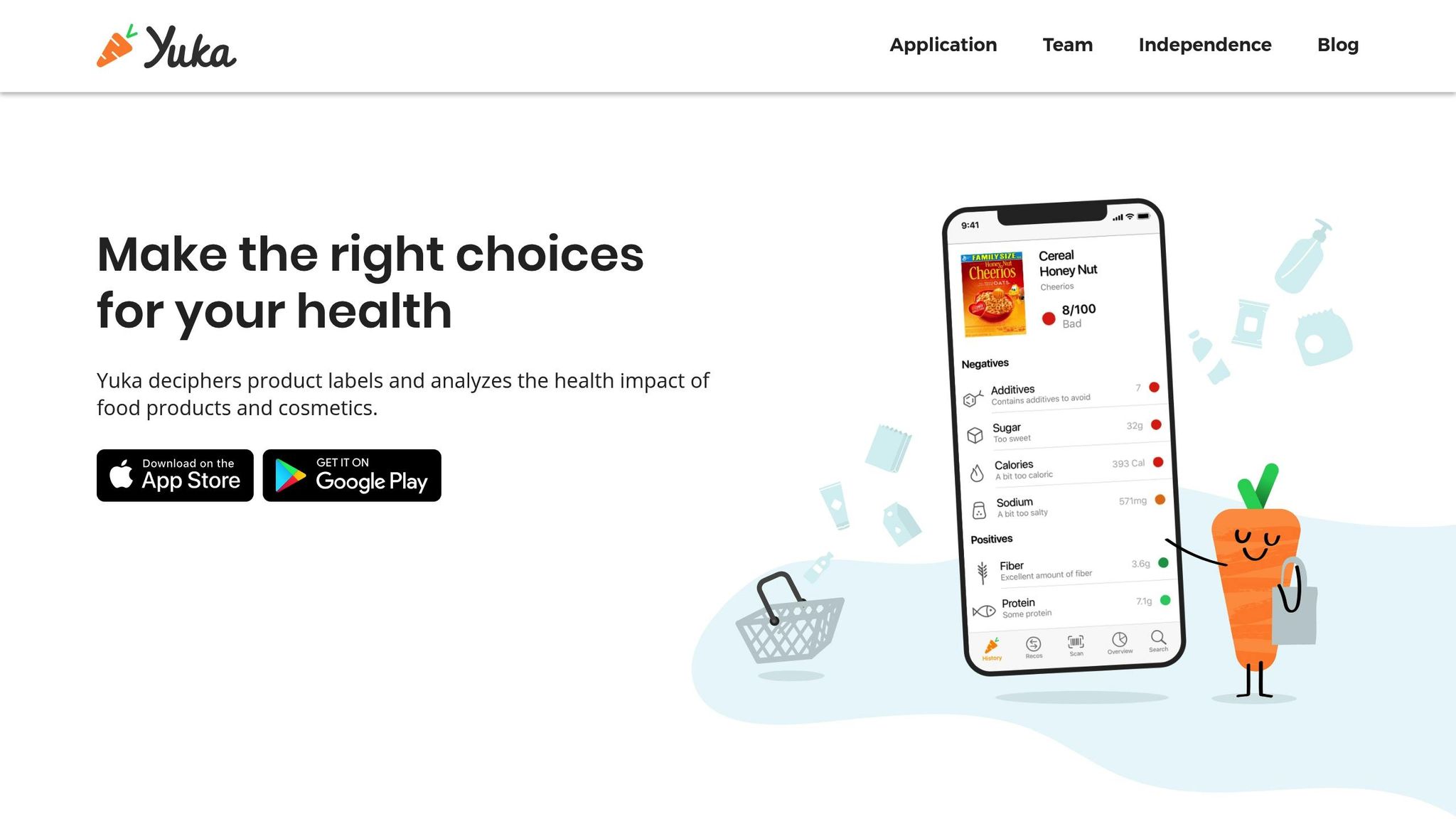
Yuka evaluates products using a 100-point scoring system, factoring in three key criteria: 60% nutritional quality, 30% additives, and 10% organic status. Nutritional quality is assessed through the Nutri-Score framework, which analyzes levels of sugar, sodium, and other essential nutrients. Users can tap on a product's score to see how specific factors, like sugar or sodium levels, contribute to the overall rating. For additives, Yuka cross-references ingredient lists with research from organizations like the WHO, EFSA, and FDA. The app's AI-powered ingredient recognition achieves over 90% accuracy, ensuring reliable comparisons. This method forms the backbone of Yuka's trusted and well-verified database.
Database Size and Accuracy
As of February 2026, Yuka's database includes 4 million food products and processes roughly 240 million scans per month from its 80 million users worldwide. The app's influence has even prompted some retailers to reformulate products to achieve healthier profiles. Julie Chapon, Co-founder of Yuka, highlights the app's mission:
"By giving consumers clear and immediate access to unbiased, scientifically grounded information, Yuka enables smarter choices at the point of purchase."
- Julie Chapon, Co-founder of Yuka
The app's impact is evident, with 94% of users reporting that they return products rated as "red" (poor).
Personalization Features
Yuka offers a tailored experience to its users. The free version provides basic evaluations, while premium features, starting at $15 per year, include personalized alerts and alternative product recommendations. For example, if a product is flagged for high sugar or sodium content, the app suggests healthier alternatives in the same category. Importantly, Yuka maintains independence by refusing advertising or brand payments, ensuring that product scores remain unbiased.
Platform Availability
Yuka is accessible on both iOS and Android devices across 12 countries and supports five languages. The app has earned a stellar 4.7/5 star rating on Google Play from 175,000 reviews as of February 2026. Users appreciate its color-coded system, which categorizes products as Excellent, Good, Mediocre, or Poor, simplifying the decision-making process and optimizing ingredient use. However, some users find the scoring a bit strict when it comes to additives. With its intuitive design and transparency, Yuka continues to help users make informed choices while navigating complex food labels.
4. Label AI
Detection Methodology
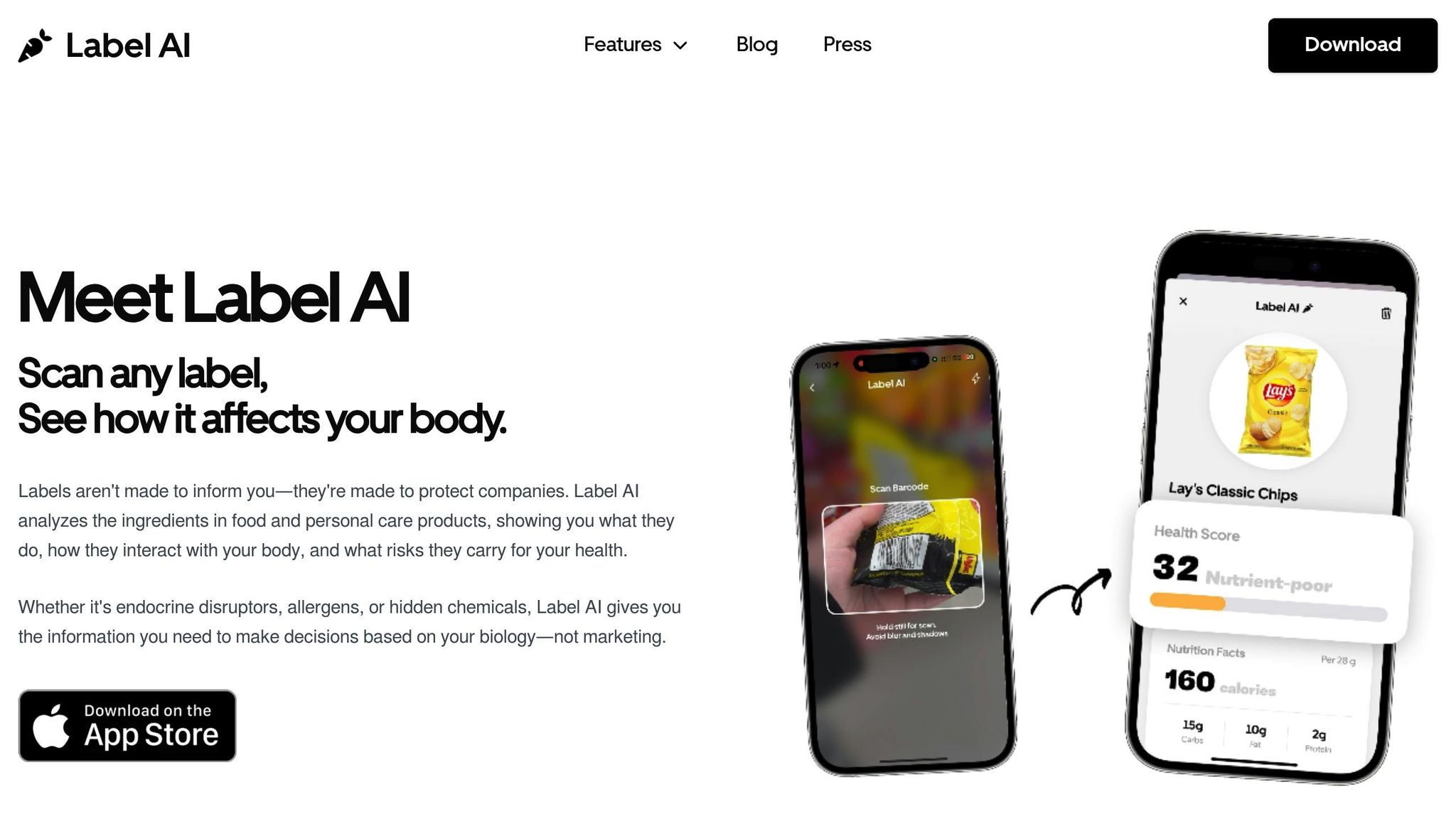
Label AI, also called the AI Food Label Agent, uses image recognition technology to pull ingredient lists and nutritional details straight from product packaging. By leveraging models like CLIP and Gemma-3 12B VL, it transforms complex labels into easy-to-understand information. This process helps identify hidden sugars and additives by comparing the extracted data against curated allergen and additive profiles. For example, it can pinpoint chemical additives such as INS 322, giving consumers a clearer understanding of what’s in their food.
Database Integration
What makes Label AI stand out is its ability to update product data in real time through Quick Commerce channels. Unlike tools that depend on static databases, it taps into dynamic nutritional databases, offering up-to-date insights into health impacts and additives. This data is essential for a recipe nutrition analyzer to provide accurate health scores. This ensures that the information remains current and relevant for users.
The AI Nutritionist in Your Pocket, Scan Food, Get Answers
Pros and Cons
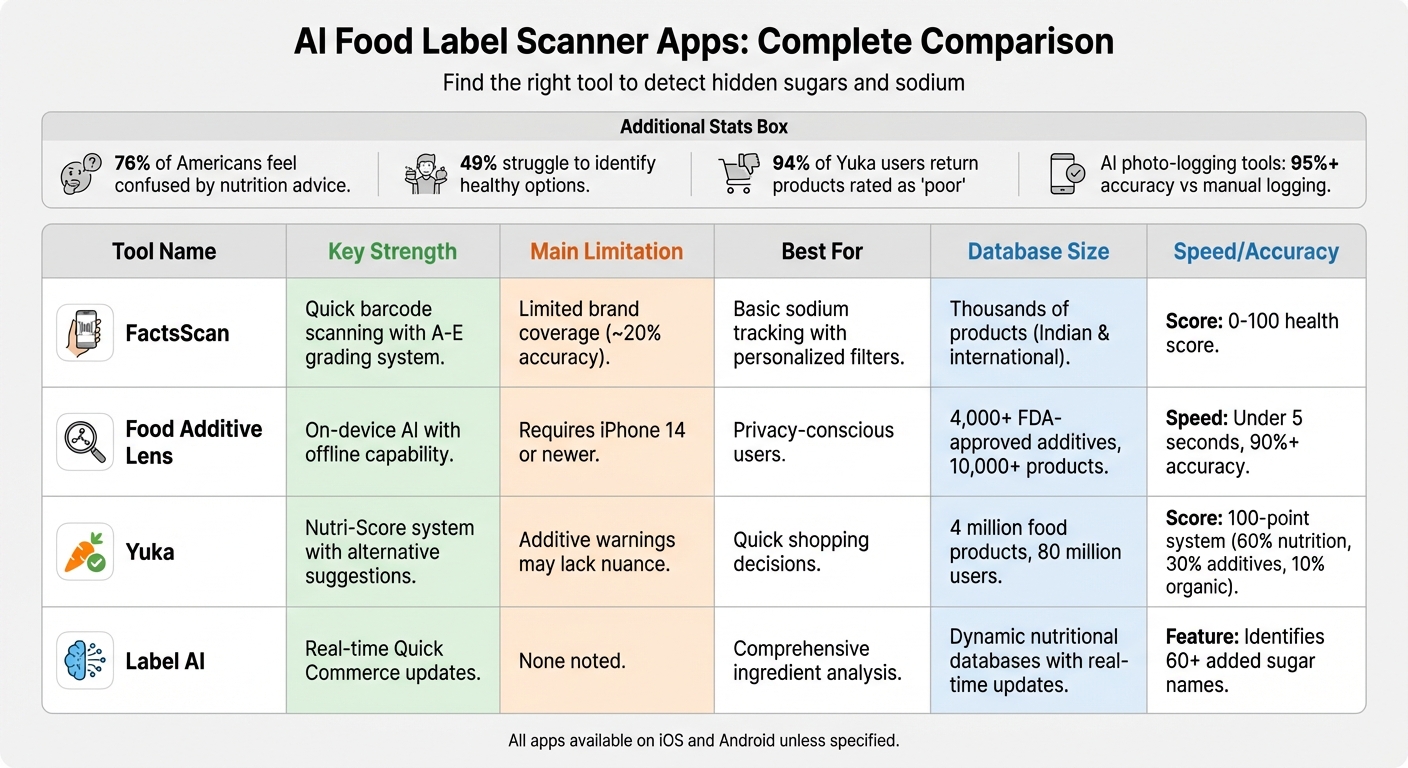
AI Food Label Scanner Apps Comparison: Features, Accuracy, and Best Use Cases
When it comes to tools designed to detect hidden sugars and sodium, each option has its own strengths and challenges. Here's a closer look at some of the key factors to consider when deciding which app might suit your needs.
Accuracy
AI photo-logging tools boast impressive precision, with accuracy rates exceeding 95% compared to manual logging. That said, they can face difficulties when analyzing mixed or partially obscured dishes. For example, the SNAQ app has a reported mean absolute carbohydrate estimation error of 5.5 g. Barcode scanners, on the other hand, encounter a different set of issues. In some cases, they identify only about 20% of scanned barcodes and may return "similar" items instead of the exact brand, which can be a significant drawback depending on your goals.
User-friendliness
Photo-based tools streamline the logging process by removing the need for manual data entry. However, some apps assign numerical health scores (ranging from 0 to 100), which can make interpretation tricky. Registered dietitian Amelia Ti highlights this issue, stating, "The photo logging and ingredient breakdown are definitely useful... I would de-emphasize the score and instead focus on personalized feedback". These scores can sometimes unintentionally attach a moral value to food choices, which could lead to restrictive eating behaviors.
Database Reliability
The reliability of an app's database can significantly impact its performance. Different tools use varying methodologies, which can produce conflicting results. For instance, an organic almond butter might receive a glowing "excellent" rating from one app while being flagged as "not approved" by another due to differing sensitivities to trace ingredients like cane sugar. Julie Chapon, CEO of Yuka, explains, "These differences often stem from the fact that each app uses its own methodology, with varying degrees of transparency and scientific grounding". Tools that rely on crowdsourced data may introduce errors, whereas those using USDA or FDA databases typically provide more reliable and authoritative information.
Quick Reference Table
Here’s a summary of the main strengths and limitations of some popular tools:
| Tool | Key Strength | Main Limitation | Best For |
|---|---|---|---|
| FactsScan | Quick barcode scanning | Limited brand coverage (~20% accuracy) | Basic sodium tracking |
| Food Additive Lens | On-device AI with fast results (under 5 seconds) | Requires iPhone 14 or newer | Privacy-conscious users |
| Yuka | Nutri-Score system with alternative suggestions | Additive warnings may lack nuance | Quick shopping decisions |
| Label AI | Identifies over 60 added sugar names | None noted | Comprehensive ingredient analysis |
Conclusion
Looking at the features of FactsScan, Food Additive Lens, Yuka, and Label AI, it’s clear that each tool caters to different preferences and priorities when it comes to nutritional tracking. The best choice comes down to what aligns with your daily habits and goals.
Food Additive Lens is perfect for those who value speed and privacy. It delivers results in less than 5 seconds and works entirely offline, offering quick insights into over 4,000 food additives. For a more detailed breakdown, FactsScan excels with its barcode scanning capabilities, A–E grading system, and personalized filters, making it easier to spot hidden sugars and sodium in countless products. Meanwhile, Yuka simplifies the process with its intuitive, color-coded scoring system out of 100 points, encouraging 94% of users to avoid products rated as "poor". Label AI, on the other hand, keeps things current by integrating real-time Quick Commerce updates, ensuring the nutritional data you rely on is always up-to-date.
For those interested in meal planning rather than analyzing individual items, Honeydew Recipe Manager is a great companion. It lets you import recipes directly from social media, create grocery lists automatically, and track nutrition for your weekly meals. Features like smart ingredient swaps - such as replacing regular flour with almond flour - support healthier choices, and its Instacart integration makes shopping easier while helping you stick to your dietary goals.
These tools take the guesswork out of deciphering food labels. By turning complex ingredient lists into straightforward insights, they empower users to make informed decisions about their nutrition.
FAQs
Which app is best for finding hidden sugars fast?
SugarSnap AI makes spotting hidden sugars a breeze. Just snap a photo or scan a barcode, and you'll instantly see details about sugar, sodium, and processed ingredient levels. It’s a quick and convenient tool for breaking down food labels.
How accurate are barcode scans vs label photos?
Barcode scans tend to deliver higher accuracy compared to label photos. Research indicates that AI tools processing barcodes can cut errors in calorie and nutrient estimates by more than 50%. On the other hand, food image recognition often shows greater inconsistencies in accuracy. This makes barcode scanning a more dependable option for nutritional analysis.
Will these label-scanning apps keep my data private?
AI-powered food label scanning apps handle data privacy in different ways. Some well-known apps take steps to anonymize user data and minimize the collection of personal information, but privacy practices aren't the same across the board. Experts suggest carefully reading each app's privacy policy to see how your data might be used. These tools can be useful, but it's smart to double-check their privacy measures before providing any sensitive details to keep your information secure.