AI Tools for Diabetic Meal Plans
• Updated
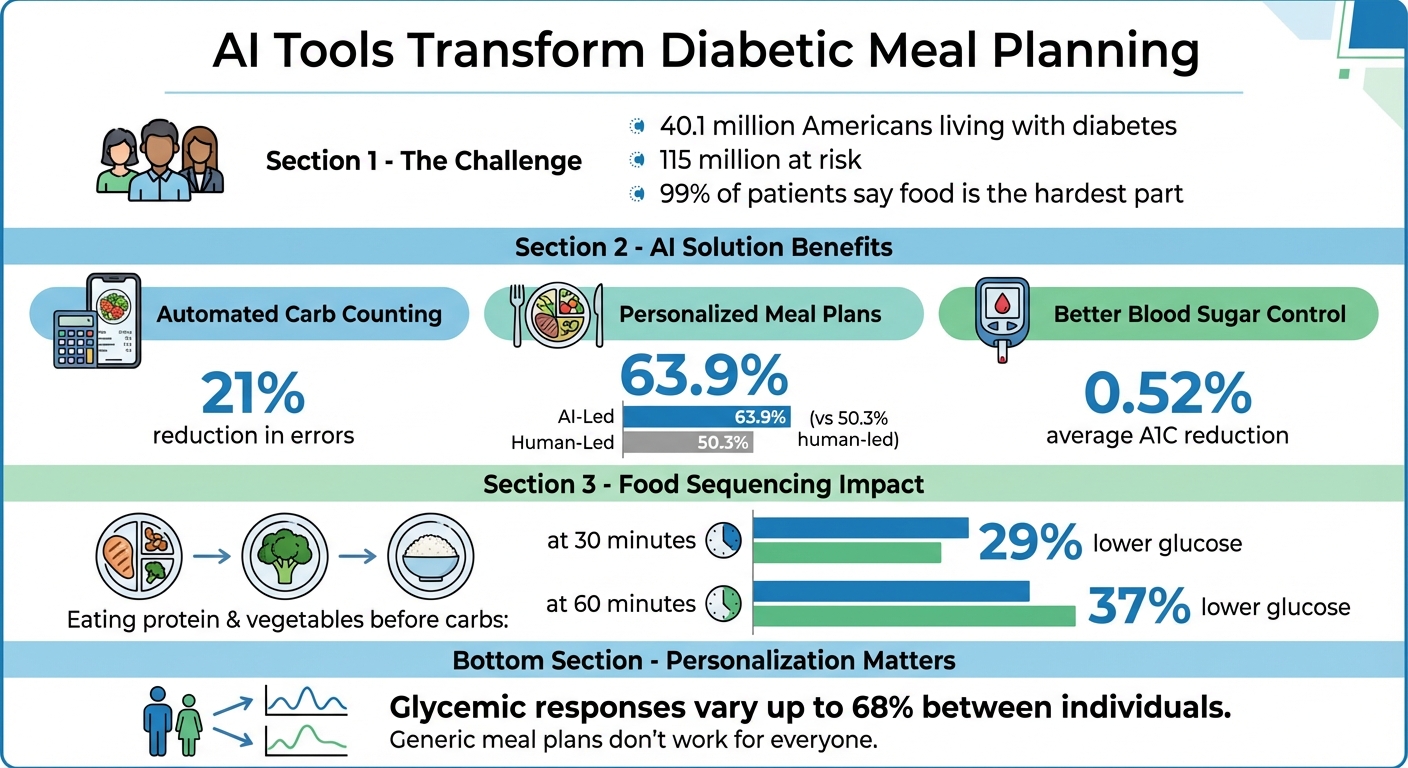
Managing diabetes is tough, especially when it comes to meal planning. Did you know 99% of patients say food is the hardest part? With 40.1 million Americans living with diabetes and another 115 million at risk, this is a widespread challenge. AI tools are stepping in to simplify this process, offering solutions like automated carb counting, personalized meal suggestions, and real-time adjustments based on your body’s needs. These tools not only reduce errors but also improve blood sugar control, cutting down on the stress and emotional toll of daily decisions.
Key Takeaways:
- Carb Counting Made Easy: AI tools use photos, voice commands, or descriptions to instantly calculate nutrition, reducing errors by 21%.
- Tailored Meal Recommendations: AI adapts to personal preferences and dietary needs, improving adherence rates by 63.9%.
- Real-Time Adjustments: Advanced systems integrate with devices like CGMs to monitor glucose and make immediate meal adjustments.
Apps like Honeydew Recipe Manager bring these features together, letting you import recipes, create smart grocery lists, and track nutrition - all in one place. Whether you're managing diabetes for yourself or a loved one, these tools make meal planning easier and more precise.
AI-Powered Diabetic Meal Planning: Key Statistics and Benefits
Can AI Really Make Carb Counting Easier for Diabetes?
How AI Simplifies Diabetic Meal Planning
AI is changing the game for diabetic meal planning, turning what used to be a daily challenge into a more manageable process. Instead of manually calculating carbs and portion sizes, modern AI tools handle the complex details for you. From automated nutrition tracking to personalized meal suggestions and real-time adjustments, these tools make meal planning more precise and tailored to individual needs.
Automated Carb Counting and Nutrition Tracking
Gone are the days of weighing food and manually counting carbs. AI tools now allow you to snap a photo, use voice commands, or type in a description to get an instant nutritional breakdown. These systems rely on databases like USDA FoodData Central to ensure accurate macro calculations.
Manual carb counting often leads to errors, but AI eliminates much of the guesswork. By integrating with fitness trackers like Fitbit or Apple Health, these tools align your meal intake with your daily activity levels. Some even send alerts as you approach your daily carbohydrate limit.
Advanced AI tools go further by identifying hidden carbs. For instance, they can flag "sugar-free" products containing sugar alcohols like maltitol, which has a glycemic index of 52 - similar to table sugar's 65. Tools like SugarSnap AI 3.0 even offer features like "Insulin Insight", which estimates the glycemic impact of meals directly from photos.
Personalized Meal Recommendations
Generic meal plans often fall short because everyone's body reacts differently to the same foods. Research shows that glycemic responses to identical meals can vary by up to 68% between individuals. AI addresses this by tailoring meal suggestions to your specific needs. Using "preference learning", these tools adapt to your tastes - whether you prefer spicy dishes, specific textures, or certain cuisines - and can even generate new recipes based on your feedback. Most AI planners fine-tune themselves to your household's preferences within 2-3 weeks.
This personalized approach is making a difference. AI-driven diabetes programs have achieved a 63.9% completion rate, compared to 50.3% for human-led programs. Digital tools have also helped reduce A1C levels by an average of 0.52%. While general-purpose tools like ChatGPT deliver diabetic nutrition advice with only 67.2% to 70.9% accuracy - sometimes suggesting inappropriate foods - specialized AI tools are far more reliable. They can even recommend strategic eating patterns, such as eating protein and vegetables before carbohydrates to reduce post-meal glucose spikes.
Real-Time Data Integration
The most advanced AI tools don't just plan meals - they adapt in real time. By integrating data from Continuous Glucose Monitors (CGMs) and wearables, these systems monitor your body's response to specific foods and make on-the-fly adjustments. Predictive algorithms can identify potential blood sugar spikes before they happen, allowing for proactive dietary changes. These tools recalculate your nutrient needs dynamically, taking into account daily variations in activity, sleep, stress, and hydration.
For example, in 2025, the AI health coach Anna demonstrated its real-time capabilities by detecting a user's fatigue through wearable data. It suggested a 10-minute walk and a snack, followed by protein intake to aid muscle recovery after a workout.
Some tools also feature spike calculators, letting you input a planned meal to predict its glucose impact based on historical data. AI chat assistants can modify recipes on demand - just ask to "make this recipe low-GI" or "reduce the carbs" to fit your glucose targets. This flexibility, combined with personalized recommendations and automated tracking, ensures that meal planning adapts seamlessly to your daily needs.
How Honeydew Recipe Manager Supports Diabetic Meal Planning
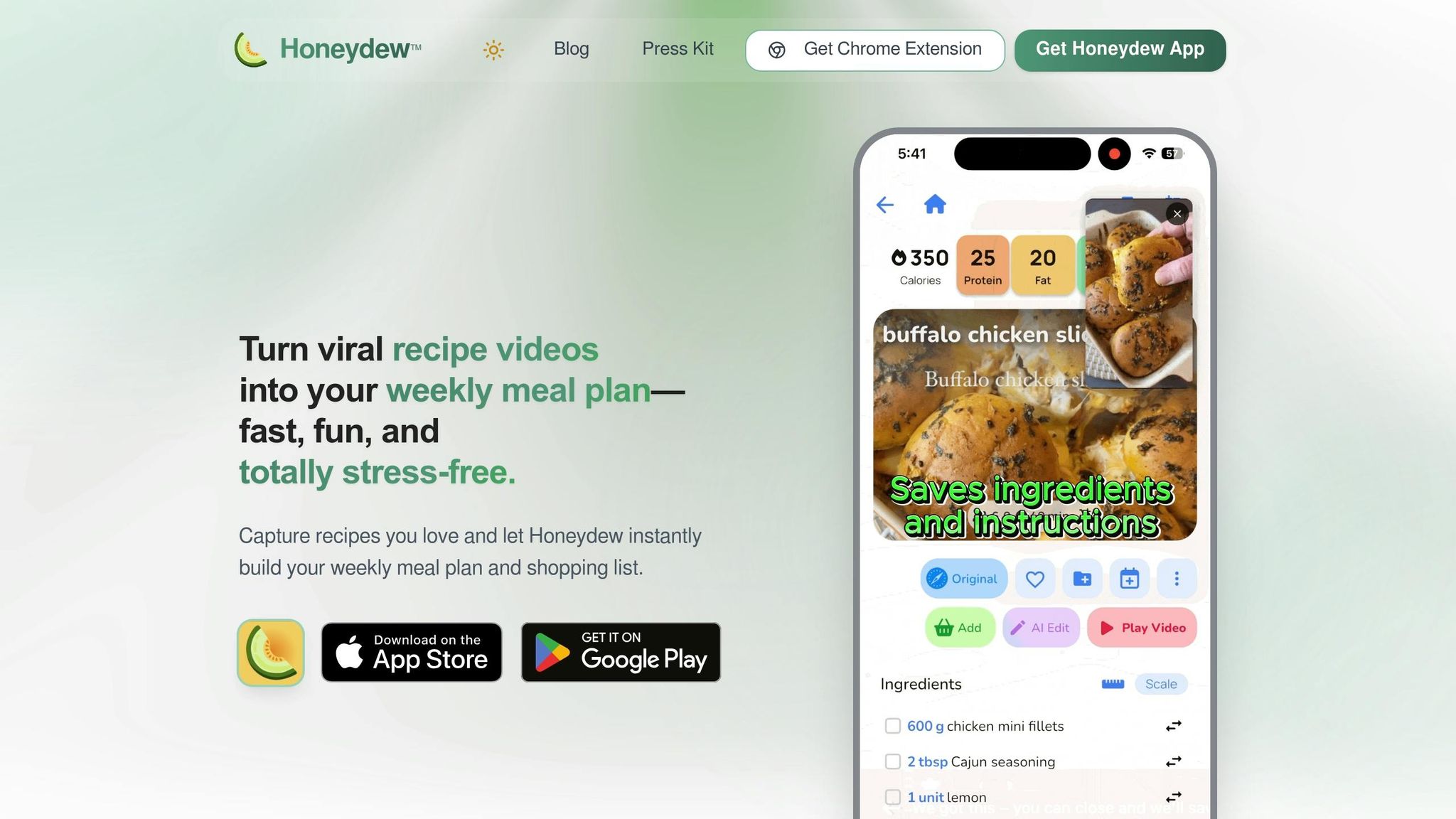
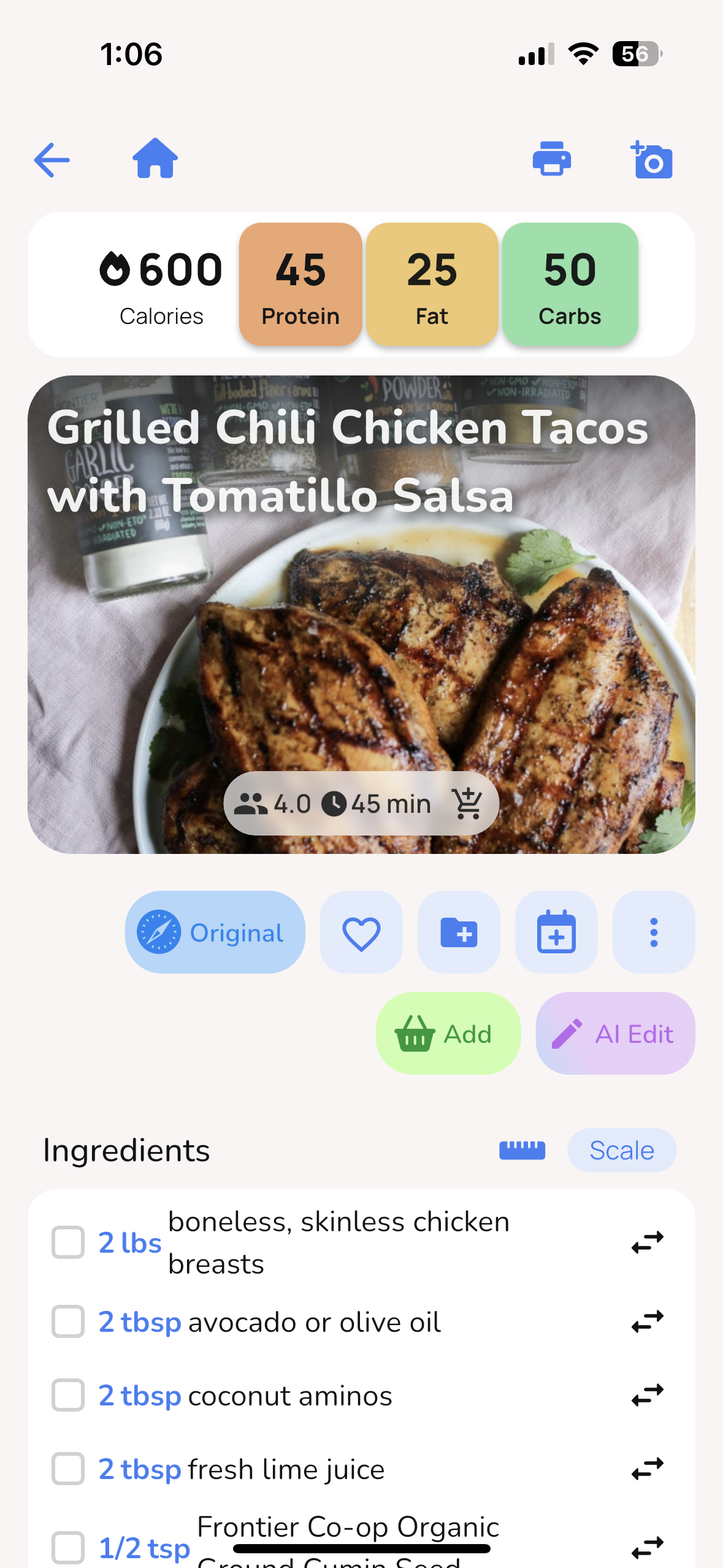
Honeydew Recipe Manager makes diabetic meal planning easier with features like AI-powered recipe imports, smart grocery lists, and real-time nutrition tracking. By combining advanced tools for nutrition analysis and recipe customization, it seamlessly integrates into your daily routine.
Importing and Organizing Recipes
This app allows you to save recipes from virtually any source - TikTok, Instagram, YouTube, Facebook Reels, websites, or even photos of handwritten recipe cards. Its AI extracts essential details like ingredients, measurements, instructions, and nutrition data specific to diabetes, such as carbohydrate and fiber content. Want to tweak a recipe? Just type a command like "reduce the carbs", and the app updates the instructions and nutritional info instantly.
As you plan your meals, simply drag recipes onto the meal calendar, and the app calculates daily and weekly totals for carbs, protein, fats, and fiber in real time. You can organize recipes into custom digital cookbooks and filter them by tags or dietary preferences, like low-carb or keto. Plus, the Pantry Mode feature suggests recipes based on ingredients you already have - just snap a photo of your fridge, and the app does the rest.
Smart Grocery Lists and Ingredient Substitutions
With over 100,000 downloads and consistent monthly user engagement, Honeydew has proven its value to users. It generates shopping lists tailored to diabetic needs and sorts items by store aisle for efficient shopping. Household sharing is another handy feature, allowing up to six family members to stay coordinated on grocery needs .
The app also excels in ingredient substitution. It suggests alternatives that align with diabetic restrictions or items you already have, making it easy to swap high-carb ingredients for low-GI options. For added convenience, the app integrates with Instacart, enabling one-click ordering for delivery of your diabetic-friendly grocery list .
AI Meal Planning and Nutrition Tracking
Honeydew’s AI-powered meal planner creates weekly diabetic meal plans in seconds, calculating calories and macros to help you stay on track with your nutritional goals. It automatically tracks carbs, fiber, and protein as you plan your meals . With a 4.8/5-star rating from users, the app is praised for its simplicity and time-saving features.
You can also adjust serving sizes and find recipes based on what’s already in your kitchen, helping reduce food waste while keeping meals consistent with your dietary needs. The app works offline and stays active during cooking, so you won’t need to touch your device with messy hands while preparing meals.
Benefits of Using AI for Diabetes Management
Better Blood Sugar Control
AI-powered tools take the guesswork out of managing glucose levels by offering precise carb tracking and smart meal sequencing. Unlike manual methods, which can be prone to errors, these tools automatically calculate the carbs, fiber, and protein in every recipe you import. This precision makes it easier to keep your blood sugar stable.
For example, eating protein and vegetables before carbohydrates has been shown to significantly reduce post-meal glucose spikes. Studies reveal this approach lowers glucose levels by 29% at 30 minutes and 37% at 60 minutes after eating. Digital diabetes tools have also shown measurable improvements in A1C levels, with an average reduction of 0.52%. When managing a condition that requires constant attention, these small but impactful changes can make a big difference in your overall health - and they also help cut down on the mental strain of daily decision-making.
Time-Saving and Convenience
Managing diabetes can feel like a full-time job, with endless decisions about food, activity, and medication. AI simplifies this process by automating tasks like carb and glycemic calculations. Instead of manually crunching numbers for every meal, you can simply import recipes and let the app handle the details.
A Johns Hopkins study highlighted the practical benefits of AI in diabetes management, showing that AI-powered prevention programs had a 63.9% completion rate, compared to 50.3% for human-led programs. This higher success rate underscores how much easier it is to stick with a plan when AI handles the heavy lifting. Tools like "Ask Honey" let you instantly swap high-carb ingredients for alternatives, such as almond flour, while Pantry Mode creates recipes based on what you already have at home - saving you time and avoiding unnecessary grocery trips.
Improved Adherence to Dietary Goals
Staying on track with dietary goals becomes much easier with AI tools that provide real-time macronutrient tracking and adjustments. When you add recipes to your meal calendar, the app automatically updates your daily totals for carbs, protein, and fiber. If you go over your limits, you can quickly tweak serving sizes or swap recipes without starting from scratch.
Features like natural language commands make adjustments even simpler. Just say, "reduce the carbs" or "make this low-carb", and the AI will modify the recipe to fit your needs. It also aligns meal suggestions with your specific macronutrient targets, so you only see recipes that match your dietary requirements. This level of flexibility helps you stick to your plan without feeling restricted or overwhelmed by manual tracking.
Conclusion
Managing diabetes no longer has to feel like a full-time job of counting carbs, analyzing recipes, and second-guessing every meal. Thanks to AI-powered tools, meal planning for diabetes has evolved into a more efficient and user-friendly process. With features like automated nutrition tracking, tailored meal suggestions, and smart grocery list creation, these tools take the stress out of daily planning.
Honeydew Recipe Manager takes these AI-driven benefits a step further by combining them into a single, easy-to-use platform. You can import recipes from any source and instantly view detailed nutritional information, including carbs, fiber, and protein. The AI-powered meal planner crafts weekly menus based on your specific macronutrient goals, while the Pantry Mode helps you make the most of ingredients you already have - cutting down on food waste and unnecessary shopping. And with the "Ask Honey" feature, you can quickly swap ingredients to adjust carb counts without hassle.
The American Diabetes Association emphasizes, "individualized meal planning that considers carbohydrate monitoring as a key strategy for glycemic control".
AI tools make this personalized approach accessible to everyone, even for those without direct access to dietitians. Whether you're offline on a camping trip or sharing your meal plan with family, these tools simplify diabetes management, helping you maintain better blood sugar control without complicating your life.
FAQs
How accurate is AI carb counting from a photo?
AI-based carb counting from a photo tends to be fairly accurate, with macronutrient estimates hitting around 84%. However, results can differ depending on factors like portion size, how the food is prepared, and the quality of the image. To improve accuracy, make sure the photo is clear and shows the food in detail.
Can AI meal plans adapt to my CGM readings and daily activity?
Yes, AI-powered meal plans can tailor themselves to your CGM (Continuous Glucose Monitor) readings and daily activity by analyzing real-time data, biometrics, and activity patterns. This means your meal recommendations can adjust dynamically, offering a personalized approach to help you better manage your nutrition and overall health.
Will Honeydew Recipe Manager work for my specific carb targets?
Honeydew Recipe Manager helps you hit your exact carb goals by tweaking recipes, tracking nutrition, and building meal plans that fit your diet. Its tools simplify staying on top of your health and dietary needs.