AI vs. Traditional Meal Planning for Seasonal Recipes
• Updated
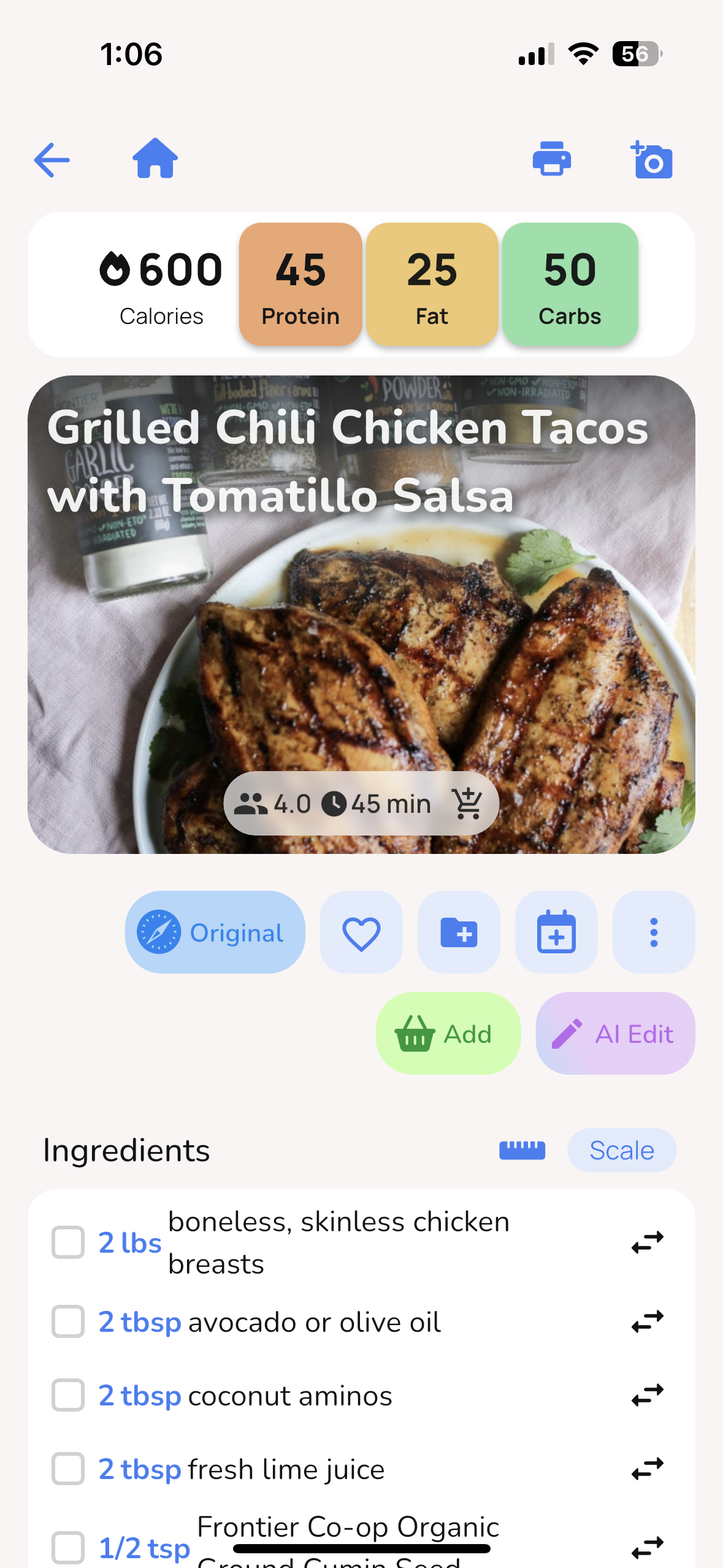
AI meal planning tools like Honeydew Recipe Manager have reshaped how people plan meals, especially for seasonal vegan recipes. Compared to manual methods, which can take 5–6 hours weekly, AI reduces planning time to just 10–15 minutes. It uses real-time data to suggest recipes, create aisle-organized grocery lists, and even sync with delivery services like Instacart. Families save an average of $100 per week by cutting food waste and improving efficiency. AI also ensures better nutritional accuracy (78–88%) compared to manual planning (35–40%), while offering features like smart substitutions and social media recipe imports.
Key Differences:
- Time Saved: AI slashes weekly planning and shopping time.
- Cost Savings: Families save $1,000–$1,800 annually by reducing waste.
- Better Nutrition: AI meets dietary goals more effectively.
- Convenience: Features like fridge-to-recipe suggestions and delivery integration simplify the process.
While manual meal planning offers personal control and the sensory experience of in-person shopping, AI tools provide unmatched speed, accuracy, and convenience for seasonal cooking.
I asked AI to meal plan for me… Here’s how it went with ChatGPT Prompts
Benefits of AI-Powered Meal Planning for Seasonal Recipes
AI-powered meal planning is changing the way we approach seasonal vegan cooking. Instead of spending hours figuring out what’s in season and crafting shopping lists, these tools can provide complete meal plans in just 10–15 minutes. By analyzing real-time data - like social media trends, grocery sales, and local produce availability - AI suggests recipes that highlight ingredients at their freshest and most nutritious.
This saves you time and lets you focus on enjoying your meals. Plus, these tools are incredibly personalized, handling multiple dietary needs like vegan, gluten-free, or nut-free preferences while learning your unique taste preferences over time. When it comes to seasonal recipes, AI consistently meets nutritional goals better than traditional planning methods.
Automated Seasonal Recipe Suggestions
AI tools, such as Honeydew Recipe Manager, take the guesswork out of seasonal vegan cooking. They analyze local produce trends - like butternut squash in the fall or asparagus in the spring - to recommend recipes that bring out the best in seasonal ingredients. For 2025, trending ingredients like yuzu, miso, and truffle are prioritized in these suggestions.
Honeydew even allows you to import seasonal recipes directly from TikTok or Instagram. Spotted a viral baked feta chickpea dish or lavender-infused dessert? With one tap, you can add it to your meal plan. From there, the app suggests complementary seasonal recipes to create a balanced and varied weekly menu, all without the research.
Another standout feature is the "fridge-to-recipe" tool. Simply snap a photo of your seasonal produce, and the AI will suggest recipes tailored to what you already have. In a November 2025 test by CNET editor Corin Cesaric, an AI-generated meal plan helped her achieve zero food waste for an entire week.
Instant Grocery Lists and Instacart Integration
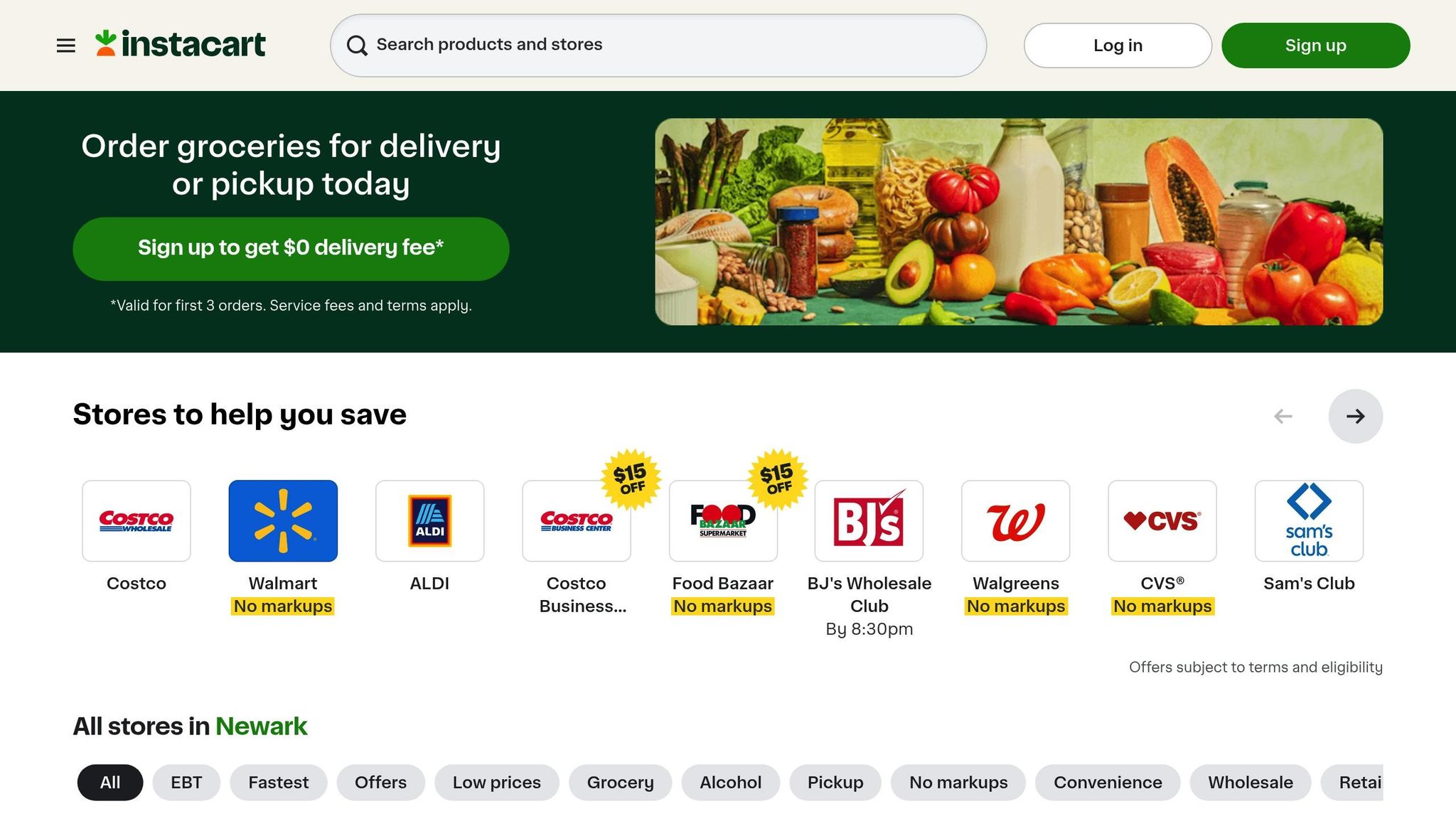
Once your meal plan is ready, AI generates a detailed grocery list with exact quantities, sorted by store aisle. What would normally take 30–45 minutes to do manually happens instantly. Honeydew’s lists are organized by sections (produce, pantry, frozen), cutting in-store shopping time by up to 40%.
For added convenience, Honeydew integrates with Instacart. With a single click, you can order all the ingredients for your seasonal vegan meals and have them delivered to your door. This is especially helpful during busy seasonal periods when specialty items like truffles or Meyer lemons may sell out quickly.
"Honeydew's grocery list feature is indispensable. It's saved me countless trips to the store." - Ryan G., Honeydew User
For families, Honeydew offers a collaborative planning feature. Up to six members can update shared grocery lists and meal plans in real time. This avoids duplicate purchases and ensures everyone’s seasonal favorites make it onto the list. And if an ingredient is unavailable, AI steps in with smart substitutions.
Smart Substitutions and Nutrition Tracking
When a seasonal ingredient is out of stock - like fresh basil in January - AI tools like Honeydew suggest alternatives that maintain the recipe’s flavor and proportions. These substitutions are 95% accurate, ensuring your dish stays vegan-friendly even when you’re missing an item.
AI also tracks nutrition automatically, calculating macronutrients and micronutrients for each meal with 84.19% accuracy. This helps ensure you maintain a balanced vegan diet as seasonal ingredients shift throughout the year.
Digital Parenting Expert Abby Brody used AI to create meals from ingredients already in her fridge, saving her family of four about $100 per week by avoiding extra grocery trips and takeout. She credits the substitution feature for making the most of what she already had on hand.
"Letting AI help me make the most of what I already have saves our family of four roughly $100 a week - I'm not kidding." - Abby Brody, Digital Parenting Expert
On a larger scale, families using AI meal planning can save between $1,000–$1,800 annually through reduced food waste and smarter shopping. By precisely portioning ingredients, suggesting substitutions, and generating efficient shopping lists, AI ensures you buy only what you need for your seasonal recipes.
Benefits of Manual Meal Planning for Seasonal Recipes
While AI tools have transformed meal planning, there's still something special about doing it the old-fashioned way - especially when working with seasonal ingredients. Manual meal planning allows you to focus on what's fresh and local, letting the availability of seasonal produce inspire your recipes. This approach is particularly helpful when local offerings change weekly.
Personal Control and Flexibility
Planning meals by hand gives you full control over the ingredients you choose and the recipes you create. Shopping in person means you can handpick the freshest items and even swap out ingredients if something unexpected catches your eye.
"Usually, I tweak my recipes to include as many local items as possible! It is a fun challenge for myself and my family each week to add as many local items to our dinner plates as possible!" - Kim Doughty-McCannon, Owner, Bell Urban Farm
This hands-on method encourages creativity in the kitchen. For instance, you could turn carrot tops into pesto or experiment with other ways to reduce waste. And when ingredients are at their peak - like summer tomatoes - you might not even need a recipe. Katherine Sacks from FoodPrint captures this perfectly:
"Summer tomatoes are so good they don't require recipes. You can slice one up, sprinkle some salt on it and chow down."
In-Person Market Shopping for Freshness
Visiting farmers' markets or local grocery stores adds another dimension to meal planning. You can inspect produce for ripeness, aroma, and texture - something no app or algorithm can replicate. This sensory experience ensures you're bringing home ingredients at their absolute best.
There are nutritional perks, too. Produce picked at peak ripeness often has higher nutrient levels. For example, vine-ripened tomatoes can contain up to 30% more vitamin C than those picked early. Shopping locally also means you're likely getting items that were harvested recently, which helps preserve their nutritional value.
Farmers' markets often feature unique varieties you won’t find in typical grocery stores, like Purple Cherokee tomatoes, pawpaws, or ground cherries. With over 100 apple varieties grown commercially in the U.S., the diversity is astounding. Plus, chatting with farmers gives you insider knowledge about what's in season now and what's coming soon - details that no algorithm can provide.
Ultimately, these manual methods offer a deeply personal and hands-on approach that stands in contrast to the efficiency of AI-driven planning.
Feature Comparison: AI vs. Manual Meal Planning
AI vs Manual Meal Planning: Time, Cost, and Efficiency Comparison
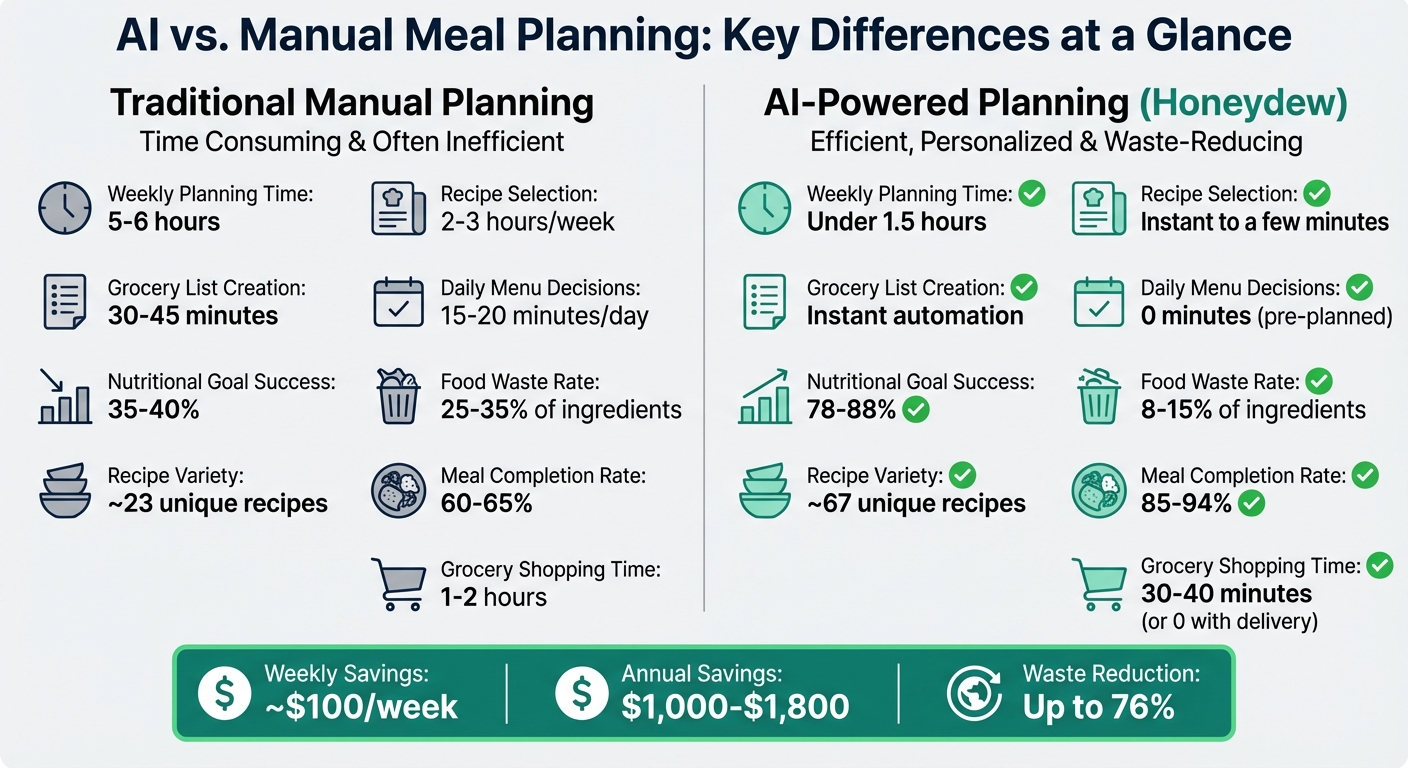
When you stack AI-powered meal planning against the manual approach, the efficiency gains are striking. AI can slash weekly planning time from 5–6 hours to less than 1.5 hours. Recipe selection, which might take 2–3 hours manually, is reduced to mere minutes. Even creating grocery lists - normally a 30–45 minute task - is automated in seconds. For seasonal vegan recipes, where ingredient availability can change frequently, this level of efficiency is a game-changer. Plus, pre-planned menus eliminate the need for daily dinner decisions, saving an extra 15–20 minutes every evening. Digital meal planning apps, overall, make the process roughly three times faster.
But speed isn’t the only advantage. AI users are far more likely to meet their nutritional goals, with a success rate of 78–88%, compared to just 35–40% for manual planners. This is because AI can juggle multiple dietary restrictions - like keto, gluten-free, or nut allergies - for an entire household simultaneously, something that’s nearly impossible to do manually. On top of that, AI-planned meals have a higher completion rate, ranging from 85–94%, compared to 60–65% for manually planned meals.
The benefits extend to reducing waste as well. AI-powered households cut food waste down to just 8–15% of ingredients, while traditional methods often waste 25–35%. In fact, AI systems can reduce kitchen waste by as much as 76%. These improvements make AI a practical tool for seasonal recipe planning, which we’ll explore further in the next section.
Comparison Table: AI vs. Manual Methods
| Feature | Traditional Manual Planning | AI-Powered Planning (e.g., Honeydew) |
|---|---|---|
| Weekly Planning Time | 5–6 hours | Under 1.5 hours |
| Recipe Selection | 2–3 hours/week | Instant to a few minutes |
| Grocery List Creation | 30–45 minutes | Instant automation |
| Daily Menu Decisions | 15–20 minutes/day | 0 minutes (pre-planned) |
| Nutritional Goal Success | 35–40% | 78–88% |
| Food Waste Rate | 25–35% of ingredients | 8–15% of ingredients |
| Recipe Variety | ~23 unique recipes | ~67 unique recipes |
| Meal Completion Rate | 60–65% | 85–94% |
| Weekly Savings | Baseline | ~$100/week |
| Grocery Shopping Time | 1–2 hours | 30–40 minutes (or 0 with delivery) |
This side-by-side breakdown highlights how AI transforms meal planning into a faster, smarter, and more precise process, making it an ideal choice for handling the complexities of seasonal recipes.
Seasonal Examples: AI vs. Manual Meal Planning in Action
Winter Recipes: Root Vegetables and Citrus
When February rolls around, root vegetables like carrots, parsnips, and sweet potatoes are at their best. This is where the contrast between AI-driven and manual meal planning really stands out. A traditional approach might involve flipping through cookbooks or scrolling through recipe blogs for 45–90 minutes, often leading to the same roasted root vegetable dish you've made countless times. It’s a tedious process that can result in forgotten ingredients and those dreaded extra trips to the grocery store.
Honeydew’s AI approach takes a completely different path. Simply snap a photo of your fridge using the app’s Pantry Mode. It identifies ingredients like carrots, sweet potatoes, and citrus, then suggests recipes tailored to the season - think Moroccan-spiced root vegetable tagine with Meyer lemon or roasted parsnip soup with a miso drizzle. These recipes incorporate trending ingredients for 2025. The app even generates a grocery list sorted by aisle, with the option for Instacart delivery. In November 2025, CNET editor Corin Cesaric tested this feature with a seven-day AI meal plan and reported zero food waste - avoiding the typical $125 monthly loss from unused groceries. This level of efficiency tackles one of the biggest drawbacks of manual planning: the difficulty of coordinating seasonal ingredients effectively.
As winter transitions to summer, the challenges shift, but the opportunities for AI to shine remain just as compelling.
Summer Recipes: Zucchini and Berries
Winter may focus on hearty root vegetables, but summer brings its own set of hurdles, especially with delicate produce like zucchini and berries. Manual meal planners often fall into a rut, cycling through an average of just 23 unique recipes. In contrast, AI users explore an average of 67 recipes, keeping things fresh and reducing produce waste.
Honeydew’s "Import From Social" feature takes the guesswork out of meal planning. You can save trending recipes from Instagram or TikTok - like zucchini fritters or berry chia pudding parfaits - without needing to manually input ingredients. Missing an item? The app’s smart substitution tool has you covered. For example, if a recipe calls for honey and you need a vegan alternative, it suggests date syrup, ensuring the recipe stays both flavorful and diet-friendly.
"Letting AI help me make the most of what I already have saves our family of four roughly $100 a week - I'm not kidding." - Abby Brody, Digital Parenting Expert
AI also slashes the time spent on planning. While traditional summer meal planning might eat up 2–4 hours on a Sunday afternoon, Honeydew cuts that down to just 10–15 minutes. This speed is crucial when dealing with perishable items - no more tossing out berries that went bad before you could use them. By expanding recipe options and streamlining the entire process, Honeydew ensures seasonal ingredients are used to their fullest potential, no matter the time of year.
Conclusion: Why AI Tools Like Honeydew Work Better for Seasonal Meal Planning
When comparing AI-powered tools to traditional meal planning, the standout advantages are time savings, reduced waste, and tailored experiences. Traditional methods can eat up 5–6 hours each week, but Honeydew slashes that down to under 1.5 hours by automating recipe selection and creating grocery lists sorted by aisle. For busy families balancing work, school, and other responsibilities, this kind of efficiency is a game-changer.
Another major win? Cutting down on food waste. Honeydew's AI reduces waste to just 8–15%, saving families an average of $100 weekly - or about $1,800 annually.
"The stress of meal planning has become a passive activity in the background of my day while I focus on more engaging tasks." – Rebecca Oggenfuss, CEO
Honeydew doesn’t just save time and money - it also adapts to your needs. Its smart substitutions boast a 95% accuracy rate, making it easy to adjust seasonal recipes for vegan diets or replace out-of-season ingredients. The tool even has a social import feature to quickly add trending recipes from platforms like Instagram, and its Instacart integration ensures you get the exact quantities delivered to your doorstep. Thanks to these features, users hit their nutritional goals 78–88% of the time, compared to just 35–40% with manual planning.
FAQs
How does AI know what’s in season near me?
AI pinpoints seasonal ingredients by diving into data sources like regional produce guides, local farming calendars, grocery sales patterns, and even social media trends. For example, tools such as Honeydew Recipe Manager combine this data with insights on weather and local preferences to suggest ingredients that are currently at their best in your area. This approach helps create meal plans packed with fresh, local produce, supporting healthier eating habits, saving money, and reducing environmental impact.
Do I still need to shop in person with Instacart integration?
With Honeydew Recipe Manager's integration with Instacart, you can streamline your grocery shopping experience and even skip the store altogether. The app automatically generates grocery lists based on your recipes, allowing you to order ingredients directly through Instacart for delivery or pickup. While you might still choose to shop in person for fresh produce or specialty items, this feature simplifies routine grocery shopping, making meal planning more convenient and less time-consuming.
How accurate is nutrition tracking for vegan meal plans?
AI-driven nutrition tracking for vegan meal plans offers impressive accuracy, often cutting errors by more than 50% compared to manual tracking. Tools like machine learning and barcode scanning enhance precision, but they can face difficulties with varied ingredients and regional differences. The overall reliability hinges on the app’s database and how well it’s trained, which means certain plant-based foods or traditional recipes might still be tricky to handle accurately.