Batch Cooking Tips to Save Time and Energy
• Updated
Batch cooking is a simple way to save time, reduce food waste, and cut costs. By preparing meals in bulk, you can minimize daily cooking, conserve energy, and avoid unnecessary grocery expenses. Here’s how you can make it work for you:
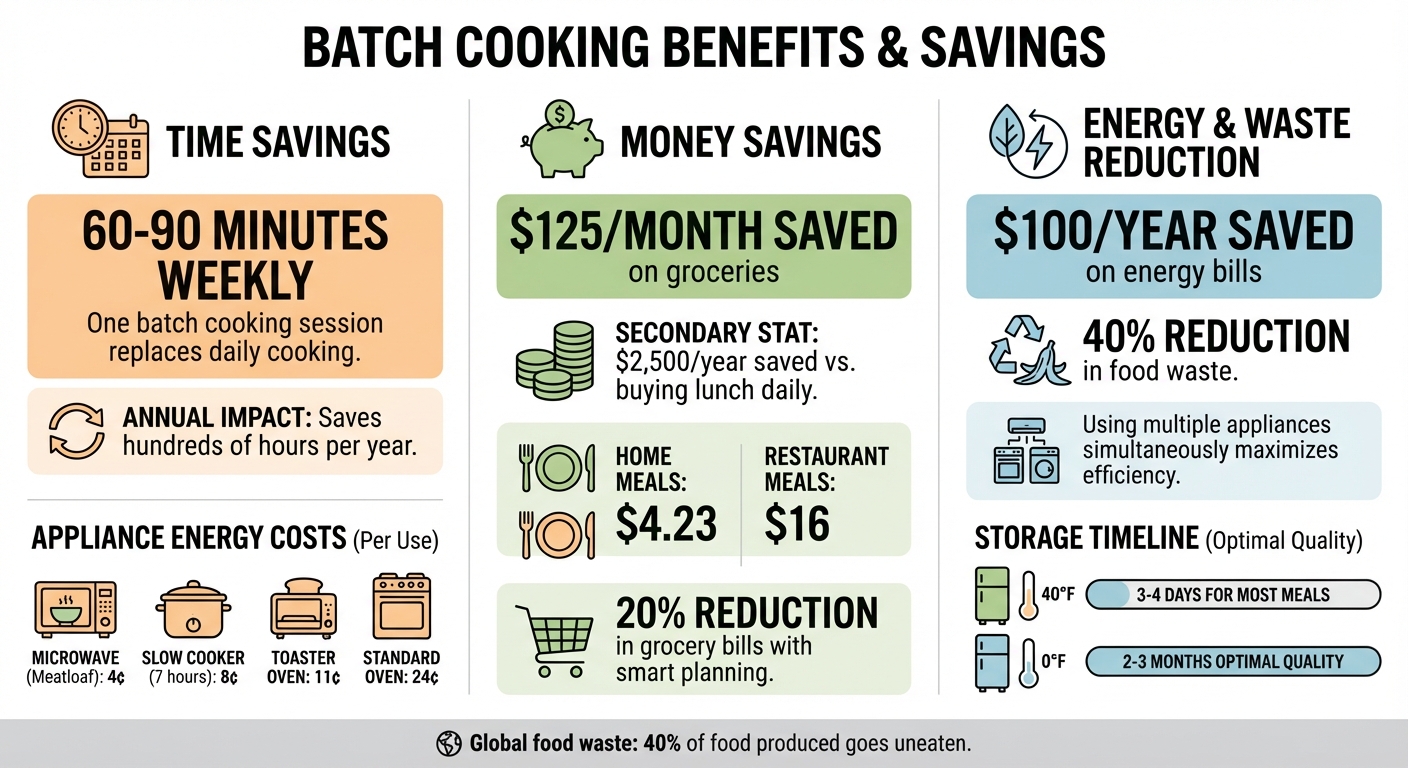
- Time-Saving: Dedicate 60–90 minutes weekly to prep meals like stews, casseroles, or roasted proteins that reheat well.
- Energy Efficiency: Use multiple appliances like ovens, slow cookers, and air fryers simultaneously to reduce energy usage.
- Cost Savings: Avoid impulse buys and save up to $125/month by planning meals and shopping your pantry.
- Storage Tips: Use freezer-safe containers, label meals, and freeze items flat to save space and maintain quality.
- Reheating: Heat meals to 165°F, and use methods like covering dishes or adding liquids to retain moisture.
Batch cooking simplifies meal prep, saves money, and ensures you always have a home-cooked meal ready to go. Tools like Honeydew Recipe Manager can streamline planning, shopping, and organizing, making the process even easier.
Batch Cooking Benefits: Time, Money, and Energy Savings Breakdown
Preparing for Batch Cooking
Plan Your Weekly Meals
Start by checking your calendar to figure out who will be home for dinner each night. Then, take stock of your pantry, fridge, and freezer using AI meal planning with pantry tracking to make sure you’re using items before they expire.
Pick 2–4 meals that reheat well, like chili, stews, curries, or casseroles. To save time and money, focus on recipes with overlapping ingredients. For example, roasted chicken can be used in wraps, stir-fries, or grain bowls. You can also try the "Core Plus Accent" approach: make a large batch of a base protein, grain, and vegetable, and switch things up with different sauces, herbs, or toppings.
Set aside 60–90 minutes, ideally on a Sunday, for your batch cooking session. If you’re just starting out, begin with one or two recipes and add more as you gain confidence. Keep in mind that buying lunch every workday can cost about $2,500 a year, so getting into a batch cooking habit can lead to big savings.
Once your meal plan is ready, it’s time to prep your kitchen for success.
Set Up Your Kitchen and Tools
A well-organized kitchen is key to efficient batch cooking. Use two cutting boards - one for raw meat and one for vegetables - to keep things safe and tidy. Make sure you have essential tools like a chef’s knife, peeler, colander, and mixing bowls, along with handy appliances like a food processor, Instant Pot, or slow cooker to save time.
Large rimmed baking sheets are great for roasting meats and vegetables at the same time. Line them with parchment paper to prevent sticking and make cleanup easier. You’ll also want large stockpots, a Dutch oven, and saucepans for cooking grains and other dishes.
If you don’t already own one, consider investing in a food processor. It can slice a whole bag of carrots in just a minute, compared to the 15 minutes it might take by hand.
For storing your meals, choose freezer-safe containers. Durable glass containers are a popular choice since they’re leakproof and heat-safe. Heavy-duty gallon-size freezer bags are another option and can be reused if labeled with a dry-erase marker. Always label your containers right away with the recipe name, date, and reheating instructions so you can easily grab what you need later.
Make a Complete Shopping List
Before heading to the store, review what you already have in your pantry, fridge, and freezer to avoid buying duplicates. Kelli McGrane, MS, RD, advises:
"Remember to shop your own pantry first – you can save money by using up the rice, beans, lentils, and other pantry ingredients that you already have on hand."
Organize your shopping list by store sections like Produce, Meat, Dairy, and Frozen to streamline your trip. Calculate how many meals and servings you’ll need to ensure you buy enough for your recipes without creating waste.
Take advantage of weekly store flyers or digital coupons to plan meals around sale items. For grains, nuts, and spices, check out bulk bins - they let you buy just the amount you need and are often cheaper than pre-packaged options. Finally, double-check your list against your pantry inventory to avoid unnecessary purchases.
Time-Saving and Energy-Saving Batch Cooking Methods
Use Multiple Appliances at Once
Running multiple appliances at the same time can be a game-changer for batch cooking. For instance, while your oven roasts chicken thighs at 375°F, you could have brown rice simmering on the stovetop and a slow cooker working on a hearty chili. This multi-tasking approach helps you prep several meal components in one go.
An Instant Pot or multi-cooker is especially handy since it combines functions like pressure cooking, slow cooking, and steaming, which can dramatically reduce prep time. Plus, appliances like microwaves, slow cookers, and air fryers tend to use less energy than traditional ovens or stovetops.
When using your oven, make the most of the heat by cooking multiple dishes or double batches at once. Arrange pans on different racks to improve airflow and ensure even cooking. Also, match the size of your pots and pans to your burners - using a small pan on a large burner can waste more than 40% of the heat produced.
By combining these strategies, you can save both time and energy while tackling bulk cooking.
Cook in Bulk and Freeze Meals
Cooking in larger quantities not only saves time but also cuts down on how often you need to use your appliances. For example, chopping all your ingredients for multiple meals in one session reduces repetitive tasks.
A simple way to start is by doubling or tripling recipes when making dinner and freezing the extra portions for later. You can also prep base ingredients like shredded chicken, roasted veggies, or cooked beans, which can be paired with different sauces or sides throughout the week for variety.
When freezing meals, let hot food cool to room temperature - within an hour - before placing it in the freezer. Hot food can raise the freezer's internal temperature, forcing it to use more energy. For soups and stews, freeze them flat in bags to save space and make thawing quicker. For dishes like casseroles or pasta, slightly undercook the ingredients so they retain their texture when reheated.
These bulk cooking habits not only reduce your daily cooking workload but also make meal prep more energy-efficient.
Apply Energy-Efficient Cooking Techniques
Small tweaks to your cooking methods can add up to noticeable energy savings. For example, using glass or ceramic baking pans lets you lower the oven temperature by 25°F without affecting cooking time. Defrost frozen ingredients in the fridge ahead of time, and skip preheating the oven unless you're baking pastries or bread - most dishes don’t need it, which saves energy.
Another tip: turn off electric burners a few minutes before the cooking time is up. The residual heat will finish the job. And if you're batch cooking, keep the oven door closed as much as possible - each time you open it, a lot of heat escapes.
For smaller portions, consider using appliances like toaster ovens, air fryers, or slow cookers instead of firing up a full-sized oven. For example, cooking a meatloaf in a microwave costs about 4¢ in energy, compared to 24¢ in a standard electric oven. A toaster oven uses 0.95 kWh (about 11¢), while a crockpot only uses 0.7 kWh over seven hours, costing about 8¢. Pressure cookers are another great option for energy-efficient batch cooking, especially for beans or stews, as they use steam pressure to cut down cooking times.
Big Batch Cooking | Stacking the Freezer with 45 Meals
How to Store and Reheat Batch-Cooked Meals
Once you've mastered meal planning, knowing how to store and reheat your meals properly is the final step to making batch cooking both safe and efficient.
Choose the Best Storage Containers
Using the right containers can make all the difference. Airtight containers are your first line of defense against freezer burn, moisture loss, and contamination. Glass containers are especially handy since they're non-porous, easy to clean, and let you see what's inside. For batch cooking, shallow containers (2–3 inches deep) are ideal because they allow food to cool, freeze, and thaw more evenly .
For liquids like soups, stews, or sauces, go for rigid containers but leave about ½ inch of space at the top to allow for expansion when freezing. If you're short on freezer space, vacuum-sealed pouches or heavy-duty freezer bags are great alternatives. Just remember to press out as much air as possible before sealing.
Label everything clearly with the recipe name, freezing date, number of servings, and reheating instructions. A simple piece of masking tape and a permanent marker will do the trick . This habit not only prevents "mystery meals" but also helps you follow a "First-In, First-Out" system, so older meals get used first .
Stick to Safe Storage Practices
Cooling your food quickly and correctly is crucial for safety. Instead of leaving hot food in large pots on the counter, divide it into shallow containers and use an ice water bath to speed up the cooling process before refrigerating or freezing . Always avoid leaving cooked meals at room temperature for more than 2 hours - or just 1 hour if it's hotter than 90°F .
Your refrigerator should stay at 40°F or below, while your freezer should be set to 0°F or lower . Most cooked proteins like beef, poultry, and stews can last 3–4 days in the fridge, while ground meats should be eaten within 1–2 days . In the freezer, batch-cooked meals retain their best quality for up to 3 months, even though food remains safe indefinitely at 0°F .
| Food Type | Refrigerator (40°F) | Freezer (0°F) |
|---|---|---|
| Cooked Meats & Stews | 3–4 Days | 2–6 Months |
| Ground Meats (Cooked) | 1–2 Days | 2–3 Months |
| Cooked Rice & Pasta | 3–5 Days | 1–2 Months |
| Blanched Vegetables | 5–7 Days | 8–12 Months |
By following these guidelines, you can ensure your meals stay fresh and safe until you're ready to enjoy them.
Reheating Done Right
Reheating meals properly not only ensures safety but also preserves flavor and texture. Whenever possible, reheat meals using the same method you originally cooked them. For example, roasted dishes are best reheated in the oven, while saucy meals do well on the stovetop. Always heat dishes to an internal temperature of 165°F to ensure they're safe to eat .
If you're using a microwave, arrange the food in a ring shape rather than piling it up in the center. Cover it with a damp paper towel to trap steam and prevent dryness. For oven reheating, set the temperature between 250°F and 300°F, and cover the dish with aluminum foil to keep it moist. Adding a splash of water, broth, or milk can help refresh grains, pasta, and proteins. As Emily Sullivan, a dietitian at MyFitnessPal, explains:
"Braising proteins and storing them in their cooking liquid helps to both add and retain moisture and flavor".
When it comes to defrosting, the safest method is to thaw meals in the refrigerator overnight . For dense proteins like chicken or steak, let them sit at room temperature for a short time before reheating. This helps the heat distribute evenly without overcooking the outside.
Proper reheating is the final step in making your batch-cooked meals convenient, safe, and delicious - completing the cycle of efficient meal prep.
Simplify Batch Cooking with Honeydew Recipe Manager
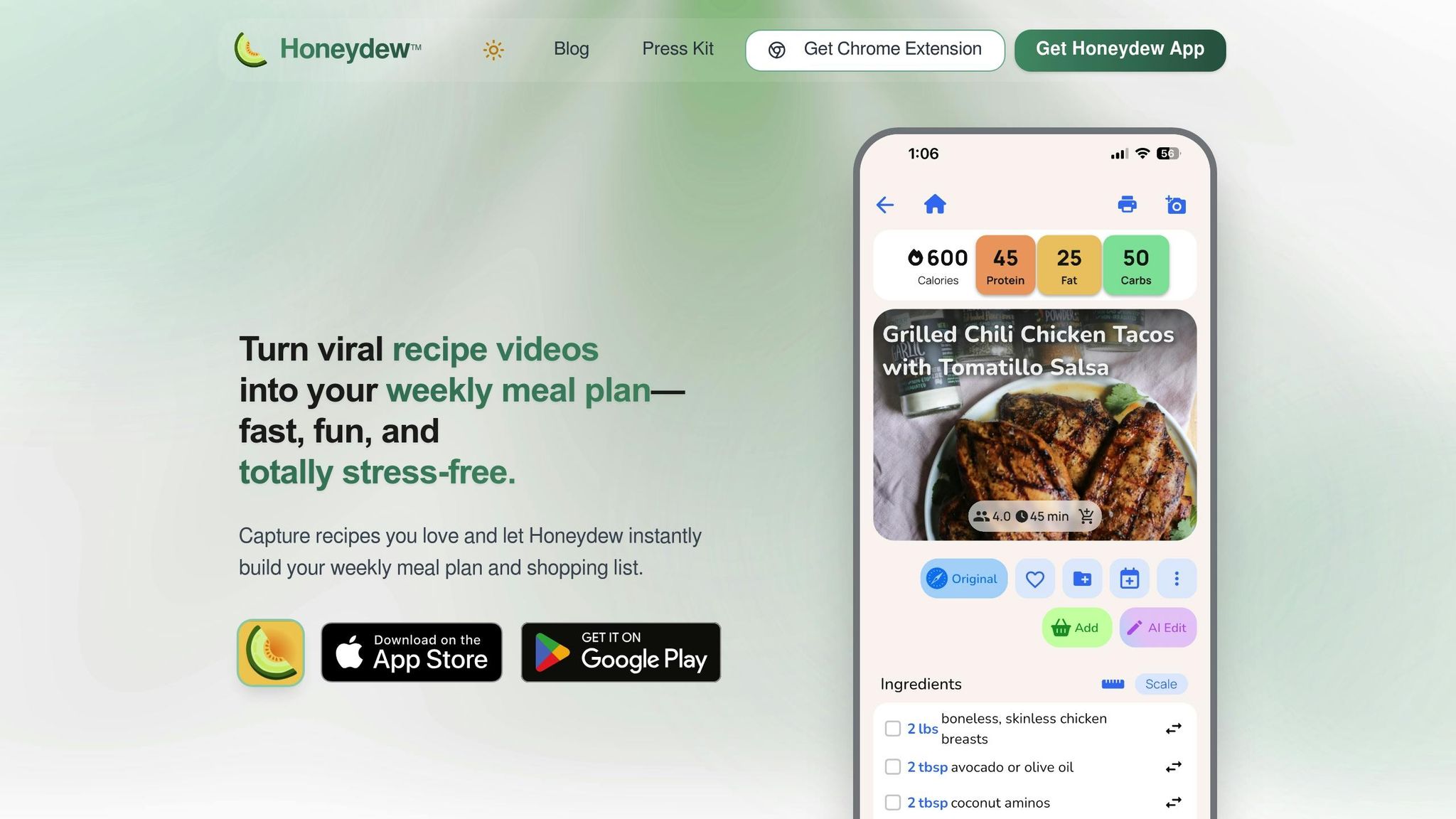
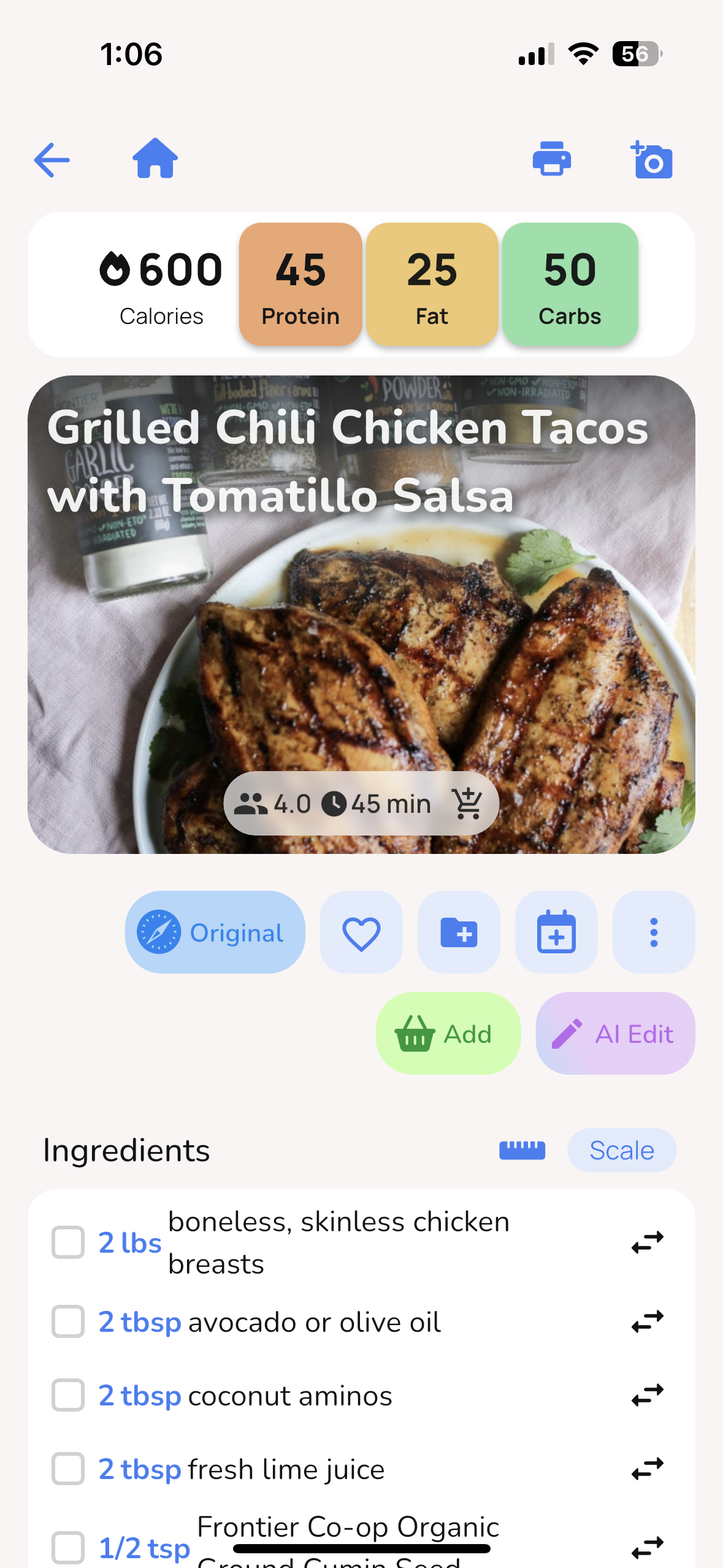
Batch cooking can feel like a juggling act - managing recipes, shopping lists, and exact measurements all at once. That’s where the Honeydew Recipe Manager steps in, combining these tasks into a single, easy-to-use app. Building on efficient meal planning and energy-saving strategies, Honeydew takes your batch cooking routine to a whole new level.
Import Recipes and Build Custom Meal Plans
Finding and organizing batch-friendly recipes can be overwhelming. Honeydew simplifies this by pulling recipes directly from platforms like TikTok, Instagram, and YouTube. Just share that viral soup or casserole recipe with the app, and it’s instantly added to your meal plan.
The app’s drag-and-drop calendar makes it a breeze to map out your cooking sessions. Want to group recipes with similar cooking methods to save time? Done. With this tool, you can maximize oven or stovetop use throughout the week. Fun fact: users save around 85,000 recipes every month using Honeydew.
Create Grocery Lists Automatically
Shopping for batch cooking doesn’t have to be chaotic. Honeydew generates a smart grocery list organized by store aisles, so you’re not darting back and forth trying to grab everything. Better yet, it consolidates ingredients - if multiple recipes call for onions or chicken broth, you’ll see the total amount needed in one place.
And for even more convenience, Honeydew integrates with Instacart to order your groceries with a single click. By using its AI-powered tools, you can cut grocery bills by up to 20%, avoiding duplicate purchases and sticking to your meal plan.
Get AI Help for Smarter Cooking
Honeydew’s AI isn’t just about convenience - it’s about cooking smarter. It can scale recipes to fit your needs and suggest substitutions based on what’s already in your pantry. With Pantry Mode, you can snap a photo of your fridge, and the app will recommend recipes to help you use up what you have. This feature alone can cut household food waste by up to 40%, saving families roughly $125 per month on groceries. As one user, James L., put it:
"The smart grocery lists save me hundreds of dollars a month. I love how it suggests recipes based on what I already have!" - James L.
Conclusion
Batch cooking isn’t just a passing fad - it’s a practical way to reclaim your evenings, lower your energy bills, and cut down on food waste. By setting aside just 60 to 90 minutes once a week to prepare meals in bulk, you can avoid the nightly stress of deciding what’s for dinner and resist the lure of pricey takeout. Plus, home-cooked meals are much easier on the wallet, costing a fraction of what you’d spend dining out.
The savings don’t stop there. Batch cooking can trim about $100 a year off your energy bills by using your oven and stovetop more efficiently in one session rather than every night. It also helps tackle food waste, a major global issue - 40% of food produced worldwide never gets eaten. Planning meals in advance ensures you use up ingredients before they go bad. As Nicolette Star Maggiolo, RD, LDN from Top Nutrition Coaching explains:
"Americans save around $12 by opting to cook and eat at home, with the average home meal costing $4.23 versus over $16 per meal at an inexpensive restaurant".
A simple trick? Double your favorite recipes, label them with the date and portion sizes, and freeze half for later. Stick to versatile staples like roasted chicken, quinoa, or beans, which can easily be turned into tacos, salads, or bowls with a quick sauce change. Also, check your pantry before shopping to avoid buying items you already have.
Want to take it a step further? Smart planning tools can make the process even smoother. Apps like Honeydew Recipe Manager simplify everything - from importing recipes and planning meals to creating organized grocery lists and even placing orders through Instacart. With AI features, the app can help you cut grocery costs by up to 20% and reduce food waste by as much as 40%, which could save you around $125 each month. Batch cooking means more than just ready-made meals - it’s about saving time, money, and resources while making life a little easier.
FAQs
How does batch cooking help me save money on groceries?
Batch cooking is a smart way to cut down on grocery bills. Buying ingredients in bulk usually brings the cost per unit down, and it helps you use up items more efficiently, reducing food waste. Plus, having meals prepped and ready to go means you’re less likely to splurge on last-minute takeout, which can quickly add up.
When you plan meals thoughtfully, you can reuse ingredients across different recipes, stretching your budget even further. Tools like Honeydew Recipe Manager make meal planning and shopping a breeze, helping you stay organized and stick to your financial goals.
How should I store batch-cooked meals to keep them fresh and safe?
To keep your batch-cooked meals fresh and safe, always use airtight containers. These help protect your food from contamination and freezer burn. Make sure to cool meals quickly before storing them in the fridge or freezer - this step is crucial to prevent bacterial growth. If you're planning to freeze your meals, divide them into small portions. Not only does this make reheating more convenient, but it also helps preserve the texture and flavor.
Don't forget to label your containers with the date to track how fresh your meals are. For the best quality, aim to eat frozen meals within a few months and maintain your freezer temperature at 0°F (-18°C). When it’s time to reheat, ensure the food reaches an internal temperature of 165°F to keep it safe to eat. Following these storage tips will not only extend the life of your meals but also make your weekly meal prep a breeze!
How can using multiple appliances make batch cooking more energy-efficient?
Using several appliances during batch cooking can help you save energy while making meal prep more efficient. For instance, using the oven to cook large portions - like casseroles or roasted vegetables - enables you to prepare multiple meals in one go. This way, the oven's energy use is spread across several dishes, cutting down on the need to cook repeatedly.
You can also pair appliances like slow cookers, pressure cookers, or microwaves to prepare different parts of your meal at the same time. This method uses less energy overall compared to cooking each dish separately on different days. By planning your appliance use wisely, you can save both time and energy while making your weekly meal prep easier.