Batch Cooking vs. Daily Cooking: Which Wastes Less?
• Updated
When it comes to reducing food waste, batch cooking outperforms daily cooking. By preparing meals in bulk, batch cooking uses full ingredient packages, minimizes spoilage, and extends food life through freezing. In contrast, daily cooking often leads to waste from unused ingredients and frequent shopping trips without a plan.
Key Takeaways:
- Batch Cooking: Saves time, money, and reduces waste through bulk buying and proper storage. Leftovers are frozen, lasting up to 3 months, and fewer groceries are wasted.
- Daily Cooking: Offers flexibility but risks more waste due to partially used ingredients and forgotten perishables. Frequent shopping increases impulse buys and spoilage.
Quick Comparison:
| Factor | Batch Cooking | Daily Cooking |
|---|---|---|
| Food Waste | Lower (efficient use of ingredients) | Higher (spoilage from partial use) |
| Cost | Lower (bulk buying, fewer trips) | Higher (frequent shopping, smaller portions) |
| Time Investment | 2-4 hours upfront, saves time weekly | 30-60 minutes daily |
| Storage | Requires freezer space | Relies on fridge for perishables |
| Flexibility | Limited (pre-planned meals) | High (meals decided daily) |
Both methods can reduce food waste with smart meal planning. Tools like Honeydew Recipe Manager simplify meal planning, track ingredients, and help cut waste by up to 76%. Whether you prefer batch or daily cooking, planning is key to saving money and reducing food waste.
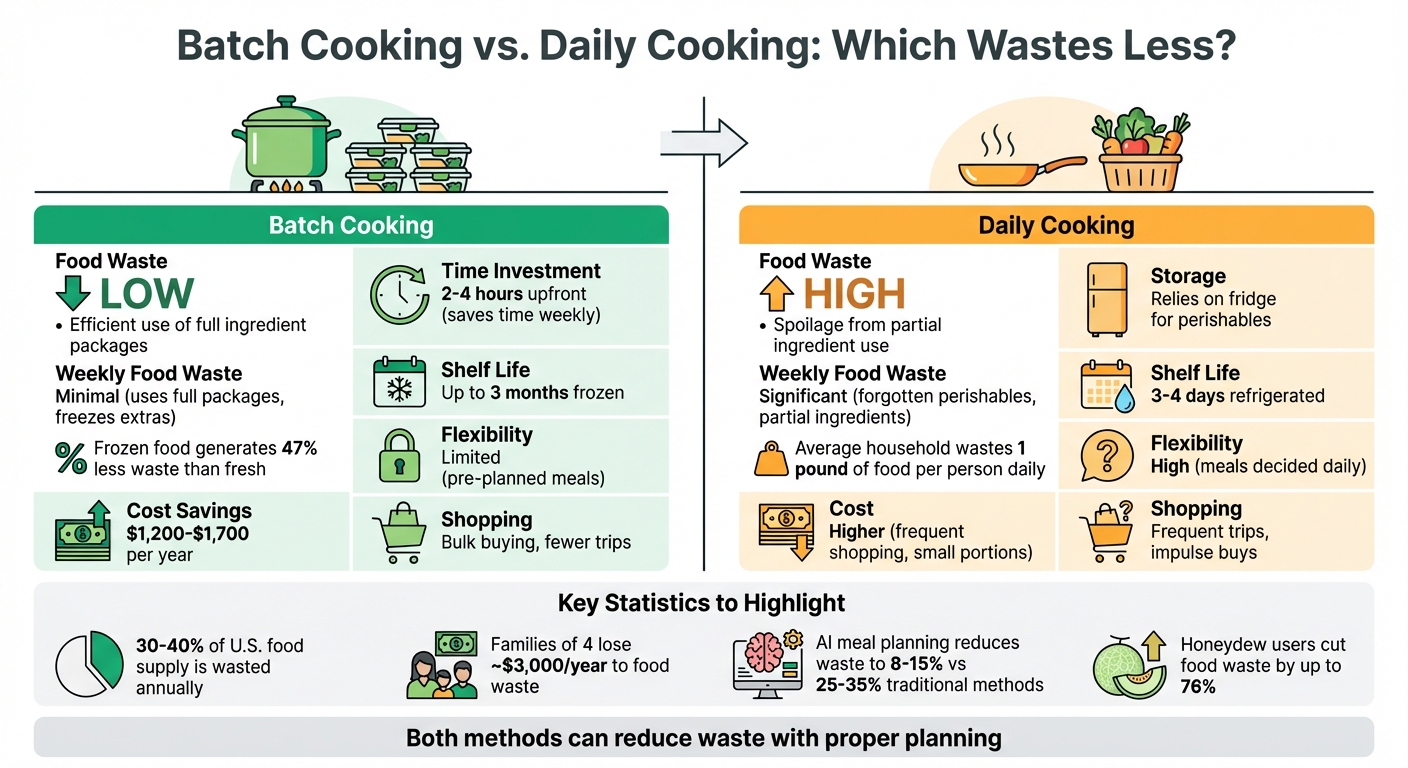
Batch Cooking vs Daily Cooking: Food Waste and Cost Comparison
A day all about FOOD! Batch cooking, meal prep, saving food waste. Cook with me, easy recipe ideas.
What is Batch Cooking?
Batch cooking is the process of preparing meals or meal components in larger quantities during a single session, typically lasting 1–2 hours each week, to store and enjoy later. Instead of starting from scratch every evening - chopping vegetables, cooking proteins, and dealing with cleanup - you handle these tasks in one focused time block.
This approach stands apart from daily cooking in two important ways. First, it eliminates the nightly stress of deciding what to cook and preparing everything from raw ingredients. Second, it relies on refrigeration or freezing to store meals for future use instead of eating them immediately. Unlike traditional meal prep, which often involves portioning out identical meals for the week, batch cooking focuses on preparing versatile components. For example, you could roast a tray of vegetables, cook a pot of quinoa, and grill several chicken breasts. These items can then be mixed and matched in different combinations throughout the week, keeping meals varied and interesting. The method lays the groundwork for efficient ingredient prep, which is explained further below.
How Batch Cooking Works
The process starts with selecting recipes that freeze well. Dishes like chili, lasagna, or curries are great options, while foods with high water content (like cucumbers or lettuce) or egg-based sauces are better avoided. Stock up on bulk staples such as grains, beans, and proteins to cut costs, and prioritize seasonal produce. To save time, multitask: simmer grains on the stove while roasting vegetables in the oven.
When it comes to storage, always let your food cool completely to room temperature before sealing and freezing it. This step prevents condensation, which can lead to ice crystals and freezer burn. Portion meals into single servings or family-sized quantities, and label each container with the meal name and preparation date. Use airtight, freezer-safe containers and a clear labeling system to avoid the dreaded "freezer mystery". These steps not only make preparation more efficient but also help minimize food waste.
Benefits of Batch Cooking
Batch cooking offers several practical advantages, starting with waste reduction. By fully utilizing bulk-purchased items - like a 10-pound bag of potatoes or a head of broccoli - you avoid letting ingredients spoil by using pantry tracking to minimize waste. This is particularly impactful when considering that around 30–40% of the U.S. food supply is wasted annually.
It’s also a cost-effective approach. Batch cooking can save an average of $1,200 to $1,700 per year on food expenses, while also cutting energy costs by roughly $100 annually compared to cooking fresh meals every night. Buying in bulk further reduces the price per unit. For instance, purchasing a 10-pound bag of potatoes instead of five 2-pound bags can save up to 30%.
Time savings are another major benefit. Instead of spending 30–60 minutes cooking each evening, you dedicate a single 2-hour session that frees up your weekday evenings. In 2020, two-thirds of UK residents reported batch cooking meals like curry, stew, and spaghetti Bolognese. Plus, most batch-cooked meals stay fresh for 3 to 4 days in the refrigerator and up to 3 months in the freezer, offering plenty of flexibility.
What is Daily Cooking?
Daily cooking is all about preparing fresh meals from scratch every evening, meant to be consumed right away. Unlike batch cooking, which involves preparing meals in bulk during a single session, daily cooking requires starting from square one each night - chopping ingredients, cooking proteins, and pulling everything together. It's the nightly ritual many households know well, where dinner is often decided on the spot.
This approach depends on frequent grocery shopping, with a focus on buying only what’s needed for the next meal or two. Instead of stocking up on large quantities, you might grab just enough for one dish - like a couple of potatoes instead of a giant bag. The idea is to use ingredients at their freshest, often within a day or two of purchase, avoiding long-term storage. As Mark van Oosterwijck, Founder of FitChef, aptly puts it:
"When every meal requires fresh thought, your brain burns energy meant for better things".
How Daily Cooking Works
The process revolves around preparing and eating meals immediately. Typically, this means shopping a few times a week, using a smart meal planning approach for that evening or the next day. Once home, the ingredients are washed, chopped, and cooked right away, minimizing the chances of food being forgotten in the fridge. Dishes made through this method are usually consumed within 3 to 4 days, making it ideal for those who prefer fresh meals over freezer-stored options.
To keep things efficient, a "First In, First Out" system is often used - placing older items at the front of the fridge ensures they get used before newer ones. This focus on immediate use not only keeps meals fresh but also streamlines ingredient management, helping to avoid waste.
Benefits of Daily Cooking
One of the biggest perks of daily cooking is its flexibility. You’re not tied to a rigid meal plan, so you can decide what to cook based on your mood or cravings that day. This spontaneity helps avoid the boredom of eating the same leftovers over and over. It’s also a great way to experiment with new recipes and techniques, turning cooking into a creative and enjoyable activity. As Joy Cho, a freelance writer and pastry chef, shares:
"I'm no longer guilty of scrapping my thoughtfully prepped-and-portioned food for last-minute takeout halfway through the week in hopes of feeling something again".
Beyond that, daily cooking allows you to adapt meals to what’s on hand in your fridge or what’s in season, making the process feel less like a chore and more like a rewarding practice. It’s particularly convenient for those with unpredictable schedules, offering the freedom to whip up simple dishes on busy nights or dive into more elaborate recipes when there’s extra time. Plus, by focusing on fresh ingredients and avoiding long-term storage, daily cooking keeps meals vibrant and flavorful. While frozen food generates 47% less household waste compared to fresh food, this method ensures you’re using ingredients at their best.
Food Waste Comparison: Batch Cooking vs. Daily Cooking
The numbers around food waste in the U.S. are staggering. About one-third of all food goes uneaten, and in 2019, the EPA reported that 96% of household food waste ended up in landfills or incineration facilities. Surprisingly, your cooking habits can have a significant impact on these statistics. Let’s break down how batch cooking and daily cooking approach food waste differently.
How Batch Cooking Reduces Food Waste
Batch cooking is all about efficiency - using full ingredient packages in one go. Instead of finding ingredient substitutions for partial leftovers or letting half a bunch of celery go limp in the fridge, batch cooking ensures everything gets used. It also encourages cascade cooking, where one ingredient serves multiple purposes. For instance, you could roast a chicken for dinner, save the leftovers for tacos the next night, and then boil the bones to make broth.
Freezing plays a huge role in reducing waste. While leftovers in the fridge only last 3–4 days, freezing extends their life for months. In fact, frozen food generates 47% less household waste compared to fresh food. Pre-portioning meals before freezing keeps you from over-preparing or letting food spoil. Megan Johnson from Our Home & Heritage emphasizes the benefits:
"When you prepare extra portions, freeze leftovers, and stock your pantry with real, from-scratch staples, you're doing more than saving money; you're creating rhythm and calm".
Another bonus? Batch cooking curbs impulse buying. With a clear plan, you make fewer trips to the store, avoiding those unnecessary purchases that often lead to wasted perishables.
Food Waste Problems in Daily Cooking
Daily cooking, on the other hand, tends to generate waste in different ways. One of the biggest culprits is fragmented ingredient use - only part of an item is used, and the rest is forgotten until it spoils. Think of that half-used jar of tomato paste or a bunch of herbs wilting in the back of the fridge.
Storage issues also contribute to waste. Without a structured plan, perishables like salad greens are often tossed into the fridge and forgotten until they’re no longer usable. Frequent grocery runs, often without a clear list, lead to impulse buys. Shopping while hungry only makes this worse, filling your cart with items that might never get used. On average, U.S. households waste about 1 pound of food per person every day, and roughly 30% of all edible food produced in the country goes to waste.
Side-by-Side Comparison: Batch Cooking vs. Daily Cooking
Here’s a quick look at how these two approaches stack up when it comes to waste, cost, time, and storage:
| Factor | Batch Cooking | Daily Cooking |
|---|---|---|
| Weekly Food Waste | Low; uses full ingredient packages and freezes extras | High; partial ingredients and forgotten perishables spoil |
| Cost | Lower; bulk buying and fewer impulse purchases | Higher; frequent trips and small-portion pricing |
| Time Required | High initial investment (2–4 hours), but saves time during the week | High daily investment (30–60+ minutes each evening) |
| Storage Needs | Requires freezer space and organized containers | Needs more fridge space for perishables |
| Leftover Management | Intentional; meals are portioned and frozen | Accidental; small amounts often go uneaten |
Both methods have their pros and cons, but when it comes to minimizing food waste, batch cooking clearly offers some strong advantages.
Pros and Cons of Each Method
Batch Cooking: Pros and Cons
Pros:
Batch cooking can save both time and money, helping you cut down on annual food and energy expenses. It also simplifies weeknight dinners, turning the usual last-minute rush into a quick reheating session. As Emily Burg from BBC Good Food explains:
"Batch-cooking is more than just a kitchen trend – it's a practical approach to making mealtimes easier, healthier and more affordable".
Cons:
However, it does come with challenges. The initial prep requires a significant time investment, and you’ll need ample freezer space, which may not be feasible for everyone. Certain foods, like lettuce, cucumbers, or egg-based sauces, don’t freeze well and can lose their quality. Additionally, eating the same meal repeatedly can get tiresome, though this can be avoided by prepping individual components instead of full dishes to allow for more variety. Despite these drawbacks, batch cooking can be a key strategy for cutting down on food waste.
Daily Cooking: Pros and Cons
Daily cooking, on the other hand, offers the advantage of peak freshness. It preserves heat-sensitive nutrients like Vitamin C and folate, and it allows for flexibility to adjust menus on the fly. Plus, studies show that spending over an hour on daily meal prep is associated with higher consumption of fruits and vegetables.
Cons:
That said, daily cooking isn’t without its downsides. Using ingredients in small amounts increases the risk of spoilage. It’s also time-consuming, often requiring 30–60 minutes or more for cooking and cleanup every evening. When you’re stressed or hungry, the temptation to opt for costly takeout can be hard to resist. Without a solid plan, ingredients might go unused and end up wasted. These challenges highlight the importance of thoughtful meal planning and waste reduction techniques.
How Honeydew Recipe Manager Reduces Food Waste
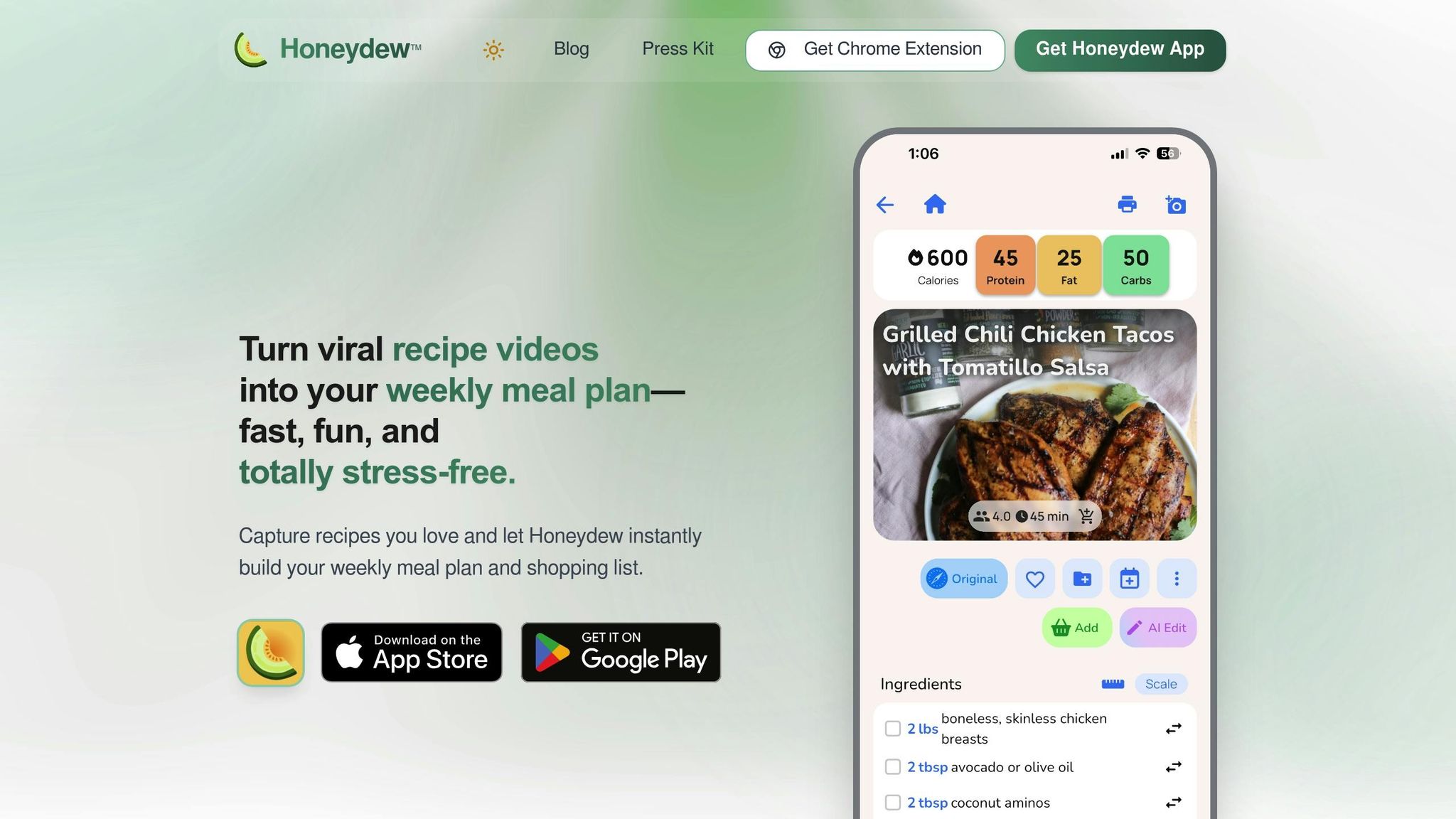
Honeydew Recipe Manager is packed with tools designed to tackle food waste head-on. With 40% of all food produced in the U.S. going to waste, better planning is more important than ever. Thanks to its AI-powered features, the app has helped households cut food waste by up to 76%. Families using AI meal planning waste significantly less - only 8–15% of their ingredients - compared to the 25–35% wasted with traditional methods. These tools make both batch and daily cooking approaches more efficient and waste-conscious.
AI Meal Planning for Batch Cooking
Honeydew's AI-generated grocery lists ensure you buy just what you need - no more, no less. The drag-and-drop meal calendar helps you plan meals for specific days, including leftovers, so those containers don't get lost in the fridge.
"I used to waste so much food. Now with Honeydew's meal planning, I buy exactly what I need and save money!" - Mark T., Honeydew user
The household sharing feature lets up to six family members collaborate on shared calendars and lists, avoiding duplicate purchases of bulk items. And with Instacart integration, you can order precise quantities - like three apples instead of a six-pack - cutting down on spoilage before your next cooking session. In fact, CNET editor Corin Cesaric tested an AI-generated meal plan in November 2025 and reported zero food waste for the entire week.
Daily Cooking Tools in Honeydew
For those who prefer daily cooking, Honeydew offers tools that focus on real-time ingredient management and inventory tracking.
The app's smart grocery lists organize ingredients by aisle and sync with Instacart for quick, on-the-spot ordering. Its ingredient-based recipe search turns leftover odds and ends into meals, helping you use up food before it spoils. Digital parenting expert Abby Brody shared that in 2025, using Honeydew's AI to create recipes from fridge leftovers saved her family of four around $100 per week by reducing grocery trips and takeout.
The household sharing feature also syncs pantry inventories in real time across all six members, preventing unnecessary duplicate purchases.
"My family of five uses Honeydew for all our meal planning. The household sharing feature keeps everyone organized." - Alex P., Honeydew user
With a 4.8/5 star rating, Honeydew shows how technology can make both batch and daily cooking easier, while helping families save money and waste less food.
Conclusion: Which Method Wastes Less?
Batch cooking clearly takes the lead in cutting down food waste. Research shows that frozen food generates 47% less household waste compared to fresh food. This reduction comes from the careful planning that batch cooking requires - avoiding impulse purchases and ensuring ingredients don’t get overlooked. By preparing meals in bulk, you make the most of your groceries and properly store leftovers, reducing the chances of spoilage.
On the other hand, daily cooking often leads to more waste due to unplanned shopping and partially used ingredients. With about one-third of food in the United States going uneaten and families of four losing around $3,000 annually to wasted food, the structure of batch cooking offers a clear advantage in managing waste.
That said, daily cooking can also be waste-efficient with the help of smart tracking tools. Whether you prefer to batch cook on weekends or whip up fresh meals every day, tools like Honeydew Recipe Manager can make a difference. Its meal planning apps and ingredient tracking help you stay organized, reduce waste, and save money. The choice is yours - find the approach that works best for your lifestyle and stick to it with the help of precise planning tools.
FAQs
What foods freeze best for batch cooking?
Foods such as soups, stews, baked goods, and cooked meats are excellent choices for batch cooking. They hold up well in the freezer, maintaining both their texture and flavor when stored correctly. This makes them perfect for prepping in advance and enjoying later with minimal effort.
How can I batch cook with limited freezer space?
To make batch cooking work with limited freezer space, try using small, stackable containers or freezer bags that can be laid flat. These options save a ton of space compared to bulky containers. Freezing meals in smaller portions is another smart move - it prevents overcrowding and lets you thaw just the right amount when needed. For larger dishes like casseroles, divide them into smaller portions that fit better in your freezer. Also, plan your meals with your freezer’s capacity in mind, and focus on space-efficient storage to make the most of the room you have.
How does Honeydew Recipe Manager help prevent ingredient waste?
Honeydew Recipe Manager helps cut down on ingredient waste by letting you import recipes, create grocery lists in seconds, and plan meals based on what’s already in your pantry. This way, you’re only buying what you truly need, reducing the chances of spoilage. Features like ingredient substitution and recipe sharing make it simple to tweak meals using what you already have on hand. Plus, with Instacart integration, you can effortlessly purchase just the right amount, avoiding overbuying and unnecessary food waste.