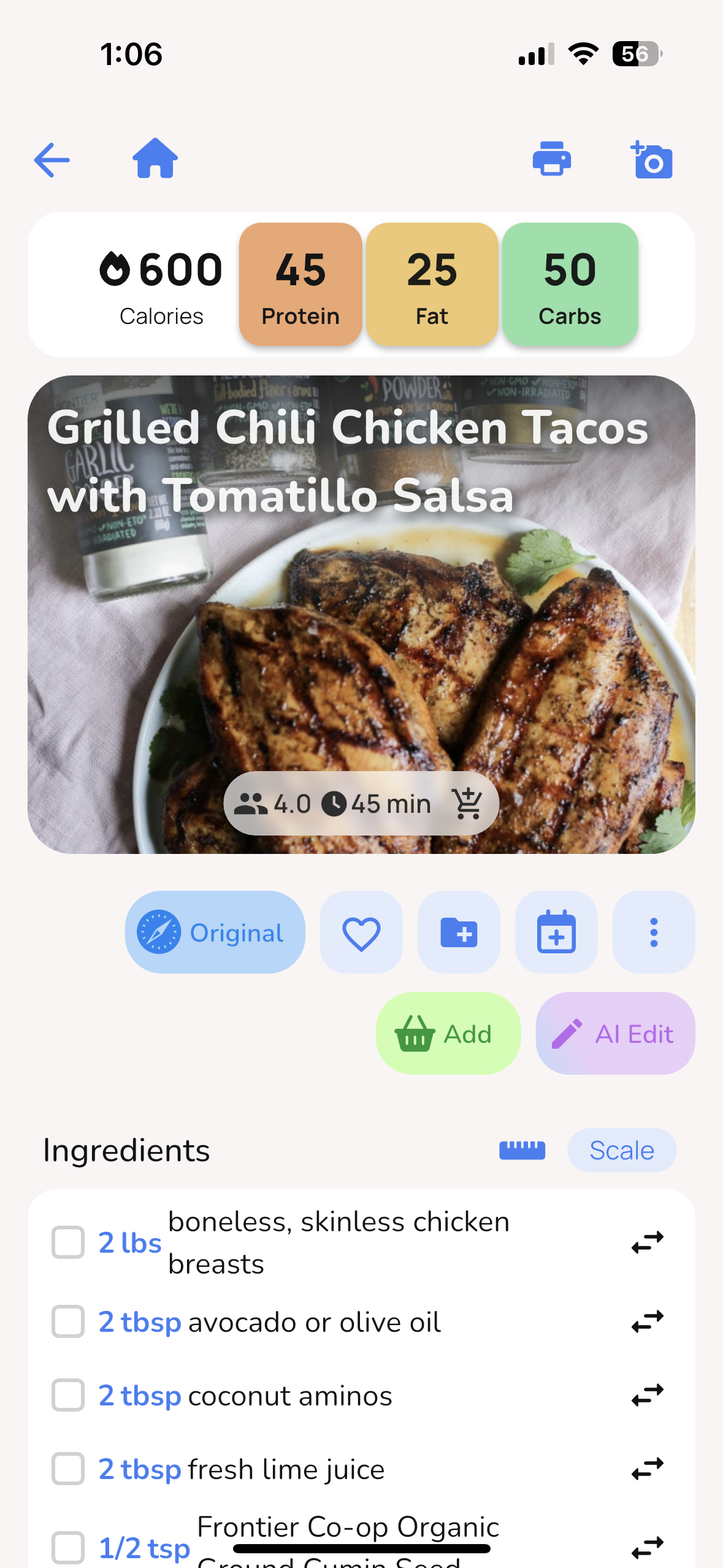
5 Benefits of AI Nutrition Tagging for Meal Planning
• Updated
AI nutrition tagging simplifies meal planning by automating nutritional analysis for recipes. It saves hours of manual work, improves tracking accuracy, and personalizes meal plans to fit dietary needs. Tools like Honeydew Recipe Manager offer features such as real-time ingredient substitutions, grocery list generation, and progress tracking, making it easier to manage nutrition and reduce food waste. Here's what you gain:
- Time Savings: Cut meal planning time from 5–6 hours to under 1.5 hours per week.
- Improved Accuracy: AI achieves 84% macronutrient accuracy vs. 35–40% with manual tracking.
- Personalized Diets: Adjust meals for dietary restrictions or goals like weight loss or carb control.
- Reduced Food Waste: AI calculates precise portions, saving $100–$125 monthly on groceries.
- Effortless Progress Tracking: Monitor daily nutrition and fill nutrient gaps using smart dashboards.
AI tools streamline meal planning, making it faster, more precise, and aligned with your health goals.
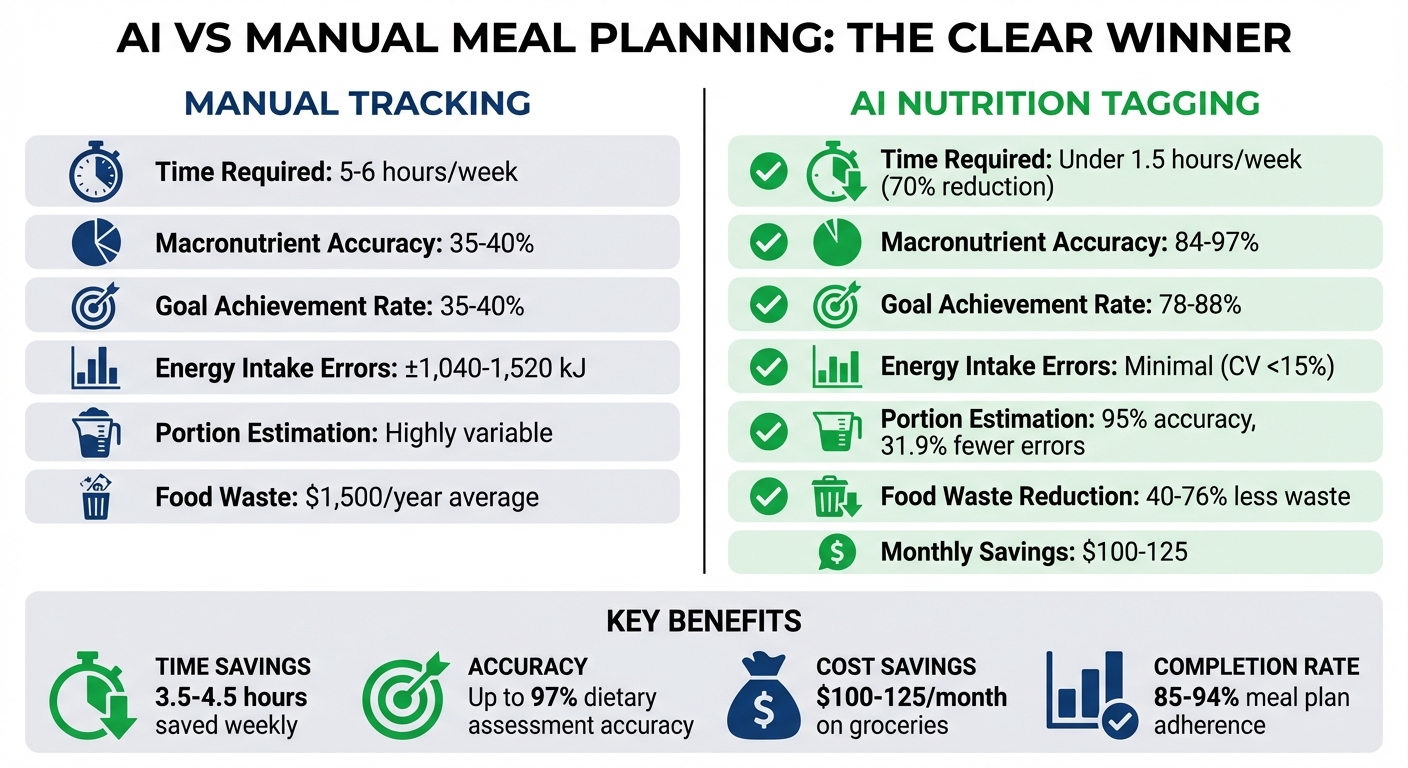
AI vs Manual Meal Planning: Time Savings and Accuracy Comparison
I built an Army of AI Agents to Manage my nutrition
1. Saves Time on Manual Calculations
Comparing meal planning apps vs manual planning shows that tracking nutrition manually can take a hefty 5–6 hours each week. But with AI nutrition tagging, that time drops to under 1.5 hours. How? By automatically extracting ingredients from social media platforms like TikTok, Instagram, or YouTube and converting measurements using USDA data. This automation makes nutritional tracking within the app almost effortless.
Take the Honeydew Recipe Manager as an example. Simply drag a recipe onto your meal calendar, and the AI updates your daily and weekly totals for calories, protein, fat, carbohydrates, and fiber instantly. Change your dinner plans for Tuesday? No problem - the AI recalculates everything in real time.
In November 2025, CNET editor Corin Cesaric tested an AI-powered meal plan with Honeydew Recipe Manager. The results? Automated calculations not only provided accurate nutrition tracking but also helped eliminate food waste, saving a typical $125 in monthly losses. This level of precision makes meal adjustments easy and builds confidence in your planning.
What’s more, you can use natural language commands like, "Plan a week of meals with 1,500 calories a day," and the AI takes care of the rest. It handles the complex calculations and creates a complete meal plan for you. This intuitive feature makes meal planning even simpler, showing just how much time you can save.
2. Improves Nutritional Accuracy and Balance
Tracking food manually is often riddled with inaccuracies. Research shows that manual food logging overestimates energy intake for Western diets by about 1,040 kJ and underestimates it for Asian diets by roughly 1,520 kJ. This happens because people generally struggle with estimating portion sizes and tend to overlook hidden ingredients like oils, sauces, or brines, which can significantly alter nutritional values.
AI steps in to fix these gaps. For example, an evaluation of 18 nutrition apps revealed that AI-powered image recognition in MyFitnessPal achieved 97% accuracy in dietary assessments. Additionally, AI-based food journaling has been shown to reduce portion estimation errors by 31.9% compared to traditional self-reporting methods.
"Human beings are terrible at visually estimating the portion size of a plate of food. SnapCalorie improves on the status quo by combining a variety of new technologies and algorithms".
This advanced technology is built into tools like Honeydew Recipe Manager, which brings real-time precision to nutritional tracking. When you import recipes from platforms like Instagram or TikTok, the AI deciphers even the most complex ingredient lists, ensuring that nothing - hidden oils, sauces, or other components - goes unnoticed. This level of detail is especially crucial for those managing specific health conditions like diabetes or hypertension.
Beyond accuracy, AI also delivers unmatched consistency. Unlike human methods, which can vary widely, AI remains reliable. A study showed that OpenAI's GPT-4o model maintained a coefficient of variation under 15% for calculating calories, protein, and carbohydrates. This means you can count on stable, reproducible results every time. In fact, users of AI meal planning tools hit their daily macro and micronutrient goals 78-88% of the time, compared to just 35-40% for those relying on manual tracking.
With this level of precision and reliability, AI ensures true nutritional balance across your week. It automatically tracks your intake, helping you maintain a well-distributed nutrient profile that aligns with your health objectives. By providing consistent and precise data, AI empowers you to create meal plans that genuinely support your wellness goals.
3. Supports Personalized Diet Goals
AI makes it easier to align your meals with your specific health and fitness objectives. Whether you're managing a condition like diabetes, training for a big race, or focusing on weight loss, AI-powered nutrition tools adjust to meet your unique dietary needs.
One of AI's standout abilities is handling multiple dietary restrictions at once. Imagine trying to manually plan meals that are keto, gluten-free, and nut allergy-safe - it’s a logistical nightmare. AI simplifies this process. For example, Honeydew Recipe Manager filters recipes based on your goals and restrictions. Planning a low-carb week? The system calculates macronutrient ratios across your meals to keep you on track. Need an ingredient swap? Honeydew’s smart substitution tool suggests alternatives that fit your dietary plan and learns from your choices to improve future recommendations.
AI doesn’t just stop at filtering recipes - it adapts based on your habits. If you consistently skip certain ingredients or give high ratings to specific meals, the system adjusts its suggestions accordingly. This adaptability pays off: meal completion rates with AI-driven plans are as high as 85–94%, compared to 60–65% with static plans. It’s clear that personalization helps people stick to their nutrition goals.
Honeydew also ensures you’re not missing out on essential vitamins and minerals, a common issue with manual meal planning. By connecting with wearables and tracking your activity, it identifies nutritional gaps and fine-tunes meal suggestions to address them. This level of customization makes achieving your health goals more manageable and enjoyable.
4. Reduces Food Waste and Grocery Costs
AI-powered tools don't just save time and improve meal planning - they also help cut down on food waste and lower grocery bills. The average U.S. household wastes about $1,500 worth of groceries annually, which amounts to 32% of their total food purchases. AI nutrition tagging addresses this issue by calculating the exact ingredient quantities you need based on your household size and nutritional goals.
Here’s how it works: the AI determines precise portions for each meal and creates grocery lists tailored to your needs. Tools like Honeydew Recipe Manager take it a step further with features like Pantry Mode. Simply snap a photo of your fridge, and the AI identifies what you already have, suggesting recipes that use those ingredients before they spoil. This approach can reduce household food waste by up to 40%, with some systems achieving reductions as high as 76%.
The financial impact is just as impressive. By minimizing food waste, families using AI meal planning tools save an average of $100 to $125 per month on groceries.
"Letting AI help me make the most of what I already have saves our family of four roughly $100 a week."
- Abby Brody, Digital Parenting Expert
Beyond cutting costs, these tools improve shopping efficiency. With accurate portioning, you only buy what you need, avoiding excess perishables. Honeydew also includes a smart substitution feature, allowing you to swap ingredients - like replacing regular flour with almond flour - so your meals stay aligned with your nutritional goals while reducing unnecessary trips to the store.
5. Enables Easy Progress Tracking
AI takes the guesswork out of tracking your nutritional progress, making it simpler and more efficient.
With AI nutrition tagging, you can monitor your diet effortlessly. Just snap a picture of your meal or describe it, and you’ll receive a complete nutritional breakdown in seconds. No more tedious portion weighing or scrolling through endless food lists - this technology eliminates the hassle entirely.
AI tracking tools compile your daily and weekly nutrition data into user-friendly dashboards that highlight long-term trends. Studies have shown that these systems can identify foods and estimate portions with up to 95% accuracy. This level of precision ensures you’re getting reliable insights into your eating habits.
But it doesn’t stop at calorie counting. Modern AI trackers go deeper, identifying nutritional gaps and offering suggestions to improve your diet. For instance, they can analyze weeks of data to spot deficiencies in key nutrients like vitamin B12, vitamin D, or iron. Some even include advanced features like "Smart Health Modes", which monitor metrics such as blood pressure or diabetes-related data, sending personalized alerts when something needs attention. By making tracking straightforward, these tools help you make informed adjustments to your meal plans.
Take Honeydew Recipe Manager, for example. When you add a recipe, it updates your daily totals in real time, helping you stay aligned with your health goals. This instant feedback boosts your confidence in sticking to and refining your meal plans.
Conclusion
AI nutrition tagging transforms meal planning by saving time, improving accuracy, and tailoring diets to individual needs. It cuts down on manual effort, achieves 87% macronutrient accuracy, and adjusts seamlessly to various dietary preferences - whether you're managing allergies, adhering to a Mediterranean diet, or aiming for specific health goals. Beyond that, it simplifies grocery shopping, reduces food waste, and offers real-time progress tracking to help you stay on top of your wellness journey.
The effectiveness of this technology is backed by research. Studies involving 4,000 user profiles and 91,000 meal plans confirm that automated nutrition tagging consistently delivers reliable results.
These advantages make AI nutrition tagging a practical addition to your daily routine. With tools like Honeydew Recipe Manager, you can bring this innovation directly into your kitchen. The app automatically analyzes the nutritional content of recipes from TikTok, Instagram, YouTube, or any website. It also creates personalized weekly meal plans, generates aisle-sorted grocery lists that sync with Instacart, and updates your daily nutrition data in real time as you log meals.
Whether you're balancing a packed schedule, managing dietary restrictions, or simply aiming to eat smarter, Honeydew Recipe Manager makes meal planning easier and healthier, all while taking the stress out of cooking.
FAQs
How does AI nutrition tagging calculate macros for recipes from social media?
AI nutrition tagging works by breaking down ingredient lists and using reliable databases like the USDA to determine the nutritional content of each ingredient. It then adjusts these nutrient values based on the exact amounts used in the recipe. This process ensures precise macro calculations, even for recipes shared on social media.
How accurate is AI nutrition tagging if portion sizes vary?
AI-driven nutrition tagging makes it easy to adjust nutritional data based on portion sizes. For instance, if you eat more or less than a standard serving, the system recalculates the nutritional values accordingly. Tools like Honeydew Recipe Manager take this a step further by automatically updating nutritional details, giving you accurate meal tracking without extra effort.
Can AI meal plans handle multiple dietary restrictions at once?
AI meal plans are capable of handling multiple dietary restrictions by tweaking recipes, recommending ingredient swaps, and analyzing components for suitability. Tools such as Honeydew Recipe Manager simplify this process, allowing you to customize meal plans to fit specific dietary needs. This ensures your meals align with your restrictions without adding unnecessary complexity.