10 Best Chili Paste Substitutes for Southeast Asian Recipes
• Updated
Chili paste is a key ingredient in Southeast Asian cooking, adding heat, flavor, and depth to dishes like Thai curries, Vietnamese stir-fries, and Indonesian rendang. But if you're out of it, don't worry - there are plenty of ingredient substitutes that can work. Here's a quick rundown of 10 options and how to use them:
- Sambal Oelek: A simple chili paste with vinegar and salt. Use 1:1.
- Gochujang: Korean fermented chili paste with sweetness and umami. Thin with water or vinegar.
- Sriracha Sauce: Smooth, garlicky, and slightly sweet. Use 1:1 but adjust for sugar.
- Chili Garlic Paste: Chunky with bold garlic flavor. Perfect for stir-fries and sauces.
- Doubanjiang: Fermented chili bean paste with salty, earthy flavors. Use sparingly.
- Harissa Paste: Smoky and spiced with cumin and coriander. Best for hearty dishes.
- Thai Curry Paste: Red or green, packed with herbs and spices. Adjust for saltiness.
- Homemade Chili Paste: Blend fresh chilies, vinegar, and salt for a quick fix.
- Crushed Red Pepper + Tomato Paste: A quick mix to mimic heat and thickness.
- Hot Sauce or Cayenne Paste: Simple but thinner, best for marinades or stir-fries.
These substitutes vary in heat, flavor, and texture, so choose based on the dish you're making. For example, Sambal Oelek is great for authentic heat, while Gochujang adds sweetness and depth. Adjust ratios and ingredients to balance flavors.
Quick Comparison
| Substitute | Heat Level (SHU) | Key Flavor Notes | Best For |
|---|---|---|---|
| Sambal Oelek | 50,000–100,000 | Tangy, fresh | Stir-fries, curries |
| Gochujang | 1,500–10,000 | Sweet, fermented, umami | Marinades, stews |
| Sriracha Sauce | ~2,200 | Garlicky, sweet, tangy | Dips, noodles |
| Chili Garlic Paste | 50,000–100,000 | Spicy, garlicky | Stir-fries, dipping sauces |
| Doubanjiang | Medium-High | Salty, earthy, bean-forward | Braised meats, soups |
| Harissa Paste | 10,000–20,000 | Smoky, cumin-heavy | Roasted meats, stews |
| Thai Curry Paste | Varies | Herbal, aromatic | Curries, soups |
| Homemade Chili Paste | Customizable | Fresh, vibrant | Any dish |
| Red Pepper + Tomato | 30,000–50,000 | Mild heat, tomato sweetness | Stews, sauces |
| Hot Sauce/Cayenne | 30,000–50,000 | Fiery, acidic | Marinades, stir-fries |
Each substitute offers a way to preserve the balance of heat, sweetness, and umami in your recipes. Experiment with what you have on hand to achieve the desired flavor.
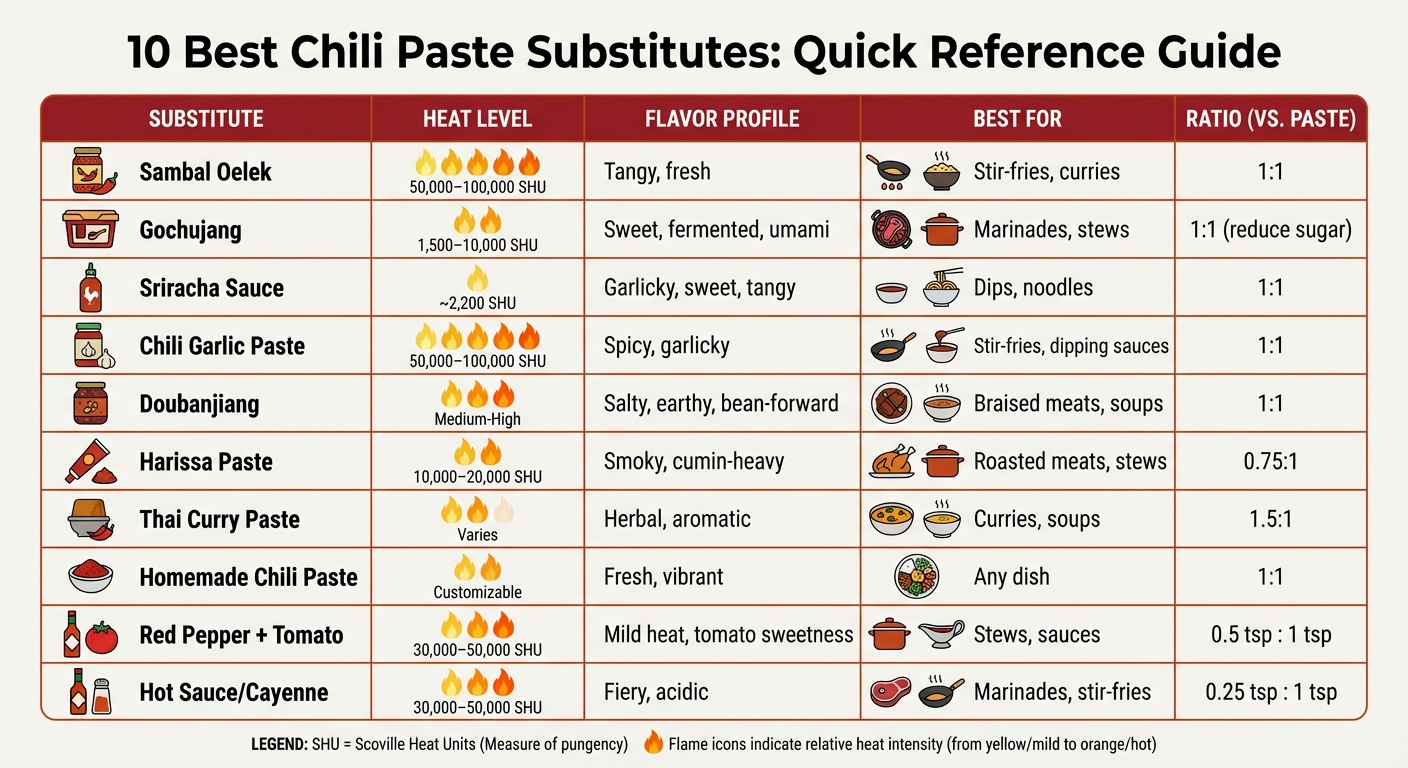
Chili Paste Substitutes Heat Levels and Usage Guide
Move Over Huy Fong! The BEST Homemade Chili-Garlic Sauce!
1. Sambal Oelek
Sambal Oelek is a raw chili paste from Indonesia made with just three ingredients: red chilies, salt, and vinegar. Its name comes from the traditional mortar and pestle, or "ulek", used to crush the ingredients into a paste-like consistency.
Chef Lina Tan, an expert in Indonesian cuisine, describes its versatility:
"Sambal oelek is the blank canvas of chili. When you add garlic or shrimp paste, you're no longer making sambal oelek - you're making something else entirely."
Traditional Sambal Oelek, often made with cayenne or Holland chilies, packs quite a punch, measuring 30,000–50,000 Scoville Heat Units (SHU). However, commercial versions like Huy Fong's are milder, ranging between 5,000–15,000 SHU. Its chunky texture adds bursts of heat to dishes, making it a favorite for many using a recipe manager.
This paste can be used as a 1:1 replacement for basic chili paste in Southeast Asian recipes. It shines in dishes like Nasi Goreng, Mie Goreng, Beef Rendang, Thai curries, and Vietnamese dipping sauces. To enhance its flavor, try blooming the paste in a teaspoon of hot oil for about 60 seconds before using it.
Culinary historian Sarah Johnson highlights its importance:
"Sambal oelek is the only substitute preserving authentic texture in Southeast Asian dishes where vinegar brightness is key."
For storage, keep Sambal Oelek in an airtight container in the refrigerator, where it will last 2–3 months. If you can’t find it, you can make a quick version by blending two red chilies with ½ teaspoon of salt and 1 teaspoon of vinegar. Up next, discover how Gochujang can bring a different twist to your recipes.
2. Gochujang
Gochujang is a thick, fermented Korean paste made from red chili powder (gochugaru), glutinous rice, fermented soybeans, and salt. Unlike the tangy, vinegar-forward sambal oelek, gochujang offers a rich umami profile with a sweet, fermented depth - often described as having a "meaty" quality. This makes it an excellent option for adding complexity to Southeast Asian dishes.
Its heat level falls between 1,000 and 2,500 Scoville Heat Units (SHU), which is similar to a mild jalapeño or Sriracha. However, the paste's high sugar content and thick texture soften the capsaicin's impact, giving it a gentler heat overall. Interestingly, South Korea uses its own Gochujang Hot Taste Unit (GHU) scale, with most store-bought varieties ranging from 30 to 45 GHU - considered medium-hot.
The unique combination of sweetness, heat, and umami makes gochujang a versatile substitute. If you're replacing Southeast Asian chili paste, use it in a 1:1 ratio. Since gochujang is thicker and sweeter than most chili pastes, you may need to thin it with water, rice vinegar, or lime juice to match the desired consistency and acidity. For recipes that require sharper heat, consider adding a pinch of cayenne or crushed red pepper flakes.
Gochujang shines in cooked dishes - think marinades, glazes, and stews - rather than as a raw finishing sauce. Christina Chaey, Senior Food Editor at Bon Appétit, highlights this distinction:
"Unlike sriracha or Tabasco, gochujang isn't meant to be used as a finishing sauce on its own - it's too aggressive".
Try using it in Thai curries, Vietnamese stir-fries, or as a flavor enhancer in noodle dishes. A tub of gochujang typically costs between $4 and $10 and can last six months to a year when refrigerated.
For optimal results, start by using half the amount your recipe calls for and adjust to taste. This helps prevent the paste's fermented sweetness from overpowering the fresh, bright flavors that are key in Southeast Asian cooking. Up next, learn how Sriracha Sauce can bring its own balance of heat and flavor to your dishes.
3. Sriracha Sauce
Sriracha stands out as a top choice for replacing chili paste in Southeast Asian dishes, thanks to its mix of heat and sweet garlic tang. Unlike chunkier chili pastes, Sriracha has a smooth, ketchup-like consistency. It's made from red jalapeño peppers, distilled vinegar, garlic, sugar, and salt, delivering a mild heat level of about 1,000–2,500 Scoville Heat Units (SHU). While traditional chili pastes focus on pure heat, Sriracha offers a well-rounded flavor profile - spicy, tangy, garlicky, and sweet. Here are some tips for using it effectively as a substitute. You can also use AI meal planning with pantry tracking to find other recipes that use these ingredients.
Sriracha works beautifully drizzled over pho, spring rolls, fried noodles, and seafood. However, its thinner texture might not be ideal for recipes requiring a thicker paste. Food writer Andrea Nguyen highlights its flavor:
"Sriraja Panich has a lovely balance of bright chili heat, delicate sweetness, vinegary tang, and garlicky backnote."
The American version from Huy Fong Foods - produced using over 100 million pounds of red jalapeño peppers annually - tends to be thicker and sweeter than the original.
When substituting with Sriracha, you can use it in a 1:1 ratio. To balance its up to 18g sugar content per serving, reduce other sweeteners in your recipe by 25–50%. If you want more heat, add a pinch of cayenne.
Keep in mind that Sriracha's high vinegar content (pH 3.8) can curdle coconut milk. To prevent this, add 1/4 teaspoon of baking soda and adjust the salt levels as needed. For a boost of umami, try incorporating a splash of fish sauce or a small amount of shrimp paste.
Its garlic-forward sweetness shines in cooked dishes like stir-fries, marinades, and dips. Start by using about 75% of the recipe's suggested amount and adjust to your taste.
Up next, learn about Chili Garlic Paste, a chunkier and more traditional alternative.
4. Chili Garlic Paste
Chili garlic paste brings a bold and layered flavor, making it a strong traditional substitute. With a heat range of 1,200 to 2,500 Scoville Heat Units (SHU), it delivers a mild-to-medium kick. This paste combines the spicy warmth of fermented chilies, the robust flavor of garlic (which makes up about 25–30% of its profile), and a tangy hint of vinegar. Its coarse, chunky texture - complete with visible chili pieces - closely resembles the hand-pounded pastes often found in Southeast Asian cooking.
Chef Liu Wei highlights the importance of this flavor balance:
"Chili garlic sauce brings three essential elements to dishes: garlic intensity, chili heat, and tangy depth from vinegar. When substituting, maintaining this balance is crucial for authentic flavor development".
This garlic-forward paste is versatile, working well in stir-fries, noodle dishes, dumpling and spring roll dipping sauces, marinades, and seafood recipes.
To substitute, use chili garlic paste in a 1:1 ratio. For a sweeter Thai chili paste (Nam Prik Pao) flavor, mix in 1 teaspoon of palm sugar and ½ teaspoon of fish sauce per tablespoon, adding it during the final minute of stir-frying to preserve the garlic's aroma.
Once opened, store the paste in an airtight glass container in the refrigerator for 2 to 4 weeks. For homemade versions, adding a thin layer of oil on top helps prevent oxidation. Most pure chili garlic pastes are naturally gluten-free, but it’s always a good idea to check for wheat-based thickeners in commercial brands. Huy Fong Chili Garlic Sauce is a widely available option that works well as a substitute.
Next, explore Doubanjiang for a deeper fermented flavor.
5. Doubanjiang (Fermented Chili Bean Paste)
If you're looking for a bold, fermented flavor with a kick, Doubanjiang is a fantastic choice, especially for dishes with Southeast Asian influences. This thick, aromatic paste is crafted from fermented broad beans, chili peppers, soybeans, salt, and wheat flour, delivering a rich, earthy heat that's medium to high in intensity. It's a cornerstone of Sichuan cuisine and plays a starring role in classics like Mapo Tofu and Twice-Cooked Pork. High-quality Doubanjiang, such as Pixian Doubanjiang, is aged in earthenware crocks for one to eight years, which gives it a deep reddish-brown hue and layers of umami flavor.
Unlike the bright, tangy chili pastes often found in Southeast Asian cooking, Doubanjiang stands out for its intense saltiness (15%–22%), savory depth, and fermented character, reminiscent of miso but with added heat. Wei Guo, the founder of Red House Spice, describes its significance perfectly:
"Sichuan chili bean paste... imparts a rich umami, earthy taste and an aromatic spiciness to any dish it is added to. It is to the Sichuanese what soy sauce is to Cantonese".
When using Doubanjiang as a substitute, start with half the amount and adjust according to your taste. To bring out its full flavor, sauté it in oil over low to medium heat for 30–60 seconds. This step enhances its aroma and softens its raw edge. Because of its high salt content, you may want to hold off on adding extra salt or soy sauce until after tasting the dish.
Doubanjiang is incredibly versatile, perfect for stir-fries, braised meats, noodle dishes, and hearty soups that need a savory, flavorful base. Once opened, store it in the refrigerator, where it can last up to a year thanks to its salt content. Keep in mind, however, that most traditional Doubanjiang contains wheat flour, making it unsuitable for those avoiding gluten. Authentic Pixian Doubanjiang is also quite affordable, typically priced at around $6 per kilogram (roughly $2.73 per pound) at Asian grocery stores.
Next up, discover the bold flavors of Harissa Paste for a North African flair.
6. Harissa Paste
Harissa Paste brings a bold, smoky flair with a distinct North African influence. This thick, oil-based paste hails from Tunisia and is made with roasted red peppers, garlic, olive oil, and spices like caraway, cumin, and coriander. In fact, UNESCO recognized Tunisian harissa in 2022 as part of the Intangible Cultural Heritage of Humanity, underscoring its importance in Tunisian heritage.
On the Scoville scale, harissa typically measures between 2,000–5,000 SHU, though versions using Baklouti peppers can hit the top of that range. Its flavor profile stands apart from sambal’s tanginess or sriracha’s sweetness, offering an earthy, smoky depth. As Laura Payne explains:
"The flavor profile of harissa can be mildly spicy to hot, and peppery, tangy, sweet, or any combination thereof. Fire-roasted peppers can be used to lend a smoky flavor".
When using harissa as a substitute for Southeast Asian chili paste, stick to a 0.75:1 ratio (use 25% less) to avoid overpowering your dish with its bold spice. Keep in mind that the caraway and cumin notes will steer your recipe toward Mediterranean flavors, making harissa a great match for hearty, slow-cooked dishes like braised meats, marinades, or stews. It’s less ideal for lighter dishes like clear broths or stir-fries. To balance its earthiness and mimic the acidity of traditional Southeast Asian pastes, consider adding a splash of lime juice or rice vinegar. Start with a small amount, as the heat can build during cooking.
Once opened, store harissa in the refrigerator, where it will stay fresh for up to six weeks.
For more home cooking and meal planning tips, check out our latest guides. Next up: Discover how Thai Curry Paste can bring bold flavors to your cooking.
7. Curry Paste (Red or Green Thai)
Thai curry pastes - whether red or green - offer a flavorful, aromatic twist compared to standard chili pastes. These pastes are packed with ingredients like lemongrass, galangal, kaffir lime zest, shrimp paste, garlic, and shallots, making them far more complex than simple chili condiments. Red curry paste (Nam Phrik Kaeng Phet) gets its warm, earthy flavor from dried red spur chilies, which typically measure between 5,000 and 30,000 SHU. Green curry paste (Nam Phrik Kaeng Khiao Wan), on the other hand, uses bird's-eye chilies, resulting in a brighter and spicier kick. Chef Pailin Chongchitnant explains:
"I consider red curry paste to be the 'basic' curry paste. It's incorporated into far more dishes than any other paste and it doesn't use any unique or special ingredients".
If you're using curry paste as a chili paste substitute, keep its bold flavors in mind. A 1.5:1 ratio of curry paste to chili paste works well, but start with less to avoid overpowering your dish. Sautéing the paste in oil or coconut cream helps release its full flavor.
Thai curry pastes shine in various dishes. Red curry paste pairs beautifully with hearty meals like red meats and stews, while green curry paste complements seafood and lighter proteins. Since these pastes already include shrimp paste and salt, you might want to dial back on other salty ingredients like fish sauce or soy sauce to maintain balance.
For storage, keep opened curry paste in the freezer instead of the fridge. This helps preserve the fresh herb oils that give the paste its distinctive taste. If store-bought curry paste feels too mild, try amping it up with minced garlic, ginger, or extra chili flakes.
Want to try something homemade? Check out how to make your own chili paste from scratch.
8. Homemade Chili Paste
Making your own chili paste gives you complete control over both the heat and flavor. One of the best perks? You can adjust the spice level to suit your taste. For instance, Thai bird's eye chilies pack a punch at 50,000 to 100,000 SHU, cayenne peppers sit at 30,000 to 50,000 SHU, and Fresno or red jalapeños offer a gentler heat, ranging from 2,500 to 10,000 SHU.
Freshly made chili paste often has a brighter, more dynamic flavor compared to store-bought versions. A simple recipe might include fresh red chilies, salt, and a splash of vinegar or lime juice. If you're aiming for a richer, Thai-inspired paste like Nam Prik Pao, try charring dried chilies, garlic, and shallots before blending them with shrimp paste, tamarind, and palm sugar. The result is a sweet, smoky, and jammy paste that’s packed with flavor. This approach not only honors traditional methods but also lets you fine-tune the paste to match the dish you’re preparing. As Mike Hultquist from Chili Pepper Madness points out:
"a 'sambal' actually refers to any chili sauce or paste that is made from a variety of chili peppers, with any number of other ingredients added in for flavor".
When swapping homemade chili paste for a store-bought version, a 1:1 ratio is a good starting point. Keep in mind, though, that homemade pastes often pack more punch since they lack preservatives. Start with a smaller amount, then adjust to taste. These pastes shine in dishes like Nasi Goreng, Tom Yum soup, stir-fries, or as marinades for grilled satay. They’re a versatile addition to your kitchen arsenal.
If you want to dial down the heat, remove the seeds and white membranes from your chilies before blending - this is where most of the capsaicin (the compound responsible for heat) is concentrated. For texture, use a mortar and pestle for a more rustic, coarse paste, or a food processor if you prefer it smooth. Store your homemade paste in an airtight jar in the fridge for up to two weeks, or freeze portions in ice cube trays for up to six months.
9. Crushed Red Pepper Flakes + Tomato Paste
If you’re out of chili paste, combining tomato paste (for its thickness and savory depth) with crushed red pepper flakes (30,000–50,000 SHU) can serve as a handy alternative. While tomato paste brings a rich umami flavor, it doesn’t have the fermented complexity found in traditional Southeast Asian chili pastes.
To mimic the balance of heat and depth, mix 1 tablespoon of tomato paste with 1/2 to 1 teaspoon of crushed red pepper flakes to replace 1 tablespoon of chili paste. The tomato paste adds sweetness and a distinct tomato flavor, so adding a splash of rice vinegar or lime juice can help replicate the tangy notes of authentic pastes like Sambal Oelek.
For better flavor, try "blooming" the red pepper flakes in warm oil for about 2 minutes before mixing. This step releases their fat-soluble flavors and avoids any raw or bitter taste. To enhance the umami profile, consider stirring in 1/2 teaspoon of fish sauce, shrimp paste, or miso, which can help approximate the depth of traditional chili pastes.
This substitute works especially well in tomato-based soups, stews, marinades, and thick stir-fry sauces. However, it’s less suitable for clear broths or delicate fish dishes, where the tomato’s flavor and color might overpower milder ingredients. Chef Somchai Wongrungroj offers a thoughtful reminder:
"Many Western 'substitutes' focus only on heat, losing the soul of Thai cooking".
If needed, thin the mixture with 1 teaspoon of water. Start with about 75% of the prepared substitute, as the heat can intensify during cooking. Gradually adjust to taste. While this combination won’t fully replicate the smoky, fermented notes of pastes like Nam Prik Pao, it’s a practical fix when you need both heat and body in your dish.
10. Hot Sauce or Cayenne Pepper Paste
Hot sauce or cayenne pepper paste can step in as substitutes for traditional chili paste, though they come with some trade-offs. Unlike the thick, fermented flavors typical of Southeast Asian chili pastes, hot sauces provide a quicker, simpler alternative. Cayenne peppers usually fall between 30,000 and 50,000 Scoville Heat Units (SHU), while Thai or Bird's Eye chilies, often used in Southeast Asian recipes, range from 50,000 to 100,000 SHU. Popular hot sauces like Sriracha (around 2,200 SHU) and Tabasco (2,000–5,000 SHU) bring even less heat to the table.
The biggest challenge with hot sauces is achieving the right thickness and depth. Most are vinegar-based and have a runny consistency, lacking the rich, fermented complexity of traditional chili pastes [92, 9]. Sriracha is often a better choice than Tabasco because its thicker texture, along with its garlic and sugar components, aligns more closely with Southeast Asian flavors [5, 7]. However, vinegar-heavy sauces should be avoided in coconut-based dishes like Tom Kha, as they can cause the coconut milk to curdle. These differences in texture and flavor require some practical ingredient adjustments.
For a quick homemade cayenne paste, mix 1 tablespoon of tomato paste with 1 teaspoon of cayenne pepper. If you want the distinct cayenne flavor without the texture of red pepper flakes, use cayenne powder as directed. To bring out its flavor, bloom dry cayenne in cool oil before heating it. If you're using bottled hot sauce, start with half the amount to account for the added liquid and acidity, and balance it by reducing other acidic ingredients like lime juice.
Hot sauces work well in stir-fries, marinades, and noodle dishes where a thinner consistency is acceptable [7, 88]. However, they are less suitable for clear broths or delicate fish dishes, where the vinegar can overpower subtle flavors. To add depth and umami - since cayenne lacks the fermented richness of traditional chili pastes - consider incorporating a drop of fish sauce or a small amount of miso.
Comparison Table
Choosing the right chili paste substitute can be tricky, but a side-by-side comparison makes it easier. The table below outlines heat levels, flavor profiles, ideal dishes, and recommended usage ratios for common substitutes. Heat levels are measured in Scoville Heat Units (SHU), which indicate the concentration of capsaicin - the compound responsible for spiciness.
For example, Sambal Oelek offers a heat range of 50,000–100,000 SHU and a tangy, bright flavor, making it a close match for traditional Southeast Asian chili paste. On the other hand, Gochujang provides a much milder heat (1,500–10,000 SHU) with a deep, sweet, and umami-rich profile due to its fermentation process. If you're using cayenne pepper, which is highly concentrated (30,000–50,000 SHU), only 1/4 teaspoon is needed to replace a full teaspoon of chili paste.
Keep in mind that usage ratios matter. While most paste substitutes can be swapped at a 1:1 ratio, dry spices like red pepper flakes require adjustments - typically half the amount. For milder substitutes like Thai curry paste, you'll need about 1.5 times the amount to match the heat level of regular chili paste. Here's a detailed breakdown:
| Substitute Name | Heat Level (SHU) | Flavor Profile | Best Dishes | Usage Ratio |
|---|---|---|---|---|
| Sambal Oelek | 50,000–100,000 | Bright, fresh, tangy | Thai curries, stir-fries, Nasi Goreng | 1:1 |
| Gochujang | 1,500–10,000 | Sweet, funky, umami | Korean BBQ, bibimbap, marinades | 1:1 (reduce sugar) |
| Sriracha Sauce | ~2,200 | Garlicky, sweet, tangy | Dipping sauces, eggs, spring rolls | 1:1 |
| Chili Garlic Paste | 50,000–100,000 | Spicy, heavy garlic, tangy | Stir-fries, noodle bowls | 1:1 |
| Doubanjiang | Medium-High | Salty, savory, bean-funk | Mapo tofu, red-braised pork | 1:1 |
| Harissa Paste | 10,000–20,000 | Smoky, earthy, cumin-forward | Tagines, roasted meats, fusion dishes | 1:1 or 0.75:1 |
| Thai Curry Paste | Varies | Aromatic, lemongrass, herbal | Thai curries, coconut soups | 1.5:1 |
| Homemade Chili Paste | Customizable | Fresh, vibrant | Any dish | 1:1 |
| Red Pepper Flakes | 30,000–50,000 | Sharp, direct heat | Pizza, pasta, quick stir-fries | 0.5 tsp : 1 tsp |
| Cayenne Pepper | 30,000–50,000 | Fiery, slightly fruity | Soups, dry rubs, sauces | 0.25 tsp : 1 tsp |
Each substitute brings its own unique flavor, so it’s important to consider the dish you're preparing. For instance, Doubanjiang's salty, bean-forward profile is ideal for Sichuan recipes like Mapo tofu, while Harissa's smoky, cumin-forward taste pairs beautifully with roasted meats or fusion dishes. Tools like the Honeydew Recipe Manager (https://honeydewcook.com) can help you track which substitutes work best and automatically adjust ingredient quantities when making swaps.
This table highlights how the right substitute can maintain the balance of heat, tang, and umami essential to Southeast Asian dishes.
Conclusion
Finding a good substitute for chili paste doesn’t have to be complicated. The trick lies in understanding the unique qualities of each option - whether it’s the sharp, clean heat of Sambal Oelek, the sweet and savory depth of Gochujang, or the bold, salty punch of Doubanjiang. Your choice should depend on the dish you’re making and the flavor you’re aiming for.
Southeast Asian cuisine thrives on a balance of heat, umami, and sweetness. While simple swaps like red pepper flakes can bring heat, they might lack the layered complexity of traditional chili pastes. To bridge that gap, you can add ingredients like fish sauce for umami or palm sugar for sweetness. For example, blooming Doubanjiang in hot oil helps soften its bitterness and brings out its rich aroma.
As noted earlier, substitution ratios are key. Paste-to-paste swaps often work at a 1:1 ratio, but dry spices like cayenne pepper pack a punch - just 1/4 teaspoon can replace a full teaspoon of chili paste. Starting with small amounts and adjusting as you go is the safest way to maintain balance, especially with bold options like Harissa or Gochujang.
For those looking to streamline their cooking process, tools like Honeydew Recipe Manager (https://honeydewcook.com) can be a game-changer. This app helps you keep track of successful substitutions, adjust ingredient amounts when swapping, and even save custom recipes for homemade chili pastes. Its smart substitution feature is especially handy when you’re missing a key ingredient but want to stay on track.
Whether you’re crafting Thai curries, Vietnamese sauces, or Indonesian stir-fries, experimenting with substitutes based on what you have on hand can help you stay close to the authentic flavors you love.
FAQs
Which substitute is closest to traditional Southeast Asian chili paste?
Sambal oelek is an excellent stand-in for traditional Southeast Asian chili paste. Made with chilies, garlic, and vinegar, it closely mirrors the bold heat and tangy flavor found in authentic chili pastes used across Southeast Asian dishes. Its straightforward ingredients ensure it maintains the dish's original taste and spice level.
How do I stop coconut milk from curdling when using vinegar-based hot sauces?
To keep coconut milk from curdling, it's all about managing heat and acidity. When using vinegar or other acidic ingredients, add them toward the end of the cooking process. Also, keep the heat low or let it simmer gently instead of boiling. Another helpful trick is to temper the coconut milk - warm it slowly before combining it with acidic elements. This gradual approach helps maintain its creamy, smooth consistency.
What’s the best substitute if I need heat without extra sweetness or salt?
For a kick of heat without adding extra sweetness or salt, consider using hot sauce (like Tabasco), chili powder, or chili flakes. These choices bring spiciness to your dish while keeping the flavor profile intact.