Best Egg Substitutes for Vegan Baking
• Updated
Eggs do a lot in baking - binding, leavening, adding moisture, and creating structure. But if you're vegan, allergic, or just out of eggs, there are plenty of substitutes that work well depending on your recipe's needs and pantry inventory. Here's a quick guide:
- Aquafaba: Great for airy desserts like meringues and macarons. Use 3 tbsp per egg.
- Chickpea Flour: Perfect for binding in cookies, muffins, and savory dishes. Mix 3 tbsp flour + 3 tbsp water per egg.
- Flax Egg: Ideal for chewy cookies and brownies. Combine 1 tbsp ground flaxseed + 2.5–3 tbsp water.
- Chia Egg: Similar to flax eggs but slightly denser. Use 1 tbsp chia seeds + 2.5–3 tbsp water.
- Silken Tofu: Adds moisture and richness to dense treats like brownies. Use 1/4 cup pureed tofu per egg.
- Applesauce: Adds moisture to muffins and quick breads. Replace 1 egg with 1/4 cup unsweetened applesauce.
- Mashed Banana: Works well in dense, sweet recipes like banana bread. Use 1/4 cup mashed banana per egg.
- Pumpkin Puree: Great for fall-inspired treats. Use 1/4 cup puree per egg.
Each substitute has its strengths, so choose based on your recipe's texture and flavor needs. For example, aquafaba is best for light, fluffy desserts, while applesauce and bananas are perfect for moist and dense bakes. Experiment to find what works for your favorite recipes!
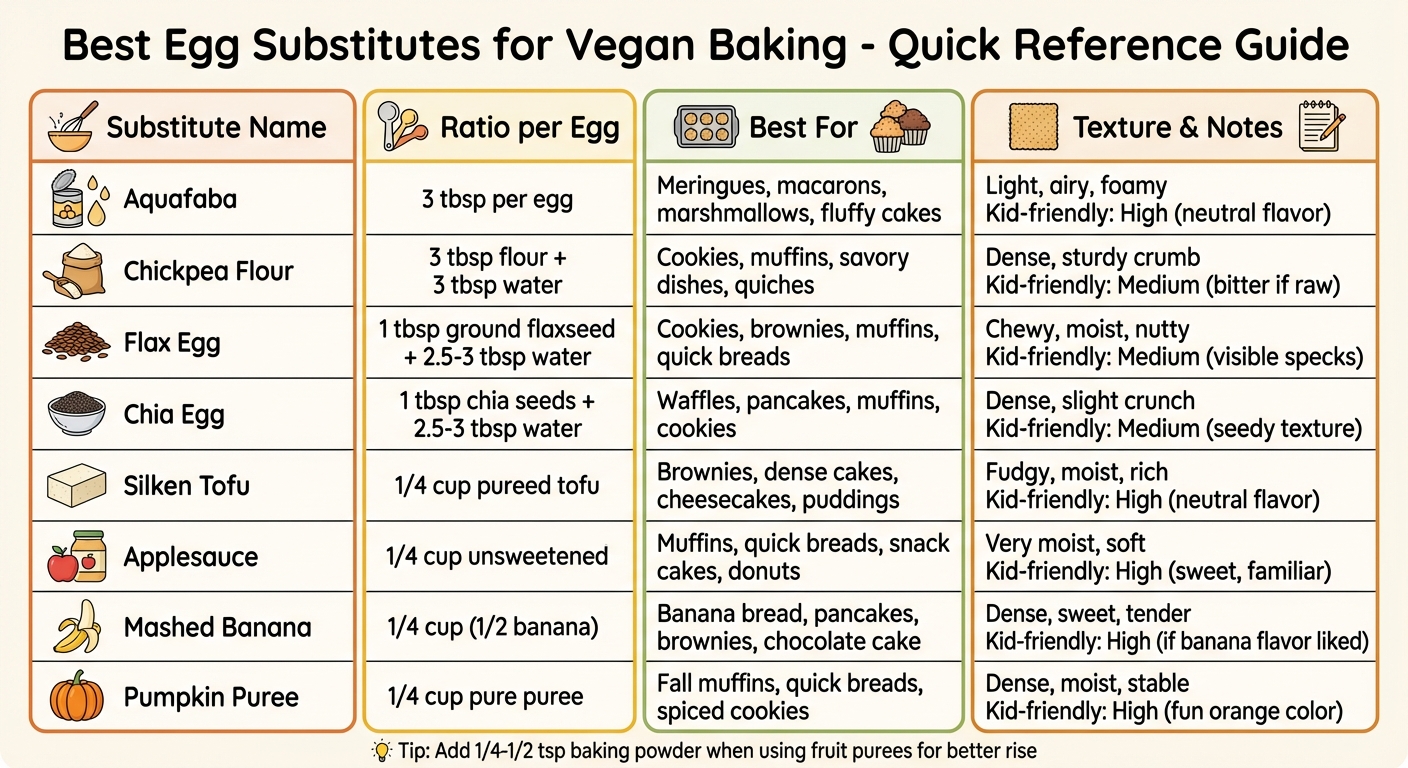
Vegan Egg Substitute Comparison Chart for Baking
16+ Vegan Egg Substitutes That ACTUALLY Work + The BEST Swaps for Baking & Cooking
1. Aquafaba
Aquafaba is the thick, starchy liquid found in a can of chickpeas, and it became a favorite in vegan baking circles back in 2016. Thanks to the proteins and starches released during cooking, this liquid behaves a lot like egg whites.
Michelle Cehn, Founder of World of Vegan, highlights its versatility:
Aquafaba's protein content mimics that of egg whites, allowing it to whip up into stiff peaks for all your meringue dreams.
Best Uses
Aquafaba shines when it comes to leavening and binding, making it perfect for creating light, airy desserts like meringues, macarons, marshmallows, and fluffy cakes. Whipping it with an electric mixer for 6–10 minutes transforms it into stable peaks, just like egg whites. For recipes that need binding, like cookies, brownies, or muffins, whisking for 45–60 seconds is enough to create a foamy texture. To make whipped aquafaba even more stable, add 1/8 teaspoon of cream of tartar for every 4 tablespoons.
Ratio per Egg
From a 15-ounce can of chickpeas, you can typically get about 1/2 cup (8 tablespoons) of aquafaba. Here's how to substitute it for eggs:
- 3 tablespoons replace one whole egg
- 2 tablespoons replace one egg white
- 1 tablespoon replaces one egg yolk
If you're working with homemade aquafaba and it seems too watery, simmer it until it thickens to a consistency similar to runny egg whites.
Texture Impact
Aquafaba brings a light, fluffy texture to baked goods. It keeps cakes and muffins moist and can even give brownies that shiny, crackly top. However, because it doesn’t set as firmly as eggs, recipes might need extra support to maintain their structure and avoid collapsing.
Kid-Friendly Notes
Aquafaba is a great option for kids with allergies since it’s free from dairy, eggs, nuts, and soy. While raw aquafaba may carry a slight bean-like smell, this usually fades once it’s baked or sweetened. For the mildest flavor in desserts, opt for unsalted canned chickpeas. You can store leftover aquafaba in the fridge for up to 5 days or freeze it in ice cube trays (1 tablespoon per cube) for up to 3 months. Stay tuned for more egg-free alternatives, or use our ingredient substitution finder for other common swaps.
2. Chickpea Flour
Chickpea flour (also known as garbanzo bean flour, gram flour, or besan) is a standout option for vegan baking, offering excellent binding and structural properties. It mimics the role of eggs by providing moisture, lift, and stability, making it a go-to choice for recipes that require multiple eggs. This makes it particularly useful for egg-heavy dishes like quiches or pound cakes.
Monica Davis, Author and Recipe Developer at The Hidden Veggies, highlights its effectiveness:
Chickpea flour mixed with water with a touch of oil has a similar protein, fat, moisture, and structure to a real egg. The protein binds together when cooked and provides moisture, lift, and structure all like a real egg.
Best Uses
Chickpea flour is a versatile ingredient that works as both a binder and a leavening agent, giving baked goods structure and lift. It shines in recipes like brownies, cookies, muffins, quick breads, and scones. Beyond sweet treats, it’s perfect for savory dishes such as vegan omelets, fritters, and French toast. A bonus? It naturally imparts a golden hue to baked goods, similar to what egg yolks provide.
Ratio per Egg
To replace one large egg, combine 3 tablespoons of chickpea flour with 3 tablespoons of water. Whisk the mixture until it thickens, then let it rest for about 5 minutes. This resting period helps reduce any "beany" flavor while ensuring the mixture develops the right consistency. For an even smoother texture, consider adding 1 teaspoon of oil and warm water or plant-based milk.
Texture Impact
Chickpea flour creates a tender yet sturdy crumb in baked goods. For cookies, it delivers a soft and chewy texture, closely resembling egg-based recipes. It offers far more structural stability than substitutes like applesauce or mashed bananas, which primarily add moisture. Once baked, chickpea flour has a neutral flavor, though it can taste slightly bitter when raw.
Child-Friendly Notes
This substitute is a great option for kids with multiple allergies since it’s naturally free of gluten, soy, and nuts. Its high protein and fiber content make it a nutritious addition to children’s treats. Once baked, the flour's flavor becomes neutral, so you can sneak in extra nutrients without altering the taste of familiar favorites. However, avoid letting kids taste raw batter made with chickpea flour - it’s bitter until cooked. Also, it’s not suitable for no-bake recipes like protein balls or raw cookie dough.
Next, dive into more egg substitutes that bring their own unique textures and benefits to vegan baking.
3. Flax Egg
Flax eggs are another fantastic option for vegan baking, joining the ranks of aquafaba and chickpea flour. By combining ground flaxseed meal with water, you create a gel-like mixture that acts as a binder and adds moisture to recipes. Laura Schneider, Founder of Friendly Vegan Kitchen, puts it this way:
Flax is the gold standard for vegan egg replacements. It works in almost all recipes to add a slightly chewy texture, works as a binder, and gives moisture to the recipe just like an egg.
Best Uses
Flax eggs shine in recipes where eggs are used for binding rather than leavening. They’re ideal for cookies (like chocolate chip or peanut butter), brownies, muffins (think banana or pumpkin), quick breads, pancakes, and waffles. They also work great in savory dishes such as veggie burgers, lentil loaves, and zucchini fritters. However, they’re not the best choice for recipes requiring eggs for significant lift, like meringues or light sponge cakes.
Ratio per Egg
To make a flax egg, mix 1 tablespoon of ground flaxseed meal with 2.5–3 tablespoons of water. Let it sit for 5–15 minutes until it thickens into a gel-like consistency. Using hot water can speed up the process. If you’re baking something light-colored, like a vanilla cake, golden flax meal is a better choice to avoid visible brown flecks. For darker or spiced recipes, regular brown flax works just fine.
Texture Impact
Flax eggs bring a chewy, moist, and slightly dense texture to baked goods. They also add a mild, nutty flavor that pairs wonderfully with recipes like chocolate brownies or cookies. Since they don’t naturally provide much lift, consider adding an extra 1/4 teaspoon of baking powder to help your baked goods rise. Genevieve Ko, Senior Editor at NYT Cooking, praises their adaptability:
Flax 'eggs' are the most versatile substitute because flax contains fat, has a subtle nutty taste that pairs with just about any sweet and binds ingredients together well.
Child-Friendly Notes
Flax eggs are a great option for children with egg allergies, making them perfect for school-safe treats. They contain zero cholesterol (compared to the 186 mg in a chicken egg) and add about 2 grams of fiber plus omega-3 fatty acids. Another bonus? Batter made with flax eggs is safe for kids to sample since there’s no risk of salmonella. For the best flavor, grind whole flaxseeds fresh using a coffee grinder, as pre-ground flaxseed can spoil quickly. Always store ground flaxseed in the freezer to keep it fresh.
Next, we’ll dive into how chia eggs stack up against flax eggs in terms of texture and versatility.
4. Chia Egg
Chia eggs create a thick gel that binds ingredients without altering flavors, making them a great choice for delicate baked goods. As BakingSubs explains:
Chia seeds... have an almost neutral flavor, making them incredibly versatile.
Best Uses
Chia eggs shine in recipes where binding and moisture are key, such as cookies, muffins, quick breads, waffles, pancakes, and brownies. However, they’re not the best option for dishes that need a lot of lift or fluffiness, like soufflés, chiffon cakes, or custard-based desserts (e.g., pecan pie). The gel they form is slightly stronger than that of flax eggs, giving them extra binding strength, especially in hearty recipes.
Ratio per Egg
To replace one egg, mix 1 tablespoon of chia seeds with 2.5–3 tablespoons of water. Let the mixture sit for 5–15 minutes until it forms a gel. Warm water can help speed up the process. You can use the seeds whole or grind them for a smoother texture, which also improves water absorption. For lighter-colored baked goods, white chia seeds are a good option to avoid visible dark specks.
Texture Impact
Using whole chia seeds can add a slight crunch and a speckled look to your baked goods. In a test by The Kitchn, vanilla muffins made with chia eggs scored a 3/10, mostly due to the texture. For a smoother result - especially in treats for kids - grind the seeds before mixing them with water. Keep in mind, chia eggs tend to produce denser and moister baked goods compared to traditional eggs. This difference in texture might require some recipe adjustments when aiming for a smoother finish.
Child-Friendly Notes
Chia eggs are a great way to add nutrients to snacks for picky eaters. One chia egg contains about 4.2 g of carbohydrates, 1.7 g of protein, 3.4 g of fiber, and omega-3 fatty acids. Thanks to their neutral flavor, they blend seamlessly into brownies or pancakes. To avoid any noticeable seedy texture, grinding the seeds is recommended when baking for kids. It’s also a good idea to limit substitutions to no more than two eggs per recipe to maintain the desired texture. Up next, learn about Silken Tofu, another versatile vegan egg substitute that works well in kid-friendly recipes.
5. Silken Tofu
Silken tofu brings a smooth, creamy texture to dense baked goods. Unlike lighter substitutes, it adds moisture and works as a binder without contributing to leavening. Megan Shoop-Volz from Chowhound highlights its versatility:
Silken tofu is smooth and adds moisture and protein without altering flavor.
Best Uses
Silken tofu shines in recipes like brownies, pound cakes, muffins, quick breads, and custard-style pies - essentially, anything where a fudgy, rich consistency is key. It’s also a favorite for vegan cheesecakes and puddings. Because of its dense, moist texture, it’s perfect for kid-friendly treats like fudgy brownies and rich muffins. However, steer clear of using it in recipes that need a light, airy texture - like soufflés, meringues, or angel food cake - since it can weigh the batter down.
Ratio per Egg
To replace one egg, use 1/4 cup (about 60 grams) of pureed silken tofu. Make sure to blend the tofu until smooth to avoid lumps. Since tofu doesn’t offer leavening, you might need to add an extra 1/4 teaspoon of baking soda or 1/2 teaspoon of baking powder for each egg replaced.
Texture Impact
Expect baked goods with a dense, moist, and velvety texture. Brownies will turn out fudgy, while cakes will have a tight, rich crumb. Keep in mind that tofu-based bakes may brown less and develop a denser crumb, so it’s best not to replace more than three to four eggs in a recipe.
Child-Friendly Notes
Silken tofu is a sneaky way to add plant-based protein and essential nutrients like calcium, manganese, iron, and Vitamin B1 - without altering the flavor of your baked goods. Food writer Devki Nehra explains:
Despite being a soy-based product, silken tofu doesn't impart any distinct flavor to the finished dish. Your chocolate cake will taste exactly like a traditional chocolate cake.
This makes it a fantastic option for adding extra nutrition to treats for picky eaters. For children with nut allergies, choose refrigerated silken tofu instead of shelf-stable versions to minimize cross-contamination risks.
Up next: Discover how applesauce can enhance moisture and natural sweetness in your vegan baking.
6. Applesauce
Applesauce is a fantastic ingredient for vegan baking, thanks to its natural pectin. This pectin helps bind ingredients together and keeps baked goods moist. Jessica Hylton, Founder of Jessica in the Kitchen, puts it perfectly:
Applesauce is high in pectin, which acts as a binding agent and helps create a similar texture as eggs in baked goods.
Best Uses
Applesauce shines in recipes for moist, tender baked goods. Think muffins, quick breads like banana or zucchini bread, snack cakes, brownies, waffles, and baked donuts. Its subtle flavor lets the other ingredients take center stage. However, it’s not the best choice for recipes where a crispy texture is key - like crunchy cookies - or for bakes that require a lot of lift, such as angel food cake or meringues.
Ratio per Egg
To replace one egg, use 1/4 cup of unsweetened applesauce. Unsweetened applesauce helps maintain the balance of flavors in your recipe. If you only have sweetened applesauce, cut back on the sugar elsewhere. Need a bit more lift? Add 1/2 teaspoon of baking powder per egg being replaced.
Texture Impact
Baked goods made with applesauce tend to have a dense, moist crumb, which works beautifully in fudgy brownies and tender muffins. That said, using it to replace more than two eggs can lead to gummy textures and less browning.
Applesauce is one of the most dense egg replacements so I don't recommend that you use more than a 1/2 cup in any given recipe.
Child-Friendly Notes
Applesauce is a go-to for kid-friendly treats. It cuts down on fat and calories while adding a touch of natural sweetness and fiber. Its mild flavor blends seamlessly into favorites like blueberry muffins or chocolate chip cookies. Plus, it’s affordable, shelf-stable, and perfect for those last-minute baking sessions.
Up next: how mashed banana can bring natural sweetness and binding power to your recipes.
7. Mashed Banana
Mashed banana is a natural way to add sweetness to recipes while effectively binding ingredients. Its pectin content and 75% water composition closely resemble a raw egg's 76% water content.
Best Uses
Mashed banana shines in dense and moist baked goods like muffins, quick breads (especially banana bread), pancakes, brownies, and chocolate cake. However, it’s not ideal for recipes that rely on a light, airy texture, such as angel food cake or savory dishes like quiches. Its familiar, sweet flavor makes it a hit with kids and a practical option for family-friendly baking.
Ratio per Egg
To replace one large egg, use 1/4 cup of mashed banana. Fully ripe bananas (yellow with brown spots) work best - mash them until smooth for even mixing. Since bananas don’t provide leavening, add 1/4–1/2 teaspoon of baking powder per egg replaced.
Texture Impact
Mashed banana creates a soft, moist, and tender crumb. Penny Stankiewicz, a Chef-Instructor of Pastry and Baking Arts at the Institute of Culinary Education, notes:
Mashed banana is an egg replacement that can make recipes more tender.
You may need to reduce added sugar in your recipe, as bananas bring a pronounced sweetness. Avoid using more than the equivalent of two eggs, as it can lead to a gummy texture.
Child-Friendly Notes
This substitute is especially kid-friendly, adding natural sweetness along with potassium and fiber to favorites like pancakes, waffles, and muffins. For convenience, keep peeled bananas in your freezer - they’re perfect for quick, last-minute baking projects. Up next, see how pumpkin puree can serve as another nutritious egg replacement.
8. Pumpkin Puree
Pumpkin puree is a fantastic option for adding moisture and binding in vegan baking. It works best in dense, moist treats like quick breads, muffins, brownies, pancakes, and chocolate-based cakes.
Best Uses
This substitute pairs wonderfully with warm spices like cinnamon and nutmeg or ingredients such as apples and caramel. Traci Weintraub, Founder of Gracefully Fed, explains:
Pumpkin puree works especially well as an egg substitute in recipes that have complementary ingredients, such as cinnamon, caramel, and apples.
Chocolate-based recipes are also a great match because the deep cocoa flavor masks the orange tint from the pumpkin. However, pumpkin puree won’t help your baked goods rise - you’ll need to include a leavening agent like baking powder or baking soda to achieve that.
Ratio per Egg
To replace one large egg, use 1/4 cup (2 oz) of pumpkin puree. Be sure to use 100% pure pumpkin puree, not pumpkin pie filling, which contains added sugars and spices that can throw off your recipe. Limit substitutions to two eggs per recipe to avoid overly dense or soggy results.
Since pumpkin puree doesn’t provide leavening, always include extra baking powder or soda as needed.
Texture Impact
Pumpkin puree creates a dense, moist, and fudgy crumb. Britt Berlin, Author of The Banana Diaries, shares:
Pumpkin puree is naturally so moist, and helps to lock in the overall moisture to the cake, bread, or cupcake that you're baking.
Its natural sweetness might even allow you to cut back on added sugar in your recipe.
Kid-Friendly Benefits
Pumpkin puree is a sneaky way to add extra nutrition and fiber to baked goods without kids noticing. Its smooth texture and gentle sweetness make it perfect for family favorites like muffins and pancakes. For convenience, freeze leftover puree in 1/4 cup portions using an ice cube tray or small bags - ready to grab for your next baking session. This is a great way to practice smarter ingredient prep and reduce kitchen waste.
Up next, check out a side-by-side comparison of these substitutes.
Quick Reference Comparison Table
Vegan baking can feel like a puzzle sometimes, but it doesn’t have to be. Here’s a handy table that breaks down eight vegan egg substitutes, covering their ratios, ideal uses, how they affect texture, and their kid-friendliness.
| Substitute | Ratio (per 1 egg) | Best Uses | Texture Effect | Kid-Friendly Factor |
|---|---|---|---|---|
| Aquafaba | 3 tbsp | Meringues, macarons, marshmallows, light cookies | Light, airy, foamy | High – Neutral flavor and blends invisibly into desserts |
| Chickpea Flour | 3 tbsp + 3 tbsp water | Savory bakes, frittatas, cookies, muffins | Dense, high-protein | Medium – Can taste bitter if undercooked; great for savory |
| Flax Egg | 1 tbsp ground + 3 tbsp water | Cookies, brownies, muffins, quick breads | Chewy, slightly nutty | Medium – Brown specks might be noticeable |
| Chia Egg | 1 tbsp + 3 tbsp water | Waffles, pancakes, muffins | Crunchy, seedy (poppy seed-like) | Medium – Texture may not appeal to all kids |
| Silken Tofu | 1/4 cup (blended) | Puddings, cheesecakes, dense cakes, brownies | Heavy, moist, smooth | High – Creamy and neutral, blends perfectly |
| Applesauce | 1/4 cup | Muffins, quick breads, donuts, pancakes | Very moist, soft | High – Sweet and familiar flavor kids usually love |
| Mashed Banana | 1/4 cup (approx. 1/2 banana) | Pancakes, brownies, muffins | Gummy, dense, sweet | High – Great if kids enjoy the banana taste |
| Pumpkin Puree | 1/4 cup | Fall-themed muffins, quick breads, cookies | Dense, stable, moist | High – Adds a fun orange color kids may find exciting |
If you’re after a smooth, seamless texture, silken tofu or applesauce are great choices. For recipes that need strong binding, like cookies or brownies, flax eggs and chia eggs work wonders.
Check out our cooking and meal planning tips for more kitchen inspiration. Up next: Tips for creating vegan treats that kids will love!
Tips for Baking Vegan Treats Kids Will Enjoy
Making vegan baked goods that kids actually want to eat is all about nailing the texture, flavor, and appearance. A few smart swaps and techniques can turn your vegan recipes into kid-approved favorites.
Texture is key. The right egg substitute can make or break your treats. For chewy cookies and brownies, flax eggs are a great choice. As Laura Schneider, Founder of Friendly Vegan Kitchen, puts it, flax is "the gold standard for vegan egg replacements" because it acts as a binder, adds moisture, and gives that chewy texture kids love. On the other hand, if you're making muffins or snack cakes, applesauce is your best friend. It creates a soft, moist crumb that feels indulgent. Just remember to add 1/2 teaspoon of baking powder when using fruit purees to avoid dense results.
Once the texture is sorted, think about flavor. Applesauce has a neutral taste, so it won’t overshadow other ingredients. But if you're using mashed bananas (about 1/4 cup to replace one egg), be ready for a natural sweetness. You might need to reduce the added sugar in your recipe to balance things out.
Now let’s talk about appearance - because kids eat with their eyes first. For chocolate-based treats like brownies or dark chocolate cake, flax seed specks blend right in, so they won’t distract picky eaters. Want a golden-brown finish on breads or pastries? Brush them with a mix of soy milk and sugar before baking. Chef Lars Varley from HAGS highlights how appearance matters, saying, "Ensuring that the appearance doesn't diverge from expectations helps keep people open-minded". And for savory dishes like tofu scrambles or chickpea flour bakes, a pinch of turmeric adds that familiar yellow color kids associate with eggs.
Finally, if you’re making light and fluffy treats like cupcakes, timing is everything. Combine 1 teaspoon of baking soda with 1 tablespoon of vinegar, but mix them at the last moment - add the vinegar to the wet ingredients and the baking soda to the dry. This ensures the chemical reaction creates maximum lift, giving you the airy texture kids expect from birthday cakes and other special treats.
Next, check out how Honeydew Recipe Manager can simplify ingredient swaps for creating these kid-friendly vegan delights!
How Honeydew Recipe Manager Helps with Ingredient Substitutions
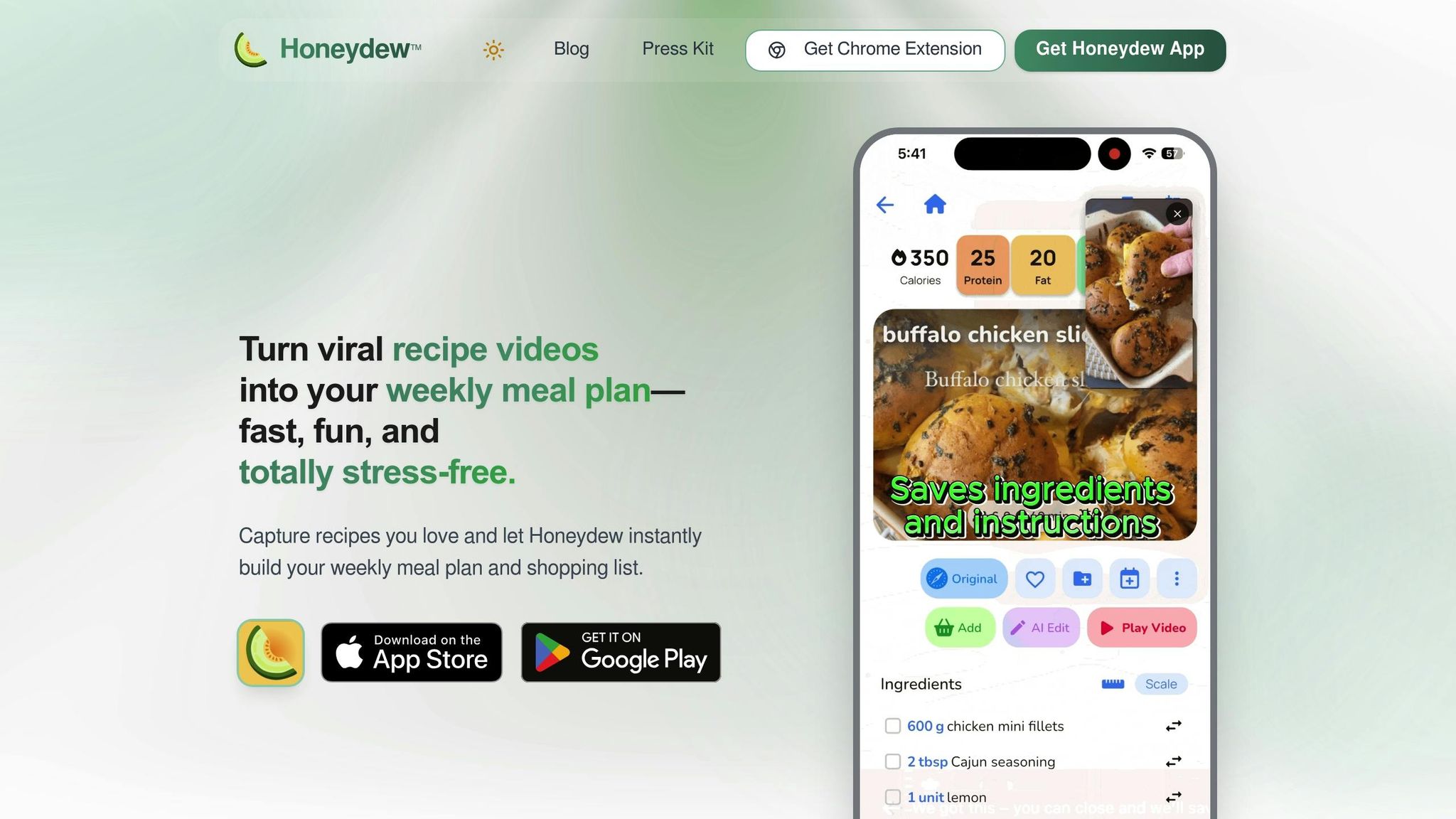
Switching to vegan baking can feel like juggling multiple egg substitutes while figuring out which one works best for each recipe. The Honeydew Recipe Manager takes the stress out of this process by letting you import vegan baking recipes from websites, blogs, and social media into one neatly organized space. With everything in one place, ingredient swaps become a lot simpler.
The app's ingredient substitution tools are where it really shines. Imagine you’re out of flaxseed meal but have chia seeds on hand. Honeydew helps you adjust the recipe, save the changes, and keep a record of your personalized, tried-and-true vegan versions. No need to start from scratch every time you bake.
Once you’ve added a recipe to your meal plan, Honeydew takes it a step further by automatically generating a categorized grocery list. This list includes all your vegan essentials - like chickpea flour, chia seeds, or silken tofu - and organizes them by store section, making shopping faster and more efficient.
For families, the app’s real-time sharing feature is a game-changer. Up to six household members can access the same recipe box and grocery list. This makes coordinating specialty ingredient purchases a breeze, especially when everyone knows what’s needed for Saturday’s batch of vegan cupcakes.
The meal planning function adds another layer of convenience. It lets you schedule baking sessions and sort recipes by the specific role eggs would play - whether for binding, leavening, or adding moisture. This level of organization not only smooths out your baking routine but also helps ensure consistent, kid-approved results. Transitioning to egg-free baking doesn’t have to be a guessing game anymore.
Conclusion
Vegan baking doesn’t mean saying goodbye to your favorite desserts - it’s about finding clever ingredient swaps. From the airy magic of aquafaba to the binding power of flax eggs and the moisture boost from applesauce, there are plenty of egg substitutes to choose from. Each one brings something special to the table, whether you’re making cookies, muffins, or birthday cupcakes. These substitutes not only make plant-based baking possible but also open the door to creative experimentation.
The trick is understanding what role the egg plays in your recipe. As Laura Schneider, founder of Friendly Vegan Kitchen, explains:
There really isn't a one-size-fits-all replacement for eggs in vegan baking. That's why we can get creative and mix and match different replacements together depending on what we need them to do in each recipe.
Start with simple recipes like quick breads or muffins and explore how different substitutes work together. For example, using hot water with flax eggs can improve their gelling, and adding ½ teaspoon of baking powder to fruit purees can help achieve a better rise. If you’re working with sweetened applesauce or ripe bananas, adjusting the sugar in your recipe can keep the flavors balanced.
Why not test one of these substitutes in a kid-friendly recipe? Your next batch of vegan brownies or banana muffins might just become a household favorite. With the right egg replacement, you can turn any baking challenge into a delicious success.
FAQs
Can I mix two egg substitutes in one recipe?
Yes, combining two egg substitutes can help you achieve the texture and functionality your recipe needs. Since different substitutes bring unique qualities, mixing them can often complement the specific requirements of your dish. Don’t hesitate to experiment to find the perfect balance!
How do I adjust baking powder or soda when swapping eggs?
When you're swapping out eggs in a recipe, it's important to tweak leavening agents like baking soda and vinegar to maintain the right texture. A good rule of thumb is to use 1/4 teaspoon of baking soda combined with 1/2 teaspoon of vinegar for each egg you're replacing.
If you're using alternatives like applesauce or mashed banana, you typically don't need to make any changes to the leavening. Just stick to what the recipe calls for, or try experimenting with small batches to make sure everything bakes up just right.
Why did my vegan cake turn out dense or gummy?
A vegan cake turning out dense or gummy usually happens when there's too much liquid in the batter. This throws off the balance between fat, flour, and liquid, resulting in a heavy, sticky texture. To avoid this, focus on accurate measurements and ensure the ingredient ratios are properly balanced for a fluffier, lighter cake.