Best Ingredient Swaps for Sweet and Savory Recipes
• Updated
When you're out of key ingredients or looking to make meals healthier, ingredient swaps can save the day. Whether you're cutting calories, reducing sugar, or accommodating dietary needs, these swaps can improve nutrition without sacrificing taste. Here’s a quick rundown of some smart alternatives:
- Butter: Use olive oil, Greek yogurt, or applesauce for fewer calories and healthier fats.
- Sugar: Replace with honey, maple syrup, or coconut sugar for added nutrients and lower glycemic impact.
- Flour: Almond, oat, or coconut flour can boost fiber and protein in baking.
- Breadcrumbs: Ground oats or almond meal work well for gluten-free options.
- Heavy Cream: Pureed white beans or Greek yogurt add creaminess with less fat.
- Rice: Riced cauliflower cuts calories and carbs significantly.
Start small by replacing 25–50% of an ingredient to maintain texture and flavor. These swaps make it easier to enjoy your favorite recipes while meeting health goals. For a seamless experience, tools like Honeydew Recipe Manager can help with substitutions, nutrition tracking, and grocery planning.
Healthy Cooking Substitutes & Swaps! Mind Over Munch Kickstart 2016
If you're looking for a specific alternative, try our ingredient substitution finder for quick, diet-friendly swaps.
Savory Recipe Swaps
These ingredient swaps help lower calories and sodium while adding extra nutrients - perfect for creating balanced, family-friendly meals.
Replacing Butter or Margarine
Extra virgin olive oil is packed with heart-friendly monounsaturated fats and polyphenols, as noted by Dr. Eboni Cornish, MD, of Amen Clinics. When sautéing vegetables or meats, use 3/4 tablespoon of olive oil for every tablespoon of butter. Making this simple change - replacing just one tablespoon of butter daily with olive oil - can lower the risk of premature death by 17%.
For creamy textures in dishes like mashed potatoes, dips, or sauces, Greek yogurt is a powerhouse. It delivers 25 grams of protein per cup while offering a thick texture and a slight tang. To ease into the swap, start with a 50/50 mix of Greek yogurt and the original ingredient to maintain familiar flavors while adding nutrition. Another option is pureed white beans, which provide a smooth, creamy texture without the extra calories of heavy cream. Registered dietitian Vandana Sheth suggests blending ½ cup of cannellini beans with 1 cup of broth to replace cream-based thickeners in soups and stews.
Once you've tackled fats, the next step is rethinking your approach to seasoning.
Reducing Salt with Natural Alternatives
The American Heart Association recommends most adults limit sodium intake to 1,500 mg per day, but just one cup of canned chicken noodle soup can pack in as much as 940 mg.
Acidic ingredients like lemon juice and balsamic vinegar are excellent for enhancing flavors without adding salt. For an extra burst of flavor, try using lemon or orange zest instead of juice. Garlic and onions - whether fresh, roasted, or powdered - create a savory base that can naturally reduce the need for salt. Roasted garlic granules, in particular, offer a more intense flavor compared to standard garlic powder.
"Seasoning with herbs and spices tricks taste buds, so you don't realize the salt's missing." – Carolyn Ross, PhD, Professor of Food Science at Washington State University
To cut back on salt, start by reducing it in recipes by 25% and replacing it with herbs like basil, rosemary, or thyme. Swap out seasoning salts (like garlic salt or celery salt) for herb-only alternatives, such as garlic powder or celery seed, to avoid hidden sodium. For some heat, cayenne pepper and ginger can stimulate your palate, while smoked paprika adds a smoky depth. Nutritional yeast is another great option, offering a cheesy, umami flavor without dairy or high sodium.
Substituting Flour or Breadcrumbs
For gluten-free options that add fiber and protein, ground oats or almond meal are excellent substitutes for breadcrumbs. Use 1 cup of ground oats or crushed nuts to replace 1 cup of breadcrumbs. If you're using oats, make sure they’re labeled "certified gluten-free" to avoid cross-contamination. Almond meal, in particular, is also rich in omega-3 fatty acids.
To thicken soups and sauces without flour, pureed white beans are a versatile option. Simply boil the beans until tender, then blend them into a smooth consistency to provide creaminess along with plant-based protein. Another great alternative is riced cauliflower, which can replace grains in savory dishes while slashing calories to just 25 per cup. These swaps not only maintain the texture of your dishes but also increase their nutritional content.
"Healthy swaps can really boost your nutrition intake by providing more vitamins, minerals, fiber, healthy fats, and protein." – Julia Zumpano, RD, LD, Cleveland Clinic
Sweet Recipe Swaps
Baking can be a lot healthier without losing the flavors you love. By making smart ingredient swaps, you can cut back on calories and fat while adding nutrients to your sweet treats. Let’s dive into some easy ways to tweak your recipes for better nutrition.
Replacing Butter or Oil
Butter and oil are calorie-dense, with a half-cup of butter packing 814 calories and 92 grams of fat, while the same amount of vegetable oil contains 964 calories and 109 grams of fat. Swapping these out for fruit-based alternatives can make a big difference.
Here are some 1:1 fat replacement options:
- Unsweetened applesauce: Perfect for muffins, brownies, and dense cakes like banana bread. Replacing one cup of butter with applesauce slashes fat from 184 grams to zero and cuts calories from about 1,600 to just 102. Keep an eye on baking times, as the added moisture can speed things up.
- Pureed avocado: A great choice for chocolate-based recipes like brownies or chocolate cake. It provides healthy fats and protein while keeping that rich, fudgy texture. The cocoa helps disguise the avocado’s green color and mild flavor.
- Mashed bananas: Excellent for quick breads, pancakes, and muffins. Bananas add natural sweetness and potassium, allowing you to reduce added sugar by 10–15%.
"If you're trying to eat more heart-healthy, increase your protein, or avoid dairy, substituting butter can be simple and your baked goods will still taste great." – Haley Bishoff, RDN, Rūtsu Nutrition
Greek yogurt is another option, especially for cakes, muffins, and pancakes. It adds protein and probiotics while keeping baked goods moist. Use 1/2 cup of Greek yogurt for every 1 cup of butter to maintain the right texture.
If you’re new to these swaps, start small. Replace just half the fat in your recipe (e.g., swap 1/2 cup of butter with 1/4 cup butter and 1/4 cup applesauce). This method helps preserve the original texture while still cutting calories and fat.
Swapping Refined Sugar
Natural sweeteners can bring extra nutrients to your baked goods, like vitamins, minerals, and antioxidants - things white sugar doesn’t offer.
- Honey: Packed with minerals like calcium, iron, and potassium, honey works well in soft cookies, cakes, and quick breads. Replace 1 cup of sugar with 1/2 to 3/4 cup of honey, but reduce other liquids by 3–4 tablespoons per cup of honey. Lower your oven temperature by 25°F since honey browns faster. Adding 1/4 to 1/2 teaspoon of baking soda helps balance honey’s acidity.
- Maple syrup: This sweetener offers antioxidants and minerals like zinc and manganese. Use 3/4 cup of maple syrup for every 1 cup of sugar in recipes like muffins or granola, and adjust other liquids accordingly.
"Generally, liquid sweeteners [like honey and maple syrup] will result in a moister and softer baked good." – Traci Weintraub, Chef and Founder, Gracefully Fed
- Coconut sugar: A 1:1 substitute for white sugar, it has a lower glycemic index and includes B vitamins and minerals like magnesium and zinc. It’s ideal for chocolate or coffee-flavored treats. For a smoother texture, grind the granules before adding them to your batter.
- Dates and date puree: Rich in fiber, potassium, and vitamins A, B, and K, dates are perfect for dense baked goods like brownies or spiced cakes. Replace 1 cup of sugar with 1 cup of date puree or 2/3 cup of date sugar. Since dates absorb moisture, you may need to add extra liquid to your recipe.
Spices like cinnamon, nutmeg, or vanilla can also enhance sweetness naturally. These flavors create a sense of sweetness, letting you reduce added sugar by 10–15%.
Alternative Flours for Baking
Switching out white flour for nutrient-packed alternatives can improve your baked goods' protein, fiber, and healthy fat content.
- Almond flour: With a sweet, nutty flavor and a dense, moist texture, almond flour is high in protein and fiber while being low in carbs. It has triple the fiber of white flour. You can often substitute it 1:1 for wheat flour, but you might need an extra egg for binding since almond flour lacks gluten. It works well in brownies, macarons, and cookies but browns quickly, so keep an eye on it.
"Almond flour is an excellent alternative to have in your kitchen cupboard... It's easy to find in shops and commonly used in plenty of sweet and savoury dishes." – Isabella Keeling, Deputy Health Editor
- Coconut flour: This flour is highly absorbent and rich in fiber, giving baked goods a subtle coconut flavor and a crumbly texture. Use only 1/4 cup for every 1 cup of wheat flour, and increase liquids or eggs to avoid dryness. It’s great for pancakes, muffins, and waffles.
- Oat flour: Offering a mild, sweet flavor, oat flour creates soft, tender baked goods. It’s rich in fiber and antioxidants and can be made at home by blending rolled oats into a fine powder. It’s perfect for cakes, muffins, and cookies.
"Oat flour adds fiber, protein, and nutrients, making baked goods more satisfying and nutritious." – Shawna Clark, Culinary Expert
Since many alternative flours lack gluten, you’ll need binders like xanthan gum, eggs, or flax eggs (1 tablespoon ground flax mixed with 3 tablespoons water) to provide structure. For gluten-free baking, aim for a mix of 70% whole-grain flours (like oat or buckwheat) and 30% starchy flours (like tapioca or potato starch).
Ingredient Swap Comparison Table
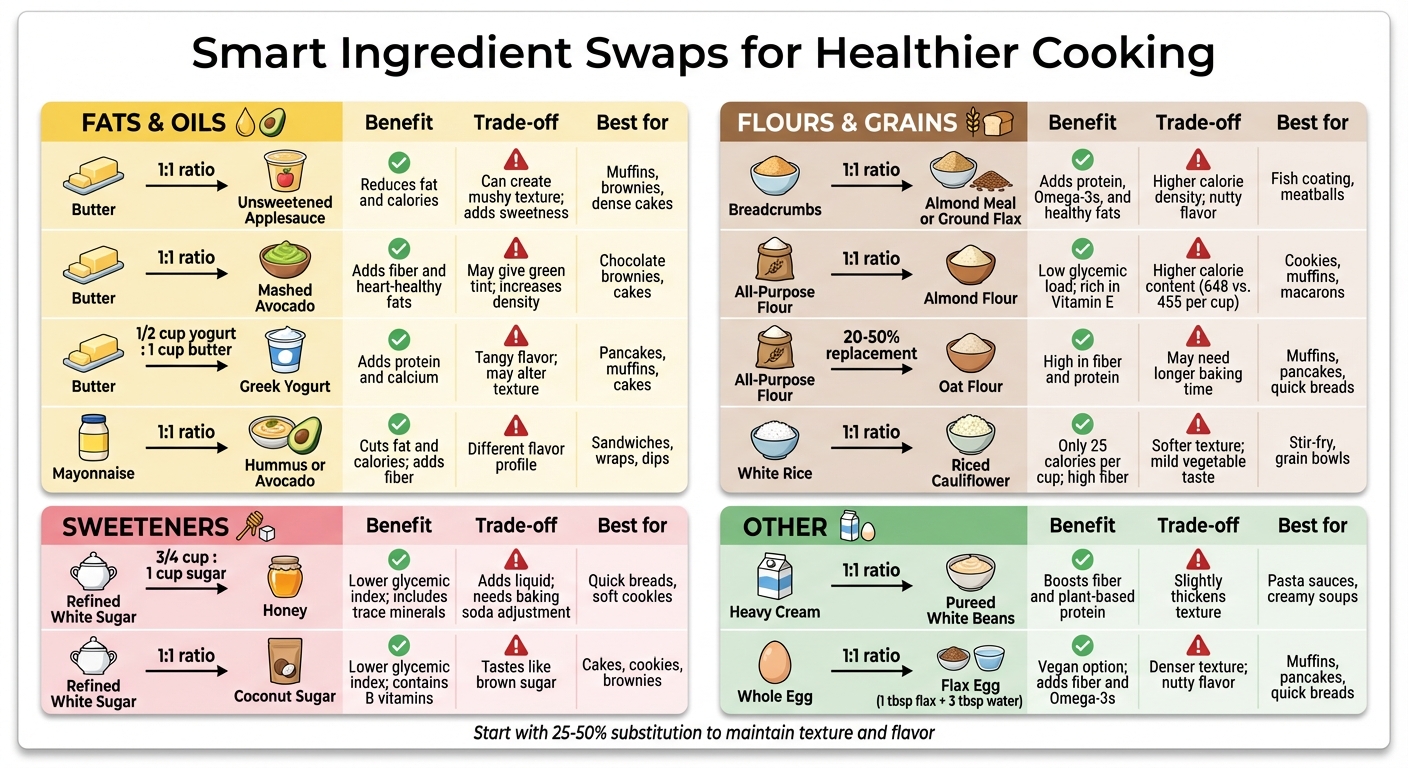
Healthy Ingredient Swap Guide: Ratios, Benefits, and Best Uses
Use the table below to quickly compare common ingredient substitutions. It highlights their nutritional benefits, potential trade-offs, and the types of recipes where they shine.
| Original Ingredient | Healthy Swap | Swap Ratio | Nutritional Benefit | Potential Trade-off | Best Recipe Types |
|---|---|---|---|---|---|
| Butter | Unsweetened Applesauce | 1:1 | Reduces fat and calories | Can create a mushy texture; adds sweetness | Muffins, brownies, dense cakes |
| Butter | Mashed Avocado | 1:1 | Adds fiber and heart-healthy fats | May give a green tint; increases density | Chocolate brownies, cakes |
| Butter | Greek Yogurt | 1/2 cup yogurt : 1 cup butter | Adds protein and calcium | Tangy flavor; may alter texture | Pancakes, muffins, cakes |
| Mayonnaise | Hummus or Avocado | 1:1 | Cuts fat and calories; adds fiber | Different flavor profile | Sandwiches, wraps, dips |
| Refined White Sugar | Honey | 3/4 cup : 1 cup sugar | Lower glycemic index; includes trace minerals | Adds liquid; needs baking soda adjustment | Quick breads, soft cookies |
| Refined White Sugar | Coconut Sugar | 1:1 | Lower glycemic index; contains B vitamins | Tastes like brown sugar | Cakes, cookies, brownies |
| Breadcrumbs | Almond Meal or Ground Flax | 1:1 | Adds protein, Omega-3s, and healthy fats | Higher calorie density; nutty flavor | Fish coating, meatballs |
| Heavy Cream | Pureed White Beans | 1:1 | Boosts fiber and plant-based protein | Slightly thickens texture | Pasta sauces, creamy soups |
| All-Purpose Flour | Almond Flour | 1:1 | Low glycemic load; rich in Vitamin E | Higher calorie content (648 vs. 455 per cup) | Cookies, muffins, macarons |
| All-Purpose Flour | Oat Flour | 20–50% replacement | High in fiber and protein | May need longer baking time | Muffins, pancakes, quick breads |
| White Rice | Riced Cauliflower | 1:1 | Only 25 calories per cup; high fiber | Softer texture; mild vegetable taste | Stir-fry, grain bowls |
| Whole Egg | Flax Egg (1 tbsp flax + 3 tbsp water) | 1:1 | Vegan option; adds fiber and Omega-3s | Denser texture; nutty flavor | Muffins, pancakes, quick breads |
Baking is a precise science, so adjustments are often necessary when swapping ingredients. For example, if you're using Greek yogurt instead of butter, stick to half the amount to prevent overly wet batter. Similarly, if you're replacing white sugar with honey, reduce other liquids in the recipe by 3–4 tablespoons per cup and add 1/4 teaspoon of baking soda to balance the acidity.
To ease into these changes, start with partial swaps. For instance, replace half the butter with applesauce or mix all-purpose flour with oat flour. This gradual approach helps you maintain texture while improving nutrition. Keep in mind that fruit-based swaps like applesauce can shorten bake times, so check your goods a few minutes earlier than usual.
For an easier way to manage these swaps, try Honeydew Recipe Manager, which simplifies substitutions and meal planning.
How Honeydew Recipe Manager Simplifies Ingredient Swapping

Smart Substitutions for Missing Ingredients
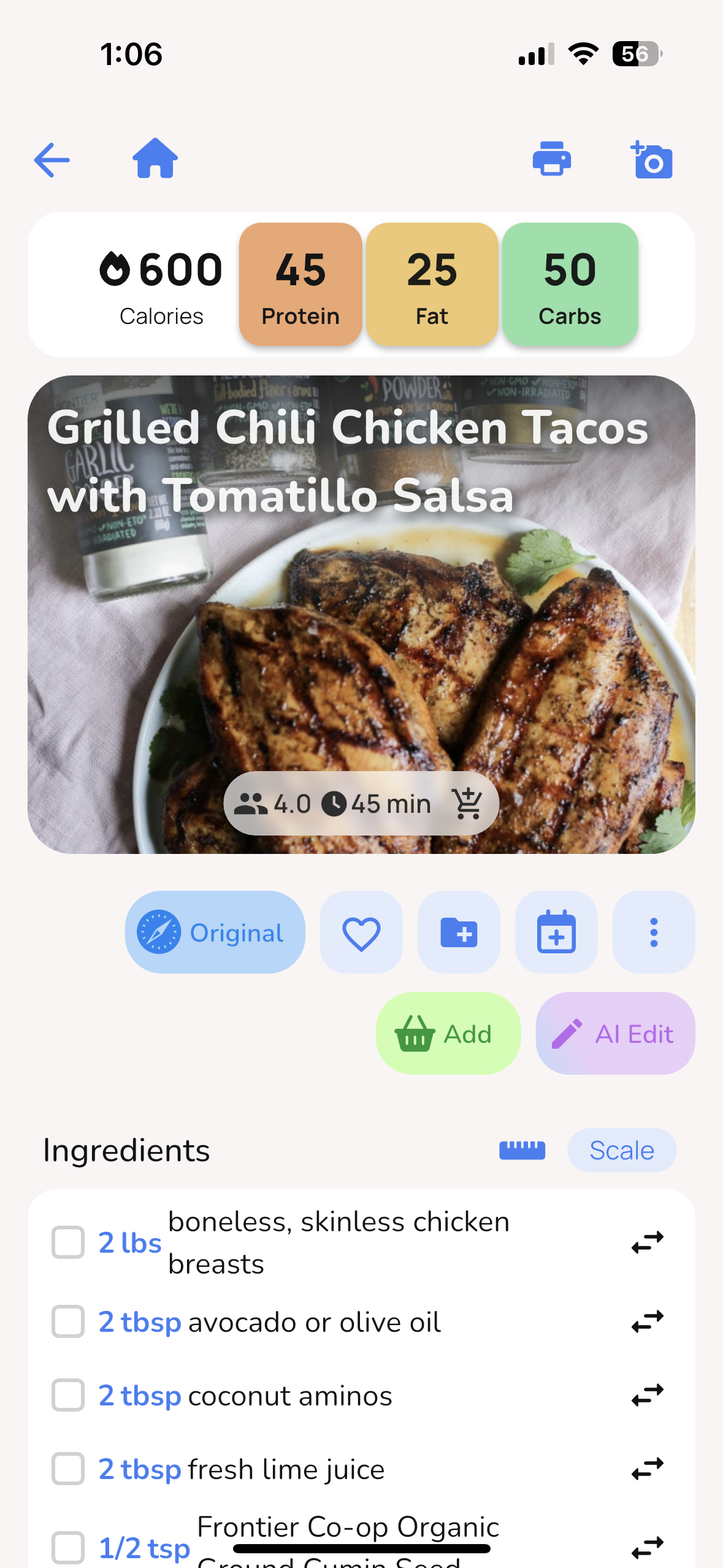
Honeydew Recipe Manager takes the guesswork out of ingredient swaps with its AI assistant, Ask Honey. This feature suggests practical alternatives tailored to your recipe, so your dishes stay flavorful - even when you're adjusting for dietary preferences or missing ingredients. The app’s Pantry Mode adds another layer of convenience by using image recognition to identify ingredients you already have and highlighting recipes you can make. It even flags items you’ll need to complete a recipe.
"The AI substitutions are also handy." - Manya Lyalya, Editor, Grand Screen
This functionality ensures that making healthier or more accessible ingredient swaps feels effortless.
Nutrition Tracking and Grocery Lists
Honeydew doesn’t just help you swap ingredients - it also keeps you informed about how those swaps impact your meals. The app uses a recipe nutrition analyzer to recalculate data instantly, giving you updated details on calories, protein, carbs, and fats. This automatic macro analysis helps you stay on track with your dietary goals without any extra hassle. Once you’ve finalized your ingredients, Honeydew generates a grocery list sorted by store sections, making shopping a breeze. And with its Instacart integration, you can even order everything you need with a single click.
From ingredient swapping to grocery shopping, Honeydew simplifies the entire meal prep process.
Family-Friendly Meal Planning
Honeydew also shines when it comes to family meal planning. It allows up to six family members to share and update meal plans and grocery lists in real time, making coordination easy - even in households with varying dietary needs. A February 2026 update added features like a Notepad PencilKit and an iOS widget for leaving notes on recipes and meal plans, ensuring everyone stays on the same page. The app’s drag-and-drop interface makes organizing weekly menus simple, and with over 85,000 recipes saved by users every month, there’s no shortage of inspiration for meals featuring healthier ingredient swaps.
Conclusion
Making small ingredient swaps can improve nutrition without compromising on taste. For example, using mashed banana instead of refined sugar or substituting lentils for ground beef reduces calories and sodium while adding fiber and protein. These thoughtful changes not only cut down on less desirable elements but also increase the intake of important nutrients.
"Simple food substitutions can have major benefits, including fewer calories, less cholesterol, and more stable blood sugar levels. These changes often lead to weight loss and lower your risks for heart disease, diabetes, cancer, and other diseases." - Kathy McManus, MS, RD, LDN
Swaps allow you to enjoy your favorite comfort foods with fewer calories. Start small - try replacing 25% to 50% of an ingredient - to maintain texture and flavor. To get the best results, choose swaps that serve the same purpose, like replacing fats, adding moisture, or acting as a binder. You can also elevate the flavor with simple additions like a splash of citrus juice or a dash of vinegar.
These small adjustments can streamline meal planning, especially with tools like the Honeydew Recipe Manager. Its features, such as the Ask Honey AI for quick swap suggestions, instant nutrition updates, and organized grocery lists, make it a breeze. Plus, its Instacart integration lets you order ingredients with a single click, and family sharing options help coordinate meals for households with varying dietary preferences.
With these tips and the convenience of Honeydew Recipe Manager, healthier cooking becomes simple and enjoyable. Why not start with just one swap in your next recipe to create meals that are both nutritious and delicious?
FAQs
How do I choose the best swap without ruining texture?
To find the right ingredient substitute without messing up texture, think about how it impacts moisture, density, and binding. The key is matching the substitute to the original ingredient's wet-to-dry ratio and purpose. For instance, replacing butter with avocado or swapping flour for a different option needs careful thought to keep the structure intact. Don’t forget to consider the substitute’s flavor, texture, and moisture levels to get the results you’re aiming for.
What adjustments should I make when baking with honey or maple syrup?
When substituting honey for sugar, use 1/2 to 2/3 cup of honey for every cup of sugar. To keep the recipe balanced, reduce other liquids by 1/8 to 1/4 cup and add 1/8 to 1/4 teaspoon of baking powder per cup of honey to counteract its acidity.
For maple syrup, replace one cup of sugar with 1/2 to 3/4 cup of syrup. Just like with honey, reduce the other liquids in your recipe by the same amount to maintain the right texture and sweetness.
How can I make gluten-free swaps that still bind and rise?
To help gluten-free recipes hold together and rise properly, use binders like xanthan gum, guar gum, or psyllium husk. These ingredients mimic gluten's role, providing elasticity and structure. You can pair gluten-free flours - such as rice, almond, or coconut flour - with these binders, or choose a pre-mixed gluten-free flour blend that already includes them. Be prepared to tweak recipes slightly to achieve the best texture and outcome.