Best Vegan Fish Sauce Alternatives for Southeast Asian Dishes
• Updated
Fish sauce is a key ingredient in Southeast Asian cooking, delivering salty, savory, and umami flavors. For those on a plant-based diet, finding diet-friendly swaps that match its depth can feel challenging. Luckily, there are both homemade recipes and store-bought options to replicate the flavor in dishes like Pad Thai or Pho.
Key Takeaways:
- Homemade Options: Use ingredients like seaweed, mushrooms, and miso for a DIY vegan fish sauce. These recipes allow flavor customization but require some preparation time.
- Store-Bought Brands: Products like Ocean's Halo, Tofuna Fysh, and Squid Brand Vegan Fish Sauce offer convenience and bold flavors, though they can be pricier.
- Usage Tips: Most alternatives work as a 1:1 substitute for traditional fish sauce, but lighter homemade versions may need doubling for stronger flavor.
Quick Comparison:
| Option | Prep Time | Umami Strength | Gluten-Free? | Best For |
|---|---|---|---|---|
| Quick Soy-Nori | 5 mins | Moderate | Optional | Stir-fries, dressings |
| Simmered Shiitake | 25 mins | High | Optional | Pho, curries, Pad Thai |
| Ocean's Halo | None | High | Yes | Soups, dipping sauces |
| Tofuna Fysh | None | Very High | No | Curries, marinades |
Whether you prefer the control of homemade sauces or the ease of store-bought ones, vegan fish sauce alternatives make it possible to enjoy the bold flavors of Southeast Asian cuisine without compromising your diet. Keep your pantry stocked with seaweed, miso, or a ready-made brand to elevate your dishes effortlessly.
The Ultimate Vegan Fish Sauce
Homemade Vegan Fish Sauce Recipes
Making vegan fish sauce at home lets you tailor the flavors to your liking and avoid the overly salty taste often found in store-bought options. By combining ingredients like seaweed for a briny kick, mushrooms for umami, and soy or miso for depth, you can create a sauce that suits your needs. Here are three recipes, each designed for different time commitments and flavor preferences.
Quick Blender Soy-Nori Sauce
This recipe is perfect when you're short on time but still want a flavorful fish sauce alternative—you can even import recipes from social media to keep your favorites organized. The nori adds a briny touch, while soy sauce or tamari provides the base. Here's how to make it:
- Blend 1/4 cup soy sauce or tamari with one torn sheet of nori seaweed and 1/2 teaspoon sea salt.
- For added complexity, include 1 teaspoon of rice vinegar, one clove of garlic, and a drizzle of maple syrup for a subtle sweetness.
This sauce takes just five minutes to prepare and works as a 1:1 substitute in stir-fries or dipping sauces. Store leftovers in the fridge for up to 10 days.
Simmered Shiitake-Wakame Fish Sauce
If you have a little more time, this simmered recipe delivers a deeper, richer flavor. Start by combining:
- 1/2 cup dried shiitake mushrooms
- 2 tablespoons wakame seaweed
- 2 cups cold water
Simmer gently with 1/4 cup soy sauce, the juice of one lime, and a few black peppercorns. Be sure to avoid boiling - Chef Adam Sobel advises:
Use low heat only - boiling extracts too much flavor.
Simmer for 20 to 25 minutes until the liquid reduces by half. Strain and press the solids to get every bit of umami-packed liquid. This sauce can be refrigerated for up to a month or frozen in ice cube trays for convenience.
Miso-Seaweed Blend
For a lighter and quicker option, try this miso-based recipe. Start by soaking one sheet of nori or a 4-inch piece of kombu in 1 cup of warm water for 10 minutes. Remove the seaweed and whisk in 2 tablespoons of white or red miso paste until dissolved. The miso gives this sauce a funky, fermented flavor reminiscent of traditional fish sauce. If you’re avoiding soy, chickpea miso works well too.
This method takes less than 15 minutes and creates a savory, umami-rich sauce that’s ideal for broths and marinades. Store it in the refrigerator for up to three weeks.
Store-Bought Vegan Fish Sauce Options
Top Store-Bought Brands
Forget the hassle of simmering and straining - these ready-made vegan fish sauces pack plenty of umami and are ready to go. Ocean's Halo Soy-Free Organic Vegan Fish Sauce ($9.99 for 10 oz) is a standout, crafted with kelp, blackstrap molasses, and mushroom powder for a smooth, balanced flavor. Since it’s entirely soy-free, it’s a great pick for those with allergies. It works wonderfully in dishes like ramen, stir-fries, and marinades. Chef Adam Sobel shares:
Ocean's Halo is my preferred store-bought option for delivering authentic flavor.
If you’re after a bolder, fermented taste, Tofuna Fysh Vegan Fish Sauce ($13.20 for 10 oz) is a great choice. This Portland-made sauce combines organic seaweed (dulse, laver, and sea lettuce) with tamari and pineapple juice concentrate, creating a distinct oceanic punch. It’s ideal for Pad Thai, soups, and sushi.
For a premium option, Squid Brand Vegan Fish Sauce delivers a traditional fish sauce vibe with a blend of 21% kombu seaweed and 9% organic shiitake mushroom extract. Naturally fermented and free of MSG and gluten, it’s a versatile option that shines in Vietnamese dipping sauces and Thai curries.
Another popular pick is 24Vegan ($24.99 for 12.68 oz), known for its slow-brewed, fermented soybean base that mimics the bold aroma of traditional fish sauce. With an impressive 4.5-star rating on Amazon from 258 reviews, it’s a favorite among users. One reviewer raves:
If you are a vegan and you want to make drunken noodles that taste like drunken noodles, this [24Vegan] is your only choice.
You can find these brands through online vegan retailers like Vegan Essentials and Earthly Gourmet Direct, or at select health food stores. Keep in mind, store-bought vegan fish sauces need to be refrigerated after opening to maintain their freshness. While convenient, they do come with trade-offs when compared to homemade alternatives.
Store-Bought vs. Homemade: Pros and Cons
Store-bought vegan fish sauces are all about ease and convenience, with a long shelf life once opened. Premium options like Squid Brand and 24Vegan offer naturally fermented flavors that rival traditional fish sauce, but they come with a higher price tag.
On the flip side, homemade vegan fish sauce gives you control over the flavor’s intensity and saltiness. If you already have ingredients like tamari, miso, and dried mushrooms, it can also be more budget-friendly. However, making it yourself involves 20 to 30 minutes of active cooking and straining. Plus, homemade sauces only last 7 to 10 days in the fridge - or up to two months if you freeze them.
Comparison of Vegan Fish Sauce Alternatives
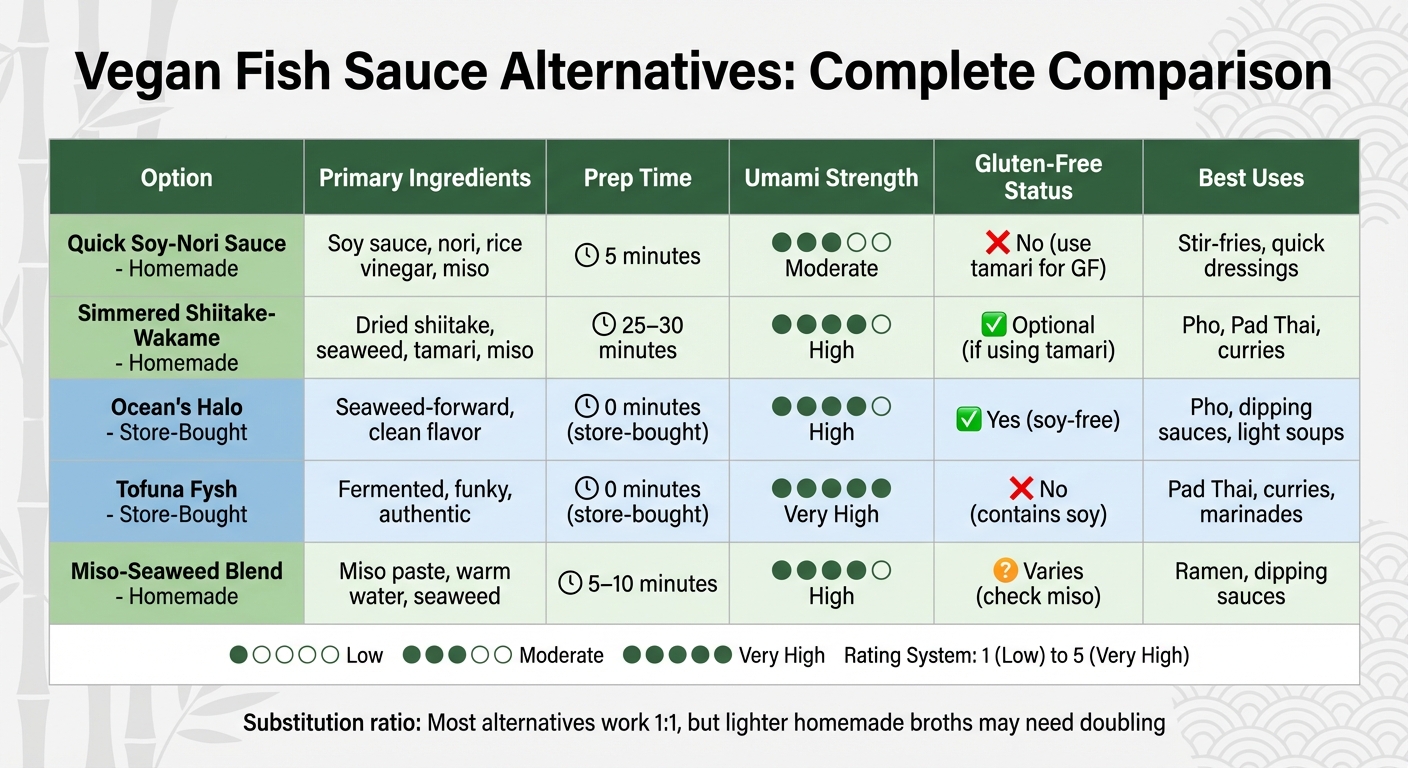
Vegan Fish Sauce Alternatives Comparison Chart
Comparison Table of Alternatives
Here’s a closer look at the key features of popular vegan fish sauce alternatives. This table highlights the ingredients, preparation time, flavor intensity, and best uses for each option.
| Option | Primary Details | Prep Time | Umami Strength | Gluten-Free Status | Storage | Best Uses |
|---|---|---|---|---|---|---|
| Quick Soy-Nori Sauce | Soy sauce, nori, rice vinegar, miso | 5 minutes | Moderate | No (use tamari for GF) | 2 weeks (fridge) | Stir-fries, quick dressings |
| Simmered Shiitake-Wakame | Dried shiitake, seaweed, tamari, miso | 25–30 minutes | High | Optional (if using tamari) | 10–30 days (fridge) | Pho, Pad Thai, curries |
| Ocean's Halo | Seaweed-forward, clean flavor | 0 minutes | High | Yes (soy-free) | Months (shelf-stable) | Pho, dipping sauces, light soups |
| Tofuna Fysh | Fermented, funky, authentic | 0 minutes | Very High | No (contains soy) | Months (shelf-stable) | Pad Thai, curries, marinades |
| Miso-Seaweed Blend | Miso paste, warm water, seaweed | 5–10 minutes | High | Varies (check miso) | 1 week (fridge) | Ramen, dipping sauces |
Homemade options like Quick Soy-Nori Sauce and Simmered Shiitake-Wakame bring a rich, oceanic aroma, especially from seaweed. On the other hand, mushroom-based versions, such as those using shiitake, lean more toward earthy undertones. Among store-bought choices, Ocean's Halo delivers a clean, seaweed-centric flavor, while Tofuna Fysh stands out with its bold, fermented depth.
For those watching sodium intake, it’s worth noting that traditional fish sauce contains between 320–600 mg of sodium per teaspoon. In comparison, alternatives like coconut aminos have significantly less, around 90–130 mg. If you’re making your own, you can tweak the saltiness to your liking.
This comparison should help you pick the right vegan fish sauce alternative to complement your Southeast Asian-inspired dishes perfectly. Whether you’re aiming for a quick fix or a deeper umami punch, there’s an option here to suit your needs. To keep these ingredients on hand, consider using AI meal planning with pantry tracking to manage your kitchen inventory efficiently.
How to Use Vegan Fish Sauce Alternatives
Substitution Ratios and Storage Tips
Getting the right balance of flavors in Southeast Asian dishes often comes down to accurate substitutions and proper storage. Most vegan fish sauce alternatives can replace traditional fish sauce on a straightforward 1:1 basis. However, homemade mushroom and soy sauce broths are lighter in flavor, so you'll need to double up - use 2 tablespoons of broth for every 1 tablespoon of fish sauce. A good starting point is to use about 75% of the fish sauce amount the recipe calls for, then tweak it to your taste.
If you're substituting with plain soy sauce or tamari, adding a splash of lime juice or rice vinegar can help mimic the tangy complexity of traditional fish sauce [4, 7, 23]. For those experimenting with coconut aminos, be sure to add 2 teaspoons of salt per 1/2 cup to match the salinity levels.
When it comes to storage, homemade vegan fish sauces vary in shelf life. Basic sauces last around 2 weeks in the fridge, while simmered versions can hold up for 1 to 3 months. Highly seasoned sauces can stretch up to 6 months. To keep them fresh, store your sauces in sterilized, airtight jars. For longer-term storage, freeze the sauce in ice cube trays - these frozen portions will stay good for 2 to 3 months [6, 13, 23].
Using Honeydew Recipe Manager for Ingredient Substitutions

The Honeydew Recipe Manager makes adapting recipes with vegan fish sauce alternatives a breeze. This app simplifies the process by automatically suggesting substitutes when you import any recipe. Whether you're pulling ideas from TikTok, Instagram, YouTube, or your favorite food blog, Honeydew identifies where vegan fish sauce can replace traditional fish sauce and adjusts the ratios for you.
Planning a week of Thai or Vietnamese meals? Honeydew's AI meal planner can create a full menu in seconds, complete with a grocery list organized by store sections. You can even add your favorite vegan fish sauce brand - whether store-bought or homemade - and the app will include it in the shopping list. With its Instacart integration, you can order everything directly from the app, saving time.
The app doesn’t stop at planning. Its AI cooking assistant offers real-time tips, answering questions like, "Can I swap tamari for soy sauce?" while you cook. Plus, with household sharing for up to six family members, everyone can stay on the same page with meal plans and shopping lists, making vegan cooking a collaborative effort.
Conclusion
Fish sauce is a key ingredient in Southeast Asian cuisine, bringing that unmistakable umami depth to dishes like Thai Pad Thai and Vietnamese Pho. However, when it comes to plant-based cooking, finding a proper vegan substitute can be a challenge - and without it, those classic flavors can fall flat.
The good news? You don’t have to sacrifice flavor to stick to your dietary choices. Vegan fish sauce alternatives, whether homemade or store-bought, deliver the salty, savory punch these dishes need. Making your own allows you to fine-tune the saltiness and umami to your liking, while brands like Ocean's Halo and Tofuna Fysh offer quick and convenient options. Plus, many of these substitutes are lower in sodium and free from cholesterol, making them a healthier choice.
For the best results, try experimenting with different methods. Use a simple soy-nori mix for quick stir-fries or rely on store-bought options when you're short on time. To deepen the umami, combine ingredients like dried shiitake mushrooms, seaweed, and miso paste instead of leaning solely on soy sauce. Always adjust as you cook since saltiness can vary.
For even easier swaps, Honeydew Recipe Manager is a game changer. This app lets you import Southeast Asian recipes from social media or blogs and suggests vegan fish sauce replacements with tailored ratios. It even creates weekly meal plans for Thai or Vietnamese dishes, complete with grocery lists and Instacart integration for sourcing specialty ingredients.
Whether you’re making Vietnamese nuoc cham or Thai green curry, vegan fish sauce alternatives prove that plant-based cooking can still honor the rich, authentic flavors of Southeast Asia. As Yumgan puts it:
This vegan fish sauce alternative isn't a compromise; it's an upgrade. It gives your dishes the depth they deserve.
These options make it possible to enjoy the vibrant flavors of Southeast Asian cuisine while staying true to your dietary values.
FAQs
Which vegan fish sauce tastes closest to the real thing?
A mix of soy sauce (or tamari), seaweed, and mushrooms makes for one of the best vegan substitutes for traditional fish sauce. This blend nails the salty, savory, and umami notes that define the original.
How can I make a low-sodium vegan fish sauce?
If you're looking to make a low-sodium vegan fish sauce, start by blending soaked seaweed - such as kombu or wakame - with miso. Once blended, strain the mixture to create a liquid that's briny and packed with umami flavor.
Prefer store-bought? Go for low-sodium options specifically labeled as reduced salt. Another approach is diluting regular fish sauce with water and boosting the flavor with a touch of chili oil or sesame oil. This way, you cut down on sodium without sacrificing the taste of your dish.
Can I use vegan fish sauce in nuoc cham and Pad Thai?
Vegan fish sauce is an excellent alternative for dishes like nuoc cham and Pad Thai. It delivers the same savory, salty depth of flavor as traditional fish sauce, making it a fantastic plant-based option for Southeast Asian recipes.