10 British Ingredient Substitutions for US Cooks
• Updated
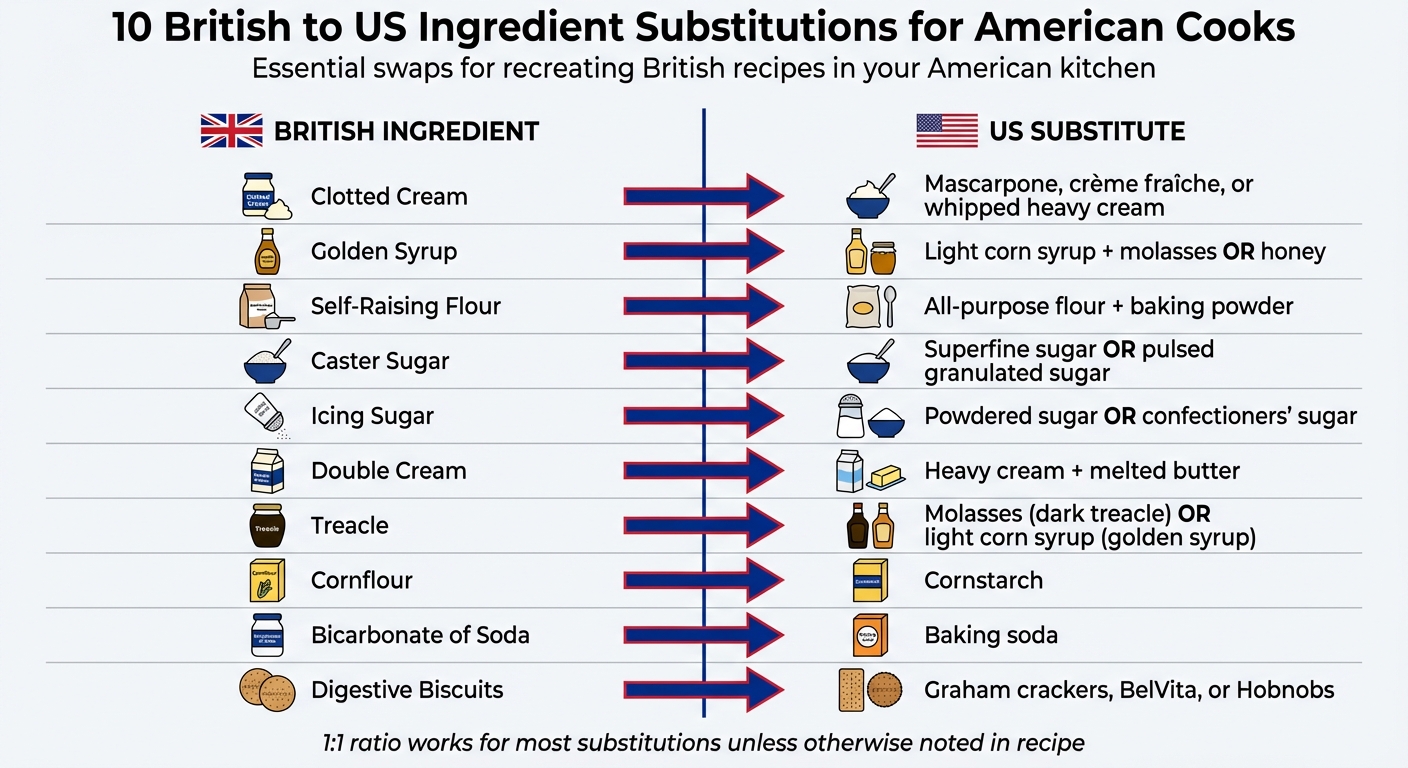
Ever tried a British recipe and felt stuck because the ingredients don’t match what’s in your pantry? This guide simplifies it for you, acting as a quick ingredient substitution finder. From clotted cream to caster sugar, here’s how to swap British staples with American equivalents for perfect results in your kitchen:
- Clotted Cream: Use mascarpone, crème fraîche, or whipped heavy cream.
- Golden Syrup: Replace with light corn syrup mixed with molasses or honey.
- Self-Raising Flour: Mix all-purpose flour with baking powder.
- Caster Sugar: Substitute with superfine sugar or pulse granulated sugar in a food processor.
- Icing Sugar: Use U.S. powdered or confectioners' sugar.
- Double Cream: Blend heavy cream with melted butter for richness.
- Treacle: Use molasses for dark treacle or light corn syrup for golden syrup.
- Cornflour: Swap with U.S. cornstarch.
- Bicarbonate of Soda: It’s just baking soda in the U.S.
- Digestive Biscuits: Replace with graham crackers, BelVita, or Hobnobs.
These swaps help you recreate British classics without hunting for hard-to-find ingredients. Whether it’s sticky toffee pudding or a Victoria sponge, these tips ensure your recipes hit the mark.
British to US Ingredient Substitutions Quick Reference Guide
British Food Words That May Confuse Americans
1. Clotted Cream
Clotted cream is a rich, spreadable dairy treat made by slowly heating heavy cream and skimming off the thick, golden layer that forms on top. With a butterfat content of at least 55% - far higher than the 38% found in American heavy whipping cream - it has a dense, smooth texture that falls somewhere between whipped cream and butter. Kate Arding, co-proprietor of Talbott and Arding, describes its flavor as:
"essentially concentrated, creamy milk".
This decadent ingredient is key for recreating British recipes, but sourcing or replicating it in the U.S. can be tricky. Here’s how to find or make it.
Availability in US Stores
Finding authentic clotted cream in the U.S. can be a challenge. Traditional British clotted cream is often unpasteurized, which doesn’t meet FDA standards. Instead, you’re more likely to spot shelf-stable jars in specialty food sections at upscale stores like Whole Foods and Wegmans, in English import shops, or through online retailers. If you’re up for the task, you can make your own version at home using pasteurized heavy cream with at least 35% butterfat. Keep in mind, though, that the process isn’t very efficient - 16 ounces of heavy cream will only yield about 6 ounces of clotted cream.
If authentic clotted cream proves elusive, there are substitutes that can mimic its flavor or texture.
Closest Flavor or Texture Match
Mascarpone cheese is the closest match in terms of texture - rich, creamy, and slightly sweet. For an even closer approximation, blend 2 parts mascarpone with 1 part heavy whipping cream until soft peaks form. Crème fraîche is another option, offering a velvety texture, though its tanginess sets it apart. Full-fat Greek yogurt is similarly thick but has a more pronounced tartness. In a pinch, heavy cream whipped to stiff peaks can work, though it will be lighter and fluffier than true clotted cream.
Adapting recipes with these alternatives is straightforward when you use the right measurements.
Appropriate Measurement Conversions
Most substitutes - like mascarpone, Greek yogurt, sour cream, or crème fraîche - can replace clotted cream using a 1:1 ratio by volume. For a homemade alternative, whip 1/2 cup (4 fl oz) of heavy cream to soft peaks, then gently fold in 8 ounces of mascarpone and 1 tablespoon of powdered sugar. To get the best texture, always use full-fat versions and let the mixture rest at room temperature for about 30 minutes before serving.
With these tips, you can bring a touch of British indulgence to your recipes, no matter where you are.
2. Golden Syrup
Golden syrup is a thick, amber-colored inverted sugar syrup with a rich, buttery caramel flavor that plays a key role in British baking. As Kim from InsanelyGood describes it:
"Golden syrup is thick and sticky with a buttery caramel-like flavor that can't be beat."
Since it's an inverted sugar - broken down into glucose and fructose - it resists crystallization during baking and keeps baked goods like cookies and cakes moist. Plus, its slow-drizzling consistency makes it perfect for recipes requiring a syrupy texture. But where can you find this ingredient in the U.S.?
Availability in US Stores
You can typically find authentic golden syrup in the international or British food sections of major grocery stores like Publix, Wegmans, and Whole Foods. Online retailers, such as Amazon or King Arthur Baking, are also reliable sources, or you can use a recipe manager to save and organize your favorite British baking finds. However, watch out for products like "King's Golden Syrup", which are often corn-syrup-based and include high fructose corn syrup instead of traditional cane sugar syrup. Another alternative is Golden Eagle Syrup, made in Alabama, which costs around $3.00 for a 16-oz pint. This version blends corn syrup, honey, and molasses rather than using pure inverted cane syrup. Once you've got your hands on golden syrup, its unique properties will shine in your recipes. To ensure you always have these specialty items on hand, consider using AI meal planning with pantry tracking to manage your inventory.
Closest Flavor or Texture Match
If golden syrup isn't available, light corn syrup is the closest match in terms of thickness and its ability to prevent crystallization. However, as Kimberly Killebrew from The Daring Gourmet points out:
"Corn syrup (whether light or dark) isn't as thick and basically tastes like thick sugar water, lacking any depth of flavor."
To recreate the caramel undertones of golden syrup, you can mix 1 tablespoon of molasses into every cup of light corn syrup. Honey can also be used as a 1:1 substitute, though its floral notes might alter the flavor of delicate recipes. Maple syrup, while an option, is thinner and has a bold, woodsy taste that can overpower traditional British treats like treacle tart.
Appropriate Measurement Conversions
Most substitutes for golden syrup can be used in a 1:1 ratio by volume. For agave nectar, use slightly less - about 2/3 to 3/4 cup for every 1 cup of golden syrup - because it's both sweeter and thinner. If you're using honey or agave, lower your oven temperature by 25°F to avoid over-browning. When working with thinner substitutes like maple syrup or agave, reduce other liquids in your recipe by 1 to 2 tablespoons to maintain the desired consistency.
3. Self-Raising Flour
Self-raising flour, introduced in 1845 by Henry Jones, is a mix of plain flour and baking powder. In the United States, it’s known as self-rising flour and usually includes salt, making it perfect for quick breads like scones, biscuits, muffins, and pancakes. Compared to American all-purpose flour, which has no leavening agents and a higher protein content (10–12%), self-raising flour contains about 8–9% protein, resulting in a softer texture.
Availability in US Stores
Self-rising flour is easy to find in the United States, with popular brands like King Arthur, Gold Medal, White Lily, and Presto. If you're after a more authentic British flavor, choose brands like White Lily or Presto. These use softer winter wheat, creating a tender and fine crumb. Keep in mind that British self-raising flour is salt-free, unlike its American counterpart.
Closest Flavor or Texture Match
If you can’t find self-raising flour or need a specific blend, making your own is simple. For a UK-style salt-free version, combine 100g of plain flour with 1 teaspoon of baking powder. Baking expert Charlotte Oates advises:
"The answer is 1 tsp of baking powder per 100g of plain flour."
For a US-style blend with salt, mix 1 cup of all-purpose flour with 1½ teaspoons of baking powder and ½ teaspoon of salt. Whisk thoroughly for 1–2 minutes to ensure even distribution. Homemade mixtures should be used within six months, as baking powder loses its effectiveness over time.
Appropriate Measurement Conversions
One cup of self-raising flour weighs about 125 grams. If substituting store-bought self-rising flour in recipes that already include leavening agents, adjust accordingly: reduce the added baking powder by 1½ teaspoons and the salt by ¼ teaspoon per cup. Avoid using self-raising flour in recipes for flat baked goods like pie crusts, tart shells, or shortbread cookies, as the leavening agents can cause unwanted puffing. These adjustments will help maintain the intended texture of your baked creations.
4. Caster Sugar
Caster sugar (sometimes spelled "castor") is a finely granulated sugar that’s perfect for delicate recipes. British bakers often rely on it for meringues, soufflés, and sponge cakes - classic staples of British baking - because its tiny crystals dissolve quickly, even in cold liquids.
Availability in US Stores
In the US, caster sugar is usually sold under names like superfine sugar or baker's sugar. You can find it in the baking aisle of many major grocery stores or online. Retailers such as Whole Foods often carry it under their private labels, and platforms like Amazon stock brands like Judee's Superfine Caster Baker's Sugar. Keep in mind that products explicitly labeled as "caster sugar" are often imported and come with a higher price tag, while "superfine" or "baker's sugar" is typically more affordable.
Closest Flavor or Texture Match
If you don’t have caster sugar on hand, regular granulated sugar can be used as a 1:1 substitute. However, its larger crystals may lead to a slightly grainy texture or a speckled look in delicate cakes. For a closer match, you can make your own caster sugar by pulsing granulated sugar in a food processor for 1–2 minutes until it reaches a fine, sandy texture - just be careful not to over-process it. When using granulated sugar in recipes like cakes, try creaming the butter and sugar for a bit longer to allow the larger crystals to break down. For meringues, mixing at a slower speed helps the sugar dissolve fully into the egg whites.
Appropriate Measurement Conversions
One cup of caster sugar weighs about 125 grams, making it an easy 1:1 swap with superfine or granulated sugar by volume. That said, some bakers suggest using 1 cup plus 2 teaspoons of granulated sugar for every cup of caster sugar to account for slight volume differences and any "dust" lost during grinding.
For more home cooking and meal planning tips, Next, we’ll explore another essential British ingredient and how to substitute it in your US kitchen.
5. Icing Sugar
Icing sugar, known as powdered sugar or confectioners' sugar in the U.S., is made by grinding granulated sugar into a fine powder and blending it with about 3% cornstarch to prevent clumping. This fine texture makes it essential for creating smooth buttercreams, glazes, and royal icing, as it dissolves effortlessly into fats and liquids.
Availability in U.S. Stores
Powdered sugar is a staple in the baking aisle of nearly every grocery store in the U.S. Whether you're shopping at a large supermarket or a small local store, you’ll usually find it near the granulated sugar. While it’s essentially the same as British icing sugar, the U.S. version typically includes cornstarch as an anti-caking agent, making it a convenient and reliable substitute for British recipes.
Closest Flavor or Texture Match
U.S. powdered sugar matches British icing sugar in sweetness and can be used interchangeably in recipes with a 1:1 ratio. Its ultra-fine texture is ideal for tasks where granulated or caster sugar might fall short. For best results, sift the powdered sugar before using it. Alternatively, you can make your own by blending granulated sugar into a fine powder and adding 1 tablespoon of cornstarch per cup.
Appropriate Measurement Conversions
British recipes usually measure icing sugar by weight (grams), while U.S. recipes often use volume (cups). Because powdered sugar is compressible, volume measurements can vary depending on sifting and packing. To ensure accuracy when following British recipes, it’s best to use a digital kitchen scale to measure in grams. If measuring by volume, note that processing 1 cup of granulated sugar into powdered sugar yields approximately 1¾ cups of homemade powdered sugar.
6. Double Cream
Double cream is a beloved British dairy product, prized for its ultra-high fat content - at least 48%. This high butterfat level gives it a thick, spoonable texture right out of the carton. Unlike the more fluid heavy cream found in the US, double cream whips quickly, holds its shape beautifully when heated, and resists curdling during cooking. But if you're in the US, getting your hands on this rich ingredient can be a bit of a challenge.
Availability in US Stores
Finding authentic British double cream in the US isn't easy. American pasteurization laws make producing high-fat creams tricky. Your best bet is to check specialty sections in gourmet stores like Whole Foods or explore British import shops, where it may come in small glass jars. Alternatively, some artisanal US dairies produce "Manufacturing Cream", which has a fat content of 40% or more and offers a texture closer to double cream.
Closest Flavor or Texture Match
If double cream isn't available, there are substitutes that can work in most recipes. US heavy whipping cream, with a fat content of 36–40%, is a common replacement. To mimic the richness of double cream, try blending 1 cup of heavy cream with 2 tablespoons of melted butter. For desserts that call for a thick, spoonable consistency, mascarpone is a great option. Crème fraîche also works well in sauces, though it adds a slight tang that may alter the flavor profile.
Appropriate Measurement Conversions
Here are some handy conversion tips for using or substituting double cream:
- 250 ml of double cream is equivalent to 1 cup of heavy cream.
- For ganache, use a 1:0.8 chocolate-to-cream ratio when working with double cream.
- If substituting double cream for heavy cream, thin it with 1 tablespoon of milk per 100 ml to match the proper consistency.
7. Treacle
Treacle is a staple in many traditional British recipes, though it may not be as familiar to cooks in the US. This thick, sticky syrup is a byproduct of sugar refining. British recipes typically use two types: a lighter, sweeter version and a darker, more bittersweet variety made by blending refinery syrup with molasses. Treacle stars in desserts like treacle tart, sticky toffee pudding, and gingerbread, but it’s also used in savory dishes to glaze meats or add depth to marinades.
Availability in US Stores
Getting your hands on authentic British treacle in the US can be a bit of a treasure hunt. Start by checking the international or "World Foods" section at larger supermarkets like Wegmans. Specialty British import stores are another option, and Lyle's - one of the most well-known treacle producers, shipping over a million tins worldwide each month - might be available through these channels. If all else fails, online retailers are a dependable backup.
Closest Flavor or Texture Match
When substituting treacle, the key is to match the flavor and texture as closely as possible. For golden syrup, light corn syrup works in a pinch, though it lacks the buttery undertones. Honey is another option, offering a similar thickness and amber hue. For black treacle, dark molasses is your best bet. However, start with a smaller amount since molasses has a stronger flavor.
Appropriate Measurement Conversions
Most treacle substitutes can be used in a 1:1 ratio. If you’re using agave nectar instead of golden syrup, cut back on the quantity since agave is almost twice as sweet. For black treacle, when replacing blackstrap molasses, mix 3/4 cup of treacle with 1 tablespoon of water to equal 1 cup of molasses. To make handling the syrup easier, lightly grease your measuring tools. For reference, two tablespoons of black treacle (roughly 43 grams) contain 41 calories and 11 grams of sugar.
8. Cornflour
In the U.K., "cornflour" refers to pure corn starch, while in the U.S., "corn flour" typically means finely ground whole corn. However, when it comes to recipes, British cornflour is equivalent to what Americans call "cornstarch" - a fine, white powder that's nearly 100% starch.
"Cornstarch and corn flour play very different roles in gluten free baking... you can't substitute cornstarch for corn flour, or vice versa." - Kat, Founder, The Loopy Whisk
Availability in US Stores
In the U.S., you'll find this product labeled as "cornstarch" in the baking aisle. Look specifically for packaging that says "cornstarch" to ensure you're getting the right ingredient.
Closest Flavor or Texture Match
For texture and functionality, U.S. cornstarch is a perfect match for British cornflour. Both have a fine, slightly squeaky texture and work seamlessly to thicken sauces, gravies, and other liquids into a clear gel. If cornstarch isn't available, you can substitute it with an equal weight of arrowroot, potato, or tapioca starch.
Appropriate Measurement Conversions
Since British cornflour and U.S. cornstarch are the same product, you can substitute them in recipes at a 1:1 ratio. For instance, if a British recipe calls for 2 tablespoons of cornflour, use 2 tablespoons of cornstarch. To avoid lumps, always dissolve cornstarch in cold liquid before incorporating it into hot mixtures.
9. Bicarbonate of Soda
Ever come across a British recipe mentioning "bicarbonate of soda"? If so, you might be wondering what it is. In the U.K., "bicarbonate of soda" is just the British term for what Americans know as baking soda. Chemically, they’re identical - pure sodium bicarbonate (NaHCO3) - and they work the same way in recipes.
"Bicarbonate of soda, also known as sodium bicarbonate, is a base that releases carbon dioxide gas when it comes into contact with an acid (like buttermilk) and a liquid (like water or milk), causing dough or batter to rise." - ElevatingKitchen
Availability in US Stores
In the U.S., baking soda is a kitchen staple and one of the most commonly found baking ingredients. You’ll see it in the baking aisle of virtually every grocery store, with brands like Arm & Hammer being household names. It’s affordable, long-lasting, and a must-have in most American homes.
Proper Measurement Conversions
Since bicarbonate of soda and baking soda are exactly the same thing, you can swap them at a 1:1 ratio without any changes to your recipe. However, it’s important not to confuse baking soda with baking powder. Baking powder contains baking soda but also includes acidic agents and anti-caking ingredients. Substituting baking powder for baking soda will alter your recipe’s chemistry and could impact the flavor or texture.
If you’re unsure whether your baking soda is still good to use, there’s an easy test: mix a small amount with vinegar. If it fizzes right away, it’s active and ready for baking. This simple check ensures your recipes rise just as they should.
10. Digestive Biscuits
Digestive biscuits are a staple in British recipes like cheesecake. These wheat-based, semi-sweet biscuits have a malty flavor and a firm, crumbly texture, setting them apart from the crackers commonly found in the U.S..
If you're recreating a British recipe, finding the right substitute is key to maintaining the authentic taste and texture.
Availability in US Stores
Finding digestive biscuits in the U.S. can be a bit tricky. However, authentic McVitie's Digestive Biscuits are often stocked in the international or British sections of large supermarkets like Wegmans or Publix. You can also check World Market or shop online for them. If you're in a pinch, graham crackers are the most widely available alternative, easily found in the baking aisle of nearly every grocery store.
Closest Flavor and Texture Match
While graham crackers work as a substitute, they are thinner, crispier, and sweeter, with honey, vanilla, or cinnamon notes that aren't present in traditional digestives. For a closer match, consider BelVita Breakfast Biscuits (Golden Oat variety), which use whole grains like oats and rye to replicate the texture and flavor of digestives more closely. Other options include:
- Marie biscuits: A lighter, crisp alternative.
- Hobnobs: Perfect for recipes that benefit from extra oat-based crunch.
- Shortbread: A richer, buttery option for a more indulgent flavor.
Your choice will depend on the texture and flavor profile your recipe requires.
### Ingredient Measurement Conversions
If you're substituting graham crackers for digestive biscuits in recipes like cheesecake crusts, stick to a 1:1 weight ratio. Adjustments may be needed based on the substitute:
- Hobnobs: Being drier, they might need more butter to bind the crumbs.
- Shortbread: With its high butter content, you can reduce the amount of added butter.
- BelVita (Golden Oat): Avoid flavored varieties like cranberry orange, as they can overpower the dessert.
Since graham crackers are sweeter than digestives, you may also want to reduce any additional sugar in your recipe. These tips ensure your dish stays true to its British roots while working with U.S.-available ingredients.
How Honeydew Recipe Manager Helps with Ingredient Substitutions
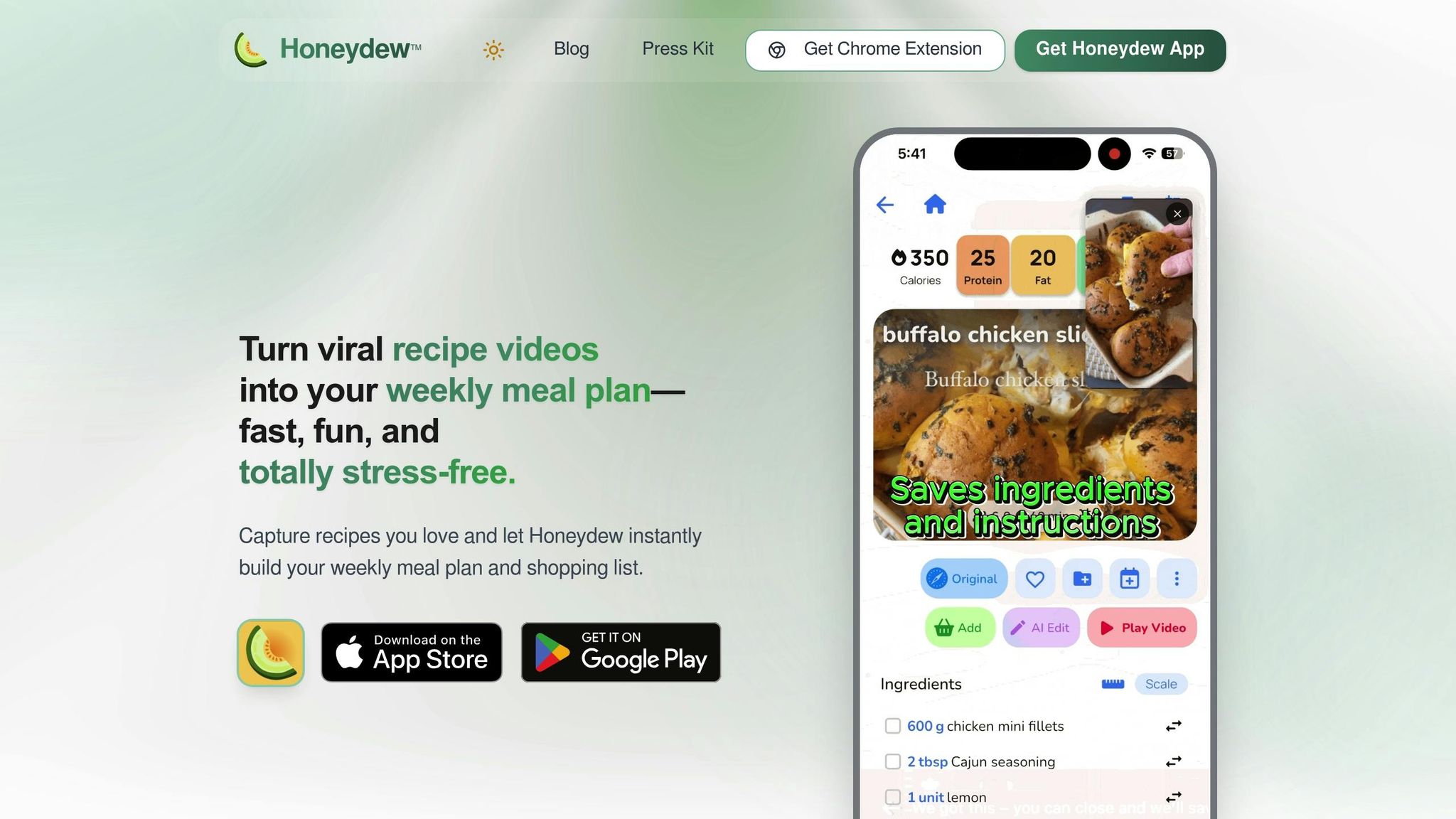
Honeydew Recipe Manager makes ingredient swaps a breeze, especially for those tackling recipes from across the pond. Its AI, powered by Natural Language Processing, automatically identifies British terms like "treacle", "double cream", and "caster sugar" when you import a recipe from social media. Then, it instantly suggests their American counterparts, taking the guesswork out of conversions. It’s like having a culinary translator at your fingertips.
The Pantry Sync feature takes it a step further by suggesting substitutions based on what you already have in your kitchen. Plus, it adjusts measurements to account for differences in ingredient density, ensuring your recipe turns out just right.
"The ingredient substitution feature is a game-changer... I can adapt any recipe easily!"
- Emily C., a happy user.
Once your recipe is adapted, Honeydew creates an aisle-sorted grocery list that includes American substitutes. It even integrates with Instacart for quick ordering. For example, instead of hunting for "cornflour" at the store, your list will show "cornstarch" in the baking aisle - making the entire process seamless.
Honeydew also converts British oven temperatures, translating Gas Marks or Celsius into Fahrenheit. No more second-guessing how hot your oven should be. With over 72,000 recipes saved monthly and a 4.8-star rating, Honeydew has become a trusted companion for American cooks experimenting with global flavors.
Conclusion
Making British recipes in a US kitchen becomes much easier once you crack the code for ingredient swaps - like knowing that cornflour is cornstarch and bicarbonate of soda is baking soda. The trick lies in identifying the substitutions that actually impact texture and flavor. For instance, using superfine sugar instead of standard granulated sugar can help you avoid gritty textures, while choosing the right type of flour can keep your scones from turning out tough.
These ten substitutions open the door to a variety of British classics, from Victoria sponge cakes to sticky toffee pudding. No more wandering grocery aisles searching for ingredients that either have different names or don’t exist in the US.
For even more convenience, the Honeydew Recipe Manager simplifies the process. Import a British recipe from Instagram or TikTok, and the app automatically translates unfamiliar terms into American equivalents. It also converts measurements, adjusts oven temperatures from Gas Marks to Fahrenheit, and creates organized grocery lists with US ingredient names.
With these handy swaps and a tool like Honeydew to handle the details, there's no reason to shy away from British recipes. Dive in and start experimenting with confidence!
FAQs
Which swaps affect texture the most in British baking?
Swapping flours and sweeteners can have a noticeable effect on texture. For instance, using American self-rising flour in place of British self-raising flour might change both the rise and texture because of variations in protein levels and the presence of added salt. Similarly, replacing British golden syrup with other sweeteners can impact the moisture and consistency of baked goods. Substituting American all-purpose flour for British plain or cake flour may also alter the tenderness and crumb structure of your desserts.
How do I convert UK grams, milliliters, and oven temps to US?
When you're using UK recipes in a US kitchen, converting measurements is key. Here's a quick guide:
-
Grams to Cups:
- 450g (1 lb) ≈ 4 cups
- 250g ≈ 2 cups
- 125g ≈ 1 cup
- 113g (a UK butter stick) ≈ 1/2 cup
-
Milliliters to US Measurements:
- 1 US cup ≈ 237 ml
- 1 tablespoon ≈ 15 ml
- 1 teaspoon ≈ 5 ml
-
Oven Temperatures:
- 180°C ≈ 350°F
- Gas marks can be converted using standard charts available online or in cookbooks.
These conversions should help you whip up UK recipes with ease in your US kitchen!
Can I substitute by cups, or should I use a scale?
When swapping British ingredients in U.S. recipes, measuring with cups works well for everyday cooking and casual baking since many recipes rely on volume measurements. However, for more precise baking or when tackling traditional recipes, using a scale is the way to go. Scales ensure accuracy, especially for delicate baked goods where exact measurements can make all the difference.