7-Day Budget-Friendly Heart-Healthy Meal Plan
• Updated
Eating heart-healthy meals doesn’t have to be expensive or complicated. This 7-day meal plan is designed to help you maintain cardiovascular health while keeping your grocery bill around $37 per person per week. It focuses on affordable staples like fruits, vegetables, whole grains, and proteins such as canned fish, chicken thighs, and lentils.
Key highlights:
- Nutritional goals: 1,800–2,200 calories, ≤1,500 mg sodium, ≤14 g saturated fat, and 30–36 g fiber daily.
- Budget tips: Use frozen or canned produce, buy in bulk, and plan meals ahead to reduce waste.
- Meal examples: Overnight oatmeal, hummus veggie wraps, and black beans with pasta - all quick, affordable, and under 30 minutes to prepare.
- Tools to simplify: Apps like Honeydew Recipe Manager help with grocery lists, substitutions, and nutrition tracking.
This plan combines cost-saving strategies with heart-healthy eating, making it easier to protect your health and your wallet.
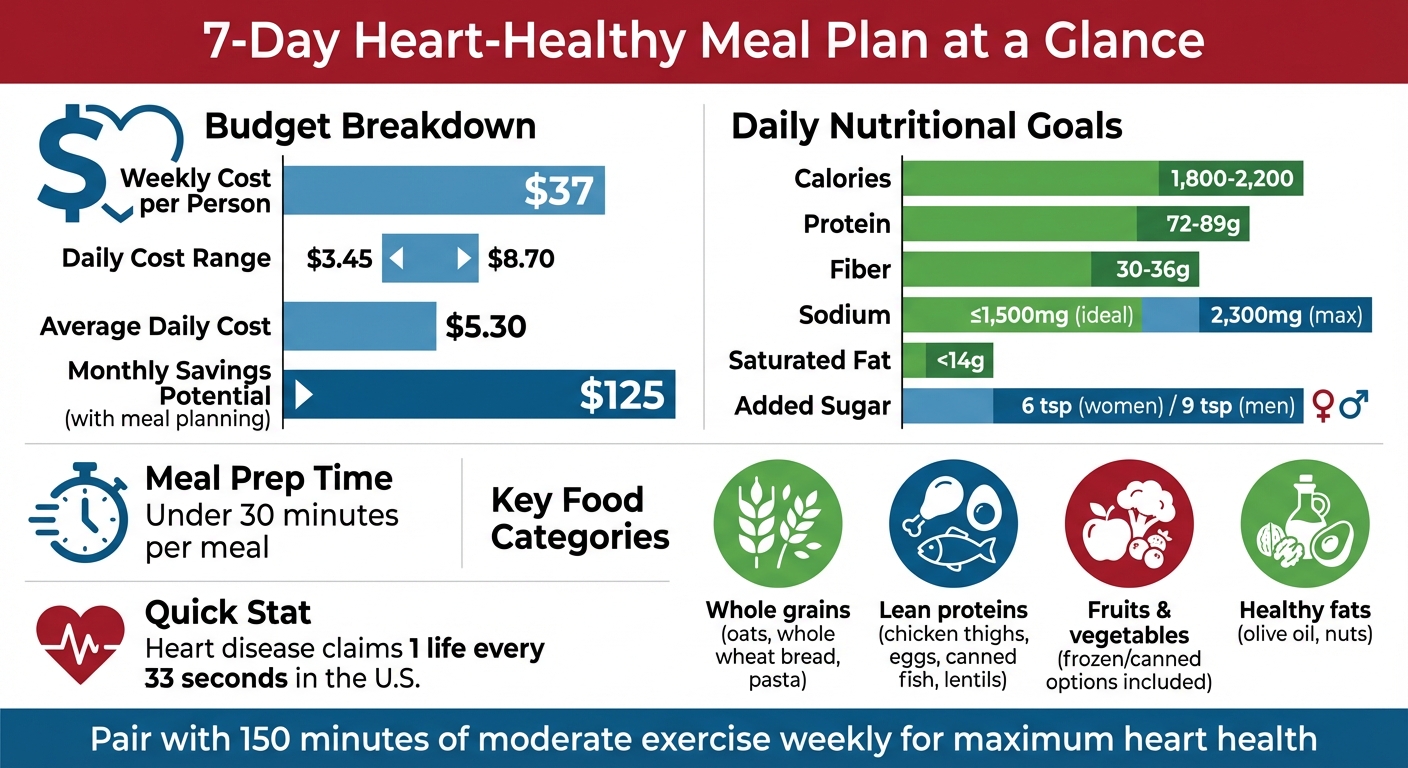
7-Day Heart-Healthy Meal Plan Overview: Budget, Nutrition Goals & Key Guidelines
Basics of Budget-Friendly Heart-Healthy Eating
Nutritional Guidelines to Follow
A heart-healthy diet typically includes 1,800–2,200 calories, 72–89 grams of protein, and 30–36 grams of fiber daily. These guidelines align with recommendations from the USDA and the American Heart Association, ensuring you get the nutrients you need while supporting cardiovascular health.
Keeping sodium in check is crucial. The American Heart Association suggests a daily limit of 2,300 mg, with an ideal goal of 1,500 mg for most adults - especially those managing high blood pressure. To reduce saturated fat, aim for less than 14 grams per day on an 1,800-calorie diet. This means swapping out butter and fatty meats for healthier options like olive oil, nuts, and fatty fish.
Added sugar is another area to watch. On average, Americans consume 17 teaspoons daily, far exceeding the recommended limits of 6 teaspoons for women and 9 teaspoons for men. High sugar intake - 20% or more of daily calories - has been linked to a greater risk of stroke and heart issues. Cutting back on sugary foods and drinks is a simple way to protect your heart.
Next, let’s explore ways to shop smarter while sticking to your heart-healthy goals.
Money-Saving Strategies for Heart-Healthy Foods
Eating heart-healthy doesn’t have to mean overspending. Start by choosing frozen or no-added-salt canned fruits and vegetables - they’re affordable, have a long shelf life, and help reduce food waste. Buying whole fruits like watermelon or pineapple and cutting them yourself can also save money compared to pre-packaged options.
Buying in bulk is another great strategy. Staples such as oats, brown rice, dried lentils, and chickpeas often cost less when purchased in larger quantities. Seasonal produce is typically more affordable too - think blueberries in the summer or apples in the fall. Local farmers' markets can also be a goldmine for fresh, inexpensive produce, as these items skip the costs associated with long-distance shipping. As the American Heart Association puts it:
"If you shop smart and plan ahead, you'll be surprised at how much good-for-you food you can buy without breaking the bank."
For proteins, budget-friendly options like chicken thighs, eggs, canned sardines in tomato sauce, and dried beans provide essential nutrients without the hefty price tag.
With these strategies, you can eat well while keeping your grocery bill in check. But there’s more - modern tools can help simplify meal planning even further.
How Honeydew Recipe Manager Makes Planning Easier
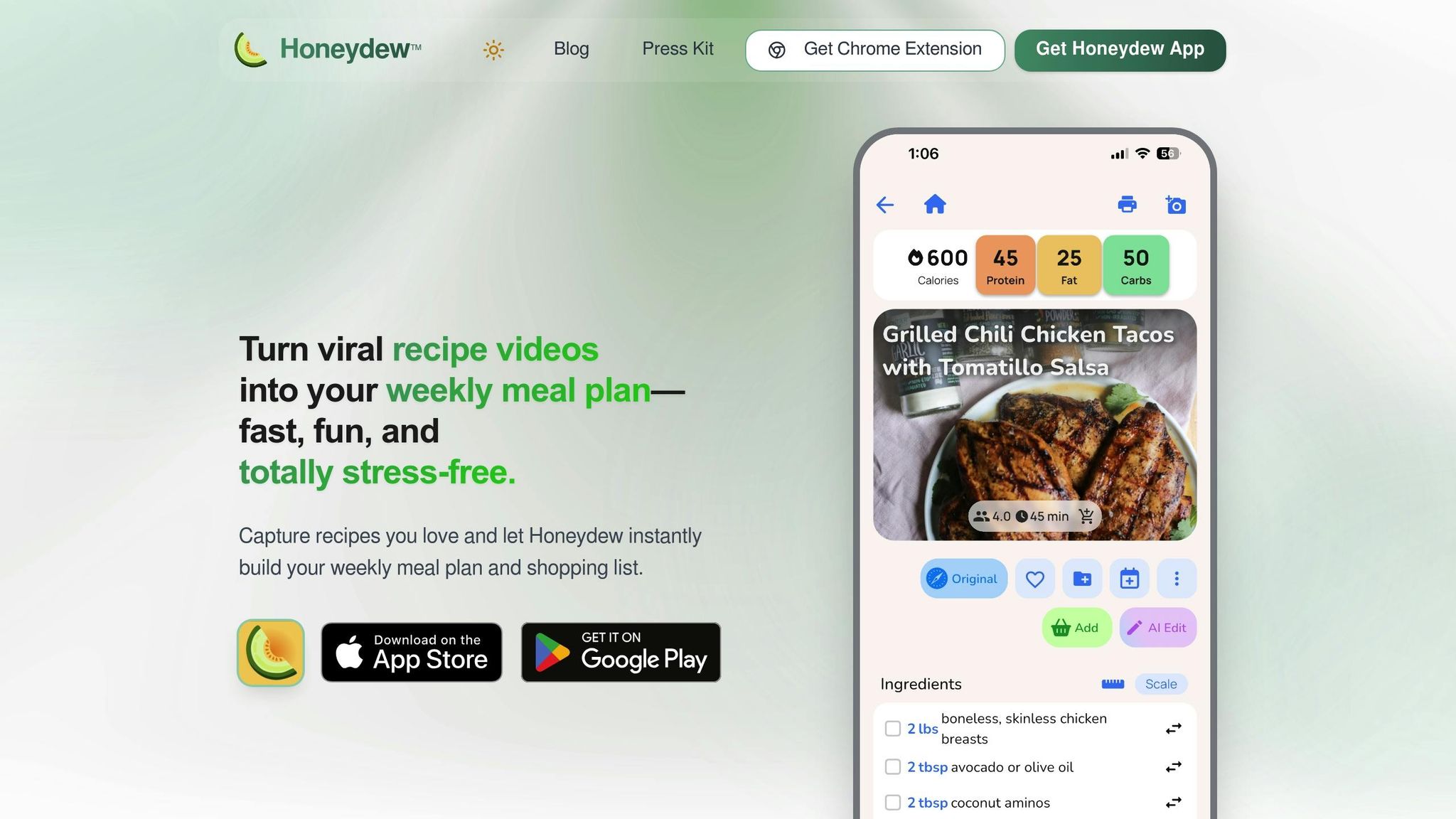
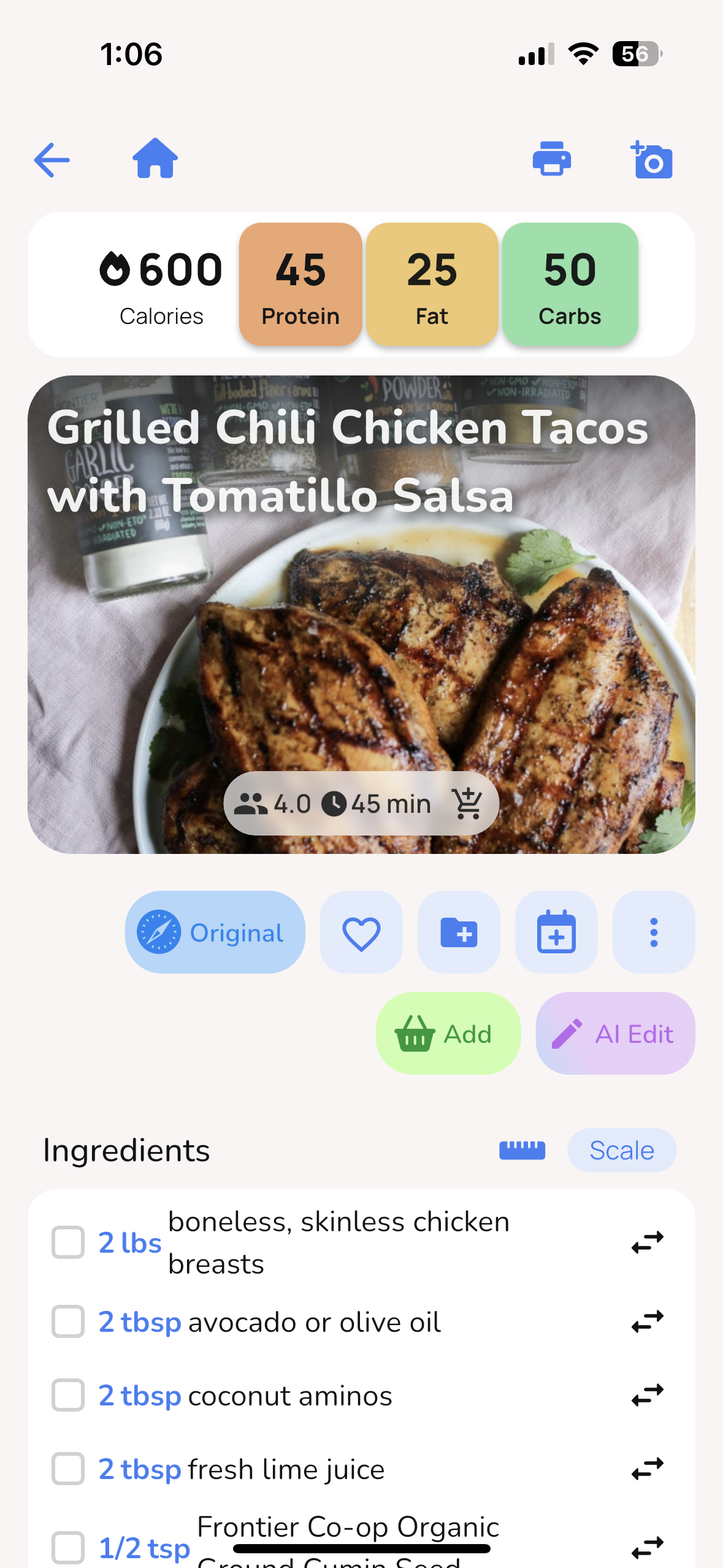
The Honeydew Recipe Manager is a game-changer for meal planning. Its AI-driven features make it easy to stay on track nutritionally and financially. Honeydew allows you to import recipes from websites or social media, categorizes ingredients, and creates aisle-sorted grocery lists to save time during shopping.
One standout feature is ingredient substitution. You can swap high-sodium items for healthier, low-sodium alternatives or replace expensive cuts of meat with affordable options like lentils, tofu, or chicken thighs. By making these adjustments, Honeydew ensures you stick to your heart-healthy goals without overspending.
With tools like Honeydew, meal prep becomes simpler and more efficient, helping you maintain your nutritional standards while staying within your budget.
7-Day Budget-Friendly Heart-Healthy Meal Plan
Daily Meal Breakdown
This meal plan is designed to be both affordable and quick, costing between $3.45 and $8.70 per day (averaging $5.30) and requiring less than 30 minutes of prep time per meal. It focuses on whole grains, lean proteins, and vegetables, keeping sodium below 1,500 mg and saturated fat under 14 grams daily.
| Day | Breakfast | Lunch | Dinner | Snacks |
|---|---|---|---|---|
| 1 | Porridge with sliced banana | Hummus Veggie Wrap (15 min) | Jacket potato with sardines in tomato sauce | Satsumas, unsalted peanuts |
| 2 | Overnight Oatmeal (10 min) | Lemony Garbanzo Salad (15 min) | 'Marry Me' Chicken with green beans | Apple, fat-free Greek yogurt |
| 3 | Boiled egg and tomato on whole wheat toast | Waldorf Turkey Pitas (15 min) | Black Beans and Pasta (25 min) | Carrot sticks, pear |
| 4 | Banana on whole wheat toast with yogurt | Tuna and White Bean Lettuce Wraps (20 min) | Cod and Asparagus Bake (30 min) | Plums, oatcakes with soft cheese |
| 5 | Whole Wheat Pancakes (25 min) | Egg, tomato, and cucumber sandwich | Mushroom and Cauliflower Frittata | Pear, unsalted peanuts |
| 6 | Southwest Tortilla Scramble (15 min) | Chicken Pasta Salad with hummus dressing (25 min) | Tuna and sweetcorn pasta bake | Apple, plums |
| 7 | Banana-Peanut Butter Yogurt Parfait | Indian-spiced scrambled eggs on toast | Apple-Cherry Pork Medallions (30 min) | Satsumas, carrot sticks |
The plan makes use of affordable, nutrient-dense proteins like canned sardines and chickpeas. These pantry staples are not only convenient and long-lasting but also provide heart-friendly nutrients such as omega-3s and fiber, while helping minimize food waste.
Recipes and Preparation Instructions
Here are a few simple recipes to help you stick to this heart-conscious meal plan:
- Overnight Oatmeal: Combine ½ cup rolled oats, ¾ cup low-fat milk, 1 tbsp chia seeds, and ½ sliced banana in a jar. Refrigerate overnight. In the morning, drizzle with honey and enjoy chilled or warmed.
- Hummus Veggie Wrap: Spread 3 tbsp hummus on a whole wheat tortilla. Add ½ cup shredded carrots, ½ cup sliced cucumber, ¼ cup diced bell peppers, and a handful of spinach. Roll it up, slice in half, and serve with an apple.
- Black Beans and Pasta: Cook 8 oz whole wheat pasta. In a skillet, sauté 2 minced garlic cloves in 1 tbsp olive oil. Stir in a 15-oz can of drained black beans, 1 cup diced tomatoes, 1 tsp cumin, and ¼ tsp black pepper. Simmer for 10 minutes, toss with pasta, and garnish with fresh cilantro.
- Cod and Asparagus Bake: Place 4 cod fillets (4 oz each) on a parchment-lined baking sheet, surrounded by 1 lb trimmed asparagus. Drizzle with 2 tbsp olive oil, squeeze fresh lemon juice, and season with garlic powder and black pepper. Bake at 400°F for 20 minutes, or until the fish flakes easily. This dish is a great source of lean protein.
Customizing Recipes with Honeydew
The Honeydew Recipe Manager simplifies meal planning and personalization. Its AI assistant, "Honey", adjusts recipes for various serving sizes, whether you're cooking for one or a larger group. Once you import any recipe, Honeydew generates an organized grocery list and calculates key nutritional details like calories, protein, and fiber.
The app also helps with ingredient substitutions. For example, if you need gluten-free pasta or are out of fresh tomatoes, Honeydew suggests alternatives - like canned diced tomatoes - and adjusts the recipe automatically. One user shared:
"The ingredient substitution feature is a game-changer for my dietary restrictions."
Honeydew also tracks your nutrition as you plan meals, keeping an eye on sodium, saturated fat, and fiber to ensure you're staying within heart-healthy limits. Plus, its Instacart integration lets you order all your groceries with just one click, saving time and reducing impulse buys. With a 4.8/5 star rating and over 90,000 recipes saved each month, Honeydew makes healthy meal planning easier than ever.
Complete Grocery List and Cost Breakdown
Shopping List by Category
Here’s a detailed grocery list designed to match the 7-day meal plan for one person. It’s organized by store sections to make your shopping trip as efficient as possible.
| Category | Item | Quantity |
|---|---|---|
| Produce: Vegetables | Onions (medium) | 1.5 |
| Carrots | 4 | |
| Garlic cloves | 6 | |
| New salad potatoes | 1 lb 7 oz | |
| Medium tomatoes | 6 | |
| Mixed salad leaves | 5.6 oz | |
| Cucumber | 0.5 | |
| Produce: Fruit | Bananas | 5 |
| Satsumas/Easy peelers | 6 | |
| Apples | 3 | |
| Pears | 5 | |
| Plums | 6 | |
| Proteins & Eggs | Chicken breasts (4 oz) | 1 |
| Chicken thighs | 1.1 lb | |
| Eggs | 6 | |
| Tinned sardines (in tomato sauce) | 4.2 oz tin | |
| Tinned tuna (in spring water) | 2.8 oz | |
| Split red lentils | 0.6 oz | |
| Grains & Bread | Whole wheat bread (loaf) | 1 |
| Rolled oats | 2.8 oz | |
| Pearl barley | 3.5 oz | |
| Dairy | Low-fat milk | 1 quart |
| Fat-free Greek yogurt | 8.8 oz | |
| Reduced-fat soft cheese | 5.3 oz | |
| Frozen | Peas | 10 oz |
Price Estimates and Shopping Integration
This entire list is estimated to cost about $37 for the week, based on typical U.S. grocery prices. It’s a budget-friendly plan that balances nutrition and affordability. For example, tinned fish provides an affordable way to include omega-3 fatty acids in your meals, while buying staples like oats and lentils in bulk helps lower costs per serving.
If you’re looking for a way to streamline your shopping even further, tools like Honeydew Recipe Manager can be a game-changer. This platform automatically generates shopping lists based on your meal plan and even integrates with Instacart for real-time pricing adjustments. According to users, this kind of AI-powered meal planning can save around $125 per month by cutting down on food waste and avoiding impulse buys.
With this list and a little planning, you’ll be set to shop smarter while sticking to your budget and supporting your health goals.
Tips for Saving Money and Improving Heart Health
Shopping Strategies That Save Money
When shopping for heart-healthy essentials, generic brands can stretch your dollars without compromising quality. Store-brand options like oats, canned beans, and whole-wheat pasta provide the same nutrition as name brands but at a lower price.
Frozen and canned foods are another budget-friendly solution. For example, canned sardines, tuna, and salmon are rich in heart-healthy omega-3s and cost much less than fresh seafood. Similarly, frozen peas and "no salt added" canned tomatoes offer the same nutritional punch as fresh produce while lasting longer, helping you avoid waste. Buying whole produce instead of pre-cut versions is another money-saver - a whole watermelon or a head of lettuce is far more economical than their pre-packaged counterparts.
"You can spend much the same as you do now and wind up with a heart-healthier diet." - Kerry Stewart, Ed.D., Professor of Medicine, Johns Hopkins
Efficient Meal Preparation Methods
Smart meal prep is key to saving money and eating well. Batch cooking is an excellent strategy - prepare large quantities of soups, chili, or grains over the weekend and freeze individual portions for quick, healthy meals during the week. Planning meals around what you already have in your pantry also reduces waste and unnecessary spending.
Another great tip? Use a "cook once, eat twice" approach. Roast a whole chicken for dinner, then use the leftovers for tacos, salads, or sandwiches later in the week. Save vegetable scraps like onion ends and carrot peels in your freezer to make homemade, low-sodium broth. Tools like Honeydew Recipe Manager even offer a pantry mode to help you track what’s already at home, so you can build meals around existing ingredients and avoid duplicate purchases.
Tracking Nutrition and Making Adjustments
To support heart health, aim to keep sodium intake under 1,500 mg per day and increase fiber consumption to 30 g or more. Digital tools like Honeydew's nutrition tracker can help by automatically calculating these numbers as you plan meals. If a recipe contains too much sodium, the app’s AI can suggest adjustments, such as lowering added salt or swapping canned vegetables for fresh ones.
Meal prep 3 heart healthy recipes for FALL to lower your cholesterol & blood pressure
Conclusion and Next Steps
This 7-day plan provides a step-by-step guide to affordable, heart-healthy eating. By sticking to key nutritional goals - keeping sodium under 1,500 mg daily, capping saturated fat at 14 g, and aiming for 30–36+ g of fiber each day - you can support healthier blood pressure and cholesterol levels. Considering that heart disease claims a life every 33 seconds in the United States, even small changes like these can make a big difference for both your health and your wallet.
The best part? You can follow this plan for just $29 per person per week. Thoughtful meal planning helps cut down on impulse buys and food waste, while prep-ahead options like overnight oats or batch-cooked soups ensure you always have something nutritious on hand, even on busy days.
If you want to keep going after this week, try mixing and matching recipes with similar calorie and nutrient profiles. Adjust portions to meet your energy needs, and don’t hesitate to repeat meals you love - eating the same breakfast or lunch every day can save both time and money. Pairing this eating plan with at least 150 minutes of moderate exercise each week can provide even greater protection for your heart.
To make meal planning easier, tools like Honeydew Recipe Manager can be a game-changer. It allows you to import heart-healthy recipes from your favorite websites or social media, create instant grocery lists organized by store section, and track your daily nutrition goals for sodium, fiber, and saturated fat. The AI meal planner can generate weekly menus in seconds, and the pantry mode helps you use up ingredients you already have, reducing waste and saving money. With features like household sharing for up to six people and smart ingredient substitutions, eating heart-healthy meals becomes simple and stress-free. Start using Honeydew Recipe Manager today to take your meal planning to the next level.
FAQs
How can I adjust the meal plan for my dietary needs?
You can easily tweak the meal plan to fit your dietary needs by swapping ingredients based on your preferences or restrictions. For instance, if you’re cutting back on sodium, try seasoning with fresh herbs, spices, or a splash of citrus instead of salt. Looking for plant-based options? Swap out animal proteins for beans, lentils, tofu, or other plant-based choices.
The Honeydew Recipe Manager makes this process even easier with its ingredient substitution feature. It lets you customize recipes, track nutrition, and build a meal plan tailored to your goals - whether that’s heart-healthy, low-sodium, or vegetarian. Plus, the tool simplifies meal planning by letting you import recipes and adjust them seamlessly to fit your lifestyle.
How can I lower sodium and saturated fat in my meals?
Reducing sodium and saturated fat in your meals can be simpler than you might think. One great starting point is to focus on fresh, whole foods rather than processed ones, which often pack in loads of salt and unhealthy fats. To keep your meals flavorful without relying on salt, experiment with herbs, spices, garlic, or citrus - they can add a ton of taste without the extra sodium.
For proteins, go for lean options such as skinless chicken, fish, or plant-based alternatives. Swap out full-fat dairy for low-fat or fat-free versions to help reduce saturated fats. Also, how you cook makes a difference - baking, grilling, or steaming your food can help you avoid unnecessary fats that come with frying. And don’t forget to load up on fruits, vegetables, whole grains, and legumes. These not only support heart health but also make your meals more balanced and satisfying.
How can the Honeydew Recipe Manager help me plan budget-friendly, heart-healthy meals?
The Honeydew Recipe Manager makes planning heart-healthy, budget-friendly meals a breeze. You can easily import recipes from social media, websites, or even photos, and it automatically creates organized grocery lists based on your meal plans. This means you can shop smarter and avoid unnecessary spending.
With handy tools like ingredient substitution and AI-powered meal suggestions, Honeydew helps you use what’s already in your kitchen, cutting down on food waste and saving money. By simplifying meal prep, planning, and shopping, it’s never been easier to stick to your budget while enjoying delicious, nutritious meals.