Challenges of IoT Kitchen Device Compatibility
• Updated
IoT kitchen devices promise convenience, but compatibility issues often make the experience frustrating. Here’s the problem: most brands create closed ecosystems, forcing users to manage separate apps and systems. On top of that, devices often rely on different communication protocols like Wi-Fi, Zigbee, or Bluetooth, which don’t always work well together. This leads to setup headaches, connection failures, and limited automation.
The good news? Standardized protocols like Matter are changing the game. Matter-certified devices let you connect products from different brands seamlessly, using a single app or voice assistant. For instance, your fridge can sync with your oven without extra hubs or apps. By early 2026, over 750 products support Matter, with major brands like Samsung and GE Appliances on board.
Key Takeaways:
- Main Issues: Brand-specific apps, poor cross-device communication, and outdated protocols.
- Solution: Use Matter-certified devices for universal compatibility and easier setup.
- Next Steps: Upgrade old devices, check for firmware updates, and use smart apps for central control.
Want a smarter, frustration-free kitchen? Focus on Matter-certified devices and reliable network setups to simplify your IoT experience.
IoT Kitchen Device Compatibility Statistics and Matter Protocol Benefits
Main Compatibility Problems in IoT Kitchen Devices
Brand-Specific Protocols and Poor Cross-Brand Communication
Many IoT kitchen devices are stuck in isolated ecosystems, often referred to as the "island effect." Companies like Samsung (SmartThings) and LG (ThinQ) design their products to operate within their own ecosystems, limiting how well they work with devices from other brands. For example, a Samsung smart oven might not communicate with an LG refrigerator because they use different protocols. This happens because manufacturers often treat their APIs as proprietary, only granting access to select partners and blocking independent integrations.
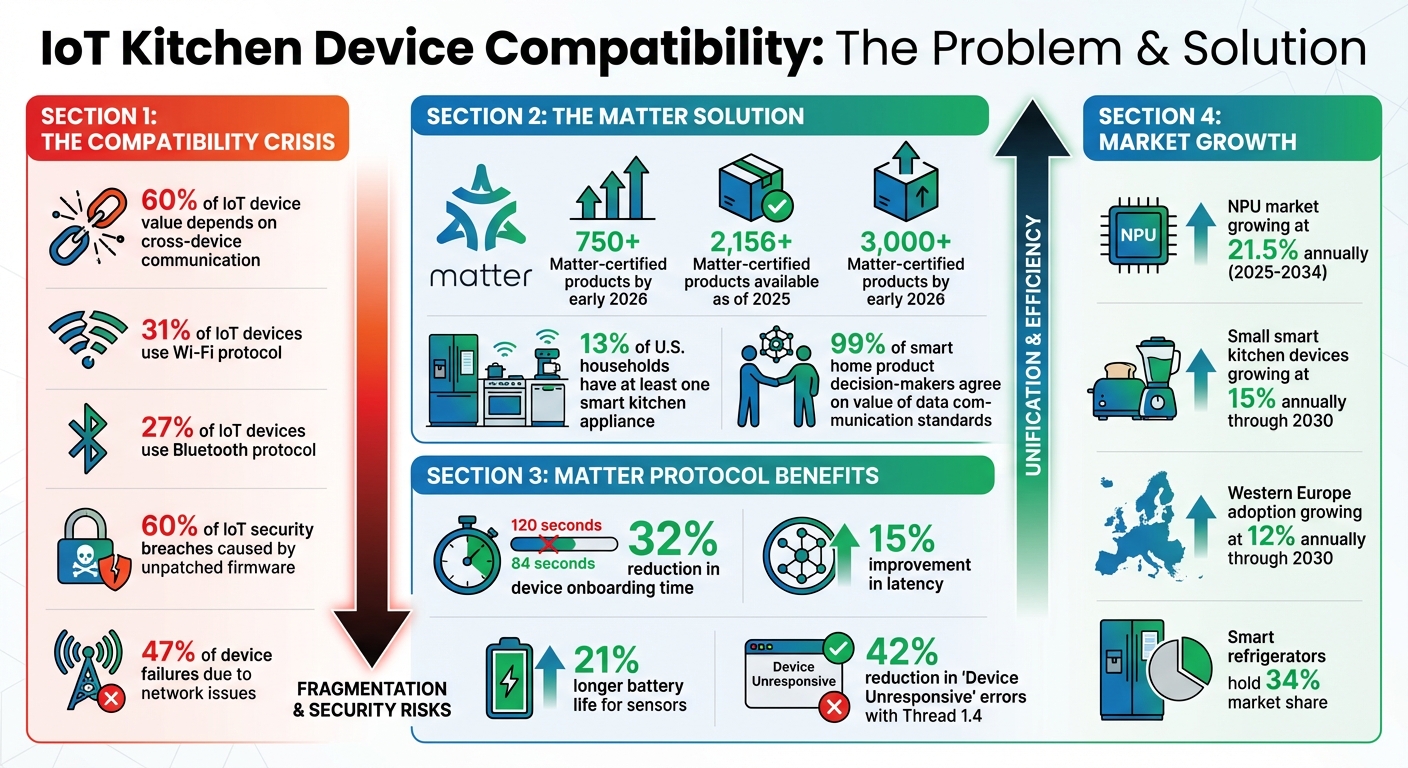
As a result, users are left juggling multiple apps - each tied to a specific brand - with separate cloud services and interfaces. This lack of cooperation between devices is more than an inconvenience; it directly impacts the value users get from their IoT setups. For example, fragmented systems can hinder smarter ingredient prep when smart scales and ovens fail to sync. In fact, about 60% of the value from IoT devices depends on how well they can work together.
"The market is very fragmented, especially due to incompatibilities between brands, and a common effort is needed to reach common standards for communication." - Pandora FMS Editorial Team
Even when devices share a protocol, they often face connection issues, making the setup process even more frustrating for users.
Connection and Setup Difficulties
While shared protocols like Wi-Fi and Bluetooth dominate IoT connections - accounting for 31% and 27% respectively - they weren't designed with kitchen environments in mind. Physical barriers like walls or metal appliances can weaken signals, leading to unreliable connectivity.
The setup process itself can also be a headache. Adding a new device often involves downloading a specific app, creating an account, and connecting to a 2.4 GHz Wi-Fi network (since many smart devices don’t support 5 GHz). Each device has its own pairing process, which can vary widely. On top of that, time-based automations, such as scheduling your oven to preheat at 5:30 p.m. using AI meal planning with pantry integration, may fail if the system doesn’t automatically adjust for Daylight Saving Time changes.
These challenges don’t stop at initial setup. Adding new devices or upgrading existing ones introduces even more hurdles.
Expanding Multi-Device Kitchens
As kitchens become more connected, integrating new devices into existing networks becomes increasingly complex. One major issue is the lack of compatibility between older and newer devices. Many older appliances don’t support newer standards like Matter, which reached version 1.4 in November 2024. For instance, a three-year-old smart dishwasher might not be able to communicate with a brand-new Matter-certified coffee maker.
This gap between old and new technology creates real problems. Unpatched firmware is responsible for 60% of IoT security breaches. Yet, updating older devices often breaks their compatibility with other appliances in your network. This forces users into a tough choice: prioritize security or maintain functionality.
Google Home + Home Assistant: The Ultimate Smart Home Upgrade
How Standardized Protocols Fix IoT Kitchen Compatibility
Standardized protocols like Matter offer a way to tackle the compatibility issues that often plague IoT kitchens.
How the Matter Protocol Works in IoT Kitchens
Matter solves the problem of device isolation by establishing a universal language that devices can use, no matter the manufacturer. Instead of relying on separate bridges or translators, Matter brings together existing technologies like Wi‑Fi, Thread, and Ethernet. It uses standardized "clusters" to define device functions - think On/Off, Temperature, or Level Control. This allows devices from different brands to work together seamlessly. For instance, a range hood can automatically sync with an oven's activity without requiring extra setup.
Another standout feature of Matter is its multi-platform support. A single appliance can connect to multiple smart home systems, such as Apple Home, Alexa, and Google Home, at the same time. This means one person in the household can use Siri on their iPhone while another uses Alexa on a smart speaker, all without disrupting the appliance's settings.
"Matter devices work with all of them and can be part of multiple platforms at the same time."
- Jennifer Pattison Tuohy, Senior Reviewer, The Verge
These technical advancements translate into real-world benefits for smart kitchens.
Practical Benefits of Standardization
With standardized protocols, kitchen appliances can communicate locally, ensuring instant responses to commands - even if the internet goes down. Adding a new appliance is as simple as scanning a QR code or tapping your phone, eliminating the need for brand-specific apps with smart meal planning tools. For older devices, Matter Bridges can convert signals from legacy Zigbee or Z-Wave sensors, making them compatible with the Matter ecosystem. Recent updates to the protocol now include energy management features, offering a single dashboard to track power usage across all connected appliances.
These improvements have encouraged major brands to adopt Matter, bringing smarter solutions to modern kitchens.
Major Kitchen Appliance Brands Adopting Matter
By early 2026, more than 750 products had achieved Matter certification. Top brands are integrating Matter into their devices to improve compatibility. For example, Samsung unveiled its Bespoke AI Refrigerator Family Hub in February 2026. This fridge not only acts as a Matter-compatible hub but also uses AI Vision technology to identify 37 types of fresh food and 50 types of processed food, managing ingredient lists through the SmartThings app.
Around the same time, GE Appliances launched 39 smart wall oven models under its Monogram, GE Profile, and CAFÉ lines. These ovens feature "CookCam" AI technology, which suggests precise cooking modes, and connect to services like HelloFresh and Instacart through the SmartHQ ecosystem.
"With this new oven line-up, we're solving real, everyday challenges by blending smart design with thoughtful technology."
- Rachael Schwartz, Executive Director of Built-in Cooking, GE Appliances
Matter continues to expand its functionality, improving appliance compatibility and adding features like enhanced energy management. When you buy a Matter-certified appliance, it can receive updates that enhance its capabilities - no need for a replacement. This ongoing development highlights the importance of standardized protocols in creating a more connected and efficient IoT kitchen.
How to Build a Compatible IoT Kitchen
Creating a kitchen where all your smart devices work together takes some planning and regular upkeep. With over 2,156 Matter-certified products available as of 2025, achieving a unified system is easier than ever.
Check and Upgrade Your Current Devices
Start by taking stock of your smart kitchen devices. Note the brand and protocol each device uses (Wi-Fi, Zigbee, Z-Wave, or Bluetooth). Check if your devices already support Matter or if a firmware update can add compatibility. For instance, TP-Link has made dozens of its Wi-Fi products Matter-compatible through free firmware updates, so it’s worth visiting the manufacturer’s website to see what’s available.
Next, consider upgrading your router to a Wi-Fi 6 model with IPv6 support. Network issues are responsible for 47% of device failures, so a robust router can make a big difference. Adding Thread Border Routers, like the Apple HomePod mini ($100), Google Nest Hub, or Amazon Echo 4th Gen, can also help maintain stable connections.
For older Zigbee devices, you can use Matter Bridges like the Philips Hue Bridge or Aqara Hub M1S to convert their signals. If you need smart plugs, Matter-certified options range from $12 to $40. Keep in mind that different platforms support different Matter versions. For example, in early 2026, Samsung SmartThings supports Matter 1.5, while Google Home is on version 1.2. Always check your platform’s version to ensure compatibility with new devices and retain advanced features.
These steps will help you build a solid foundation for integrating your devices with smart apps.
Use Smart Apps for Better Integration
Once your devices are upgraded and connected, simplify control by using smart apps. Platforms like Google Home, Amazon Alexa, and Apple Home allow you to manage devices from various manufacturers within a single interface. This eliminates the hassle of switching between multiple brand-specific apps. You can even set up routines - like using a single voice command, such as "Start dinner prep", to turn on the range hood, preheat the oven to 375°F, and adjust the lighting.
For meal planning and recipe management that syncs with your smart appliances, Honeydew Recipe Manager (https://honeydewcook.com) is a handy tool. It lets you import recipes from social media, create grocery lists instantly, and plan weekly meals. Through its Instacart integration, you can order ingredients directly. Additional features like AI-generated meal plans, ingredient substitutions, and nutrition tracking make it easy to adapt recipes to your dietary needs.
"99% of decision-makers in smart home product companies agree on the value of data communication standards."
- Jabil Smart Home Technology Trends Survey
Test and Maintain Your IoT Kitchen System
After setting everything up, test your system to ensure it works smoothly and schedule regular maintenance. For example, check if the extractor hood activates when the cooktop reaches high heat or if time-based triggers adjust properly for Daylight Saving Time. Be mindful of potential issues, like conflicting conditions where two apps try to control the same device simultaneously. To avoid disruptions, design critical automations to run locally on the Matter fabric, so they function even during internet outages.
Securing your IoT network is another must. Use a guest network and disable UPnP and WPS to minimize vulnerabilities. Since unpatched firmware accounts for 60% of IoT security breaches, schedule monthly checks to ensure all firmware is up to date and that battery-powered sensors are charged. Matter 1.3 and later versions make maintenance easier by allowing appliances, like extractor hoods, to send proactive notifications when filters need replacing.
Homes using Thread 1.4-certified Border Routers have seen a 42% drop in "Device Unresponsive" errors compared to older 1.3 setups in late 2025. To keep your system running smoothly, back up configurations before major updates and use diagnostic tools to monitor your network’s health over time.
The Future of IoT Kitchen Compatibility
New Developments in IoT Kitchen Technology
The smart kitchen is getting smarter, thanks to cutting-edge advancements like edge AI. With embedded NPUs (neural processing units), devices can now recognize food and adjust cooking settings in real time without relying on the cloud. This shift toward local intelligence is significant, with the NPU market expected to grow at an annual rate of 21.5% between 2025 and 2034.
Another key development is Thread 1.4, which became mandatory on January 1, 2026. This protocol enables seamless credential sharing across devices from Apple, Amazon, and Google. Meanwhile, Wi-Fi 7 is stepping in to handle high-bandwidth tasks like streaming recipes or cooking tutorials to smart displays. Together, these technologies create a dual-network system designed for efficiency.
"Thread 1.4 is a pretty big push toward avoiding the walled garden"
- Aaron Striegel, Professor of Computer Science and Engineering at the University of Notre Dame
Smart kitchens are also integrating real-time health data and augmented reality (AR) interfaces. These features offer personalized cooking guidance tailored to dietary needs. For example, Honeydew Recipe Manager (https://honeydewcook.com) uses AI to generate meal plans, suggest ingredient swaps, and track nutrition - all in sync with connected appliances.
Unified platforms like Fresco's KitchenOS are helping to bridge compatibility gaps between brands. Using standardized MQTT messaging, these systems allow appliances from different manufacturers to work together. Imagine your smart fridge "telling" your oven how to cook something - this is already becoming a reality. By early 2026, about 13% of U.S. households had at least one smart kitchen appliance, with small devices like smart blenders and coffee makers leading the charge, growing at an estimated 15% annual rate through 2030.
These innovations not only improve day-to-day functionality but also set the stage for longer-lasting benefits.
Long-Term Advantages of Standardized Systems
Standardization in smart kitchen tech offers more than just convenience - it brings reliability, energy efficiency, and a future-proof foundation to your home. By resolving current compatibility issues, universal protocols simplify setup and enhance overall efficiency.
In a study conducted at Global Engineering College in Bangalore between May and August 2025, researchers tested Matter 1.4.2 with 50 devices from five vendors. The results were impressive: onboarding time dropped by 32% (from 120 to 84 seconds), latency improved by 15%, and battery-powered sensors lasted 21% longer due to synchronized sleep cycles.
Local-first reliability is another game-changer. Devices can communicate directly over your home network, ensuring automations continue to work even if the internet goes down. Energy management is smarter too. Appliances can coordinate with solar panels or batteries to perform energy-intensive tasks like dishwashing during off-peak hours, cutting utility bills. This trend is already gaining traction in Western Europe, where government energy efficiency standards are driving adoption at a projected 12% annual growth rate through 2030.
For manufacturers, standardized systems eliminate the need to create separate integrations for every platform.
"Matter is no longer an 'emerging' standard; it is the baseline requirement for market entry in the IoT space"
- Devin Rosario, Technical Product Owner
This shift frees up developers to focus on creating better features, rather than troubleshooting compatibility issues. Predictive maintenance is one example of what's possible. By analyzing performance data across devices, manufacturers can offer proactive servicing, extending the life of your appliances. Accessibility is also improving, with many platforms meeting Web Content Accessibility Guidelines (WCAG) AA standards, ensuring these technologies are usable for everyone, regardless of age or ability.
The financial benefits are hard to ignore. Consumers save money by avoiding incompatible products and steering clear of vendor lock-in. With over 3,000 Matter-certified products available as of early 2026, the ecosystem has reached a tipping point. While smart refrigerators currently dominate the market with a 34% share, the fastest growth is happening in smaller devices and energy-smart cooking systems that adjust to real-time grid costs.
Conclusion: Making IoT Kitchens Work Better
The main hurdle in creating a truly smart kitchen lies in compatibility. Devices from different brands often operate in silos due to proprietary protocols, leaving users juggling multiple apps and enduring complicated setups. This lack of integration doesn't just waste time - it can also drive up costs.
Standardized protocols like Matter address this issue by enabling devices to "speak the same language." With a single app and plug-and-play functionality, users can enjoy a smoother, more secure smart kitchen experience. Industry experts back this approach:
"By adopting a universal IoT standard like Matter, you'll eliminate many of the inoperability issues by creating a system that communicates easily with others." - The SSL Store Editorial Team
Smart apps also play a crucial role in bridging these gaps. Take Honeydew Recipe Manager (https://honeydewcook.com) as an example. This platform simplifies meal planning by importing recipes from social media, generating grocery lists instantly, and syncing with connected appliances. When paired with Matter-certified devices, such apps create a cohesive ecosystem where appliances work together seamlessly.
To make the most of these advancements, focus on choosing Matter-certified devices, hubs that work across platforms, and appliances that support automatic firmware updates. This is especially important given that unpatched firmware accounts for 60% of IoT security breaches.
FAQs
Do I need a hub to use Matter in my kitchen?
No, you don’t always need a hub to use Matter in your kitchen. Matter is built to integrate smoothly with most existing smart home systems and can operate either with or without a dedicated hub, depending on the devices you have and your particular setup.
Can my older smart appliances be upgraded to Matter?
Older smart appliances might not work with the Matter standard right away. Whether they can be upgraded depends on two main factors: if the manufacturer offers firmware updates and if the device's hardware can handle Matter. If neither is an option, you may need to consider replacing the appliance with a newer model that supports Matter. To figure out your options, contact the manufacturer or retailer for details on upgrades and future compatibility.
How do I fix smart kitchen devices that keep disconnecting?
If your IoT device isn’t working as expected, start by checking your Wi-Fi network. Many IoT devices operate on the 2.4 GHz band, so make sure your router supports it. Restart both your router and the device to refresh the connection, and try to keep the device close to the router to avoid weak signals.
Make sure the device firmware and any related apps are updated - outdated software can often cause issues. If your network has too many connected devices, it might be overloaded. In that case, you can optimize your setup or think about upgrading to a more powerful router. And if none of this works, reach out to customer support for further help.