How to Clean a Sous Vide Machine
• Updated
Your sous vide machine needs regular cleaning to maintain precise cooking, prevent bacteria buildup, and extend its lifespan. Without proper care, mineral deposits from tap water can reduce heating efficiency, clog water flow, and cause mechanical issues. Food particles from leaks or spills can also lead to contamination and unpleasant odors. Here's a simple breakdown to keep your machine in top condition:
- Daily Cleaning: Wipe down surfaces with soapy water, clean removable parts, and dry everything thoroughly.
- Weekly Descaling: Use a vinegar-water solution (1:1 ratio) or a mild cleaning agent to remove mineral buildup. Run the machine in the solution at 140°F for 45–60 minutes.
- Deep Cleaning: For stubborn buildup or leaks, disassemble removable parts, scrub internal components with a soft brush, and rinse carefully.
Avoid submerging electronics, using abrasive tools, or skipping routine maintenance. Proper storage in a cool, dry spot further ensures longevity. Regular cleaning keeps your sous vide machine efficient, safe, and ready for perfect cooking results.
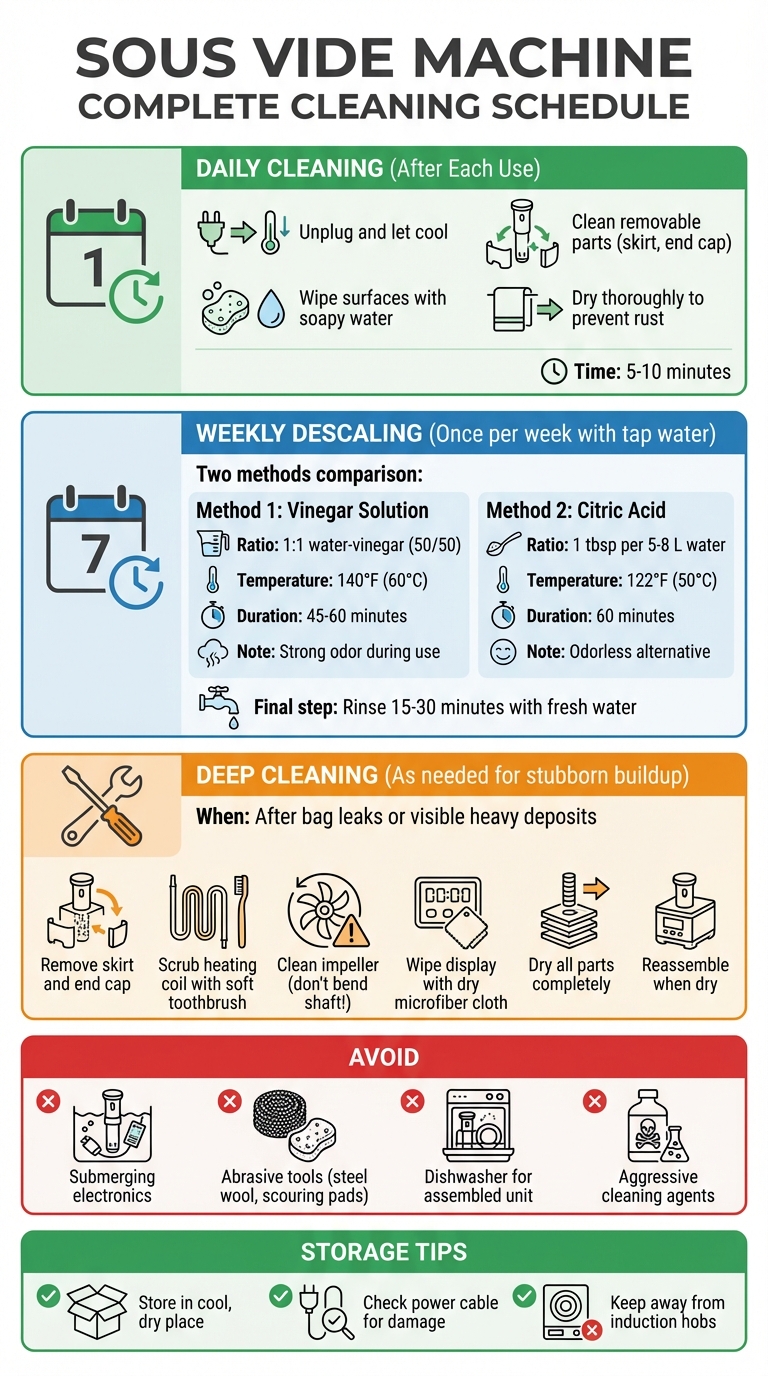
Complete Sous Vide Machine Cleaning Schedule: Daily, Weekly, and Deep Clean Steps
How to Clean Your Sous Vide Cooker | Fast & Easy! 🧼
Why You Need to Clean Your Sous Vide Machine
Precision in temperature control is the heart of sous vide cooking, but minerals from tap water can throw everything off balance. Over time, calcium and lime deposits build up on the heating element, forming a barrier that reduces its efficiency. Gary Logsdon from Amazing Food Made Easy points out the mechanical toll this takes:
If these deposits get heavy enough, they can reduce the efficiency of the heating element and/or cause issues with the spinning impeller.
This loss of efficiency doesn’t just make cooking less precise - it can lead to bigger problems down the line.
Another hidden issue is how these deposits can hinder water circulation, creating uneven temperatures in the water bath. These cold spots don’t just mess with your cooking results - they can also pose serious food safety risks.
Beyond these immediate concerns, food contamination becomes a real possibility if something goes wrong during cooking, like a leaky bag or a cracked egg. Grease, food particles, and proteins can stick to the internal parts of your sous vide machine. If not cleaned promptly, these residues harden, making them tough to remove. Over time, they can cause cross-flavors in your food, introduce harmful bacteria, and even damage the machine’s components.
Skipping regular maintenance doesn’t just affect cooking quality - it speeds up wear and tear on essential parts. Mineral buildup can lead to overheating, leaks, and even motor failure. Depending on your water source, these deposits can appear in a variety of colors - white, brown, black, or even green. What starts as a barely noticeable film can quickly grow into a thick layer that damages sensors and blocks water flow, eventually leading to costly repairs or a complete replacement.
Luckily, the solution is simple: clean your sous vide machine after every use and descale it weekly if you’re using tap water. A quick wipe-down after cooking and a weekly vinegar bath can prevent heavy buildup. With this routine care, your machine will heat more effectively, maintain precise temperatures, and last much longer.
What You Need to Clean Your Sous Vide Machine
Keeping your sous vide machine in top shape doesn’t require any fancy tools. In fact, most of what you’ll need is probably already in your home. With just a few everyday items, you can handle both routine maintenance and deeper cleaning tasks. Here’s a breakdown of the essentials and some optional tools that can make the process even easier.
Basic Cleaning Supplies
For regular descaling, a simple mix of white vinegar and water (1:1 ratio) does the trick. If you’re dealing with tougher mineral buildup, you can use a CLR solution mixed at a 1:9 ratio (CLR to water).
To tackle grease and food residue, a bit of mild dish soap works wonders. A soft toothbrush is perfect for scrubbing those tricky spots, like the heating coil or impeller. And don’t forget to have some microfiber cloths or rags on hand - they’re great for wiping down the exterior and display without leaving scratches.
Optional Tools for Better Cleaning
If you want to go the extra mile, a bottle brush can help you reach into narrow heating chambers that a toothbrush might not be able to clean thoroughly. A 2-quart pitcher can be useful for creating a contained cleaning bath, helping you conserve vinegar or CLR.
For those dealing with hard water, using distilled water in your cooking bath can help minimize mineral buildup over time. Additionally, some sous vide models feature dishwasher-safe skirts and end caps, making cleanup even simpler.
With these essentials and a few optional tools, keeping your sous vide machine clean and efficient is straightforward and hassle-free.
How to Clean Immersion Circulators
Keeping your immersion circulator clean ensures it operates efficiently and avoids potential problems down the line.
Daily Cleaning Steps
After each use, unplug the circulator and let it cool before starting the cleaning process. Once it’s cooled, use a damp, soapy cloth to wipe down all the parts that were submerged in water. Pay extra attention to the areas around the heating element and nearby components, as these spots can trap food particles or grease - especially if a cooking bag leaked.
Be careful not to submerge the electronic head or display in water, as this can cause irreversible damage. If your circulator has a removable stainless steel skirt and end cap, detach them for separate cleaning. Use a soft toothbrush with mild dish soap to gently clean around the impeller and heating coils, being cautious not to bend the impeller shaft. For the display, wipe it with a damp microfiber cloth, dry it immediately, and reassemble the unit only after all parts are completely dry. This helps prevent rust and unwanted odors.
For mineral buildup that accumulates over time, move on to the weekly descaling process.
Weekly Descaling Steps
Tap water can leave behind mineral deposits on the heating element and impeller, which can reduce the circulator’s performance. To keep it running smoothly, descale it weekly. Fill a narrow container, like a 2-quart pitcher, with a descaling solution up to the circulator's fill line. This setup minimizes waste while ensuring thorough cleaning.
Run the circulator in the descaling solution for the recommended time, then rinse it for 15–30 minutes with fresh water to remove any acidic residue. If you’re dealing with stubborn deposits, mix a 10% CLR solution (10% CLR, 90% water), heat it to 140°F, and let the circulator run in it for 60 minutes. Afterward, rinse thoroughly to remove any remaining cleaner.
Table: Vinegar vs. Citric Acid Cleaning
| Method | Mixture Ratio | Temperature | Duration |
|---|---|---|---|
| Vinegar | 50/50 water-vinegar | 140°F (60°C) | 45–60 minutes |
| Citric Acid | 1 tbsp per 5–8 L water | 122°F (50°C) | 60 minutes |
Vinegar is a convenient and effective choice for regular maintenance, though it has a strong odor during use. Citric acid, on the other hand, is odorless and works well at lower temperatures, making it a great alternative for those who prefer to avoid vinegar smells.
How to Deep Clean Your Sous Vide Machine
When mineral deposits refuse to budge or you've had the unfortunate experience of a bag leak, it's time to give your sous vide machine a thorough cleaning. These steps apply to models with accessible parts, like the Anova Precision Cooker, but not to sealed models such as the Anova Nano. Use this guide when regular maintenance isn't enough to tackle stubborn buildup or after a bag leak.
Cleaning the Skirt and End Cap
Start by unplugging your circulator and letting the water cool completely. Then, remove the skirt and end cap following the instructions provided by the manufacturer. These stainless steel components are often dishwasher-safe, making cleanup easier. If you prefer to hand wash, use warm water and a bit of mild dish soap. Once cleaned, dry the parts thoroughly to prevent rust before reassembling.
Cleaning Internal Parts
With the skirt removed, you'll have access to the heating coil, impeller, pump shaft, and sensors. Use a soft toothbrush and mild dish soap to gently scrub these internal components, focusing on areas with visible buildup. Be careful not to bend the impeller shaft during cleaning. As Anova Culinary notes:
When cleaning the unit make sure you do not bend the impeller shaft. If you do it may rub against the steel skirt after you reassemble it.
Rinse everything carefully with warm water, ensuring the electronic head remains completely dry. If you're cleaning a ChefSteps Joule, unscrew the foot by turning it counterclockwise, and use a bottle brush to clean the heating cavity.
Cleaning the Display and Probes
Keep the electronics safe from moisture. Wipe the display and surrounding areas with a dry microfiber cloth. If there's grime, lightly dampen the cloth, but avoid letting moisture near the electronics. For internal sensors on accessible models, you can use the same soft toothbrush technique. Make sure everything is completely dry - especially around the power connectors - before reassembling the circulator.
How to Keep Your Sous Vide Machine in Good Condition
To keep your sous vide machine running smoothly, regular maintenance is key. These habits not only ensure your device stays precise but also help extend its lifespan. A little care goes a long way in preventing expensive repairs or replacements.
Common Cleaning Mistakes to Avoid
When cleaning your sous vide machine, a few missteps can lead to damage. Here’s what to watch out for:
- Keep electronic components dry. Always ensure the control panel and power assembly stay above water. Moisture can easily damage these parts.
- Skip the dishwasher. While it might be tempting, running the assembled unit through a dishwasher can cause water damage. Hand washing gives you better control and helps protect sensitive components.
- Avoid abrasive tools. Steel wool or scouring pads can scratch and harm your machine. Instead, opt for soft toothbrushes or a gentle vinegar bath. Alessandro Lombardo advises:
Never use aggressive cleaning agents or abrasives. Do not use solvents or petrol-based cleaning agents. Some cleaning agents may leave harmful residues or cause damage to the machine.
- Remove moisture immediately after use. Stagnant water encourages mineral buildup and bacterial growth. If you have hard tap water, switching to distilled water for your water bath can cut down on how often you need to descale.
Once your machine is clean, proper storage is the next step to keeping it in top shape.
How to Store Your Sous Vide Machine
Storing your sous vide machine correctly ensures it stays in good working order between uses.
- Thoroughly dry all surfaces. Use a clean, absorbent cloth to remove any lingering moisture, especially around the skirt, end cap, and heating element. Moisture left behind can lead to rust or mold.
- Choose a cool, dry storage spot. Keep your machine away from humidity, and don’t wrap it in plastic wrap. Trapped humidity can damage the ventilation grid and other components.
- Inspect the power cable before storage. Check for any frays or damage, as a compromised cable is both a safety risk and a potential cause of equipment failure. Also, store your circulator away from induction hobs, as their electromagnetic fields can interfere with the machine’s temperature sensors.
Conclusion
Keeping your sous vide machine clean isn’t just about appearances - it’s essential for maintaining cooking performance and extending the life of your equipment. Over time, mineral deposits from tap water can build up, reducing the machine’s heating efficiency and disrupting water circulation. This can lead to uneven temperatures, which can throw off your cooking results. Regular cleaning also helps prevent rust, lime buildup, and unnecessary strain on the motor.
Thankfully, the cleaning process is simple. After each use, make sure to dry your machine thoroughly. Every so often, run a vinegar bath to break down mineral buildup on the heating coils and other internal components. If you notice any leaks, tackle them right away with a deep clean to avoid bacterial growth.
FAQs
What happens if I don’t clean my sous vide machine regularly?
Neglecting to clean your sous vide machine isn’t just about appearances - it can cause mineral deposits, food residue, and other contaminants to build up. Over time, this gunk can mess with the machine’s heating and water circulation, leading to uneven cooking and even strange, unpleasant flavors in your meals.
But that’s not all. The warm, humid environment inside the machine is the perfect spot for bacteria to thrive, which could turn into a serious food safety issue. Keeping your sous vide machine clean not only helps it run smoothly but also ensures your food stays safe and tastes great.
Can I use something other than vinegar to descale my sous vide machine?
If you prefer not to use vinegar, a commercial descaling solution, such as a calcium-lime-rust remover (e.g., CLR), is a great alternative. However, steer clear of abrasive cleaners or harsh chemicals like ammonia or bleach, as they can harm your machine. To keep your machine in good shape and working longer, always stick to the cleaning guidelines provided by the manufacturer.
How do I store my sous vide machine to keep it in good condition?
To keep your sous vide machine working like a charm, proper storage is key. Start by unplugging it and making sure all parts are clean and fully dry. Use a damp cloth to wipe down the exterior, but be cautious to avoid letting water come into contact with the electronic components or display. And remember - never submerge the electronic head or pump housing in water.
Once everything is dry, store the machine in a cool, dry spot, away from steam, spills, or direct sunlight. To keep dust at bay while still allowing for air circulation, consider covering it with a clean towel or a breathable bag. Taking these simple steps will help protect your sous vide machine from moisture damage and keep it dependable for years to come.