Dairy-Free Swaps for Tzatziki Sauce
• Updated
Tzatziki is a creamy Greek dip made with yogurt, cucumber, garlic, and herbs. If you're avoiding dairy, you can easily swap traditional yogurt for plant-based alternatives like coconut yogurt, cashew yogurt, oat-based yogurt, or even tahini. These options maintain the dip's texture and flavor while catering to dietary needs like lactose intolerance or vegan preferences.
Key Tips for Dairy-Free Tzatziki:
- Yogurt Alternatives: Use plain, unsweetened plant-based yogurts for the best results.
- Cucumber Prep: Grate, salt, and drain cucumber thoroughly to avoid a watery dip.
- Flavor Balance: Combine garlic, dill, lemon juice, and olive oil for the classic tzatziki taste.
- Rest Time: Let the mixture chill for 30–60 minutes to develop flavors.
Popular Yogurt Substitutes:
- Oat-Based Yogurt: Neutral taste, may require straining for thickness.
- Cashew Yogurt: Creamy texture with a slight nuttiness.
- Coconut Yogurt: Subtle tropical flavor; works well with garlic and herbs.
- Tahini: A nut-free option, whisked with water and lemon for a smooth base.
This dairy-free version pairs well with pita, veggies, grain bowls, or as a sauce for wraps. Store it in the fridge for up to 5 days, but avoid freezing as it affects the texture. Follow these steps, and you’ll have a creamy, plant-based tzatziki ready in no time.
Recipe for Dairy-Free Tzatziki - Wellness Wednesday with Cindy
Plant-Based Yogurt Alternatives
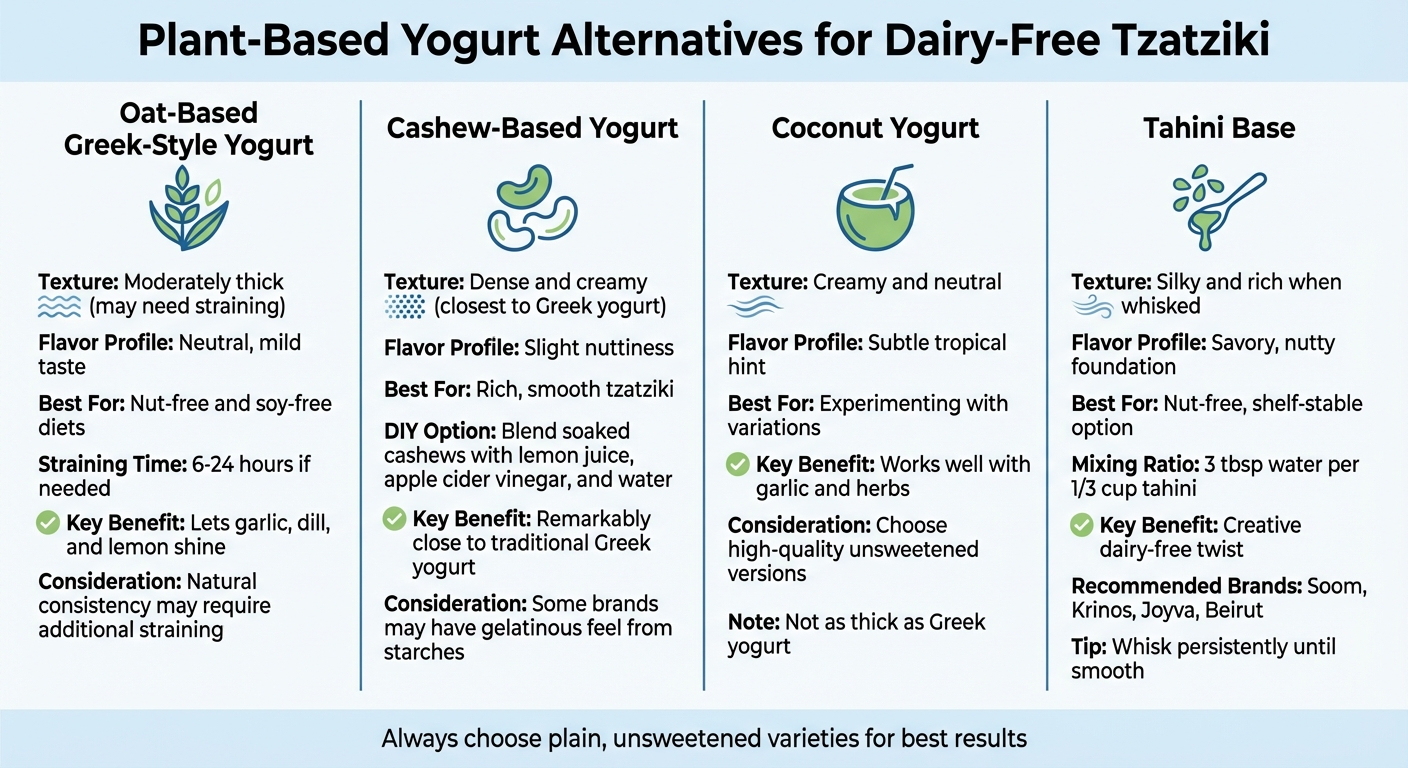
Plant-Based Yogurt Alternatives for Dairy-Free Tzatziki Comparison Chart
For a dairy-free tzatziki that still captures the essence of traditional Greek yogurt, choose a plain, unsweetened plant-based yogurt. The ideal option should replicate the thick, tangy qualities of Greek yogurt while remaining free of added sugars that might interfere with the savory flavors of garlic and herbs. Here are some excellent plant-based alternatives to consider:
Oat-Based Greek-Style Yogurt
Oat yogurt is a neutral option with a moderately thick texture, making it a solid base for tzatziki. If you need it thicker, strain it through cheesecloth in the fridge for 6–24 hours. This choice is particularly good for those avoiding nuts and soy. Its mild taste allows the garlic, dill, and lemon to take center stage, though its natural consistency may require some additional straining.
Cashew-Based Yogurt
Cashew yogurt offers a dense, creamy texture that's remarkably close to Greek yogurt. Its slight nuttiness pairs well with cucumber and herbs, creating a smooth and rich tzatziki. For a homemade alternative, blend soaked raw cashews with lemon juice, apple cider vinegar, and water to make cashew cream. Be aware that some store-bought cashew yogurts may include starches, which can sometimes give them a slightly gelatinous feel.
Coconut Yogurt
Coconut yogurt provides a creamy, neutral base with a hint of tropical flavor, especially in high-quality unsweetened versions. This subtle profile works well with the traditional tzatziki flavors of garlic and herbs, making it a versatile option for those looking to experiment with different variations of the dish.
Tahini as a Base
Tahini is a nut-free, shelf-stable alternative that transforms into a silky, rich base when mixed with lemon juice and water (use 3 tablespoons of water for every 1/3 cup of tahini). It delivers a savory, nutty foundation that works surprisingly well in tzatziki. Alex from The New Baguette explains:
Whisked up with lemon juice and a bit of water, it [tahini] turns into a smooth, silky sauce I've long believed to be the perfect substitute for vegan yogurt.
Although the mixture might look separated at first, persistent whisking will bring it together into a smooth consistency. For the best results, opt for Middle Eastern or Mediterranean brands like Soom, Krinos, Joyva, or Beirut, which tend to have a more balanced flavor profile without excessive bitterness. This approach maintains the classic taste of tzatziki while offering a creative, dairy-free twist.
How to Prepare the Cucumber
Picking the right cucumber is key. Opt for English or Persian cucumbers - their thin, edible skins and minimal seeds make them perfect for recipes. If you're using regular cucumbers with thick, waxy skins, make sure to peel them to avoid bitterness and a tough texture.
Once you've chosen your cucumber, it’s time to prep. Cut it in half lengthwise and scoop out the seeds with a small spoon. This step is especially important for regular cucumbers with large, watery seeds. If you're using seedless varieties, you can skip this part. For a thicker, more scoopable dip, always remove the seeds.
Next, grate the cucumber using the large holes on a box grater for texture. If you're short on time, a food processor can finely chop it instead, or you can use a recipe manager to quickly find alternative prep methods. After grating, sprinkle a pinch of salt over the cucumber and let it rest in a fine-mesh strainer for about 15–20 minutes. The salt works to draw out excess moisture. Once drained, 1 cup of grated cucumber should reduce to roughly 1/4 cup of solids.
The final step is wringing out the cucumber to remove any remaining liquid. Place the salted cucumber in a clean kitchen towel or cheesecloth and squeeze firmly until no more liquid comes out. As Sylvie Shirazi, recipe developer at Gourmande in the Kitchen, emphasizes:
This step is crucial. Most dairy-free yogurts - especially coconut-based ones - aren't as thick as traditional Greek yogurt, so removing the water from your cucumber helps keep your tzatziki thick, creamy, and scoopable.
This draining process is even more important when using plant-based bases like tahini or coconut yogurt, which naturally lack the density of Greek yogurt. Take your time with this step - your sauce will reward you with the perfect consistency.
Dairy-Free Tzatziki Recipe Instructions
Ingredients and Their Functions
Here’s what you’ll need: 1½ cups unsweetened plant-based yogurt, 1 cup grated, dry cucumber (use the salt-and-squeeze method to remove excess water), 2–3 cloves garlic (minced or pureed), 2 tbsp fresh lemon juice, 2 tbsp extra virgin olive oil, 3 tbsp finely chopped fresh dill, and salt and pepper.
Each ingredient plays a key role: the yogurt gives the sauce its creamy texture and tangy flavor, the cucumber adds a refreshing crunch, and the garlic brings aromatic depth. The lemon juice cuts through the richness with its acidity, the olive oil adds a silky smoothness, and the dill provides that signature Mediterranean flavor. Together, these ingredients create a balanced and flavorful dip.
Mixing and Combining
Start by whisking the yogurt, garlic, olive oil, lemon juice, and dill until the mixture is smooth and well-blended. Next, fold in the drained cucumber, ensuring it’s evenly distributed throughout. If the tzatziki seems too thin, it likely means the cucumber wasn’t drained thoroughly. The goal is a thick and creamy consistency, not a watery one.
Once combined, cover the bowl and refrigerate the tzatziki for 30 to 60 minutes. This resting period is crucial - it allows the garlic and herbs to meld into the yogurt base, enhancing the overall flavor. For thinner plant-based yogurts, chilling is especially helpful in achieving the right texture, making the sauce scoopable and satisfying.
Adjusting Seasonings
After chilling, give the tzatziki a taste and tweak it to your liking. Add a pinch of salt, a touch more garlic, or an extra splash of lemon juice to brighten the flavor. If you want a richer texture, drizzle in a little more olive oil. For a stronger herbal note, stir in another tablespoon of fresh dill or, for a cooling twist, add a tablespoon of fresh mint.
As Minimalist Baker puts it:
"Taste and adjust flavor as needed, adding more salt for overall flavor, garlic for zing, lemon for acidity, or dill for herbiness."
The key is balance - garlic should be present but not overpowering, and the flavors should harmonize beautifully for a classic Mediterranean experience.
Serving and Storage Tips
Dairy-free tzatziki is a versatile addition to a variety of dishes, both Mediterranean and beyond, making it a great addition to your ingredient prep routine. Pair it with warm pita, chips, or fresh veggies for a simple snack, or use it as a dip for falafel, gyros, or grilled vegetables. It’s also a great match for heartier options like chickpea shawarma, lentil patties, or tofu wraps, bringing a cool, tangy balance to savory flavors. As Alisa Fleming, Founder of GoDairyFree.org, explains:
Tzatziki is incredibly popular because it pairs well with so many dishes.
Beyond dips, this sauce shines as a topping for grain bowls with quinoa, rice, or farro. A quick splash of lemon juice or olive oil can thin it into a zesty salad dressing. It also works beautifully as a burger topping, a spread for wraps, or a cooling sauce for roasted vegetables like eggplant, zucchini, or cauliflower. Its refreshing quality makes it an excellent complement to spicy dishes.
When it comes to storage, keep your dairy-free tzatziki in an airtight container in the refrigerator for 3 to 5 days. Before serving, give it a stir to mix in any separated liquid. To revive its flavor, drizzle a little olive oil on top and sprinkle fresh dill or mint just before serving. If it feels too thick, adjust the consistency with water, lemon juice, or white wine vinegar.
Freezing tzatziki, however, is not a good idea. As Patty Catalano, Food Editor at The Kitchn, cautions:
Freezing tzatziki is not recommended, as the texture will change and may turn grainy upon thawing.
The high water content in cucumbers and the properties of plant-based yogurts can cause the sauce to separate and lose its creamy texture when frozen. For the best flavor, refrigerate it overnight to let the garlic, herbs, and lemon fully meld together. These tips help maintain the freshness and texture of your tzatziki, ensuring it’s ready to elevate your meals every time.
Using Honeydew Recipe Manager for Ingredient Substitutions

The Honeydew Recipe Manager makes it easy to find plant-based alternatives for your tzatziki. Its AI-driven tools suggest ingredient swaps tailored to dietary needs like dairy-free, vegan, or allergy-friendly options.
You can import a tzatziki recipe directly from social media or popular cooking websites, and the app will automatically create a detailed grocery list with plant-based substitutes. For example, if Greek yogurt is a key ingredient, Honeydew suggests alternatives such as unsweetened coconut yogurt, cashew-based creams, or even tahini, depending on the texture you're aiming for.
As Emily C., a loyal Honeydew user, puts it:
"The substitution feature streamlines adapting recipes to my dietary needs."
The app’s smart grocery list doesn’t just provide substitutions - it also suggests specific brands. For instance, it might recommend Culina or Cocojune for coconut yogurt, and Soom or Krinos for tahini, ensuring your recipe stays consistent and aligned with your dietary preferences.
Honeydew also goes beyond substitutions to improve meal planning. It supports household sharing for up to six family members, so everyone can view or contribute to your dairy-free meal plans. Plus, its built-in calorie and macro calculator helps you track the nutritional impact of your ingredient swaps, making it easier to maintain a balanced diet.
Conclusion
Make dairy-free tzatziki in just 5–10 minutes of prep time, followed by 30–60 minutes of chilling. Opt for plant-based yogurts like coconut or cashew to get that creamy texture. Be sure to thoroughly drain the grated cucumber and let the mixture chill so the flavors of garlic, dill, and lemon can blend beautifully.
Using plant-based yogurt simplifies the process since you can skip straining traditional dairy yogurt. Plus, these neutral bases allow the fresh herbs and garlic to take center stage.
The Honeydew Recipe Manager makes ingredient swaps a breeze. It suggests specific brands, generates detailed grocery lists, and even tracks nutrition. When you import tzatziki recipes from social media or websites, the app organizes everything into clear ingredient lists with exact amounts. With household sharing for up to six people, coordinating your dairy-free meal prep has never been easier. This tool not only adapts recipes to fit your dietary needs but also simplifies planning for the week.
Store your tzatziki in the fridge for 4–5 days. Use it as a dip for veggies, a spread for wraps, or a topping for grain bowls. This versatile, dairy-free condiment is a great addition to your weekly meal prep, enhancing a variety of dishes throughout the week.
FAQs
What are the best dairy-free yogurts for making tzatziki sauce?
For a creamy, tangy, and dairy-free tzatziki, there are several plant-based yogurt options that work beautifully. Coconut milk-based yogurts, like Culina and CocoJune, offer a rich texture with a mild flavor that blends well into the sauce. Almond milk options, such as Kite Hill Greek-style yogurt, and Silk Greek-style coconut yogurt are also excellent for their thick consistency and subtle tang.
Other great choices include So Delicious Unsweetened Plain Coconutmilk Yogurt and Forager Project Cashew Yogurt, both prized for their smooth texture and neutral taste. These alternatives make an ideal base for creating a flavorful, plant-based tzatziki.
How do I keep my dairy-free tzatziki from becoming too watery?
To keep your dairy-free tzatziki from getting watery, start by prepping your ingredients the right way. Grate the cucumber, then use a clean kitchen towel or cheesecloth to squeeze out as much liquid as you can. This step is key because cucumbers naturally contain a lot of water.
For the base, go with a thick, high-quality plant-based yogurt. If the yogurt feels a bit too thin, strain it through a fine mesh strainer or cheesecloth for a few hours to get rid of extra moisture. These simple steps will help you create a creamy and perfectly textured tzatziki every time!
Can you freeze dairy-free tzatziki sauce for later?
Yes, you can freeze dairy-free tzatziki sauce for later use. That said, freezing might alter its texture, leaving it a bit less creamy once thawed. To keep these changes to a minimum, make sure to store it in an airtight container. After defrosting, give it a good stir to restore its consistency as much as possible.