Dairy-Free vs. Lactose-Free: Key Differences
• Updated
When choosing between dairy-free and lactose-free products, the key difference lies in their ingredients and suitability:
- Lactose-Free: Made from animal milk with lactose removed using enzymes or filtration. It retains milk proteins like casein and whey, making it suitable for those with lactose intolerance but not for milk allergies or vegan diets.
- Dairy-Free: Completely plant-based, containing no milk or milk-derived ingredients. Ideal for individuals with milk allergies, vegans, or those avoiding all dairy components.
Quick Overview:
- Lactose-Free: Animal milk, lactose removed, contains milk proteins, suitable for lactose intolerance.
- Dairy-Free: Plant-based, no milk proteins, suitable for milk allergies, vegans, or dairy-free diets.
| Feature | Lactose-Free | Dairy-Free |
|---|---|---|
| Source | Animal milk | Plant-based (e.g., almond, soy) |
| Milk Proteins | Contains casein & whey | None |
| Cholesterol | Present | None |
| Suitability | Lactose intolerance | Milk allergies, vegan diets |
Understanding these distinctions ensures you select the right option for your dietary needs.
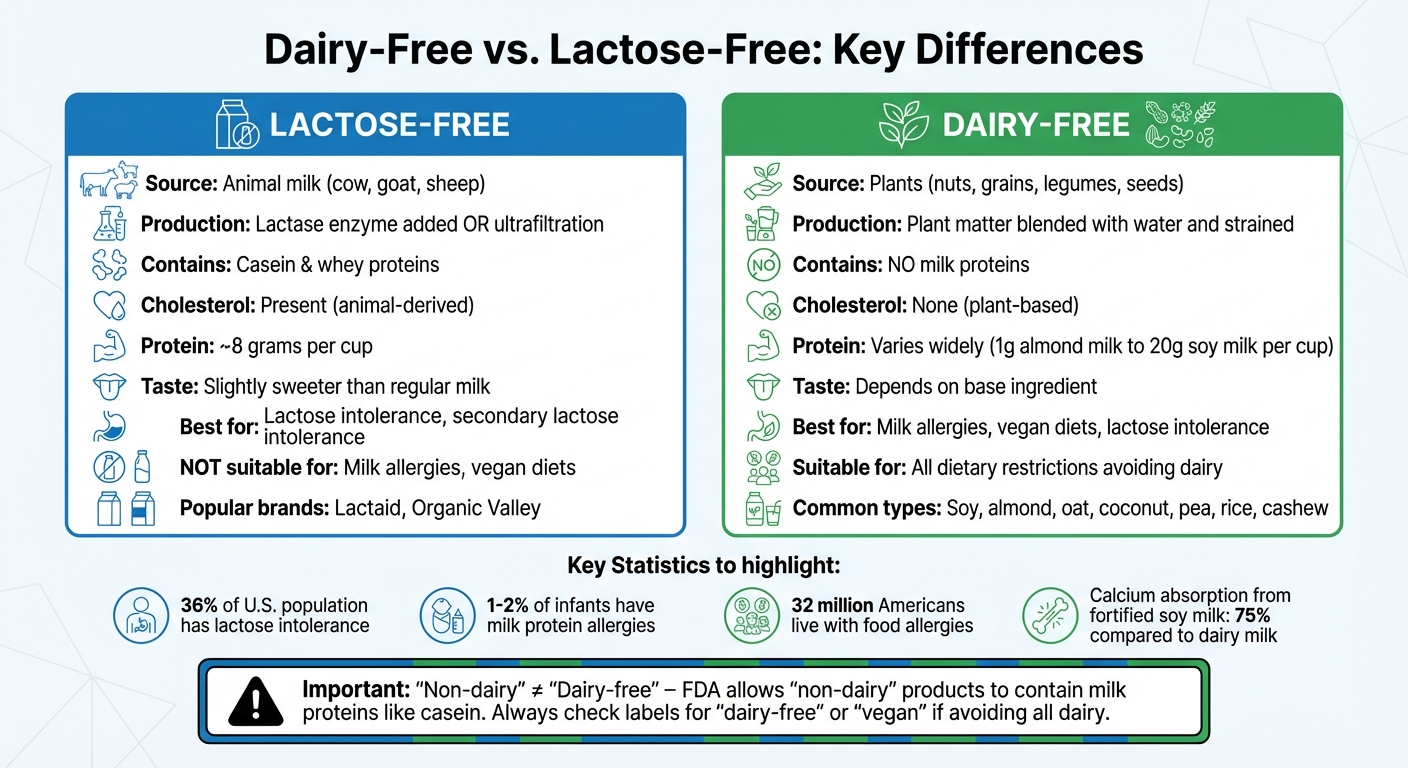
Dairy-Free vs Lactose-Free Products Comparison Chart
Dairy-Free vs Lactose-Free - What's The Difference?
What Is Lactose-Free?
Lactose-free products are real dairy items - made from cow, goat, or other animal milks - where the lactose has been broken down into simpler sugars, making them easier to digest. These products still retain key nutrients like calcium, vitamins, and proteins such as casein and whey.
"Lactose is the carbohydrate in milk and dairy products." – Rosie Schwartz, Registered Dietitian
It's important to note that while lactose-free products are easier on the digestive system for those with lactose intolerance, they are not suitable for people with milk allergies or those following a vegan diet. If your issue stems from milk proteins rather than lactose, dairy-free alternatives are a better fit.
How Lactose-Free Products Are Made
To produce lactose-free milk, most manufacturers rely on an enzymatic process. They add lactase - the enzyme naturally found in the human body - to the milk. This breaks lactose down into two simpler sugars: glucose and galactose. Essentially, this process "pre-digests" the milk, allowing those with lactose intolerance to enjoy it without discomfort. Some brands also use ultra-filtration, a method that physically removes lactose molecules through mechanical pressure. This technique often results in a flavor closer to that of regular milk.
Lactose-free milk tends to taste slightly sweeter than its traditional counterpart. Why? Glucose and galactose activate your sweet taste receptors more strongly than lactose. As Rosie Schwartz explains:
"Because the lactose is broken down into simple sugars, that can make lactose free milk taste sweeter than regular milk, but it doesn't actually contain more sugar."
Popular brands like Lactaid use enzymatic methods to create 100% lactose-free milk, ice cream, and fortified dairy products. Organic Valley offers lactose-free options that meet organic standards while using the same breakdown process.
Who Should Choose Lactose-Free?
Lactose-free products are ideal for people with lactose intolerance - a condition where the body doesn't produce enough lactase to digest lactose properly. In the U.S., around 36% of the population experiences lactose intolerance, with symptoms like bloating, gas, abdominal cramps, diarrhea, and nausea often appearing within 30 minutes to two hours of consuming dairy.
These products can also help individuals with secondary lactose intolerance, a temporary issue caused by factors like surgery, infections, or conditions such as celiac disease or Crohn's disease. Once the small intestine heals, many people can return to regular dairy. Premature infants, whose digestive systems are still developing, may also need lactose-free formulas until their bodies can produce adequate lactase.
For those who want the nutritional perks of dairy - like 8 grams of protein and 25% of your daily calcium per cup - lactose-free options can be a great solution. However, if you experience reactions like hives or wheezing, you might have a milk protein allergy rather than lactose intolerance. In that case, completely dairy-free alternatives are a better choice. The next section will dive into these options for those with milk protein allergies or those seeking plant-based substitutes.
What Is Dairy-Free?
Dairy-free products are entirely free of milk and milk-derived ingredients, including proteins like casein and whey. These products are made from plant-based sources such as nuts, seeds, grains, or legumes, making them a completely animal-free option. In contrast, lactose-free products are still derived from animal milk but have the lactose removed. Dairy-free options go a step further by excluding all milk proteins, lactose, and cholesterol.
It's important to note that "non-dairy" and "dairy-free" are not interchangeable terms. The FDA allows "non-dairy" products to include milk proteins like casein, so if you need to avoid all dairy components, look for labels that specifically state "dairy-free" or "vegan." This distinction is key when selecting truly dairy-free alternatives.
Common Ingredients in Dairy-Free Alternatives
Dairy-free products rely on a variety of plant-based ingredients to replicate the texture and taste of dairy. Here are some common options:
- Soy milk: Known for its high protein content (about 8 grams per 8-ounce serving), soy milk is a versatile choice, especially for cooking and baking.
- Almond milk: With a naturally sweet flavor and low calorie count, almond milk is popular but typically contains only 1 gram of protein per serving and a small percentage of actual almonds (2% to 14%).
- Oat milk: Loved for its creamy texture, oat milk is often used in coffee drinks. Barista-style versions are specifically designed to handle heat without curdling. However, it tends to have a higher carbohydrate content, so check the label if that's a concern.
- Coconut milk: This rich, high-fat option works well in curries or as a whipped cream base, though its distinct flavor might not suit every dish.
- Pea protein: Products made from pea protein are high in protein and are often used for dairy-free yogurts and milk alternatives.
- Rice milk: Known for its thinner texture and higher carbohydrate content, rice milk is another option, though it’s less creamy than other alternatives.
- Cashew milk: Frequently used for dairy-free cheeses or cream cheese alternatives, cashew milk offers a smooth texture.
For those looking to match the nutritional benefits of dairy milk, choosing products fortified with calcium and vitamin D is a smart move. For example, calcium from fortified soy milk is absorbed at about 75% the rate of calcium from dairy milk, making fortification an important consideration.
Who Should Choose Dairy-Free?
Dairy-free products are essential for people with a milk protein allergy. This condition involves an immune response to proteins like casein or whey, which can cause reactions ranging from mild hives to severe anaphylaxis. Milk allergies affect about 1% to 2% of infants and require complete avoidance of dairy products. Unlike lactose intolerance, which is a digestive issue, a milk allergy demands stricter dietary vigilance.
As Ashley Adams, a specialist in dairy-free cooking, explains:
"Lactose-free products are made for people with lactose intolerance but they are usually not suitable for people who have milk allergies or who are on a vegan or dairy-free diet."
Vegans also opt for dairy-free alternatives as part of their commitment to avoiding all animal-derived ingredients. Others may find that cutting out dairy helps alleviate gastrointestinal issues like reflux or constipation, even if they don’t have a diagnosed allergy or intolerance. Additionally, religious practices and concerns about the environmental effects of dairy farming encourage many people to adopt a dairy-free lifestyle.
When transitioning to a dairy-free diet, it’s essential to carefully read ingredient labels to avoid hidden sources of dairy, such as caseinates, whey, lactalbumin, curds, or ghee. And while eggs are often sold in the dairy aisle, they are not considered dairy since they don’t contain milk proteins or lactose. This makes dairy-free options a practical choice for families managing allergies or following a vegan diet.
Dairy-Free vs. Lactose-Free: Side-by-Side Comparison
Comparison Table: Dairy-Free vs. Lactose-Free
Knowing the difference between dairy-free and lactose-free products is key for anyone managing specific dietary needs. Lactose-free products are made from animal milk and go through processes like enzymatic treatment or ultrafiltration to remove or break down lactose. This keeps the milk proteins and natural cholesterol intact, making the lactose easier to digest without changing the core dairy composition.
On the other hand, dairy-free products are entirely plant-based. They're created by blending plant ingredients such as oats or almonds with water, then straining the mixture. The result is a product free of milk proteins, lactose, and cholesterol.
| Feature | Lactose-Free | Dairy-Free |
|---|---|---|
| Primary Source | Animal milk (cow, goat, sheep) | Plants (nuts, grains, legumes, seeds) |
| Key Ingredients | Real dairy, lactase enzyme | Plant extracts, water, thickeners, stabilizers |
| Production Process | Addition of lactase or ultrafiltration | Blending plant matter with water and straining |
| Milk Proteins | Contains casein and whey | None |
| Cholesterol | Contains natural, animal-derived cholesterol | Cholesterol-free |
| Protein Content | About 8 grams per cup | Varies (e.g., high in soy/pea; low in almond/rice) |
| Suitability | Great for those with lactose intolerance | Ideal for people with milk allergies, vegans, or lactose intolerance |
Amanda Blechman, a Registered Dietitian and Senior Manager of Scientific Affairs at Danone North America, points out:
"While people who experience intolerance to lactose may enjoy these products, the FDA makes it clear that this label [lactose‐free] does not protect a person who is allergic to dairy products."
This distinction highlights not only their ingredients and production methods but also their nutritional differences.
Nutritional Differences
The nutritional content of lactose-free and dairy-free products can vary quite a bit. For example, an 8-ounce glass of lactose-free cow's milk provides about 8 grams of protein, along with naturally occurring calcium and potassium.
Dairy-free options, however, show a wider range in their nutrient profiles. Almond milk, for instance, typically contains just 1 gram of protein per 8-ounce serving, while soy milk can deliver up to 20 grams. Rice milk, on the other hand, is higher in carbohydrates, sometimes offering 22 grams per 8-ounce serving. To achieve a creamy texture similar to dairy, many plant-based milks include added thickeners like gums or carrageenan, as well as sweeteners to improve flavor.
Interestingly, lactose-free milk often tastes slightly sweeter than regular milk. This happens because the lactase enzyme breaks lactose into glucose and galactose - two simpler sugars that taste sweeter. Meanwhile, dairy-free milks remain naturally cholesterol-free since they contain no animal-derived ingredients.
Meal Planning Tips for Both Diets
For families dealing with lactose intolerance or dairy allergies, meal planning can feel like a daunting task. But it doesn’t have to be! Start your weekly menu with naturally dairy-free whole foods like fruits, vegetables, meats, poultry, seafood, legumes, grains, nuts, and seeds. These options work for both diets and make meal prep easier, even for picky eaters.
Be cautious of hidden dairy in everyday foods. Items like cold cuts, breads, instant potato mixes, salad dressings, and breakfast cereals can contain milk ingredients that aren’t immediately obvious. Reading labels is crucial - look for "Contains: Milk" warnings to spot dairy more easily.
If your family is managing only lactose intolerance (and not a milk allergy), you have a bit more flexibility. Hard-aged cheeses like Parmesan, Swiss, and Cheddar are often safe because the aging process breaks down most of the lactose.
Next, let’s look at how Honeydew Recipe Manager can simplify ingredient swaps and meal planning.
Using Honeydew Recipe Manager for Ingredient Substitutions
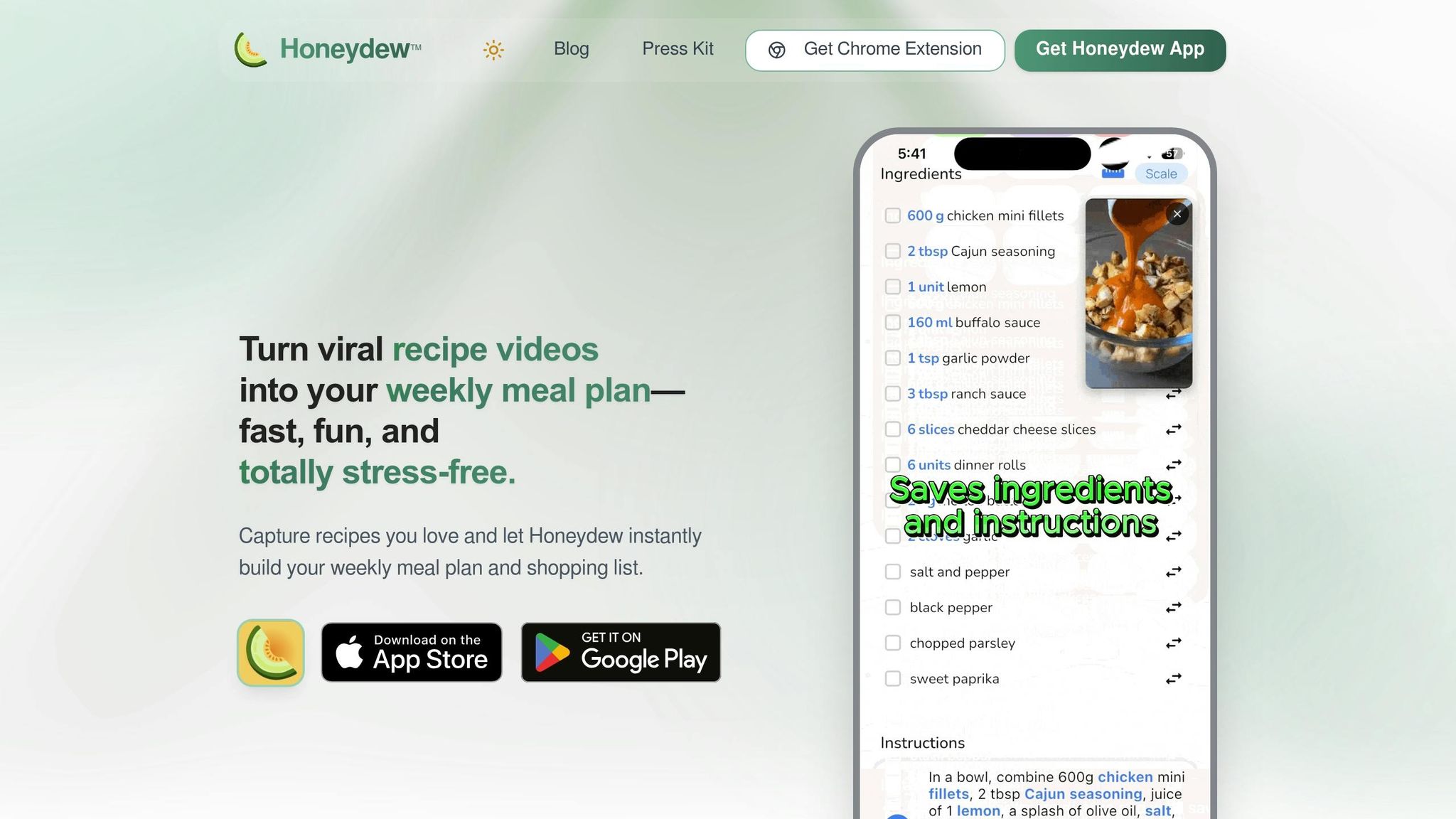
Honeydew Recipe Manager is a game-changer when it comes to finding substitutions. Import recipes from platforms like TikTok, Instagram, YouTube, or any website, and the app will suggest dairy-free or lactose-free alternatives tailored to your needs. For example, it might recommend coconut oil as a replacement for butter.
The app’s AI meal planner can generate weekly menus that align with your dietary requirements. Plus, its Pantry Mode lets you snap a photo of your fridge, and it will suggest recipes based on what you already have - no need for specialty shopping. Honeydew also creates grocery lists and integrates with Instacart for seamless ordering.
With the household sharing feature, up to six family members can access the same recipes and meal plans. Everyone can check what’s for dinner and share their preferences. The app also includes a calorie and macro calculator to help ensure your family gets the nutrients they need. For reference, adults typically require 1,000–1,200 milligrams of calcium daily.
Finding Recipes That Match Your Diet
The app doesn’t just help with substitutions - it also makes finding diet-friendly recipes a breeze. Honeydew Recipe Manager allows you to filter recipes by ingredients you want to include or avoid. For example, if your child dislikes visible vegetable chunks, you can search for recipes that use pureed butternut squash or cauliflower as hidden bases. These work great in dairy-free pizza or pasta sauces.
The app’s AI cooking assistant is there to answer questions in real time while you cook. Wondering if nutritional yeast can replace Parmesan? It can not only confirm but also suggest ways to enhance umami flavors without cheese - think roasted mushrooms, miso paste, or olives. Features like one-tap recipe translation for international dishes and a screen that stays on during cooking make meal prep even smoother.
With around 32 million Americans living with food allergies and 30 million developing lactose intolerance by age 20, a tool like this can save time and reduce stress. The free plan includes up to 10 recipe imports and basic meal planning features, while Honeydew Plus ($4.17/month) offers unlimited recipe storage, advanced AI meal planning, and social media imports - perfect for families navigating dietary restrictions.
Conclusion: Choosing the Right Option
Deciding between dairy-free and lactose-free options ultimately comes down to your specific health needs. If your child has a milk allergy, dairy-free products are the only safe choice. On the other hand, if lactose intolerance is the concern, lactose-free dairy provides a similar taste and functionality to regular milk.
"Lactose-free milk is 100% cow's milk, so for the most part, it behaves exactly as regular milk does." - Tasting Table
This distinction is important not only for managing allergies and intolerances but also for maintaining proper nutrition. For example, lactose-free milk contains 8 grams of protein per cup, while dairy-free alternatives like almond milk often provide just 1 gram. To meet your calcium and Vitamin D requirements, look for fortified options.
To make meal planning simpler, tools like the Honeydew Recipe Manager can be a game-changer. It allows you to import recipes, substitutes ingredients automatically, plan weekly menus with an AI assistant, create grocery lists, and even order ingredients through Instacart - all while sharing the plan with family members.
Whether you're navigating an allergy or an intolerance, having the right knowledge and tools can make meal planning much easier. Stick to whole foods, pay attention to labels, and embrace technology to create safe and enjoyable meals with less hassle.
FAQs
How can I tell if I have lactose intolerance or a milk allergy?
Lactose intolerance happens when your body struggles to digest lactose, the natural sugar found in milk. This is due to a shortage of lactase, the enzyme needed to break it down. Common symptoms include bloating, diarrhea, gas, and stomach cramps.
On the other hand, a milk allergy is an immune system reaction to proteins in milk, such as whey or casein. Unlike lactose intolerance, this can trigger more severe symptoms like hives, swelling, or even difficulty breathing.
If you’re experiencing symptoms, it’s important to consult a healthcare provider for an accurate diagnosis and tailored advice.
Can lactose-free products still trigger allergy symptoms?
Yes, lactose-free products can still trigger allergy symptoms because they are made from dairy. A dairy allergy is caused by an immune system reaction to milk proteins, whereas lactose intolerance stems from trouble digesting lactose, a sugar found in milk. For those with a dairy allergy, it's crucial to avoid all dairy-based products - even those labeled as lactose-free.
Which dairy-free milk is best for picky eaters and protein needs?
Soy milk stands out as a top dairy-free option, especially for picky eaters who need protein. With around 8 grams of protein per 8-ounce serving, it mirrors the protein content of cow's milk. Plus, it’s often fortified with calcium and vitamin D, making it a nutritionally comparable alternative. While pea protein milk is another high-protein choice, soy milk is frequently recommended because of its close nutritional profile to cow's milk.