Eggplant as a Substitute for Garden Eggs
• Updated
Cooking West African stews in the U.S. can be tough without garden eggs, a key ingredient that’s often hard to find. Luckily, eggplants, especially Thai varieties, work as a practical alternative. Here’s why:
- Garden eggs are small, bitter vegetables used in West African dishes for their spongy texture and unique flavor.
- Eggplants share a botanical link with garden eggs, making them a logical substitute.
- Thai eggplants are closest in size, shape, and bitterness, while standard globe eggplants require peeling and salting to match the taste and texture.
To prepare eggplants for stews:
- Peel and salt globe eggplants to reduce bitterness.
- Boil or steam until tender, then mash to a chunky consistency.
- Cook with red palm oil, tomatoes, smoked mackerel, or other proteins for a rich, flavorful dish.
This substitution ensures you can recreate West African stews without losing much of their signature taste.
Nigerian GARDEN EGGS SAUCE aka EGGPLANT Sauce aka AUBERGINE Sauce
Choosing the Right Eggplant for Substitution
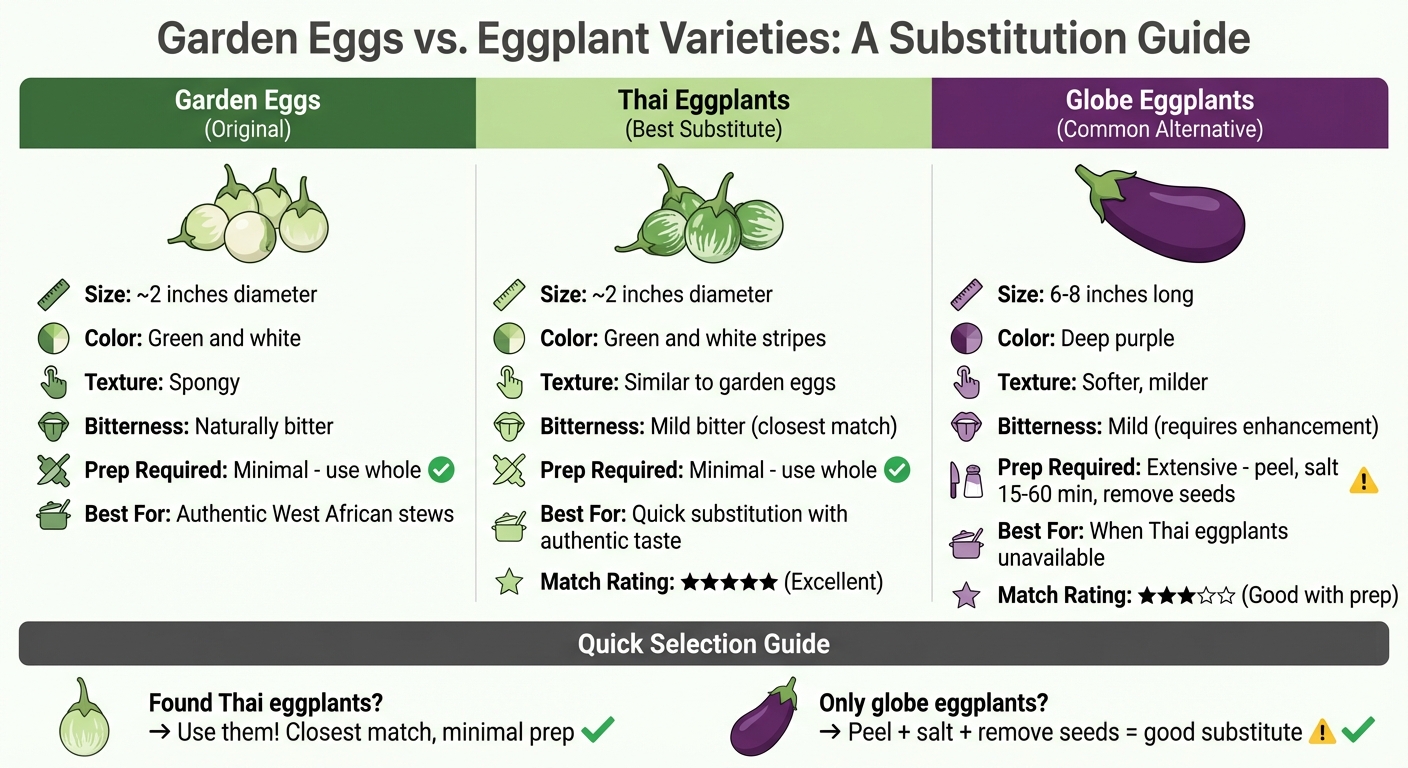
Garden Eggs vs Thai Eggplant vs Globe Eggplant Comparison Guide
Thai Eggplants vs. Standard Eggplants
Thai eggplants are small, round, and about 2 inches in diameter, featuring green and white stripes. They closely resemble garden eggs in both texture and mild bitterness.
"If you can't find Nigerian garden eggs, Thai eggplants make an excellent substitute since they're similar in size, shape, and flavor."
– Ozoz Sokoh, Food Explorer and Author, Serious Eats
On the other hand, standard eggplants are much larger and milder in flavor. To get closer to the texture of garden eggs, peel and salt them before use. Thai eggplants, however, can be used whole, which cuts down on prep time.
Once you've picked the right type of eggplant, the next step is preparing it properly to replicate the texture and taste of garden eggs.
How to Pick Fresh Eggplants
When selecting an eggplant, go for one that feels heavy for its size. If it's large but oddly light, it might be overripe and pulpy. Look for smooth, taut, and glossy skin. Avoid any with wrinkles, soft spots, or brown blemishes.
The stem cap should be bright green with small spikes. A cap that’s dried out or brown is a sign the eggplant isn’t fresh. Press the flesh gently - it should spring back quickly. If it leaves a dent, the eggplant is likely past its prime.
"The females are firmer and have fewer seeds. The fewer seeds the eggplant has, the less bitter it will be."
– Peter Napolitano, Author and Produce Expert
Here’s a handy tip: Check the blossom end (opposite the stem). A round mark indicates a "male" eggplant, while an oval mark suggests a "female." Male eggplants usually have fewer seeds and are less bitter, making them the better option.
With a fresh and well-chosen eggplant, you're ready to move on to preparation techniques that enhance its flavor and texture.
Preparing Eggplant to Match Garden Eggs
How to Reduce Bitterness
To mimic the light color and mild flavor of garden eggs, start by peeling large purple globe eggplants. This step removes the bitter compounds found in the skin.
Next, slice the eggplant lengthwise and use a spoon to scoop out the large seeds, which are often the source of bitterness. Sprinkle the slices with salt and let them sit for 30 to 60 minutes. This process draws out moisture and reduces bitterness. Afterward, rinse the eggplant thoroughly and pat it dry.
"Salting the eggplant... draws out excess moisture, concentrates flavor, and ensures the stew isn't watery."
– Ozoz Sokoh, Food Explorer, Serious Eats
For an additional step, soak the eggplant pieces in milk for 30 minutes before draining them. This softens the flesh and binds any remaining bitter compounds.
Once the bitterness is under control and the texture is prepped, you're ready to cook and mash the eggplant for your stew.
Cooking and Mashing for Stews
After reducing the bitterness, the next step is cooking the eggplant to replicate the texture of garden eggs. Quarter the eggplant and boil it in salted water for 10–15 minutes, or until it becomes tender enough to mash. Drain the cooked eggplant and mash it with a fork or potato masher to achieve a slightly chunky, crushed-tomato-like texture.
"Once the garden eggs/eggplants are fork tender, drain them, and mash them with a potato masher or a fork. They should be the consistency of crushed tomatoes, only slightly chunky."
– Lois, Author, Yummy Medley
For a thicker stew, blend half of the cooked eggplant into a smooth puree while leaving the other half chunky. This combination adds richness to the stew while maintaining a rustic feel. If you prefer a completely smooth puree, cook it in a pot until most of the water evaporates before incorporating it into your stew base.
Steaming is another option, especially if you're aiming for a silky texture. Steam the eggplant for about 10 minutes. This method softens the flesh while preventing it from soaking up too much oil during cooking.
Using Eggplant in African Stews and Sauces
Once you've mashed your eggplant, it's time to bring everything together into a flavorful stew.
Pairing Eggplant with Other Ingredients
Start by heating red palm oil, which gives the dish its authentic taste and vibrant color. To check if the oil is ready, drop in a piece of onion - if it sizzles, you're good to go. Sauté chopped white or red onions until they soften, then add fresh plum tomatoes or canned diced tomatoes along with red bell peppers. These ingredients help balance the earthiness of the eggplant.
"Palm oil is an essential ingredient for this recipe! Any other oil will not reproduce the special delicious flavor of this classic Nigerian food recipe, and vegetable or olive oils will not produce the unique color, either."
– Ethnic Foods R Us
For protein, smoked mackerel brings a rich smokiness, while dried shrimp (commonly labeled as "crayfish" in African stores) adds a briny depth. If you're aiming for a vegan option, try rehydrated shiitake mushrooms combined with vegan oyster sauce for a similar umami kick. To finish, stir in leafy greens like spinach, amaranth, or Nigerian scent leaf (also known as clove basil) to enhance the stew's nutritional value and aroma.
Once your base is ready, it's time to fine-tune the flavors with spices and seasonings.
Adjusting Spices and Seasoning
Eggplants like the standard variety tend to be milder than traditional garden eggs, so you'll need to amp up the spices to capture the authentic taste. Add Scotch bonnet or habanero peppers for heat, which complements the eggplant's subtle flavor. To deepen the umami, incorporate bouillon cubes, dried shrimp, or fermented locust beans (known as ogiri okpei or iru), which bring the savory "funk" that defines many African stews.
"Dried shrimp (often labeled 'crayfish' in African grocers)... are essential for their briny depth."
– Ozoz Sokoh, Food Explorer, Serious Eats
Round out the flavor with garlic and ginger, and stir in Nigerian scent leaf or Thai basil after removing the stew from heat to preserve their fresh, aromatic qualities. Serve this hearty dish alongside boiled yams, fried plantains, or plain white rice for a satisfying meal.
Conclusion
Key Points for a Successful Substitution
Let’s revisit the tried-and-true methods for capturing authentic flavors when garden eggs aren’t available. Thai eggplants are a great match in terms of size and bitterness, making them a reliable alternative. If you’re using standard purple globe eggplants, peeling and salting them for 15 to 60 minutes helps remove bitterness and excess moisture. Once prepped, cook the eggplant until it’s fork-tender, then mash it into a texture resembling chunky crushed tomatoes.
Because globe eggplants are naturally milder, you can boost their flavor by incorporating ingredients like dried shrimp, fermented locust beans, and smoked mackerel. Don’t forget red palm oil - it’s essential for achieving the rich taste and vibrant color that define West African stews.
Using Honeydew Recipe Manager for Better Results

When substituting ingredients in traditional recipes, precision is key. That’s where tools like the Honeydew Recipe Manager (https://honeydewcook.com) come in handy. This app makes it simple to document your adjustments, like which eggplant variety worked best, the ideal cooking time, or any tweaks to the spice blend that elevated your dish.
With its smart ingredient substitution feature, Honeydew helps you find alternatives when garden eggs aren’t on hand. Plus, the AI cooking assistant provides real-time preparation tips, making the process smoother. You can even import recipes for African stews from Instagram, TikTok, or YouTube, then personalize them with your own notes. What’s more, the app supports household sharing for up to six family members, ensuring everyone has access to your perfected recipe. It’s a practical way to preserve and share culinary traditions with future generations.
FAQs
What’s the difference in flavor and texture between Thai eggplants and garden eggs?
Thai eggplants bring a fresh, slightly grassy flavor to the table, paired with a firm, crisp texture and plenty of seeds. They're versatile and shine in both raw and cooked dishes. In contrast, garden eggs have a mildly bitter, savory taste and a softer texture, which makes them perfect for soaking up flavors in stews and sauces - particularly in traditional African recipes.
How can I prepare globe eggplants to replace garden eggs in stews and sauces?
Start by picking fresh, firm globe eggplants with smooth and shiny skin. Give them a good wash, trim the stems, and peel them if you'd like - though the skin is edible, it can feel a bit tough on larger eggplants. Next, cut the eggplants into small, evenly sized pieces to make sure they cook at the same rate.
Cook the pieces by boiling or steaming them for about 10–15 minutes, or until they turn soft and tender. Once they're cooked, mash or blend the eggplants to get the texture you need - whether smooth or slightly chunky, depending on your dish. Use this prepared eggplant in your stew or sauce as your recipe calls for, and enjoy a flavorful alternative to garden eggs.
What spices and ingredients bring out the best flavor in eggplant for West African stews?
To bring out the best in eggplant for West African stews, a mix of aromatic ingredients lays the foundation. Onions, garlic, and ginger form a savory base that sets the stage for bold flavors. Adding Scotch bonnet peppers introduces a fiery kick and a deep, complex heat, while palm oil not only enriches the flavor but also gives the dish its characteristic vibrant color and earthy undertone.
For a deeper, more layered taste, fermented ingredients like ogiri okpei or iru (fermented black beans) bring an umami punch. Meanwhile, tomatoes, whether fresh or in paste form, add balance with their tangy and rich notes. Together, these elements elevate the eggplant, enhancing its natural flavor while weaving in the unmistakable essence of West African cuisine.