Fair Trade Labels: What to Look For
• Updated
Fair trade labels help ensure products meet ethical standards, benefiting farmers and workers globally. However, not all claims of "fair trade" are verified. To identify genuine labels, look for trusted certifications like the Fairtrade Mark, Fair Trade Certified™, or the Fairtrade Sourced Ingredient (FSI) Mark. These labels guarantee minimum prices, community investments, and safer labor practices.
Key Points to Remember:
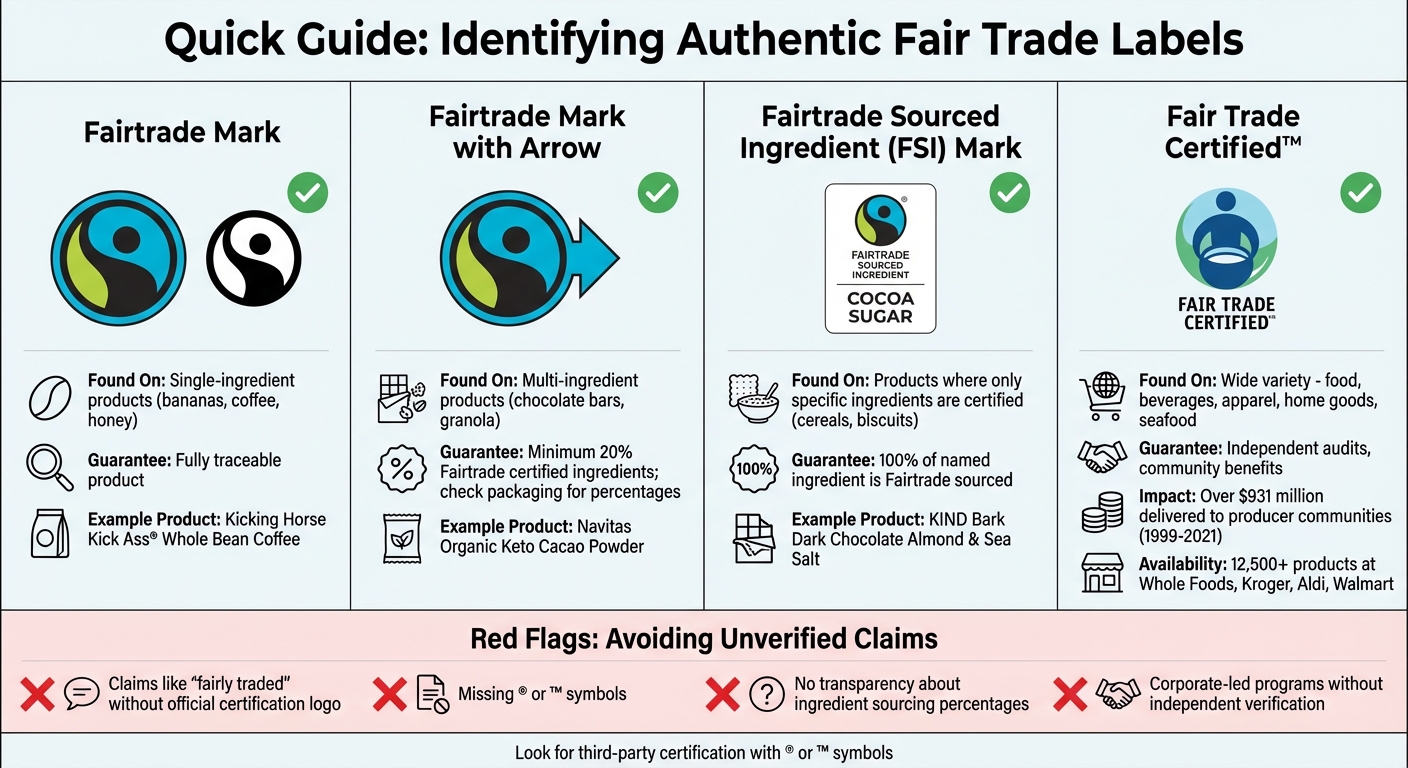
- Fairtrade Mark: Blue and green logo for fully traceable, single-ingredient products.
- Fairtrade Mark with Arrow: For multi-ingredient products, check packaging for Fairtrade-certified ingredient percentages (minimum 20%).
- FSI Mark: Highlights specific certified ingredients (e.g., "Cocoa" or "Sugar").
- Fair Trade Certified™: Covers a wide product range, ensuring independent audits and community benefits.
Red Flags:
- Claims like "fairly traded" without official certification.
- Lack of transparency about ingredient sourcing.
- Corporate-led programs without independent verification.
By recognizing these labels and avoiding vague claims, you can make informed ethical purchases. Tools like Honeydew Recipe Manager can help integrate fair trade products into your weekly meal planning and shopping.
Guide to Identifying Authentic Fair Trade Certification Labels
Understanding Fair Trade Logos
Checklist: Identifying Real Fair Trade Labels
Here’s how to spot genuine fair trade labels. Each label has distinct features, and here’s a breakdown with examples to guide you.
Fairtrade Mark
The original Fairtrade Mark stands out with its blue and green design (sometimes black and white). It’s commonly found on single-ingredient products like bananas, coffee, and honey. This mark ensures the product is fully traceable.
For example, in April 2021, Fairtrade America spotlighted Kicking Horse Kick Ass® Whole Bean Coffee as a product using this mark for full traceability in the U.S..
Fairtrade Mark with Ingredient Percentage
For products with multiple ingredients, like chocolate bars or granola, look for the Fairtrade Mark with an arrow. This arrow signals you to check the packaging for ingredient percentages, which can help with AI-driven pantry tracking. At least 20% of the product must be Fairtrade certified, and any ingredient that can be Fairtrade sourced must meet that standard. This mark also applies to certain single-ingredient items (like cocoa, sugar, tea, or fruit juice) that use mass balance sourcing, ensuring certified volumes match sales.
A good example is Navitas Organic Keto Cacao Powder, which uses this arrow mark to indicate mass balance sourcing for its cocoa.
"The minimum total Fairtrade content of the finished product must be at least 20 percent. For full transparency to consumers, the percentages of each ingredient are displayed on the back of the product package." – Fairtrade America
Fairtrade Sourced Ingredient Mark
The Fairtrade Sourced Ingredient (FSI) Mark features a white tab identifying the specific ingredient, like "Cocoa" or "Sugar." This mark means that while the entire product isn’t Fairtrade certified, 100% of the named ingredient is sourced under Fairtrade terms. It’s often seen on products like breakfast cereals, biscuits, and granola.
For instance, KIND Bark Dark Chocolate Almond & Sea Salt uses the FSI Mark for its dark chocolate. Farmers supplying this chocolate still benefit from the Fairtrade Minimum Price and Premium, just as they would with the original certification.
Fair Trade Certified™ Label
The Fair Trade Certified™ label, owned by Fair Trade USA, appears on a wide variety of products in the U.S., including food, beverages, apparel, home goods, and even seafood. With over 12,500 Fair Trade Certified™ products available, you’ll find this label at major retailers like Whole Foods, Kroger, Aldi, and Walmart. Between 1999 and 2021, Fair Trade USA delivered more than $931 million in benefits to producer communities.
Checklist: Verifying Labels and Packaging Details
Once you've spotted a fair trade label, the next step is making sure it's genuine. Here's how to dig into the packaging details to confirm authenticity. This process builds on the label features discussed earlier.
Ingredient Percentages and Transparency
Turn the package around to check the sourcing details indicated by the arrow. For multi-ingredient products - like chocolate bars or granola - the packaging should clearly list the percentages of each Fairtrade ingredient. This level of detail helps you understand exactly what you're purchasing.
"For full transparency to consumers, the percentages of each ingredient are displayed on the back of the product package." – Fairtrade America
Keep in mind, products with the Fairtrade Mark and an arrow must include at least 20% Fairtrade-certified ingredients. If you spot a white Fairtrade Sourced Ingredient (FSI) Mark, take a closer look at the label - it highlights the specific ingredient that's certified, such as "Cocoa" or "Sugar", while the rest of the product may not meet Fairtrade standards.
Third-Party Certification
Authentic fair trade labels are issued by trusted organizations that perform thorough audits. Look for ® or ™ symbols, which indicate the label's legitimacy. If these symbols are missing, the "fair trade" claim might be unverified or self-assigned by the brand.
Some packaging or brand websites also mention the auditor, such as FLOCERT, which conducts inspections for Fairtrade International.
Packaging Legibility and Compliance
The label should comply with U.S. food labeling regulations, ensuring it's clear and easy to read. It must also provide text explaining the sourcing model. If the product uses mass balance sourcing - a system where certified and non-certified ingredients are mixed during production but tracked through audits - this should be clearly stated on the packaging. Mass balance applies exclusively to cocoa, cane sugar, tea, and fruit juice.
Checklist: Other Fair Trade Labels and Their Meanings
Beyond the primary fair trade certifications, several other labels provide additional insight into ethical sourcing. These certifications often have unique standards, and understanding them can help you make more informed purchasing decisions.
Fair For Life Certification
The Fair For Life certification goes beyond traditional fair trade standards by auditing the entire value chain. This includes not just producers but also brand owners and contract processors in Western countries. Essentially, it ensures ethical practices are upheld throughout the supply chain.
To display the Fair For Life seal, products must meet stringent requirements. For instance, at least 80% of the agricultural ingredients must be certified (or 50% with plans to reach 80%). If certified ingredients make up less than 70% of the total, the label mandates that the exact percentage is disclosed on the front panel - offering a level of transparency that other certifications often lack.
You’ll find the Fair For Life label on a variety of products, including coffee, fruits, vegetables, vegetable oils, artisanal goods, and increasingly on cosmetics and nutritional supplements. The certification focuses on five key areas: fair pricing with minimum guarantees, safe working conditions, empowerment of vulnerable communities, environmental accountability, and funding for local education and healthcare initiatives.
Spotting Non-Certified Claims
Unlike "certified organic", the term "fair trade" isn’t legally protected in the U.S.. This means companies can use "fair trade" on their labels without undergoing third-party verification.
"The use of the term 'Fair Trade' on a label is not protected by law and may well be meaningless unless it is supported by a recognized validation system." – Nasser Abufarha, Managing Director, Canaan Fair Trade
Be cautious of products that claim to be "fair trade" but lack a recognizable third-party seal. Some corporate-led programs, like Starbucks C.A.F.E. Practices or Mondelez CocoaLife, may appear on packaging but don’t offer the same level of transparency or guaranteed minimum prices as independent certifications. As Anna Canning from Fair World Project points out:
"Corporate-led labels stamp supply chains without ensuring benefits for farmers and workers."
To ensure authenticity, look for a third-party certification logo with ® or ™ symbols. Be skeptical of vague claims like "ethically sourced" or "responsibly grown" unless they’re backed by a verifiable seal. This checklist can help you navigate and verify fair trade claims effectively.
Checklist: Red Flags to Avoid
When you're shopping for fair trade products, it's just as important to know what to avoid as it is to recognize trustworthy labels. Spotting these warning signs can help you steer clear of products that might not genuinely support farmers or workers.
Uncertified 'Fair Trade' Claims
One of the clearest red flags is any claim of being "fair trade" or "fairly traded" without an official certification logo. As Emilee Lamb from Fairtrade America explains:
"It's not enough to just say that you're doing the right thing – assurance and oversight are key to making trade fairer".
Without a verified seal, like the Fairtrade Mark, Fair Trade Certified™, or Fair For Life, there's no independent validation that the product meets ethical standards.
Some companies create their own in-house labels instead of using third-party certifications. These corporate-led programs often lack transparency and omit minimum price guarantees, leaving farmers vulnerable when market prices drop. As Fair World Project points out:
"Many of the new labels that exist come on the market because corporations want a lower standard to meet".
While these labels might sound credible, they are typically self-policed and tend to serve corporate interests over worker protections. Always look for independent certification to ensure the claims are legitimate.
Missing Ingredient Sourcing Details
Another warning sign is the lack of transparency about ingredient sourcing, especially for products with multiple ingredients like chocolate or granola. Legitimate certifications require brands to disclose which ingredients are fair trade and what percentage of the product they represent.
For example, if you see a Fairtrade Mark with an arrow, check the back of the package. It should specify which ingredients are certified and their percentage. If this information is missing, it’s a red flag.
Additionally, some products use a mass balance system for ingredients like cocoa, sugar, or tea. In these cases, the packaging should clearly explain how the system works. If there’s no explanation or no arrow guiding you to more details, the product may be engaging in "fairwashing" - a marketing tactic designed to appear ethical without genuine commitment to fair trade practices.
Using Fair Trade Products in Meal Planning with Honeydew Recipe Manager
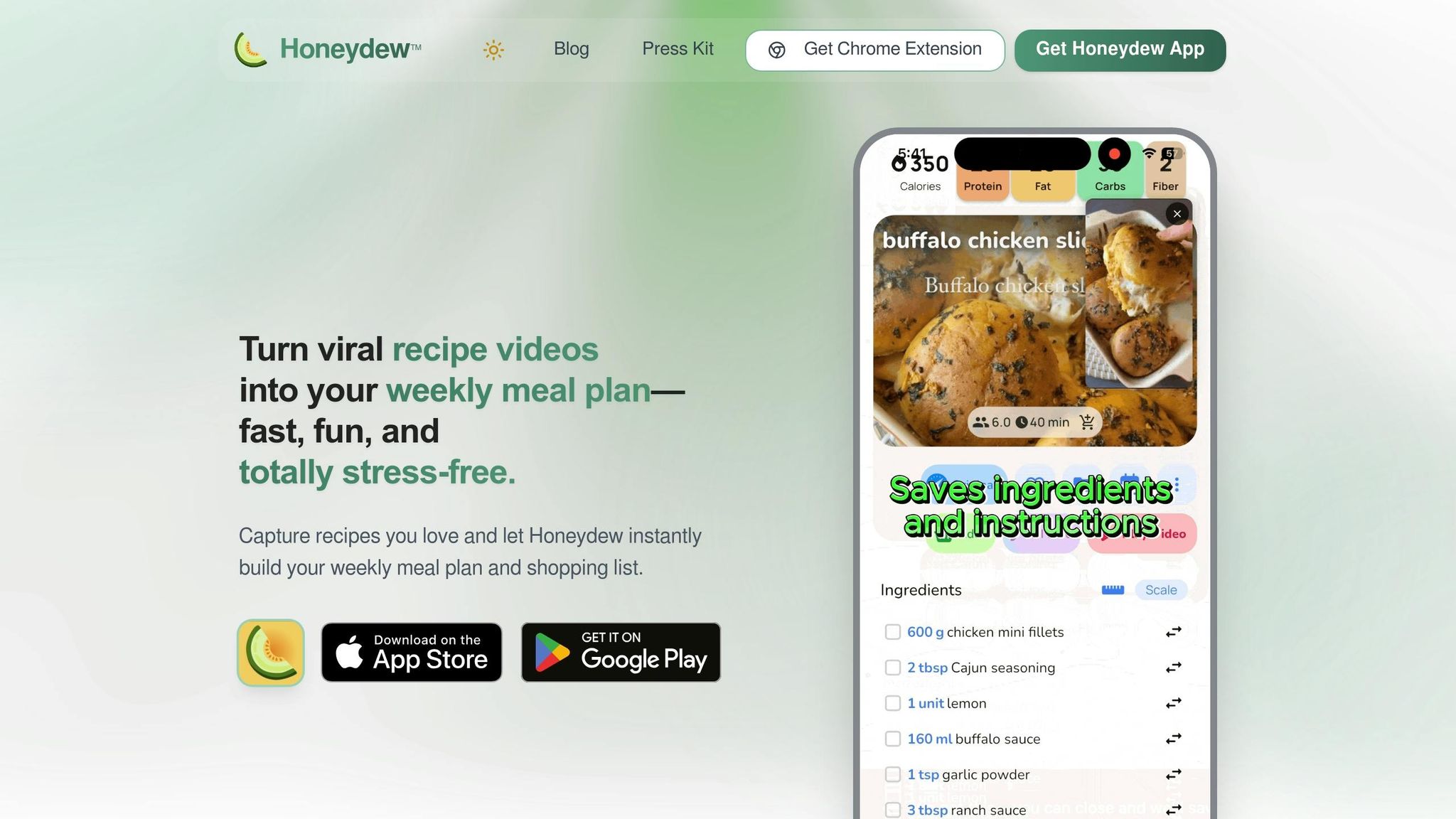
Now that you know how to spot real fair trade labels, it’s time to bring ethically sourced ingredients into your cooking routine. The Honeydew Recipe Manager makes this easier by helping you find, organize, and shop for fair trade products. With its tools, you can plan meals that align with your values and support ethical sourcing.
Filter Recipes by Fair Trade Ingredients
Honeydew Recipe Manager uses AI to analyze ingredients, making it simple to find recipes built around fair trade staples like coffee, cocoa, bananas, tea, and sugar. When you import recipes from websites or social platforms, the app’s AI organizes the ingredients, helping you search your collection for dishes that use ethically sourced products.
You can tag recipes manually or let the app automatically highlight those featuring fair trade ingredients, such as chocolate or vanilla. Once tagged, you can filter your recipe library to focus solely on ethical cooking. To ensure accuracy, scan product packaging for fair trade certifications. By doing so, you're directly integrating fair trade principles into your meal planning.
"When you buy Fairtrade products, you can feel good about your purchase supporting the social justice movement and making a meaningful difference in people's lives".
Plan and Shop Ethically with AI and Instacart Integration
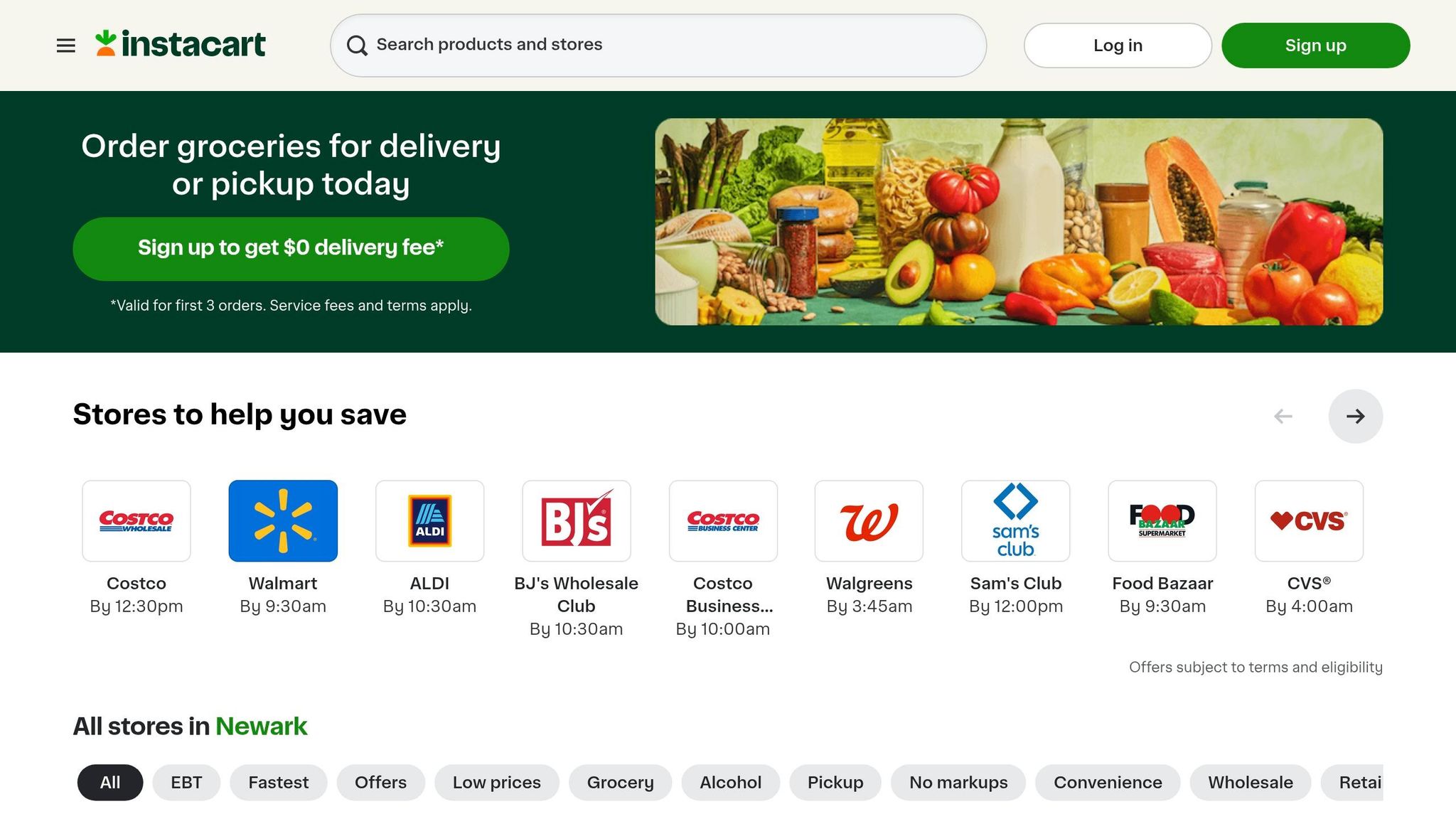
The app doesn’t just stop at identifying fair trade ingredients - it simplifies your meal planning and grocery shopping too. Honeydew Recipe Manager’s AI can create weekly meal plans that emphasize recipes with fair trade products. Once your plan is set, it automatically generates aisle-sorted grocery lists, making it easier to find certified products in-store.
Thanks to its Instacart integration, you can shop directly from major retailers like Whole Foods, Kroger, Walmart, and Aldi. These stores carry a wide range of fair trade brands, including Kicking Horse Coffee, Navitas Organics, and KIND Bark. You’ll also find products like NatureSweet tomatoes, Wholesome sweeteners, Death Wish Coffee, BLK & BOLD coffee, and UNREAL chocolate.
When reviewing your grocery list, watch for items with the "Fairtrade Sourced Ingredient" (FSI) mark. This white label indicates that specific components, such as cocoa or sugar, are ethically sourced - even if the entire product isn’t certified. For multi-ingredient items, like chocolate bars or granola, look for the Fairtrade Mark with an arrow. This symbol means at least 20% of the product is fair trade, with full sourcing details listed on the packaging. These labels give you the transparency needed to make informed, ethical choices while supporting producers around the world.
Conclusion: Supporting Fair Trade with Informed Choices
Choosing fair trade products becomes much easier when you know what to look for. Start by seeking out trusted third-party certifications, like the green-and-blue Fairtrade Mark or the Fair Trade Certified™ label, which confirm that products meet verified standards. If you see a Fairtrade Mark with an arrow, flip the package to check the percentage of certified ingredients.
Be cautious of terms like "fairly traded" that lack independent verification. Unlike "organic", the term "fair trade" isn't legally regulated, meaning companies can use it for marketing without adhering to rigorous standards. To avoid falling for greenwashing, stick to recognized certifications or explore organizations like the Fair Trade Federation and the World Fair Trade Organization, which evaluate company-wide ethical practices instead of just individual products.
Every time you choose a product with a verified label, you're supporting minimum price guarantees, community development initiatives, and safer working conditions for farmers in the Global South.
For those aiming to incorporate fair trade into meal planning, tools like Honeydew Recipe Manager make it even easier. This app filters recipes to highlight fair trade staples and creates grocery lists aligned with your values, thanks to AI-powered planning and Instacart integration. By pairing your label knowledge with smart planning tools, you can seamlessly include ethical shopping in your weekly routine. Retailers like Whole Foods, Kroger, and Walmart often carry certified products, making it convenient to shop with purpose.
FAQs
How can I tell if a “fair trade” claim is real?
To confirm a product's "fair trade" claim, check for well-known certifications on the packaging. Look for the Fair Trade Certified™ label, or certifications from Fairtrade International or Fair Trade USA. These organizations conduct third-party audits and monitoring, ensuring the claim is legitimate.
Be cautious of ambiguous phrases like “Fair Trade Certified Ingredients” if they lack a clear label or certifier. Stick to official, trusted certifications to ensure the product meets fair trade standards.
What’s the difference between the Fairtrade Mark, the arrow version, and the FSI Mark?
The Fairtrade Mark serves as the primary symbol of Fairtrade certification, guaranteeing that products adhere to specific social, economic, and environmental standards. The arrow version is used for products containing multiple Fairtrade ingredients, encouraging consumers to read the packaging for more information. Meanwhile, the FSI Mark emphasizes ethically sourced ingredients, even when the entire product doesn’t qualify as fully Fairtrade certified, providing clarity about sourcing practices.
Does “mass balance” mean the product contains certified ingredients?
Mass balance is a certification approach that ensures the quantity of certified ingredients is tracked and balanced across the supply chain. However, it does not mean that every ingredient in a product is individually certified or sourced from certified origins. Instead, it focuses on maintaining an overall balance of certified and non-certified materials throughout the production process.