Freezer Organization for Reducing Food Waste
• Updated
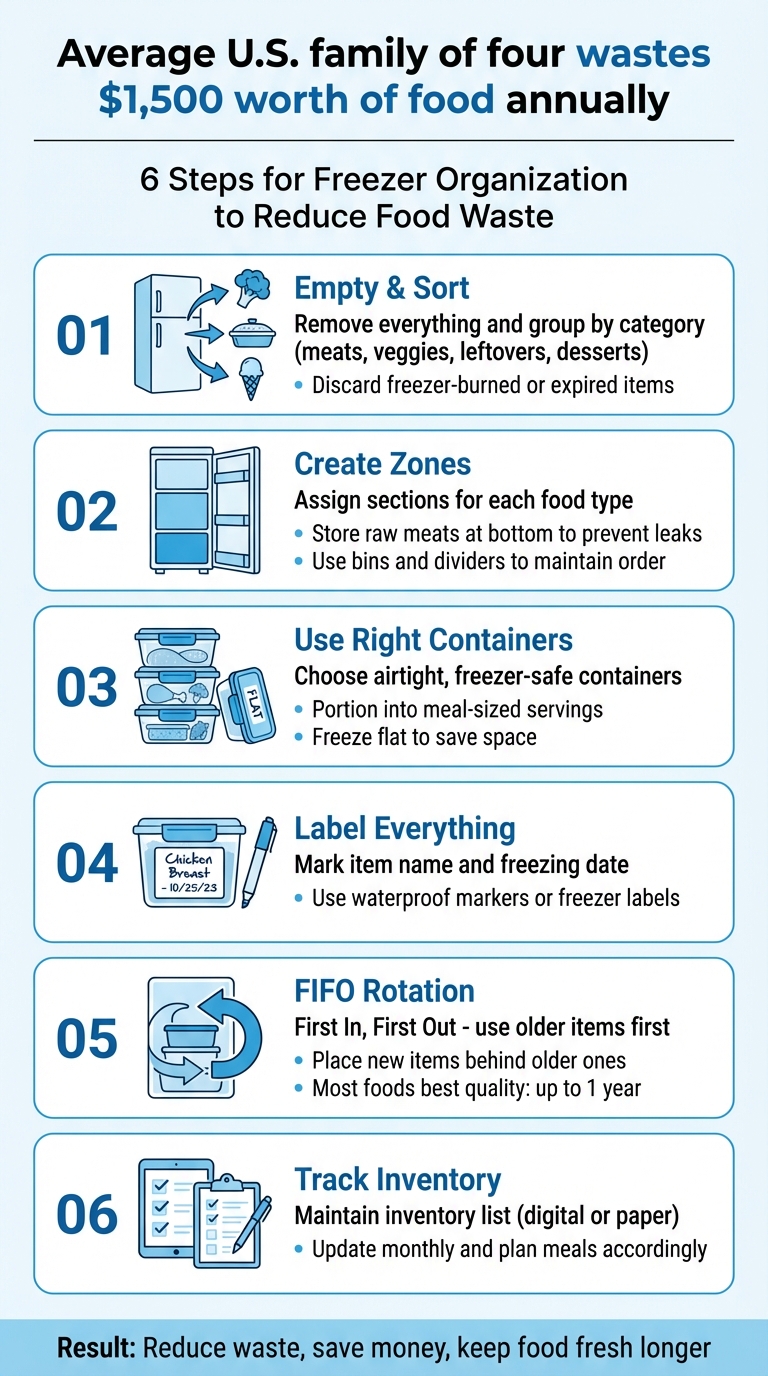
A messy freezer leads to wasted food and money. The average U.S. family of four throws away $1,500 worth of uneaten food annually, much of it forgotten in the freezer. Organizing your freezer can prevent this by keeping food visible, accessible, and fresh for longer. Here's how:
- Clear it out: Empty the freezer, sort items into categories (meats, veggies, etc.), and toss expired or freezer-burned food.
- Create zones: Assign sections for specific food types and store raw meats at the bottom to prevent leaks.
- Use proper containers: Opt for airtight, stackable, freezer-safe options to prevent freezer burn and save space.
- Label and date: Mark every item with its name and freezing date to track freshness easily.
- FIFO system: Use older items first by placing them at the front or top.
- Track inventory: Maintain a list to avoid overbuying and ensure nothing gets forgotten.
6-Step Freezer Organization Process to Reduce Food Waste
How to Organize Your Freezer to Save Money | Easy Freezer Organization Tips upright & chest freezer
Step 1: Empty Your Freezer and Remove Unwanted Items
The first step to getting your freezer in order is to take everything out. Clearing it completely is the only way to figure out what you’re working with. Cleaning expert Erica Young emphasizes:
"Empty your freezer completely. This is the only way to see exactly what you have and clear out expired and freezer-burned food".
While you're emptying it, keep your frozen items safe by placing them in a cooler or a secondary freezer, if available. Lay everything out on a flat surface so you can easily assess what you have. Once the freezer is empty, start grouping similar items together to make reorganizing a breeze.
Group Similar Items Together
Sort your freezer contents into categories like meats, veggies, leftovers, desserts, and pre-packaged meals. This not only reveals duplicates - like three bags of frozen peas - but also helps you plan how much space each category needs. Corey Pence, Senior Manager of In-Home Organizing at The Container Store, explains:
"The key to organizing any space is categorization. Group similar foods such as meats, vegetables, desserts, and leftovers into freezer-safe containers".
As you sort, remove bulky packaging, like cardboard boxes, to get a better sense of how much space the actual food will take up. This approach keeps things efficient and makes reorganizing smoother.
Throw Out Expired or Freezer-Burned Food
Now it’s time to decide what stays and what goes. While food stored at 0°F is technically safe to eat indefinitely, its quality declines over time. Look for signs like ice crystals or discoloration, which indicate freezer burn. Generally, freezer burn starts affecting food quality after about three months.
A good rule of thumb is the one-year guideline. Corey Pence advises:
"Most frozen foods are good for up to a year, so if you haven't used something in the past 365 days, it's a clear sign you probably won't. It's time to get rid of it".
Here's a quick reference table to help you gauge how long foods maintain their quality:
| Food Type | Quality Storage Guidelines |
|---|---|
| Hamburger and ground meats | 3 to 4 months |
| Steaks, chops, and roasts | 4 to 12 months |
| Whole chicken or turkey | 1 year |
| Chicken or turkey pieces | 9 months |
| Soups and stews | 2 to 3 months |
| Leftover cooked meat/poultry | 2 to 6 months |
| Pizza | 1 to 2 months |
If you’re unsure about the quality of an item, thaw it in your refrigerator and use your senses. Heather Billings, Senior Waste Reduction Consultant at the Center for EcoTechnology, explains:
"For most foods, the risks are of spoilage, which is going to be apparent... If the food is spoiled, you should be able to see, smell, and taste it".
Be firm during this step. There’s no need to hold on to food you know you won’t eat - it’s just taking up space.
Step 2: Divide Your Freezer into Food Categories
With your freezer now empty and sparkling clean, it’s time to set up clear zones. Dividing your freezer by food type not only makes it easier to locate items but also helps prevent food from disappearing into the abyss at the back. This setup lays the groundwork for efficient storage, proper portioning, and smoother rotation later on.
Think of your freezer as a filing cabinet, with each section serving a specific purpose. Lisa Freedman, Executive Lifestyle Director at The Kitchn, offers an important safety tip:
"Store meat and fish at the very bottom. This way, if something were to leak, the mess won't be dripping down through your entire freezer".
In addition to safety, keep in mind that temperature can vary slightly within your freezer, so organizing based on these differences can make a big impact.
Assign Sections for Each Food Type
Designate specific areas for different food categories. For example, create zones for proteins, vegetables, fruits, pre-made meals, carbohydrates, desserts, and leftovers. Place items you grab often, like frozen fruit or waffles, at eye level for convenience. Meanwhile, raw meats and seafood should always go in the lowest section to avoid any cross-contamination issues.
Leftovers and pre-made meals should be stored where you can see them easily. This visibility not only keeps them top of mind but also helps you use them before freezer burn sets in.
As for the freezer door, reserve this space for items that handle slight temperature fluctuations well, such as nuts, flour, butter, yeast, and ice packs. These are less sensitive to the frequent opening and closing of the door.
Use Bins or Dividers to Keep Things Organized
Bins are your best friend when it comes to freezer organization. Once you’ve sorted your freezer into zones, bins or dividers can help maintain order. If your freezer lacks built-in drawers, clear plastic bins can act as pull-out compartments, making it easy to group similar items. Lisa Freedman suggests:
"Use bins to create drawers. When there are no drawers, you can make them with clear bins. Use them to group like with like items, and then you can just pull one out to see what's in there".
For flat items like frozen meat packages or bags of soup, magazine holders work wonders. Store them upright, so you can "file" them vertically, much like organizing records. This eliminates the hassle of digging through a messy pile. To maximize vertical space, use shelf risers for shorter items, and divided racks to separate slim vegetable bags.
If you’re working with a chest freezer, stackable wire baskets are a game-changer. Use these to create layers - place frequently used items in the top baskets and bulk purchases at the bottom. This way, you can access what you need without rummaging through everything.
Step 3: Use the Right Containers and Portion Sizes
Once you’ve organized your freezer into clear zones, the next step is all about selecting the right containers and portioning your food effectively. This approach not only helps preserve freshness but also prevents freezer burn and keeps your meals easy to access. By focusing on these details, you’ll ensure your frozen foods stay in great shape and are ready to use when you need them.
Choose Freezer-Safe Stackable Containers
Airtight containers are your first line of defense against freezer burn. As Karrie Truman, author of Seriously Good Freezer Meals, explains:
"Air that sneaks into a container or bag after it's been closed can lead to freezer burn, ice crystals, and dry, leathery food".
Look for containers with secure latches or silicone seals to keep air out. Opt for clear materials - whether glass or high-quality plastic - so you can easily see what’s inside without opening the lid and letting cold air escape.
The material you choose depends on how you plan to use the food. Borosilicate glass containers are ideal for foods you’ll reheat directly, as they can handle the transition from freezer to oven or microwave without cracking. Lightweight, BPA-free plastic containers are more durable and stackable, making them great for everyday use. For liquids, silicone trays work well for freezing small, measured portions that thaw quickly.
Don’t forget to leave room for expansion. Frozen food expands, so it’s important to leave some headspace in your containers. For wide-mouth containers, leave about 0.5 to 1 inch of space, and for narrow openings, aim for at least 1.5 inches. The National Center for Home Food Preservation advises:
"It's best to freeze foods in a container that isn't overly large. You don't want to go too small either, because food expands as it freezes".
Divide Food into Meal-Sized Portions
Avoid freezing large quantities of food in one block. Bulk packs of meat or leftovers frozen together can turn into a solid mass that’s impossible to separate without defrosting the entire thing. Instead, portion proteins, soups, and leftovers into meal-sized servings before freezing. This way, you only thaw what you need, reducing waste.
Freezing items flat can save both space and time. For liquids like soups or sauces, pour them into freezer bags, press out the air, and lay them flat on a baking sheet to freeze. Once solid, you can stack them neatly. Food writer Valerio Farris sums it up perfectly:
"Freeze flat. It's a great way to save space and decrease thaw time".
For ground meat, use a spoon to create indentations before freezing. This makes it easy to break off smaller portions as needed. Small amounts of stock, pesto, or tomato paste can be frozen in ice cube trays or silicone molds and then transferred to a larger freezer bag for storage.
Ditch bulky packaging to maximize freezer space. Items like waffles, chicken nuggets, or ice pops often come in oversized cardboard boxes. Transfer them to freezer bags instead, and tape the cooking instructions directly onto the bag so you don’t lose them. This simple switch not only frees up space but also makes meal prep faster and more efficient.
Step 4: Label All Items with Dates and Contents
Once your meals are portioned and containers are ready, the next step is crucial: labeling everything clearly. Without proper labels, even the most organized freezer can turn into a chaotic collection of mystery meals and forgotten leftovers. Unlabeled food often goes unnoticed, gets pushed to the back, and eventually becomes waste.
Write the Item Name and Freezing Date
Always label each item with its name and the date it was frozen. Lisa Freedman, Executive Lifestyle Director at The Kitchn, emphasizes this simple but essential practice:
"Everything homemade needs to be clearly labeled and dated the day it's frozen".
This applies to all frozen items - leftovers, batch-cooked meals, stocks, or anything prepped for later. While food stored at 0°F remains safe indefinitely, its quality can decline over time. For instance, soups generally retain their texture for about two months, while an uncooked whole chicken stays at peak quality for up to a year. Adding the freezing date helps you keep track of freshness and ensures you use items before they lose their flavor or texture.
To make things even more organized, label freezer bins and shelves by category - like "Meats", "Vegetables", or "Leftovers." This makes it easy for everyone in your household to find what they need and keep the system tidy.
Use Waterproof Markers or Labels
Choose a permanent, water-resistant marker or specialized freezer labels for your labeling needs. A Sharpie marker is a popular choice because it won’t smudge or fade, even in the cold and damp conditions of a freezer. Pair it with masking tape for a cost-effective solution, or go for specialized freezer labels that are designed to resist water and leave no residue behind.
Erica Young, a cleaning and home décor expert at Taste of Home, highlights the importance of durable labeling:
"Labels track the date and contents of frozen food containers. This set of 500 labels is water-resistant and won't leave a residue".
You can find bulk packs of water-resistant labels - 500 for about $6.99 - which makes this a budget-friendly upgrade. If you use reusable containers, consider dissolvable food labels that are freezer-safe and wash off completely during cleaning, leaving no sticky residue. For wire shelves, where regular labels might not stick, attach them to the shelf edges with binder clips for a practical workaround.
Step 5: Use First-In-First-Out (FIFO) Rotation
Now that your food is labeled and organized, it’s time to put a FIFO system into action. This method ensures you're using older items first, keeping food quality high and reducing waste. While frozen foods remain safe indefinitely, their texture and flavor can start to decline over time. Most frozen foods are at their best quality for up to a year, so proper rotation helps you enjoy them while they’re still delicious.
The key to FIFO is simple: make sure older items are used before the newer ones.
Place New Items Behind Older Ones
When adding new items to your freezer, always place them behind the older ones. For chest freezers, stack the newer items at the bottom and the older ones on top. If you’re using flat-frozen bags, store them vertically with the dates clearly visible - this makes it much easier to grab the right one.
To make your rotation even smoother, pair it with a reliable inventory system.
Track Usage with an Inventory List
Keeping an inventory list isn’t just about knowing what’s in your freezer - it’s a tool that helps you plan meals and avoid forgetting items buried in the back. As the University of Georgia Cooperative Extension explains:
"By keeping an inventory, you will know your freezer's contents at all times. It also helps to keep foods from being forgotten."
Consider using a magnetic dry-erase board or a paper list attached to your freezer door. Organize it by food category and update it regularly, ideally once a month. During your monthly check, take the opportunity to rearrange items, refresh your zones, and remove anything outdated. Keeping this habit ensures your freezer stays efficient and easy to manage.
Step 6: Track Your Freezer Inventory with Meal Planning Tools
Keeping a paper list on your freezer door might seem practical, but it can quickly become a mess with daily use. Switching to digital tools offers a cleaner, more efficient way to keep track of your frozen items. These tools provide a searchable inventory and help you use your food before it expires. Moving from paper to digital not only boosts accuracy but also makes managing your freezer much easier.
Use Honeydew Recipe Manager for Meal Planning
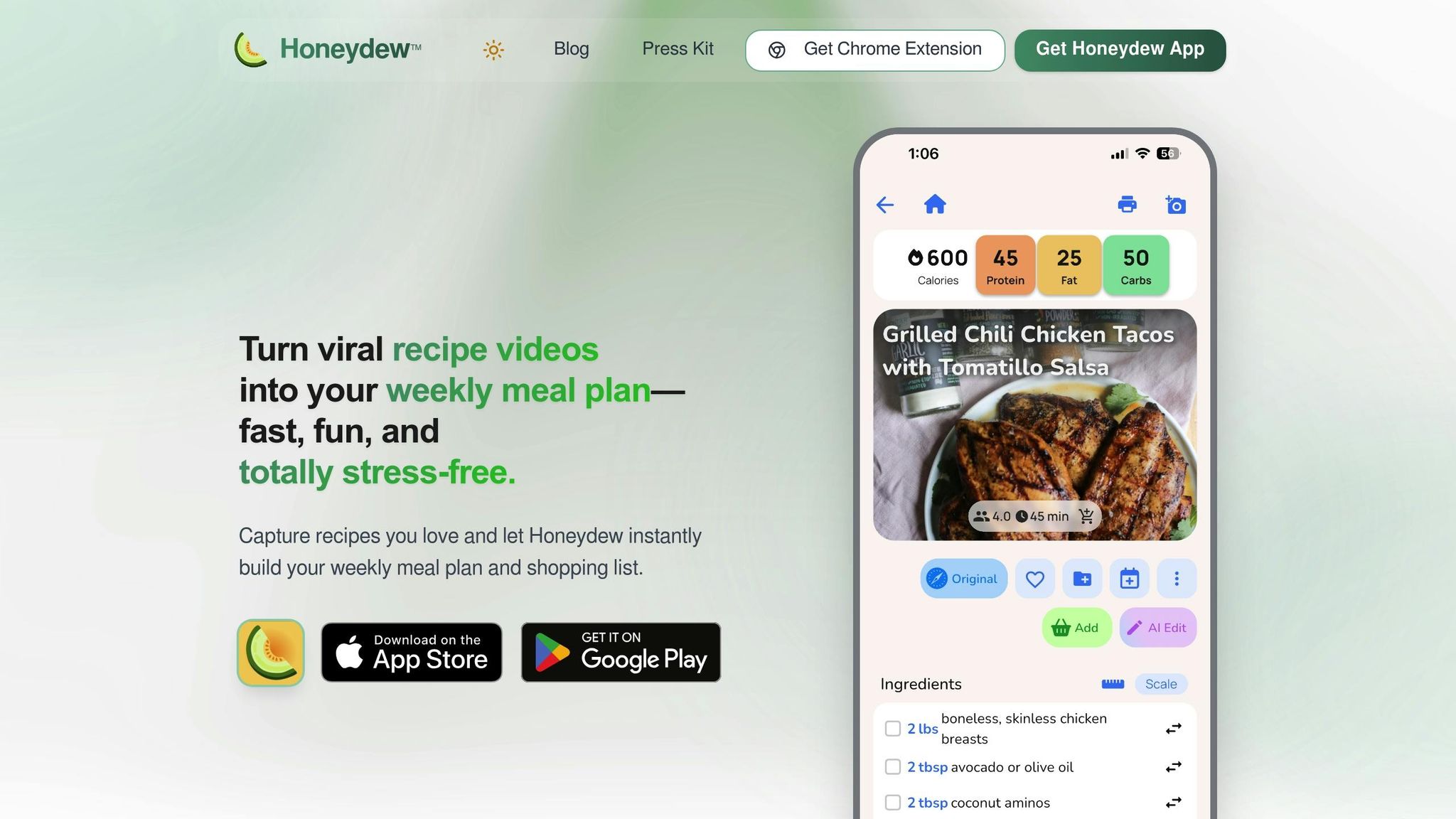
The Honeydew Recipe Manager transforms your freezer inventory into meal plans you can actually use. By logging your frozen items, the app’s AI suggests recipes tailored to what you already have on hand. This system helps you plan meals around your current stock, cutting down on waste and unnecessary grocery expenses.
The app also mirrors your freezer’s organization, making it easier to locate items. Plus, you can update your inventory in real time - cross off items as you use them to keep the AI planner accurate. This way, it won’t recommend recipes that require ingredients you’ve already used up. It’s a simple yet effective way to complement your freezer organization with smart technology.
Optimize Your Inventory and Reduce Waste
Accurate tracking is key to making the most of your freezer. Regularly review your inventory to focus on items that are nearing their peak quality. Honeydew’s AI takes this a step further by generating meal plans that prioritize ingredients before they lose their freshness. Since most frozen foods are at their best for about three months, this feature ensures nothing goes to waste.
For missing ingredients, Honeydew integrates with Instacart, letting you order exactly what you need right away. This streamlined shopping approach avoids overbuying and keeps your freezer organized. As one satisfied user, James L., shared:
"The smart grocery lists save me hundreds of dollars a month".
Conclusion
Keeping your freezer organized isn’t just about tidiness - it’s a practical way to save money and reduce food waste. By clearing it out, sorting items into categories, using the right containers, labeling everything with dates, and following the FIFO (First In, First Out) method, you can create a system that works. It’s worth noting that the average American family of four throws away around $1,500 worth of food every year - an amount that could be significantly reduced with better freezer management.
The key to success lies in visibility and tracking. As Regina Harmon, CEO of the Food Recovery Network, puts it:
"Establishing a running inventory of what foods you have at home will always be worth the extra time".
This principle of knowing what you have ensures you can make the most of your frozen goods. Keep in mind that most soups retain their best quality for about two months in the freezer, while other foods can last up to a year.
To take your system to the next level, consider using digital tools like Honeydew Recipe Manager. This app leverages AI to turn your freezer inventory into meal plans, suggesting recipes based on what you already have and prioritizing items nearing their quality limit. Plus, it can sync with Instacart, making it easy to grab any missing ingredients. By pairing your organized freezer with smart tools, you can maximize both convenience and savings.
FAQs
How can I store food in the freezer to avoid freezer burn?
To keep freezer burn at bay, ensure your food is wrapped securely and stored in airtight, freezer-safe containers or bags. Press out as much air as you can before sealing - using a straw to remove the extra air is a handy trick. Maintain your freezer at a steady 0°F (-18°C) and minimize temperature fluctuations by limiting how often you open the door. Keeping your freezer organized and labeling items with dates can make it easier to use them before they lose quality, helping to cut down on waste.
How does using a FIFO system help reduce food waste in my freezer?
Keeping a FIFO (First In, First Out) system in your freezer is a smart way to make sure older items get used before newer ones. This straightforward approach helps prevent food from being forgotten and going bad, cutting down on waste and saving you money in the process.
An organized freezer with regularly rotated items means you’ll always have a clear idea of what’s available. This can simplify meal planning and even save you from making extra trips to the store. And let’s be honest - having a tidy freezer also means less time rummaging around for that one ingredient you need!
How can organizing my freezer help reduce food waste?
Keeping your freezer organized can make a world of difference in managing your food. It allows you to see exactly what you have, so you can use up older items before they spoil. By labeling everything clearly and rotating your stock, you’ll avoid the dreaded forgotten leftovers or expired items hiding in the back.
Using airtight containers or freezer bags is another game-changer. These help prevent freezer burn, which means your food stays fresh longer. An organized freezer doesn’t just cut down on waste - it also saves you time and money when it comes to meal planning and grocery shopping.