Top 7 Galangal Substitutes for Southeast Asian Cuisine
• Updated
If you’re cooking Southeast Asian dishes and can’t find galangal, don’t worry - there are several substitutes that can help replicate its unique citrusy, pine-like flavor. Here are the best options:
- Ginger: Widely available, but spicier and less citrusy. Add lemon zest or lemongrass to get closer to galangal’s profile.
- Fingerroot: Offers earthy, peppery notes but lacks the citrus undertone. Use half the amount of galangal.
- Lemongrass + Kaffir Lime Leaves: A great combination for citrusy and floral notes, though less earthy than galangal.
- Turmeric + Horseradish: Turmeric adds earthiness, while horseradish provides sharp heat. Best for rich dishes.
- Lime Zest + Ginger: A simple mix that mimics galangal’s citrusy and warming notes. Works well in soups and curries.
- Dried or Powdered Galangal: Convenient but less aromatic. Rehydrate slices for better flavor.
- Mace + Ceylon Cinnamon: A creative option for spiced dishes, offering mild citrus and peppery warmth.
Each substitute works best in specific recipes, so choose based on your dish. For example, lemongrass and kaffir lime leaves shine in soups, while turmeric and horseradish suit curries or stews. Adjust quantities carefully to maintain balance.
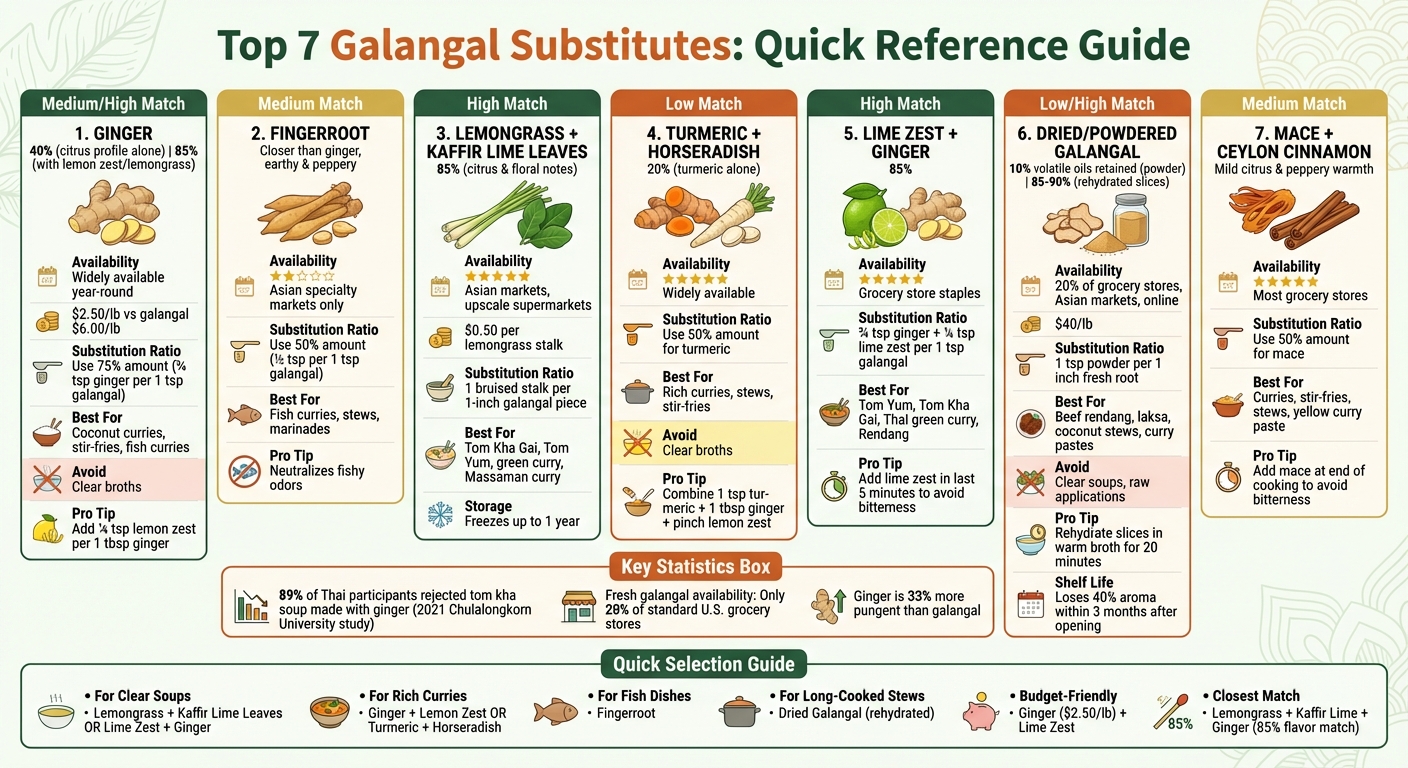
Galangal Substitute Comparison Chart: Flavor Match, Availability & Best Uses
1. Ginger
Flavor Similarity to Galangal
Ginger has a spicy-sweet flavor with a peppery kick, which contrasts with galangal's citrusy, pine-like, and earthy notes. While they come from the same botanical family, ginger's heat is much sharper and can easily overpower the delicate balance of Southeast Asian broths. Galangal's unique flavor comes from compounds like 1,8-cineole and alpha-pinene, which ginger lacks. Instead, ginger's warmth comes from gingerols.
In a 2021 blind taste test conducted by Chulalongkorn University, 89% of Thai participants rejected tom kha soup made with ginger, describing it as "unbalanced" and "medicinal". Bangkok-based Chef Nonglak summed it up: "Galangal is the soul of tom kha. Ginger makes it taste like… dirty medicine". To better replicate galangal's subtle citrus tone when using ginger, you can mix in 1/4 teaspoon of lemon zest or a touch of lemongrass for every tablespoon of ginger. These adjustments can help bridge the flavor gap, though the difference remains noticeable.
Availability in the United States
Ginger is far easier to find in the U.S. compared to galangal. It’s a year-round staple in the produce sections of most grocery stores and is generally more affordable. In contrast, fresh galangal is often limited to Asian specialty stores or higher-end supermarkets, making ginger the go-to substitute for most home cooks.
Best Use Cases in Southeast Asian Dishes
Thanks to its bold flavor and wide availability, ginger works well in coconut milk–based Thai curries, where the richness of the milk helps tone down its intensity. It also shines in stir-fries and fish curries, where its strong taste complements other robust ingredients. However, ginger is less suitable for clear broths, as it can muddy the flavors and appearance. If you're substituting ginger for galangal, use about 75% of the amount (e.g., 3/4 teaspoon of ginger for every 1 teaspoon of galangal) to account for its stronger heat and pungency.
2. Fingerroot
Flavor Similarity to Galangal
Fingerroot belongs to the same botanical family as galangal but delivers a more pungent, earthy, and medicinal flavor. It shares a peppery warmth with galangal, though it lacks the citrusy and pine-like undertones that define galangal's profile. Food writer and chef Andrew Gray notes, "Fingerroot is a closer match to galangal than ginger, offering a similar flavor profile with earthy and slightly peppery notes". While both ingredients bring warmth to dishes, fingerroot's flavor leans more intense and less balanced by brighter notes.
Because of its bold flavor, you should use only half the amount of fingerroot compared to galangal in recipes. For instance, if a recipe calls for 2 teaspoons of galangal, start with just 1 teaspoon of fingerroot and adjust as needed. Its unique taste requires precise measurement, especially since it can be tricky to source.
Availability in the United States
Finding fingerroot in typical U.S. grocery stores can be difficult. Instead, look for it at Asian specialty markets, particularly those that stock Thai or Cambodian ingredients. You may find it fresh, frozen, dried, or in powdered form.
Best Use Cases in Southeast Asian Dishes
Fingerroot's strong, medicinal flavor works beautifully in Southeast Asian cuisine, particularly in fish curries, stews, and marinades. It’s also effective at neutralizing strong fishy odors. The rhizome slices easily and integrates well into curry pastes and marinades, without the woody texture that galangal sometimes has. Be sure to peel it before use and start with half the amount of galangal the recipe calls for, adjusting to taste as you go.
3. Lemongrass and Kaffir Lime Leaves
Flavor Similarity to Galangal
Lemongrass and kaffir lime leaves, when combined, do a great job of replicating galangal's citrusy and pine-like flavors. Lemongrass brings a lemony aroma with a hint of pine, while kaffir lime leaves contribute a bright, floral citrus note. That said, lemongrass on its own lacks the peppery warmth and earthy undertones that galangal naturally provides. As food writer Maya Gonzalez points out, "Lemongrass adds essential citrus notes missing in ginger alone".
To get closer to galangal's complex flavor, pair lemongrass with fresh ginger. This combination introduces the peppery kick that lemongrass lacks. Together, they achieve about an 85% flavor match to galangal. In contrast, using just ginger only retains around 40% of galangal's citrusy profile. This duo not only captures the essence of galangal but is also easy to source in the U.S.
Availability in the United States
Both lemongrass and kaffir lime leaves are widely accessible in the U.S. You can find them at Asian markets, specialty food stores, and even in many upscale supermarkets. Fresh lemongrass is quite affordable, costing around $0.50 per stalk, which is significantly cheaper than galangal at $6.00 per pound. Plus, these ingredients freeze well. Stored in airtight bags, they can last up to a year in the freezer.
Best Use Cases in Southeast Asian Dishes
This substitution shines in classic Thai dishes like Tom Kha Gai and Tom Yum soups, as well as in curries such as green, Massaman, and red curry. To replace a 1-inch piece of galangal, use a bruised lemongrass stalk, crushing it lightly to release its oils. For curry pastes, mix equal amounts of minced lemongrass and kaffir lime leaves to match the required volume of galangal. Just remember to remove whole lemongrass stalks and kaffir lime leaves before serving, as they are tough and not meant to be eaten. This blend ensures authentic Southeast Asian flavors when fresh galangal isn’t available.
4. Turmeric and Horseradish
Flavor Similarity to Galangal
Turmeric, a member of the ginger family, brings a mild, earthy bitterness to dishes but falls short of galangal's sharp citrus, pine, and peppery notes. According to professional testing, turmeric alone only captures about 20% of galangal's flavor profile.
"Turmeric provides earthy notes but lacks galangal's citrus-pepper profile." – Chef Lisa Chang
On the other hand, horseradish offers a sharp, pungent heat that closely mimics galangal's spicy intensity.
"Horseradish is a great substitute when seeking to replicate the spicy intensity of galangal." – Muhammad Shahid
For a more balanced substitution, try combining 1 teaspoon of turmeric, 1 tablespoon of fresh ginger, and a pinch of lemon zest. This mix helps capture some of galangal's complexity and can expand your options in recipes where galangal isn't available.
Availability in the United States
Both turmeric and horseradish are easy to find in the U.S. Dried turmeric is widely available and affordable, often stocked in supermarkets due to its popularity as a health supplement. Fresh turmeric can usually be found at Asian markets. Horseradish, commonly sold in both fresh and prepared forms, is available in most grocery stores, typically in the condiment or produce sections.
Best Use Cases in Southeast Asian Dishes
Turmeric works well in curries, rice dishes, and soups, where its earthy warmth blends with other spices. If you're using turmeric as a galangal substitute, use half the amount to avoid overpowering bitterness. However, it's best to skip turmeric in clear broths like Tom Yum, as its vibrant yellow color can dramatically change the dish's appearance .
Horseradish is a better fit for heartier dishes like stir-fries, sauces, or meat-based recipes, where its bold, pungent heat can stand out. Use it sparingly, though, as its strong flavor can easily take over. Both turmeric and horseradish work best in rich, flavorful dishes that benefit from their intensity.
5. Lime Zest and Lime Juice with Ginger
Flavor Similarity to Galangal
Combining ginger with lime zest and juice creates a flavor profile that closely resembles galangal's unique citrus and pine notes. While ginger provides a peppery warmth, it doesn’t naturally include galangal's bright citrus undertones. The addition of lime zest and juice fills this gap, offering the necessary balance of heat and citrus.
"Fresh ginger lacks [galangal's] citrus backbone, making direct swaps unreliable. The zest mimics galangal's limonene compounds." – Lisa Chang, Food Writer
This mixture can replicate about 85% of galangal's flavor. To substitute, use 3/4 teaspoon of ginger combined with 1/4 teaspoon of lime zest (or 1/2–1 tablespoon of lime juice) for every teaspoon of galangal . For best results, add lime zest toward the end of cooking to avoid bitterness. This approach not only captures galangal's essence but also relies on ingredients that are easy to find.
Availability in the United States
Ginger and limes are staples in most U.S. grocery stores, making this substitute both practical and budget-friendly. Ginger is especially economical, costing about $2.50 per pound compared to galangal's average price of $6.00 per pound.
Best Use Cases in Southeast Asian Dishes
This substitute shines in dishes like Tom Yum, Tom Kha Gai, and Thai green curry, where citrusy brightness is key . It’s also a great fit for Malaysian Rendang, Thai-style salad dressings, and marinades that call for a zesty punch. For clear soups like Tom Yum, use grated ginger with lime zest and juice to maintain the dish’s aromatic quality. In curry pastes, blending ginger with lime zest effectively mimics galangal’s complex flavor.
6. Dried or Powdered Galangal
Flavor Similarity to Galangal
Dried or powdered galangal captures the earthy, pine-like essence of fresh galangal but loses its bright citrus and floral undertones. In fact, powdered galangal retains only about 10% of its volatile oils, which significantly diminishes its aromatic complexity, especially in delicate dishes. Once opened, its aroma fades quickly - up to 40% within just three months.
"Galangal powder isn't a lazy shortcut - it's a strategic tool for busy cooks. But unlike ginger powder, it loses floral notes fast, making it useless in clear Thai soups where fresh rhizome shines." – Lisa Chang, Food Writer
That said, dried galangal slices can be rehydrated in warm broth for about 20 minutes, preserving 85–90% of their flavor compounds. When substituting, use 1 teaspoon of powdered galangal for every 1 inch of fresh root. For stews, some chefs suggest using only one-third of the fresh amount to account for its concentrated earthiness.
Availability in the United States
Finding dried or powdered galangal in the U.S. can be a bit of a challenge. It's absent from around 80% of standard grocery stores and is mainly stocked by Asian specialty markets or online retailers like Amazon and Kalustyan's in New York. It may also appear under names like "Laos powder", "Thai ginger", or "Siamese ginger".
Expect to pay about $40 per pound for authentic galangal powder. Be cautious of cheaper options, as they may be adulterated with ginger or starch. High-quality powder should have a pale beige color; a yellow hue signals oxidation, and a dusty smell instead of sharp, piney notes indicates it’s stale.
Best Use Cases in Southeast Asian Dishes
Powdered galangal works best in recipes with long cooking times, where its concentrated flavor can blend seamlessly. It’s ideal for dishes like beef rendang, laksa, coconut-based stews, dry spice rubs, and homemade curry pastes. These dishes benefit from its earthy depth without requiring the fresh rhizome's moisture or floral notes.
However, powdered galangal is not suitable for clear Thai soups like Tom Yum or Tom Kha Gai. Its lack of citrus brightness and floral complexity can lead to a flat, muddy flavor profile. Similarly, it’s best avoided in raw applications like salad dressings, where its dusty taste can overpower.
7. Mace or Ceylon Cinnamon
Flavor Similarity to Galangal
For a creative way to replicate the flavor of galangal, try combining mace and Ceylon cinnamon. Together, these two spices can mimic the complexity of galangal's taste. Cinnamon brings in light peppery notes, while mace contributes a mild spiciness with a touch of citrus.
"Cinnamon provides the light peppery notes of galangal; mace adds a subtle spiciness that includes mild citrus notes." – Spiceography
Ceylon cinnamon, often preferred in Thai dishes, delivers a gentle sweetness that enhances flavors without overwhelming them. Mace, derived from the outer covering of the nutmeg seed, adds a mix of cinnamon-like warmth and a hint of pepper. This pairing captures the piney, citrusy essence of galangal quite effectively.
Availability in the United States
Both mace and Ceylon cinnamon are easy to find in the U.S., making them a convenient substitute for galangal. Ground mace is commonly sold by brands like McCormick and can be found in most grocery stores, while Ceylon cinnamon is also widely available - just check the label to ensure you're getting the right variety. For more options, international markets like H Mart and 99 Ranch Market or online stores are great places to shop. Mace is typically sold as whole "blades" or in powdered form.
Best Use Cases in Southeast Asian Dishes
This spice duo is particularly suited for Southeast Asian recipes like curries, stir-fries, and hearty stews. If you're replacing powdered galangal, use ground mace at half the amount specified in the recipe. To avoid bitterness, add mace toward the end of cooking. Ceylon cinnamon is a staple in yellow Thai curry pastes and Indonesian rendang, while mace is often included in traditional Southeast Asian spice blends. Use these spices sparingly to achieve the right balance. This combination is a practical solution when fresh galangal is out of reach.
Ultimate Guide to GALANGAL - Hot Thai Kitchen!

How to Use Galangal Substitutes in Your Cooking
When swapping galangal with other ingredients, precise measurements and timing are crucial to maintain the essence of Southeast Asian dishes. These substitutions can preserve much of the original flavor, but slight adjustments will help you get closer to galangal's unique taste.
For fresh ginger, which is 33% stronger than galangal, use ¾ teaspoon of ginger for every teaspoon of galangal needed. To mimic galangal's citrusy undertone, add ¼ teaspoon of lemon zest (or 1/8 teaspoon of lemon juice) for every tablespoon of ginger you use.
If you're working with galangal powder, its concentrated flavor means you only need ½ teaspoon of powder to replace 1 inch of fresh galangal. For soups like Tom Kha, a mix of 1 part ginger to 1.5 parts lemongrass can help recreate galangal's floral and citrusy notes. Substituting with fingerroot? Use ½ to 1 part fingerroot for every 1 part galangal, adjusting based on its stronger flavor.
Timing also plays a vital role. When using ginger and lemon zest, sauté them in oil for about 30 seconds to release their essential oils. For an added citrus kick, sprinkle more lemon zest into your dish during the last 5 minutes of cooking - this prevents any bitterness. If you're using dried galangal slices, soak them in warm broth (not water) for 20 minutes to revive their volatile oils before adding them to slow-cooked recipes.
"Ginger is 33% more pungent. Overuse creates bitter heat." – Maya Gonzalez, Latin American Cuisine Specialist
Each substitute will bring its own twist to the dish. Ginger adds more heat, while lemongrass provides a floral aroma but lacks the earthiness of galangal. If you're using turmeric for its color, apply a 3:1 ratio of turmeric to galangal and expect a slightly bitter, earthy flavor along with a vibrant yellow hue. When using lemongrass, remember to crush the stalks to release their essential oils - don’t mince them too finely.
With these measurements and methods, you can tweak your recipe to suit your needs. For added precision, tools like Honeydew Recipe Manager can help streamline your ingredient substitutions and meal planning.
Find Ingredient Substitutes with Honeydew Recipe Manager

Struggling to find fresh galangal for your Thai curry or Indonesian Rendang? Honeydew Recipe Manager has you covered. This smart app uses AI to suggest ingredient substitutions based on what’s in your pantry, as well as your dietary needs or allergies. It’s like having a culinary assistant that knows all the best swaps, inspired by traditional ingredients like galangal.
One standout feature is Search by Ingredients, which helps you discover Southeast Asian recipes using common substitutes like ginger or fingerroot when galangal is unavailable. If you import a recipe from social media, Honeydew’s AI automatically identifies the ingredients and offers practical alternatives when needed .
With over 100,000 downloads and a stellar 4.8-star rating from more than 6,600 reviews on Google Play, users are raving about its substitution tool.
"The ingredient substitution feature is a game-changer for my dietary restrictions. I can adapt any recipe easily!" – Emily C.
Once you’ve added a recipe to your meal plan, the app takes things further. It creates a smart grocery list with suggested substitutes for hard-to-find items like galangal, organizes the list by store aisle, and even translates international recipes with clear measurements and ingredient terms - all with just a tap.
Honeydew Recipe Manager is available for free on iOS and Android. For those looking for more, the premium Honeydew Plus plan costs $6.99 per month or $39.99 per year, offering unlimited recipe storage and household sharing for up to six people. With users saving around 85,000 recipes every month, it’s a handy tool for anyone diving into the rich flavors of Southeast Asian cuisine .
Conclusion
Fresh galangal can be tough to track down in U.S. markets. Thankfully, these seven substitutes can help you bring the flavors of Southeast Asia to your kitchen.
Ginger with lime zest is one of the easiest options to find. The zest adds a touch of citrus that balances ginger's spicier kick, mimicking galangal's piney and citrusy profile. For Thai soups, pairing ginger with lemongrass and kaffir lime leaves creates a flavor combination that comes close to the real thing.
If you're cooking something slow and hearty, dried galangal is a strong contender. Once rehydrated, it can preserve up to 90% of its original taste. Fingerroot, on the other hand, works particularly well in fish dishes due to its similar botanical qualities. As always, getting the ratios and timing just right makes all the difference.
Choose your substitute based on the dish you're preparing. For example, Indonesian stews pair beautifully with a ginger-lime blend, while Thai curries benefit from the brightness of lemongrass and kaffir lime leaves. With a little creativity and some thoughtful tweaks, you can recreate the vibrant flavors of Southeast Asian cuisine.
FAQs
What can I use instead of galangal in Tom Kha soup?
If you’re out of galangal, try substituting it with a mix of fresh ginger and lemon zest. This pairing mimics the citrusy and mildly peppery essence of galangal, which is crucial for Tom Kha soup's signature flavor. Use an equal amount of ginger as you would galangal, and sprinkle in a touch of lemon zest to suit your taste. While it won’t replicate galangal perfectly, it’s a fantastic alternative that keeps the soup’s flavors well-balanced.
How can I make ginger taste more like galangal?
To replicate galangal's distinct flavor using ginger, mix fresh ginger with a touch of lemon zest. This combination introduces the citrusy and subtly pine-like qualities that define galangal. For a more accurate substitute, opt for young ginger (harvested at approximately 3–4 months old). Its milder, fresher taste aligns more closely with galangal's unique profile.
What are some easy-to-find substitutes for galangal in the U.S.?
Fresh ginger is a simple and widely available alternative to galangal in the U.S. Its flavor is milder and a bit sweeter, but it still brings a warm, aromatic touch that pairs well with most Southeast Asian dishes.
If fresh ginger isn’t an option, dried or ground ginger can work as substitutes, though the flavor won’t be as bold. For recipes that highlight the citrusy notes of galangal, try adding a small amount of lime juice or zest along with the ginger to better replicate the original taste.