German Baking Ingredients: US Alternatives
• Updated
When baking German recipes in the U.S., ingredient differences can impact your results. From flour types to leavening agents, understanding these distinctions is key to achieving the right texture and flavor. Here's what you need to know:
- Flour: German flours (e.g., Type 405) are classified by ash content, while U.S. flours are based on protein. For Type 405, use pastry or cake flour; for Type 550, use all-purpose flour.
- Leavening Agents: German baking powder (Backpulver) is single-acting, reacting only to moisture, while U.S. baking powder is double-acting (moisture and heat). Substitute with care.
- Dairy: German Schlagsahne (36% fat) is richer than U.S. whipping cream (30%). Use heavy cream for better stability.
- Sweeteners: Replace German vanilla sugar with 1–2 tsp of vanilla extract. Adjust liquids when swapping sugar for honey.
- Specialty Items: Substitute Quark with 0% Greek yogurt and Schmand with full-fat sour cream. Use Cream of Wheat for Farina.
For precision, use a digital scale, as U.S. volume measurements can vary. Tools like the Honeydew Recipe Manager simplify substitutions and conversions, ensuring your baked goods meet recipe expectations.
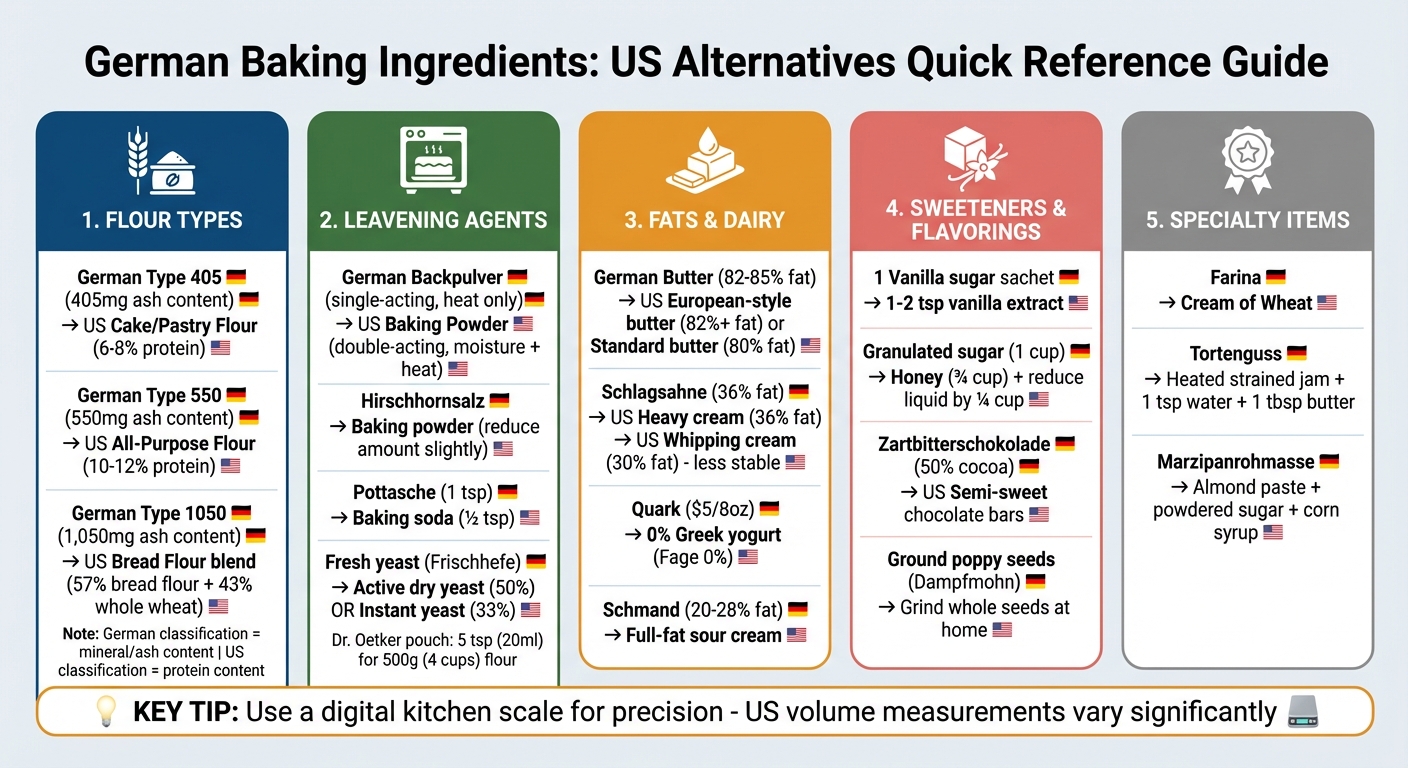
German to US Baking Ingredient Substitution Guide
Baking Basics: Types of German Flour
1. Honeydew Recipe Manager

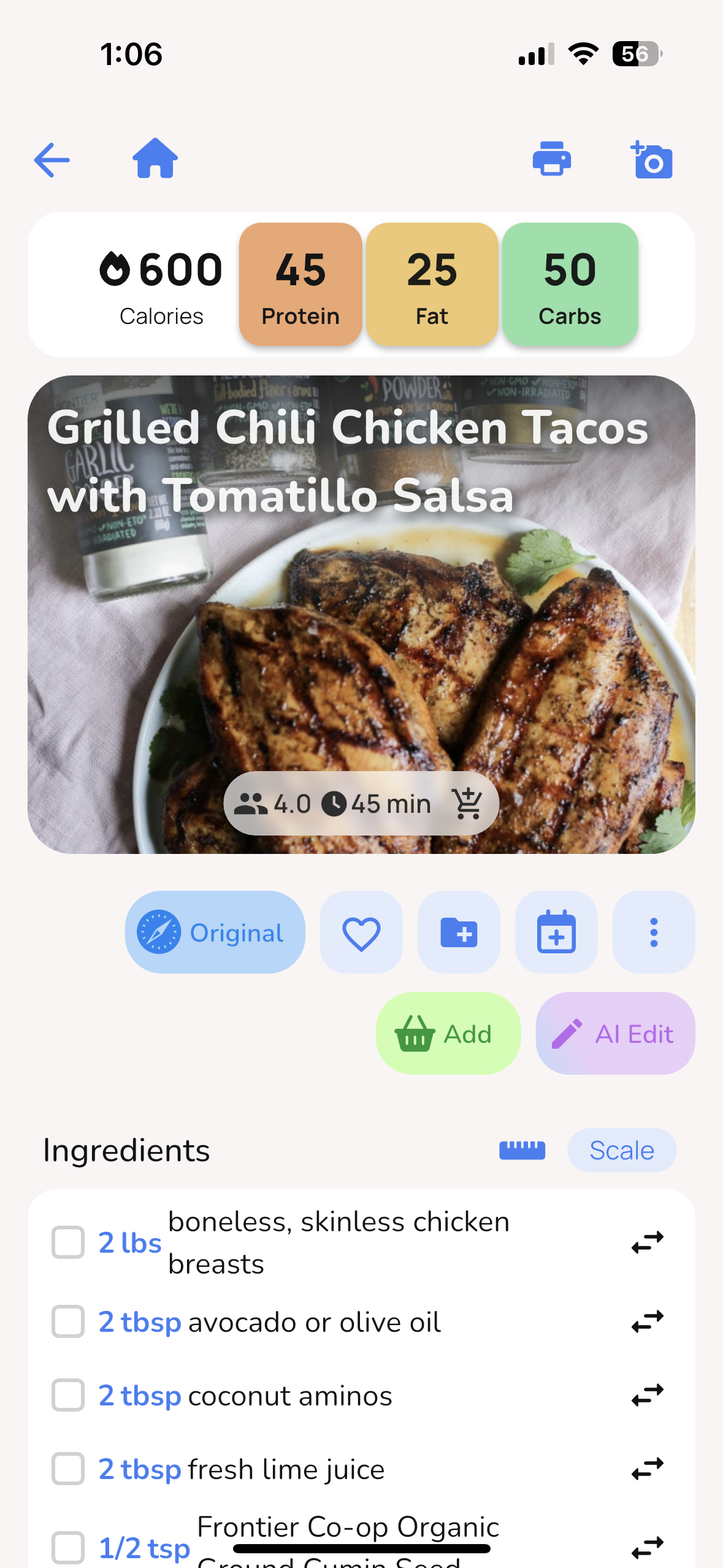
The Honeydew Recipe Manager makes it easier to recreate German recipes in American kitchens by tackling common challenges like measurement conversions and ingredient substitutions. Here's how it works.
One standout feature is its ingredient substitution tool. It swaps out hard-to-find German staples with accessible American alternatives. For instance, Magerquark is replaced with 0% Greek yogurt, and Schmand is swapped for full-fat sour cream. This ensures you can stick to the recipe's spirit without hunting down specialty items.
The app also bridges the gap between German and American flours. It translates German flour types to their U.S. counterparts: Type 405 becomes Pastry or Cake Flour, Type 550 matches All-Purpose Flour, and Type 1050 converts to Bread or High-Gluten Flour. These precise conversions help maintain the texture and structure of baked goods.
Another handy feature is its ability to convert German weight measurements (in grams) into American volume units (like cups). This is particularly useful for ingredients with varying densities, ensuring your recipes turn out just right.
For bakers who love sharing their creations online, the app offers recipe import and translation tools. These features instantly adapt German recipes, letting you recreate the authentic rise, texture, and flavor that make German baked goods so special - all while using ingredients and measurements suited for U.S. kitchens.
2. Flour Types
Functionality in Baking
Flour classification varies significantly between Germany and the United States. German flours are labeled with "Type" numbers, which reflect their mineral content - the ash left behind after burning 100 grams of flour. For instance, Type 405 contains 405 milligrams of ash, while Type 1050 has 1,050 milligrams. The higher the number, the more bran and germ the flour includes, resulting in darker, more robust flours .
In the U.S., flours are categorized by protein content, which determines how much gluten develops when the flour is combined with liquid. Paul Adams, Senior Science Research Editor at America's Test Kitchen, explains:
When you choose a flour for baking, you are choosing how much gluten is going to form, and hence how much structure your baked good is going to have.
For reference, cake flour has a protein content of about 6–8%, all-purpose flour falls between 10–12%, and bread flour ranges from 12–15%.
Substitution Accuracy
The higher protein levels in American wheat can complicate the process of recreating traditional German recipes. Karin Anderson, author of Brot & Bread, highlights this issue:
My German-American rolls were suffering from hyper-glutenism! For a fluffy crumb you need the right kind of flour.
To substitute German Type 405, commonly used in delicate cakes, American cake or pastry flour is a good match. If only all-purpose flour is available, you can lower its protein content by replacing 2 tablespoons of flour per cup with cornstarch. For Type 550, which is akin to standard all-purpose flour, no adjustments are typically needed. To mimic the properties of Type 1050, a blend of 57% bread flour and 43% whole wheat flour works well.
Availability in the US
German flours, particularly specialty types like Type 1050 or rye flours such as Type 997 or 1150, are not commonly found in American grocery stores. These often need to be sourced through specialty retailers. In some cases, "First Clear" flour serves as a close substitute for Type 1050, but it is also not widely available. These differences in flour accessibility often lead to noticeable changes in the texture and structure of baked goods.
Impact on Recipe Outcome
Using the wrong type of flour can significantly alter the texture of your baked goods. For example, substituting American bread flour (12–15% protein) for German Type 550 (approximately 7.52% gluten) can make rolls overly chewy and porous, resembling French bread rather than the airy, soft German Brötchen you're aiming for . Anderson also points out:
American flour does absorb more water. Unfortunately, it's always a bit trial and error to figure out what works best.
3. Leavening Agents
Functionality in Baking
When it comes to baking, the type of leavening agent you use can make or break a recipe. Take German baking powder, or Backpulver, for instance. Unlike the American double-acting variety, Backpulver is single-acting. A popular example, Dr. Oetker "Backin", releases CO₂ only when exposed to heat. On the other hand, American baking powder is double-acting, meaning it starts reacting as soon as it’s mixed with wet ingredients and then reacts again during baking.
This distinction is more than technical - it’s crucial. Double-acting baking powder gives you some flexibility since the batter can rest before baking. But with single-acting Backpulver, you need to work quickly. Once the batter is mixed, it must go straight into a preheated oven, or the rising action will fizzle out before baking even begins.
Substitution Accuracy
If you’re baking German recipes in the U.S., you can use American double-acting baking powder without issue. However, substituting German-style single-acting powder in recipes that require room-temperature activation won’t work. Want to mimic German baking powder at home? Combine cream of tartar and baking soda in a 2:1 ratio.
For more specialized German leaveners, substitutions can be trickier. Take Hirschhornsalz (hartshorn salt), often used in traditional cookies like Springerle. This leavener creates a crisp texture and causes cookies to spread horizontally rather than rise vertically. If you’re substituting, use baking powder but reduce the amount slightly. Another example is Pottasche (potash), a common ingredient in Lebkuchen. For every teaspoon of Pottasche, you can use ½ teaspoon of baking soda instead.
Availability in the US
Finding German baking products in the U.S. can be a bit of a treasure hunt. Dr. Oetker products occasionally show up in the international or organic sections of larger supermarkets, often under labels like European Gourmet Bakery or Dr. Oetker Organics. A standard pouch of Dr. Oetker baking powder contains 5 teaspoons (20 ml) and is designed for 500 grams (about 4 cups) of flour. However, specialty leaveners like Hirschhornsalz and Pottasche are much harder to track down. Your best bet? Look online or visit a German specialty store.
Fresh yeast (Frischhefe) is another staple in German baking, but it’s rare to find in U.S. grocery stores these days. As baker and blogger Karin Anderson points out:
Fresh yeast, the default yeast for German bakers, is not an ingredient easily found in US stores.
Instead, you can rely on active dry yeast or instant yeast as substitutes. For lean doughs, replace fresh yeast with 50% active dry yeast or 33% instant yeast. These adjustments are essential for recreating the authentic textures and flavors of German baked goods in American kitchens.
4. Fats and Dairy
Functionality in Baking
In the U.S., butter must have at least 80% fat, while German butter usually contains 82% to 85% fat. That extra fat plays a big role in baking - it coats the flour proteins more thoroughly, which reduces gluten formation and results in a softer, more tender crumb. Pastry chef Jenni Fields highlights this difference:
Batters made with European butter tend to bake up more tender with a lovely, velvety crumb.
German recipes often call for cultured butter (Sauerrahmbutter), which adds a tangy flavor, while American butter - made from sweet cream - has a milder taste. When it comes to cream, German Schlagsahne (36% fat) is comparable to American heavy cream, but U.S. "whipping cream" (30% fat) might not hold its shape as well for traditional German cake fillings.
Just like with flour and leavening agents, understanding the fat content in butter is essential for achieving the right texture and flavor in German-style baked goods. The fat percentage directly impacts how the final product looks, feels, and tastes.
Substitution Accuracy
To replicate the qualities of German ingredients, it’s important to choose American substitutes that match both the fat content and flavor profile.
For most German recipes, standard unsalted American butter works well. However, European-style butter (with 82% or more fat) can make pastries flakier and enhance the flavor. If you’re looking for a budget-friendly option, domestic European-style butter is often cheaper than imported brands.
For dairy substitutions, German Quark - typically around $5 for an 8-ounce container - can be replaced with no-fat Greek yogurt, such as Fage 0%, for thick fillings. Sour cream is another good alternative, as it closely matches the 20%–28% fat content of Schmand.
Impact on Recipe Outcome
These substitutions influence not only the ingredients themselves but also the texture and flavor of your baked goods.
In laminated doughs, such as those used for croissants and danishes, higher-fat European butter creates better-defined layers and caramelizes more quickly, delivering a rich, nutty flavor. Pastry chef Hsing Chen emphasizes:
Laminated doughs for croissants and danishes are most dependent on the quality of butter used because it is the fat content that creates the best layers and the most prominent flavor.
For simpler treats like cookies and brownies, where butter isn’t the star of the show, standard American butter remains a practical and cost-effective option.
5. Sweeteners and Add-Ins
After diving into flours, leaveners, and fats, let’s explore the role of sweeteners and add-ins in crafting the authentic flavors of German baked goods.
Functionality in Baking
German recipes often call for vanilla sugar sachets instead of the liquid vanilla extract commonly used in the U.S.. While sugar is best known for adding sweetness, it also plays a key role in baking. When heated, sugar caramelizes, contributing to browning through the Maillard reaction. Interestingly, most German granulated sugar is derived from beets, while American sugar comes from cane. Despite this difference, both are chemically identical sucrose.
Honey, however, behaves quite differently. Joanne Chang, owner of Flour Bakery, explains:
honey doesn't create those air pockets [during creaming], and it results in a denser baked good.
This is because honey lacks the sharp crystals that granulated sugar has, which are essential for incorporating air when creamed with butter. As a result, honey isn't suitable for recipes that rely on the creaming method for leavening.
Substitution Accuracy
Understanding how to substitute sweeteners accurately is crucial. For instance, one vanilla sugar sachet can be replaced with 1–2 teaspoons of liquid vanilla.
When swapping granulated sugar for a liquid sweetener like honey, you’ll need to adjust the liquid content in the recipe. Reduce the liquid by 1/4 cup for every cup of liquid sweetener added, and never replace more than half the total sugar. Since honey is sweeter than sugar, use only 3/4 cup of honey for every 1 cup of sugar.
German recipes often incorporate marzipan (Marzipanrohmasse) as a dough ingredient or filling, rather than just as decoration. In U.S. stores, you’ll typically find marzipan and almond paste sold side by side, but they are not interchangeable. Marzipan has a smoother texture and higher sugar content, while almond paste is grittier and less sweet. If needed, you can turn almond paste into marzipan by mixing it with powdered sugar and corn syrup.
Availability in the US
Ingredient availability matters when recreating German recipes. Luckily, standard granulated sugar in the U.S. works just as well as German beet sugar.
However, some ingredients are harder to find. Whole poppy seeds are widely available, but the ground or steamed versions (Dampfmohn) used in Germany are not. Pre-made poppy seed fillings in the U.S. are often overly sweet and sticky, which can alter the recipe’s authenticity. For a better result, buy whole poppy seeds from a store with high turnover and grind them at home using an electric coffee grinder.
When it comes to chocolate, German recipes typically use chocolate with about 50% cocoa content (Zartbitterschokolade), which aligns well with U.S. semi-sweet chocolate bars. Always opt for chocolate bars instead of chips, as chips contain stabilizers that can interfere with melting and blending into batters.
Impact on Recipe Outcome
Liquid sweeteners do more than just change the flavor. Honey, for example, causes baked goods to brown faster due to its glucose and fructose content. It also produces softer, moister textures but can dry out quicker than sugar-based versions. Kye Ameden from King Arthur Baking notes:
using liquid sweeteners in soft cookies will make them slightly crumbly and cakey; they may also spread more than the original version.
Sugar’s hygroscopic nature - its ability to attract and retain moisture - helps baked goods stay fresh longer. This is especially important in layered cakes, where sugar can draw moisture from the cake layers into the frosting if not properly balanced.
6. Specialty Items
Functionality in Baking
When it comes to German baking, specialty ingredients are what truly set these recipes apart. These unique components add distinct textures and flavors that define authentic German baked goods. Take Quark, for instance - a fresh dairy product that’s a must-have for making traditional German cheesecakes (Käsekuchen). It delivers the perfect creamy consistency. Another example is Farina (known as Cream of Wheat in the U.S.), which is often sprinkled on fruit pie crusts to soak up excess juice and keep the crust from turning soggy.
Then there’s Tortenguss, a clear or red glaze that not only holds fruit securely on tarts but also gives them a beautiful glossy finish. And let’s not forget Schmand, a soured cream with a fat content ranging from 20% to 28%. Its ability to hold up under heat makes it ideal for both sweet and savory dishes. These ingredients are essential for creating the authentic flavors and textures associated with German baking.
Substitution Accuracy
When replicating German recipes, substitutions for these specialty items require a bit of finesse. It’s important to understand the role each ingredient plays to find the best alternative. For instance, Nadia Hassani, the author of Spoonfuls of Germany, suggests:
"My take on any baking recipes with quark: go for no-fat Greek yogurt instead."
Greek yogurt with 0% fat closely matches Quark’s thickness, making it a reliable substitute. Similarly, full-fat sour cream works well in place of Schmand due to its comparable fat content and consistency. For Tortenguss, a homemade version can be prepared by heating strained jam or jelly with a teaspoon of water and a tablespoon of butter. This mixture achieves a similar glossy effect, perfect for fruit tarts.
Availability in the US
Finding these specialty ingredients in the U.S. can be a challenge, much like the struggles mentioned earlier with basic German baking staples. For example, Quark is available but often comes at a steep price - around $5.00 for an 8-ounce container - and may include added salt, which isn’t typical in Germany. Tortenguss is rarely stocked in U.S. grocery stores and is mostly available through online retailers. On the other hand, Farina is easy to find as Cream of Wheat in most supermarkets. While Schmand isn’t commonly sold, full-fat sour cream is an excellent and accessible substitute. As for ground poppy seeds (Dampfmohn), they’re rarely sold pre-ground in the U.S., so buying whole seeds and grinding them at home is your best bet.
Impact on Recipe Outcome
Substituting these specialty ingredients can slightly alter the texture and flavor of your baked goods, but the essence of the recipe can still shine through. For example, using 0% Greek yogurt instead of Quark results in a cheesecake that’s close in texture to the original, though you might notice a subtle difference in taste. Meanwhile, pre-made poppy seed fillings available in the U.S. are often overly sweet, which can throw off the balance of traditional German poppy seed cakes. Skipping Farina in fruit pies may lead to a soggy crust, as it won’t absorb the extra juice. While these substitutions may introduce minor changes, they allow you to preserve the distinct character of German recipes, even when certain ingredients are hard to come by.
Pros and Cons
Here’s a breakdown of the trade-offs when using US alternatives in German baking. Each substitution comes with its own set of challenges and benefits, so understanding these can help you make the best choices for your recipes.
Flour substitutions
The type of flour you use can significantly affect the texture and structure of your baked goods. US all-purpose flour has a higher protein content than German Type 405, which can lead to more gluten development - great for breads but not ideal for delicate pastries. If you’re aiming for the tender crumb typical of German baking, cake flour is a better option. However, its lower protein content can sometimes result in a weaker structure. To ensure precision, it’s best to use a digital scale for measuring ingredients, as relying on volume measurements can upset the balance of your recipe.
Leavening agents
US double-acting baking powder offers a distinct advantage: it allows for a more flexible baking process because it activates in two stages - once when mixed and again when heated. In contrast, German Backpulver requires immediate baking after mixing, leaving less room for delay. This makes US baking powder a convenient substitute in German recipes, especially for home bakers.
Vanilla substitutions
German Vanillezucker provides a subtle vanilla flavor without adding extra liquid to the mix. On the other hand, vanilla extract, a concentrated liquid, may require slight adjustments to the recipe. For a balanced substitution, use 1 teaspoon of vanilla extract and add 1 tablespoon of granulated sugar for every tablespoon of vanilla sugar called for in the recipe.
Specialty ingredients
Some traditional German ingredients, like Quark, can be tricky to find in the US. A practical workaround is to use 0% Greek yogurt, which closely mimics Quark’s texture and flavor. This substitution lets you maintain the essence of German recipes, even when authentic ingredients aren’t readily available.
Conclusion
This guide has walked you through the essentials of adapting German baking recipes for an American kitchen. The key lies in understanding how ingredients differ between the two regions and making precise substitutions. Even small variations, like the protein content in flour or the fat composition of butter, can transform the texture of your baked goods. As Nadia Hassani, author of Spoonfuls of Germany, wisely notes:
I don't bake anything without my digital kitchen scale! There is just too much variation in the US measuring system by volume.
To maintain the integrity of your recipes, focus on thoughtful ingredient swaps. For example, cake or pastry flour is an excellent stand-in for German Type 405 flour to achieve that light, tender crumb. Additionally, keep in mind that US baking powder's double-acting formula offers more flexibility than the single-acting version commonly used in Germany . Precision in measurements and substitutions is critical for recreating authentic results.
For a hassle-free experience, tools like Honeydew Recipe Manager (https://honeydewcook.com) can simplify the process. This app's smart substitution feature automatically recommends US alternatives - like using 0% Greek yogurt in place of Quark - and seamlessly converts measurements between metric and imperial systems. It even helps with temperature conversions (just multiply Celsius by 1.8 and add 32 to get Fahrenheit) and guides you on ingredient choices, ensuring your recipes stay true to their origins.
Whether you're baking a traditional Schwarzwälder Kirschtorte or trying your hand at German breakfast pastries, the right techniques and substitutions will bring those beloved German flavors to life in your American kitchen, without sacrificing texture or taste.
FAQs
What is a good substitute for German quark in the United States?
If you're in the U.S. and need a substitute for German quark, Greek yogurt is an excellent choice - especially low-fat Greek yogurt. Its creamy texture and tangy flavor closely resemble quark, making it a reliable option for most recipes. For a thicker consistency, you can strain the Greek yogurt using a cheesecloth for a few hours before incorporating it. This easy adjustment helps your baked goods and desserts retain their intended taste and texture!
What are the U.S. equivalents for German flour types?
German flours are classified by "type" numbers, which indicate their mineral content. In contrast, U.S. flours are grouped based on protein levels and intended baking uses. Here's a quick guide to how these flours compare:
- Type 405: Matches cake flour in the U.S., making it ideal for light cakes and delicate pastries.
- Type 550: Similar to all-purpose flour, perfect for everyday baking like cookies and quick breads.
- Type 812: A middle ground between all-purpose and whole-wheat flours, offering a slightly richer texture.
- Type 1050: Comparable to whole-wheat flour, great for hearty, flavorful breads.
- Type 1600: Resembles whole-grain or rye-heavy flours, often used in rustic breads and robust rolls.
If you're swapping flours, pick the closest U.S. equivalent and adjust the liquid in your recipe, as higher-mineral flours tend to soak up more water. For a hassle-free way to find substitutes and tweak recipes, tools like Honeydew Recipe Manager can suggest alternatives automatically.
Can I use American baking powder in German recipes?
Yes, you can use American baking powder in German recipes, but there are a few differences worth noting. German recipes often use single-acting baking powder, while the American version is usually double-acting. The key difference is that double-acting baking powder reacts twice - once when combined with wet ingredients and again when exposed to heat during baking.
This can slightly affect how your baked goods rise. To get the best results, you might need to tweak the amount of baking powder or adjust your timing. However, in most cases, the substitution works just fine without requiring major changes to the recipe.