How to Hide Veggies in Kids' Meals
• Updated
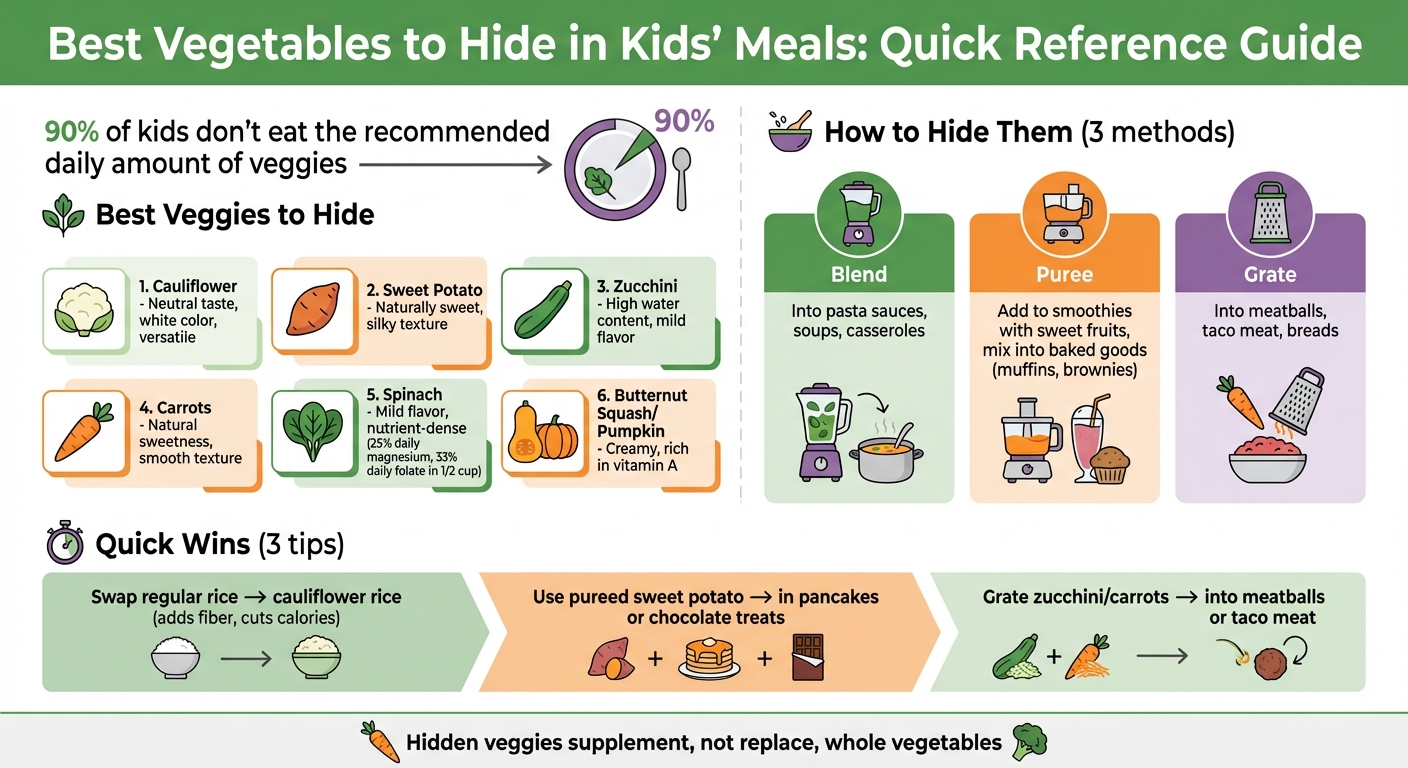
Mealtime battles over vegetables? You're not alone - 90% of kids don't eat the recommended daily amount of veggies. But there’s a simple way to fix this: sneak vegetables into meals your kids already love. From pasta sauces to muffins, you can blend, puree, or grate veggies into dishes without anyone noticing. This method helps boost fiber, vitamins, and minerals while avoiding dinnertime drama.
Key Tips:
- Best veggies to hide: Cauliflower, sweet potato, zucchini, carrots, spinach, and butternut squash.
- How to hide them:
- Blend into pasta sauces, soups, or casseroles.
- Add to smoothies with sweet fruits to mask flavors.
- Mix into baked goods like muffins or brownies.
Quick Wins:
- Swap regular rice for cauliflower rice to add fiber and cut calories.
- Use pureed sweet potato in pancakes or chocolate treats.
- Grate zucchini or carrots into meatballs or taco meat.
Hidden veggies aren’t a replacement for serving whole vegetables, but they’re a practical way to ensure your kids get the nutrients they need. Ready to make mealtime easier? Start small - try adding pureed carrots to pasta sauce or zucchini to muffins today.
Best Vegetables to Hide in Kids' Meals and How to Use Them
Hidden Veggie Recipes Kids Will Love!
Best Vegetables to Hide in Meals
When it comes to sneaking vegetables into meals, some veggies are better suited for the job than others. The best ones have two standout qualities: a mild flavor and a versatile texture. These traits make them easy to blend into dishes without raising suspicion - perfect for those picky eaters who claim they can "taste everything." Here are some top vegetables that slide right into meals without being noticed.
Cauliflower, Sweet Potato, and Zucchini
Cauliflower is a master of disguise. Its white color and neutral taste make it almost invisible when added to dishes. Mash it into potatoes, mix it into creamy sauces like mac and cheese or alfredo, or even turn it into a rice substitute. For convenience, steam and puree a large batch, then freeze it in small portions. These can be added to soups, stews, or sauces in seconds.
Sweet potato is another winner, thanks to its natural sweetness and silky texture when pureed. It blends effortlessly into orange-colored dishes like grilled cheese spreads, pancakes, and even chocolate brownies. Its sweetness enhances both savory and sweet recipes, making it a versatile choice.
Zucchini is your go-to for its high water content and mild flavor. Grate it finely into spaghetti sauce, taco meat, or sloppy joes, or bake it into moist breads and muffins. It adds moisture and nutrients while staying under the radar.
Carrots, Spinach, and Butternut Squash
These veggies not only pack a nutritional punch but also work beautifully in both sweet and savory dishes.
Carrots are great for adding natural sweetness and a smooth texture. Puree or grate them to enrich marinara sauces, muffins, or even cakes. They’re a simple way to sneak in extra vitamins without altering the flavor too much.
Spinach might seem tricky because of its green color, but its mild flavor makes it surprisingly easy to hide. To mask the green hue, pair it with darker ingredients like blueberries in smoothies or cocoa powder in brownies. Just half a cup of cooked spinach can provide about 25% of a child’s daily magnesium needs and 33% of their daily folate.
Butternut squash and pumpkin are creamy additions that work well in dishes like marinara, chili, or pancake batter. Pumpkin, rich in vitamin A, can replace heavy cream in sauces while adding a velvety texture and subtle sweetness.
These stealthy veggies make it simple to boost the nutritional value of kid-friendly meals without anyone being the wiser.
How to Hide Veggies in Everyday Meals
Incorporating vegetables into your family’s meals doesn’t have to be a battle. By using simple techniques, you can sneak extra nutrition into dishes your family already loves - without altering the flavors they expect. Here’s how to make it happen.
Blending Veggies into Pasta Sauces
Pasta sauces are a fantastic way to hide vegetables because their naturally thick and flavorful base conceals added ingredients with ease. A high-speed blender can transform steamed or sautéed veggies into a smooth, creamy sauce that mimics the texture of traditional recipes.
For tomato-based sauces, try carrots, red peppers, or zucchini. If you’re making a cream sauce, stick to milder options like cauliflower or white beans to maintain the familiar color and taste. To balance acidity, add a tablespoon or two of maple syrup and a dash of nutritional yeast for a rich, savory flavor.
"Incorporating vegetables into family meals can sometimes be a challenge, but there are several heartwarming ways to do it without changing the dishes we all know and love."
– Wendi Bergin, Founder, Joyfully Prepared
Batch prepping can make this process even easier. Steam and puree vegetables like cauliflower, carrots, or sweet potatoes at the start of the week, then store them in the fridge for quick use. These purees are freezer-friendly, too - if the sauce separates after thawing, a quick blend will restore its creamy consistency. To keep pasta dishes fresh, store the sauce and noodles separately to avoid mushiness.
But veggies aren’t just for dinner - they can sneak into snacks, too.
Adding Veggies to Smoothies and Snacks
Smoothies are a no-fail option for hiding vegetables, thanks to the natural sweetness of fruits. Spinach is a great starting point because of its mild flavor and ability to blend seamlessly. Once you’ve mastered spinach, experiment with other options like carrots, beets, or steamed cauliflower.
If the green color is a deal-breaker for your child, dark berries such as blueberries or blackberries can mask the tint. Pair these veggies with naturally sweet fruits like bananas, mangoes, or pineapples to keep the flavor balanced. For a creamy texture, toss in avocado or a spoonful of Greek yogurt - it’ll feel more like a treat than a health boost.
"Spinach tops the list for its mild flavor and versatility, making it a favorite among both newbie and veteran smoothie drinkers."
– The Peas, Easy Peasie, LLC
Start small, adding just a handful of veggies, and gradually increase the amount as your family adjusts. Using frozen fruits and vegetables can create a thick, dessert-like consistency. For an extra fun twist, pour smoothie mixtures into popsicle molds and freeze them - perfect for a refreshing, veggie-packed summer snack.
For heartier meals, casseroles and baked dishes are another great hiding spot.
Mixing Veggies into Casseroles and Bakes
Casseroles and baked dishes are ideal for sneaking in vegetables because their ingredients blend together beautifully. Pureeing is a go-to method - steam vegetables like cauliflower, sweet potatoes, or carrots, then mix them into cheese sauces for dishes like mac and cheese or Alfredo bakes. The texture stays smooth, and the veggies go unnoticed.
For meat-based dishes like meatloaf, meatballs, or shepherd’s pie, finely grate zucchini or carrots and mix them into the ground meat. They add moisture and blend right in once cooked.
"They [grated carrots and zucchini] add a nice moistness and fold right into the meat."
– Stefani Sassos, M.S., R.D.N., Good Housekeeping Institute
To keep the look consistent, match the vegetables to the dish. Use orange veggies like butternut squash, pumpkin, or carrots in cheddar-based recipes, and white vegetables like cauliflower or parsnips for potato or cream-based dishes. You can also mix cauliflower rice with regular rice or blend mashed cauliflower with mashed potatoes - this not only adds fiber but also cuts down on calories.
For lasagna, layer in shredded carrots and finely chopped mushrooms. Mushrooms mimic the texture of ground meat, making them almost impossible for picky eaters to detect. To save time, batch-prep steamed and pureed veggies, so they’re ready to mix into any casserole or bake at a moment’s notice.
With these tips, you can easily boost your family’s veggie intake without anyone feeling like they’re eating “health food.”
How to Hide Veggies in Kid Favorites
Kid-friendly meals are a great opportunity to sneak in some extra nutrition. With a little creativity, you can turn popular dishes like meatballs, chicken nuggets, muffins, and sweet treats into veggie-packed options that kids will love.
Veggies in Meatballs and Nuggets
Meatballs and nuggets are perfect for hiding vegetables without raising suspicion. Try finely grating zucchini or yellow squash, or use pureed bell peppers, onions, and mushrooms. Just make sure to squeeze out any extra liquid using a clean kitchen towel to avoid sogginess. For a gluten-free option, swap breadcrumbs with cauliflower rice, which adds fiber and nutrients. Mushrooms are another great addition - they mimic the texture of meat and blend in seamlessly.
You can also mix in mashed black beans or chickpeas for a boost of fiber and potassium without changing the texture. Finely chopped kale or spinach works especially well in turkey or chicken meatballs, where the darker meat helps disguise the greens. These same tricks can be extended to other kid-approved foods, including baked treats.
Veggies in Muffins and Sweet Treats
Baked goods are another clever way to add vegetables to your kid's diet. Muffins, for example, can easily hide shredded carrots for natural sweetness or zucchini for added moisture - just remember to squeeze the zucchini dry to keep the texture just right.
For chocolate treats like brownies or double chocolate muffins, vegetables like spinach, kale, or beets work wonders. The cocoa powder completely masks the green color and earthy flavor. A popular recipe for Healthy Chocolate Muffins with spinach and carrots, featured on The Natural Nurturer, has earned rave reviews, with a 4.91 out of 5 rating from 349 votes.
"These chocolate muffins... walk that lovely line between joyful and wholesome. This one will be a forever favorite. Making breakfasts sweeter, lunch box packing easier, freezers stocked, and everyone feeling good about those veggies!"
– Taesha Butler, Founder, The Natural Nurturer
Sweet potato and butternut squash are excellent for spiced muffins or banana bread, thanks to their natural sweetness and starchy texture. Pumpkin is another versatile option for spiced or chocolate muffins, adding creaminess and nutrients. Even broccoli and cauliflower can be used - just steam them until tender and puree them into a smooth consistency before mixing them into the batter.
If texture is a concern, pureeing vegetables is the best approach. Steam veggies like broccoli, cauliflower, or carrots until soft, then blend them into a smooth, "baby food" consistency. This eliminates any chunks or surprises that might make kids suspicious.
"A lot of times kids don't like fruits and veggies because of texture and not necessarily flavor. All of the fruits and veggies in these muffins are chopped so fine that the texture isn't an issue!"
– Super Healthy Kids
Using Honeydew Recipe Manager for Hidden Veggie Meals
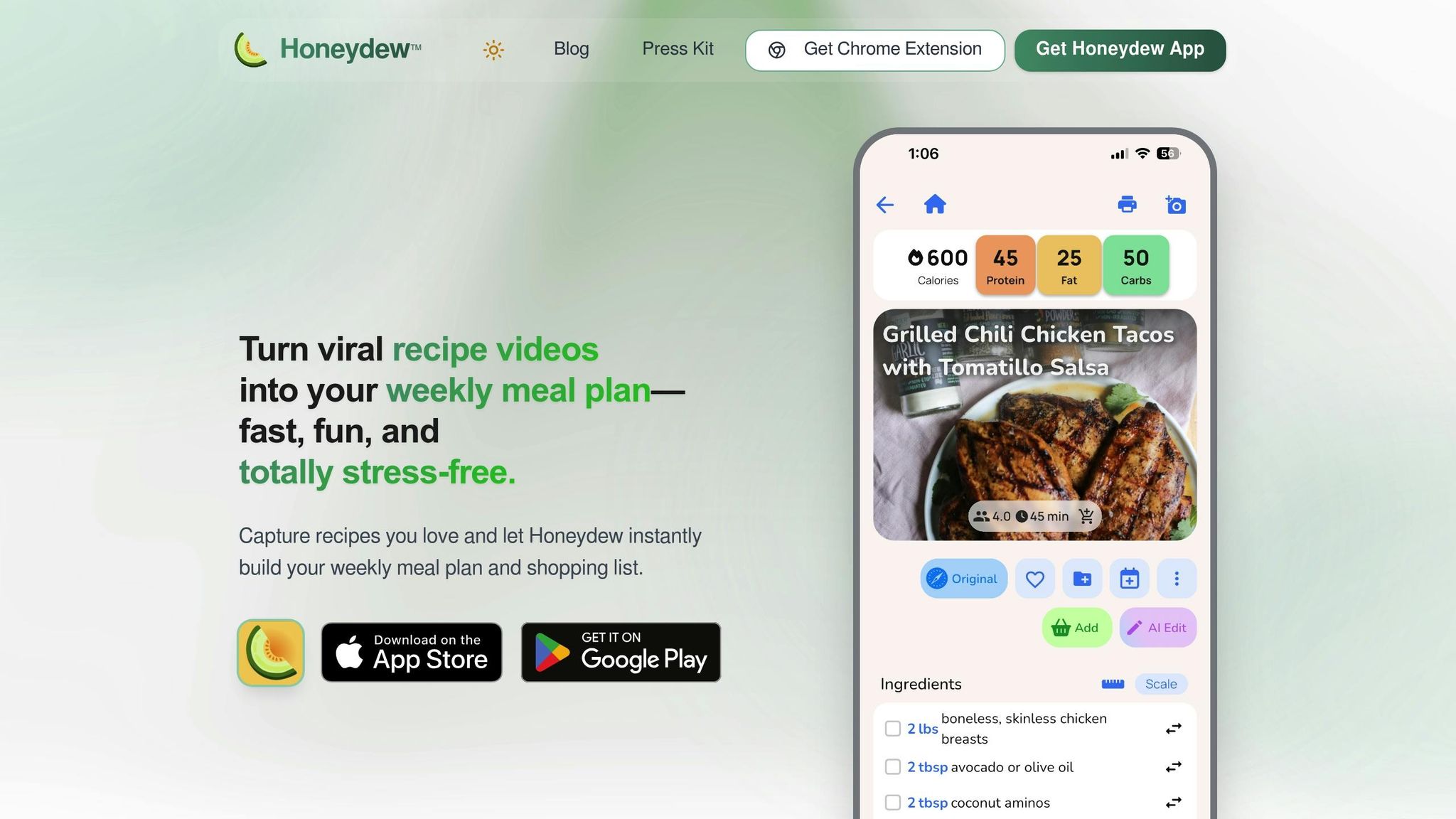
Getting kids to eat their veggies can feel like a full-time job, especially when juggling picky eaters and a packed schedule. That’s where Honeydew Recipe Manager steps in, making the process of planning and preparing hidden veggie meals so much easier. From finding clever recipes to organizing your grocery shopping, this app takes the stress out of sneaking vegetables into family favorites.
Finding Hidden Veggie Recipes
Honeydew Recipe Manager makes discovering and saving recipes a breeze. Whether you spot a veggie-packed pasta sauce on Instagram Reels or a creative zucchini brownie recipe on TikTok, you can instantly import it into the app. No more digging through bookmarks or scrolling through endless screenshots when it’s time to cook. With users saving around 270,000 recipes every month, the app offers a treasure trove of ideas, from spinach-filled pancakes to pasta sauces that hide up to eight different vegetables.
Got a favorite dish you’d like to make healthier? Snap a photo, and Honeydew’s AI copycat generator will create a veggie-loaded version you can whip up at home. Next, let’s see how the app’s AI takes meal planning and ingredient swaps to another level.
Using AI for Meal Planning and Substitutions
Honeydew’s AI-powered meal planner is like having a personal chef that prioritizes nutrition. It creates weekly menus filled with hidden veggie recipes and suggests simple ingredient swaps - like using pumpkin or cauliflower puree in mac and cheese - to keep meals familiar yet packed with nutrients.
"The ingredient substitution feature is a game-changer for my dietary restrictions. I can adapt any recipe easily!" – Emily C.
The app also lets you search recipes by ingredient and automatically calculates calories and macros, making it easy to stay on top of your family’s nutrition goals. Up next, find out how Honeydew simplifies shopping with its grocery list and delivery features.
Creating Grocery Lists with Instacart Integration
Once you’ve picked your hidden veggie recipes, Honeydew turns them into neatly organized grocery lists. And thanks to its Instacart integration, you can order everything you need - from fresh produce to specialty items like avocado - with just a few taps.
"The smart grocery lists save me hundreds of dollars a month. I love how it suggests recipes based on what I already have!" – James L.
Even if you’re offline, you can access your recipes and lists, ensuring you’re never left scrambling. At just $39.99 a year, Honeydew Recipe Manager is a handy tool that transforms the way you plan, shop for, and cook hidden veggie meals.
Conclusion
Sneaking vegetables into meals isn’t trickery - it’s a clever way to ensure kids get the nutrients they need, especially during those picky eating years. With 90% of children not meeting the daily recommendation of 1 to 3 cups of vegetables, these approaches can make a real difference. Vegetables are packed with fiber, antioxidants, vitamins, and minerals that help with brain development, immune health, and digestion - all vital for growing children.
"Consuming nutrient dense foods at a young age is also so important because it paves the way for a lifetime of healthy eating." – Carleigh Bodrug, Health Coach
Incorporating vegetables into familiar dishes allows you to boost nutrition without altering the flavors kids already love. While hidden veggies can provide that extra boost, it’s still important to serve whole vegetables regularly, helping kids get used to their natural taste and texture over time.
For busy parents, tools like Honeydew Recipe Manager can make meal planning even easier. This app helps you find veggie-packed recipes on social media, create organized grocery lists, and even order ingredients through Instacart - all for just $4.17 per month with the Honeydew Plus subscription.
Why not start small? Try adding carrots to pasta sauce or zucchini to muffins this week, and see how simple it can be to turn everyday meals into nutrient-rich favorites for your family.
FAQs
What are some easy ways to sneak veggies into kids' meals?
Getting kids to eat more vegetables doesn’t have to be a battle. With a few smart ideas, you can sneak some extra nutrition into their meals without them even noticing! One trick is to blend or puree veggies like cauliflower, sweet potato, or spinach and mix them into dishes they already love. For instance, pureed cauliflower can be stirred into mac and cheese, or you can add spinach to marinara sauce. These small changes boost the nutritional value without altering the taste.
Another fun approach is to use vegetables in unexpected ways. Replace half the rice in stir-fries with cauliflower rice, or swap out regular noodles for spiralized zucchini or carrots. Pair these veggie alternatives with kid-approved sauces, and they’ll hardly notice the difference. You can even sneak vegetables into baked goods - grated zucchini or carrots work wonderfully in muffins, pancakes, or brownies, adding both moisture and nutrients.
For families on the go, apps like Honeydew Recipe Manager can be a lifesaver. They help you discover veggie-packed recipes, plan meals, and organize grocery lists, making healthy eating more manageable. With these simple strategies, adding more vegetables to your kids’ plates can be effortless - and complaint-free!
What are the best vegetables to sneak into meals for kids?
Some vegetables are incredibly easy to sneak into meals for kids, even those who are picky eaters. Spinach, carrots, cauliflower, zucchini, peas, and sweet potatoes are great choices because they can be blended or hidden in a variety of dishes without being obvious.
For instance, you can mix pureed spinach into marinara sauce, mash cauliflower into regular mashed potatoes, or stir shredded zucchini into muffin or pancake batter. These simple tricks add extra nutrients to meals while keeping the flavors kid-approved.
How can I help my child eat more vegetables if they don’t like them?
Getting your child to eat more vegetables doesn’t have to feel like an uphill battle. A smart trick? Sneak veggies into meals they already love. You can blend or grate vegetables into recipes without them even noticing. For instance, try mixing pureed carrots or zucchini into pasta sauce, taco meat, or even mac and cheese. Cauliflower rice works great in casseroles or stir-fries, and leafy greens like spinach or kale can be blended into fruit smoothies - the sweetness of berries easily hides the taste of the greens.
To make meal planning smoother and ensure your child is getting enough nutrients, consider using Honeydew Recipe Manager. This handy app lets you import recipes, monitor nutrition, and even find ingredient swaps when needed. By planning meals that incorporate hidden veggies, you can help your child hit the USDA’s daily vegetable recommendations: about 1 cup for toddlers, 1½ cups for kids aged 4-8, and 2-3 cups for older children. With a little creativity and the right tools, you can boost their veggie intake and keep mealtime stress-free.