Homemade Za'atar: Ingredients and Ratios
• Updated
Za'atar is a Middle Eastern spice blend made from dried herbs, sumac, toasted sesame seeds, and salt. It’s commonly used to enhance dishes like flatbreads, roasted vegetables, dips, and marinades. Making it at home allows you to control the quality and flavor balance of the mix.
Key Points:
- Core Ingredients: Dried oregano, thyme, sumac, toasted sesame seeds, and salt.
- Basic Ratio: 2 parts oregano, 2 parts sumac, 2 parts sesame seeds, 1 part thyme.
- Optional Add-Ins: Cumin, coriander, chili flakes, Aleppo pepper, or dried mint.
- Storage: Keep in an airtight container for 1–3 months at room temperature, or up to 6 months refrigerated.
Quick Tip:
Toast sesame seeds for a richer flavor and grind some into the mix for depth. Adjust the sumac for tanginess or sesame for nuttiness to suit your taste.
This article guides you through crafting your own za'atar blend, perfecting the ratios, and using it to elevate everyday meals.
Ingredients for Homemade Za'atar
Core Ingredients
Za'atar is built on four essential ingredients that give it its distinctive flavor.
Dried herbs are the foundation of this blend. Traditional za'atar uses Origanum syriacum, a wild herb native to the Levant, often referred to as Syrian oregano or Bible hyssop. Since this herb is hard to find outside the region, you can replicate its flavor with a mix of dried oregano, marjoram, and thyme in a 3:1 ratio. Reem Kassis explains that this combination comes close to capturing the herb's unique taste.
Sumac is the ingredient that gives za'atar its signature tang. This reddish spice, made from ground berries, delivers a bright, acidic flavor that balances the earthy herbs. Sam Knight of The Aproneer emphasizes:
"Sumac is a spice that tastes sour - similar to lemon juice. It's a crucial ingredient for za'atar, so you really can't make it without the sumac".
When buying sumac, look for a pure, reddish-purple powder without added salt or citric acid. Keeping track of these specific spice requirements is easier with pantry tracking tools that monitor your stock levels. Authentic za'atar relies on unadulterated ground sumac to achieve its characteristic taste.
Toasted sesame seeds bring a nutty richness and a pleasant crunch. Toast raw sesame seeds in a dry skillet over medium-low heat for 2–5 minutes until they release a fragrant aroma. For added depth, crush some of the seeds to release their natural oils, enhancing the blend's overall flavor. A pinch of fine sea salt or kosher salt ties everything together, balancing the flavors perfectly.
Optional Add-Ins
Za'atar can be tailored to your taste with optional spices. Consider adding ground cumin, coriander, chili flakes, Aleppo pepper, or dried mint. Introduce these extras sparingly to maintain the blend’s herbaceous, tangy, and nutty profile.
Now that you know the ingredients, the next step is smarter ingredient prep to perfect the ratios for a flawless za'atar blend.
Stop Buying Za’atar! Make This Authentic Lebanese Blend at Home in 5 Minutes | Be Inspired
Za'atar Ingredient Ratios
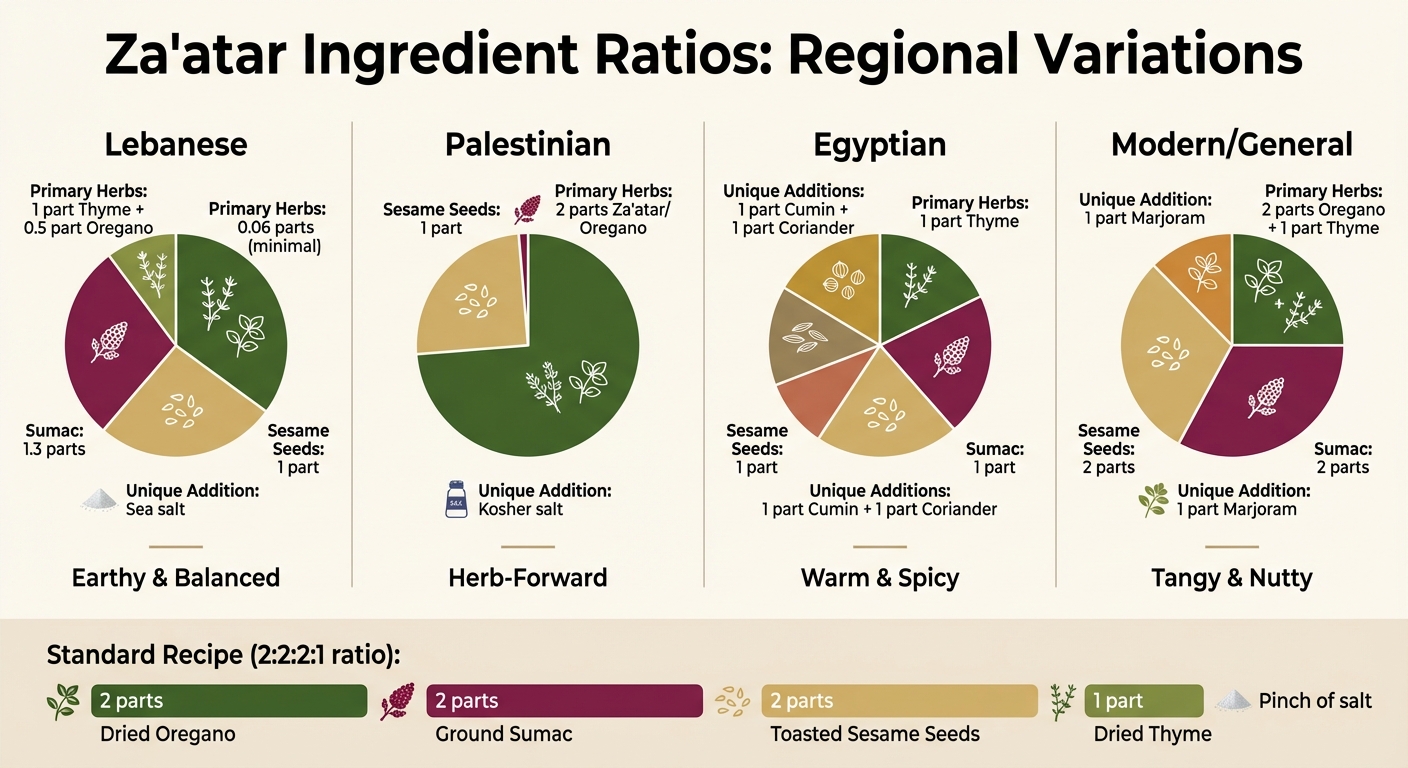
Za'atar Ingredient Ratios by Regional Tradition
Standard Recipe Example
Getting the ratios right is key to achieving the perfect za'atar blend. A reliable starting point is a 2:2:2:1 ratio: 2 parts dried oregano, 2 parts ground sumac, 2 parts toasted sesame seeds, and 1 part dried thyme. For a smaller batch (½ cup), this means using 2¼ tablespoons each of oregano, sumac, and sesame seeds, along with 1⅛ tablespoons of thyme. Toss in a pinch of salt (about ¼ teaspoon) to bring the flavors together.
Need more? For a larger 1½-cup batch, use 6¾ tablespoons each of oregano, sumac, and sesame seeds, plus 3½ tablespoons of thyme. This ratio results in a herb-forward mix with a tangy brightness and nutty undertones - great for everyday cooking. You can find more cooking tips and recipes on our blog. Toasting the sesame seeds is a must to enhance their flavor. Curious how different regions tweak their blends? Check out the comparison table below.
Comparison Table
Za'atar recipes differ widely across the Middle East, influenced by local ingredients and traditions. As Heidi Swanson points out:
"Za'atar is a traditional Middle Eastern spice blend that varies from country to country, family to family, and cook to cook".
| Tradition | Primary Herbs | Sumac | Sesame Seeds | Unique Additions |
|---|---|---|---|---|
| Lebanese | 1 part Thyme + 0.5 part Oregano | 1.3 parts | 1 part | Sea salt |
| Palestinian | 2 parts Za'atar/Oregano | 0.06 parts (minimal) | 1 part | Kosher salt |
| Egyptian | 1 part Thyme | 1 part | 1 part | 1 part Cumin, 1 part Coriander |
| Modern/General | 2 parts Oregano + 1 part Thyme | 2 parts | 2 parts | 1 part Marjoram |
Lebanese blends highlight the earthy aroma of thyme with a balanced amount of sumac, while Palestinian versions focus more on herbs with very little sumac. Egyptian za'atar, on the other hand, introduces warm spices like cumin and coriander, giving it a spicier, more layered flavor.
If your za'atar ends up tasting too bitter, Sylvia Fountaine offers this tip:
"If your zaatar is overly bitter, it may contain too much thyme compared to the rest of the ingredients".
To fix it, simply add more sumac or sesame seeds to even out the flavors.
How to Mix Za'atar
Getting the right mix is crucial to balancing the flavors in your za'atar. Each step, from toasting to blending, plays a role in achieving that perfect harmony.
Toasting Sesame Seeds
Toasting sesame seeds is a game-changer when it comes to flavor. The best way to do this is by using a dry skillet over medium-low heat. Stir or shake the seeds constantly for about 5 minutes to avoid burning them. You'll know they're ready when they turn golden and release a nutty aroma. Another option is to spread the seeds on a baking sheet and toast them in the oven at 300°F for roughly 10 minutes. Whichever method you choose, let the seeds cool completely on a plate for at least 5 minutes before mixing. Once cooled, they're ready to combine with your herbs and spices.
Blending Ingredients
Begin by breaking down your dried herbs to a fine, even texture. You can do this by crumbling them with your hands or using a mortar and pestle. Next, grind about a third of the toasted sesame seeds along with the herbs. This step releases the oils from the seeds, enhancing the overall flavor. Palestinian writer Reem Kassis explains it well:
"Grinding the za'atar with some of the sesame seeds releases the seed oils, moistening the dried herb, while folding more sesame seeds in whole creates a more pleasing overall texture".
After creating this herb-seed base, fold in the rest of the sesame seeds, along with sumac and salt. This method ensures a balance between a flavorful, powdery base and the subtle crunch of whole seeds. Taste your mixture and tweak it as needed - add a bit more sumac for tanginess or a pinch of salt to elevate the flavors.
Customization and Storage
Adjusting Ratios for Flavor
Once you've got the basic za'atar blend down, you can start tweaking it to suit your personal taste. Yumna Jawad, founder of Feel Good Foodie, shares her approach:
"I started making za'atar at home so I could tweak it to my own taste, sometimes more sumac for tang, sometimes extra sesame for nuttiness."
For a tangier, citrus-like kick, try increasing the amount of sumac. If you’re after a richer, nuttier flavor, add more toasted sesame seeds. Want to bring a bit more warmth and complexity to the mix? Add a pinch of ground cumin or coriander. And for those who love a little heat, a sprinkle of red chili flakes or Aleppo pepper can give your blend a subtle yet satisfying spice. Start by adjusting in small amounts - about a teaspoon at a time - until you hit the perfect flavor balance. Once your blend is just right, it’s time to think about proper storage to keep it fresh.
Storage Recommendations
To maintain the freshness and aroma of your custom za'atar, store it in an airtight glass jar or spice container. Keep it in a cool, dark spot, like your pantry. At room temperature, the blend will stay vibrant for about 1 to 3 months. If you want it to last longer, refrigerate it for up to 6 months or freeze it for up to a year. If freezing, let the container come to room temperature before opening to prevent condensation, which could affect the texture. When the blend starts to lose its aroma or tastes dull, it’s a clear sign that it’s time to whip up a new batch. For those who enjoy making larger quantities, scaling up is simple with the right tools.
Scaling Batches with Honeydew Recipe Manager

Once you’ve nailed your recipe, scaling it for larger batches - or even gifting - becomes easy with the help of Honeydew Recipe Manager (https://honeydewcook.com). This app automatically adjusts ingredient quantities, making it a breeze to scale your blend. It even suggests smart ingredient swaps, like using dried lemon zest as a substitute for sumac. You can save your custom recipe, track its nutritional details, and share it with family and friends who want to recreate your version. Plus, the app seamlessly converts between imperial and metric units, ensuring precise measurements every time.
Ways to Use Za'atar
Quick Applications
Za'atar is a versatile seasoning that can take simple dishes to the next level. Sprinkle it over hummus or labneh for an instant flavor boost. It’s a natural fit for eggs - whether fried or scrambled - bringing an herbal, tangy twist. Roasted vegetables like carrots, cauliflower, or Brussels sprouts shine when tossed with olive oil and za'atar before hitting the oven. Even a basic tomato and cucumber salad can benefit from a sprinkle of this blend. Feeling snacky? Try it on popcorn or avocado toast for a flavorful upgrade.
But if you’re looking to incorporate za'atar more deeply into your cooking, there are plenty of creative ways to do so.
Using Za'atar in Recipes
Za'atar can go beyond a simple sprinkle - it can become a central element in your dishes. Mix it with olive oil to create a paste that’s perfect for spreading on flatbreads or pizza dough before baking. This technique is key for making manaqeesh flatbread and works equally well for homemade crackers or savory muffins. You can also whisk it into vinaigrettes with a splash of lemon juice or blend it into softened butter for a delicious spread.
It’s also a game-changer for proteins. Use it as a dry rub or mix it into marinades for chicken, lamb, fish, or even tofu. Za'atar’s versatility makes it a great addition to hearty dishes, as highlighted by author Heidi Swanson:
"I find za'atar a welcome counterpoint to the sweetness of deeply roasted winter squash and a nice wildcard element in big hearty soups."
Recipe developer Anita Schecter agrees, noting:
"Za'atar can be used in the same way you might use any other seasoning blend - in meat marinades, as part of dips, or on roasted vegetables."
Whether you’re experimenting with traditional recipes or adding a twist to everyday meals, za'atar has the power to elevate your cooking with its bold, herbal flavors.
Conclusion
Making homemade za'atar is easier than you might think. Start by toasting sesame seeds until they're golden, then mix them with dried thyme, sumac, and salt in the recommended proportions. This simple process brings out the freshest flavors and lets you tailor the blend to your taste - without relying on the anti-clumping agents or citric acid substitutes often found in store-bought versions. As cookbook author Adeena Sussman explains:
"I found making my own to be a revelation, because I could control exactly how much of each element I wanted in the mix."
The beauty of homemade za'atar lies in its flexibility. Want more tang? Add extra sumac. Prefer a nuttier flavor? Increase the toasted sesame seeds. Start with a small batch, around 1/4 cup, to experiment with your ideal flavor profile before scaling up. This way, you can create a seasoning blend that's perfectly suited to your preferences.
Once you've nailed your custom mix, tools like the Honeydew Recipe Manager (https://honeydewcook.com) can make the process even smoother. This app helps you adjust serving sizes while keeping ingredient ratios consistent - whether you're making a small batch for yourself or a larger one for gifting. You can also import za'atar-based recipes from social media, add ingredients like sumac to your grocery list, and plan meals that highlight this versatile blend.
To keep your za'atar fresh, store it in an airtight container in a cool, dark spot. It will stay flavorful for 1 to 6 months. Whether you're sprinkling it on scrambled eggs, roasting vegetables, or using it in marinades, your homemade za'atar brings a personal touch to dishes. Celebrate the rich culinary heritage of the Middle East with a blend that's entirely your own.
FAQs
What can I use if I can’t find Syrian oregano?
If you can't find Syrian oregano, try mixing dried oregano, thyme, and marjoram. This blend mimics the flavor of the native herb and is a great substitute for making homemade za'atar.
How do I fix za’atar that tastes too bitter?
To tone down overly bitter za’atar, tweak the ingredient proportions. Cut back on bitter herbs like oregano or marjoram, and add more sesame seeds or sumac. This can brighten the mix and bring the flavors into better balance.
Can I make za’atar without sesame seeds?
Yes, you can prepare za’atar without sesame seeds. Although sesame seeds are typically included in traditional recipes, some versions omit them entirely. It all comes down to your personal taste and the flavor profile you want to achieve.