How AI Sensors Monitor Frying Heat
• Updated
AI sensors are transforming how we fry food by ensuring precise temperature control and improving kitchen safety. These advanced systems use a combination of thermal imaging, contact sensors, acoustic monitoring, and AI algorithms to maintain frying temperatures within an ultra-tight range of ±0.5°F - far better than traditional appliances, which can fluctuate by 25°F to 60°F. This precision enhances cooking results, prevents oil breakdown, and reduces the risk of kitchen fires caused by overheating.
Key highlights:
- Real-time monitoring: Infrared and contact sensors track oil and pan temperatures.
- Cooking stage detection: MEMS microphones analyze sounds like sizzling to identify stages like searing or overheating.
- Safety features: Systems can cut power automatically or warn users of dangerous conditions.
- Smart integration: App-connected devices guide recipes, adjust heat automatically, and even predict cooking times.
AI-powered frying tools make it easier to achieve consistent, high-quality results through smarter ingredient prep while addressing common safety concerns.
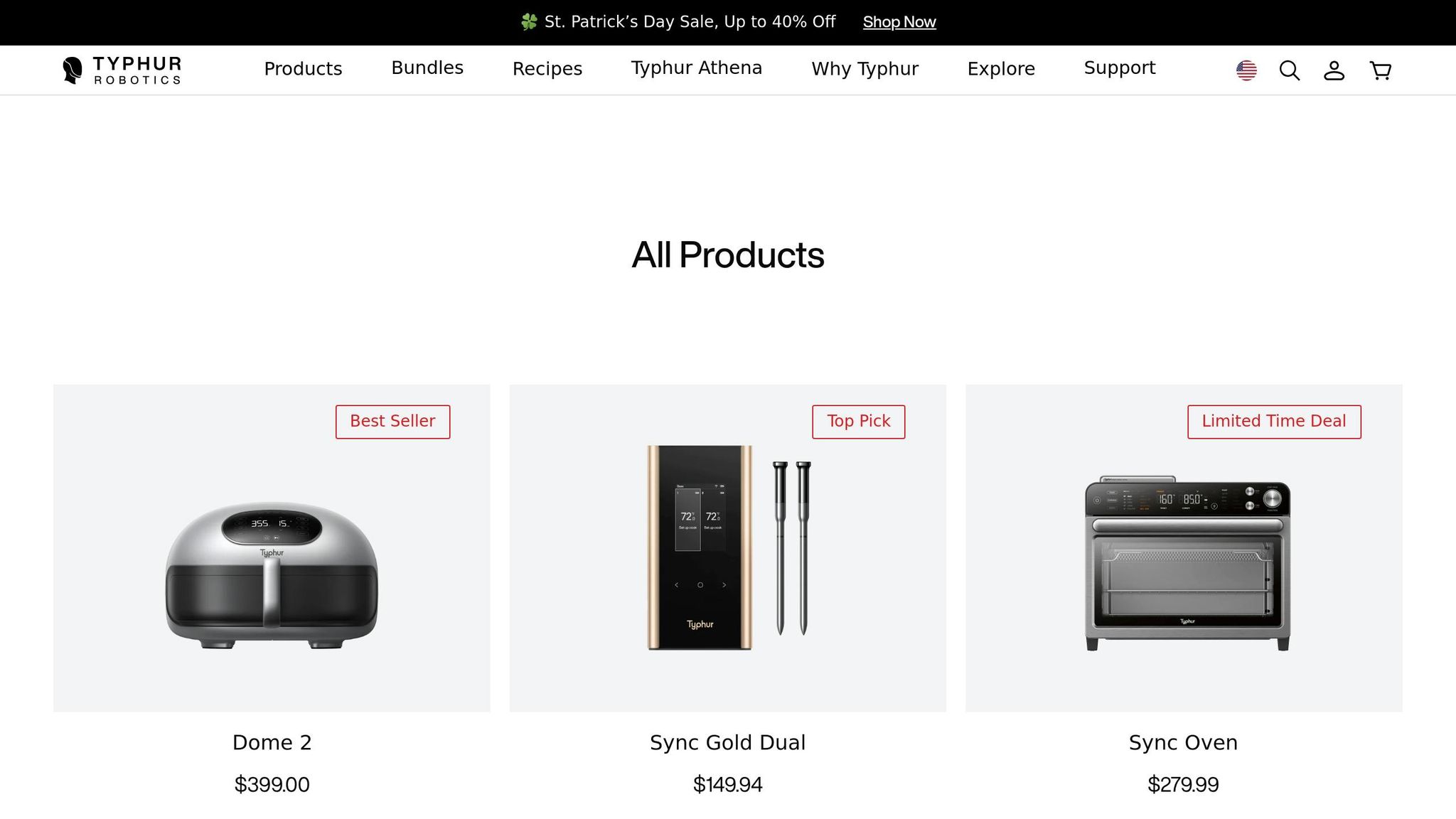
Typhur Sync 8QT AI Smart Air Fryer with Built-in Wireless Meat Thermometer | Best Ceramic Airfryer
How AI Sensors Monitor Frying Heat
AI Sensor Types for Smart Frying: Functions and Applications
Sensor Types Used in AI Frying Systems
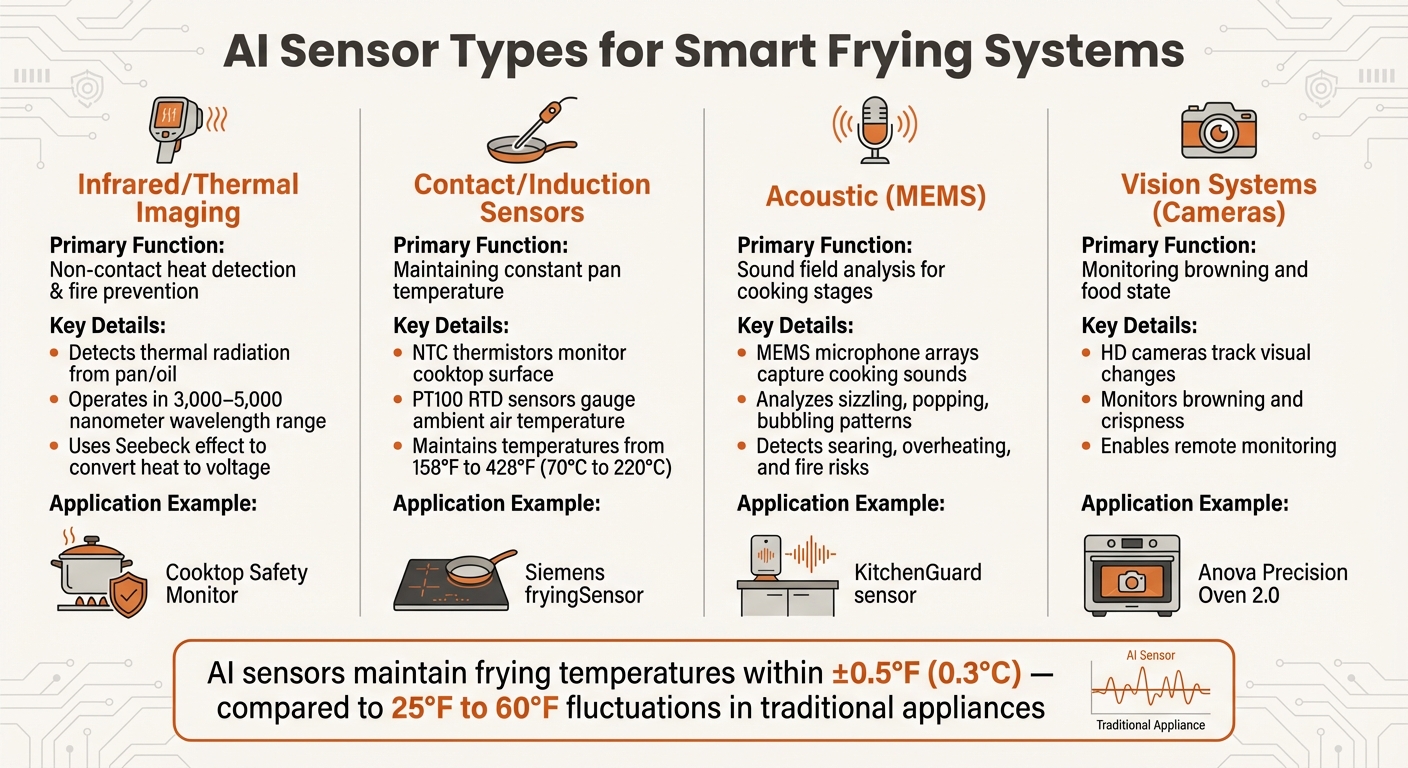
AI frying systems rely on a variety of sensors to ensure precise heat monitoring. Infrared sensors, also known as thermopiles, play a central role in non-contact temperature measurement. These sensors detect thermal radiation emitted from the pan or oil and convert it into a voltage signal using the Seebeck effect. They are particularly effective in the 3,000–5,000 nanometer wavelength range, which aligns with the heat transmission properties of glass-ceramic cooktops.
Contact sensors take a more direct approach by measuring the temperature of specific surfaces. NTC thermistors monitor the cooktop's surface temperature, while PT100 RTD sensors gauge the ambient air temperature near the heating elements. For instance, the Siemens fryingSensor integrates sensors directly into the cooktop and communicates with compatible cookware to maintain steady temperatures ranging from 158°F to 428°F (70°C to 220°C).
Adding to this, acoustic sensors provide a unique dimension by "listening" to the cooking process. MEMS microphone arrays capture sounds like sizzling or popping, and machine learning algorithms analyze these audio patterns to determine cooking stages - such as when you're searing meat or when oil is nearing its ignition point.
Some advanced systems, like premium ovens, combine temperature sensors with HD cameras for a more comprehensive monitoring approach. Together, these sensors provide real-time data that the AI system uses to optimize cooking conditions. This data can also be synced with AI meal planning tools to streamline the entire kitchen workflow.
Real-Time Temperature Measurement and Control
Once the sensors collect data, AI algorithms take over to maintain precise frying temperatures. Central to this process is the PID (Proportional-Integral-Derivative) control loop, which functions like an intelligent thermostat. It continuously compares the current temperature with the desired setting and adjusts the heating element in real time to prevent fluctuations. This keeps frying temperatures stable within a narrow margin of ±0.5°F (0.3°C), a stark improvement over traditional appliances that can vary by as much as 25°F to 60°F.
The system also addresses evaporative cooling, a phenomenon where moisture escaping from food lowers the surface temperature. By measuring both the dry bulb temperature (air temperature) and the wet bulb temperature (food's surface temperature), advanced AI systems can compensate for this effect and deliver heat more precisely.
| Sensor Technology | Primary Function | Application Example |
|---|---|---|
| Infrared/Thermal Imaging | Non-contact heat detection & fire prevention | Cooktop Safety Monitor |
| Contact/Induction Sensors | Maintaining constant pan temperature | Siemens fryingSensor |
| Acoustic (MEMS) | Sound field analysis for cooking stages | KitchenGuard sensor |
| Vision Systems (Cameras) | Monitoring browning and food state | Anova Precision Oven 2.0 |
AI Algorithms for Heat Management
Automatic Heat Adjustment for Consistent Results
AI algorithms take the guesswork out of heat management by making instant adjustments based on sensor data. Using slope analysis, these systems monitor temperature trends: a negative slope signals heat loss, while a positive slope indicates heat gain. This constant feedback loop ensures precise control, adding heat or scaling it back as needed.
To maintain a steady temperature, many systems employ forced-limit cycle techniques. These methods keep the temperature within a tight range - usually ±2°F - by using status flags to track whether the temperature is above or below the target and whether it’s rising or falling. When a drop is detected, the system responds with a heat pulse to stabilize conditions.
Sensor fusion plays a key role in refining this process. By combining data from infrared sensors, internal thermistors, and load cells, the system can estimate the mass of food in the pan and adjust heat accordingly. For example, tests showed that this weight-sensitive approach reduced cooking time for fries from 22 minutes for a 1-lb batch (450 g) to just 16 minutes for a smaller batch weighing about 5 oz (150 g).
These algorithms don’t just optimize cooking - they also integrate safety measures to prevent potential hazards.
Safety Features and Cooking Predictions
AI-driven systems go beyond efficiency by incorporating features designed to keep your kitchen safe. Acoustic monitoring is one such innovation. Machine learning enables these systems to "listen" to cooking sounds like sizzling, popping, and bubbling. For instance, the KitchenGuard sensor can detect early signs of grease fires or boiling over, preventing accidents before they occur. Researchers at Fraunhofer IDMT emphasize this goal, stating:
"to develop an AI-supported cooking and frying sensor that analyzes cooking noises and precisely recognizes cooking conditions... warns of critical situations at an early stage".
Another safety feature is temperature stall detection. AI sensors recognize when the temperature plateaus at 212°F - the boiling point of water - which might indicate leftover water in a fryer after cleaning. The system can then alert the user or shut down automatically to avoid accidents.
For cooking predictions, algorithms use one-step-ahead modeling to anticipate heat carryover. By stopping the heating process about 5°F below the target, the system prevents overcooking. Vision-based systems equipped with HD cameras take it a step further, monitoring physical changes like browning and crispness. Once the food reaches the desired state, the system triggers an automatic shut-off. This combination of predictive modeling and real-time monitoring ensures perfectly cooked food while letting you step away from the stove with peace of mind.
Connecting AI Sensors with Smart Cooking Apps
Advantages of App-Connected Frying Systems
Imagine connecting a device like the Hestan Cue Smart Probe to your phone. This setup doesn't just monitor temperature - it actively adjusts it in real-time while guiding you through recipes step by step. These Guided Recipes ensure every detail, from temperature to power levels, is perfectly aligned with what the dish needs.
For those who thrive on precision, Control Mode is a game-changer. It allows you to tweak temperatures degree by degree, making tasks like deep frying at 300°F or crafting delicate candies much easier. Devices like the Siemens fryingSensor even notify you exactly when your pan hits the ideal temperature for adding ingredients. By leveraging sensor data, these systems ensure every stage of cooking meets the optimal conditions. Chef Julian captures this perfectly:
"The precision of the Smart Probe is a game changer in the kitchen. With other devices it was a challenge to get precision control for non water based cooking... Now I can pull together what I want, set the probe in and control my results".
But it’s not just about temperature. These app-connected systems can save you 30–40 minutes in your daily cooking routine through automation. Some setups even take it a step further by scanning cookbook instructions or online recipes and converting them into optimized cooking modes with precise temperatures and times. The Anova Precision Oven 2.0 ($1,299.00) offers a unique twist: an HD internal camera that lets you monitor your food remotely while the AI handles the heat adjustments. This blend of automation and real-time control transforms the way you cook, making every meal a seamless experience.
Using Honeydew Recipe Manager with AI Cooking Tools
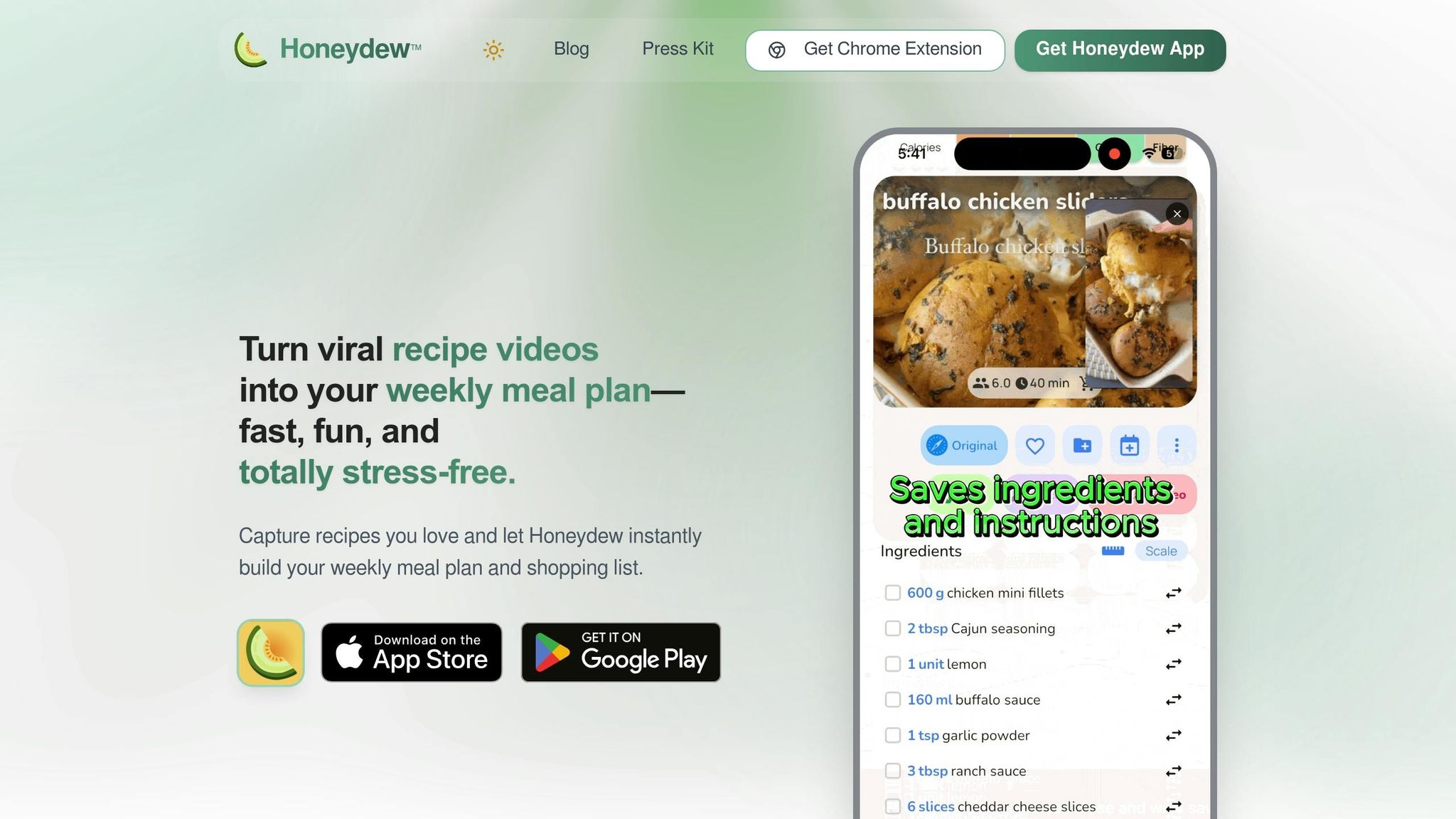
Smart apps like the Honeydew Recipe Manager take the convenience of AI cooking tools to the next level. This app simplifies everything before you even start cooking. Want to try a recipe you saw on TikTok, Instagram, or YouTube? Honeydew lets you import it instantly. Its dynamic portion scaling feature is another standout - it recalculates ingredient quantities and cooking times when you adjust serving sizes. This syncs perfectly with your smart appliances, ensuring your AI sensor maintains precise heat throughout the process.
The app’s "Ask Honey" AI assistant adds even more flexibility. It allows you to customize recipes for picky eaters or other specific needs - like turning a fried chicken recipe into a gluten-free version - before sending the updated instructions straight to your smart frying device. When it’s time to shop, Honeydew generates grocery lists sorted by store sections, so you’re always prepared. Plus, for households using these advanced cooking tools, the app supports up to six members through its sharing feature, ensuring everyone has access to the same recipes and meal plans on their devices. It’s a streamlined way to bring the whole family into the AI-powered cooking experience.
Conclusion
Key Takeaways
AI sensors are changing the way we fry at home by keeping temperatures steady within an impressive ±0.5°F range. This level of accuracy ensures consistent results every time you cook. As Stephen Svajian, CEO of Anova, puts it:
"Steam, combined with heating algorithms written in the age of endless computing power, can maintain temperature with levels of precision would make your old-school oven blush".
These systems go beyond precision - they also make cooking safer and easier. By predicting cook times based on the size and thickness of your food, they remove the guesswork. Plus, they automatically shut off once the cooking is done, addressing safety concerns and offering peace of mind.
When paired with smart cooking apps like Honeydew Recipe Manager, the advantages multiply. These apps not only help you find recipes but also ensure perfect execution by syncing with the AI sensors. Features like automated grocery lists and personalized recipe tweaks streamline the entire process, saving time and reducing food waste.
Whether you're frying chicken at a high heat (around 428°F) or gently cooking fish at a lower setting (about 158°F), AI sensors act like cruise control for your stovetop. They handle the technical aspects, allowing you to focus on the fun and creative side of cooking. The result? Consistently achieving restaurant-quality meals with ease.
FAQs
Do I need special cookware to use AI frying sensors?
No, you don’t need special cookware, but it does have to work with induction cooktops. That means it should have a flat base and be made from magnetic materials like stainless steel, enameled steel, or cast iron. Make sure your pots and pans meet these requirements for the best results.
How do AI sensors detect overheating or a grease fire early?
AI sensors rely on thermal imaging and real-time processing to keep a close eye on stovetop temperature patterns and activity. By detecting unusual heat changes, these sensors can predict potential risks like overheating or grease fires. When something seems off, they spring into action - either by triggering alerts or even automatically shutting off the stove to help prevent accidents.
Will AI-controlled frying work on gas stoves or only electric/induction?
AI-controlled frying is compatible with both gas and induction stoves. Using advanced sensors and algorithms, these systems can accurately monitor and adjust heat levels to ensure optimal cooking performance. Even gas stoves equipped with intelligent sensors can integrate seamlessly with this technology.