How AI Simplifies Dietary Suitability Checks
• Updated
AI makes checking food labels and recipes for dietary compatibility faster and easier. Instead of manually decoding complex ingredient lists or adapting recipes, AI tools handle the heavy lifting in seconds. Here's how:
- Label Scanning: Use your phone's camera to scan food labels. AI tools like EasyOCR decode ingredients and flag those that don’t meet your dietary needs.
- Ingredient Analysis: AI matches ingredients to your dietary profile, using databases like USDA and FoodKG for precise nutrient calculations and compatibility checks.
- Smart Substitutions: When an ingredient doesn’t fit your diet, AI suggests replacements that preserve flavor and function.
- Meal Planning: Apps like Honeydew Recipe Manager manage recipes, plan meals, and generate grocery lists tailored to your preferences.
- Time Savings: Tasks that once took minutes now take seconds, reducing stress and improving accuracy.
AI tools like Honeydew Recipe Manager integrate these features into daily life, helping you save time, reduce food waste, and stick to your health goals. Whether scanning labels, planning meals, or shopping for groceries, AI ensures every step aligns with your dietary needs.
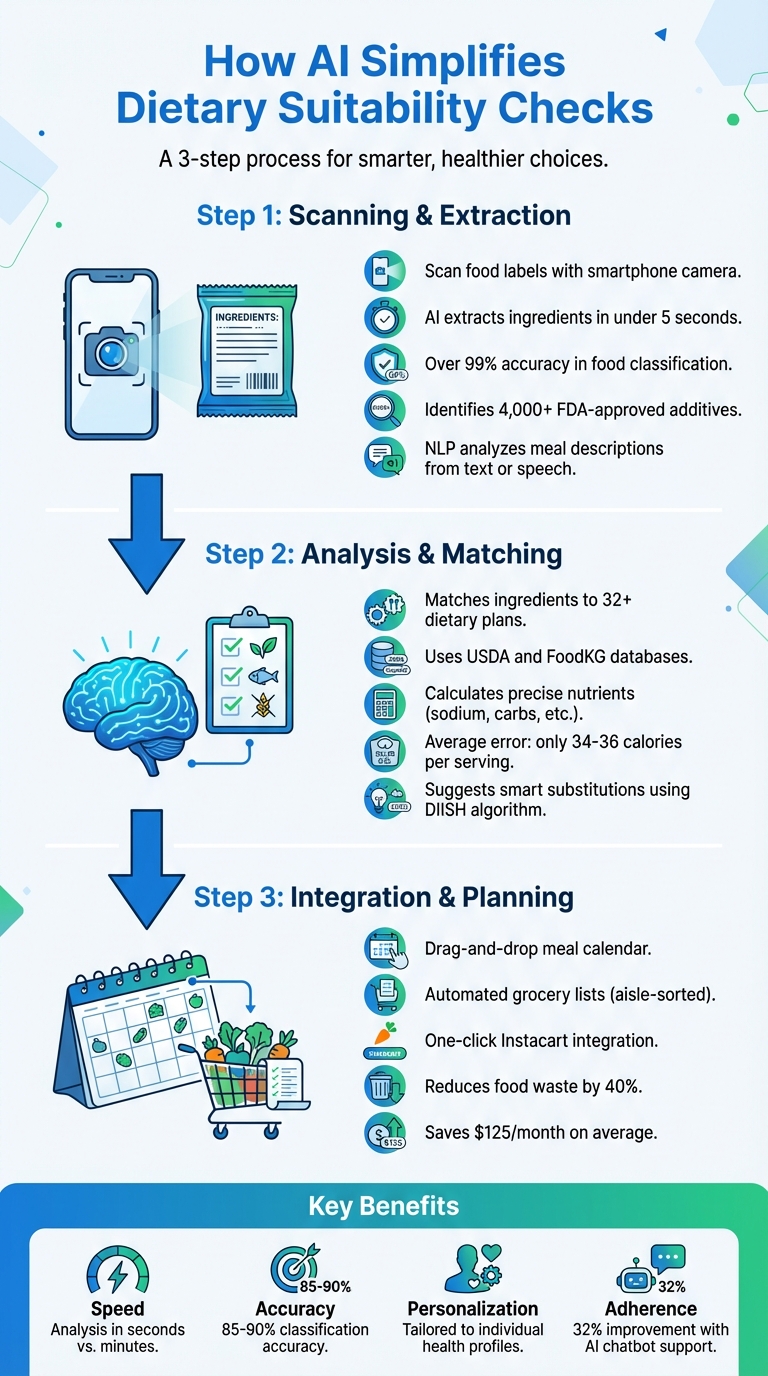
How AI Checks Dietary Suitability in 3 Steps
Step 1: Scanning Food Labels and Ingredients with AI
Using Your Smartphone to Scan Labels
It all starts with your smartphone's camera. Simply point it at the ingredient list on any food package, and tools like EasyOCR or Firebase API can instantly transform that image into text. From there, the AI steps in to decode complicated ingredient names and cryptic codes, translating them into plain, understandable English.
To get the best results, take clear photos of the entire ingredient list in natural light. For products with wrap-around labels, you might need multiple shots to capture everything accurately. Including the product name and brand in your photos helps the AI cross-reference its database for more precise insights.
Here's a cool example: In December 2025, Yihang Feng, a graduate researcher at the University of Connecticut, launched the "Food Additive Lens" app. This app uses an on-device Three-Agent AI System to identify over 4,000 FDA-approved additives in just under 5 seconds. It’s built on data from the USDA's Global Branded Food Products Database. Some apps even offer a Confidence Score - High (80–100%), Medium (50–79%), or Low (<50%) - so you’ll know if the photo needs retaking.
Once the ingredient data is processed, it becomes the foundation for deeper AI-driven dietary analysis in later steps.
Natural Language Processing for Meal Descriptions
AI isn't limited to just scanning food labels. With Natural Language Processing (NLP), it can also analyze meal descriptions, whether spoken or written, and extract the ingredients for dietary evaluation. This feature is particularly handy when eating out or using recipes from social media that don’t come with a formal ingredient list.
A great example of this tech in action came in August 2025, when Honeydew Recipe Manager introduced "Pantry Mode." This feature allows users to snap a single photo of their pantry or a collection of ingredients. The AI then identifies the items and suggests recipes you can make with what you already have. It can also take your typed or spoken meal ideas and turn them into a detailed ingredient list, making it easy to check against your dietary preferences or restrictions.
This precise ingredient data lays the groundwork for even more advanced dietary insights in the following steps.
Step 2: AI-Powered Ingredient Analysis for Dietary Compatibility
Matching Ingredients to Dietary Profiles
After the AI extracts ingredient details from a label or recipe, it aligns each item with your specific dietary requirements. Using databases like FoodKG and the FoodOn ontology, the system identifies hierarchical relationships between foods. For example, if you're avoiding dairy, the AI knows that "unsalted butter" is part of the dairy category and flags it accordingly.
These advanced models also convert recipe measurements into grams using USDA data, enabling precise calculations of sodium, carbohydrates, and other nutrients. This level of accuracy is crucial for individuals managing strict nutritional goals or health conditions.
Some tools even go beyond generic ingredient checks by validating items at the SKU level. This means they can cross-reference specific product barcodes to confirm certifications, such as "certified gluten-free" labels.
Take Honeydew Recipe Manager as an example. It uses similar technology to analyze extensive recipe datasets, ensuring compatibility with over 32 dietary plans, including Low FODMAP, PCOS-friendly, and Mediterranean diets. Its automated nutrition calculations, based on USDA data, boast an average per-serving error of just 34.51 to 36.42 calories - comparable to the accuracy of professional manual methods.
Once dietary mismatches are identified, the AI takes the next step by offering tailored ingredient substitutions.
AI-Suggested Substitutions for Incompatible Ingredients
When an ingredient doesn't align with your dietary needs, the AI flags it and suggests suitable replacements. This is powered by a specialized algorithm called DIISH, which ranks substitutes by analyzing word embeddings and ingredient co-occurrence frequencies. The goal? To find alternatives that keep the dish's flavor and functionality intact while meeting your dietary goals.
"DIISH consistently outperforms each of the other scoring metrics in all of our evaluation datasets." - Sola S. Shirai, Researcher, Rensselaer Polytechnic Institute
The system also evaluates the role of each ingredient before suggesting a replacement. For instance, an egg used as an emulsifier in a sauce requires a different substitute than one used as a leavening agent in baking. Honeydew Recipe Manager's "Ask Honey" feature takes this a step further by converting entire recipes to fit specific diets - like vegan or gluten-free - while adjusting all interdependent ingredients to maintain the original dish's structure.
Step 3: Integrating AI Insights into Meal Planning with Honeydew Recipe Manager
Importing Recipes and Checking Dietary Suitability
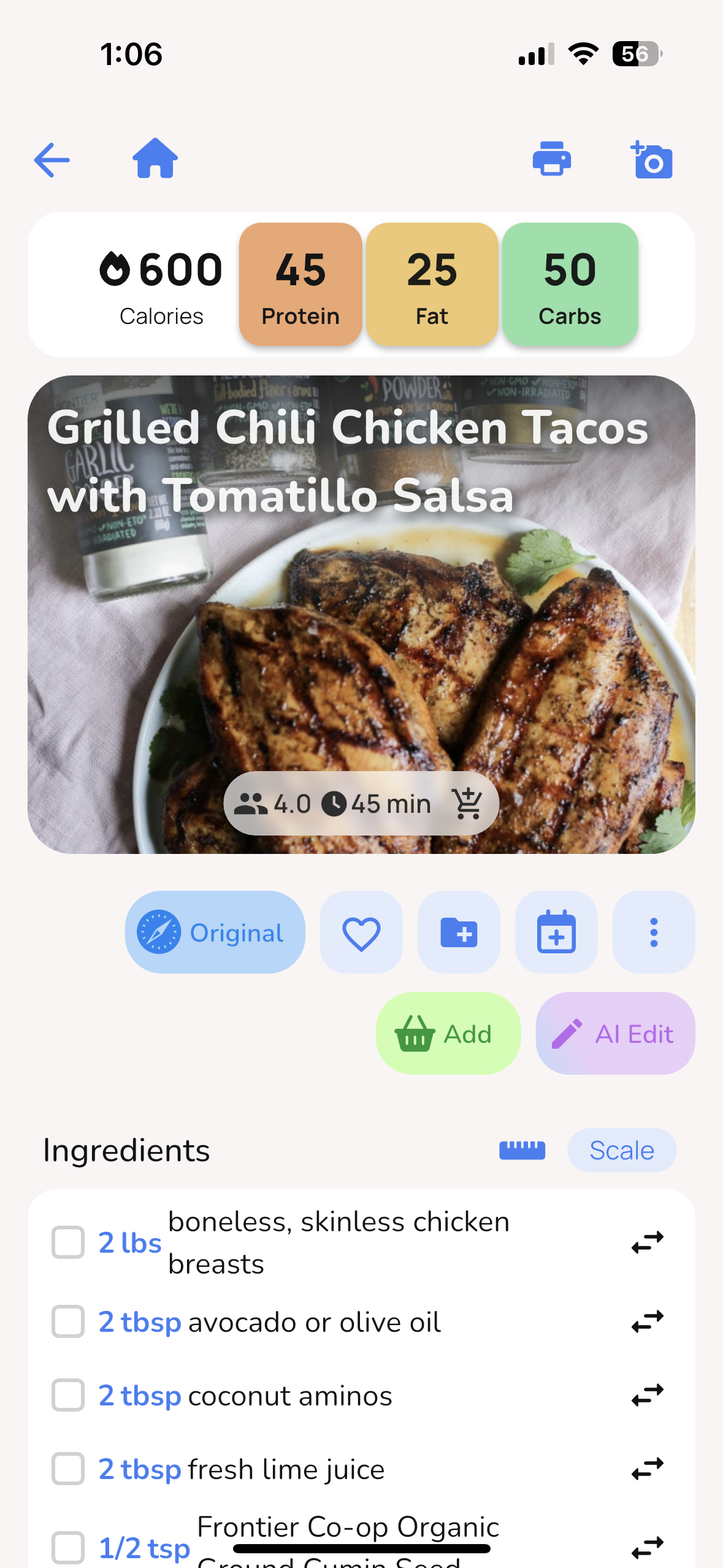
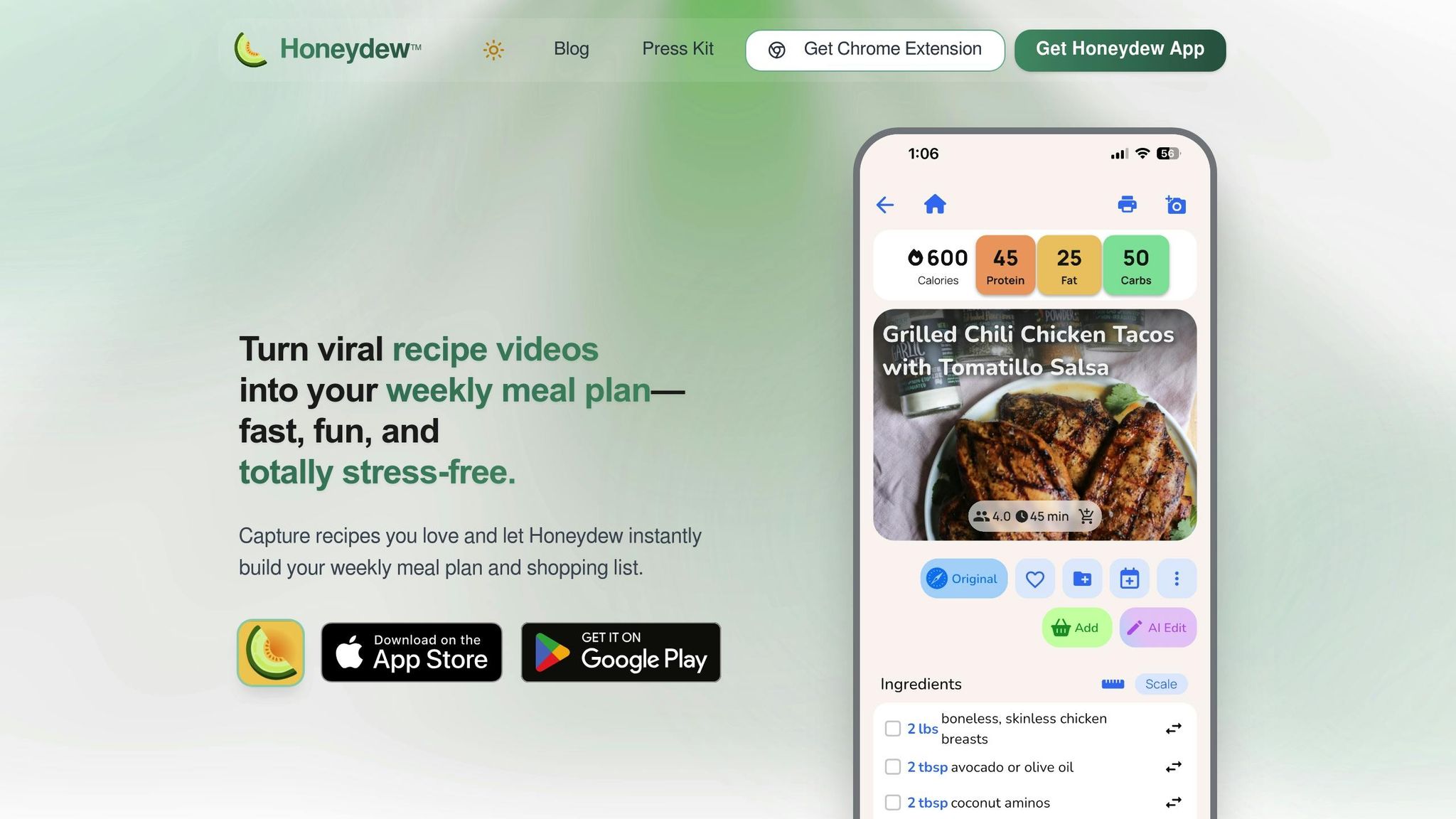
Honeydew Recipe Manager makes it easy to bring recipes from all kinds of sources - social media, websites, or even handwritten notes - into one place. The app’s AI takes care of extracting ingredients and instructions automatically, flagging any items that don’t fit your dietary needs. For instance, if you’re on a gluten-free diet, the app will quickly highlight non-compliant ingredients and suggest gluten-free swaps.
The "Ask Honey" feature can transform recipes to suit your dietary preferences in seconds. Plus, with "Pantry Mode", you can snap a photo of your current ingredients, and the AI will suggest recipes you can make right away.
Once your recipes are imported and customized, you’re ready to start organizing your meals more effectively.
Using AI Reports for Weekly Meal Planning
After importing your recipes, Honeydew helps you plan your week with ease. The app's drag-and-drop calendar allows you to schedule meals for the week, while the AI offers tailored suggestions based on your dietary restrictions and preferences. It even calculates your daily nutritional intake - covering calories, protein, fat, carbs, and fiber - to ensure your plan aligns with your health goals. This kind of automation doesn’t just save time; it can cut household food waste by up to 40% and save around $125 each month.
The app also supports meal planning for up to six household members. With the "Cookbook Translator", international recipes are converted to your preferred language and measurement system (Imperial or Metric), all while respecting your dietary requirements.
Creating Grocery Lists with Instacart Integration
To round it all off, Honeydew links your meal plan directly to your grocery shopping. Once you finalize your plan, the app generates a detailed, aisle-sorted grocery list with exact quantities. It even checks your pantry to exclude items you already have and suggests alternatives for non-compliant ingredients. With one-click integration to Instacart, you can place your grocery order without any extra steps.
The app also includes a "no screen lock" mode for cooking, keeping your device awake so you can follow recipes without interruptions.
"Honeydew has made meal planning fun again. The interface is intuitive and the suggestions are spot on!" - David K., Verified User
Key Benefits of AI in Dietary Suitability Checks
Speed and Accuracy
AI takes the hassle out of analyzing food choices, replacing manual methods that are often slow and prone to errors. With AI-powered apps, ingredient labels can be scanned in under 5 seconds, delivering results with over 99% accuracy in food classification and nutrient detection. For example, CNN-based AI models consistently achieve classification accuracy rates of 85% to 90%, making them a reliable tool whether you're scanning items at the store or reviewing recipes at home.
Personalized Dietary Solutions
Unlike one-size-fits-all nutrition advice, AI tailors dietary recommendations to your unique health profile. Advanced systems now consider factors like biomarkers, gut microbiome data, and even 3D body modeling to craft meal plans that align with your metabolism. A notable study by Zeevi and Ben-Yacov between 2015 and 2021 demonstrated the power of AI in personalizing diets. Their machine-learning algorithm helped 225 adults with prediabetes reduce daily hours with glucose levels above 140 mg/dL by 1.3 hours per day over six months. In contrast, participants following a standard Mediterranean diet only reduced this by 0.3 hours per day.
AI also brings flexibility to daily life. It adjusts meal plans for unexpected situations like travel or ingredient shortages without compromising nutritional value. For instance, in May 2025, the University of Twente introduced an AI system that personalized smoothie recipes to manage obesity and type 2 diabetes. Using the LLaMA3 model for privacy, the system achieved 80.1% adherence to RIVM and USDA health guidelines across 1,000 recipes. AI-driven dietary interventions have even reached a 72.7% diabetes remission rate in clinical studies. These tools simplify meal planning and shopping, integrating personalized insights into everyday routines.
Integration with Daily Life
AI tools are designed to fit seamlessly into your daily habits, making it easier to stick to dietary goals. Apps like Honeydew Recipe Manager suggest real-time ingredient swaps - for example, replacing regular flour with almond or coconut flour for keto or gluten-free diets - and even create smart shopping lists that omit items you already have.
AI also taps into social media trends, extracting recipes from TikTok videos, Instagram posts, or screenshots. With one click, these recipes can be turned into a grocery list and ordered via Instacart, streamlining the process of following a dietary-compliant meal plan. AI-powered chatbots further enhance adherence by providing ongoing support. Studies show that these chatbots improve user commitment to nutrition plans by 32% compared to traditional counseling methods. This blend of convenience and personalization makes it easier to maintain a consistent, healthy diet.
The AI Nutritionist in Your Pocket, Scan Food, Get Answers
Conclusion
AI is revolutionizing how we approach dietary compliance, transforming what used to be a time-consuming and stressful task into something that can be done in seconds. Instead of painstakingly reading food labels or second-guessing recipe ingredients, AI takes care of the analysis, reducing stress in the kitchen and boosting confidence that every meal aligns with your health goals.
This technology doesn’t just stop at analysis - it fits effortlessly into your daily life. Tools like Honeydew Recipe Manager make it easy to capture recipes from TikTok, Instagram, or even by snapping a quick photo, instantly checking them for compatibility with your dietary needs. From there, you can turn those recipes into aisle-sorted grocery lists and even arrange for ingredient delivery. On average, Honeydew Recipe Manager users save around 90,000 recipes each month. Plus, AI-powered meal planning can cut household food waste by up to 40% and save families about $125 per month.
Whether you’re managing diets for an entire household or sticking to your own plan, AI simplifies the process. It saves time, reduces errors, and ensures your meals are tailored to your needs. These tools don’t just make life easier - they help improve overall health and well-being.
With AI handling everything from label scanning to meal planning, sticking to your dietary goals has never been simpler. Want to see how it can transform your routine? Check out Honeydew Recipe Manager to explore features like smart ingredient substitutions, automated grocery lists, and personalized meal planning. Visit honeydewcook.com to get started today!
FAQs
How does AI accurately identify ingredients on food labels?
AI leverages advanced optical character recognition (OCR) technology to scan food labels and extract text with impressive accuracy. Once the text is captured, AI algorithms - trained on extensive ingredient databases - analyze the information to identify and verify each ingredient listed.
This blend of precise scanning and smart data analysis allows users to quickly figure out if a product fits their dietary preferences, simplifying both meal planning and grocery shopping. It’s a game-changer for anyone navigating specific diets or food restrictions.
Can AI manage complex dietary needs or multiple restrictions at the same time?
AI can handle even the most intricate dietary needs and restrictions with ease. Thanks to advanced ingredient databases and smart filters, it can meticulously analyze food labels and recipes. This means it can identify allergens, trace contamination risks, and specific sensitivities, ensuring recommendations are both safe and accurate.
Take the Honeydew Recipe Manager, for instance. This AI-driven tool simplifies the process by evaluating ingredients and offering tailored substitutions to match your dietary requirements. Whether you're navigating gluten-free, dairy-free, or multiple restrictions, AI ensures your meals are not only safe but also diverse and flavorful.
How does AI make meal planning and grocery shopping easier?
AI takes the hassle out of meal planning and grocery shopping by tailoring meal ideas to your dietary needs, preferences, and daily habits. Whether you're following a keto plan, sticking to vegan meals, or managing allergies, AI can tweak recipes and suggest ingredient swaps to help you stay on track with your goals.
Tools like Honeydew Recipe Manager make the process even smoother. They can automatically generate grocery lists from recipes you upload, saving you time and effort. Plus, with features like integration with grocery delivery services, these tools provide real-time inventory updates and handle substitutions when something's out of stock. The result? Meal planning and shopping that’s quicker, easier, and completely customized to your lifestyle.