How AI Suggests Ingredient Swaps Instantly
• Updated
Out of an ingredient while cooking? AI tools can now instantly suggest replacements based on what you have, dietary needs, and flavor compatibility. This saves time, reduces food waste, and makes cooking easier for everyone, whether you're managing allergies, health goals, or just an empty pantry.
Key takeaways:
- AI-powered apps like Honeydew Recipe Manager analyze recipes, pantry contents, and dietary preferences to recommend ingredient substitutions.
- They provide exact ratios, predict flavor changes, and even adjust recipes automatically.
- Popular swaps include coconut milk for dairy, tamari for soy sauce, and flaxseed meal for eggs.
- Honeydew offers features like Pantry Mode, AI suggestions, and recipe imports from social media for $6.99/month or $39.99/year.
With tools like these, you can confidently replace missing or restricted ingredients without compromising your dish.
Cooking Assistance using ChatGPT | Analyze Image with ChatGPT
How Honeydew Recipe Manager Enables Instant Ingredient Swaps
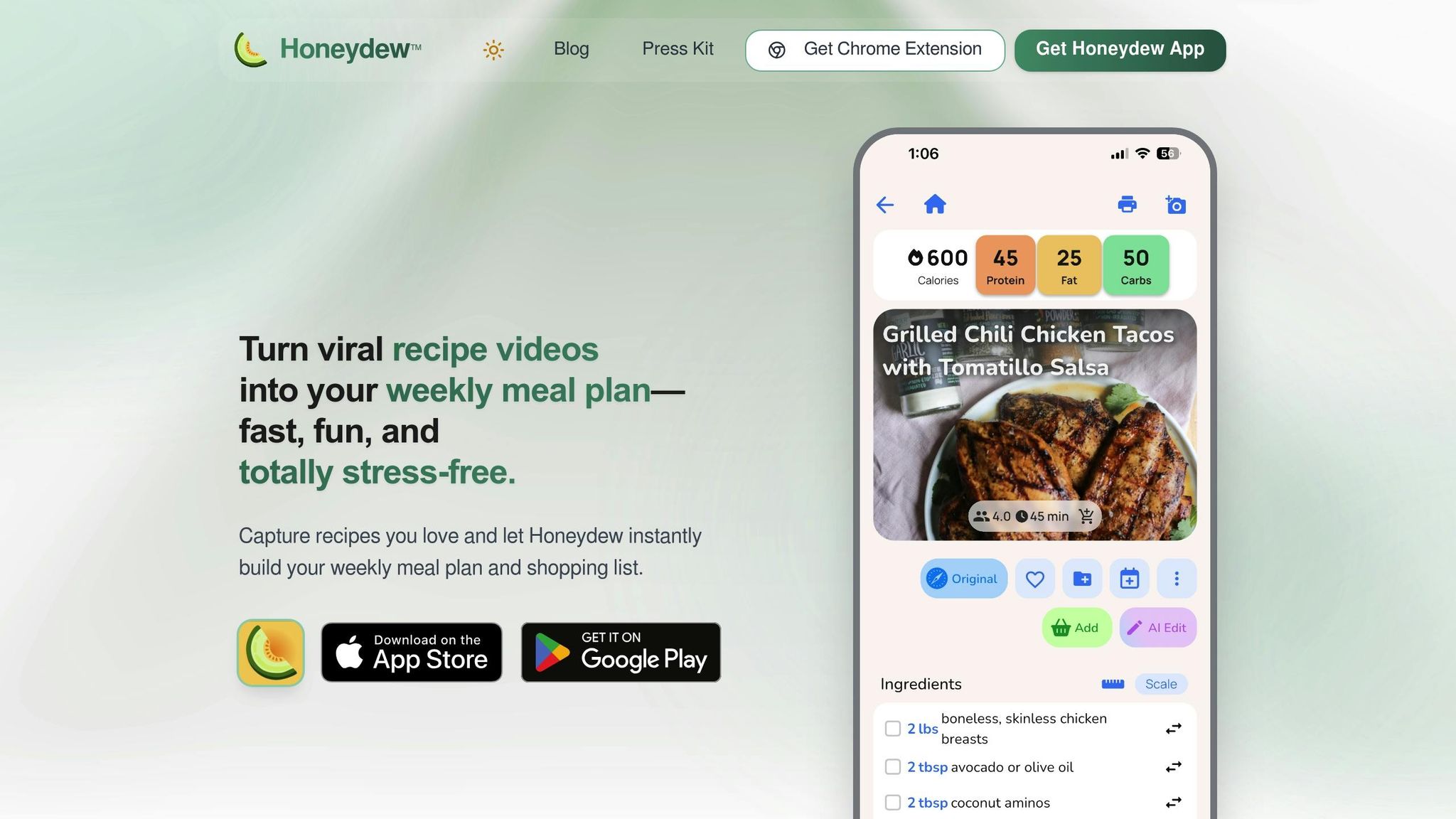
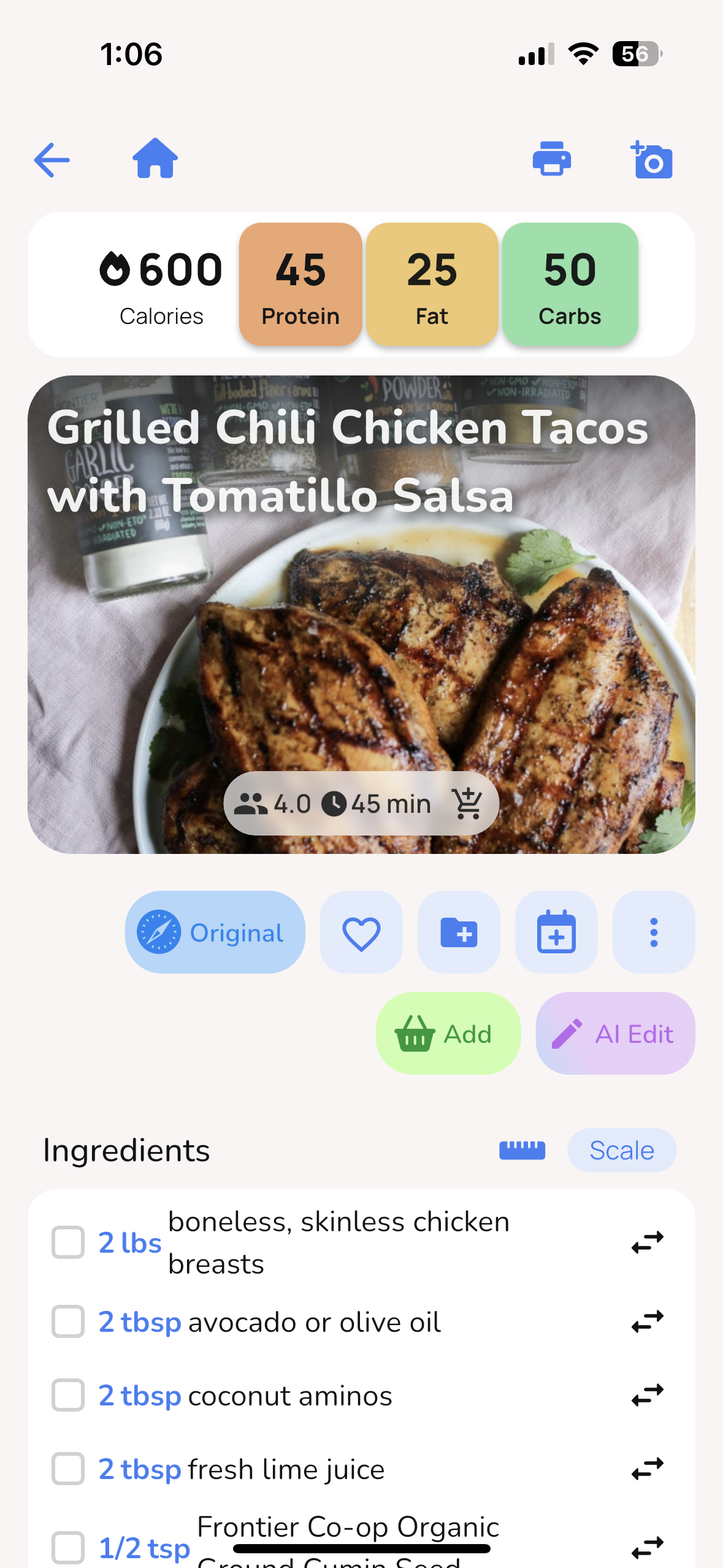
Honeydew Recipe Manager simplifies ingredient substitutions with smart, user-friendly features. By analyzing your recipe alongside your pantry inventory and dietary preferences, the app provides tailored alternatives whenever needed.
Import Recipes from Any Source
Whether it's from TikTok, Instagram, YouTube, or a random website, Honeydew's AI can extract ingredient lists and measurements from any recipe. This structured data forms the foundation for identifying missing or restricted ingredients with precision.
Flag Missing or Restricted Ingredients
After importing a recipe, Honeydew cross-checks its ingredients with your pantry inventory and dietary preferences. Whether you're vegan, keto, gluten-free, or have specific allergies, the app identifies items you don’t have or can’t use. Using Pantry Mode, you can sync your inventory by scanning receipts or photos for AI meal planning with pantry integration, allowing the AI to detect missing ingredients or allergens through metadata. Once flagged, the app is ready to suggest suitable substitutions.
AI-Powered Substitution Suggestions
With your recipe and pantry information in hand, Honeydew's AI uses advanced flavor chemistry to offer well-matched ingredient swaps. By analyzing flavor profiles and ingredient pairings, it recommends substitutions that enhance your dish. For instance, if you're out of butter in a recipe featuring garlic and herbs, the AI might suggest a fat alternative that complements those flavors. Keeping your pantry updated and dietary preferences detailed ensures the system delivers accurate, practical suggestions.
Step-by-Step Guide to Using Ingredient Substitution
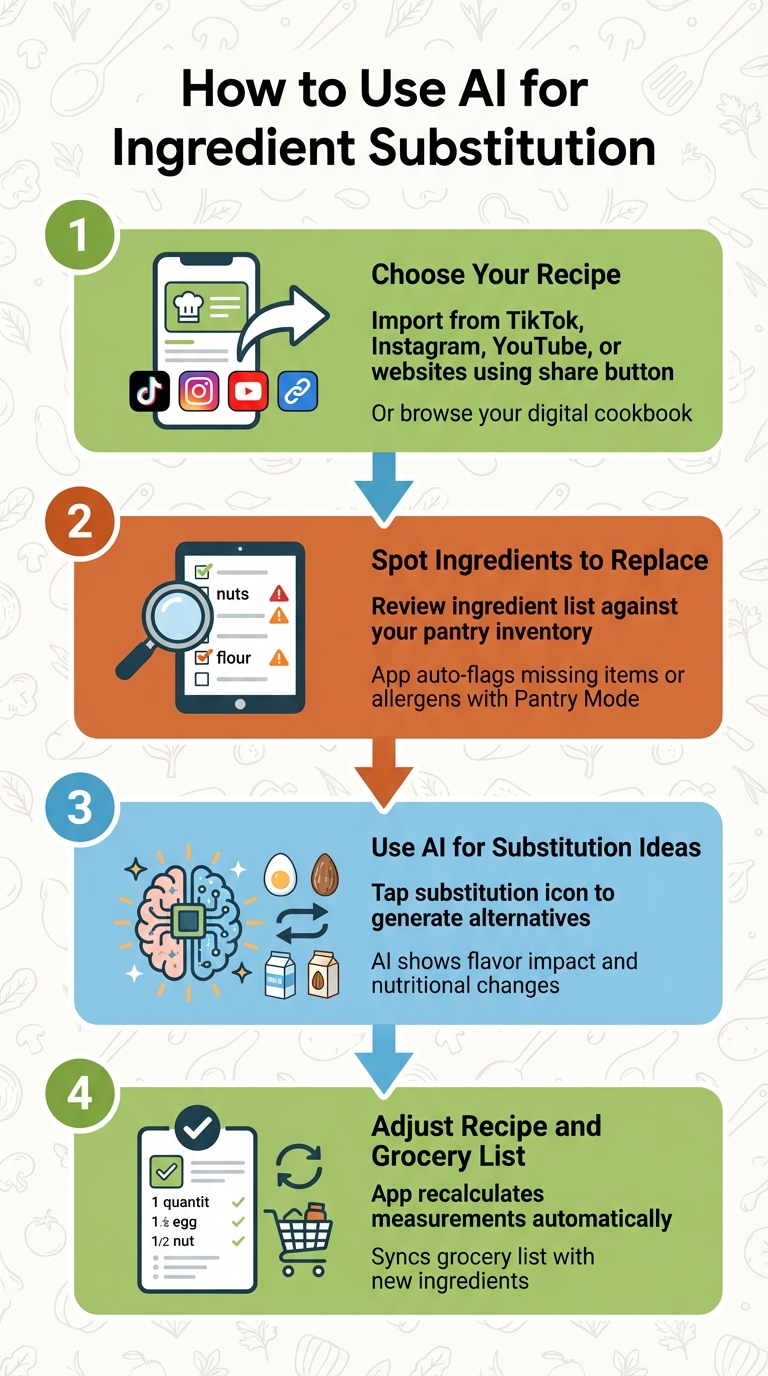
4-Step Guide to AI-Powered Ingredient Substitution in Recipe Apps
Step 1: Choose Your Recipe
Start by picking a recipe. You can import one directly from platforms like TikTok, Instagram Reels, Facebook Reels, or YouTube using the share button. Alternatively, search your digital cookbook or browse the Discover Page to find a recipe that catches your eye. Once selected, load the recipe and take a moment to review its ingredients.
Step 2: Spot Ingredients to Replace
Go through the ingredient list and pinpoint any items you’re missing or can’t use. Honeydew simplifies this step by checking the recipe against your pantry inventory and dietary preferences. If you’ve activated Pantry Mode by snapping a photo of your fridge, the app highlights missing ingredients or allergens automatically. Simply tap on any flagged item to mark it for substitution.
Step 3: Use AI for Substitution Ideas
Once you’ve marked ingredients for replacement, tap the substitution icon next to the flagged item. Honeydew’s AI will generate a list of alternative options, including details on how each choice affects the flavor and nutritional value of the dish. Browse through the suggestions and pick the one that works best with your needs and what you have available.
Step 4: Adjust Recipe and Grocery List
After finalizing your substitutions, Honeydew updates the recipe for you, using a grocery list calculator to recalculate measurements. It also syncs your grocery list, swapping out the original ingredient for the replacement. This way, you’re ready to cook or shop without missing a step.
Common Ingredient Substitution Examples
AI has made recipe customization easier than ever, especially when it comes to ingredient substitutions. It analyzes flavor profiles, functions, and nutritional content to suggest practical swaps. Whether you're missing a key ingredient or need to adjust for dietary restrictions, AI takes into account how each substitute impacts texture, taste, and nutritional value.
For instance, if you're replacing wheat flour with rice or almond flour, adding 1/4 teaspoon of xanthan gum per cup helps replicate the structure provided by gluten. Need to swap out eggs in baking? Mix 1 tablespoon of ground flaxseed with 2.5 tablespoons of water to create a binding agent. These small tweaks ensure your recipes stay functional and delicious.
A study involving 12 AI recipe converters across 47 recipes found them 74% accurate for single dietary restrictions. However, accuracy dropped to 31% when multiple restrictions were involved.
"True intelligence requires layered clinical, manufacturing, and sensory data - not just recipe text."
– Dr. Lena Torres, Director of the Food Allergy Innovation Lab, Johns Hopkins University
For plant-based buttermilk alternatives, adding 1 teaspoon of lemon juice or vinegar to oat milk ensures the right acidity for leavening. Similarly, coconut milk works as a 1:1 substitute for heavy cream, offering creaminess with a subtle coconut flavor. AI even flags cross-contamination risks; for example, when suggesting tamari instead of soy sauce, it reminds users to check for gluten-free certification.
These examples highlight how precise adjustments can maintain the quality of your dishes, even when ingredients are swapped.
Substitution Table for Common Ingredients
| Original Ingredient | AI-Suggested Substitute | Adjustment Ratio / Notes | Dietary Fit |
|---|---|---|---|
| Wheat Flour | Rice or Almond Flour | Add 1/4 tsp xanthan gum per cup for structure | Gluten-Free |
| Cow's Milk | Coconut or Almond Milk | 1:1 ratio; Coconut milk preferred for heavy cream replacement | Vegan / Dairy-Free |
| Egg (as binder) | Flaxseed Meal + Water | 1 tbsp ground flax + 2.5 tbsp water = 1 egg | Vegan |
| Soy Sauce | Tamari | 1:1 ratio; Check for gluten-free certification | Gluten-Free |
| Butter | Coconut Oil | 1:1 ratio; Lower melting point may affect texture | Vegan |
| Honey | Maple or Date Syrup | 1:1 ratio; Date syrup avoids filtration issues | Vegan |
| Peanut Butter | Sunflower Seed Butter | 1:1 ratio; Check for shared facility cross-contamination | Nut-Free |
AI tools also provide detailed nutritional breakdowns, covering macronutrients and key vitamins or minerals like sodium and calcium, helping you maintain a balanced diet while adapting recipes to your needs.
Conclusion
AI-powered ingredient substitution makes cooking simpler by quickly suggesting alternatives for missing or restricted ingredients. This not only saves time but also helps cut down on food waste through smarter ingredient prep. Plus, fewer last-minute trips to the store mean you can focus more on enjoying your time in the kitchen.
The Honeydew Recipe Manager brings these perks straight to your device. With features like the "Ask Honey" AI assistant and Pantry Mode, it transforms cooking into a seamless experience. The app can turn social media recipes into customizable recipe cards and even adjust ingredient ratios automatically. With a stellar 4.8/5-star rating on the Apple App Store from 728 users, it’s clear that home cooks value the convenience it offers. You can try it for free or upgrade to Honeydew Plus for $6.99 per month or $39.99 annually, giving you access to professional-level recipe customization at home.
Start cooking smarter and easier with the Honeydew Recipe Manager’s AI-powered tools for meal planning apps vs. manual planning to find the best fit for your kitchen.
FAQs
How does AI pick the best substitute?
AI chooses ingredient substitutes by examining key elements like flavor, texture, and nutritional value to preserve the essence of a recipe. It relies on tools like food knowledge graphs and semantic data to find appropriate alternatives, factoring in dietary restrictions and allergies. By prioritizing options based on their nutritional benefits and how well they fit the dish, AI ensures substitutions are practical, safe, and tailored to individual preferences or dietary goals.
Will substitutions change taste or texture?
Substitutions can influence both the taste and texture of a product. This happens because AI works to strike a balance between sensory appeal and functional needs. While every effort is made to keep changes minimal, some differences are simply unavoidable.
How accurate is AI with multiple dietary restrictions?
AI tools are becoming impressively precise at handling various dietary restrictions. They can cross-check ingredients against vast databases to ensure they align with specific needs, recommend alternatives, and even tweak recipes accordingly. That said, when it comes to more complicated scenarios - like severe allergies or autoimmune conditions - their accuracy hinges on the quality of their algorithms and the data they rely on. While these tools save a lot of time and effort, human oversight remains critical, especially when dealing with sensitivities that could pose serious health risks.