How to Read Organic and Non-GMO Labels
• Updated
Not all food labels mean what you think. Terms like "natural" or "eco-friendly" are often unregulated, but USDA Organic and Non-GMO Project Verified labels follow strict standards. Here's what you need to know:
- USDA Organic: Guarantees no GMOs, synthetic pesticides, or fertilizers. Requires annual inspections and strict farming practices, including outdoor access for animals.
- Non-GMO Project Verified: Focuses only on avoiding genetic modification but allows synthetic pesticides and fertilizers.
- Key Difference: All organic products are non-GMO, but not all non-GMO products are organic.
Quick Overview:
- Organic Labels:
- "100% Organic": All ingredients certified organic.
- "Organic": At least 95% organic ingredients.
- "Made with Organic Ingredients": 70–95% organic, no USDA seal.
- Less than 70% organic: Organic claims only in the ingredient list.
- Non-GMO Labels:
- Verified by third-party testing (e.g., Non-GMO Project Verified).
- "GMO-free" claims without certification can be misleading.
Tip: Look for the USDA Organic seal or Non-GMO Project Verified seal for reliable choices. PLU codes on produce can also help: 5-digit codes starting with 9 indicate organic, but GMO identification via codes is unreliable.
Understanding these labels helps you avoid synthetic chemicals, support better farming practices, and make informed food choices.
Organic, All-Natural, non-GMO | What Do The Labels Actually Mean
What Organic and Non-GMO Labels Mean
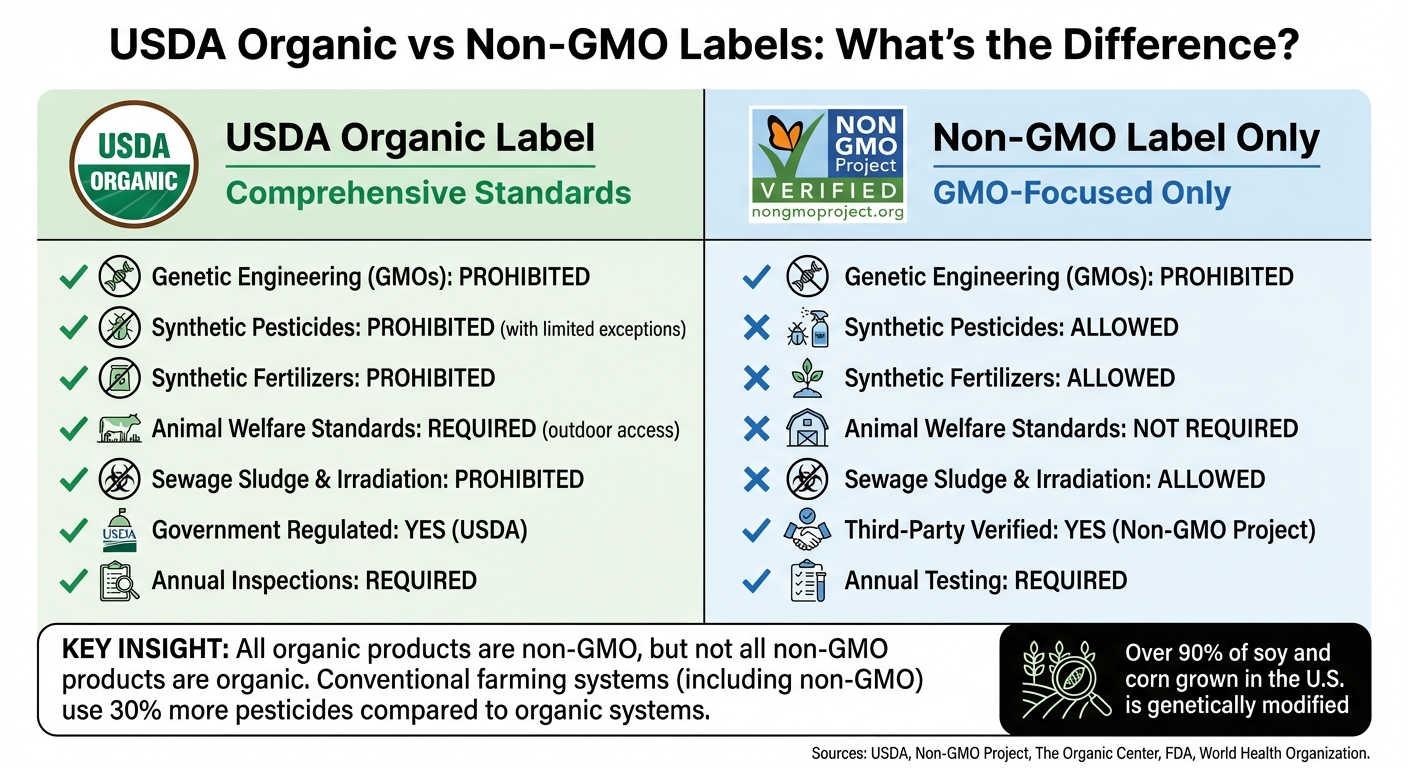
USDA Organic vs Non-GMO Label Comparison Guide
Organic Label Definition
The USDA organic label stands out as the only government-regulated certification for organic food in the U.S. This label guarantees that a product meets strict federal guidelines covering everything from soil management to animal care. Unlike vague terms like "natural" or "clean", organic certification undergoes rigorous annual inspections by USDA-accredited agents to ensure compliance with these standards.
For crops to qualify as organic, the land must remain free of prohibited substances for at least three years. Practices like genetic engineering, ionizing radiation, and the use of sewage sludge are strictly banned. Livestock raised under organic standards must be fed 100% organic agricultural feed and have access to the outdoors throughout the year. Additionally, grazing animals like cattle must spend at least 120 days per season on pasture and get at least 30% of their diet from grazing.
"Organic is a label that indicates that a food or agricultural product has been produced according to the USDA organic standards, which require operations to use practices that cycle resources, conserve biodiversity, and preserve ecological balance." – USDA Agricultural Marketing Service
With these standards in place, it’s clear how organic certification goes beyond other labels. But how does it compare to non-GMO labeling?
Non-GMO Label Definition
The non-GMO label simply means that the product’s DNA has not been altered through genetic engineering. This is significant because over 90% of soy and corn grown in the U.S. is genetically modified. However, the non-GMO label focuses solely on genetic modification and doesn’t address other farming practices like pesticide use or soil conservation.
It’s important to note that all organic products are non-GMO, but not all non-GMO products are organic. USDA organic standards explicitly ban genetic engineering as part of their guidelines. On the other hand, non-GMO products might still be grown using synthetic fertilizers and pesticides. In fact, conventional farming systems, which include non-GMO products, use 30% more pesticides compared to organic systems.
Here’s a quick comparison to break it down further:
| Feature | USDA Organic Label | Non‐GMO Label Only |
|---|---|---|
| Genetic Engineering (GMOs) | Prohibited | Prohibited |
| Synthetic Pesticides | Prohibited (with limited exceptions) | Allowed |
| Synthetic Fertilizers | Prohibited | Allowed |
| Animal Welfare Standards | Required (outdoor access) | Not Required |
| Sewage Sludge & Irradiation | Prohibited | Allowed |
4 Types of Organic Label Categories
The USDA has created four distinct organic label categories based on the percentage of organic ingredients in a product. These categories help consumers easily understand what they’re purchasing. Let’s break them down.
100% Organic
100% Organic products are made entirely from certified organic ingredients, excluding salt and water. These items are allowed to carry the USDA Organic Seal and the label "100 Percent Organic" on their packaging.
Organic (95% Organic Ingredients)
Products labeled as Organic must contain at least 95% certified organic ingredients. The remaining 5% must be non-GMO and adhere to the National List of Allowed and Prohibited Substances. These products are also eligible to display the USDA Organic Seal, giving consumers confidence in their choice.
Made with Organic Ingredients (70–95% Organic)
Items in the Made with Organic Ingredients category include 70–95% organic content. These products can highlight up to three specific organic ingredients on the label (e.g., "Made with organic corn and peas"). However, they cannot display the USDA Organic Seal.
Less Than 70% Organic Ingredients
Products with Less Than 70% Organic Ingredients cannot use the word "organic" on the front of the package or display the USDA Organic Seal. Any organic claims are limited to the ingredient list on the back or side of the packaging.
| Label Category | Organic Content | USDA Seal? | Front Panel "Organic" Claim |
|---|---|---|---|
| 100% Organic | 100% | Yes | "100% Organic" |
| Organic | 95%–99% | Yes | "Organic" |
| Made with Organic Ingredients | 70%–94% | No | "Made with organic [specific ingredients]" |
| Less Than 70% Organic Ingredients | <70% | No | Only indicated in the ingredient list |
How to Identify Non-GMO Products
Navigating non-GMO claims can feel more complicated than understanding organic labels, which follow strict USDA guidelines. Many products with "non-GMO" or "GMO-free" labels rely on self-made claims rather than independent verification. Knowing which labels to trust can help you make better-informed choices at the store.
Non-GMO or GMO-Free Claims
If you see "non-GMO" or "GMO-free" on a label without a certification seal, it's worth digging deeper. These text-only claims are not regulated and often lack independent verification. The FDA even advises against using the term "GMO-free" because proving the complete absence of genetically modified material is nearly impossible. Also, be cautious of vague terms like "natural", "clean", or "green" - these have no federal standards and don't guarantee a product is GMO-free.
Here’s a quick guide to help sort verified claims from marketing jargon:
| Label Claim | Verification Level | GMO Status |
|---|---|---|
| Non-GMO Project Verified | Independent Third-Party | Tested for high-risk ingredients |
| "GMO-Free" (Text only) | Self-Claimed | May lack independent verification |
| "Natural" or "Clean" | Unregulated | No assurance of being GMO-free |
Keep in mind, products certified organic automatically meet non-GMO standards since USDA organic rules prohibit genetic engineering.
Non-GMO Project Verified Seal
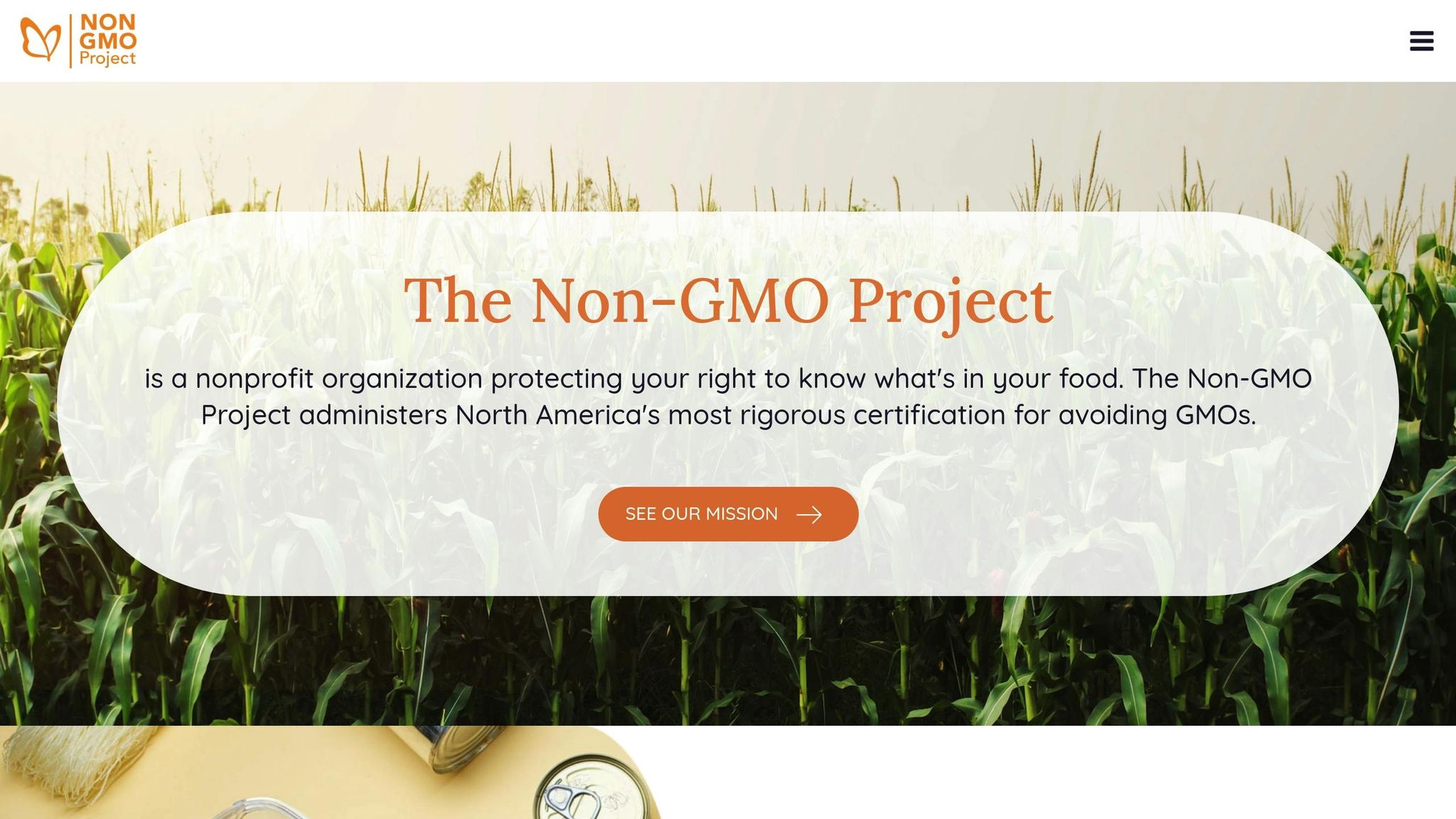
For a more reliable way to spot non-GMO products, look for the Non-GMO Project Verified seal. This seal means the product has passed a thorough third-party verification process, which typically takes 3 to 6 months. The process includes detailed ingredient reviews, testing for high-risk materials, and annual renewals.
"Nearly a third of shoppers look for the Butterfly to avoid GMOs." - The Non-GMO Project
This seal is especially important because GMOs are found in over 70% of grocery store products. High-risk ingredients like corn, soy, canola oil, cottonseed oil, and sugar from sugar beets are particularly common. By 2020, 92% of U.S. corn and 99% of sugar beet crops were genetically modified. To confirm a product's certification, you can search the Non-GMO Project's database, which lists over 50,000 verified products, representing $25 billion in annual sales.
How to Use Produce PLU Codes to Check Organic and GMO Status
PLU codes, found on the stickers attached to fruits and vegetables, offer a handy way to understand how produce was grown. While these codes primarily help retailers set prices, they also provide clues about farming practices. Used since 1990, PLU (Price Look-Up) codes are 4- or 5-digit numbers that, though not government-regulated, serve as a quick reference for consumers making decisions about their produce choices.
PLU Code Breakdown
PLU codes can complement official seals like USDA Organic certification or non-GMO labels when identifying produce origins. The number of digits and the first digit of the code indicate specific growing methods. For example:
- Conventional produce is marked with a four-digit code beginning with 3 or 4. A common example is 4011, which identifies a standard banana.
- Organic produce has a five-digit code starting with 9, such as 94011 for an organic banana.
"Conventional produce PLUs have four digits and organics have five - and the first number will always be 9 if the produce is organic."
- Charlotte Vallaeys, Senior Food and Nutrition Policy Analyst, Consumer Reports
However, distinguishing GMO produce is trickier. While GMO items should theoretically carry a five-digit code starting with 8 (e.g., 84011 for a GMO banana), this designation is rarely used in practice. Instead, many GMO items share the same four-digit codes as conventional produce, making PLU codes unreliable for identifying GMOs.
| Produce Type | Code Length | Starting Digit | Example | Reliability |
|---|---|---|---|---|
| Conventional | 4 Digits | 3 or 4 | 4011 (Banana) | Reliable |
| Organic | 5 Digits | 9 | 94011 (Organic Banana) | Reliable |
| GMO | 5 Digits | 8 | 84011 (GMO Banana) | Unreliable (rarely used) |
How to Verify Label Authenticity
The rise in demand for organic and non-GMO products has led to some misleading labeling practices. Not every claim you see on a product is backed by legitimate certification. Knowing how to verify these labels can help you make smarter, more informed choices. Here’s how to separate the real certifications from the marketing gimmicks.
Check for the USDA Organic Seal or Certifier Information
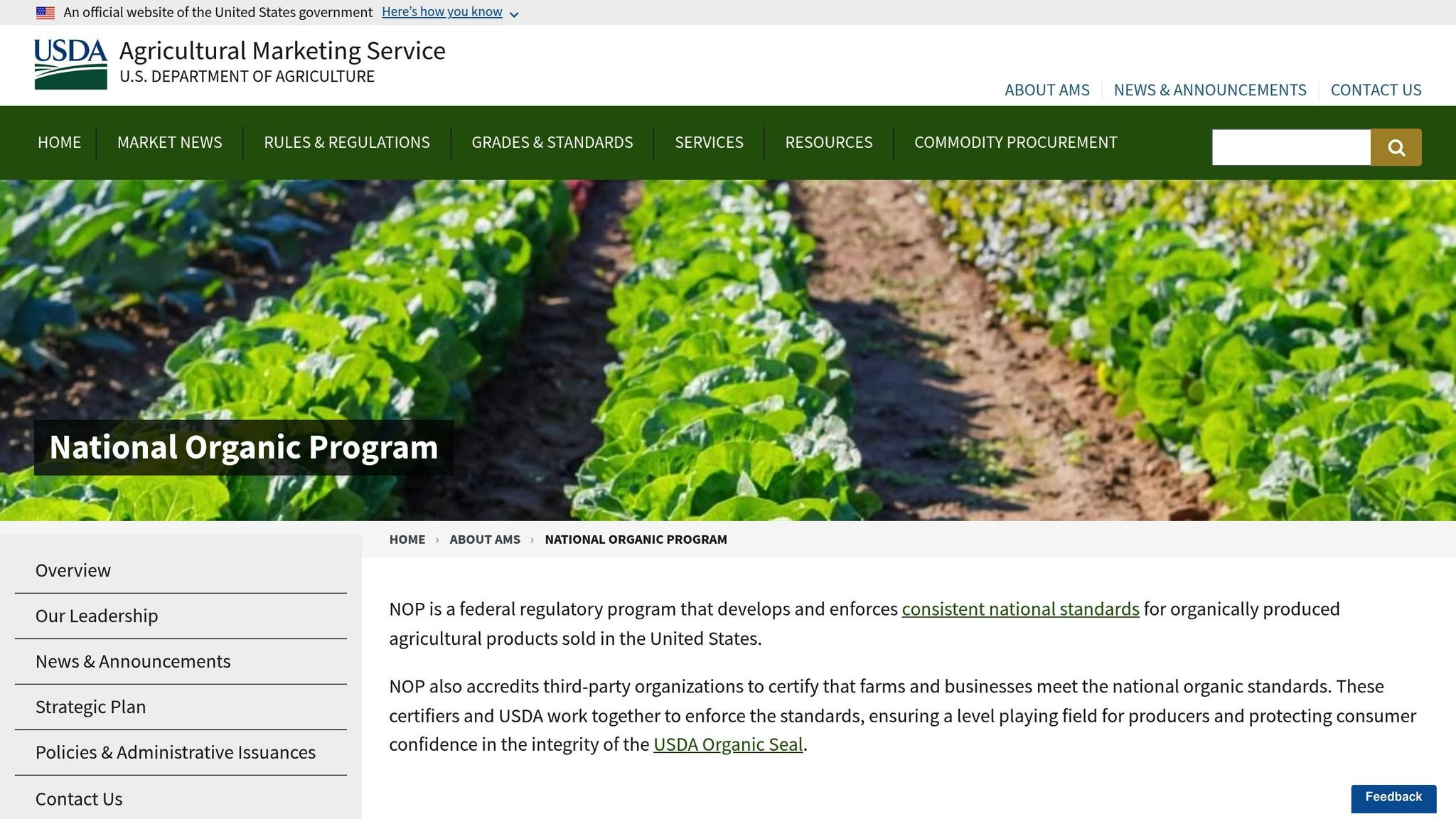
The USDA Organic seal is your go-to sign of authenticity. This green and white (or black and white) circular logo is a registered trademark. You’ll find it on products labeled as "100% Organic" or "Organic" (which means at least 95% organic ingredients). However, products labeled "Made with Organic Ingredients" won’t carry the seal, even though they still require certification.
To ensure the claim is valid, check for a USDA-accredited certifier’s name near the ingredient list. Look for phrases like "Certified organic by [Name of Certifier]". If this information isn’t there, the product’s organic status might be questionable. For further confirmation, use the USDA Organic INTEGRITY Database online to verify whether the company’s certification is current and active.
Avoid Misleading or Uncertified Claims
Once you’ve checked for the USDA Organic seal, be wary of other claims that aren’t regulated. Unverified terms like "natural" or "eco-friendly" often lack any independent certification. Keep in mind that the USDA organic label is the only government-backed certification for organic food in the U.S..
For non-GMO claims, look for the Non-GMO Project Verified seal, which ensures products undergo regular testing and annual inspections. Additionally, since January 1, 2022, the USDA mandates that manufacturers disclose bioengineered (GMO) ingredients. This can appear as a "Bioengineered" symbol, on-package text, or even a scannable QR code. If you suspect a product is falsely labeled, you can report it to the USDA National Organic Program, which handles violations of organic regulations.
| Label Type | What to Look For | Red Flags |
|---|---|---|
| USDA Organic | Green/white seal, certifier name on the label | Missing certifier name, seal on "Made with Organic" products |
| Non-GMO | Non-GMO Project Verified seal, organic certification | Claims like "GMO-free" without third-party proof |
| Unregulated Terms | Words like "natural", "eco-friendly", "sustainable" | No certification or vague marketing language |
How Honeydew Recipe Manager Helps with Organic and Non-GMO Meal Planning
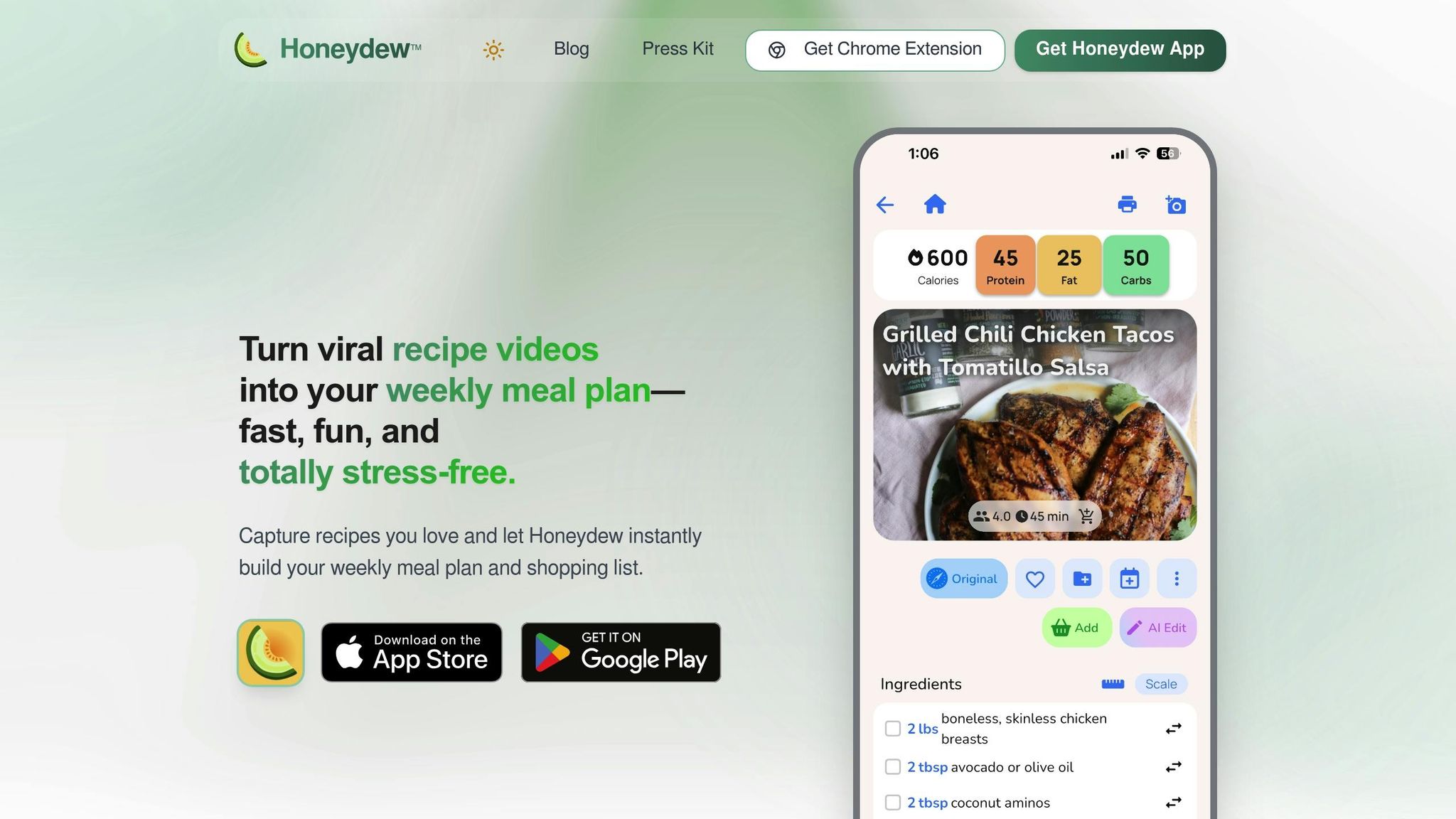
Now that you’re familiar with organic and non-GMO labels, Honeydew Recipe Manager makes it easier to bring those standards into your kitchen. With its practical tools, you can seamlessly incorporate these ingredients into your daily meals.
Filter Recipes by Organic and Non-GMO Ingredients
Honeydew’s AI-powered search lets you instantly find recipes that align with organic and non-GMO standards. You can even import recipes from TikTok, Instagram, YouTube, or other websites, and the AI will analyze them to ensure they meet your clean-label preferences.
The meal planner takes it a step further by generating weekly plans in seconds, focusing on recipes that include USDA Organic or Non-GMO Project Verified ingredients. Plus, you can search for recipes based on what’s in your pantry, so those certified organic items you’ve already bought don’t go to waste.
Auto-Generate Grocery Lists with Label Information
Once you’ve picked your recipes, Honeydew simplifies shopping with automated grocery lists. These lists are organized by store sections and include label details, so you know which products need to meet organic or non-GMO standards. For example, items requiring USDA Organic or Non-GMO Project Verified seals are flagged for easy identification.
With Instacart integration, you can directly order ingredients online. The smart grocery list also reminds you to check for the USDA Organic seal (indicating at least 95% organic ingredients) or the Non-GMO Project Verified seal, saving you from second-guessing in the grocery aisle.
Track Nutrition and Customize Substitutions
Honeydew doesn’t just stop at recipe selection and shopping - it also helps fine-tune your meal planning. The smart substitution feature suggests alternatives when you’re missing specific organic or non-GMO items. For instance, if a recipe calls for conventional canola oil, the app recommends certified non-GMO options. As Miles McEvoy, National Organic Program Deputy Administrator, explains:
"No matter where it was grown, if a product has the USDA Organic label on it, it wasn't produced with GMOs".
This means choosing organic substitutions automatically addresses concerns about GMOs.
Additionally, the app includes nutrition tracking with an auto calorie and macro calculator, helping you stay on top of both your nutritional goals and ingredient quality. You can even monitor how often you’re using "100% Organic" products versus those labeled "Made with Organic Ingredients" (which contain 70-95% organic ingredients). This gives you a clear view of how well you’re sticking to clean-label eating habits.
Conclusion
Understanding the difference between organic and non-GMO labels goes beyond simply reading what's on the packaging. It’s about cutting through misleading claims to make informed decisions. The USDA Organic seal is the only certification in the United States that’s government-backed, requiring thorough inspections to ensure detailed traceability. On the other hand, terms like "natural", "clean", or "sustainably harvested" are not regulated and don’t come with verified standards.
Here’s a quick breakdown: products labeled "Organic" must contain at least 95% organic ingredients, while those labeled "Made with Organic" need at least 70% organic content but cannot carry the USDA seal. Importantly, USDA Organic certification prohibits genetic engineering, meaning any product with that seal is automatically non-GMO. To confirm a product’s authenticity, look for a USDA-accredited certifier on the label. These details are what make the organic label trustworthy.
"Organic integrity from farm to table, consumers trust the organic label." – Miles McEvoy, Deputy Administrator of the National Organic Program
This trust is rooted in knowing the difference between regulated certifications and unverified marketing terms.
With this knowledge, incorporating organic and non-GMO standards into your meals becomes much simpler. Tools like the Honeydew Recipe Manager can help streamline the process by filtering recipes for organic and non-GMO ingredients, creating grocery lists with label details, and even suggesting substitutions. Whether you’re aiming for a fully organic lifestyle or just trying to include more organic ingredients, having the right tools and a clear understanding of these standards makes healthier eating easier to achieve.
FAQs
What’s the difference between USDA Organic and Non-GMO Project Verified labels?
The USDA Organic label signifies that a product adheres to strict USDA guidelines. This includes being made with at least 95% organic ingredients and being completely free from synthetic pesticides, fertilizers, and GMOs. If a product is labeled as "100% organic", it means every ingredient is organic.
On the other hand, the Non-GMO Project Verified label confirms that a product has been tested and verified to contain no genetically modified organisms (GMOs). However, this label doesn’t mean the product is organic or meets the USDA organic criteria.
Each label serves a unique purpose, so knowing the difference can help you make more informed choices when selecting food and other items.
How do I spot organic and non-GMO products at the grocery store?
To spot organic and non-GMO products, start by checking for the USDA Organic Seal or the name of a certifying agency on the label. Items labeled “100% organic” are made entirely with organic ingredients, while those marked “organic” must have at least 95% organic components. Both categories are strictly regulated under USDA guidelines.
For non-GMO options, look for certifications like “Non-GMO Project Verified” or similar labels. These indicate the product has been thoroughly checked to ensure it doesn’t contain genetically modified ingredients.
Taking a closer look at product labels can help you make informed decisions and feel good about what you’re bringing into your home.
Does organic automatically mean non-GMO?
Organic products in the U.S. don’t automatically mean “non-GMO,” but certified organic items are required to be free of genetically modified organisms (GMOs). Organic farming standards strictly forbid the use of GMOs at any stage of production, ensuring that certified organic goods meet this requirement.
To ensure you're buying non-GMO products, look for the USDA Organic seal, which confirms adherence to these rules. For added peace of mind, you can also check for labels like "Non-GMO Project Verified" alongside the organic certification.