Kaffir Lime Leaf Substitutes for Southeast Asian Dishes
• Updated
When you can’t find kaffir lime leaves, substitutes like lime zest, lemongrass, and bay leaves can help replicate their citrusy, floral aroma in Southeast Asian recipes. Each alternative has unique strengths, making them suitable for specific dishes like curries, soups, or marinades.
Here’s a quick overview:
- Lime Zest: Most accessible, adds bright citrus notes.
- Lemongrass: Offers a lemony, herbal flavor; great for broths and curries.
- Bay Leaves: Adds earthy depth; pair with lime zest for balance.
- Curry Leaves: Earthy with mild citrus hints; ideal for curries and rice dishes.
- Lemon Balm: Mild citrus with minty undertones, good for lighter dishes.
- Lime Juice: Adds tanginess but lacks the aroma of kaffir lime leaves.
For the best results:
- Use lime zest for convenience and aroma.
- Pair lemongrass or bay leaves with lime zest for more balanced flavors.
- Add substitutes at the right time (e.g., lime zest at the end of cooking) to preserve their fragrance.
Pro Tip: Frozen kaffir lime leaves from Asian markets are the closest match if fresh ones aren’t available.
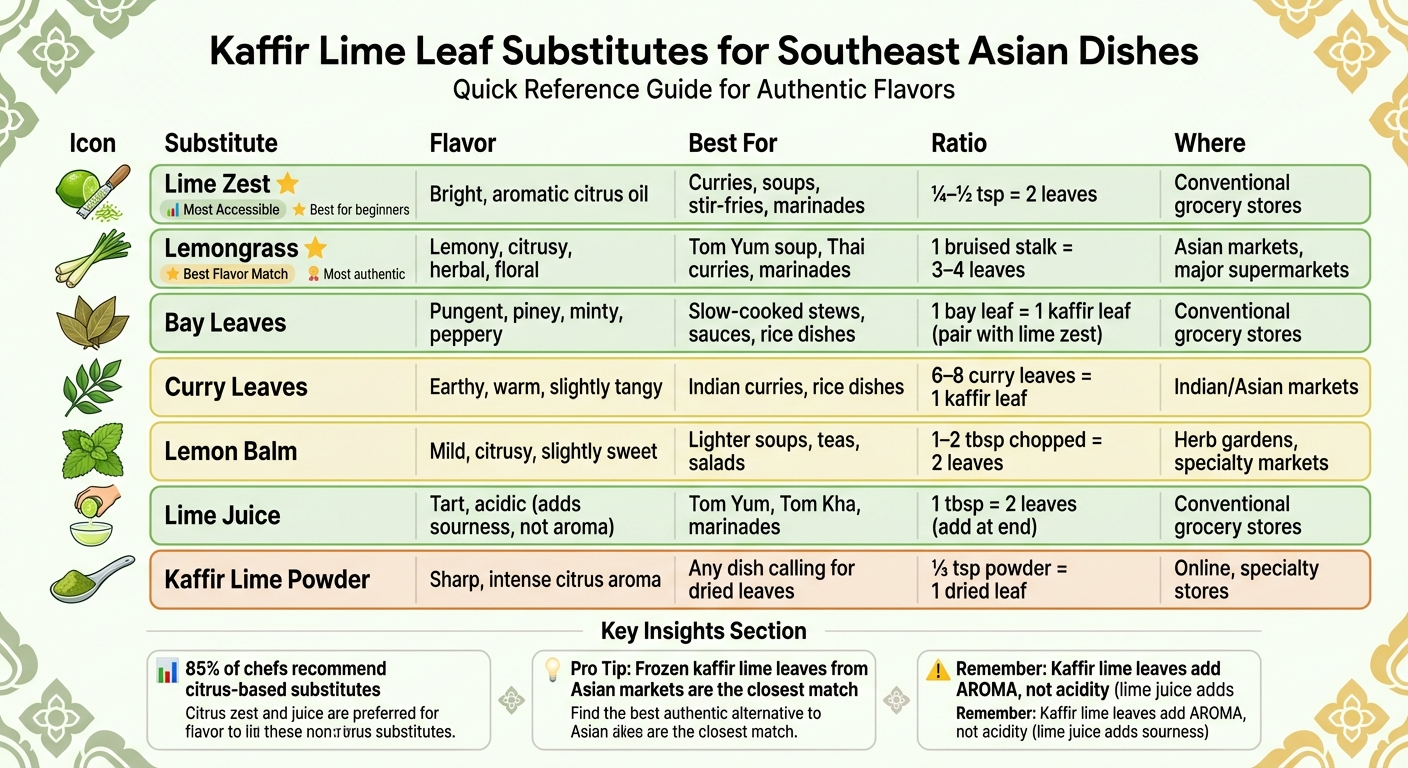
Kaffir Lime Leaf Substitutes Comparison Chart for Southeast Asian Cooking
1. Lemongrass
Flavor Profile
Lemongrass is a solid alternative to kaffir lime leaves, offering a bright, citrusy flavor with herbal undertones. Bon Appétit describes it as "intensely lemony, with hints of ginger and floral notes". While both ingredients share a lemony aroma due to compounds like citronellal, lemongrass delivers a more direct citrus punch with subtle ginger-like warmth. Its vibrant taste adds depth to many Southeast Asian dishes.
Best Dishes
Lemongrass works best in liquid-based recipes where its aromatic oils can fully infuse. It’s a natural fit for dishes like Tom Yum soup, Thai green curry, Tom Kha, and stews. Beyond soups and curries, it enhances marinades for grilled chicken, stir-fries, and sauces. To use, bruise the stalk with a knife to release its oils, then remove the tough, woody parts before serving.
Substitution Ratio
To replace kaffir lime leaves, use 1 whole stalk of lemongrass for every 3–4 leaves, or 1 tablespoon of minced lemongrass for 2–3 leaves. If you need a stronger flavor, you can increase the amount by 1.5–2×. For curry pastes, substitute 2–3 stalks of lemongrass for every 4–5 kaffir lime leaves.
Availability in US Stores
Fresh lemongrass is easy to find at Asian markets and is becoming more common in mainstream grocery stores, often in the produce section. While dried or powdered lemongrass is available, fresh is generally preferred for achieving authentic Southeast Asian flavors. Its accessibility makes it a practical choice for those looking to replicate these dishes at home.
2. Lime Zest
Flavor Profile
Lime zest is often seen as the go-to substitute for kaffir lime leaves because it shares the essential aromatic oils that create a similar citrusy bitterness. However, it doesn’t quite capture the earthy, floral, and herbal notes that make kaffir lime leaves so distinct. While lime juice brings acidity to a dish, lime zest offers an aromatic punch, making it a better choice for recipes where depth of flavor is key. This makes lime zest a great option for many traditional Southeast Asian dishes.
Best Dishes
Lime zest shines in liquid-based dishes like Thai green curry, red curry, Tom Yum soup, and Tom Kha Gai. It also works well in marinades and stir-fries. To preserve its aromatic qualities, add the zest toward the end of cooking, as the heat can diminish its fragrance.
Substitution Ratio
For substitution, use ½ teaspoon of lime zest per kaffir lime leaf or ¼ teaspoon for every two leaves. Alternatively, the zest of one medium lime can replace two kaffir lime leaves. When zesting, stick to the green outer layer and avoid the white pith, which can taste bitter. To mimic the complexity of kaffir lime leaves more closely, try combining lime zest with a little lemon zest or even a bruised bay leaf.
Availability in US Stores
Fresh kaffir lime leaves are hard to find, with only about 20% of conventional supermarkets carrying them. In contrast, Persian limes are a staple in nearly every grocery store across the United States, making lime zest an accessible and convenient alternative. Its widespread availability ensures that home cooks can easily recreate authentic Southeast Asian flavors with a smart recipe manager without the need for specialty ingredients.
What can I substitute for Kaffir Lime Leaves?
3. Bay Leaves
Bay leaves bring a distinct herbal character to dishes and, when paired with a touch of citrus, can echo the layered flavors of kaffir lime leaves.
Flavor Profile
Bay leaves have a bold, earthy aroma with subtle floral undertones and hints of pine, mint, and pepper. While they share some herbal qualities with kaffir lime leaves, they don’t deliver the same sharp citrus intensity that’s common in Southeast Asian cuisine.
Best Dishes
Bay leaves shine in slow-cooked, liquid-based recipes. They’re a great addition to Thai curries (both green and red), Tom Yum and Tom Kha soups, fragrant rice dishes, and hearty broths. For the best results, add them early in the cooking process to release their flavors fully. Just don’t forget to remove them before serving - they’re too tough to eat.
Substitution Ratio
For kaffir lime leaves, use ½ to 1 bay leaf as a substitute. If you’re replacing dried kaffir lime leaves, go with ½ of a bay leaf or ½ teaspoon of crushed bay leaves for quicker-cooking sauces. To better replicate the citrus and herbal combo in dishes like Thai curries or Tom Yum, try combining 1 bay leaf with 1 teaspoon of lime zest, bruising them slightly before adding to release their oils.
Availability in US Stores
Bay leaves are easy to find in almost any grocery store across the US, making them a convenient alternative when specialty ingredients are unavailable. Stored properly in a cool, dry place, dried bay leaves can retain their flavor for up to two years.
4. Curry Leaves
Curry leaves bring a warm, earthy flavor with subtle citrus notes, making them a versatile option in Southeast Asian cooking, though their character differs from kaffir lime leaves.
Flavor Profile
Curry leaves have a bold, tangy taste with hints of citrus and a distinct earthy, peppery edge. While they share a botanical connection with citrus fruits, their aroma leans more savory and grounded compared to the floral sharpness of kaffir lime leaves. This makes them ideal for dishes that benefit from a deeper, more complex flavor rather than a bright citrusy kick. Their unique profile often dictates how they’re prepared and the types of recipes they enhance.
Best Dishes
Curry leaves shine in curries, rice dishes, soups, and stews, adding a layer of earthy warmth. They can also work in Thai curries or Southeast Asian soups, though they won’t replicate the floral lime fragrance. To unlock their aromatic oils, try lightly bruising the leaves or quickly toasting them in oil or butter before use. Like bay leaves, they’re technically edible but are typically removed before serving due to their tough texture.
Substitution Ratio
For Southeast Asian recipes, use 6–8 curry leaves to replace one kaffir lime leaf. If you want to match the citrus brightness more closely, add a pinch of lime zest to the mix for a balanced substitution.
Availability in US Stores
You’ll usually find curry leaves in specialty Asian or Indian grocery stores. Look for vibrant green leaves, and store them in the refrigerator for up to a week. To extend their shelf life, freeze them - they’ll keep for several months this way. This is a great way to reduce waste, especially when using AI meal planning with pantry tracking to manage your ingredients.
5. Lemon Balm
Lemon balm brings a gentle citrus flavor with a hint of mint, making it a softer alternative to the bold, floral punch of kaffir lime leaves. Instead of tartness, it relies on its fragrant essential oils to add brightness to dishes.
Flavor Profile
Lemon balm (Melissa officinalis) has a light, lemony taste that’s far milder than kaffir lime leaves. Its citrus notes are fresh but lack the sharp lime zing or peppery undertones typically associated with Southeast Asian cuisine. While it doesn’t replicate the boldness of kaffir lime, its subtle tang and minty twist can add a refreshing layer of flavor to your cooking.
Best Dishes
This herb shines in Thai curries and Pad Thai, where its mild citrus notes blend well with ingredients like chili peppers, garlic, ginger, and fish sauce. It’s ideal for recipes that benefit from a gentle citrus lift rather than the assertive lime flavor of kaffir lime leaves. Lemon balm works well both fresh and frozen, offering flexibility similar to fresh kaffir lime leaves.
Substitution Ratio
To replace kaffir lime leaves, use 1–2 tablespoons of chopped lemon balm for each leaf. Start with a 1:2 ratio - using half as much lemon balm as the recipe calls for in kaffir lime leaves - and adjust based on your taste preferences.
Availability in US Stores
In the United States, you can find dried lemon balm in the spice section of most grocery stores. For a more vibrant flavor, check out fresh bunches at farmers' markets, as fresh lemon balm offers a stronger aroma than its dried counterpart. This widely available herb is a convenient substitute that helps preserve the essence of Southeast Asian dishes when kaffir lime leaves are hard to find.
6. Lime Juice
Lime juice is a common stand-in for kaffir lime leaves, though it comes with some compromises. It brings a sharp, tangy brightness to dishes but lacks the layered floral and herbaceous notes that kaffir lime leaves contribute to Southeast Asian cuisine.
Flavor Profile
Lime juice offers a strong citrus flavor, dominated by tartness and acidity. This is quite different from the aromatic complexity of kaffir lime leaves, which are all about fragrance without adding sourness. As Silas, Founder of Flavor365, puts it:
Lime juice adds sourness (acidity), which is a completely different flavor profile. Makrut lime leaves are about aroma, not acid.
While lime juice can't replicate the depth of kaffir lime leaves, its tangy quality can complement many dishes in its own way.
Best Dishes
Thanks to its tart nature, lime juice works best in liquid-based dishes like Tom Yum soup, Tom Kha Gai, Thai curries, marinades, and dressings. It also shines in Thai curry pastes, where its citrusy kick balances the bold flavors of heat and spice.
Substitution Ratio
To replace kaffir lime leaves, start with 1 tablespoon of freshly squeezed lime juice for every 2 leaves. A medium lime typically yields 1 to 3 tablespoons of juice, so add it gradually - about a teaspoon at a time - and taste as you go. This prevents the dish from becoming overly sour. For the best results, add lime juice at the end of cooking to maintain its fresh, bright flavor and avoid bitterness.
Availability in US Stores
Fresh limes are easy to find in nearly every US grocery store, making lime juice a highly accessible alternative when kaffir lime leaves aren't available. For the best flavor, always choose freshly squeezed juice instead of bottled options.
7. Honeydew Recipe Manager

Swapping out kaffir lime leaves in recipes can feel like solving a puzzle. Honeydew Recipe Manager takes the guesswork out of it with its Smart Ingredient Substitutions feature. Using AI, the app suggests alternatives based on what’s in your pantry, complete with proper ratios. Whether you’re debating between lime zest or lemongrass, this tool ensures your substitutions work seamlessly with your recipe.
Another standout feature is the AI Recipe Capture, which lets you import recipes from social media or even handwritten notes. Once uploaded, the app helps you adjust ingredients, like swapping kaffir lime leaves, while keeping the flavors authentic. It’s no wonder Honeydew boasts a stellar 4.8/5 rating from over 6,900 reviews.
"The ingredient substitution feature is a game-changer for my dietary restrictions. I can adapt any recipe easily!" – Emily C.
Planning meals is also a breeze with the app’s drag-and-drop calendar. You can schedule weeks of Southeast Asian dishes, and Honeydew will automatically create grocery lists organized by store aisle. For $6.99/month or $39.99/year, the Honeydew Plus plan offers unlimited recipe storage and household sharing for up to six members.
If you’re working with substitutes like lime zest, lemongrass, or curry leaves, the Search by Ingredient feature finds recipes that match what you have on hand. And the Cookbook Translator instantly converts recipes into English, helping you navigate international instructions while tweaking ingredients to fit what’s available in U.S. stores. These tools make it easier to adapt recipes without losing the vibrant flavors that define Southeast Asian cuisine.
Comparison Table: Kaffir Lime Leaf Substitutes
Here's a quick-reference table summarizing the key details of various substitutes for kaffir lime leaves. The choice of substitute depends on what’s handy and the dish you’re preparing.
If convenience is your priority, lime zest is the easiest option. It's widely available and delivers the bright, citrusy aroma you’d expect. However, it doesn’t replicate the floral complexity of kaffir lime leaves. Lemongrass is another solid choice, offering a similar citrus-floral profile, though it leans more toward a lemony flavor.
For a closer match to the original, kaffir lime powder is a great pick - it’s essentially ground kaffir lime leaves. The downside? It might require a trip to a specialty store or an online order. On the other hand, bay leaves bring a bold, earthy depth to dishes but lack the citrus notes, making them better when paired with lime zest.
| Substitute | Flavor Profile | Recommended Dishes | Measurement Conversion | Where to Buy (US) |
|---|---|---|---|---|
| Lime Zest | Bright, aromatic citrus oil | Curries, soups, stir-fries, marinades | 1/4 to 1/2 tsp = 2 leaves | Conventional grocery stores |
| Lemongrass | Lemony, citrusy, herbal, floral | Tom Yum soup, Thai curries, marinades | 1 bruised stalk = 3–4 leaves | Asian markets, major supermarkets |
| Kaffir Lime Powder | Sharp, intense citrus aroma | Any dish calling for dried leaves | 1/3 tsp powder = 1 dried leaf | Available online and in specialty stores |
| Bay Leaves | Pungent, piney, minty, peppery | Slow-cooked stews, sauces, rice dishes | 1 bay leaf = 1 kaffir leaf | Conventional grocery stores |
| Curry Leaves | Earthy, warm, slightly tangy | Indian curries, rice dishes | 1 leaf = 1 kaffir leaf | Indian/Asian markets |
| Lemon Balm | Mild, citrusy, slightly sweet | Lighter soups, teas, salads | 1–2 tbsp chopped = 2 leaves | Herb gardens, specialty markets |
| Lime Oil | Concentrated, pure lime essence | Baking, sauces, dressings | 1–2 drops = 1–2 leaves | Available online and in specialty stores |
"The best and most accessible substitute for kaffir lime leaves is lime zest, which captures the bright, aromatic citrus oil essence you're looking for."
– Silas, Founder, Flavor365
How to Use Substitutes in Thai Curries and Soups
When swapping ingredients in Thai curries and soups, it’s important to remember that kaffir lime leaves contribute a delicate, floral aroma rather than acidity, as discussed earlier. The trick is to replicate their citrusy essence without adding unwanted sourness, which means timing and preparation are everything. Here’s how to get the best results with lime zest, lemongrass, bay leaves, and dried leaves.
For lime zest, timing is crucial. Add it during the last 2–3 minutes of cooking - or even after turning off the heat - to preserve its fragrant oils. Use a microplane to grate only the green outer layer (avoiding the bitter white pith). Start with about 1/4 teaspoon to replace two kaffir lime leaves, then adjust based on your taste. For an extra layer of flavor, pair the zest with a torn bay leaf.
Lemongrass needs a bit more preparation. Trim the root and tough tops, peel away the woody outer layers, and bruise the stalk to release its oils. Add it early in the cooking process - whether you’re building a curry base or simmering a broth - so the flavors have enough time to infuse. Be sure to remove the stalk before serving, as it remains tough even after cooking.
With bay leaves, tearing them along the midrib before adding them helps release their oils, enhancing both herbal and citrus notes. Using one bay leaf as a substitute for one kaffir lime leaf will lend a more earthy flavor, so pairing it with lime zest can help balance the citrusy profile of your dish.
If you’re working with dried leaves, keep in mind they’re less potent than fresh ones. Double the quantity to compensate, and consider rehydrating them in warm water for 10–15 minutes before use. Crushing the leaves can also help release their oils, ensuring your dish retains its authentic flavor.
Using Honeydew Recipe Manager for Ingredient Substitutions
When you're making tom yum soup or green curry and don't have kaffir lime leaves, the Honeydew Recipe Manager makes finding substitutions a breeze. Its Smart Substitutions feature uses AI to recommend alternatives based on what you already have, while also considering any dietary restrictions or allergies. For instance, if you import a Thai curry recipe from social media, the app might suggest using lime zest or lemongrass as replacements, matching the recipe's flavor profile. This tool doesn’t just offer suggestions - it syncs with your shopping list and meal planning for a smoother cooking experience.
Once you choose a substitute, Honeydew automatically updates your grocery list. It adjusts quantities and organizes items by store aisle, saving you time and effort. With over 270,000 recipes imported monthly and a stellar 4.8-star rating on the Google Play Store, it’s clear that users rely on and appreciate this feature.
"The ingredient substitution feature is a game-changer for my dietary restrictions. I can adapt any recipe easily!" – Emily C., Honeydew User
Honeydew goes beyond substitutions. Its Cookbook Translator lets you convert international recipes into clear English with just one tap. This is especially handy for deciphering ingredient lists from authentic Thai or Vietnamese cooking channels. To stay organized, you can enable the Auto Sort setting, ensuring that any swapped ingredients are categorized correctly.
Whether you're using the free version or upgrading to Honeydew Plus, these tools fit seamlessly into your cooking routine, making meal prep easier and more enjoyable.
Conclusion
You don’t have to sacrifice the essence of Southeast Asian cooking when you can’t find kaffir lime leaves. Lime zest is the easiest and most effective stand-in, offering those fragrant oils that define the ingredient’s unique character. For a deeper flavor, lemongrass adds a citrusy-floral complexity that works wonders in soups and curries, while a combination of bay leaves and lime zest can create a more nuanced flavor profile, especially for slow-cooked dishes.
These options don’t just replicate the aroma - they honor the rich culinary traditions of Southeast Asia. It’s important to remember that kaffir lime leaves contribute aroma, not acidity, so lime juice alone won’t deliver the same results. Instead, it introduces sourness, which shifts the dish’s balance. Interestingly, about 85% of chefs and culinary experts recommend citrus-based substitutes, so you’re in good hands when choosing these alternatives.
Feel free to get creative. Try pairing lime zest with lemon thyme or Thai basil for added layers of flavor. Since fresh kaffir lime leaves can be hard to find, these substitutes open up more possibilities in your cooking. By working with these alternatives, you preserve the authentic spirit of Southeast Asian recipes while adding your own touch.
FAQs
Can I use dried kaffir lime leaves instead of fresh?
Yes, you can use dried kaffir lime leaves as a substitute for fresh ones, but keep in mind that they won't deliver the same bold, citrusy punch. Drying tends to mellow their flavor, which might make your dish taste a bit less vibrant. To compensate, try using twice the amount of dried leaves or gently crush them to help release more of their aroma.
What’s the closest substitute for kaffir lime leaves in Thai curry?
If you're out of kaffir lime leaves for your Thai curry, lime zest is your best bet. It delivers a comparable citrusy punch. Simply use 1–2 teaspoons of lime zest to keep that signature flavor in your dish.
How do I avoid bitterness when using lime zest as a substitute?
To avoid any bitterness when zesting a lime, make sure to only remove the thin, colored outer layer of the peel. The white pith beneath it is bitter and should be left untouched. A fine grater or zester works best, giving you better control and accuracy while zesting.