10 Lemongrass Substitutes for Southeast Asian Dishes
• Updated
Lemongrass adds a citrusy, herbal flavor to many Southeast Asian dishes, but it’s not always easy to find. Luckily, there are 10 substitutes that can mimic its flavor in soups, curries, stir-fries, and marinades. Here’s a quick breakdown:
- Lemon Zest + Ginger: Matches the citrusy and spicy notes of lemongrass. Easy to find year-round.
- Lemon Verbena: Floral and lemony, great for broths and teas.
- Kaffir Lime Leaves: Bold citrus aroma, ideal for curries and soups.
- Lemon Balm: Mild lemon flavor, works in lighter dishes.
- Lemongrass Paste: Convenient and closest in flavor to fresh lemongrass.
- Lime Zest + Juice: Bright and tangy, perfect for marinades and stir-fries.
- Lemon Thyme: Herbal with a citrus twist, adds depth to dishes.
- Coriander Stalks + Ginger: Fresh and earthy, great for broths and curries.
- Thai Basil (or Lemon Basil): Adds a spicy, citrusy note.
- Preserved Lemons: Tangy with a salty kick, best for seafood and soups.
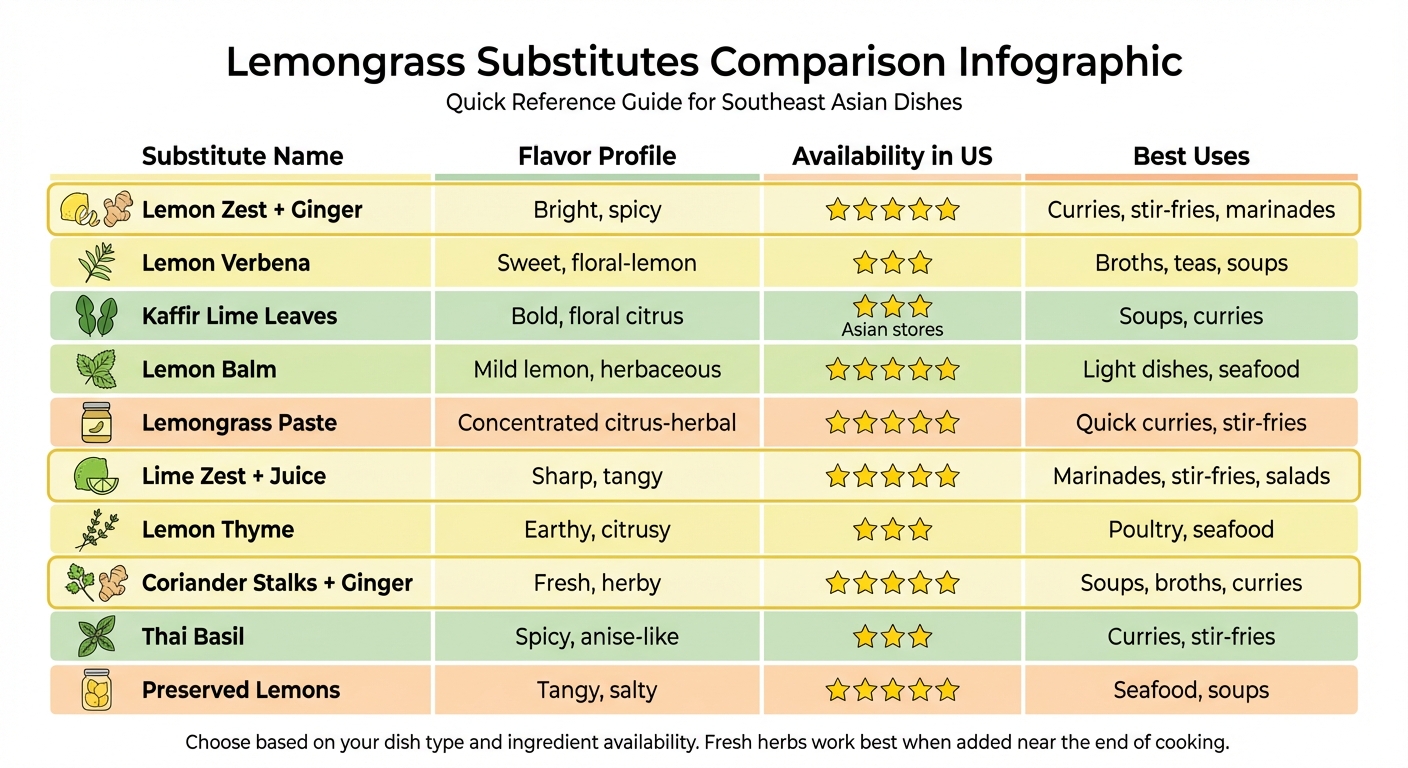
Quick Comparison
| Substitute | Flavor Profile | Availability | Best Uses |
|---|---|---|---|
| Lemon Zest + Ginger | Bright, spicy | Very High | Curries, stir-fries, marinades |
| Lemon Verbena | Sweet, floral-lemon | Medium | Broths, teas, soups |
| Kaffir Lime Leaves | Bold, floral citrus | Medium (Asian stores) | Soups, curries |
| Lemon Balm | Mild lemon, herbaceous | High | Light dishes, seafood |
| Lemongrass Paste | Concentrated citrus-herbal | High | Quick curries, stir-fries |
| Lime Zest + Juice | Sharp, tangy | Very High | Marinades, stir-fries, salads |
| Lemon Thyme | Earthy, citrusy | Medium | Poultry, seafood |
| Coriander Stalks + Ginger | Fresh, herby | Very High | Soups, broths, curries |
| Thai Basil | Spicy, anise-like | Medium | Curries, stir-fries |
| Preserved Lemons | Tangy, salty | High | Seafood, soups |
Each substitute works best in specific dishes, so choose based on the flavor profile you need. For example, kaffir lime leaves are excellent in Thai curries, while lemon zest and ginger are versatile for most recipes. Add substitutes at the right time - zest and herbs are best added toward the end, while paste and stalks can be cooked longer to release their flavors.
Lemongrass Substitutes Comparison Chart for Southeast Asian Cooking
1. Lemon Zest and Ginger
Flavor Similarity to Lemongrass
This combination stands out as one of the best substitutes for lemongrass, thanks to its ability to replicate both the citrusy brightness and gentle spiciness. Lemon zest delivers fragrant citrus oils like citral and limonene without introducing unwanted tartness. Meanwhile, fresh ginger brings a warm, peppery kick to round out the flavor.
"This pairing works so well because it hits both the high citrus notes and the warm, spicy base notes that make lemongrass so magical."
– Silas, Founder, Flavor365
To get the most out of this pairing, use a microplane to zest only the yellow outer layer of the lemon, avoiding the bitter white pith underneath. Add the lemon zest and ginger during the final 5–10 minutes of cooking to preserve their delicate aromas. For an even closer match to lemongrass's herbal edge, you can toss in a few cilantro leaves or a single mint leaf for extra depth.
This substitute isn’t just about flavor - it’s also incredibly easy to source, making it a practical choice year-round. This accessibility is a key benefit of pantry-based meal planning.
Ease of Availability in the United States
Lemons and fresh ginger are staples in nearly every grocery store across the U.S., available year-round. Unlike fresh lemongrass stalks - which can sometimes be tricky to find - these ingredients are reliably accessible and often already in your kitchen, making them perfect for smart meal planning.
"Lemon zest is an excellent lemongrass replacement because lemons are available year-round everywhere. In addition, it offers a great citrus flavor without adding unwanted acidity to the dish."
– Ginny Collins, Recipe Creator, Savor and Savvy
Compatibility with Southeast Asian Dishes
This pairing blends seamlessly into the bold flavors of Southeast Asian cuisine. It shines in liquid-based dishes like Tom Yum soup, Tom Kha, and Thai curries, where the ingredients infuse beautifully into coconut milk or broth. It’s also a great fit for stir-fries and marinades for grilled meats. For a balanced substitution, replace one lemongrass stalk with the zest of half a lemon and 1/4 teaspoon of grated ginger. If you prefer a stronger flavor, use 1 teaspoon of zest and 1/2 teaspoon of ginger.
This simple swap proves that everyday pantry items can easily replicate the citrusy, spicy essence of lemongrass in your favorite dishes.
2. Lemon Verbena
Flavor Similarity to Lemongrass
Lemon verbena brings a bold, sweet, and floral lemon aroma that closely matches the citrusy character of lemongrass. Some even consider it more fragrant than lemon zest, making it a fantastic option for delicate broths and teas.
"This herb has a powerful, sweet, and floral-lemon aroma that is strikingly similar to lemongrass, arguably even more so than lemon zest on its own."
– Silas, Founder, Flavor365
That said, lemon verbena’s flavor is more intense than lemongrass, and it lacks the earthy, gingery warmth that lemongrass provides. Because of this, it’s best to use it sparingly - 2 to 4 fresh leaves can replace one medium lemongrass stalk. To get the most out of its citrus oils, gently bruise the leaves and add them toward the end of cooking.
While it doesn’t mimic lemongrass completely, lemon verbena captures its citrusy essence with a unique floral twist.
Ease of Availability in the United States
Finding fresh lemon verbena in U.S. grocery stores can be tricky. It’s usually limited to specialty produce sections or home gardens. Despite its scarcity, its distinct flavor makes it a worthwhile option for specific Southeast Asian recipes.
Compatibility with Southeast Asian Dishes
Lemon verbena shines in liquid-based Southeast Asian dishes like soups, stews, curries, and even Vietnamese Pho. It pairs wonderfully with coconut milk-based curries and clear broths, delivering a floral brightness that complements the dish without overpowering it. Just remember to remove the leaves before serving, as they’re meant solely to enhance the flavor.
3. Kaffir Lime Leaves
Flavor Similarity to Lemongrass
Kaffir lime leaves, also known as makrut lime leaves, are another excellent option when you’re looking for a citrus-forward substitute for lemongrass. Both ingredients share citronellal, an aromatic compound responsible for their distinctive lemony fragrance. While lemongrass has a warm, earthy undertone with a hint of ginger, kaffir lime leaves lean toward a more intense blend of floral, piney, and citrus notes.
"This evokes the fresh fusion of citrus and floral notes." – Silas, Founder, Flavor365
These leaves are perfect for adding aroma without increasing acidity. To get the most out of them, bruise or tear the leaves to release their essential oils before using. Typically, 2–3 bruised leaves can replace one lemongrass stalk, but you can adjust based on your flavor preference.
Ease of Availability in the United States
Finding fresh kaffir lime leaves in the U.S. can be a bit of a challenge. Only about 20% of mainstream grocery stores stock them. However, Asian markets are a more reliable source, where you’ll often find them fresh in refrigerated sections or packaged in plastic clamshells. If local options fall short, online retailers like Amazon frequently offer dried or frozen alternatives.
If you do come across fresh leaves, it’s worth buying extra and freezing them. Stored in a zip-top bag, they can last up to a year and can be used straight from the freezer without losing much of their flavor. Fresh leaves tend to be easier to find in the humid southern states, whereas frozen or dried versions are more common in northern areas. This makes them a practical ingredient for those delving into authentic Southeast Asian recipes. For more home cooking and meal planning tips, explore our latest guides.
Compatibility with Southeast Asian Dishes
A cornerstone of Thai, Indonesian, and Cambodian cooking, kaffir lime leaves are a natural fit for Southeast Asian recipes. They shine in liquid-based dishes such as Tom Yum soup, Tom Kha Gai, and a variety of Thai curries, including Green, Red, Matsaman, and Panang. Impressively, they feature in about 70% of Thai curry recipes.
Their sturdy texture allows them to hold up during long cooking times, steadily infusing stews and marinades with their aroma. However, they aren’t meant to be eaten whole - remove them before serving. If a dish calls for the leaves to be consumed, like in some salads, slice them into ultra-thin ribbons using the chiffonade technique to make them easier to eat.
4. Lemon Balm
Flavor Similarity to Lemongrass
Lemon balm brings a gentler lemon flavor to the table, lacking the gingery, peppery, and woody layers that define lemongrass. To achieve a closer match to lemongrass's depth, try combining lemon balm with a hint of grated ginger or a bit of lemon zest. As part of the mint family (Melissa officinalis), it has prominent herbaceous undertones that can dominate a dish if overused.
"Lemon balm is like lemongrass's sweet, gentle cousin. It offers a milder lemon flavor with a touch of sweetness." – Pantry & Larder
For substitution, use about 4 fresh lemon balm leaves or 2 tablespoons of finely chopped leaves to replace one medium lemongrass stalk. While milder, its subtle lemony profile makes it a practical alternative for dishes needing a lighter citrus touch.
Ease of Availability in the United States
Lemon balm is widely accessible across the United States, often found fresh in grocery store herb sections. It thrives in USDA zones 4 through 9, growing to approximately 2 feet tall and wide. Many home cooks also grow it at home, whether on kitchen windowsills or in backyard gardens, thanks to its adaptability to temperate conditions.
Compatibility with Southeast Asian Dishes
This herb shines in lighter dishes like brothy soups, seafood, and salads, where its delicate oils can stand out. Unlike lemongrass, which is typically cooked for extended periods, lemon balm should be added toward the end of cooking or used as a fresh garnish to preserve its flavor. Its tender leaves can remain in the dish, eliminating the need for removal, unlike the fibrous stalks of lemongrass. However, its minty undertones can overwhelm more robust dishes, so it’s best used sparingly in curries or as a secondary flavor.
5. Lemongrass Paste
Flavor Similarity to Lemongrass
Lemongrass paste is made by pureeing concentrated stalks, delivering a flavor profile that's very close to fresh lemongrass. It captures the same citrusy and herbal notes, though it might miss some of the brighter, more complex aromatics found in fresh stalks.
"It's literally processed lemongrass, just in a convenient tube. This is the closest match in both taste and aroma." – Hip Hip Gourmet
For substitutions, use 1 tablespoon of paste to replace one fresh stalk or 1 tablespoon of chopped lemongrass. Keep in mind that some commercial pastes may include added salt or oil, so check the label to avoid accidentally over-salting your dish. The concentrated nature of the paste also ensures it's available year-round, making it a reliable alternative.
Ease of Availability in the United States
In the U.S., lemongrass paste is easy to find at major grocery stores like Walmart, Kroger, and Publix. You'll typically locate it in the refrigerated produce section or the Asian foods aisle. A popular brand, Gourmet Garden, sells 4-ounce squeezable tubes priced between $3.94 and $4.79. After opening, keep the paste refrigerated for several weeks or freeze it for up to six months to extend its shelf life.
Compatibility with Southeast Asian Dishes
Lemongrass paste works especially well in liquid-based recipes like curries, soups, and sauces. Its smooth texture eliminates the fibrous quality of fresh stalks, making it perfect for dishes that require quick preparation. For the best results, add the paste midway through cooking to allow the flavors to meld seamlessly.
6. Lime Zest and Juice
Flavor Similarity to Lemongrass
Lime zest captures the sharp citrus brightness of lemongrass but lacks its herbal and complex undertones. While lemongrass is known for its unique combination of lemony, gingery, and minty flavors, lime zest offers a straightforward citrus profile. As Hip Hip Gourmet explains:
"Lime zest brings intense citrus aroma and tangy brightness, echoing the top notes of lemongrass."
Lime juice, on the other hand, contributes acidity without the aromatic qualities of lemongrass. For a closer match, try blending 1 teaspoon of lime zest with 1/2 teaspoon of freshly grated ginger per lemongrass stalk. To finish, you can add 1 tablespoon of lime juice for extra tang.
Ease of Availability in the United States
When it comes to substitutes, availability often plays a big role. Limes are easy to find in the United States, stocked year-round in most grocery stores, from national chains to local markets. This makes them a convenient alternative, especially since fresh lemongrass is often limited to specialty or Asian markets. Look for fresh limes in the produce section, and when zesting, use a microplane to carefully remove just the green outer layer, avoiding the bitter white pith underneath.
Compatibility with Southeast Asian Dishes
Lime zest and juice are a natural fit for many Thai and Vietnamese dishes. The zest works beautifully in marinades, stir-fries, and salads, while the juice adds a fresh, tangy finish to soups, sauces, and seafood. As Savor and Savvy notes, "limes have a more fruity, almost floral scent that pairs well with Asian recipes", making them a great choice for Southeast Asian-inspired cooking.
To add more depth to your dishes, consider pairing lime zest with coriander stalks or grated ginger in curries and stir-fries. Keep in mind that lime zest is more concentrated than lemon zest, so use it sparingly to avoid overpowering your recipe.
7. Lemon Thyme
Flavor Similarity to Lemongrass
Lemon thyme brings a crisp citrus aroma with a subtle earthy undertone, capturing some of the brightness of lemongrass but with its own thyme-forward twist. While lemongrass offers a complex mix of citrus, warm ginger-like notes, and floral-minty hints, lemon thyme simplifies this with a straightforward citrusy brightness combined with the herbal depth typical of thyme.
This herb is a staple in French and Mediterranean cooking rather than Southeast Asian cuisine. Still, its citrusy quality can work as a substitute for fresh lemongrass. The earthy tones add complexity to dishes, though they won't replicate the gingery warmth that lemongrass is known for.
Ease of Availability in the United States
You can find lemon thyme at farmers' markets, specialty grocers, and garden centers across the U.S., though it’s less common in standard supermarkets compared to regular thyme. If you enjoy gardening, lemon thyme grows well in containers, making it a handy addition to your kitchen.
For substitutions, one sprig of lemon thyme can replace one stalk of lemongrass. If you're using chopped fresh lemon thyme, one tablespoon is a good equivalent for one lemongrass stalk. Its availability and versatility make it a practical choice for experimenting with recipes.
Compatibility with Southeast Asian Dishes
When used in Southeast Asian dishes, lemon thyme mirrors the citrusy aspect of lemongrass while introducing a unique earthy note. It works particularly well with poultry, fish, and steak prepared in Southeast Asian styles, blending nicely with garlic, ginger, and fish sauce. While it doesn’t fully replicate lemongrass, its earthy character adds a new layer of flavor.
Because lemon thyme originates from Mediterranean cuisine, it brings a slightly different herbal quality. Start with small amounts to see how its earthy tones pair with traditional Southeast Asian ingredients like galangal, kaffir lime, and Thai basil.
8. Coriander Stalks and Ginger
Flavor Similarity to Lemongrass
Using fresh ginger and coriander stalks together creates a substitute that mirrors the layered flavor of lemongrass. Ginger brings warmth and a spicy kick, while coriander stalks contribute fresh, floral, and peppery undertones. Together, they come close to the aromatic depth of lemongrass.
It’s important to use coriander stalks, not the leaves, as the stalks are richer in essential oils and flavor compounds. While lemongrass has a natural citrusy brightness, this pairing leans on the floral qualities of coriander and the heat of ginger to deliver that familiar "lemon-meets-ginger" taste. For an extra touch of citrus, you can always add a bit of lime or lemon zest.
Ease of Availability in the United States
This substitute is incredibly easy to source in the U.S. Fresh ginger root and coriander (commonly called cilantro in the U.S.) are widely available in grocery stores year-round. Unlike lemongrass, which can sometimes be tricky to find depending on your location, these two ingredients are kitchen staples you can rely on.
To replace one stalk of fresh lemongrass, use 2 teaspoons of freshly grated ginger mixed with 2 teaspoons of finely chopped coriander stalks. Always opt for fresh ginger rather than dried to ensure the right moisture and zing needed for Southeast Asian dishes.
Compatibility with Southeast Asian Dishes
This duo shines in liquid-based dishes like soups, broths, and curries, where the flavors have time to infuse. Recipes such as Thai tom yum, Vietnamese pho, and Thai green curry all benefit from this substitute. Beyond soups, it also works beautifully in Thai-inspired salads and marinades for grilled meats, especially when paired with a touch of lime zest.
For the best results, lightly bruise the ginger and coriander stalks to release their aromatic oils before cooking. Add the mixture early in the cooking process, such as when sautéing aromatics, to allow the flavors to fully develop in the dish. This method ensures your Southeast Asian recipes maintain their vibrant and aromatic qualities, even without fresh lemongrass.
9. Thai Basil and Other Basil Varieties
Flavor Similarity to Lemongrass
While Thai basil can't replicate the citrusy and ginger-like notes of lemongrass, it brings a spicy, anise-like depth that works beautifully in Southeast Asian dishes. Its flavor contrasts with lemongrass but also complements it in a unique way, enhancing the overall dish profile.
If you're aiming for a closer citrus flavor, lemon basil is a better option thanks to its refreshing lemony aroma. For those using sweet basil, which has a milder taste, adjust the ratio to 1.5:1 for a more balanced substitution.
Ease of Availability in the United States
Sweet basil is easy to find year-round in most U.S. supermarkets. Thai basil, on the other hand, is less common in mainstream grocery stores but is gradually becoming more accessible. To find fresh Thai basil, check local Asian markets or specialty grocery stores. Organic food markets and some high-end supermarkets may also carry Thai basil or Holy basil varieties.
Thai basil stands out with its narrow green leaves and reddish-purple stems, while lemon basil is recognized by its pointed leaves and citrusy scent. If fresh Thai basil isn't available in your area, online retailers like Amazon, iHerb, and Mountain Rose Herbs offer both fresh and dried options. These basil varieties are excellent for Southeast Asian recipes, just like other lemongrass alternatives.
Compatibility with Southeast Asian Dishes
Thai basil adds a bold, spicy aroma to stir-fries and curries and pairs particularly well with the herbal notes of lemongrass. It's a key ingredient in dishes like green curry. For lighter dishes, such as seafood or soups, lemon basil is a great choice because its citrusy flavor enhances delicate ingredients.
"The flavor of the lemon basil will be subtler than that of Thai basil, but it will still impart the same citrus-herb taste." - Kimberly Baxter, Nutrition and Dietetics Expert
To get the most out of basil's flavor and aroma, add it toward the end of cooking. It's also perfect as a garnish for pho, salads, and noodle bowls. For an extra citrus kick, sprinkle in some lemon zest.
10. Lemon Preserve
Flavor Similarity to Lemongrass
Preserved lemons bring a bright citrusy flavor with a salty twist, making them an interesting alternative to lemongrass. While they share a similar citrus fragrance, they lack the herbal, ginger, and minty undertones that define lemongrass. Instead, their flavor is bold, tangy, and slightly mellow, thanks to the fermentation process that enhances their saltiness. Though unconventional, they can work as a substitute in Southeast Asian recipes, offering citrus notes with a salty depth rather than fresh, layered aromatics.
Ease of Availability in the United States
Finding lemongrass in some Western supermarkets can be tricky, but preserved lemons are often easier to source. Common in North African cuisine, they’re typically available in the international or specialty sections of well-stocked grocery stores. Their accessibility makes them a practical option for Southeast Asian dishes, especially seafood and broth-based recipes.
Compatibility with Southeast Asian Dishes
Preserved lemons shine in seafood dishes like fish, shrimp, or prawns. They’re also great for soups and light broths, where their bold flavor can spread evenly through the liquid. To substitute lemongrass, use 1/2 teaspoon of preserved lemon per stalk, or 1 teaspoon for a stronger kick. Finely chop the lemon to ensure it blends well into the dish and avoids concentrated salty bites.
One key tip: cut back on additional salt or salty ingredients like fish sauce. The natural salinity of preserved lemons can easily overpower a dish, so add them gradually and taste as you go.
Substitute For Lemongrass: 7 Best Lemongrass Alternatives
Substitute Comparison by Dish Type
Southeast Asian dishes like Thai curries, Vietnamese soups, and Malaysian stir-fries each have their own unique flavor profiles, which means finding the right lemongrass substitute depends on the dish. This guide simplifies the process by matching substitutes to specific recipes, ensuring the flavors stay authentic and balanced.
For Thai curries and Malaysian stir-fries, kaffir lime leaves bring a bold, floral lime aroma, while a mix of lemon zest and grated ginger captures the citrusy warmth of lemongrass perfectly. If you're short on time, lemongrass paste is a convenient option that packs a punch of concentrated flavor, ideal for quick curries or dishes like Rendang. For Vietnamese soups like Pho, a combination of lemon verbena and grated ginger delivers a sweet, floral-lemon aroma reminiscent of the traditional taste. Alternatively, coriander stalks with ginger offer a fresh, herby twist that blends seamlessly into savory broths.
Here’s a quick guide to help you pick the best substitute based on your dish:
| Substitute | Flavor Profile | U.S. Availability | Best Southeast Asian Dishes | Substitution Ratio (per 1 Stalk) |
|---|---|---|---|---|
| Lemon Zest + Ginger | Bright citrus with warm, peppery spice | Very High | Thai curries, stir-fries, marinades | 1 tsp zest + 1/2 tsp grated ginger |
| Kaffir Lime Leaves | Potent, floral, perfumed lime | Medium (Asian markets) | Tom Yum soup, Thai green/red curries | 2–3 torn leaves |
| Lemongrass Paste | Concentrated, authentic, slightly salty | High (International aisle) | Malaysian Rendang, quick curries, stir-fries | 1 tbsp paste |
| Lemon Verbena | Sweet, floral-lemon | Medium (Specialty/Garden) | Vietnamese Pho, light broths, teas | 2–4 leaves |
| Coriander Stalks + Ginger | Herby, fresh, pungent | High | Vietnamese soups, broths, savory stews | 1 tbsp stalks + 1 tsp lime zest |
| Lime Zest + Juice | Sharp, tangy brightness | Very High | Thai-inspired salad dressings, finishing soups | 1 tsp zest or 1 tbsp juice |
When using these substitutes, timing matters. For fresh herbs like lemon verbena or lemon balm, add them during the last 5–10 minutes of cooking to preserve their delicate flavors. If you're working with leaf-based ingredients such as kaffir lime leaves, gently bruise them with your hands to release their essential oils. On the other hand, dried substitutes or lemon zest-ginger blends are better suited for long-simmering dishes, as they can handle extended cooking times without losing their punch.
How to Use Lemongrass Substitutes
With a variety of lemongrass substitutes at your disposal, here’s how to make the most of them for balanced and flavorful dishes.
Measure carefully to keep flavors in harmony. If you're using lemongrass paste, substitute 1 tablespoon for each stalk of fresh lemongrass. Add it early in the cooking process so it blends seamlessly with other aromatics. Be cautious with salt - taste as you go to avoid over-seasoning. For dried lemongrass, use 1 teaspoon per stalk. Rehydrate it by steeping in hot water for 10–15 minutes to release its flavor before adding it to your dish.
The combination of lemon zest and ginger is perfect for stir-fries and marinades. Use the zest from half a lemon and pair it with 1/4 to 1/2 teaspoon of grated ginger per stalk. A microplane works best for zesting, as it helps you capture the bright yellow peel while avoiding the bitter white pith.
For substitutes like kaffir lime leaves or lemon verbena, gently bruise the leaves (use 1–2 kaffir lime leaves or 2–4 lemon verbena leaves per stalk) to release their aromatic oils. If using kaffir lime leaves, remove the tough midrib for easier handling, or slice the leaves into thin ribbons if they’ll be eaten in the dish.
Timing matters when working with delicate flavors. Add fresh zest, lemon balm (4–6 large leaves), or lemon verbena during the last 5–10 minutes of cooking to preserve their citrusy aroma. If you're using coriander stalks, mix 2 teaspoons of finely chopped stalks with 2 teaspoons of fresh ginger for a punch of herbal and spicy notes. These tips ensure your dishes retain the essence of Southeast Asian flavors, even without fresh lemongrass.
Honeydew Recipe Manager for Smart Substitutions

Technology has made ingredient swaps easier than ever, and the Honeydew Recipe Manager is a perfect example of this. If you're craving dishes like tom yum soup or Vietnamese pho but don't have fresh lemongrass, this app takes the guesswork out of substitutions. Its Smart Substitution feature suggests alternatives tailored to your recipe, taking into account lemongrass's unique flavor mix of citrus, ginger, and floral-minty notes. This ensures the substitute not only replicates the flavor but also complements the specific dish.
The app understands that different recipes require different substitutes. For example, a robust Thai curry might call for kaffir lime leaves with lemon zest, while a lighter Vietnamese marinade could use lemon verbena and fresh ginger. Plus, it provides precise substitution ratios, so you get the flavors just right.
Honeydew doesn't stop at substitutions. It allows you to import Southeast Asian recipes directly from platforms like TikTok, Instagram, YouTube, or any website. If a saved recipe calls for lemongrass, the app flags it as missing and offers alternatives with exact measurements. Its AI meal planner can even create weekly menus based on what you already have in your kitchen, saving you time and effort.
For households, the app's sharing feature is a game-changer. Up to six family members can access shared substitution recommendations and grocery lists. With Instacart integration, you can order substitutes like fresh ginger, kaffir lime leaves, or lemongrass paste for delivery in just a few hours. This seamless connection between recipe inspiration and ingredient shopping makes cooking even more convenient.
Conclusion
Lemongrass brings a vibrant mix of bright citrus, warm ginger, and subtle floral notes that are essential to many Southeast Asian dishes. When it's unavailable, carefully chosen substitutes - like a blend of lemon zest and ginger - can help maintain the balance of citrusy brightness and warm spice that defines these flavors.
Different recipes benefit from specific substitutions and techniques. For instance, kaffir lime leaves are a great choice for Thai curries and Tom Yum soup, while a combination of lemon and ginger works beautifully in many Vietnamese dishes. To get the most out of your substitutes, try lightly bruising herb leaves to release their essential oils or adding citrus zest toward the end of cooking to preserve its fresh, aromatic qualities.
When experimenting with substitutes, start small. Ingredients like lemon verbena or dried lemongrass can have a stronger flavor than fresh stalks, making it easier to add more than to fix an overpowering dish. For those who want extra guidance, tools like the Honeydew Recipe Manager can simplify the process. Its Smart Substitution feature provides precise ratios and flags missing ingredients when you import recipes from websites or social media, making it easy to adjust on the fly.
Whether you're whipping up a quick stir-fry or preparing a complex curry, the right substitutes can help you achieve the authentic flavors you're aiming for. And with Honeydew's Instacart integration, you can easily stock up on essentials like fresh ginger, kaffir lime leaves, or lemongrass paste - ensuring you're always ready to recreate the vibrant tastes of Southeast Asia.
FAQs
What substitute tastes most like fresh lemongrass?
If you’re out of fresh lemongrass, a blend of lemon zest and freshly grated ginger works as a great alternative. This combination replicates the zesty citrus notes and subtle herbal undertones of lemongrass, making it a solid choice for many Southeast Asian dishes.
Can I use dried lemongrass instead of fresh?
Fresh lemongrass brings a bright, citrusy kick that’s hard to replicate, while dried lemongrass leans more toward a woodsy flavor. If you’re aiming for the authentic taste often found in Southeast Asian dishes, dried lemongrass might fall short.
How do I avoid making the dish too sour or salty?
When replacing lemongrass, balance the flavors to avoid making the dish overly sour or salty. Begin with a small amount - around 1/2 teaspoon of lemon or lime zest per lemongrass stalk - and adjust as you taste. If you're mixing substitutes, such as lemon zest with ginger or cilantro, add them gradually, tasting often. You might also want to cut back on other salty ingredients to maintain harmony in the dish.