Meal Planning vs. Improvising: Reducing Food Waste
• Updated
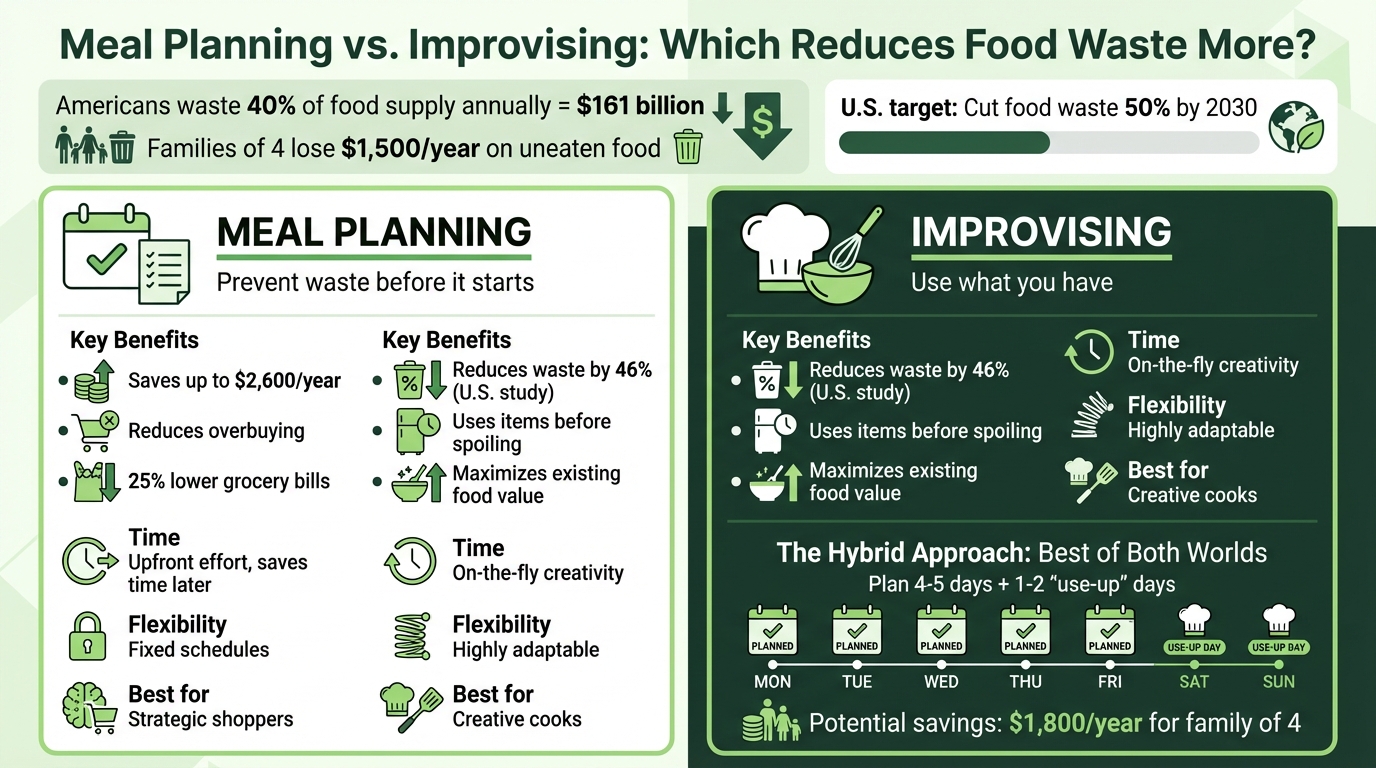
Americans waste up to 40% of their food supply annually, costing $161 billion and wasting resources like 5.9 trillion gallons of water. Families of four lose about $1,500 each year on uneaten food. To tackle this, two key strategies stand out: meal planning and improvising.
- Meal Planning: Pre-schedule meals, shop with a grocery shopping checklist, and use leftovers strategically. Saves money (up to $2,600/year) and reduces waste by avoiding overbuying.
- Improvising: Use what’s already in your kitchen with flexible recipes. Focuses on perishable items, reducing waste by up to 46%.
Both methods help cut waste, save money, and support the U.S. goal of halving food waste by 2030. A hybrid approach - planning most meals while leaving room for "use-up days" - offers the best balance. Apps like Honeydew Recipe Manager simplify both methods with tools like AI meal plans, inventory tracking, and recipe suggestions.
| Metric | Meal Planning | Improvising |
|---|---|---|
| Waste Reduction | Prevents over-buying | Uses items before they spoil |
| Time Investment | Upfront effort, saves time later | On-the-fly creativity required |
| Cost Savings | Avoids unnecessary purchases | Maximizes existing food |
| Flexibility | Fixed schedules | Adjusts to available ingredients |
| Handling Perishables | Strategic meal scheduling | Prioritizes near-expiration items |
Takeaway: Whether you prefer structure or spontaneity, reducing food waste is achievable with the right approach and tools.
Meal Planning vs Improvising: Food Waste Reduction Comparison
Menu Plan and Food Prep for Zero Food Waste
What is Meal Planning?
Meal planning involves deciding ahead of time what meals you'll prepare over a set period - whether that's a few days or an entire week. By mapping out your meals, you can create a focused grocery list and ensure you have the right ingredients on hand when you need them. A great starting point is to take stock of what’s already in your fridge, freezer, and pantry. This helps you avoid buying duplicates and encourages you to plan meals around items you already own. It’s a simple way to save time and money while cutting down on food waste.
"By planning ahead, you can save calories, time, money and decrease the amount of food you waste."
- Kara Lynch, Extension Educator at Michigan State University Extension
Meal planning is all about being intentional. It means shopping with a clear purpose and cooking with a strategy so that ingredients are used efficiently. It also helps you make the most of leftovers and ensures perishable food gets used before it spoils.
How Meal Planning Reduces Food Waste
When you plan your meals, you’re less likely to overbuy and more likely to use what you already have. Scheduling meals strategically - like using fresh produce and meats earlier in the week and saving pantry-based meals for later - helps ensure perishables don’t go to waste. This approach aligns your grocery shopping and cooking with what you’ll actually use.
Leftovers are another area where meal planning shines. Instead of letting yesterday’s dinner sit forgotten in the fridge, you can schedule "leftover nights" or plan meals that repurpose leftovers into something new. A great example of this is the "Use-Up Day" concept, tested in studies funded by Unilever between 2021 and 2023 across the U.S. and Canada. Households that implemented a weekly meal focused on using ingredients they already had reduced food waste by 46% in the U.S. and 33% in Canada compared to their baseline.
Meal planning isn’t just about reducing waste - it’s also about saving money. Families who plan their meals consistently can cut their grocery bills by around 25%. For instance, a family spending $200 per week on groceries could save $50 weekly, adding up to about $2,600 a year.
Using Technology for Meal Planning
Technology has made meal planning easier than ever. Apps can streamline the process, helping you plan meals, shop efficiently, and reduce waste - all with the tap of a screen.
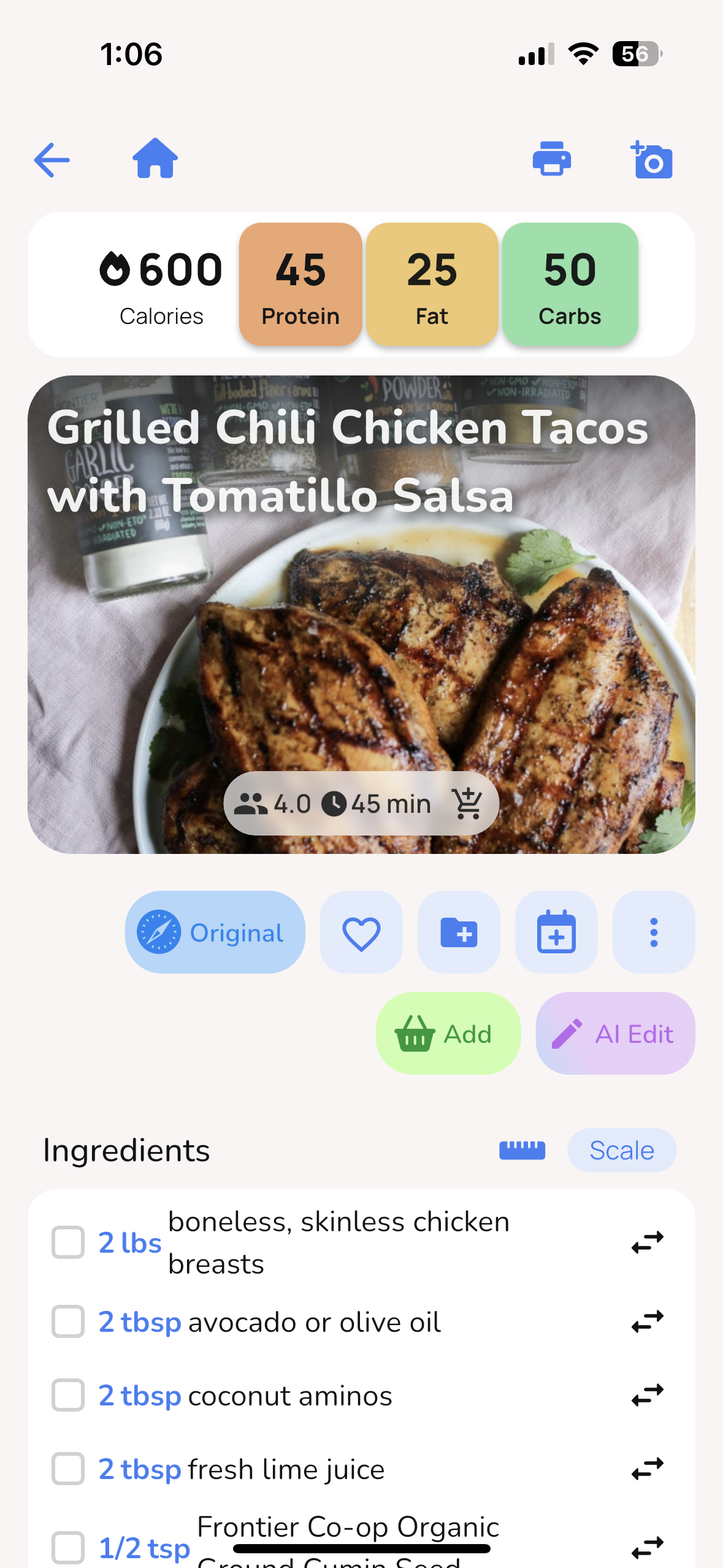
Take Honeydew Recipe Manager, for example. This app simplifies planning by letting you import recipes from social media or websites and automatically creating a detailed grocery list. Its AI feature even designs weekly meal plans based on your dietary preferences, what’s already in your pantry, and your cooking habits. Missing an ingredient? The app suggests substitutions, so you’re not stuck making last-minute store runs or abandoning recipes altogether.
Honeydew also integrates with Instacart, so you can order groceries directly from your list. Plus, it allows you to share recipes and shopping lists with others in your household, keeping everyone informed about what’s for dinner and what ingredients need to be used. With features like nutrition tracking and a meal planning calendar, the app makes it easy to prioritize fresh ingredients, adjust meal schedules, and incorporate leftovers into your weekly routine.
What is Improvising?
Improvising in cooking is all about working with what you already have. Instead of starting with a recipe or a pre-planned menu, you build meals around the ingredients sitting in your fridge, freezer, or pantry. This approach flips traditional meal planning on its head by focusing on immediate inventory - especially perishables that need to be used before they spoil. It leans on adaptable recipes that fit what’s on hand, offering flexibility but also introducing some unique challenges.
A common tool in this method is the use of "catchall" recipes - think soups, stir-fries, casseroles, or stews. These dishes are perfect for mixing and matching ingredients. A handy trick is the "3 + 1" heuristic, which combines three basic staples (like a protein, vegetable, and starch) with one item that’s nearing its expiration or freshness limit. This approach not only sparks creativity in the kitchen but also helps cut down on food waste by making sure ingredients don’t go unused.
How Improvising Can Reduce Waste
Improvising is a natural ally in the fight against food waste. By focusing on what’s already in your kitchen, especially perishables, you can dramatically cut down on spoiled food. A practical tip is the "First In, First Out" strategy, where you prioritize using older or more fragile items first. For example, a Unilever-backed study found that flexible recipes can achieve waste reductions comparable to structured meal plans , especially when using smart ingredient prep techniques.
This approach also encourages clever ways to revive and repurpose ingredients. Got limp lettuce or drooping veggies? A quick soak in ice water for 15–20 minutes can bring them back to life. Overripe fruit? Toss it into a smoothie or use it in baked goods. Even scraps like onion skins and carrot peels don’t have to go to waste - they can be simmered into a flavorful homemade stock. These small, creative steps can make a big difference in reducing perishable waste.
Challenges of Improvising
Improvising isn’t without its hurdles. One of the biggest challenges is keeping track of your inventory with pantry tracking tools. Items buried in the back of the fridge or tucked into high-humidity drawers are easy to forget until it’s too late. Another common issue is confusion over date labels. Misunderstanding terms like "Best If Used By" or "Sell By" often leads people to throw away perfectly good food. The U.S. Food and Drug Administration estimates that this confusion contributes to about 20% of consumer food waste.
Leftovers can also be a stumbling block. Many improvisers overestimate how quickly they’ll eat them, only to let them sit in the fridge until they’re no longer safe. Without a clear plan, it can be tough to use ingredients efficiently, especially if you’re unsure how to combine random items into dishes that are both tasty and satisfying. Skill and awareness play a big role in making improvising work effectively.
Meal Planning vs. Improvising: Direct Comparison
Let’s dive into how meal planning stacks up against improvising, especially when it comes to reducing food waste and saving money. These two strategies tackle waste in different ways: meal planning stops waste before it starts, while improvising focuses on using up ingredients before they go bad.
Here’s an example to put things into perspective: A July 2023 Unilever study found that households using a "use-up day" with flexible recipes reduced food waste by 33% in Canada and 46% in the U.S.. That’s a big win for improvising, showing how effective it can be in minimizing waste.
When it comes to time, the two methods also differ. Meal planning takes effort upfront - checking what’s in your fridge, writing a list, and weekly meal planning. But this prep work pays off by cutting down on decision-making during the week and avoiding extra grocery runs. Improvising, on the other hand, skips the prep but requires more creativity in the kitchen. Despite their differences, both approaches can help a family of four save around $1,800 per year.
Comparison Table
Here’s a quick breakdown of how meal planning and improvising compare:
| Metric | Meal Planning | Improvising |
|---|---|---|
| Primary Waste Reduction | Prevents over-buying and impulse purchases | Uses ingredients before they spoil |
| Time Investment | Requires upfront planning but saves time during the week | Less pre-planning; more on-the-fly creativity needed |
| Cost Savings | Cuts unnecessary purchases (helping save about $1,800/year) | Maximizes the value of food already purchased |
| Flexibility | Less flexible due to fixed meal schedules | Highly adaptable to available ingredients |
| Handling Perishables | Uses scheduled meals to ensure freshness | Reacts to expiration dates by using items as needed |
| Skill Requirement | Lower - follows predetermined recipes | Higher - demands culinary creativity and confidence |
For the best of both worlds, consider a hybrid approach. Plan meals for four or five days a week, leaving room for flexible "use-up days." This way, you can stay organized, avoid impulse buys, and still have the flexibility to handle leftovers or ingredients nearing expiration. It’s a practical balance that works even when life gets hectic.
How Honeydew Recipe Manager Supports Both Approaches
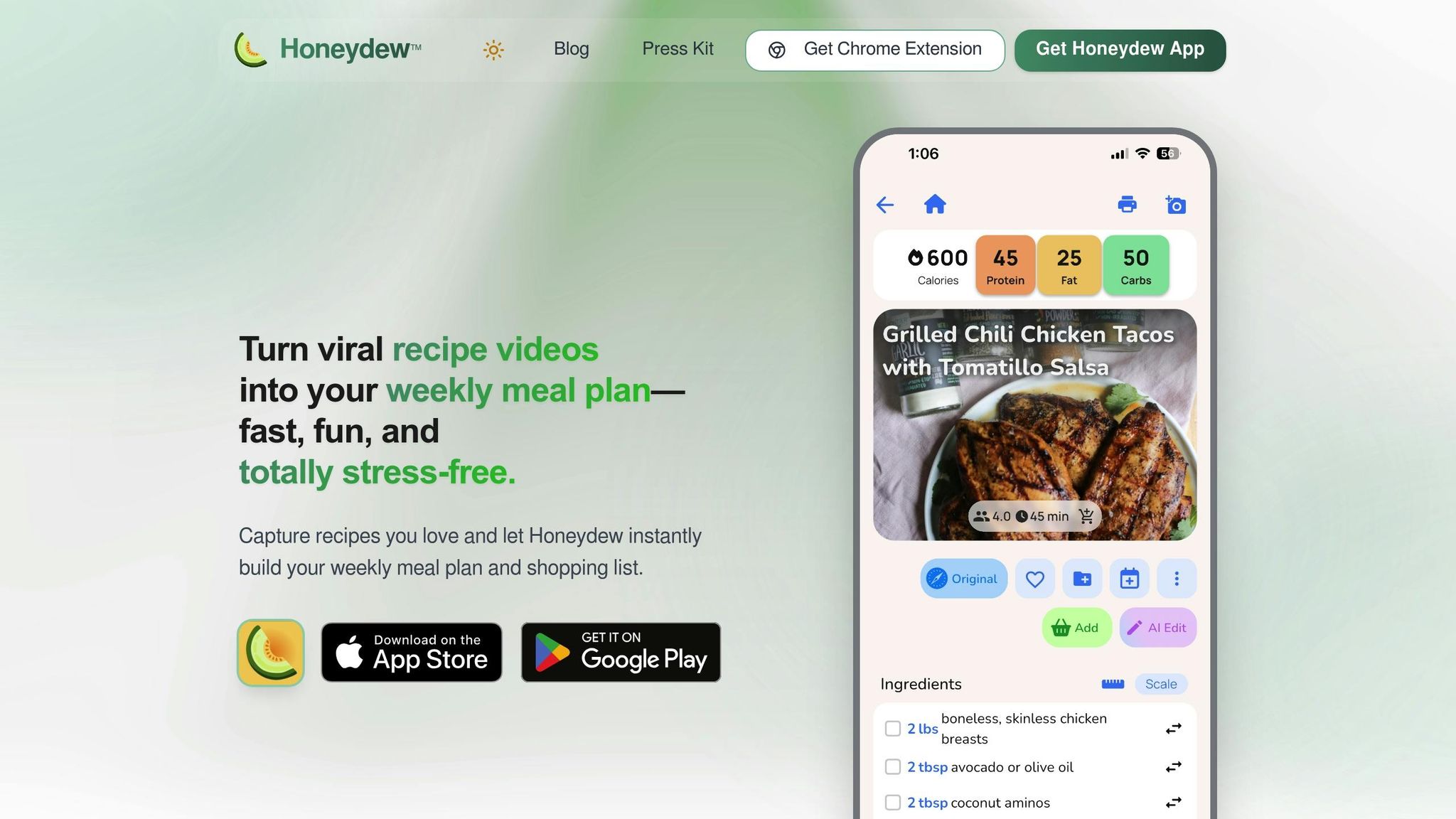
Honeydew Recipe Manager brings together the best of structured planning and spontaneous cooking, offering tools to help reduce food waste no matter your approach.
Whether you’re someone who thrives on detailed meal plans or prefers to cook on the fly, Honeydew Recipe Manager bridges the gap between these styles. At the heart of this system is its real-time inventory tracking feature. By using image capture technology, the app provides precise ingredient data, eliminating the common 59.3% failure rate tied to manual tracking. Research even highlights that manual methods are "psychologically unsustainable". With this accurate tracking, the app shifts your focus from "What do I feel like eating?" to "What needs to be used?". Here’s how Honeydew tailors its features to both planners and improvisers.
Honeydew for Structured Meal Planning
For those who prefer planning, Honeydew’s AI-generated weekly meal plans take the guesswork out of shopping and cooking. These 7-day menus are customized to your preferences, household size, and current pantry inventory. By prioritizing ingredients you already have, the app helps prevent overbuying and cuts down on perishable food waste. It even calculates exact ingredient amounts and consolidates overlapping items - like combining chicken breast quantities across recipes - so you only buy what’s necessary. This approach has been shown to reduce food waste by up to 40% and save families an average of $125 per month.
"I used to waste so much food. Now with Honeydew's meal planning, I buy exactly what I need and save money!"
Mark T. shared this experience, reflecting the feedback of many users who have rated Honeydew 4.8/5 stars on the Apple App Store and Google Play. Another user, Alex P., praised the household sharing feature: "The household sharing feature keeps everyone organized". Grocery lists and meal schedules sync across household members, avoiding duplicate purchases. Plus, you can import recipes from TikTok, Instagram, and YouTube, letting the app’s AI create structured plans and organized shopping lists.
Honeydew for Flexible Improvising
If you prefer a more spontaneous approach, Honeydew’s Pantry Mode is your go-to tool. A quick photo of your fridge allows the AI to suggest recipes based on the perishable items you already have. The app also tracks expiration dates with its Spoilage Proximity Index (S-Index), flagging ingredients as "Use First" when they’re nearing their expiration. On top of that, its smart ingredient substitution feature helps you adapt recipes to what’s available in your pantry.
"The smart grocery lists save me hundreds of dollars a month. I love how it suggests recipes based on what I already have!"
Emily C. called this feature "a game-changer", especially for adjusting recipes to fit dietary needs. With Pantry Mode, AI-driven suggestions reduce food waste by 65% and help 78% of users find recipes faster. By maintaining a continuously updated digital inventory of your pantry, fridge, and freezer, Honeydew makes it simple to cook on a whim while keeping waste to a minimum. James L.’s experience highlights just how effective this approach can be.
Conclusion
Tackling food waste effectively calls for a mix of thoughtful planning and the ability to adapt when things don’t go as expected. By reducing food waste with smart meal planning and proper storage, households can avoid overbuying - one of the main contributors to waste. Globally, about one-third of all food intended for human consumption goes to waste, costing households a significant amount of money every year.
At the same time, flexibility plays a crucial role. Many households succeed by practicing what researchers call "meal mutability", which means adjusting recipes based on what’s already in the kitchen. For example, sticking to a meal plan but dedicating one day a week to using up leftovers has proven to be an effective strategy for cutting down on waste. This approach blends the structure of planning with the creativity of improvisation, creating a system that’s both efficient and adaptable.
The Honeydew Recipe Manager is a great example of this balanced method. It combines structured tools like AI-generated meal plans and organized grocery lists with flexible features such as Pantry Mode and expiration tracking. These tools help you stay on top of your food inventory and adjust when plans change. By using technology to support these habits, you can overcome common mental shortcuts that often lead to waste.
Want to see how this approach can make a difference in your kitchen? Download Honeydew Recipe Manager today and start reducing food waste while managing your meals more efficiently.
FAQs
How do I start meal planning if I’m busy?
Planning meals doesn't have to be a chore. Dedicate a specific time each week - maybe on a weekend or your day off - to map out your meals. Start by taking stock of what’s already in your pantry or fridge. This helps you avoid buying items you don’t need and reduces waste.
Stick to simple recipes that fit your schedule, and jot down a detailed grocery list based on your plan. To make things even easier, prep some ingredients in advance - like chopping vegetables or portioning out snacks. If you’re looking for extra convenience, consider using a meal planning app. These tools can streamline the process by organizing your shopping lists and schedules for you.
What are easy “use-up day” meal ideas?
Sometimes, the best meals come from what’s already in your kitchen. “Use-up day” meal ideas are perfect for turning leftovers or perishable ingredients into something delicious. Think soups, stir-fries, or casseroles - these dishes are incredibly flexible and let you mix and match whatever you have on hand. Not only does this help cut down on food waste, but it also makes meal prep a breeze.
How do I know if food is still safe past the date?
To determine if food is still safe to eat after its date, rely on your senses. Check its appearance, smell, and texture carefully. If you see discoloration, mold, unusual softness, or sliminess, it’s best to throw it away. Keep in mind that expiration dates typically indicate quality rather than safety. Use your judgment and handle food properly to minimize waste while ensuring it’s safe to consume.