Mediterranean Diet for Weight Loss
• Updated
The Mediterranean diet is a balanced way of eating that focuses on whole, plant-based foods, healthy fats like olive oil, and lean proteins, with minimal processed foods and sweets. It's not about strict restrictions but prioritizing nutrient-rich options. This eating style supports weight loss by promoting satiety through fiber, protein, and healthy fats. Research shows participants can lose up to 22 pounds in a year while reducing risks of heart disease, diabetes, and other chronic conditions.
Key Takeaways:
- Core Foods: Vegetables, fruits, whole grains, legumes, nuts, seeds, olive oil, fish, and moderate dairy.
- Weight Loss Strategy: Focus on "volume eating" (low-calorie, nutrient-dense foods) and portion control for calorie-dense items like olive oil and nuts.
- Health Benefits: Lower risk of heart disease, stroke, and type 2 diabetes; supports long-term weight management.
- Meal Planning: Use the plate method - half vegetables, one-quarter lean protein, one-quarter whole grains.
- Snack Ideas: Hummus with veggies, roasted chickpeas, nuts, Greek yogurt with berries.
This diet is recognized as the #1 "Best Diet Overall" by U.S. News & World Report for its flexibility and health benefits. Tools like meal planning apps can simplify adopting this lifestyle.
Mediterranean Diet Meal Plan for Weight Loss | 3 Days + bonus
Core Principles of the Mediterranean Diet
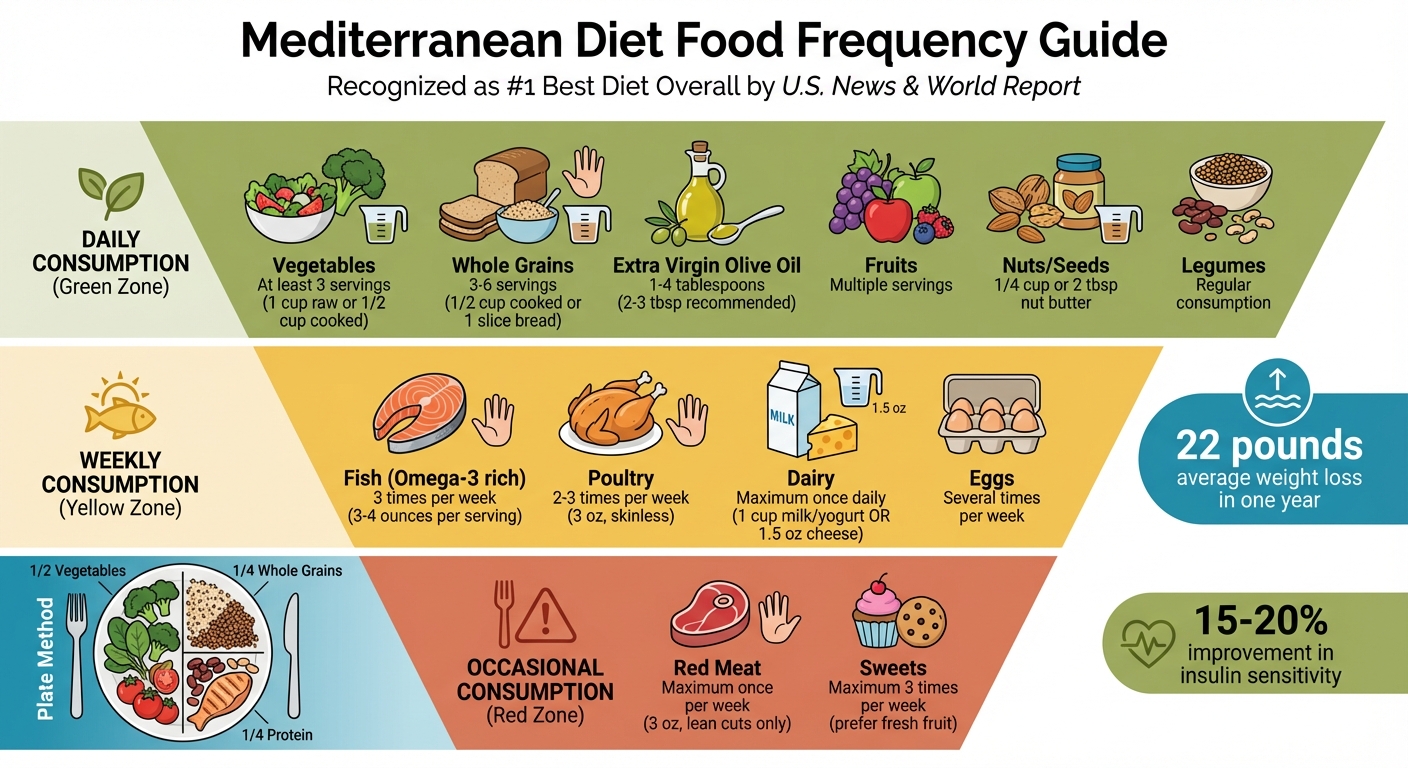
Mediterranean Diet Food Frequency Guide for Weight Loss
Whole, Unprocessed Foods
At the heart of the Mediterranean diet are recognizable, plant-based whole foods. Think vibrant vegetables, fresh fruits, hearty whole grains, protein-packed legumes (like beans, lentils, and chickpeas), nuts, and seeds. These staples are naturally low in calorie density, meaning you can enjoy generous portions without hindering your weight loss goals.
The high fiber content in these foods works wonders - helping you feel full, stabilizing blood sugar levels, and even improving insulin sensitivity by 15–20%.
Tara Schmidt, Lead Dietitian for the Mayo Clinic Diet, explains it well:
The Mediterranean diet isn't just heart-healthy - it's a good choice for anyone interested in eating well and losing weight. It naturally prioritizes foods that are low in calorie density while being high in nutrients.
To keep things flavorful, lean on herbs and spices like garlic, cumin, and oregano. They add depth to your meals without relying on extra calories or sodium. Pair these nutrient-rich ingredients with healthy fats to keep your energy steady and hunger in check.
Healthy Fats in Your Diet
Extra virgin olive oil takes center stage in the Mediterranean diet, replacing butter and other saturated fats. While olive oil is calorie-dense, it slows digestion and helps manage hunger hormones, making it a key player in maintaining satiety and supporting weight control. Healthy fats from sources like olive oil, nuts, and fatty fish also promote fat oxidation, help regulate blood sugar, and improve the absorption of fat-soluble vitamins (A, D, E, and K).
To incorporate these fats into your routine:
- Use 2–3 tablespoons of extra virgin olive oil daily for cooking or as a salad dressing.
- Enjoy a small handful (about 1 ounce) of nuts or seeds each day.
- Include fatty fish, such as salmon or mackerel, 2–3 times per week for omega-3 benefits.
Since fats pack a calorie punch, measuring portions with spoons or pre-portioning nuts can help you avoid overindulging.
Eating Dairy, Meat, and Sweets in Moderation
The Mediterranean diet doesn’t cut out dairy, meat, or sweets - it simply redefines how often and how much you enjoy them. By moderating these richer foods, you make more room for nutrient-dense, plant-based options.
For dairy, stick to modest portions like 1 cup of yogurt or 1.5 ounces of cheese, favoring fermented varieties to support gut health. Poultry can be enjoyed 2–3 times a week in 3-ounce servings, while red meat is limited to once a week or less. When choosing red meat, go for lean cuts like tenderloin or flank steak, and think of it as a flavor boost rather than the star of the dish.
Sweets? Fresh, seasonal fruit should be your go-to dessert, with processed treats saved for special occasions (no more than three times per week). Swapping sugary drinks for herbal teas and using olive oil instead of butter or cream in recipes can also help cut back on saturated fats while keeping your meals flavorful.
| Food Category | Serving Goal | Serving Size | Weight Loss Tip |
|---|---|---|---|
| Dairy | Max once daily | 1 cup milk/yogurt; 1.5 oz cheese | Opt for low-fat or fermented options |
| Poultry | 2–3 times per week | 3 oz | Choose skinless white meat; bake or grill |
| Red Meat | Max once per week | 3 oz | Stick to lean cuts; use as a flavor enhancer |
| Sweets | Max 3 times per week | Varies | Focus on homemade treats or fresh fruit |
Meal Planning and Portion Control Tips
Building on the Mediterranean way of eating, these tips focus on meal planning and portion control to support weight loss while keeping meals enjoyable and balanced.
How to Build Balanced Meals
The plate method is a simple and effective guide for creating balanced Mediterranean meals. Here's how it works:
- Half your plate: Load up with non-starchy vegetables like leafy greens, tomatoes, zucchini, or bell peppers.
- One-quarter of your plate: Add lean proteins such as grilled fish, lentils, chickpeas, or skinless chicken.
- The remaining quarter: Fill with whole grains like quinoa, brown rice, or bulgur.
This approach ensures a good mix of nutrients while keeping calories in check. Non-starchy vegetables are naturally low in calories, so you can eat them generously, but be mindful of calorie-dense ingredients like olive oil - measure it carefully.
To align with your body's natural rhythm, aim for a hearty breakfast, a moderate lunch, and a lighter dinner. You can also increase meal volume without adding extra calories by incorporating more leafy greens into soups or using broth instead of oil for sautéing vegetables.
| Food Category | Daily Servings | Serving Size Example |
|---|---|---|
| Vegetables | At least 3 | 1 cup raw or 1/2 cup cooked |
| Whole Grains | 3 to 6 | 1/2 cup cooked or 1 slice bread |
| Fish (Omega-3 rich) | 3 per week | 3 to 4 ounces |
| Nuts/Seeds | At least 3 per week | 1/4 cup or 2 tbsp nut butter |
| Extra Virgin Olive Oil | 1 to 4 | 1 tablespoon |
Portion Control Strategies
Even though the Mediterranean diet emphasizes whole, nutrient-rich foods, portion control is still essential - especially for calorie-dense items like olive oil, nuts, and cheese. To keep portions in check, use these simple guidelines:
- A small handful of nuts (about 1 ounce) makes one serving.
- A serving of cheese should be about the size of your thumb.
- Always measure olive oil with a tablespoon, aiming for 2–3 tablespoons daily.
"The program teaches a food group 'building-block' method – fill your plate with unlimited fruits and vegetables, then add lean protein, smart carbohydrates, and healthy fats."
One of the best parts of the Mediterranean diet is its focus on fresh fruits and vegetables, which are so low in calories that you can enjoy them freely. This "volume eating" approach allows you to feel full and satisfied without meticulously counting calories. In fact, people following structured Mediterranean meal plans report an average weight loss of 5.3% of their body weight in six months, with some achieving up to 13.1% weight loss in the same period.
To stay on track, try batch cooking grains, legumes, and dressings in advance, and pre-portion snacks to avoid overeating. Eating slowly and in a relaxed, social setting - without distractions - can also help you tune in to your natural hunger and fullness signals.
For an extra layer of convenience, technology can make meal planning and tracking even easier.
Using Honeydew Recipe Manager for Meal Planning
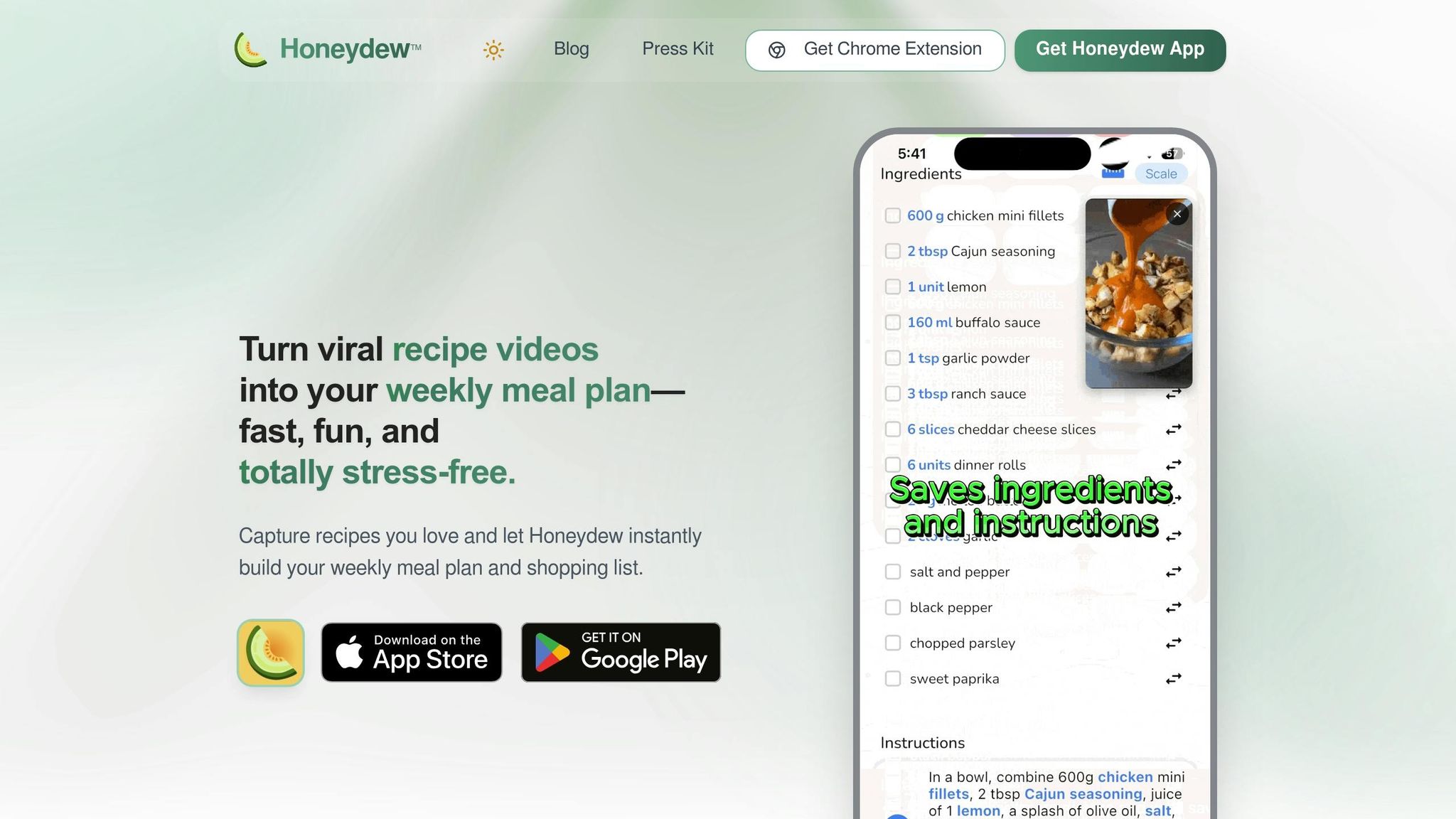
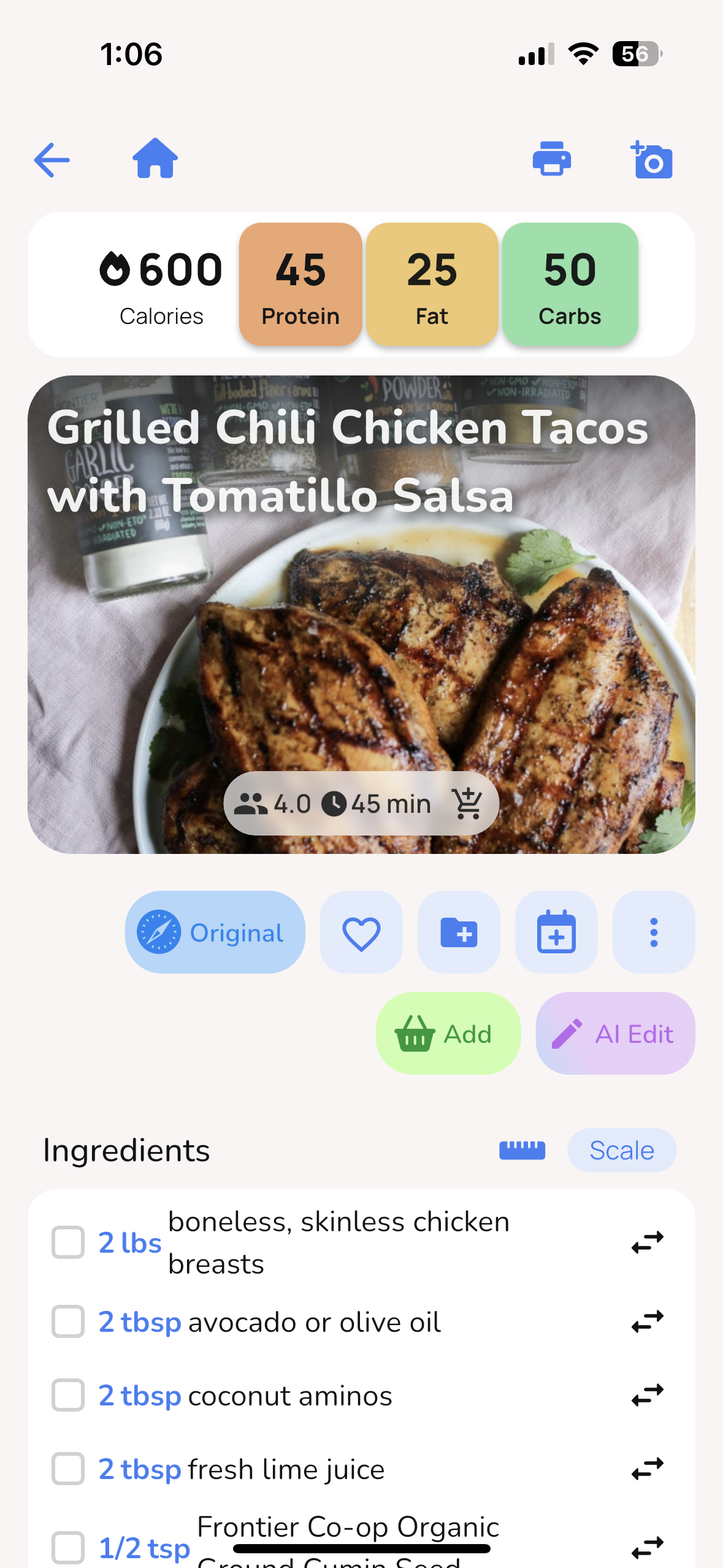
A smart meal planning app like Honeydew Recipe Manager can take the guesswork out of building balanced meals and managing portions. This app simplifies everything by importing recipes from social media, creating grocery lists, and adjusting portion sizes automatically.
Honeydew’s AI-driven meal planner tailors weekly meal plans to your dietary needs, whether you're looking for high-protein options or gluten-free alternatives. It generates organized grocery lists sorted by store sections, and its serving size scaler lets you adjust portions in either Imperial or Metric units.
The app also features an auto calorie and macro calculator, so you can track your nutrition without lifting a finger. Its Pantry Mode is a standout feature: snap a photo of your pantry ingredients - like chickpeas, olive oil, and tomatoes - and the app suggests recipes using those staples. Plus, with household sharing for up to six members, everyone can stay synced on meal plans and grocery lists in real time.
Honeydew offers a free version (up to 10 recipe imports) and a premium Honeydew Plus plan for unlimited recipes and advanced features. Pricing is $4.17 per month (billed annually) or $6.99 monthly. The app has earned high praise, with a 4.8/5 rating on Google Play (8,390 reviews and over 100K downloads) and a 5.0/5 rating on the Apple App Store.
Mediterranean Diet Meal Examples
The Mediterranean diet is all about simplicity, balance, and flavor. These meal ideas focus on weight loss, nutrition, and long-term satisfaction using wholesome, accessible ingredients. With the right portions and satisfying flavors, this way of eating becomes a practical and enjoyable lifestyle.
Breakfast Ideas
Start your day strong with a breakfast that delivers around 15 grams of protein and 6 grams of fiber to keep you full and energized. Greek yogurt is a standout choice - just 7 ounces pack 20 grams of protein. Top it with fresh berries like raspberries (8 grams of fiber per cup) and a handful of walnuts or pecans for a delicious parfait.
Prefer savory? A Mediterranean breakfast bowl with quinoa, smoked salmon, cherry tomatoes, cucumber, and crumbled feta drizzled with olive oil offers approximately 487 calories and 26 grams of protein. Registered dietitian Kristen Carli, MS, RD, emphasizes:
Breakfast is like your morning superhero when it comes to weight loss! Kicking off your day with a nutritious meal can rev up your metabolism, making it easier to burn calories throughout the day.
For busy mornings, overnight options are a lifesaver. Combine cooked quinoa with kefir (9 grams of protein per cup), chia seeds, and berries before bed for a ready-made breakfast with 18 grams of protein and 9 grams of fiber. Or, scramble eggs with baby spinach and enjoy them alongside whole-grain toast sprinkled with 3 tablespoons of hemp seeds and a side of raspberries for an extra protein boost.
A good breakfast sets the tone, but lunch and dinner keep the momentum going.
Lunch and Dinner Options
Chickpeas and lentils shine in Mediterranean meals, thanks to their winning combination of protein and fiber, which helps you feel full longer. For example, one cup of cooked chickpeas contains 14.5 grams of protein and 12.5 grams of fiber - half your daily fiber needs. A chickpea salad with Greek yogurt dressing, feta, and hemp seeds offers 40 grams of protein for only 420 calories.
Using volume eating - filling your plate with water-rich veggies like cucumbers and bell peppers - lets you enjoy larger portions without extra calories. A Mediterranean chickpea power bowl with quinoa, roasted chickpeas, avocado, and tahini delivers 485 calories, 18 grams of protein, and 12 grams of fiber. Roasting chickpeas at 400°F gives them a nutty, satisfying flavor that’s hard to beat.
For seafood lovers, grilled salmon paired with quinoa and roasted vegetables is a hit. Ancient grains like farro or quinoa bring more fiber and calcium to the table than white rice, helping regulate blood sugar and keep you full. Swap calorie-heavy dressings (120 calories per tablespoon) for Greek yogurt-based ones to add creaminess without the extra fat. Food journalist Tiffany McCauley highlights:
Fiber makes everything better, and chickpeas will give you 12.5 grams of fiber per cup. That's half the daily minimum!
Many grain and chickpea salads stay fresh for 3–5 days in the fridge and often taste even better after a day as the flavors meld. To avoid soggy salads, salt diced cucumbers and let them drain for 10 minutes before mixing.
Snack Options
The best snacks combine protein, fiber, and healthy fats to keep you satisfied between meals. Hummus with raw veggies like carrots, bell peppers, or cucumbers is a classic choice. For something crunchy, roasted chickpeas seasoned with cumin and paprika offer 6 grams of protein and 5 grams of fiber per serving.
Cottage cheese is another high-protein option - just 1/2 cup of low-fat cottage cheese provides about 12 grams of protein. Layer it in a mason jar with chopped cucumbers, tomatoes, and peppers for a portable snack with 20 grams of protein and 5 grams of fiber. Alternatively, Greek yogurt with berries and walnuts delivers around 13–14 grams of protein.
For a heartier snack, sardines on whole-wheat toast provide up to 22 grams of high-quality protein along with omega-3s. Registered dietitian Nicole Randazzo, MA, RD, CDCES, notes:
The addition of the whole-grain toast adds fiber for steadier energy.
A small handful of nuts (about 1/4 cup) or Mediterranean-style avocado toast with 9 grams of protein and 7 grams of fiber are other great options. Jack Bishop, Chief Creative Officer at America's Test Kitchen, adds:
Finding healthy snacks is easy when following the Mediterranean diet. There's a long tradition of small plates throughout the region, from tapas in Spain to antipasti in Italy and meze in Greece and Turkey.
For convenience, prep roasted chickpeas or energy balls made with dates, oats, and nut butter over the weekend. These make quick, satisfying snacks during hectic weekdays.
Key Takeaways for Success
Consistency Over Perfection
Making the Mediterranean diet part of your daily life is more about steady habits than unattainable perfection. Studies show that people following this lifestyle can lose an average of 8.7% of their body weight, with long-term followers trimming their waistlines by 2–4 inches.
Start small - try incorporating one new habit each week. For example, swap your regular cooking oil for extra virgin olive oil or snack on a handful of nuts daily. Focus on adding more plant-based foods, whole grains, and healthy fats to your meals rather than stressing over restrictions. As dietitian Caroline Margolis, RDN, points out:
It is nonrestrictive, and therefore easier to maintain.
Planning ahead is another way to stay consistent. Cook grains, legumes, and vegetables in bulk so you always have healthy options ready. Stock your kitchen with essentials like Greek yogurt, nuts, hummus, and fresh fruit to help you avoid last-minute unhealthy choices. Simplify meals using the plate method: half vegetables, one-quarter lean protein, and one-quarter whole grains.
Consistency can feel easier with the right tools, making meal planning less of a chore.
Using Tools for Support
Streamlining your Mediterranean meal planning is simple with tools like the Honeydew Recipe Manager. This app organizes your meals and grocery lists in one place, allowing you to import recipes directly from TikTok, Instagram, or YouTube. With features like a drag-and-drop calendar and auto-generated shopping lists, it saves you time and effort.
Honeydew also includes a nutrition tracker that calculates calories and macronutrients automatically, helping you track your progress. Its Pantry Mode suggests recipes based on what you already have at home, while an AI-powered substitution tool tailors recipes to your dietary needs. With a 4.8/5 star rating on the App Store, users love how it cuts down on food waste and simplifies healthy eating.
Long-Term Health Benefits Beyond Weight Loss
The Mediterranean diet isn’t just about losing weight - it’s about improving overall health for the long haul. Following this eating plan is linked to a 72% lower risk of dementia. It also helps protect against heart disease and stroke by lowering blood pressure and improving cholesterol levels.
For those concerned about metabolic health, the diet can increase insulin sensitivity by 15–20%, offering protection against type 2 diabetes and metabolic syndrome. Additionally, it’s associated with longer telomeres, a sign of slower biological aging, which may contribute to its lasting health benefits.
The benefits extend to mental health too, helping reduce depression and anxiety while lowering the risk of neurodegenerative diseases like Alzheimer’s and Parkinson’s. By promoting a healthy gut microbiome, the diet also aids in regulating satiety hormones and blood sugar, which supports long-term weight management.
FAQs
How many calories should I eat on the Mediterranean diet to lose weight?
For those aiming to lose weight while following the Mediterranean diet, the standard daily calorie intake is approximately 1,500 calories. This guideline is based on a carefully crafted 7-day meal plan developed by a dietitian. However, individual factors like your activity level, age, and specific weight loss goals may require adjustments to this calorie target.
What are the best portion sizes for olive oil, nuts, and cheese?
For portion control, stick to 1 ounce (about 2 tablespoons) of nuts and seeds, 2 tablespoons (or 1/4 cup) of olive oil, and 1 ounce of cheese per serving. These portions help you stay balanced while following the Mediterranean diet. The key is moderation - enjoy these in reasonable amounts as part of a diverse and balanced meal plan.
How can I meal prep Mediterranean meals for a busy week?
To streamline meal prep for Mediterranean dishes, start by planning your recipes in advance. Focus on dishes that can be prepared ahead, like hearty salads, grain bowls, and roasted vegetables. Batch cooking essentials such as quinoa, legumes, and proteins can make your week much easier. Don’t forget to whip up dressings or sauces beforehand for added convenience. Store everything in portioned containers for quick, grab-and-go meals. These strategies not only save time but also help you maintain a Mediterranean diet that supports both weight management and overall health.