How to Plan Low-Sodium Meals on a Budget
• Updated
Cutting sodium while saving money is possible with smart planning. The average American consumes 3,400–3,500 mg of sodium daily, far exceeding the recommended limit of 2,300 mg (or 1,500 mg for those with high blood pressure). Processed foods like canned soups, frozen meals, and snacks are the main culprits, but fresh produce and whole foods can feel expensive. This guide offers practical tips to help you reduce sodium without overspending:
- Stock a low-sodium pantry with AI tracking: Opt for items like dried beans, whole grains, and "no salt added" canned goods. These are affordable and naturally low in sodium.
- Shop smart: Stick to grocery store perimeters for fresh produce and compare unit prices to save. Rinse regular canned goods to cut sodium by up to 40%.
- Use herbs and spices: Replace salt with garlic, onions, vinegar, citrus, and homemade spice blends for bold flavors.
- Batch cook: Prepare meals in bulk to save time and money while controlling sodium levels.
- Plan meals around sales: Check store ads and use affordable staples like beans, lentils, and seasonal produce to stretch your budget.
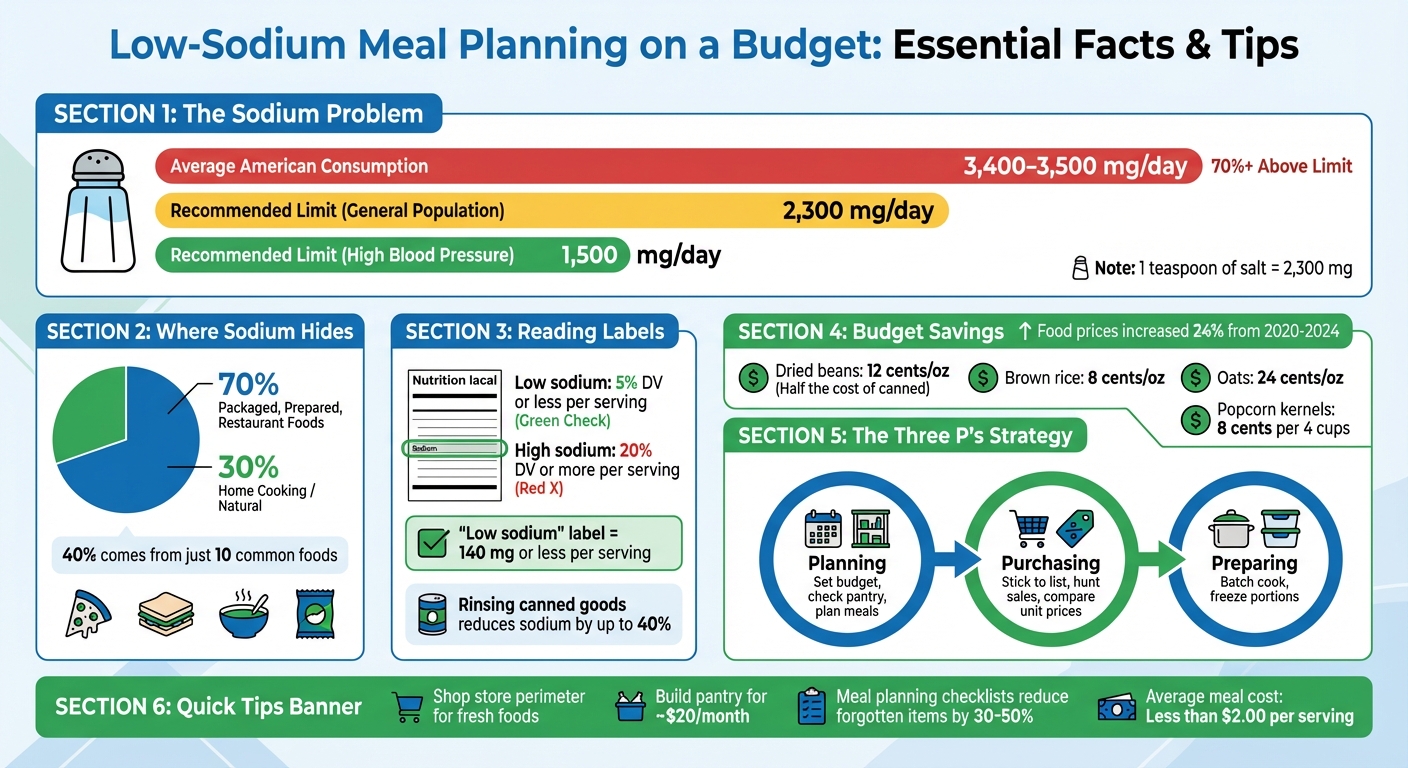
Low-Sodium Meal Planning: Key Statistics and Budget Tips
Low-Sodium Eating and Budget Basics
Daily Sodium Guidelines
Keeping your sodium intake in check is essential. The general recommendation is to stay under 2,300 mg per day, which equals about one teaspoon of table salt. For individuals with high blood pressure or a higher risk of heart disease, the American Heart Association advises an even lower limit of 1,500 mg daily. Sodium plays a key role in maintaining fluid balance, but too much of it can put extra strain on your heart.
"Sodium attracts water, and a high-sodium diet draws water into the bloodstream, which can increase the volume of blood and subsequently your blood pressure." – FDA
Excess sodium is linked to serious health issues like heart attacks, strokes, kidney disease, and even stomach cancer. On average, Americans consume 3,400 to 3,500 mg of sodium daily, with over 70% coming from packaged, prepared, and restaurant foods. Surprisingly, about 40% of this intake comes from just ten common foods, including pizza, deli meat sandwiches, soups, and salty snacks. Understanding where sodium hides in your diet is the next step toward better health.
Finding Hidden Sodium in Foods
Knowing your daily sodium limit is only half the battle - it’s equally important to identify where sodium sneaks into your meals. Start by reading nutrition labels carefully. Foods with 5% Daily Value (DV) or less of sodium per serving are considered low, while items with 20% DV or more are high. Be cautious with "reduced sodium" claims, as they only indicate a 25% reduction. Instead, seek out labels like "low sodium" (140 mg or less per serving) or "no salt added."
Pay attention to ingredient lists. Additives such as monosodium glutamate (MSG), sodium citrate, sodium bicarbonate, and sodium alginate are common sources of hidden sodium. Even fresh poultry and pork may be injected with saline or broth to enhance flavor - unseasoned fresh meat should have roughly 100 mg of sodium or less per 4-ounce serving. Condiments are another sodium trap; for instance, just one tablespoon of soy sauce can pack around 1,000 mg. A simple trick to cut sodium: drain and rinse canned beans and vegetables, which can slash their sodium content by up to 40%. Once you’re familiar with these hidden sources, you can make smarter, budget-conscious choices at the store.
Budget Tips for Healthy Eating
Keeping sodium low while sticking to a budget might seem tricky, especially with food prices climbing 24% from 2020 to 2024. However, the "Three P's" - Planning, Purchasing, and Preparing - can make it easier. Start by planning meals and setting a budget. When purchasing, stick to your list and hunt for sales. Finally, prepare ingredients in bulk to save time and money.
Focus your shopping on the outer edges of the grocery store, where fresh produce, lean meats, and dairy are typically found. These items are naturally lower in sodium compared to processed foods in the center aisles. To save even more, compare unit prices and choose whole produce instead of pre-cut versions, which often come with a higher price tag. Buying dry beans, lentils, and grains in bulk is another budget-friendly option - and they come with zero added sodium. Over time, you can build a pantry stocked with staples like beans, grains, and spices for about $20 per month. This gradual approach keeps costs manageable while setting you up for healthier, low-sodium meals.
Building a Low-Sodium Pantry on a Budget
Affordable Low-Sodium Pantry Items
A well-stocked pantry makes low-sodium cooking much easier. Start with basics like whole grains - brown rice (8 cents/oz), oats (24 cents/oz), and quinoa. These are naturally sodium-free and budget-friendly options. Dried beans are another excellent choice, offering protein at about 12 cents/oz, which is half or even a third of the cost of canned beans. If you prefer convenience, go for canned "no-salt-added" beans and vegetables such as tomatoes, corn, or green beans, usually priced around $1.09 for a 15-ounce can.
For protein, consider canned tuna, salmon, or chicken packed in water (unsalted), along with unsalted peanut butter. To add flavor without salt, use ingredients like garlic, onions, vinegars, and oils. When shopping, look for labels that say "No Salt Added" or "Unsalted", as "Reduced Sodium" products can still contain more sodium than you might expect. For instance, some store brands offer no-salt-added chicken broth with as little as 35 mg of sodium per cup.
Ways to Save on Pantry Staples
Once you've identified quality low-sodium ingredients, there are plenty of ways to save money while stocking up. Store brands are a great option for affordable low-sodium staples. Lines like Walmart's Great Value, Target's Good & Gather, and Aldi's Simply Nature often offer no-salt-added products at lower prices compared to national brands. Always check unit prices on shelf tags to make sure you're getting the most for your money.
Buying in bulk is another smart strategy. For example, a 32-ounce bag of popcorn kernels costs about $2.29 and provides servings for just 8 cents per 4 cups. Bulk purchases of dried beans, rice, and spices can save even more, and you can create your own salt-free spice blends at home. When low-sodium items go on sale, stock up and freeze extras to extend their shelf life. If "no-salt-added" canned goods aren't available, you can buy regular versions and rinse them under water to reduce sodium content. Lastly, use the "First In, First Out" method - place newer items behind older ones in your pantry to avoid waste and ensure everything gets used before its expiration date. These tips help you save money and stay prepared for low-sodium meal planning every day.
Planning and Shopping for Low-Sodium Meals
How to Plan Weekly Meals on a Budget
Start by setting a weekly budget and taking stock of what you already have in your pantry and freezer. This helps you avoid buying duplicates and wasting money. Check grocery store ads for sales and seasonal produce, then plan your meals around these deals. For instance, if chicken is on sale, you can use it across multiple meals during the week.
Stretch your budget further by incorporating affordable plant-based proteins like beans and lentils. These are naturally sodium-free and can either replace or complement pricier meats. Pair them with fresh vegetables and whole grains to create meals that are both nutritious and low in sodium.
For an easier planning process, tools like the Honeydew Recipe Manager can be a game-changer. This app imports low-sodium recipes, organizes grocery lists by store section, and even creates AI-driven weekly meal plans with adjustable serving sizes. Plus, it helps reduce food waste (https://honeydewcook.com).
Once your meal plan is ready, focus on shopping strategically to stick to your budget and sodium goals.
Grocery Shopping Strategies for Low-Sodium Diets
When grocery shopping, stick to the store's perimeter. This is where you'll find fresh produce, lean meats, and dairy - foods that are naturally lower in sodium compared to the processed items often found in the center aisles. If you do venture into those aisles, make it a habit to read Nutrition Facts labels. Look for items with 5% Daily Value (DV) or less of sodium per serving, as these are considered low-sodium. Avoid products with more than 20% DV per serving.
Save money by choosing whole produce instead of pre-cut, packaged options. For example, a whole head of lettuce or unpeeled carrots is usually cheaper than their pre-washed versions. Buying larger packs of meat and freezing portions for later is another way to cut costs. Compare unit prices and consider store brands to stretch your dollar further.
When it comes to canned goods like tomatoes, beans, or tuna, prioritize options labeled "no-salt-added" or "low-sodium". If these aren't available, you can reduce sodium by rinsing regular versions under water. Stock up on inexpensive flavor boosters like garlic, onions, citrus, and dried herbs - these enhance taste without the need for extra salt.
For additional savings, shop seasonally. The USDA Seasonal Produce Guide is a helpful resource for finding fruits and vegetables at their peak quality and lowest prices.
More Whole Foods and Less Sodium Pantry Cooking | Simple Budget Meal Tips and Recipes
Cooking Methods to Cut Sodium and Save Money
Once you've planned meals and shopped smartly, the right cooking techniques can help you lower sodium while keeping costs in check.
Using Herbs and Spices Instead of Salt
Toasting spices like cumin, coriander, and peppercorns releases their natural oils, enhancing flavor without needing salt. Similarly, sautéing ingredients like garlic, onions, shallots, or ginger early in the cooking process creates a savory base that elevates the dish.
Acidic elements such as citrus juice or vinegar can also enhance flavors. For a bright, aromatic touch, add citrus zest or juice just before serving.
"Try using natural substitutes like lemon, ginger, curry, dried herbs (such as bay leaves, basil and rosemary), onion, garlic and dry mustard." - George Thomas, MD, Hypertension Specialist, Cleveland Clinic
Pre-made seasoning blends often pack 150–220 mg of sodium per serving. Instead, craft your own salt-free mix using pantry staples. For example, the American Heart Association suggests combining 1 tablespoon of garlic powder with 1 teaspoon each of cayenne, mace, basil, onion powder, black pepper, thyme, sage, parsley, marjoram, and savory. You can also pair specific herbs with proteins: rosemary complements chicken, dill enhances fish, and cumin pairs well with beef.
Batch Cooking and Freezing Meals
Cooking in bulk not only saves money but also gives you complete control over sodium content. Tools like slow cookers and pressure cookers are great for tenderizing meats and infusing dishes with the rich flavors of herbs and aromatics - no extra salt needed. For example, using the sauté function on a pressure cooker to brown garlic and onions creates a depth of flavor that salt alone can’t achieve.
Commercial soups and broths often contain 600–900 mg of sodium per cup, but homemade versions can be prepared with far less sodium. Once meals are cooked, divide them into airtight containers for easy, portioned servings. Refrigerate these within 2 hours, and consume within 3 to 4 days, or freeze them for up to 3 months. To save freezer space, consider reducing homemade stock by half and freezing it in ice cube trays for quick, concentrated portions.
These techniques not only reduce sodium but also set you up with ready-to-use staples for future meals.
Making Homemade Low-Sodium Staples
Creating staples at home lets you keep sodium levels in check. For example, store-bought spaghetti sauce often contains 300–500 mg of sodium per serving, but a homemade version using fresh tomatoes and herbs can have as little as 19 mg. Similarly, making your own salad dressing is simple - combine olive oil, vinegar (or lemon juice), and dried herbs in a jar, then shake. This helps you avoid the 250–400 mg of sodium often found in commercial dressings.
For a versatile, sodium-free broth, slow-cook a whole chicken with water and aromatics for about 8 hours. This process not only provides tender meat for multiple meals but also yields a flavorful broth at a fraction of the cost of store-bought options. If you're making tomato sauce, use fresh or no-salt-added canned tomatoes (seeded to reduce excess liquid) and include sun-dried tomatoes for an extra flavor boost. Freeze these homemade staples in portioned containers so you always have a low-sodium option ready to go.
Sample Low-Sodium Weekly Meal Plan on a Budget
7-Day Meal Plan
This 7-day plan shows how to combine smart shopping with low-sodium eating on a budget. It focuses on affordable staples like eggs, chickpeas, and bananas to keep costs low while reducing waste. Here's a breakdown of meals for the week:
| Day | Breakfast | Lunch | Dinner |
|---|---|---|---|
| 1 | Porridge with sliced banana | Hummus Veggie Wrap | Jacket potato with sardines in tomato sauce |
| 2 | Overnight Oatmeal | Lemony Garbanzo Salad | Chicken with green beans |
| 3 | Boiled egg and tomato on whole wheat toast | Waldorf Turkey Pitas | Black Beans and Pasta |
| 4 | Banana on whole wheat toast with yogurt | Tuna and White Bean Lettuce Wraps | Cod and Asparagus Bake |
| 5 | Whole Wheat Pancakes | Egg, tomato, and cucumber sandwich | Mushroom and Cauliflower Frittata |
| 6 | Southwest Tortilla Scramble | Chicken Pasta Salad with hummus dressing | Tuna and sweetcorn pasta bake |
| 7 | Banana-Peanut Butter Yogurt Parfait | Indian-spiced scrambled eggs on toast | Apple-Cherry Pork Medallions |
This meal plan keeps things simple by repeating breakfast and lunch combinations, which saves time, reduces ingredient variety, and cuts costs. Instead of relying on salt for flavor, these meals use herbs, garlic, onions, citrus, and spices to create tasty dishes without the extra sodium.
Cost Breakdown and Nutrition Information
This plan is designed to be both nutritious and budget-friendly, averaging less than $2.00 per serving by focusing on store-brand items and plant-based proteins. By following a "6-to-1" shopping strategy, weekly grocery costs can drop from $70–$85 to around $60 - saving between 14% and 29% compared to typical shopping habits.
Nutritionally, the plan emphasizes foods high in potassium, such as bananas, avocados, and leafy greens, which help counteract sodium's effects on the body. If you can't find no-salt-added canned goods, rinsing regular canned items is an easy way to reduce sodium content.
For added convenience, tools like the Honeydew Recipe Manager (https://honeydewcook.com) simplify meal planning. This app generates grocery lists sorted by store sections, adjusts serving sizes, and even suggests ingredient substitutions based on what you already have. It's a great way to stick to your budget while keeping sodium levels in check.
Ingredient Substitutions for Low-Sodium Cooking
Replacing Salt with Flavorful Alternatives
Acids have a way of enhancing natural flavors, much like salt does. A quick squeeze of lemon or lime juice, or even a splash of balsamic or apple cider vinegar, can bring brightness to a dish without adding sodium. For the best results, add these acidic elements near the end of cooking - just before serving - to bring out the full flavor.
Garlic and onions, whether fresh or powdered, can create a rich, savory base that reduces the need for salt. Pairing vinegar with fresh ginger and garlic can also mimic the depth of umami flavors. Spices like black pepper, cayenne, and red pepper flakes are excellent for adding a kick, compensating for the absence of salt.
"Seasoning with herbs and spices tricks taste buds, so you don't realize the salt's missing" - Dr. Carolyn Ross, food science professor at Washington State University
By using these flavorful alternatives, you can craft dishes that satisfy without relying on sodium.
Budget-Friendly Pantry Swaps
Making smart ingredient swaps can lower both sodium levels and your grocery bill. For instance, replace salted butter with unsalted butter, use Greek yogurt instead of sour cream, and opt for evaporated milk in place of heavy cream. Evaporated milk typically costs $1.50–$2.00 per 12-ounce can, compared to $4.00–$5.00 per pint for heavy cream.
Another great option is making homemade broth. Simmer leftover vegetable scraps and chicken bones to create a flavorful base that’s essentially free, compared to the $1.50 per quart you’d spend on store-bought broth. You can also stretch ground meat further by substituting half of it with cooked lentils in recipes like chili, tacos, or spaghetti sauce. This swap not only reduces sodium but also adds fiber and cuts costs.
These substitutions are simple ways to make meals healthier and more affordable. Tools like Honeydew Recipe Manager (https://honeydewcook.com) can make it even easier by suggesting ingredient swaps based on what’s already in your pantry.
Conclusion
Planning low-sodium meals on a budget doesn’t have to be complicated. The trick is keeping your pantry stocked with affordable basics like dried beans, whole grains, and no-salt-added canned goods. Comparing unit prices, buying in bulk, and rinsing canned vegetables are simple ways to save money while managing sodium intake. These strategies naturally lend themselves to efficient batch cooking, which maximizes both your time and budget.
Batch cooking and homemade staples not only cut costs but also help control sodium levels. For example, swapping part of the ground meat in a recipe with lentils or opting for unsalted butter can make meals both healthier and more affordable. Studies even suggest that using checklists for meal planning and shopping can reduce forgotten items by 30% to 50%, saving you from costly last-minute store trips and keeping your spending in check.
Technology can make this process even easier. Tools like the Honeydew Recipe Manager (https://honeydewcook.com) streamline meal planning with features like AI-powered recipe imports, budget-friendly ingredient swaps, and sodium tracking. Its pantry mode helps you use what you already have - like dried beans, oats, or no-salt-added canned goods - so you can plan meals around existing supplies and avoid unnecessary purchases. Aisle-sorted shopping lists keep you focused on essentials, cutting down on impulse buys. Plus, its AI assistant scales recipes for batch cooking, reducing the cost per serving, while Instacart integration lets you check prices and order groceries without navigating aisles full of processed foods.
FAQs
What’s the easiest way to hit 1,500–2,300 mg sodium a day?
Preparing meals at home with fresh, minimally processed ingredients is a great way to manage sodium intake. Prioritize fresh fruits, vegetables, lean meats, and canned or frozen options labeled as low-sodium or no-salt-added. Instead of reaching for the salt shaker, try flavoring dishes with herbs, spices, garlic, or onion for a tasty and healthier alternative.
Planning ahead can make this even easier. Tools like the Honeydew Recipe Manager can help you organize low-sodium meal plans and grocery lists, making it simpler to steer clear of heavily processed, sodium-packed foods.
Which 'healthy' foods are secretly high in sodium?
Some foods often considered "healthy" can actually pack an unexpected punch of sodium. For instance, canned vegetables and beans - even those marked as "no salt added" - can still contain more sodium than you'd think. Similarly, certain cheeses like cottage cheese and processed or cured meats can also contribute significantly to your sodium intake. While these foods do provide nutritional benefits, it's a good idea to read labels carefully and opt for low-sodium versions whenever possible.
How can I keep meals flavorful without adding salt?
Enhance the flavor of your meals without relying on salt by turning to herbs, spices, and aromatics. Ingredients like basil, garlic, ginger, and citrus can bring a vibrant depth to your dishes and excite your taste buds. For an extra kick, try incorporating options such as hot honey, low-sodium seasonings, or even fresh vegetables to add natural flavor while keeping sodium levels in check. Experimenting with these elements can transform your cooking into a delicious, low-sodium experience.