5 Plant-Based Shrimp Paste Alternatives
• Updated
Shrimp paste is a key ingredient in Southeast Asian recipes, but there are many reasons you might need a substitute - whether you're avoiding shellfish, following a vegan diet, or looking for sustainable options. Here are five plant-based alternatives that deliver bold umami flavors:
- Miso Paste: Fermented soybeans with a savory depth. Dark miso works best for a saltier, richer taste.
- Fermented Bean Paste (Doenjang): A Korean soybean paste with a strong, earthy flavor similar to shrimp paste.
- Seaweed (Nori or Wakame): Offers a salty, oceanic flavor but lacks the fermented punch.
- Vegan Fish Sauce: A liquid alternative made from seaweed, soybeans, and mushrooms for a salty, bold taste.
- Dried Shiitake Mushrooms: Intensely umami, earthy, and versatile for various dishes.
Each option has its strengths, and combining them can help replicate the complexity of shrimp paste. For example, mix miso with seaweed for a briny kick or combine dried mushrooms with fermented bean paste for depth. These substitutes are widely available in U.S. grocery stores and online. Whether you're making curries, soups, or stir-fries, these ingredients can help you achieve rich, savory flavors without shellfish.
How to make Vegan Bagoong
1. Miso Paste
Miso paste, made from fermented soybeans, brings a savory depth that mirrors the salty kick of shrimp paste. It’s a great way to elevate plant-based curries and stir-fries.
Umami Level
The fermentation process, which involves a koji starter, gives miso its signature umami punch. But not all miso is the same. Dark miso, which undergoes a longer fermentation, has a bolder, saltier taste that’s closer to shrimp paste. On the other hand, white miso offers a milder, sweeter flavor.
Substitution Ratio
You can swap miso for shrimp paste at a 1:1 ratio, teaspoon for teaspoon. If shrimp paste is a key flavor in your recipe, try using 1–2 tablespoons of dark miso for every 1/2 teaspoon of shrimp paste to make the flavor stand out. Since miso doesn’t have the same briny taste, adding a pinch of crumbled nori or wakame can help replicate that seafood-like essence. To keep its flavor intact, stir miso in toward the end of cooking or over low heat.
Best Dishes
Miso works wonders in Thai curries, soups like Tom Yum, noodle dishes, and stir-fries, delivering a hearty umami hit. It’s also fantastic for marinades, sambal dipping sauces, or stir-fried veggies, offering a shellfish-free way to achieve bold, authentic flavors.
Availability in US Stores
In the US, you can find miso in the refrigerated section of most grocery stores, usually near tofu or kimchi. Specialty stores like Whole Foods and H Mart also carry it, often with organic and gluten-free options available.
2. Fermented Bean Paste (Doenjang)
Doenjang, a Korean fermented soybean paste, packs a punch when it comes to deep, savory flavor - comparable to the role shrimp paste plays in Southeast Asian cooking. While it lacks the briny, seafood essence of shrimp paste, it makes up for it with its bold fermentation profile and rich umami. It's stronger and saltier than white miso, making it a better match for the robust flavors found in traditional shrimp paste dishes.
Umami Level
The fermentation process behind doenjang gives it a distinct earthy umami, on par with the intensity of shrimp paste. Its fermented notes are reminiscent of Thai gapi or Malaysian belacan, making it a natural fit for Southeast Asian recipes. Unlike the milder Japanese miso, doenjang aligns more closely with the fermented bean pastes used in Thailand. For a hint of that oceanic flavor, try mixing it with a bit of crumbled nori or wakame.
Substitution Ratio
Doenjang can be used as a 1:1 replacement for shrimp paste. Since it’s naturally saltier, you may need to reduce the amount of added salt or soy sauce in your dish. Chef and author Adam Sobel offers this advice:
If you don't have miso on hand, doenjang... or taucu... can be used in equal measure. Both offer a more intense and somewhat saltier flavor, which might mean you'll want to cut back a bit on the soy sauce added.
Best Dishes
Doenjang works wonders in dishes like Thai Yellow Curry and Khao Soi, where it provides a fermented backbone for curry pastes. It’s also a fantastic addition to Filipino Kare-Kare (peanut stew), Indonesian sambal, laksa, and stir-fried vegetables. For Filipino-inspired recipes, sauté it with minced garlic, ginger, onion, and mushrooms to mimic the chunky texture of bagoong.
Availability in US Stores
You can find doenjang in Korean supermarkets such as H Mart or through online retailers. It’s usually sold in plastic tubs in the non-refrigerated section, but once opened, it should be refrigerated. Properly sealed and stored, it keeps for three to five months in the fridge.
3. Seaweed (Nori or Wakame)
Seaweed, like nori or wakame, offers a plant-based alternative to shrimp paste with a natural, oceanic flavor. While it delivers the salty, briny taste reminiscent of the sea, it doesn't have the distinctive fermented tang that shrimp paste brings. Think of it as capturing the "sea" essence without the "shrimp", making it perfect for lighter Southeast Asian dishes where you want a touch of ocean flavor without the boldness of fermentation.
Umami Level
Nori and wakame are packed with natural glutamates, giving them a strong umami profile. Their flavor leans more toward briny and fresh rather than the funky, pungent notes of fermentation. To mimic the complexity of shrimp paste, you can mix crumbled seaweed with a small amount of miso or fermented bean paste. This combination adds a subtle fermented depth, creating a well-rounded umami flavor that works as a shrimp paste substitute [6, 10].
Substitution Ratio
To match the intensity of shrimp paste, you'll need to use more seaweed. A good rule of thumb is to use 2–3 times the amount of seaweed - about 1 tablespoon of seaweed for every teaspoon of shrimp paste [1, 6]. Soak dried seaweed in warm water until it softens, then process it into a paste or chop it finely for use.
Best Dishes
Seaweed shines in Thai green and red curry pastes, Tom Yum soup, and Filipino dishes like laing (taro leaves in coconut milk) or ginisang munggo (mung bean soup) [1, 4]. It’s also a great addition to stir-fried vegetables, broths, and dipping sauces for spring rolls. For dishes like Filipino bagoong-based recipes, finely ground nori or aonori flakes blend seamlessly, adding flavor without altering the texture.
Availability in US Stores
You can easily find dried nori sheets and wakame in the international aisles of most major U.S. supermarkets, as well as in health food stores and Asian grocery chains like H Mart or 99 Ranch Market [2, 6]. These seaweeds are shelf-stable, budget-friendly, and a great pantry staple for plant-based cooking.
4. Vegan Fish Sauce
Vegan fish sauce captures the salty, savory essence of shrimp paste using ingredients like fermented soybeans, seaweed (dulse, wakame, or kombu), and dried shiitake mushrooms. Some recipes also include miso or soy sauce for added depth. This liquid alternative delivers a powerful umami boost, making it a go-to choice for enhancing a variety of dishes.
Umami Level
The umami flavor in vegan fish sauce is bold and complex, which is crucial for creating the rich depth found in many Southeast Asian dishes. Experts point out that prioritizing fermented soybeans and salt over predominantly seaweed-based blends is key to achieving an authentic, funky flavor. Brands like Au Lac are often highlighted for their salty, fermented taste, while 24vegan has earned praise for closely resembling traditional fish sauce.
Substitution Ratio
Because of its concentrated flavor, it's important to measure carefully. Use 1 tablespoon of vegan fish sauce for every 1/2 teaspoon of shrimp paste, adjusting as needed to suit your dish. Since vegan fish sauce is liquid and less concentrated than shrimp paste, fine-tuning the amount is essential. For recipes calling for traditional fish sauce, you can usually replace it with an equal 1:1 ratio.
Best Dishes
Vegan fish sauce is a versatile addition to dishes like Thai Pad Thai, Pad Kee Mao (Drunken Noodles), Vietnamese dipping sauces (nuoc cham), ramen, and marinades. It can even replace anchovy paste in vegan kimchi recipes. Its versatility makes it a great choice for stir-fries, soups, and curries in both Thai and Vietnamese cooking.
Availability in US Stores
You can find vegan fish sauce in Asian supermarkets like H Mart and Ranch 99 Market, as well as larger chains like Whole Foods and Walmart. Look for bottles labeled "Nước Mắm Chay." Popular brands include Au Lac, Lucky Eight, Coconut Tree, and Thai Taste. Specialty bottles can sometimes cost around $30, but they’re also available on Amazon if local stores don’t stock them.
5. Dried Shiitake Mushrooms
Dried shiitake mushrooms pack a deep, earthy umami flavor, making them a solid plant-based alternative to shrimp paste. While they don’t mimic the briny, fishy notes of traditional shrimp paste, their intense savory profile fits seamlessly into Southeast Asian dishes. When combined with soy sauce or tamari, which are rich in glutamates, the nucleotides in shiitake mushrooms create a bold umami impact.
Umami Level
Dried shiitake mushrooms stand out for their exceptional umami intensity, surpassing other mushroom varieties like oyster mushrooms. According to America's Test Kitchen:
a salty broth made with dried shiitake mushrooms (rich in nucleotides) and soy sauce (glutamates) provided just the right meaty punch as a 1:1 substitute for fish sauce.
The drying process amplifies their flavor, making them even more robust. For an added boost, incorporating a bit of seaweed can elevate the umami notes even further.
Substitution Ratio
To use dried shiitake mushrooms as a shrimp paste substitute, grind them into a fine powder and apply a 1:1 ratio (1 teaspoon of mushroom powder for every teaspoon of shrimp paste) . For a paste-like consistency, soak the mushrooms in hot water for 30 minutes, blend into a paste, and use the same 1:1 ratio. If using whole or chopped mushrooms, about one cup of finely chopped shiitakes can replace ½ teaspoon of shrimp paste.
Best Dishes
The rich umami of dried shiitake mushrooms works wonders in dishes like Thai Tom Yum, green papaya salad, curry pastes, Filipino Kare-Kare, and Indonesian Nasi Goreng. They also enhance Vietnamese dipping sauces and Malaysian curries. Chef Jeff Keasberry highlights their versatility:
Shiitake mushrooms... are my go-to umami ingredient for vegetarian cooking.
Availability in US Stores
Dried shiitake mushrooms are easy to find in the United States. They’re stocked at Asian markets like H Mart and 99 Ranch Market, health food stores, and major online retailers .
Comparison Table
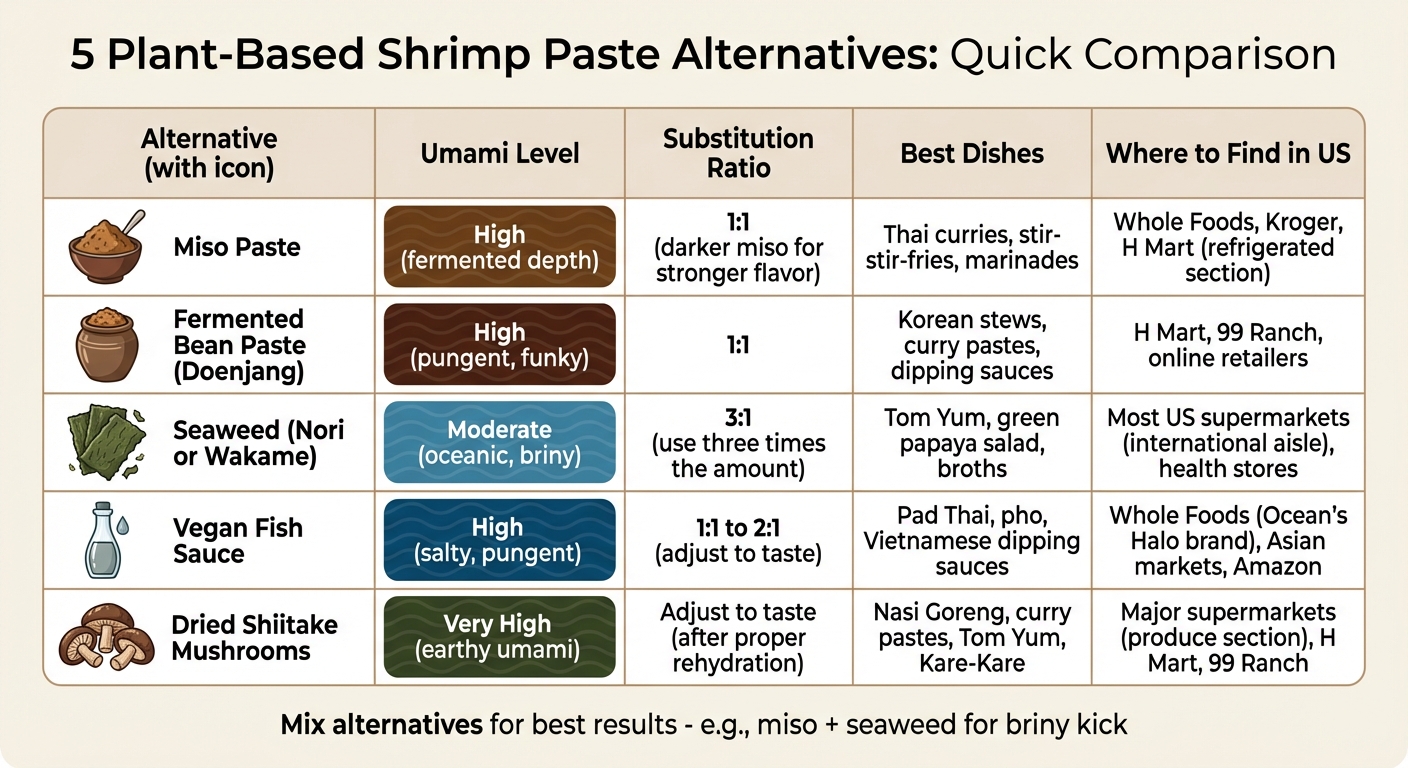
Plant-Based Shrimp Paste Alternatives Comparison Chart
Choose the option that fits your flavor preferences and what’s available near you. Miso paste and fermented bean paste provide a deep, fermented taste, seaweed brings a briny, oceanic touch, vegan fish sauce adds a salty, bold kick, and dried shiitake mushrooms deliver rich umami without any fishy undertones.
Here’s a quick breakdown of their differences, including umami levels, substitution ratios, dish pairings, and availability in the US:
| Alternative | Umami Level | Substitution Ratio | Best Dishes | Where to Find in US |
|---|---|---|---|---|
| Miso Paste | High (fermented depth) | 1:1 (darker miso for stronger flavor) | Thai curries, stir-fries, marinades | Whole Foods, Kroger, H Mart (refrigerated section) |
| Fermented Bean Paste (Doenjang) | High (pungent, funky) | 1:1 | Korean stews, curry pastes, dipping sauces | H Mart, 99 Ranch, online retailers |
| Seaweed (Nori or Wakame) | Moderate (oceanic, briny) | 3:1 (use three times the amount) | Tom Yum, green papaya salad, broths | Most US supermarkets (international aisle), health stores |
| Vegan Fish Sauce | High (salty, pungent) | 1:1 to 2:1 (adjust to taste) | Pad Thai, pho, Vietnamese dipping sauces | Whole Foods (Ocean's Halo brand), Asian markets, Amazon |
| Dried Shiitake Mushrooms | Very High (earthy umami) | Adjust to taste (after proper rehydration) | Nasi Goreng, curry pastes, Tom Yum, Kare-Kare | Major supermarkets (produce section), H Mart, 99 Ranch |
For stronger flavors, darker miso and fermented bean paste are excellent options. If you can’t find them locally, online retailers are a reliable backup.
Conclusion
Whether you're steering clear of shellfish or just looking for a substitute for traditional shrimp paste, there are plenty of options to bring that savory, umami-packed flavor to your dishes. Ingredients like miso paste, fermented bean paste, seaweed, vegan fish sauce, and dried shiitake mushrooms each offer their own unique twist - from the ocean-like saltiness of nori to the earthy richness of rehydrated mushrooms.
"Finding a vegan or vegetarian substitute for [shrimp paste] can be challenging but there are actually many other ingredients you can use to add a similar umami note to your recipes." - Recipes and Places
For the best results, you might want to mix and match. Pair miso with crumbled seaweed for a briny, funky kick, or combine mushrooms with fermented bean paste for a deep, savory complexity. Start with recommended amounts, then tweak to suit your taste.
To make experimenting easier, tools like Honeydew Recipe Manager can be a game-changer. This app helps you seamlessly swap ingredients while keeping your Southeast Asian recipes balanced. Import your favorite Thai curry or pho recipe, and the app’s smart substitution feature will guide you in replacing shrimp paste with plant-based alternatives. Plus, it lets you save recipes, track what works, and share your creations. With features like AI meal planning and auto-generated grocery lists, it ensures you're always stocked with the right ingredients.
So, don’t hesitate to get creative. These alternatives aren’t just stand-ins - they’re flavorful additions that can take your plant-based cooking to the next level.
FAQs
What are the best plant-based alternatives to shrimp paste, and how do I choose the right one for my recipe?
Choosing the right plant-based substitute for shrimp paste largely depends on the flavor your dish needs and the role shrimp paste plays in it. Typically, shrimp paste brings a punch of umami, saltiness, and a distinct fermented seafood aroma to Southeast Asian dishes like curries, sambals, and sauces.
If you're after that deep umami flavor, miso paste - made from fermented soybeans - is a go-to option. To mimic the briny or earthy notes, ingredients like seaweed or dried mushrooms work well. For a salty kick, tamari or soy sauce can do the trick. Want to take it up a notch? Try blending miso with seaweed or adding a splash of Shaoxing wine to introduce fermentation-like complexity.
Ultimately, the best substitute depends on what your recipe calls for - whether it’s a bold, punchy flavor or just a subtle savory hint. Don’t be afraid to experiment with different combinations to find what works best for your dish!
Can I combine plant-based substitutes to replicate shrimp paste?
If you're looking to replicate the flavor of shrimp paste in a plant-based way, a combination of ingredients like miso paste, seaweed, fermented soybean paste, and mushrooms can do the trick. Together, they bring that salty, umami-packed depth often found in Southeast Asian dishes.
Try mixing small amounts of these ingredients to get the taste just right. For instance, blending miso paste with finely chopped seaweed can create a savory, slightly briny flavor. Adding fermented soybean paste or mushrooms will amplify the umami richness, giving your dish a well-rounded flavor profile.
Where can I buy plant-based shrimp paste alternatives in the US?
If you're looking for plant-based shrimp paste alternatives, check out specialty Asian grocery stores, health food stores, or online retailers that focus on Southeast Asian ingredients and vegan products. Some larger grocery stores with international sections might also have these substitutes on their shelves.
Can't find them nearby? Online shopping is a great backup. Major e-commerce platforms often offer a range of vegan shrimp paste options, with delivery available across the U.S.