How to Replace Coconut Milk in Southeast Asian Recipes
• Updated
Coconut milk is a key ingredient in Southeast Asian cooking, offering creaminess and balancing flavors in dishes like Thai curry, Tom Kha soup, and Rendang. But what if you can’t use it? Whether due to allergies, calorie concerns, or availability, there are many substitutes for any recipe that replicate its texture and richness. Here’s a quick summary:
- Dairy Options: Evaporated milk, heavy cream, or a mix of Greek yogurt and half-and-half can mimic the creamy texture. Add coconut oil or extract for flavor if needed.
- Plant-Based Options: Cashew cream, silken tofu, oat milk, soy milk, or almond milk work well for vegan or lighter alternatives. Adjust thickness and sweetness for the best results.
- Recipe Adjustments: For substitutes, tweak sweetness, spice, and texture to maintain balance. Use low heat to prevent curdling in dairy-based options.
Each substitute has strengths depending on the dish. For example, cashew cream suits rich curries, while silken tofu is ideal for soups. Experiment with these alternatives to keep your dishes flavorful without coconut milk.
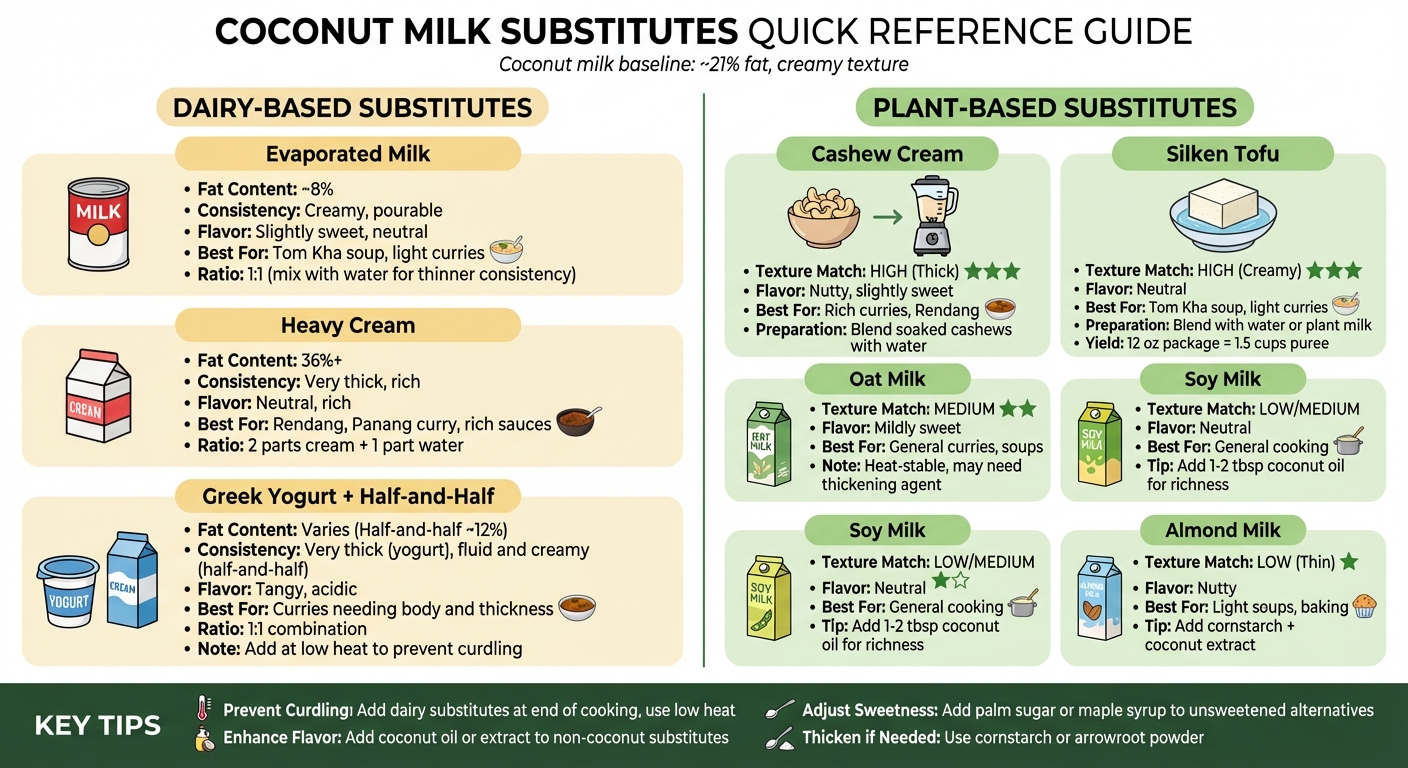
Coconut Milk Substitutes Comparison Chart for Southeast Asian Cooking
What would be a good substitute for coconut milk in curry sauces?
Dairy-Based Substitutes
If you're okay with dairy, there are several options that can replace coconut milk while still delivering the creamy texture so essential in Southeast Asian dishes. One popular choice is evaporated milk, which is made by removing about 60% of the water from regular milk. This process creates a rich, concentrated product that mimics the creaminess of canned coconut milk. With about 8% fat, it’s lighter than heavy cream but still works well for soups and lighter curries.
For recipes that require a richer base, heavy cream is a great alternative. It contains at least 36% milk fat - much higher than the typical 21% found in coconut milk. Because of its thickness, heavy cream is often diluted by mixing two parts cream with one part water. While both evaporated milk and heavy cream provide the desired creaminess, they lack the tropical aroma of coconut milk. To compensate, you can add a few drops of coconut oil or extract to capture some of that signature flavor.
Another option is combining Greek yogurt with half-and-half. Greek yogurt adds thickness and body, while half-and-half (which has about 12% fat) brings a lighter, pourable creaminess. Food writer Sonja Overhiser explains:
"Greek yogurt adds creaminess and body much like coconut milk does in a sauce. It's a little tangier than coconut milk, so use a modest amount."
One challenge with dairy substitutes is avoiding curdling, especially when cooking with high heat or acidic ingredients. Registered Dietitian Novella Lui advises:
"Dairy products tend to curdle with heat. To avoid this, add the heavy cream or half and half closer to finishing cooking or use low heat."
To prevent curdling, add your dairy substitute toward the end of cooking, keep the heat low, or use a tempering method. This involves slowly stirring small amounts of the warm curry base into the cold dairy before fully mixing it in. For dishes that need to simmer longer, a cornstarch slurry can help stabilize the mixture and prevent separation.
These dairy-based alternatives are great for maintaining the richness and balance that Southeast Asian dishes require. Below, you’ll find specific tips for using evaporated milk, heavy cream, Greek yogurt, and half-and-half to achieve the right texture and flavor.
Evaporated Milk and Heavy Cream
Evaporated milk is a great choice for dishes like Tom Kha soup or lighter curries where you want creaminess without overwhelming richness. Its shelf-stable nature makes it a convenient substitute when fresh coconut milk isn’t available. It can be used in a 1:1 ratio, but as Chef and Dietitian Cindy Chou notes:
"Since it has a thicker consistency than coconut milk, you'll need to mix it with water."
Heavy cream, on the other hand, works well for richer dishes like Rendang or Panang curry. To use it as a substitute, dilute it by mixing 1 cup of cream with 1/2 cup of water to replace 1.5 cups of coconut milk. Keep in mind that evaporated milk has a natural sweetness, so you may need to adjust the sugar or palm sugar in your recipe.
Greek Yogurt and Half-and-Half
This pairing is ideal for thickening soups and curries while mimicking the creamy texture of coconut milk. Greek yogurt provides a substantial, thick base, while half-and-half ensures the mixture stays pourable and slightly less tangy. Combine the two in a 1:1 ratio to replace coconut milk, and if needed, thin it with a bit of water. To balance the tanginess, you can add a touch more half-and-half or a few drops of coconut extract. Be sure to add this mixture at low heat or after removing the dish from direct heat to avoid curdling.
Comparison Table: Dairy Substitutes
| Substitute | Fat Content | Consistency | Flavor Impact | Best Use Case |
|---|---|---|---|---|
| Evaporated Milk | ~8% | Creamy, pourable | Slightly sweet, neutral | Tom Kha soup, light curries |
| Heavy Cream | 36%+ | Very thick, rich | Neutral, rich | Rendang, Panang curry, rich sauces |
| Greek Yogurt | Varies | Very thick | Tangy, acidic | Curries needing body and thickness |
| Half-and-Half | ~12% | Fluid, creamy | Neutral | Lighter soups, thinning thick sauces |
Plant-Based Substitutes
For those following a vegan lifestyle, there are several plant-based alternatives to coconut milk that can deliver similar creaminess and flavor. One standout option is cashew cream, which closely mimics the thick texture and high fat content of coconut milk. To make it, soak raw cashews and blend them with water until smooth. The result is a rich, creamy paste with a mild nutty flavor that pairs beautifully with Thai ingredients like lemongrass and galangal.
Alisa Fleming, founder of GoDairyFree.org, shares her thoughts:
"Nut cream... is my personal preference and a great option for those who aren't allergic to tree nuts. I like cashews the best. They have the most neutral flavor, but with a slight sweetness."
Another excellent alternative is silken tofu, particularly for lighter dishes like Tom Kha soup. By blending silken tofu with equal parts water or plant milk, you can create a protein-rich, neutral base that absorbs bold spices effortlessly. A standard 12-ounce package of silken tofu yields about 1.5 cups of puree, which nearly matches the volume of a typical 13.5-ounce can of coconut milk.
Below, we’ll explore plant-based substitutes in more detail, including how to adjust them for flavor and texture.
Cashew Cream and Silken Tofu Blend
The consistency of cashew cream can be adjusted by varying the amount of water during blending. It’s particularly well-suited for thick, rich curries like Rendang, thanks to its high fat content (similar to coconut milk's approximately 21% fat). On the other hand, silken tofu is ideal for broth-based soups, offering a smooth, non-oily finish. For thicker curries, use less water, and for lighter soups, add more. To enhance richness, a small amount of coconut oil can be added to mimic the mouthfeel of traditional coconut milk.
Oat Milk, Soy Milk, and Almond Milk
For convenience, widely available plant milks like oat, soy, and almond milk can also work as substitutes. These options may require slight adjustments to maintain the balance of flavors in dishes like Thai curry or Tom Kha soup.
- Oat milk is heat-stable and works well in boiling curries. Its mild sweetness complements many recipes.
- Soy milk has a neutral flavor but benefits from the addition of 1–2 tablespoons of coconut oil to increase richness.
- Almond milk, being thinner, may need thickening agents such as cornstarch and a touch of coconut extract to achieve the desired body and aroma.
Sonja Overhiser, a recipe developer and author, emphasizes the versatility of oat milk:
"Oat milk is a widely available dairy-free milk that's our favorite for substitutions. The texture is thicker than almond milk and soy milk."
Comparison Table: Plant-Based Substitutes
| Substitute | Texture Match | Flavor Profile | Best Use Case | Adjustments Needed |
|---|---|---|---|---|
| Cashew Cream | High (Thick) | Nutty, slightly sweet | Rich curries, Rendang | Blend soaked cashews with water |
| Silken Tofu | High (Creamy) | Neutral | Tom Kha soup, light curries | Blend with water or plant milk to desired consistency |
| Oat Milk | Medium | Mildly sweet | General curries, soups | Add a thickening agent if more body is needed |
| Soy Milk | Low/Medium | Neutral | General cooking | Add coconut oil to enhance richness |
| Almond Milk | Low (Thin) | Nutty | Light soups, baking | Whisk in cornstarch and a touch of coconut extract |
Each substitute has its strengths, so choosing the right one depends on the dish you’re preparing and the flavor profile you’re aiming to achieve.
Adjusting Recipes for Flavor and Texture
Once you've chosen a dairy or plant-based substitute, the next step is fine-tuning your recipe to replicate coconut milk's signature creaminess, sweetness, aroma, and mouthfeel. These tweaks will help ensure your dish stays true to its traditional flavor profile, even with alternative ingredients.
Adjustments for Thai Curry, Tom Kha Soup, and Rendang
Thai Curry
Coconut milk's natural sweetness is key to balancing the heat from chilies and the saltiness from fish sauce. If you're using unsweetened plant-based milks like oat or soy, consider adding a touch of sweetness. A teaspoon of palm sugar, brown sugar, or maple syrup per cup of milk should do the trick .
Tom Kha Soup
Tom Kha soup relies on its silky texture and the unmistakable flavor of galangal. When using lighter substitutes like silken tofu or oat milk, you can enhance the dish's umami by adding a bit more fish sauce or shiitake mushroom powder. Thai food specialist Derek Lucci highlights the importance of galangal:
"The galangal isn't negotiable: after all, the soup is called tom kha, which translates to 'boiled galangal.'"
To achieve a creamy texture without heaviness, blend silken tofu with equal parts water and incorporate it at the end of cooking over low heat to avoid curdling.
Rendang
Rendang presents a challenge because it’s a dry curry that depends on coconut milk reducing until its fats fry the meat. If using heavy cream or cashew cream, dilute it with water in a 2:1 ratio (two parts cream to one part water) to mimic the consistency of canned coconut milk, which is about 21% fat . For added richness, blend sautéed onions into a puree and stir it in to replicate the silky texture of reduced coconut milk . You can also boost warming spices like ginger, garlic, and chili to replace the sweetness coconut milk brings.
Working with Dairy Substitutes
When using dairy-based options such as Greek yogurt or heavy cream, tempering is crucial to avoid curdling. Gradually whisk small amounts of hot sauce into the cold dairy before adding it to the dish. Once incorporated, keep the heat low. A pinch of baking soda can also help prevent the proteins from clumping.
Testing and Refining Substitutions
Before committing to a full recipe, it’s wise to test your substitute with a small batch. For example, plant-based milks like almond or rice milk can separate or turn watery when heated. Simmer a few tablespoons with curry paste to see how it behaves . If the substitute is too thin, whisk in 1 teaspoon of cornstarch or arrowroot powder to thicken it. If it feels too rich, dilute it gradually with water or broth until you reach the desired consistency.
Taste-testing is key. Adjust sweetness, saltiness, and acidity as needed. A squeeze of lime juice or a splash of vinegar can brighten the flavors and help maintain balance. These small adjustments will help you achieve the authentic Southeast Asian flavors you’re aiming for, no matter which substitute you use. For more home cooking and meal planning tips, explore our latest guides.
Using Honeydew Recipe Manager for Smart Substitutions

Preparing a dish like Thai curry or Tom Kha soup can feel intimidating when you're missing a key ingredient. That’s where Honeydew Recipe Manager steps in, making substitutions easy while helping you stick to the authentic taste of Southeast Asian cuisine. This app is designed to simplify meal planning and adapt recipes to what you have on hand.
Auto-Generate Substitutions
Honeydew’s Auto-Generate Substitutions feature is like having a culinary assistant in your pocket. It analyzes your recipe and suggests alternatives for missing ingredients. For example, if you’re out of coconut milk, the app might recommend cashew cream for rich sauces or evaporated milk for soups that need a 1:1 replacement. It even takes into account specific needs, like the 21% fat content required for a rendang or lighter options for broth-based dishes.
One standout feature is how Honeydew adjusts fat ratios automatically. Say you need to replicate the fat content of a 14-ounce can of coconut milk - Honeydew might suggest blending 3.5 ounces of nut butter with 1.25 cups of water. The app does all the calculations for you, so there’s no need to worry about the math. It even converts metric measurements into US units, making the process even smoother.
Scaling Recipes for US Measurements
If you’ve ever tried to follow a Southeast Asian recipe that uses grams or milliliters, you know how confusing it can be. Honeydew’s Smart Serving Size Scaling feature solves this problem by instantly converting metric measurements into cups, ounces, and other familiar US units. Whether it’s grams of galangal or milliliters of fish sauce, the app ensures everything is easy to understand.
This feature is especially handy when you’re pulling recipes from international food blogs or social media platforms like TikTok or Instagram. Honeydew allows you to import recipes from any source and automatically adjusts ingredient quantities to fit US standards. No more juggling conversion tools - just focus on cooking.
Conclusion
Replacing coconut milk in Southeast Asian recipes becomes manageable once you grasp the essentials. Dairy-based options like heavy cream or evaporated milk can replicate the creaminess, while plant-based choices like soy milk or oat milk are excellent for lighter dishes or when avoiding animal products. The best substitute often depends on the dish - some are ideal for hearty curries, while others are better suited for brothy soups.
The trick lies in experimenting and making adjustments along the way. Many alternatives won't naturally replicate coconut milk's richness without a little tweaking - adjusting thickness or carefully managing heat to avoid separation can make a big difference. As chef Pailin Chongchitnant wisely notes:
"Though there's no good substitute flavour-wise, we can at least go for texture".
For a more seamless approach, tools like Honeydew Recipe Manager can simplify the process by suggesting suitable replacements tailored to your dish. It even converts metric measurements into US-friendly units like cups and ounces, making it easier to adapt recipes for classics like Thai curry, Tom Kha soup, or rendang.
With some practice and a bit of creativity, you can still whip up flavorful Southeast Asian dishes - even when coconut milk isn't on hand.
FAQs
What is the most authentic-tasting substitute for coconut milk?
Coconut cream is the best alternative for replicating the flavor and texture of coconut milk in Southeast Asian recipes. It delivers a rich, creamy consistency while preserving the dish's original taste.
How do I stop dairy substitutes from curdling in curry or soup?
To keep coconut milk from curdling, add it slowly over low to medium heat while stirring gently. Avoid letting it boil after adding, and save acidic ingredients like lime or tomatoes for the end of cooking. Opt for full-fat coconut milk and try to maintain a steady temperature to prevent sudden changes. If curdling happens, lower the heat right away and stir gently to bring it back to a smooth consistency.
What’s the best coconut milk replacement for rendang reduction?
To maintain the rich, creamy texture and traditional taste of rendang, the best substitute for coconut milk is coconut cream. You can easily dilute it with water to match the consistency and flavor of coconut milk. This swap ensures your dish stays authentic while delivering the same depth of flavor.