How to Replace Palm Sugar in Southeast Asian Dishes
• Updated
Palm sugar is a key ingredient in Southeast Asian cuisine, known for its caramelized, earthy sweetness. But if you can't find it, there are several substitutes that can work in its place. Here's what you need to know:
- Light Brown Sugar: A simple 1:1 replacement with mild caramel notes. Works well in curries and stir-fries.
- Coconut Sugar: Closely matches palm sugar's flavor. Use a 1:1 ratio, ideal for desserts and sauces.
- Dark Brown Sugar: Richer molasses flavor, suitable for bold recipes like soy-based sauces. Adjust sweetness as needed.
- Maple Syrup: Smoky and sweet, great for dressings and desserts. Use 2/3 cup for every 1 cup of palm sugar and reduce liquids.
- Honey: Floral and intense, perfect for marinades and desserts. Use 1/2 to 2/3 cup per 1 cup of palm sugar and adjust liquids.
Each substitute has its strengths depending on the dish. For liquid options like honey or maple syrup, tweak liquid quantities to maintain consistency. Whether you're making Pad Thai, curries, or desserts, these alternatives ensure your dish stays balanced and flavorful.
The Ultimate Guide to PALM SUGAR - Hot Thai Kitchen
Top Palm Sugar Substitutes
When you're out of palm sugar, the key is to choose a substitute that complements your dish's flavors. Palm sugar's caramel and earthy notes are central to Southeast Asian cuisine, so these alternatives aim to preserve that essence. Here's a breakdown of the top options, with more precise ratio adjustments coming in the next section.
Light Brown Sugar
Light brown sugar is an easy go-to substitute, thanks to its mild caramel flavor. It's especially effective in dishes like curries and stir-fries, where bold ingredients such as fish sauce, garlic, and chili dominate, masking any subtle differences.
"In my opinion, [brown sugar is] the best substitute for palm sugar as the flavor is similar AND it's something most of us already have in our pantries." – Andrew Gray
This substitute works well in both savory and sweet recipes. Use it in a 1:1 ratio as a direct replacement for palm sugar.
Coconut Sugar
Coconut sugar is one of the closest matches to palm sugar. Made from coconut palm sap, it replicates palm sugar's caramel-earthy profile while offering about 15 calories and 4 grams of carbohydrates per teaspoon. Its granular texture makes it easier to measure compared to traditional palm sugar blocks. Use coconut sugar as a 1:1 substitute. For baking, you might want to add a bit of extra butter or oil to offset its slightly drier consistency.
Dark Brown Sugar
Dark brown sugar delivers a more pronounced molasses flavor and richer color. It’s perfect for recipes that can handle a bolder sweetness, such as dark soy-based sauces or syrups infused with lemongrass. Since dark brown sugar is sweeter than palm sugar, start with a smaller amount and adjust to taste.
Maple Syrup
Maple syrup brings a smoky, butterscotch-like sweetness to the table, making it a good choice for desserts, dressings, and lighter sauces. As a liquid, it requires some recipe adjustments. Replace 1 cup of palm sugar with 2/3 cup of maple syrup and reduce other liquids by 1/4 cup. Because maple syrup is sweeter, begin with less and tweak as needed. Detailed ratio adjustments will follow in the next section.
Honey
Honey is another versatile option, offering natural sweetness with floral undertones. It shines in marinades, dressings, and certain desserts. Since honey is sweeter than palm sugar, use between 1/2 to 2/3 cup of honey for every 1 cup of palm sugar. Reduce other liquids by about 1/4 cup for every 2/3 cup of honey used. Keep in mind that honey causes baked goods to brown faster, so lowering the oven temperature slightly may be necessary. Detailed ratios and tips are covered in the next section.
Substitution Ratios and Adjustments
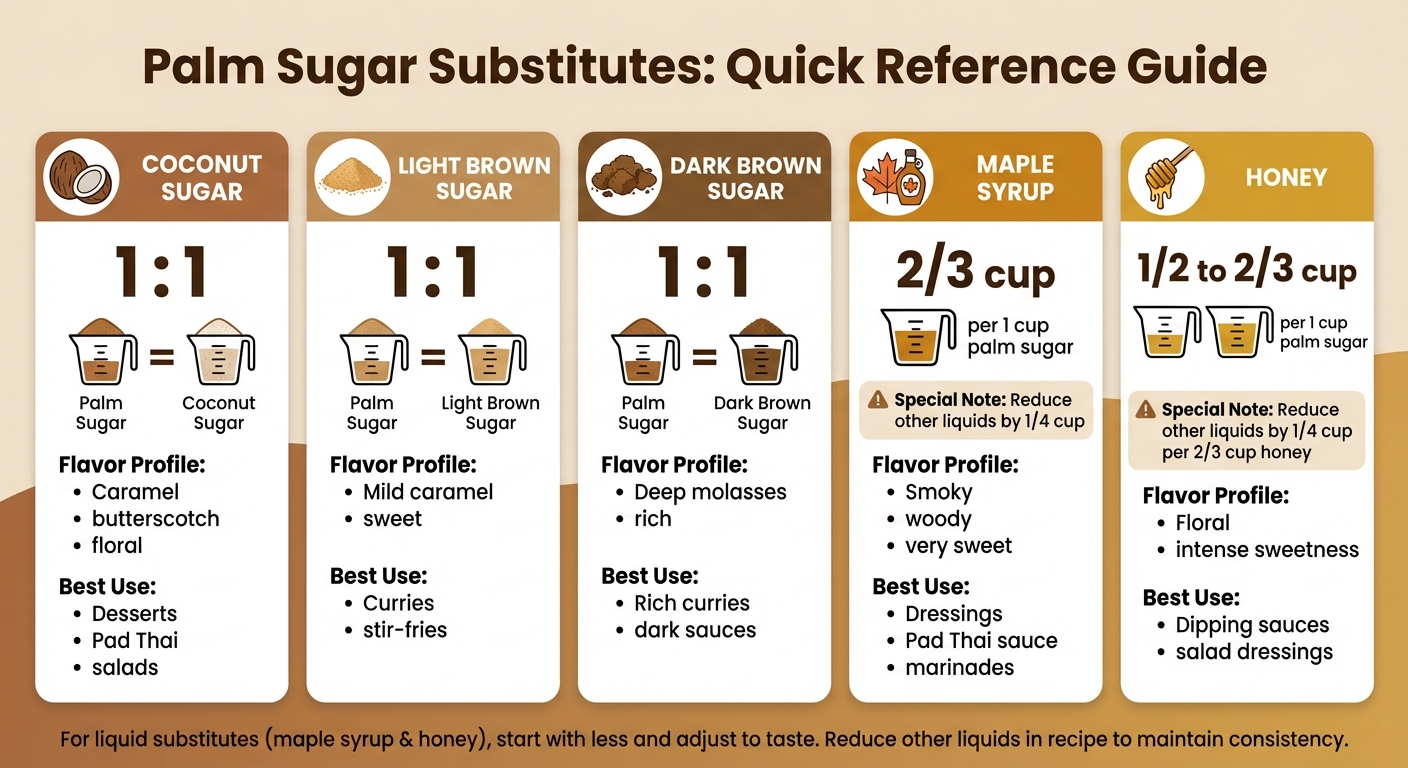
Palm Sugar Substitutes: Ratios and Best Uses for Southeast Asian Cooking
Getting the right substitution ratios is crucial when recreating the flavors of Southeast Asian cuisine. Precise measurements ensure that the essence of the dish stays intact.
For granulated substitutes, the ratio is straightforward: a 1:1 swap works well. For instance, one tablespoon of finely chopped, tightly packed palm sugar weighs about 12 grams.
Liquid substitutes, however, require a bit more tweaking. For every 1 cup of palm sugar, use approximately 2/3 cup of maple syrup. To balance the extra liquid, reduce other liquids in your recipe by around 1/4 cup. Similarly, if using honey, substitute with 1/2 to 2/3 cup per 1 cup of palm sugar and again cut back other liquids by about 1/4 cup. Since both maple syrup and honey are sweeter than palm sugar, it’s best to start with a smaller amount and adjust to your taste. Here's a quick reference table to guide you:
| Substitute | Ratio (Sub:Palm) | Flavor Profile | Best Use |
|---|---|---|---|
| Coconut Sugar | 1:1 | Caramel, butterscotch, floral | Desserts, Pad Thai, salads |
| Light Brown Sugar | 1:1 | Mild caramel, sweet | Curries and stir-fries |
| Dark Brown Sugar | 1:1 | Deep molasses, rich | Rich curries and dark sauces |
| Maple Syrup | 2/3 : 1 | Smoky, woody, very sweet | Dressings, Pad Thai sauce, marinades |
| Honey | 1/2 to 2/3 : 1 | Floral, intense sweetness | Dipping sauces and salad dressings |
These ratios and recommendations will help you maintain the harmony of flavors in your Southeast Asian recipes.
How to Use Substitutes in Popular Southeast Asian Dishes
Curries and Stir-Fries
In curries and stir-fries, sugar plays a key role in balancing saltiness and acidity. With so many bold herbs and spices in these dishes, the subtle flavors of palm sugar often get masked, making substitutions easier here than in desserts.
Light brown sugar is a great all-purpose substitute. As cooking coach Jules Clancy explains, "The flavor of brown sugar is slightly less intense but it's such a minimal difference you don't notice it in a dish with lots of other flavors". You can use it directly in a 1:1 ratio. If you're opting for a liquid sweetener, start with half the amount you'd use for a dry substitute and adjust as needed.
To achieve that classic Southeast Asian balance of sweet, salty, tangy, and spicy, add your substitute gradually and taste frequently. While curries can hide subtle differences, sauces require extra attention, especially when adjusting for liquid content.
Sauces like Pad Thai
Pad Thai sauce is a bit trickier because the sweetener plays a more central role. Chef Andy Ricker advises dissolving the sweetener completely before adding it to the stir-fry: "Dissolving palm sugar makes it easier to incorporate into pad thai sauce".
If you're using honey or maple syrup, mix them with tamarind paste and fish sauce first. For every 1 cup of palm sugar, use about 1/2 cup of honey or 3/4 cup of maple syrup. Maple syrup, in particular, introduces a slightly smoky flavor, so taste and adjust the seasoning as you go to maintain the dish's signature balance.
These substitution tips help you keep the authentic flavor profile of Pad Thai intact, even when using alternatives.
Desserts and Salads
In desserts, where sweetness takes center stage, precise adjustments are crucial. For dishes like mango sticky rice, light brown sugar or coconut sugar are excellent choices. They provide a traditional caramel-like flavor and a rich brown color that complements the delicate coconut and fruit notes.
For coconut milk-based desserts that require a liquid sweetener, simmer the mixture longer or at a higher temperature to reduce excess moisture and create a syrupy texture. In salad dressings, coconut sugar dissolves easily and helps maintain a harmonious blend of sweet, salty, and tangy flavors. Chef Pailin Chongchitnant suggests, "In a recipe where it is also contributing flavour, like in a salad, pad thai, and definitely in desserts, you want to use light brown sugar or perhaps you can try maple syrup, which has obviously a different flavour but might be good nonetheless!".
These adjustments, paired with the recommended substitution ratios, help preserve the delicate flavor balance that's so essential to Southeast Asian cuisine.
Simplify Ingredient Substitutions with Honeydew Recipe Manager
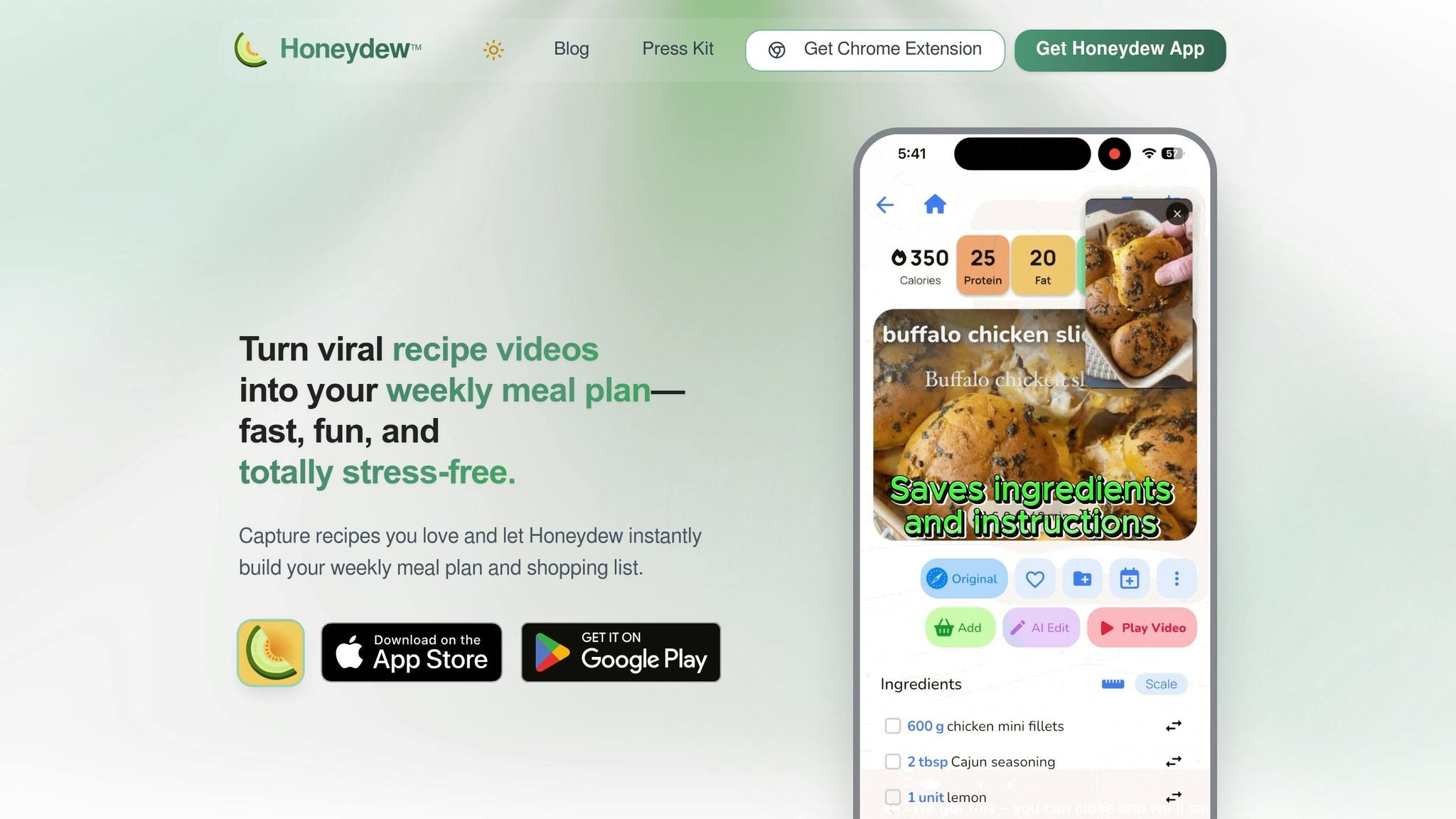
Managing your pantry just got a whole lot easier with Honeydew Recipe Manager. Using the substitution tips mentioned earlier, this app takes the guesswork out of finding the right alternative for palm sugar. Its smart substitution suggestions recommend the best replacements tailored to your dish - like light brown sugar for general cooking or coconut sugar when you want that caramel-like flavor.
But Honeydew doesn’t stop there. It also streamlines your shopping with its instant grocery list creation feature. When you swap palm sugar for pantry staples like honey or maple syrup, the app updates your shopping list automatically. Even better, it recalculates quantities for you - perfect for when those traditional palm sugar blocks, which can be tricky to prep, aren’t available at your grocery store.
The app goes a step further with AI-powered meal planning. It helps you organize your Southeast Asian cooking week by suggesting recipes that work with the substitutes you already have. You can even import recipes directly from social media or websites, plan meals around ingredients like maple syrup or light brown sugar, and order what you need through its Instacart integration.
For those who want to keep the authentic flavors of their dishes while experimenting with sweeteners, Honeydew Recipe Manager offers tailored advice. For example, bold curries can adapt to nearly any sweetener, while more delicate dishes like desserts or salads require precise substitutions. The app ensures your recipes maintain their balance and flavor - no need to memorize ratios or charts.
Conclusion
Choosing the right substitute for palm sugar depends on the role it plays in your dish. For savory dishes, where sweetness balances salt and acidity, options like light brown sugar work well. However, when the sugar's flavor is a key feature - like in desserts or salads - coconut sugar or maple syrup can better capture those rich caramel and butterscotch undertones.
"In savory dishes, sweetness is often added just to balance the salt and/or acid, not to provide a sweet flavor to the dish... the little bit of palm sugar just doesn't really come through." - Pailin Chongchitnant, Chef and Author
When using liquid sweeteners like honey or maple syrup, start with half the suggested amount and adjust gradually. This helps avoid overpowering sweetness while allowing you to fine-tune the flavor. For a more nuanced substitute, combine ingredients - like white sugar with a bit of molasses and maple syrup - to better replicate palm sugar's earthy complexity. Taste as you go and trust your instincts to get the balance just right.
These substitution techniques ensure your Southeast Asian dishes retain their authentic flavors. Even without palm sugar, your pantry staples can step in with a bit of creativity, keeping your favorite recipes delicious and true to their roots. Tools like Honeydew Recipe Manager can help you organize and perfect these adjustments for seamless cooking.
FAQs
Which substitute tastes most like palm sugar?
Maple sugar is a great alternative to palm sugar, delivering a similar caramel and butterscotch flavor. It's particularly well-suited for preserving the traditional taste of Southeast Asian recipes.
How do I adjust liquids when using honey or maple syrup?
When swapping palm sugar for honey or maple syrup, it's important to account for the extra moisture these liquid sweeteners bring. Here's how: substitute 1 cup of palm sugar with 3/4 cup of honey or maple syrup, and then reduce the other liquids in your recipe by about 1/4 cup for every cup of liquid sweetener you use. This adjustment helps maintain the right texture and flavor balance. Feel free to tweak further if needed!
What’s the best substitute for palm sugar in Pad Thai sauce?
When making Pad Thai sauce, light brown sugar is the closest substitute for palm sugar. It provides a comparable sweetness and a mild caramel-like flavor. Other alternatives include:
- Coconut sugar: Offers a slightly nutty taste.
- Maple syrup: Adds a hint of richness.
- Honey: Brings natural sweetness with a floral undertone.
- White sugar: A neutral option if nothing else is available.
- Molasses: Delivers a deeper, more robust flavor.
For the best results, dissolve your chosen substitute before mixing it into the sauce to ensure a smooth consistency.