Robotic Cooking Systems for Meal Prep
• Updated
Robotic cooking systems are transforming home kitchens by automating food preparation tasks like chopping, stirring, and managing heat. These devices use AI to follow recipes with precision, making meal prep faster and easier. From entry-level models starting at $149 to fully integrated systems costing up to $335,000, there's a wide range of options to suit different needs and budgets. Key benefits include saving time, improving cooking consistency, and promoting healthier eating by measuring ingredients accurately. Some systems even sync with apps like Honeydew Recipe Manager for meal planning and grocery shopping, further simplifying the process. While these tools are convenient, they require pre-portioned ingredients and can't handle tasks like peeling or butchering. Whether you're a busy professional, a parent, or someone with physical limitations, robotic cooking systems offer a practical way to enjoy home-cooked meals with less effort.
Top 5 Cooking Robots That Make Dinner For You
How Robotic Cooking Systems Work
Robotic cooking systems are all about efficiency and precision, streamlining meal preparation with cutting-edge technology.
At their core, these systems rely on dual-arm manipulators and motion-sensing actuators to mimic human movements in the kitchen. These actuators use high-torque brushless DC motors paired with low-reduction gearboxes, enabling them to handle tasks like cutting and tossing without needing external force sensors. Advanced models, such as YORI, feature 11-degree-of-freedom arms that can simultaneously hold a pan and stir - essentially performing tasks as if using both hands. To enhance accuracy, RGB-D cameras map the kitchen environment, while IR thermal cameras monitor cooking temperatures. Digital controls, including SSRs (solid-state relays) and digital potentiometers, ensure precise heat adjustments. Recipes are translated into robotic commands through Actionable Knowledge Graphs, which researchers have shown to match 76.5% of recipe actions to specific robotic tasks.
Main Features of Robotic Cooking Systems
Robotic systems come packed with features designed to handle various cooking tasks:
- Automated stirring: Dual-axis mixers ensure consistent results for stir-frying and mixing.
- Chopping and dicing: Modular food processors use linear actuator-driven lids to push ingredients through blades.
- Seasoning precision: Archimedes screws, powered by geared DC motors and load cells, accurately measure spices.
- Temperature control: Retrofitted commercial appliances use thermocouples with magnetic docking for constant monitoring.
- Tool swapping: Pneumatic tool changers quickly switch between specialized tools, with guiding cones ensuring perfect alignment.
For example, the YORI system’s dual-arm manipulator can handle an 11-pound payload - 67% more than its original design requirement.
| Component | Technology | What It Does |
|---|---|---|
| Actuators | Quasi-Direct Drive (QDD) | Handles tasks like cutting and tossing |
| End-Effector | Pneumatic Tool Changer | Swaps kitchen tools in seconds |
| Dispenser | Archimedes Screw + Load Cell | Dispenses spices with pinpoint accuracy |
| Software | ROS2 / Shared Memory | Controls motors at a 1,000Hz frequency |
Together, these components make meal prep faster, easier, and more consistent.
Setting Up Robotic Cooking Systems in Your Kitchen
Installing a robotic cooking system is straightforward, but it requires some planning to fit seamlessly into your kitchen.
For residential setups, these systems typically use internal water reservoirs and plug into standard outlets. Countertop models like the Suvie 3.0 need a space of about 14 inches wide, 20 inches deep, and 13 inches high. Programming is user-friendly - you can input recipes through a touchscreen, mobile app, or meal card scanner. Some systems, such as the Suvie 3.0, even feature "Cool-to-Cook" scheduling, which keeps ingredients chilled until cooking begins. To ensure food safety, these systems are designed to lower raw protein temperatures to below 41°F within two hours. For instance, the Suvie 3.0 Plus can handle functions like baking, roasting, and air frying, while the 2.0 version focuses on water-based cooking methods like sous vide and steaming.
Full-kitchen robotic systems take it a step further with modular designs that organize storage, cooking, and preparation units efficiently. WiFi connectivity also allows you to monitor and adjust cooking from anywhere, so you can start dinner even while you're at work.
Safety and Maintenance Guidelines
Safety is a top priority, with motion-sensing actuators built to detect torque and collisions automatically. For maintenance, keep cameras, sensors, and water reservoirs clean to ensure optimal performance. Detachable pots and tool attachments should be washed after each use, just like traditional cookware. Monthly checks of pneumatic connections are recommended to ensure tool changers operate smoothly - if tools aren’t seating properly, the guiding cones may need cleaning or realignment. While many systems have automatic diagnostics, reviewing error logs via the app can help you catch potential issues early. Always unplug the system before performing any manual cleaning or maintenance on internal components.
Using Smart Tools to Improve Meal Prep
Smart tools like the Honeydew Recipe Manager, when paired with advanced robotic cooking systems, create a seamless cooking experience. Honeydew automates meal planning and syncs with smart appliances, such as ovens, refrigerators, and sous-vide machines. This integration allows you to control cooking remotely - yes, you can start dinner without even being in the kitchen. Plus, with Alexa compatibility, you can manage timers and follow guided recipes hands-free, keeping your devices clean while you cook.
Planning Meals with Honeydew Recipe Manager
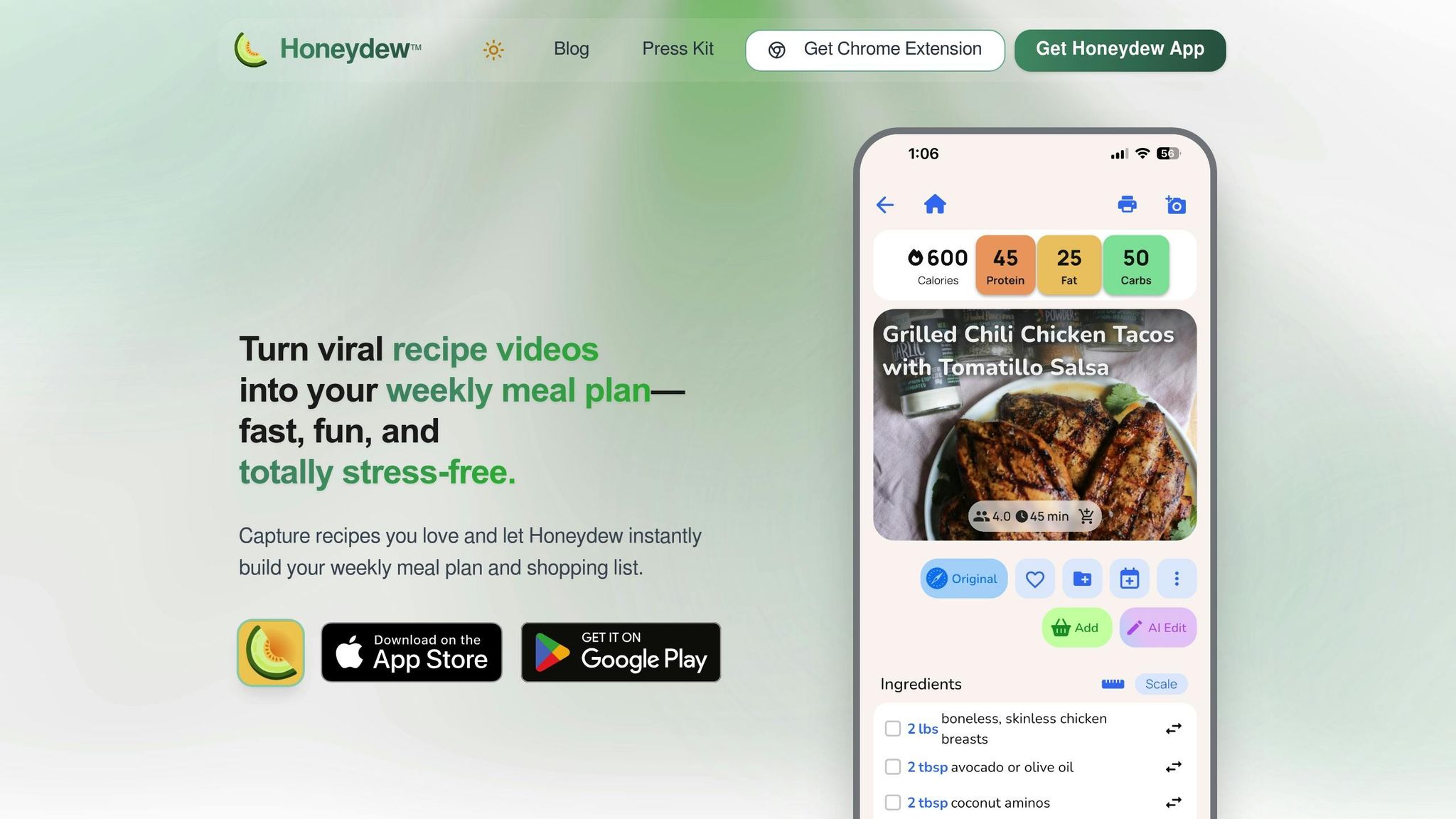
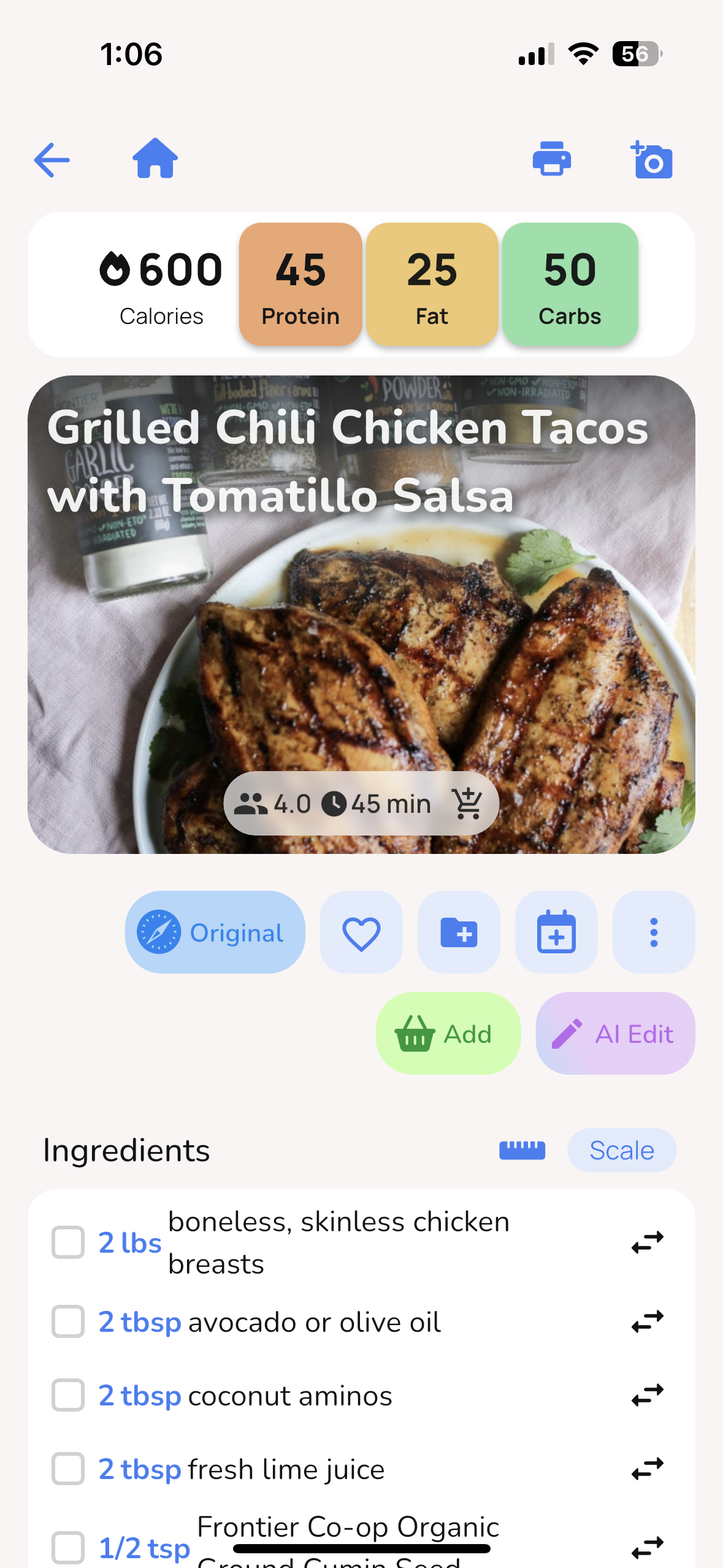
Honeydew simplifies meal prep by pulling recipes from TikTok, Instagram, YouTube, and virtually any website using AI-powered extraction. Users collectively save around 270,000 recipes monthly on the platform, creating their own digital cookbooks. The app’s AI meal planner can whip up a weekly schedule in seconds, complete with a grocery list organized by store aisle. And thanks to its Instacart integration, you can order all your ingredients with just one click.
Feeling stuck with random fridge items? Honeydew’s Pantry Mode lets you snap a photo of your fridge, then suggests recipes based on what you already have. For households, the Household Sharing feature keeps everyone on the same page by synchronizing meal plans and grocery lists across multiple users. This kind of organization ensures better coordination with robotic cooking systems.
Connecting Honeydew with Robotic Cooking Systems
Honeydew takes meal prep a step further by directly integrating with robotic cooking systems. The app reformats recipes so they can be interpreted by the robotic system, ensuring a smooth transition from recipe selection to execution. Its smart ingredient management system can suggest substitutions or adjust recipes based on what’s available in your pantry.
To make things even easier, the app offers a "No Screen Lock" mode, keeping instructions visible while you oversee the robotic system. Got a favorite restaurant dish? The Copycat Recipe Generator lets you recreate it at home by turning a simple photo into a structured recipe.
Reducing Food Waste and Improving Efficiency
AI-powered meal planning isn’t just convenient - it’s economical. Households using Honeydew can cut food waste by up to 40%, saving roughly $125 per month on groceries. The app’s pantry tracking feature alerts you when items are running low or nearing expiration, helping you use everything before it goes bad. You can also create a "Use-First" bin in your fridge for items close to expiring and adopt the FIFO (First-In, First-Out) method to better manage groceries. Additionally, Honeydew consolidates overlapping ingredients across recipes, so you don’t end up overbuying.
Cost and Value of Robotic Cooking Systems
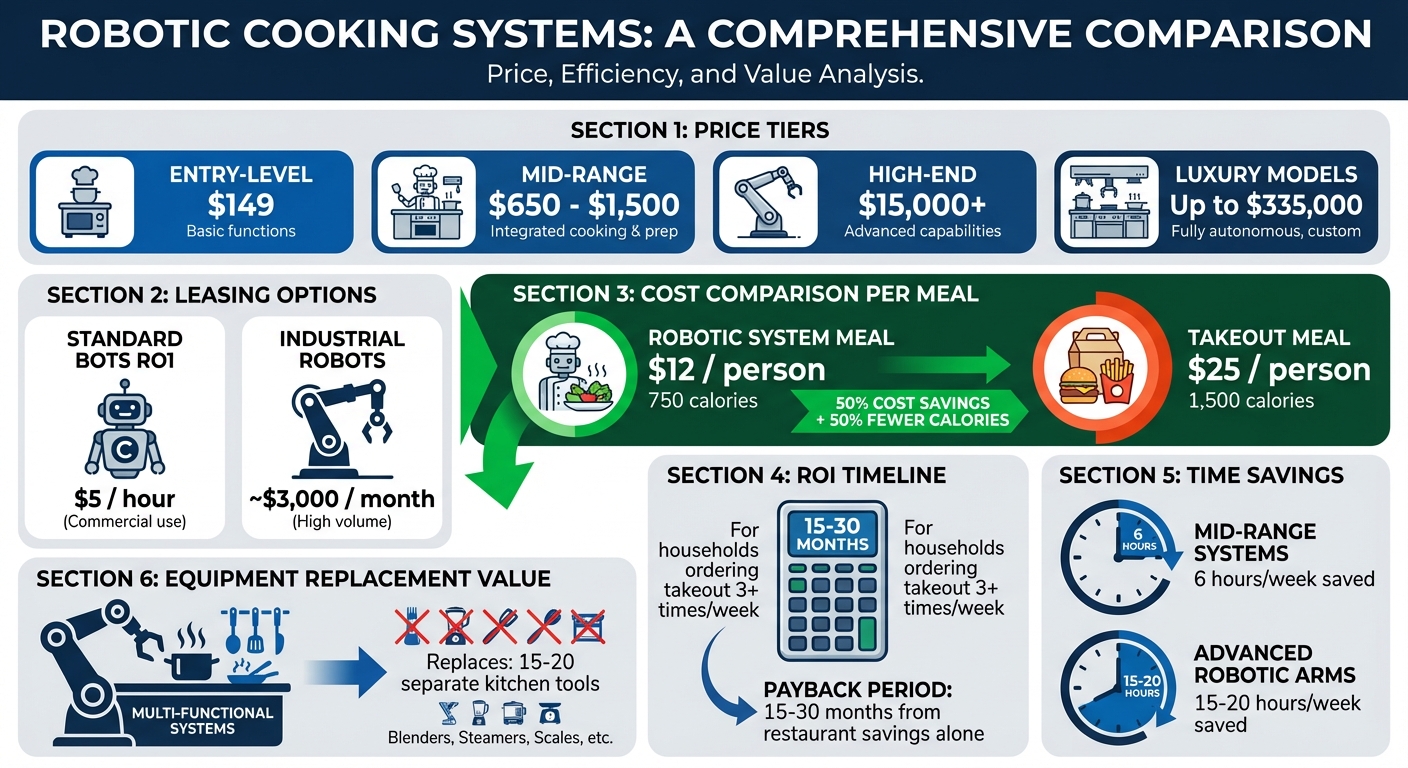
Robotic Cooking Systems Price Comparison and ROI Calculator
While robotic cooking systems can greatly improve efficiency, it’s important to break down their costs and understand the value they bring to your kitchen.
Purchase Price and Ongoing Costs
Robotic cooking systems come in a range of price points. Entry-level models start at $149, mid-range options fall between $650 and $1,500, and high-end systems, which often include robotic arms, start at $15,000, with luxury models reaching up to $335,000.
Beyond the purchase price, subscription fees can add up. Some manufacturers offer leasing options instead of requiring full payment upfront. For example, Standard Bots’ RO1 system offers a lease plan starting at $5 per hour for commercial use, while industrial robots typically lease for about $3,000 per month.
The financial benefits become more apparent when comparing robotic cooking to typical dining habits. Suvie estimates its meals cost around $12 per person, compared to $25 for takeout. That’s not only half the price but also a significant calorie cut - from 1,500 to 750 calories per meal. For households ordering takeout three or more times a week, a high-end robotic system could pay for itself in 15 to 30 months, just from restaurant savings.
Time savings are another major factor. Mid-range systems can save about 6 hours per week, while advanced robotic arms reclaim 15 to 20 hours weekly. Robin Liss, CEO of Suvie, highlights how shifting dinner prep to these systems can free up valuable time. Additionally, many multi-functional systems replace 15 to 20 separate kitchen tools - like blenders, steamers, and scales - reducing clutter and the need for extra purchases.
These numbers help frame the decision of whether a robotic cooking system is a good fit for your household.
Deciding If a Robotic Cooking System Is Right for You
Determining whether this investment makes sense depends on your cooking habits, kitchen setup, and budget. Beyond the upfront costs, consider how often you’d use the system and the potential time savings.
Start by calculating your five-year total cost of ownership, including any subscriptions or meal kit expenses. Make sure your kitchen can handle the system’s requirements, such as reliable Wi-Fi and dedicated outlets - some high-power models can trip circuits if shared with other appliances. You’ll also need enough counter space and structural support for these devices.
Your cooking frequency is a key factor. If you rarely cook or prefer hands-on meal preparation, an entry-level model priced between $149 and $500 might be more practical than a $15,000 system. On the other hand, families who frequently dine out, households with limited time for cooking, or individuals managing specific dietary needs with AI-tailored recipes might find mid-range to high-end systems a worthwhile investment. To future-proof your purchase, prioritize models with Wi-Fi connectivity and regular firmware updates, ensuring the device remains functional and up-to-date for 5 to 10 years.
Conclusion: The Future of Meal Prep with Robotic Cooking Systems
Robotic cooking systems are changing how Americans approach meal prep, shifting the effort from hands-on work to managing and supervising. Instead of chopping, stirring, or keeping an eye on the stove, you can rely on AI to handle repetitive tasks. Studies show that a handful of common cooking actions dominate most recipes, making automation an efficient solution for everyday meals.
Advancements like neuro-symbolic AI are taking this technology to the next level, translating vague cooking instructions into precise, actionable steps. Smart tools are also playing a big role. For instance, Honeydew Recipe Manager bridges the gap between recipes and robotic cooking systems. It converts unstructured recipe data from social media or websites into formats these systems can understand. Plus, its AI-powered meal planning and ingredient prep feature can create weekly menus in seconds, while Instacart integration simplifies grocery shopping by automating ingredient delivery. And when paired with Wi-Fi-enabled cooking devices, Honeydew eliminates the need for manual data input - just import a recipe, and the system takes care of the rest.
These innovations also make cooking more accessible for seniors and people with disabilities by automating tasks that might otherwise be unsafe or challenging. This means more households can benefit from smart meal planning and automation. Still, as Patrick Lin, a professor at California Polytechnic State University, reminds us:
"Convenience can come at a great cost, so it's vital to look ahead at the possible ethical and social disruptions that emerging technologies might bring, especially for a deeply human and cultural domain - food - that's interwoven throughout daily life."
The combination of robotic cooking systems and tools like Honeydew is reshaping home cooking. It saves time, cuts down on food waste, and makes healthy eating easier. At the same time, it raises important questions about what might be lost as technology becomes more involved in such a personal and meaningful part of our lives. Together, these advancements are not just simplifying meal prep - they’re redefining what cooking at home looks like.
FAQs
What are the current limitations of robotic cooking systems?
Robotic cooking systems still face challenges when it comes to fully preparing meals on their own, especially in complex and unstructured environments. For instance, they often struggle with adapting to new recipes or managing unexpected ingredient variations without human guidance. These hurdles emphasize the importance of human involvement in some parts of the cooking process.
How much hands-on work do I still need to do?
The level of effort required varies depending on the robotic cooking system. Many systems take care of tasks like managing cooking times and maintaining temperatures, which significantly cuts down on manual work. That said, you'll often need to handle some prep work - things like chopping ingredients, loading them into the machine, and picking or scheduling recipes. While advanced models are designed to limit user involvement as much as possible, there’s usually some initial setup and occasional monitoring involved.
Will Honeydew Recipe Manager work with my robot cooker?
Yes, Honeydew Recipe Manager is compatible with robot cookers that support smart device integration and Wi-Fi connectivity. It offers features like smart appliance control and recipe importation to seamlessly work with your robotic cooking system.