12 Rose Water Substitutes for Baking and Cooking
• Updated
When you're out of rose water or want to try something new, there are plenty of substitutes that can provide floral, fruity, or aromatic notes to your recipes. Here's a quick rundown of options:
- Orange Blossom Water: A 1:1 substitute with a lighter, citrusy floral flavor.
- Vanilla Extract: Use ½ teaspoon for every 1 teaspoon of rose water; adds warmth and sweetness.
- Almond Extract: Bold and nutty; start with ½ the amount of rose water.
- Rose Essence: Highly concentrated; use 3-4 drops per teaspoon of rose water.
- Rose Oil: Extremely potent; just 1-2 drops per teaspoon of rose water.
- Dried Rose Powder: Use 2 teaspoons for every 1 teaspoon of rose water.
- Crushed Rose Petals: Gentle flavor; use 2 teaspoons per teaspoon of rose water.
- Lemon Juice or Zest: Bright and tangy; adjust sugar to balance flavors.
- Lavender Water or Extract: Floral with herbal notes; use sparingly.
- Jasmine Water: Sweet and earthy; a 1:1 substitute for rose water.
- Rose Jam: Sweet and textured; adjust sugar in recipes.
- Rose Turkish Delight: Adds floral sweetness; chop and use to taste.
These alternatives work across desserts, savory dishes, and beverages. Choose based on flavor strength, availability, and recipe needs.
| Substitute | Flavor Strength | Best Uses | Substitution Ratio |
|---|---|---|---|
| Orange Blossom Water | Medium | Desserts, savory dishes | 1:1 |
| Vanilla Extract | High | Baking, sweet recipes | ½ tsp per 1 tsp |
| Almond Extract | High | Desserts, nutty flavors | ½ tsp per 1 tsp |
| Rose Essence | Very High | Desserts, drinks | 3-4 drops per tsp |
| Rose Oil | Extremely High | Chocolates, frostings | 1-2 drops per tsp |
| Dried Rose Powder | High | Baking, beverages | 2 tsp per tsp |
| Crushed Rose Petals | Low | Garnish, infusions | 2 tsp per tsp |
| Lemon Juice or Zest | Medium | Savory, citrusy desserts | Adjust to taste |
| Lavender Water/Extract | High | Baking, meats, syrups | 1:1 (water), less for extract |
| Jasmine Water | Medium | Rice, desserts | 1:1 |
| Rose Jam | Medium | Fillings, toppings | 1-2 tsp per tsp |
| Rose Turkish Delight | Low to Medium | Puddings, jellies | Adjust to taste |
Start small with concentrated options like oils or extracts, and adjust to taste. For pantry staples like vanilla or almond extract, these are easy swaps for everyday recipes. Specialty items like rose essence or Turkish delight can add a more floral touch when available.
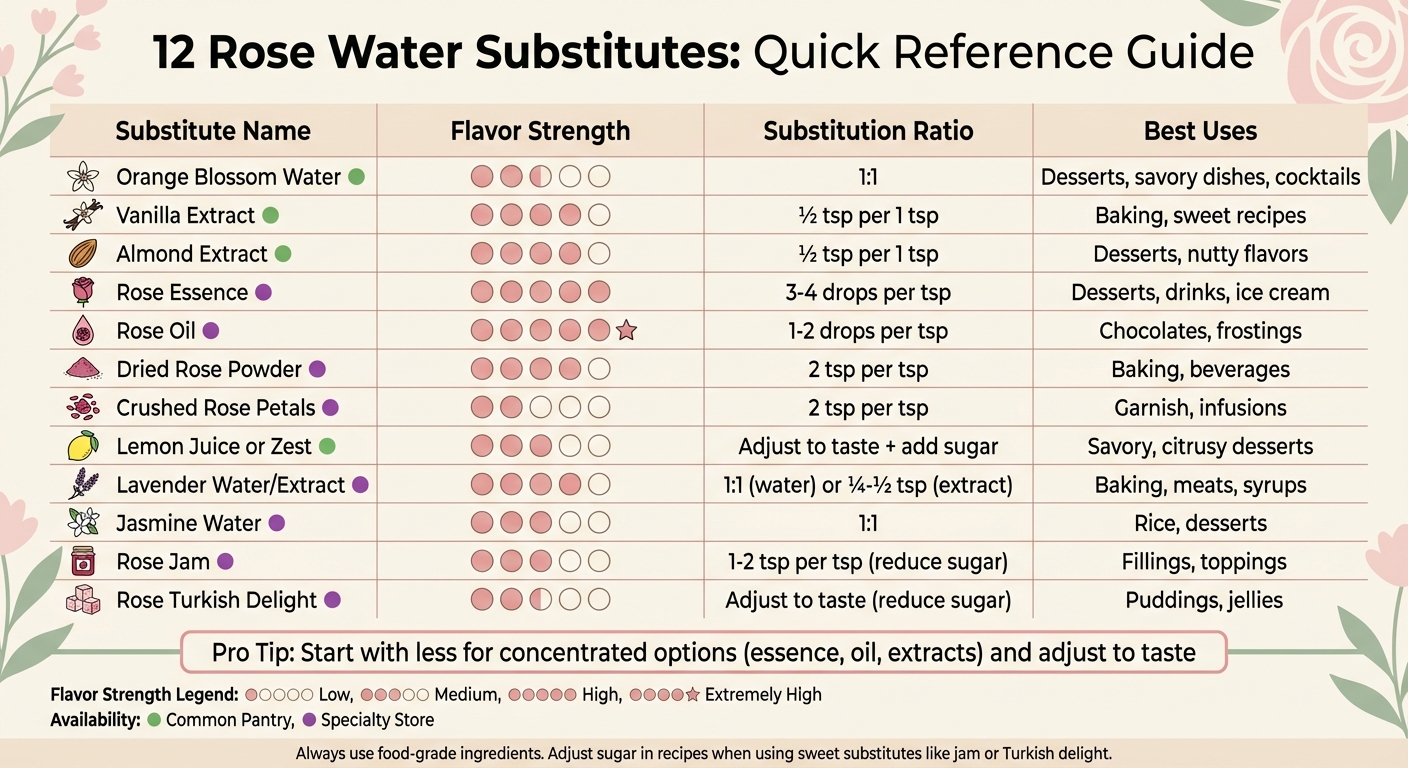
Rose Water Substitutes Comparison Chart: Ratios, Strength & Best Uses
1. Orange Blossom Water
Flavor Profile
Orange blossom water is made by distilling the flowers of bitter orange (Seville orange) trees, delivering a fruity, floral taste with a hint of bitterness. Compared to rose water, it’s lighter and more delicate, offering a subtle citrus-floral aroma that enhances a variety of dishes. As Laila Ibrahim from Serious Eats puts it:
"Orange blossom water is lighter, more delicate, and far less polarizing - floral without notes of grandma's golden-tubed lipstick."
Best Uses
This ingredient shines in Middle Eastern and North African desserts like baklava, kanafeh, and basbousa, where it’s often infused into sugar syrups. It also pairs wonderfully with French pastries like madeleines, chocolate desserts, and recipes featuring nuts (especially pistachios and walnuts) or stone fruits. Beyond sweets, it can add depth to Moroccan tagines, couscous salads, and lemon vinaigrettes for bitter greens or fennel. For a refreshing touch, try adding a few drops to lemonade or cocktails.
Substitution Ratio
Orange blossom water can replace rose water in recipes at a 1:1 ratio. However, its flavor is quite strong, so it’s wise to start with a smaller amount and adjust to taste. If the recipe already includes citrus elements like orange zest, consider reducing them slightly to keep the flavors balanced.
Availability
You can find orange blossom water easily at international markets or online. Popular brands include Cortas (around $7.95 for 10 fl oz) and Sadaf (approximately $11.80 for 10 fl oz). To preserve its flavor, store the bottle in a cool, dark place with the lid tightly sealed. It typically keeps well for about a year without refrigeration. Thanks to its wide availability, orange blossom water is a convenient and flavorful choice for diverse recipes.
2. Vanilla Extract
Flavor Profile
Vanilla extract brings a warm, floral sweetness with earthy hints and a touch of caramel. It gently enhances other flavors without stealing the spotlight, making it a favorite in both sweet and savory recipes. Its complexity works particularly well with chocolate and fruit-based dishes. Kierin Baldwin, a Chef-Instructor at the Institute of Culinary Education, puts it perfectly:
"Vanilla complements a wide variety of common flavors, which is why you see it in almost everything."
This adaptability is why vanilla extract is a staple in countless kitchens. Using AI meal planning with pantry tracking can help you keep track of staples like this to ensure you never run out.
Best Uses
Vanilla extract is a must-have for cookies, cakes, and brownies, but its magic doesn’t stop there. It enhances custards, ice creams, and even savory creations like roasted fruits or salad dressings. When the flavor of vanilla takes center stage - like in vanilla ice cream or buttercream - opt for pure vanilla extract instead of imitation. The depth and complexity of pure vanilla create a noticeably richer taste.
Substitution Ratio
Vanilla extract is much more concentrated than floral waters like rose water. If you’re swapping vanilla extract for rose water, start with half the amount. For instance, if a recipe calls for 1 teaspoon of rose water, use ½ teaspoon of vanilla extract and adjust as needed.
Availability
You can easily find vanilla extract in U.S. grocery stores, available in both pure and imitation varieties.
3. Almond Extract
Flavor Profile
Almond extract delivers a bold, nutty, and slightly fruity flavor that’s often associated with marzipan. Made from bitter almond oil, alcohol, and water, it’s highly concentrated - just a few drops or about ¼ teaspoon can flavor an entire recipe. Unlike the gentle floral notes of rose water, almond extract brings a sweet and intense nuttiness. Cookbook author Jake Cohen highlights its importance:
"We've become conditioned to expect a certain almond flavor, so I always add a little extract when I'm using almond flour, marzipan, or almond paste."
Its potency makes it perfect for recipes that need a touch of nutty richness.
Best Uses
Almond extract shines in baked goods and desserts like cookies, cakes, pastries, and chocolate treats. It’s a staple for recipes such as biscotti, shortbread, pound cakes, coffee cakes, cheesecakes, and fudge. For a creative twist, you can even add a small amount to savory dishes like meat glazes for unexpected depth. In Middle Eastern sweets, it’s a great alternative for those who prefer a nutty flavor over floral notes.
Given its strength, precise measurement is essential to avoid overpowering your dish.
Substitution Ratio
Almond extract’s intensity means you’ll need less of it when swapping for rose water. Use half the amount - if the recipe calls for 1 teaspoon of rose water, start with ½ teaspoon of almond extract and adjust to taste. For dishes that require heating, add the extract at the end of cooking to preserve its delicate oils and aroma.
Availability
Almond extract is easy to find in the baking aisle of most U.S. grocery stores, usually near vanilla and other flavorings. It comes in both pure and imitation forms, with pure extract offering a richer taste from real almond oils. A small bottle typically costs around $14.00. Thanks to its high alcohol content (about 90%), it has a long shelf life - 2 to 4 years when stored in a cool, dark pantry. No refrigeration required!
4. Rose Essence
Flavor Profile
Rose essence is a concentrated alternative that delivers the floral richness of fresh rose petals in a much stronger form - about 4 to 8 times more potent than rose water. Just a few drops can replace multiple teaspoons of rose water, making it a powerful option for recipes. However, its intensity means you should use it sparingly to avoid an overpowering or artificial taste.
Most rose essences are alcohol-based, which not only enhances their strength but also extends their shelf life. This makes them a popular choice in Indian cuisine, where they're often used to flavor desserts and drinks.
Best Uses
Rose essence shines in desserts and baked goods like cakes, cookies, puddings, ice cream, and Turkish Delight. Its concentrated nature is perfect for recipes where you want a bold rose flavor without adding extra liquid. It also works beautifully in beverages such as lattes, smoothies, cocktails, and rose lemonade. For savory dishes, it adds a sophisticated floral note to salads, marinades, and various Indian and South Asian recipes.
Substitution Ratio
Because of its strength, precise measurement is key. Start with 3 to 4 drops of rose essence for every teaspoon of rose water, or use 1 teaspoon of essence for every 2 tablespoons (6 teaspoons) of rose water. Adjust gradually to suit your taste. When shopping, look for products labeled as "pure" rose extract or essence to ensure you're getting natural flavor rather than artificial additives.
Availability
Rose essence is widely available in the U.S., often found in the baking or international sections of grocery stores. It's also stocked in Indian and Middle Eastern markets and can be easily purchased online. Although the initial cost may be higher than rose water, the small bottles last a long time due to their concentration, making them an economical choice in the long run.
5. Rose Oil
Flavor Profile
Rose oil is an intensely concentrated essential oil, extracted from rose petals through steam distillation. It’s estimated to be 5 to 10 times stronger than rose water in both aroma and flavor. With its rich floral scent and a subtle fruity hint - especially from damask roses - it’s no wonder it’s so prized. Producing just 5 ml of pure rose oil requires about 10,000 rose petals, which explains why food-grade versions can cost more than $150 for a tiny 5 ml bottle. Unlike rose water, which can lose its mild flavor when exposed to heat or air, rose oil is far more stable. Its oil-based nature makes it perfect for recipes like chocolate or buttercreams, where adding water could mess with the texture.
Best Uses
Rose oil shines in chocolate-making because it avoids the pitfalls of water-based rose water, which can cause tempered chocolate to seize. It blends effortlessly with cocoa butter, delivering a bold floral note. Beyond chocolate, it’s ideal for buttercreams, ganache, cake fillings, and frostings, where its concentrated flavor enhances without adding liquid. For baked goods or desserts, like cookies and confections, it’s best to add rose oil after cooking or when the dish has cooled to preserve its delicate aroma. Its potency means a little goes a long way, so careful dosing is crucial.
Substitution Ratio
When swapping rose oil for rose water, precision is everything. Start with just 1 to 2 drops of rose oil per teaspoon of rose water, tasting as you go. Overdoing it can leave your dish tasting soapy, so stir thoroughly and adjust gradually.
Important safety tip: Only use rose oil labeled as "food-grade" for cooking. Oils meant for aromatherapy or cosmetic use are NOT safe to consume.
Availability
Rose oil is typically sold in small vials and can be found at specialty baking stores, upscale grocery stores, or online. Look for labels like "Chef's Essence" or "food-grade rose oil" to ensure it’s safe for culinary use. While the price might seem steep, its high concentration means even a tiny bottle will last a long time in your kitchen.
6. Dried Rose Powder
Flavor Profile
Dried rose powder packs a bold, concentrated floral punch. Made by grinding dried rose petals, it offers a sweet, aromatic bouquet that's powerful enough to require careful measurement. A small amount can transform dishes with its unique flavor.
This powder isn’t just for desserts; it also enhances drinks and even savory recipes with its distinctive floral essence.
Best Uses
Dried rose powder is perfect for recipes where extra liquid might ruin the texture - think whipped desserts, meringues, tempered chocolate, or frozen puddings. It also shines in drinks like lattes, smoothies, or cocktails, adding flavor without changing the consistency. On the savory side, it can elevate spice rubs, marinades, and sauces. Beyond the kitchen, it’s even a popular ingredient in homemade face masks.
Substitution Ratio
Use 2 teaspoons of dried rose powder for every 1 teaspoon of rose water. If you're aiming for a milder flavor, start with 1 teaspoon and adjust as needed.
Availability
You can find dried rose powder at specialty spice stores, Middle Eastern markets, or online. For a DIY option, grind organic, pesticide-free dried rose petals into a fine powder. Many grocery stores sell dried rose petals, making it easy to prepare your own at home.
7. Crushed Rose Petals
Flavor Profile
Crushed rose petals bring a delicate floral essence to your dishes, offering a softer and more natural flavor compared to rose water. Their aroma is gentle, adding just a hint of the flower's character without dominating the dish. This subtle infusion makes them an excellent choice for recipes where a light floral touch is desired.
Best Uses
These petals shine in recipes where both flavor and aesthetics matter. They can be gently heated in cream to create a fragrant base for chocolate truffles or ganache, then strained for a smooth finish. They’re also a lovely addition to cake batters, cookies, or homemade syrups for cocktails. On the savory side, they can enhance Middle Eastern marinades or spice blends. You can also use a recipe manager to organize these floral-infused dishes. For a decorative touch, use them as garnishes on cupcakes, fruit salads, or champagne cocktails. Depending on the dish, the petals can either be infused and removed or blended into the recipe.
Substitution Ratio
For every teaspoon of rose water, use 2 teaspoons of crushed dried petals. If using powdered rose petals, substitute with about 1 tablespoon (3 teaspoons) to achieve a similar flavor. Start with a small amount and adjust to taste, as the strength can vary depending on the type and freshness of the petals.
Availability
Only use culinary-grade, organic petals - steer clear of those from florists or roadside sources, as they may be treated with chemicals. Culinary varieties like Damask, Centifolia, and Gallica are commonly found at Middle Eastern markets, specialty spice stores, or online. Fresh petals are easiest to source in spring, either from home gardens or wild plants.
8. Lemon Juice or Zest
Flavor Profile
Lemon juice and zest are excellent options when you're looking to add a punch of acidity to your dish. Lemon juice brings a tart, vibrant tang that contrasts with the gentle floral essence of rose water. Meanwhile, lemon zest offers a more concentrated citrus flavor, with subtle floral undertones and a zesty finish. This citrusy alternative adds a lively dimension, making it a versatile choice for both sweet and savory recipes.
Best Uses
Lemon zest shines in desserts like lemon meringue pie, gelato, sorbets, and cheesecakes. Its brightness also complements salad dressings and marinades. On the savory side, lemon juice is a go-to for enhancing salad dressings, poultry or seafood marinades, and creamy sauces like hollandaise or tzatziki. When baking, opt for zest or lemon extract instead of juice if you're worried about excess liquid or acidity impacting the texture or rise of your batter.
Substitution Ratio
Start with a small amount - just a few drops of juice or a pinch of zest - to find the right balance. Typically, 2 tablespoons of lemon juice or ½ teaspoon of lemon extract can replace 1 teaspoon of zest. For sweet recipes that originally call for rose water, adding a pinch of sugar can help offset the tartness.
Availability
Fresh lemons are easy to find year-round in most grocery stores, and bottled lemon juice or dried lemon peel are pantry staples often located in the baking or spice aisles. A medium-sized lemon generally provides about 1 tablespoon of zest and 2 to 3 tablespoons of juice. Be careful to avoid the bitter white pith, as it can interfere with the delicate flavors in baked goods.
9. Lavender Water or Extract
Flavor Profile
Lavender brings a fresh twist to recipes while keeping the floral essence similar to rose water. Its aroma is sweet and floral, with subtle hints of lemon and mint, giving it a slightly herbaceous and citrusy character. English lavender (Lavandula angustifolia) is often the top choice for culinary use due to its clean, soft floral notes and low camphor content, which avoids any medicinal undertones. As Claire Cheney, Founder of Curio Spice Co., describes, culinary lavender is "enchanting and forest-like" rather than overly perfumed. On the other hand, varieties like Lavandin or Spanish lavender can taste sharper or even bitter because of their higher camphor levels, so it's best to stick with food-grade English lavender for cooking.
Best Uses
Lavender shines in desserts like shortbread cookies, scones, blueberry muffins, and panna cotta, where its floral notes complement creamy and fruity flavors. It’s also great for infusing into sugar or simple syrups, perfect for lemonade and cocktails. On the savory side, lavender is a key ingredient in Herbes de Provence and pairs beautifully with rich proteins like lamb, chicken, salmon, and tuna. Cheney explains:
Lavender pairs really well with rich and fatty foods because it cuts through and lifts the overall flavor.
It also adds a unique touch to brown butter sauces for roasted vegetables. When substituting lavender for rose water, precise measurements are key.
Substitution Ratio
Lavender extract is much more concentrated than rose water, so you’ll need to adjust the amount carefully. Use only ¼ to ½ teaspoon of lavender extract for every teaspoon of rose water. If you’re using lavender water (hydrosol), you can typically substitute it at a 1:1 ratio. Start small - around ¼ to ½ teaspoon of extract per teaspoon of rose water - and adjust to taste.
Availability
You can find lavender water and extracts in specialty food stores, Middle Eastern or Indian grocery stores, or the international aisles of supermarkets like Whole Foods, Trader Joe's, and Walmart. For a homemade option, steep organic dried lavender buds in 80-proof vodka for several weeks to create your own extract. Just make sure the label specifies "culinary" or "food-grade" to ensure it’s safe for cooking.
How to Make Rose Hydrosol at Home (DIY Rose Water)
10. Jasmine Water
Jasmine water is a refined alternative to rose water, offering a unique twist for both sweet and savory recipes.
Flavor Profile
Jasmine water delivers a sweet, floral aroma with a slightly earthy or bitter undertone. While its scent is intensely sweet, its flavor is more delicate compared to the fruity-floral notes of rose water. This subtlety makes it an excellent choice for recipes that need a gentler floral touch, whether you're working with traditional dishes or experimenting with modern culinary ideas.
Best Uses
Jasmine water shines in traditional Thai desserts like Khanom Namdokmai and Khanom Tuay, where its floral aroma enhances the dish beautifully. In Sicilian recipes, it adds elegance to watermelon pudding and granita. For modern baking, it can elevate treats such as shortbread cookies, French palmiers, cakes, or panna cotta. Its flavor pairs wonderfully with lemon, citrus, and coconut. On the savory side, just a small amount can infuse rice with a floral aroma or even add a surprising twist to fried eggs or salad dressings.
Substitution Ratio
To replace rose water with jasmine water, use a 1:1 ratio. If you're working with jasmine essence or oil, start with an extremely small amount (use a toothpick to measure) since these are highly concentrated. Gradually adjust to taste, ensuring the flavor doesn’t overpower your dish.
Availability
Jasmine water is often available at specialty spice stores, Asian markets, and tea retailers. If you can’t find it bottled, you can make your own by steeping 1–2 teaspoons of jasmine tea leaves in 8 oz of hot water (175–180°F) for 2–3 minutes. For an even fresher option, collect jasmine blossoms at night or early morning when their fragrance is strongest, and infuse them in cold water for 3–4 hours. This homemade method captures the essence of jasmine beautifully.
11. Rose Jam or Marmalade
If you're looking for a flavorful and textured alternative to rose water, rose jam or marmalade is an excellent choice. It brings a concentrated floral taste along with sweetness and a velvety texture, making it a favorite for desserts and sweet dishes. This preserved form of rose flavor is especially appealing to those who appreciate a more intense and aromatic touch.
Flavor Profile
Rose jam is celebrated for its fragrant, sweet floral notes. Samira Kazan, Founder of Alphafoodie, describes it as:
The fragrant rose flavor is strong and sweet, without being overwhelming.
Its semi-set consistency often includes edible rose petals, creating what tastebotanical calls a "sweet rose-scented heaven". Some variations even incorporate citrus fruits like orange, lemon, or tart apples for a zesty twist. Keep in mind, it’s sweeter than rose water, with one tablespoon containing about 23 calories and 5 grams of sugar. These qualities make it a standout ingredient in various recipes.
Best Uses
Rose jam is incredibly versatile in the kitchen. It can be used as:
- A filling for Victoria sponge cakes, macarons, or croissants.
- A topping for rice pudding, yogurt, pancakes, or red berry desserts.
- A spread for toast, paired with tangy fromage blanc or mild cheeses like Lancashire, Wensleydale, or ricotta.
It also works beautifully in sweet milk puddings, jellies, and other desserts, adding a floral twist to your creations.
Substitution Ratio
When substituting rose jam for rose water, use 1–2 tablespoons. Because of its high sugar content, adjust the other sweeteners in your recipe accordingly. To retain its delicate floral aroma, add the jam toward the end of cooking and stir well. If the petal texture isn’t to your liking, strain the jam to create a smooth jelly.
Availability
You can often find rose jam in Middle Eastern grocery stores. Alternatively, making your own is a rewarding option. Recipes typically require pesticide-free, organic roses - about 1/3 cup of dried petals (or 1 cup fresh). Homemade rose jam can last up to two months in the refrigerator or as long as 1.5 years if properly heat-canned.
12. Rose Turkish Delight
Rose Turkish delight, also known as lokum, offers a sweet and chewy way to capture the floral essence of rose water. This classic Ottoman treat brings the same fragrant profile as rose water but in a candy form.
Flavor Profile
Rose Turkish delight delivers a soft, floral flavor with a subtle perfume-like quality. Its sweetness is gentle, never overpowering, and the candy has a tender, springy texture that melts in your mouth, releasing its signature rose aroma [77,78,79]. According to Dr. Aylin Aktoprak, a food historian from Istanbul University:
Turkish delight represents the pinnacle of Ottoman confectionery artistry. Its restrained sweetness reflects centuries of refinement where flavor balance was valued over sugar intensity.
Unlike overly sugary mass-market candies, authentic lokum is made with natural rose extract, giving it a more refined and aromatic flavor [77,79].
Best Uses
Rose Turkish delight shines in desserts like milk puddings, jellies, and whipped creations, where it can dissolve or blend seamlessly. For even distribution of its flavor, chop it into small pieces. It also works beautifully crumbled over chocolate desserts or as a filling. Traditionally, it's enjoyed with Turkish coffee or tea. Be sure to adjust the amount based on the desired level of sweetness and aroma in your dish.
Substitution Ratio
Start with a small amount, taste as you go, and reduce any additional sugar in the recipe. If using a chocolate-coated version, such as Fry's Turkish Delight, remove the coating or account for its flavor in your recipe.
Availability
You can find authentic rose Turkish delight in Middle Eastern markets, specialty candy shops, or the international and baking sections of larger supermarkets [77,79,81]. For the best results, choose varieties made with natural rose extract over artificial flavoring. Properly stored at room temperature, authentic lokum has a shelf life of 2–3 weeks [80,81].
Rose Water Substitute Comparison Table
When you're out of rose water, the right substitute can save your recipe without compromising on flavor. The choice depends on factors like flavor intensity, how you plan to use it, and what's available in your pantry. Some alternatives pack a punch with just a few drops, while others mimic rose water's subtlety and require equal amounts.
Below is a detailed comparison of 12 substitutes, highlighting their flavor strength, ideal applications, substitution ratios, and where to find them. For highly concentrated options like rose essence, use sparingly. Floral waters, on the other hand, often work in a 1:1 ratio.
| Substitute | Flavor Intensity | Best Uses | Substitution Ratio | Availability |
|---|---|---|---|---|
| Orange Blossom Water | Medium | Baking, savory dishes, cocktails | 1:1 | Specialty Store |
| Vanilla Extract | High | Baking, sweet desserts | 1/4 to 1/2 tsp per 1 tsp | Common Pantry |
| Almond Extract | High | Middle Eastern desserts, fruit dishes | 1/4 to 1/2 tsp per 1 tsp | Common Pantry |
| Rose Essence | High | Baking, desserts, ice cream | 1/4 to 1/2 tsp per 1 tsp | Specialty Store |
| Rose Oil | Extremely High | Chocolate making, cold desserts | 1–2 drops per 1 tsp | Specialty Store |
| Dried Rose Powder | High | Smoothies, lattes, baking | 1 tsp per 1 tsp | Specialty Store |
| Crushed Rose Petals | Low | Cookies, cakes, garnish | 2 tsp per 1 tsp | Garden/Specialty |
| Lemon Juice or Zest | Medium (Tangy) | Savory meats, marinades, glazes | 1:1 (add 1/2 tsp sugar) | Common Pantry |
| Lavender Water/Extract | High | Meats (lamb, fish), baking | 1:1 (water) or 1/4 to 1/2 tsp (extract) | Specialty/Garden |
| Jasmine Water | Medium | Indian desserts, rice dishes | 1:1 | Specialty Store |
| Rose Jam/Marmalade | Medium | Frostings, glazes, toppings | 1–2 tsp (reduce sugar) | Grocery/Specialty |
| Rose Turkish Delight | Low to Medium | Puddings, jellies, whipped desserts | Chopped to taste (reduce sugar) | Specialty Store |
Quick Tips for Substitutions
- Common pantry staples like vanilla extract, almond extract, and lemon juice are convenient go-to options.
- Specialty items such as rose oil or rose essence often require a trip to an ethnic or specialty store.
- If using concentrated substitutes like rose oil, add them at the end of cooking to preserve their flavor and avoid bitterness.
- Sweet alternatives like rose jam or Turkish delight may require sugar adjustments to maintain the dish's balance.
Pair this guide with tools like Honeydew Recipe Manager to simplify ingredient swaps and keep your cooking stress-free!
How to Use Substitutes with Honeydew Recipe Manager

The Honeydew Recipe Manager makes finding a substitute for rose water incredibly straightforward. Its AI-powered Smart Ingredient Substitutions feature scans your recipe and suggests alternatives based on what you already have in your pantry and any dietary preferences. Instead of spending time flipping through cookbooks or Googling for options, you’ll get instant, tailored recommendations. Whether you’re making a delicate Middle Eastern dessert or a savory marinade, this tool helps you adapt recipes with ease.
If you’re looking to use up substitutes like orange blossom water or almond extract, the app’s "Search by Ingredients" feature is a lifesaver. Simply input the ingredients you have, and it will show recipes that already incorporate them. It’s a great way to make the most of those specialty items before they expire.
Honeydew also makes importing recipes from social media a breeze. With one-tap imports from platforms like TikTok, Instagram Reels, YouTube, and Facebook Reels, the app’s AI can suggest substitutes such as lavender water or vanilla extract when rose water isn’t available.
"The ingredient substitution feature is a game-changer for my dietary restrictions. I can adapt any recipe easily!" - Emily C.
The app’s AI meal planner takes it a step further by generating weekly meal plans that prioritize recipes using the substitutes you already own. Plus, its smart grocery lists automatically calculate exact quantities and organize items by store aisle with the Auto Sort feature, making shopping faster and more efficient.
For those cherished family recipes or physical cookbooks that include rose water, Honeydew’s Import from Anywhere feature lets you snap a photo or screenshot. The app extracts the recipe details and applies its substitution intelligence, offering alternative ingredients instantly. With a 4.8/5 star rating, users consistently highlight how quickly it helps build a digital cookbook.
Honeydew is free to download on iOS and Android, but upgrading to Honeydew Plus for $4.17/month unlocks unlimited recipe storage and family sharing options.
Using Substitutes in Middle Eastern Dishes
Middle Eastern cuisine often features rose water as a key ingredient, especially in desserts like baklava and Persian rice pudding. Its distinct floral aroma is integral to these dishes, but when it's unavailable, there are alternatives that can help maintain their traditional flavor.
Orange blossom water is one of the most straightforward substitutes, working as a 1:1 replacement. Lebanese chef and cookbook author Anissa Helou explains:
rosewater is mostly used in sweets, like baklava
Orange blossom water provides a similar floral intensity with a hint of citrus, making it a versatile option for recipes like baklava syrup. For a more customized approach, you can use rose essence (just 1/4 to 1/2 teaspoon per teaspoon of rose water) or almond extract (at 1/4 to 1/2 the amount) to achieve a balanced floral flavor. To avoid a soapy aftertaste when using rose essence, always stir it into cooled syrup.
In desserts beyond baklava, substitutions vary depending on the dish. For Persian rice pudding (Sholeh Zard), kewra water - an extract from pandanus flowers - offers a fruity floral note that complements the dish well. If kewra water isn't available, enhancing the pudding with extra cardamom and a touch of vanilla extract can achieve a similar aromatic profile.
For savory rice dishes, the approach shifts slightly. In Gulf-style or Persian jeweled rice, a splash of orange blossom water or a few crushed cardamom pods can add the necessary depth and fragrance. As Anissa Helou notes:
In the Gulf, it [rosewater] is sprinkled on rice at the end of cooking to add fragrance.
If you're considering oil-based substitutes like rose oil, it's best to add them at the end of cooking to preserve their delicate aroma. This careful attention to detail reflects the cultural importance of rose water in these dishes. In fact, about 90% of the world's rose water is produced in Iran, making these substitutions not just practical but also a respectful nod to tradition.
Conclusion
Finding a substitute for rose water is easier than it seems. Whether you opt for orange blossom water as a direct replacement, rose essence at a reduced quantity, or vanilla extract for a hint of sweetness, each substitute adds its own unique twist. The key is understanding their strength - starting with small amounts and adjusting to taste ensures you avoid an overpowering or soapy outcome.
The choice of substitute often depends on the recipe. For traditional Middle Eastern dishes, options like orange blossom water or cardamom work beautifully to preserve authentic flavors. On the other hand, vanilla and almond extracts complement Western-style baked goods perfectly.
For those who love a bit of help in the kitchen, tools like Honeydew Recipe Manager make substitutions even easier. Its smart ingredient feature suggests alternatives based on what’s already in your pantry. It also adjusts serving sizes, accounts for concentration differences, and even generates grocery lists - all while tracking nutritional changes when using substitutes like rose jam or syrup.
As Andrew Gray from Gusto Meadow wisely says:
Experimentation in the kitchen is the spice of life.
So, don’t hesitate to try different substitutes. With a little creativity and the right tools, you might just stumble upon new flavor combinations that become your go-to favorites. These options give you the flexibility to recreate authentic flavors while adding your personal touch to every dish.
FAQs
What is the best substitute for rose water in terms of flavor?
If you're searching for something that mirrors the flavor of rose water, rose essence is an excellent choice. It offers a similarly strong, floral aroma and taste, making it ideal for recipes that call for a subtle floral touch.
Just remember, rose essence is much more concentrated than rose water. A few drops are usually enough to deliver the same effect, so adjust your quantities accordingly.
What can I use instead of rose water without changing the texture of my batter?
To swap out rose water without altering your batter's consistency, go for a liquid alternative with a comparable flavor profile. Great choices include orange blossom water, vanilla extract, or lavender extract. For example, you can use orange blossom water in the same amount as rose water (a 1:1 ratio), while vanilla extract should be added more sparingly - around ½ to 1 teaspoon.
The trick is to keep the liquid balance in your recipe intact. Begin with a small amount of the substitute, taste your batter as you mix, and adjust gradually to get the flavor just right without overwhelming the dish.
How do I prevent a soapy taste when using rose water substitutes?
When working with rose water substitutes, it’s important to avoid a soapy taste by starting with small amounts and adjusting gradually. Concentrated options like rose essence or rose extract should be added sparingly - just a few extra drops can easily overwhelm a dish. If you’re using floral waters or other aromatic alternatives, make sure they blend well with the recipe’s flavors without taking over. The key is to use a gentle touch for a well-balanced outcome.