Saffron vs. Turmeric: Which Works in Paella?
• Updated
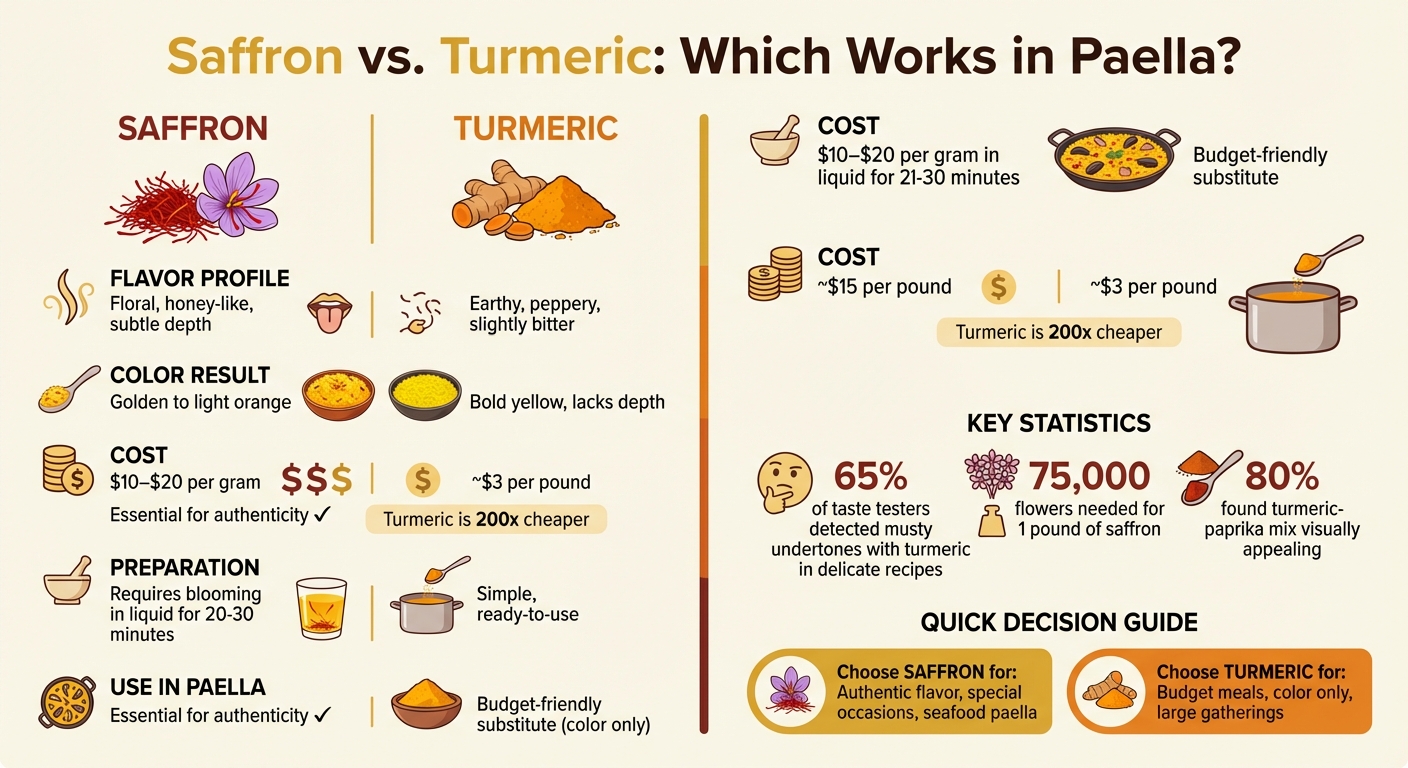
Saffron and turmeric are both used to add color to paella, but they differ significantly in flavor, cost, and cultural significance. Saffron, prized for its floral aroma and golden hue, is a cornerstone of paella recipes in Spain and costs $10–$20 per gram due to its labor-intensive harvesting process. Turmeric, on the other hand, is a budget-friendly alternative at $3 per pound, offering a bold yellow color but an earthy, peppery flavor that lacks saffron's complexity. While saffron is essential for authentic paella, turmeric can be used sparingly when cost is a concern, though it alters the dish's flavor and heritage.
Quick Comparison
| Criteria | Saffron | Turmeric |
|---|---|---|
| Flavor | Floral, honey-like, subtle depth | Earthy, peppery, slightly bitter |
| Color | Golden to light orange | Bold yellow, lacks depth |
| Cost | $10–$20 per gram | ~$3 per pound |
| Preparation | Requires blooming in liquid | Simple, ready-to-use |
| Use in Paella | Essential for authenticity | Budget-friendly substitute |
If you're prioritizing flavor and tradition, saffron is the clear choice. For casual meals where cost matters, turmeric can work as a substitute for color, but its flavor may overpower delicate ingredients like seafood.
Saffron vs Turmeric Comparison for Paella: Cost, Flavor, and Color Differences
Saffron vs Paprika, Tumeric and Colorants
Flavor Profile and Taste
Saffron and turmeric bring very different qualities to the table, especially when it comes to flavor. Saffron offers a floral, honey-like sweetness with earthy undertones and a faint hint of the sea. It harmonizes with other ingredients, adding depth to dishes like paella. Without saffron, paella can feel flat and lack complexity.
Turmeric, in contrast, is mainly used for its vibrant color in dishes like paella. Its flavor is bold, with a pungent, peppery edge, owing to its roots in the ginger family. While saffron introduces a subtle bitterness that balances the dish, turmeric can sometimes bring musty or metallic notes if overused. Notably, blind taste tests found that 65% of participants detected these musty undertones when turmeric was used as a saffron substitute in delicate recipes.
Let’s break down the unique flavor contributions of saffron and turmeric.
Saffron's Flavor
Saffron owes its distinctive honey-floral aroma to a compound called safranal. This compound is entirely absent in turmeric, making saffron's flavor nearly impossible to replicate. It adds a gentle depth to dishes, enhancing the flavors of seafood, chicken, or vegetables without overwhelming them.
"Saffron isn't just 'for color' - it's the soul of paella." - Antonio Rodriguez, Spice Expert
Turmeric's Flavor
Turmeric, on the other hand, has a much earthier and more assertive profile. Its woody, bitter notes can easily dominate a dish if not used carefully. Many cooks mistakenly focus on turmeric's ability to mimic saffron's color, overlooking the stark differences in flavor. In fact, 78% of failed saffron substitutions occur because the flavor chemistry is misunderstood.
If you opt for turmeric, use it sparingly - about 1/2 teaspoon for every pinch of saffron. Blooming the spice in warm broth for five minutes before adding it to the dish can help tone down its intensity. These distinct flavor profiles highlight why saffron remains indispensable for authentic paella.
Color and Visual Appeal
The color of paella is more than just visual - it reflects the depth of flavor and the infusion of spices in the dish. While both saffron and turmeric contribute yellow tones, the way they transform the dish's appearance is quite different. Let’s break down how each spice impacts the visual appeal of paella.
Saffron's Color Effect
Saffron creates a stunning golden to light orange hue, often seen as the signature of authentic paella. This vibrant color comes from crocin, a compound released when saffron threads steep in warm liquid. The transformation is gradual, adding a layer of richness and warmth that feels almost luxurious.
"Turmeric (left) creates flat yellow; saffron (right) yields luminous gold with floral notes." - Antonio Rodriguez, Spice Expert
To achieve this effect, steep saffron in warm liquid for 20–30 minutes before adding it to your dish. Avoid adding saffron directly to oil, as it can diminish both its color and aroma. Using AI meal planning with pantry tracking can help you manage these delicate spices and ensure you always have the right ingredients on hand.
Turmeric's Color Effect
Turmeric, on the other hand, offers a yellow tone but lacks the depth and complexity of saffron. While it can mimic the general yellow appearance, it doesn’t bring the orange undertones or the vibrant, multidimensional quality saffron provides. To prevent an overly artificial look, use only 1/4 to 1/2 teaspoon of turmeric.
Some cooks enhance turmeric's color by adding a pinch of smoked paprika, which adds depth and shifts the tone closer to saffron's golden hue. Interestingly, in blind taste tests, 80% of participants found a turmeric-orange coloring more visually appealing for rice dishes. However, this result underscores why saffron remains the preferred choice in traditional paella - its color not only enhances the dish visually but also honors its culinary roots.
Authenticity and Spanish Cooking Traditions
Saffron's Role in Paella History
Saffron made its way into Spanish kitchens in the 8th century, brought by the Moors, and quickly became a cornerstone of the country's culinary identity. Nowhere is its importance more apparent than in paella, especially in Valencia, where the dish was born. The Spanish Ministry of Agriculture even sets legal guidelines for what qualifies as authentic paella, emphasizing the use of traditional ingredients like saffron.
"The unique flavor and aroma that saffron brings to the dish cannot be replicated with any other spice, making it an indispensable ingredient in Spanish cuisine." - Ibérico Club
In its purest form, Valencian paella uses just two spices: saffron, which provides its signature golden hue and subtle floral aroma, and pimentón de la Vera (smoked paprika), which adds depth. This restrained approach highlights a legacy of culinary precision. Saffron's distinct qualities - its vivid color, delicate scent, and slight bitterness - cannot be mimicked by substitutes. Changing this key ingredient risks not only altering the dish's flavor but also undermining its cultural roots.
Turmeric as a Substitute
While saffron is integral to tradition, some cooks opt for turmeric as a cost-effective alternative. Using a smart meal planning tool can help you organize these ingredients and manage costs effectively. However, this swap comes at a price beyond dollars and cents. Replacing saffron with turmeric shifts the flavor and compromises the dish’s authenticity. Spanish culinary purists argue that such substitutions dilute the cultural significance of paella, with some experts going so far as to label it "cultural vandalism". In Valencia, any rice dish that deviates from the traditional recipe is dismissed as arroz con cosas - essentially "rice with things" - and not considered true paella.
The problem isn’t just about taste. Many commercial spice blends rely heavily on turmeric - up to 70% - and include artificial additives like E102, resulting in an unnatural neon yellow color that clashes with traditional standards. While turmeric costs roughly $3 per pound compared to saffron's $10 to $20 per gram, the savings come at the expense of the dish’s heritage. For casual cooking, turmeric may provide an acceptable color, but only saffron maintains the integrity and legacy of authentic paella.
Cost and Availability
The cost and availability of saffron and turmeric play a big role in shaping their use in traditional dishes like paella. Using smart ingredient prep can help manage these costs.
Why Saffron Costs More
Saffron is one of the most expensive spices in the world, often priced between $10 and $20 per gram. The reason? Its production is incredibly labor-intensive. Each Crocus sativus flower produces only three tiny red stigmas, which must be hand-harvested during a very short blooming period. The flowers bloom for just two to three weeks each year, and each bloom lasts only about two days. Harvesting has to happen at dawn, before the flowers begin to wilt.
To produce just one pound of saffron, around 75,000 flowers are needed (about 150 flowers per gram). This process takes an estimated 370 to 470 hours of manual labor. Wholesale saffron prices can climb as high as $10,000 per pound. For example, a small 0.036-ounce jar of saffron threads at Whole Foods Market in Brooklyn, NY, sells for $15.79.
"In order to produce one kilogram of saffron, about 370 to 470 hours are required to pluck 150,000 flowers of their stigma." - Diana Perez, Culinary Producer and Researcher
Saffron's high price reflects not only its rarity but also the painstaking effort behind its production. This stands in stark contrast to turmeric, which is far more affordable.
Turmeric's Lower Cost and Easy Access
Turmeric, on the other hand, is a budget-friendly spice. A relative of ginger, it grows easily in tropical climates and requires far less effort to process. The production involves boiling, drying, and grinding the root into powder - steps that are much simpler and faster compared to saffron's delicate harvesting process. Turmeric costs about $0.05 per gram, making it roughly 200 times cheaper than saffron. At the same Brooklyn Whole Foods Market, a 2.38-ounce jar of organic turmeric powder costs just $5.29.
For American home cooks, turmeric is a pantry staple, readily available in the spice aisle of nearly every grocery store. Saffron, while also accessible, is typically sold in tiny, secure packages due to its high value. Another difference? Turmeric is ready to use as-is, while saffron requires blooming - soaking in warm liquid - before it can release its flavor and color.
This difference in cost and preparation highlights saffron's special place in traditional paella. While turmeric offers affordability and convenience, it lacks the rich, labor-intensive heritage that saffron brings to the dish.
When to Use Turmeric Instead of Saffron
Considering the earlier discussion on flavor, color, and cost, there are clear situations where turmeric can replace saffron - and others where it simply won’t work. The choice often comes down to what matters most: Are you prioritizing the vibrant golden color or the authentic flavor? If your goal is to achieve that classic yellow hue without breaking the bank, turmeric is a suitable alternative. However, for the unmistakable taste of paella, saffron remains irreplaceable.
Using Turmeric for Color Only
Turmeric is a budget-friendly option when color is the main concern. It provides a similar golden tone at a fraction of saffron's cost - about 1/200th of the price. This makes it an excellent choice for casual meals or large gatherings. When using turmeric solely for color, a small amount (about 1/2 teaspoon per pinch of saffron) is sufficient.
That said, turmeric's flavor profile is entirely different. While saffron adds a sweet, floral essence, turmeric has bold, earthy, and peppery notes that can easily dominate a dish. To mellow its intensity, briefly bloom turmeric in warm broth before adding it to your recipe.
For a more saffron-like appearance, try blending 1/4 teaspoon of turmeric with 1/2 teaspoon of sweet paprika. This combination creates a warmer, deeper hue. In taste tests, 80% of participants found this turmeric-paprika mix visually closer to saffron’s effect on rice.
"Turmeric provides the signature yellow color to the rice without the expense of saffron."
– Sonja Overhiser, Author, A Couple Cooks
However, be cautious with quantities. Using more than 1/4 teaspoon of turmeric per cup of rice can lead to bitterness and an unnatural tan color. While turmeric is a great option for achieving the right look, some dishes still require the distinct flavor that only saffron can provide.
When Not to Substitute
Authentic Spanish paella, as defined by Spain's Ministry of Agriculture, must include saffron. Substituting turmeric disqualifies the dish from being considered true paella.
Turmeric is also a poor choice for delicate seafood paellas. Its strong, peppery flavor can clash with the subtle sweetness of fish and shellfish. In a Food Network test, 65% of tasters reported off-putting flavors when turmeric was used in seafood-based paellas. When working with premium ingredients like lobster, clams, or monkfish, saffron is worth the investment to preserve the dish’s integrity.
"Turmeric's earthy punch overwhelms delicate paella, while artificial colors create visually perfect but flavorless rice."
– Max, Spice Specialist
For those moments when authenticity matters most, preparation is key. Planning ahead with reliable recipes can help ensure success. If you need help organizing your recipes - whether they call for saffron or turmeric - the Honeydew Recipe Manager (https://honeydewcook.com) is a handy tool. It allows you to import recipes, create grocery lists, and track ingredient costs, making it easier to plan for occasions when only saffron will do.
Conclusion
Choosing between saffron and turmeric for your paella comes down to what matters most to you - authentic flavor or practicality. Saffron delivers that classic taste and vibrant color associated with traditional Spanish paella, but it’s definitely a splurge. On the other hand, turmeric offers a budget-friendly way to achieve a similar golden hue, though it lacks saffron’s delicate floral and honey-like notes.
Think about the occasion. For special events where authenticity is key, saffron is worth the extra cost. But for casual dinners or feeding a crowd, turmeric is a reasonable substitute that keeps things colorful without breaking the bank.
Planning ahead can make the process easier. Tools like Honeydew Recipe Manager (https://honeydewcook.com) can help streamline your paella prep. Its smart substitution feature suggests alternatives when you’re out of saffron, adjusting quantities to prevent overpowering your dish with turmeric. You can also track expenses, create shopping lists, and share recipes with loved ones - helping you decide when to splurge or save.
FAQs
How do I tell if saffron is real?
To test the authenticity of saffron, place a few threads in hot water. Real saffron will gradually release its color over a span of 20 to 60 minutes, all while maintaining its red hue. In contrast, fake saffron will rapidly bleed color and may even fall apart.
Can I combine saffron and turmeric in paella?
Yes, saffron and turmeric can be combined in paella. Turmeric is often used as a substitute for saffron to create that signature golden hue. But keep in mind, their flavors are quite different - saffron brings a delicate earthy and floral note, while turmeric has a more pronounced, slightly bitter taste. If you use both, add them in moderation to maintain a balanced flavor and vibrant color in the dish.
How can I stretch saffron without losing flavor?
To get the most out of saffron without using too much, try steeping a few threads in warm water or broth for 10-15 minutes. This helps release its vibrant color and rich aroma. Another option is to make a concentrated infusion by mixing saffron with hot liquid before incorporating it into your recipe. Skip using saffron powder directly - steeping lets you extract maximum flavor while using less.